In 1298 a Venetian merchant named Marco Polo found himself in a Genoese prison, captured in one of the endless naval wars between the two great Italian trading cities. He was not, by then, an ordinary prisoner. He had spent the better part of his life away in the East, in service to the Mongol emperor of China, and he had stories: extraordinary, barely believable stories of stone cities larger than any in Europe, of paper used as money, of coal that burned like wood, of a court so rich it beggared description. He happened to share his cell with a writer of romances named Rustichello of Pisa. Between them, captor's boredom and prisoner's memory produced one of the most influential books of the Middle Ages.
We usually call it The Travels of Marco Polo, though it went by other names, in Italian, famously, Il Milione. For centuries it was the single most important European source on China, central Asia and the wider East, read and copied and argued over long after Polo's death. It also, almost from the start, attracted a particular kind of suspicion: was any of it true? That double life, as both essential testimony and suspected tall tale, has followed the book for seven hundred years, and it is what makes the book so interesting.
A family business that reached halfway across the world
Marco Polo was born around 1254 into a Venetian merchant family already deep in the long-distance trade that made Venice rich. The key point, often lost, is that he did not set out as a lone adventurer. His father Niccolò and uncle Maffeo were experienced traders who had already made one journey deep into Asia before Marco ever left home, reaching the court of Kublai Khan, the Mongol ruler who by then governed China. They returned to Venice bearing, by the account in the book, a request from the Khan himself for the Pope to send learned men and holy oil from Jerusalem.
When the brothers set out again around 1271, they took the teenage Marco with them. The journey east was itself epic: across the Holy Land, through Persia, over deserts and the high passes of central Asia, a trek of several years that eventually brought them to the court of Kublai Khan in the late 1270s. According to the book, the young Venetian impressed the emperor and entered his service, travelling on missions through the vast Mongol empire and observing its cities, customs and wealth over a period of some seventeen years before the family finally made the long voyage home, returning to Venice around 1295.
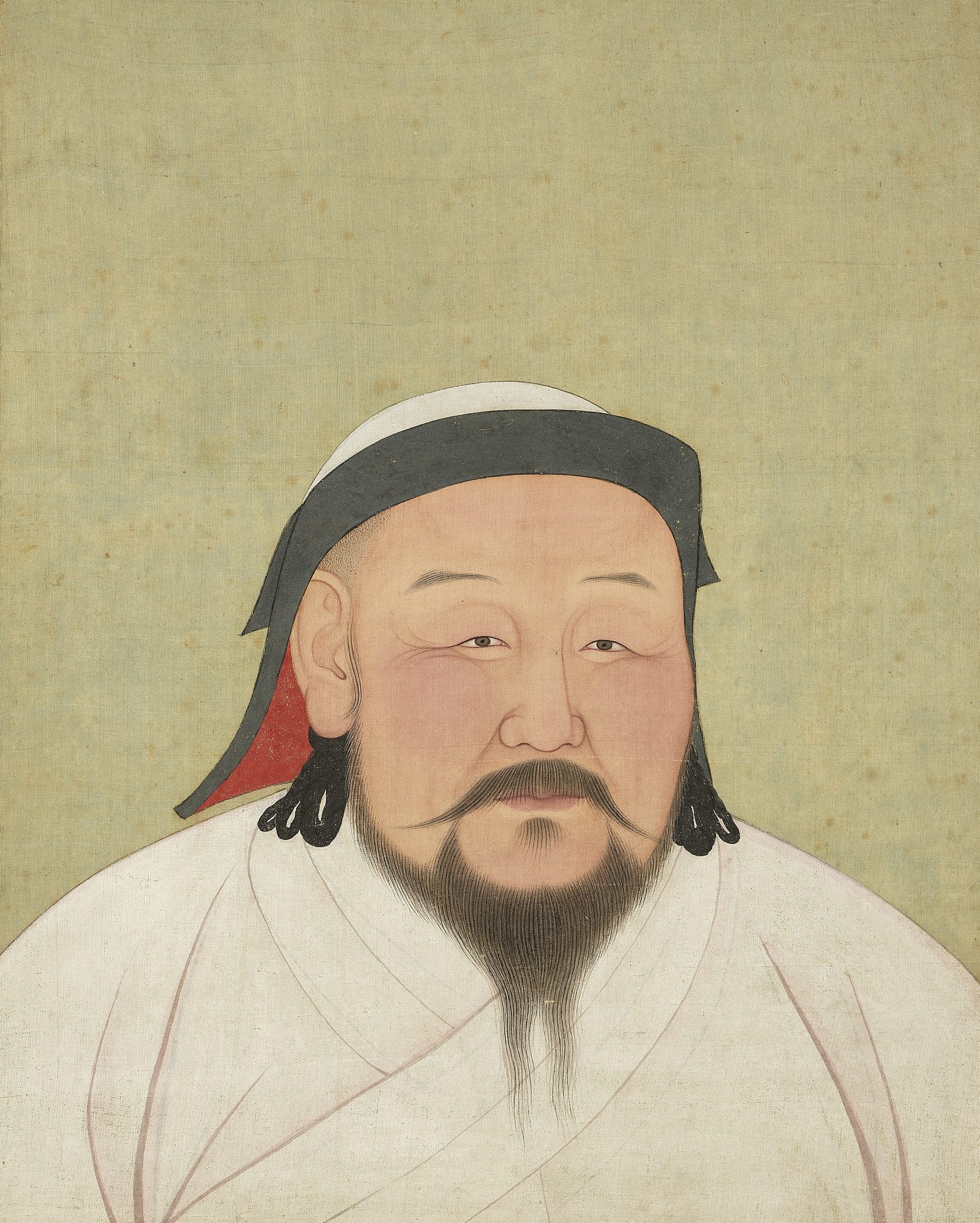
The empire he claimed to serve
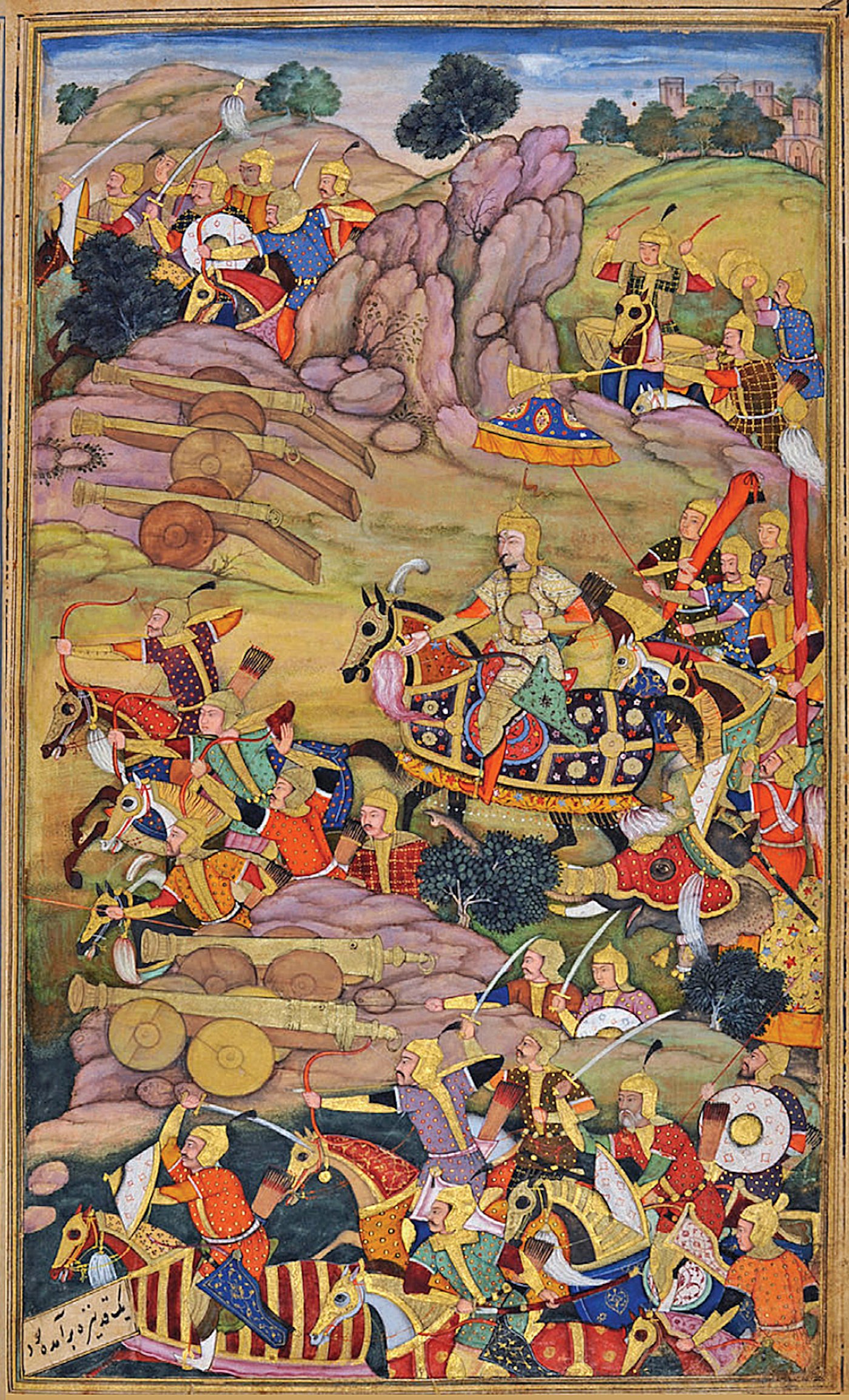
The world Polo described was real and astonishing, whatever one makes of his personal role in it. Kublai Khan was the grandson of Genghis Khan, and he ruled the Yuan dynasty he had established over China, the easternmost and richest portion of the largest land empire the world had ever seen. For a brief historical window, the Mongol conquests had stitched together a corridor of relative stability across Eurasia, the so-called Pax Mongolica, that made it possible, if still dangerous, for a European to travel overland all the way to the Pacific and back.
Polo's book conveys the scale of this with real wonder. He describes the splendour of Kublai's capital at Khanbaliq (modern Beijing) and his summer palace at Xanadu, the efficiency of the imperial postal relay system, the busy ports and canals, the enormous populous cities of southern China that dwarfed anything in Europe. Much of what he reports, such as paper money, the burning of "black stones" (coal) for fuel and the sophistication of Chinese urban life, was accurate and, to his European readers, frankly incredible. It is part of why the book mattered: it widened the known world.
The nickname Il Milione, "the million", was attached to Marco Polo, and possibly his book, in his own lifetime, and it may have been a gentle jeer. The likeliest explanation is that Polo so constantly described things in the millions (millions of inhabitants, millions in revenue, millions of ships) that sceptical Venetians dubbed him "Marco of the Millions," half-admiring and half-rolling their eyes. The teller of tall numbers got his doubting nickname four centuries before anyone used the phrase "tall tale."
The book, and the man who wrote it down
It helps to be clear about how the Travels came to exist, because it shapes how much we can trust it. Polo did not sit down and write a careful memoir. He dictated his recollections, in prison, to Rustichello, a professional author of chivalric romances. Rustichello shaped the raw material into a book, and it is generally accepted that he added literary flourishes, stock phrases from his romances, and a certain amount of polish. The text then survived only in copies (there is no original manuscript), and those copies diverge from one another, in different languages, with passages added, dropped or garbled by generations of scribes. There is no single, authoritative "what Marco Polo said." There is a thicket of versions.
This matters for the credibility debate, because some of the oddities and errors people seize on may belong to Rustichello or to later copyists rather than to Polo himself. The book is part travelogue, part merchant's report, part wonder-tale, assembled by two men in a cell and then reshaped by hundreds of hands over centuries. Treating it as a modern eyewitness affidavit was never going to end well.
"Emperors and kings, dukes and marquises, counts, knights, and townsfolk, and all people who wish to know the various races of men and the peculiarities of the various regions of the world, take this book and have it read to you."— Opening lines of The Travels of Marco Polo, as set down with Rustichello of Pisa, c. 1298
Did he reach China?
This is the great question, and it has never entirely gone away. For most of history the doubts were vague. Polo's contemporaries found his numbers absurd, and there was a persistent legend that on his deathbed he was urged to recant his exaggerations and instead replied that he had not told the half of what he had seen. But in modern times the question was sharpened by scholars who pointed to some puzzling silences in the book.
The skeptical case, argued most prominently by the historian Frances Wood in her 1995 book Did Marco Polo Go to China?, runs roughly like this. For a man who claims to have spent seventeen years in China, Polo fails to mention some startlingly obvious things. He never describes the Great Wall. He says nothing about tea, or about Chinese writing, or about the practice of foot-binding then spreading among Chinese women. His name has not been found in the otherwise detailed Chinese administrative records of the period. Wood suggested he might have travelled only as far as the Black Sea or Persia, and compiled the rest of the book from Persian and Arabic guidebooks and the tales of other merchants.
Did Marco Polo really reach China, or stitch his book together from other men's reports? Sceptics, Frances Wood among them, point to his odd silences: no Great Wall, no tea, no foot-binding, no mention in Chinese records. But most specialists in Mongol-era history, including scholars like Igor de Rachewiltz and Hans Ulrich Vogel, find the skeptical case unpersuasive. They note the Ming-era wall did not yet exist; that tea-drinking and foot-binding were not universal and might be overlooked by a foreigner in Mongol service; that the book contains detailed, accurate information (on salt administration, currency and local geography) hard to get secondhand. The mainstream view today is that Polo probably did go, while accepting the book is unreliable in its details and shaped by Rustichello. It is a live debate, not a settled scandal.
The defenders have strong replies. The "Great Wall" that tourists picture is largely a Ming-dynasty construction built well after Polo's time; in the late thirteenth century there was no continuous, monumental wall for him to gawp at. Tea-drinking and foot-binding were not yet universal across all the regions and social levels a foreigner moving in Mongol official circles would encounter, and a Mongol-employed traveller might simply not register customs of the conquered Chinese population as noteworthy. The absence of his name in Chinese records proves little, given how rarely minor foreign functionaries were recorded and how much has been lost. Above all, defenders point to the wealth of specific, verifiable detail in the book (the workings of the salt monopoly, the denominations of paper money, the layout of particular cities) that would have been very hard to assemble secondhand. Recent scholarship, including a detailed study by the historian Hans Ulrich Vogel of Polo's descriptions of Chinese money, salt and revenue, has tended to strengthen the case that he really was there, or at least had access to remarkably precise information from someone who was.
"Marco Polo introduced pasta — spaghetti and noodles — to Italy from China."
This is a twentieth-century invention, with no basis in Polo's book. Pasta existed in Italy and the wider Mediterranean before he was born; there are references to dried pasta in Sicily well before his journey. The legend appears to have been popularised by a 1920s American trade magazine and cemented by a Hollywood film. Polo did describe noodle-like foods in Asia, but he treated them as familiar, not as a marvel, precisely because Italians already had their own.
The book's strange afterlife
Whatever the truth of Polo's itinerary, the influence of his book is beyond dispute, and it ran in directions he could never have intended. For two centuries the Travels was Europe's richest description of the East, copied into many languages and consulted by merchants, mapmakers and dreamers. Its vision of a wealthy, sophisticated Asia, full of spices and gold and great cities, helped fuel the European hunger to reach those markets directly, the very hunger that, in time, sent ships looking for new routes.
The most famous reader of all may have been Christopher Columbus. A surviving copy of the Travels annotated in Columbus's own hand survives in Seville, dense with his marginal notes about the riches and islands of the East. When Columbus sailed west in 1492, expecting to reach the lands of the Great Khan, he was in part chasing the world Marco Polo had described two centuries earlier. He died still believing he had reached the fringes of Asia. In that sense the Venetian merchant's prison memoir helped reshape the entire planet, by sending another man, full of its promises, blundering into a continent neither of them knew existed.
Why the doubts matter less than the door he opened
It would be a mistake to end on the credibility quarrel as if it were all that mattered. Yes, the book is unreliable in detail; yes, Rustichello's hand and centuries of copying muddied it; yes, Polo probably exaggerated his own importance at Kublai's court, where no independent record confirms his grand roles. All of that is worth saying plainly, because honest history flags its uncertainties rather than smoothing them over.
But step back and the achievement is real. Whether through his own eyes or partly through the reports of others he travelled among, Marco Polo gave medieval Europe its fullest, most vivid picture of a world it barely knew existed: a vast, rich, ordered civilisation at the far end of the earth. He widened the mental map of an entire continent and helped plant the idea that the distant East was not the edge of the world but a destination worth reaching. The man who died nicknamed "the million," gently mocked for his unbelievable numbers, turned out to have undersold the strangeness of what was out there. As the legend has him saying at the end: he had not told the half of it.
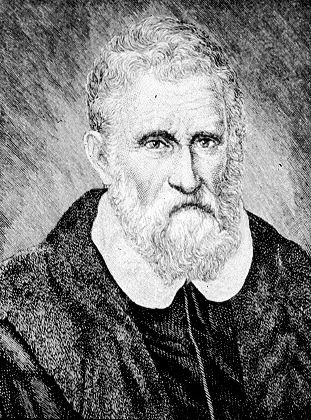
Image: a portrait of Marco Polo, after a now-lost original (public domain, via Wikimedia Commons).
Read next: Genghis Khan and the Largest Contiguous Empire in History and Zheng He: The Treasure Fleet the Ming Tried to Erase.
Sources & further reading
- Marco Polo, The Travels (Penguin Classics edition, trans. Ronald Latham), or the annotated edition by Henry Yule and Henri Cordier.
- Frances Wood, Did Marco Polo Go to China? (Secker & Warburg, 1995) — the best-known statement of the skeptical case.
- Hans Ulrich Vogel, Marco Polo Was in China: New Evidence from Currencies, Salts and Revenues (Brill, 2013).
- John Larner, Marco Polo and the Discovery of the World (Yale University Press, 1999).
- Encyclopaedia Britannica, "Marco Polo."