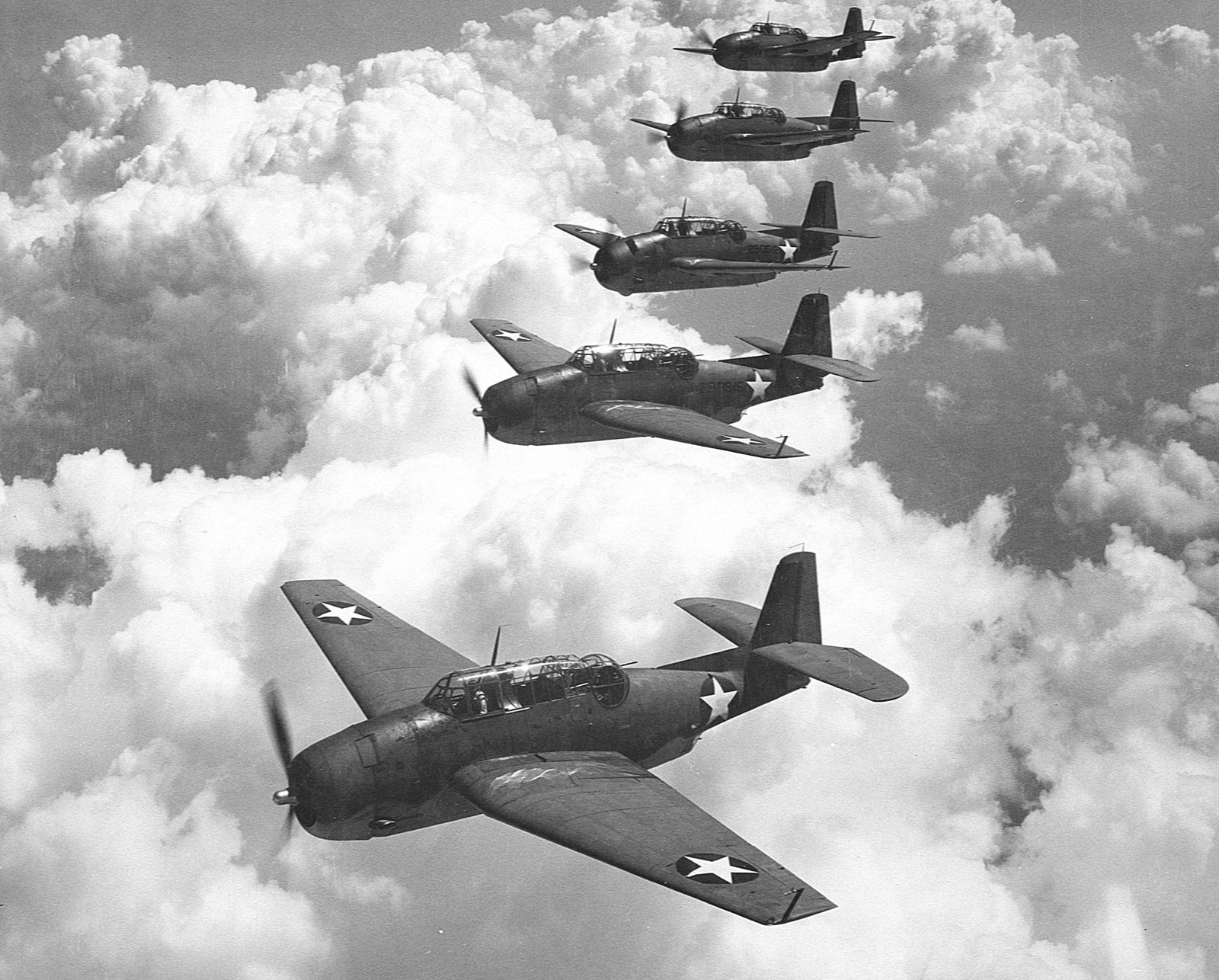
On the afternoon of 5 December 1945, five U.S. Navy torpedo bombers took off from Fort Lauderdale, Florida, on a routine training flight over the Atlantic. They were called Flight 19. Somewhere out over the water, something went wrong. The flight leader's radio messages, picked up faintly by ground stations, grew increasingly confused. He seemed convinced his compasses were failing and that he was somewhere he was not. As the afternoon wore into a stormy night, the planes flew on, lost, until presumably they ran out of fuel and went into the sea. Fourteen men were never found. Worse, one of the flying boats sent to search for them also vanished, apparently exploding in mid-air. Six aircraft, gone in a single evening. It is the founding tragedy of a legend and, as we'll see, also a good illustration of how a legend gets built.
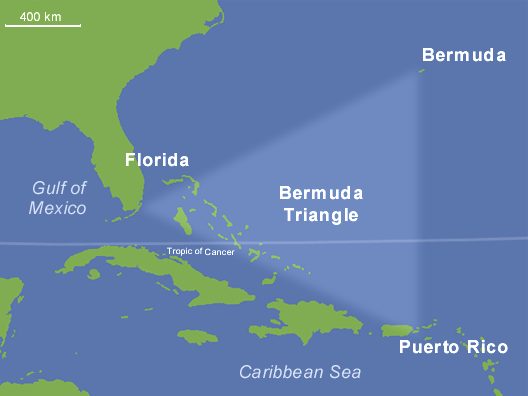
The "Bermuda Triangle" is a loosely defined patch of the western Atlantic, usually drawn between Miami, Bermuda and Puerto Rico, where ships and aircraft are said to disappear at an unusual rate, sometimes under mysterious circumstances. Over the decades it has been blamed on everything from freak weather to magnetic anomalies to the lost city of Atlantis to alien abduction. It is one of the most commercially successful mysteries of the twentieth century. It is also, when you actually look at the numbers, very probably not a mystery at all. Let's take it seriously enough to take it apart.
How the legend was built
The idea of a sinister triangle is younger than most people assume. Scattered reports of strange disappearances in the area circulated in the 1950s, but the phrase "Bermuda Triangle" itself was coined by the writer Vincent Gaddis in a 1964 article for the pulp magazine Argosy, later expanded into a book. The legend then exploded in 1974 with Charles Berlitz's bestseller The Bermuda Triangle, which sold millions of copies and cemented the area's spooky reputation in popular culture. Berlitz strung together a long list of vanished ships and planes and implied that conventional explanations couldn't account for them.
The trouble is that this whole edifice was built on storytelling, not data. And in 1975 a librarian named Lawrence Kusche did something nobody promoting the mystery had bothered to do: he went back to the original sources (newspaper archives, Lloyd's of London records, official accident reports, weather data) and checked the famous cases one by one. His book, The Bermuda Triangle Mystery — Solved, is still the most important thing ever written on the subject, and its conclusion was devastating.
"The Legend of the Bermuda Triangle is a manufactured mystery... perpetuated by writers who either purposely or unknowingly made use of misconceptions, faulty reasoning, and sensationalism."— Lawrence David Kusche, The Bermuda Triangle Mystery — Solved, 1975
Kusche found, again and again, that the "mysterious" cases fell apart on inspection. Some ships said to have vanished in calm weather had in fact sunk in violent storms; the mystery writers simply didn't mention the storms. Some disappearances hadn't even happened in the Triangle at all; one supposedly lost vessel had gone down in the Pacific. In several cases the wreckage had in fact been found, or a perfectly ordinary cause established, and the writers left the inconvenient resolution out. The pattern wasn't supernatural. The pattern was sloppy and selective storytelling.
What really happened to Flight 19
Take the founding case. Flight 19 is tragic and the loss was real, but it is not inexplicable. The flight was a training exercise, and the leader, Lieutenant Charles Taylor, was an experienced pilot who was nonetheless unfamiliar with that particular stretch of coastline. The surviving radio transcripts strongly suggest he became disoriented and convinced he was over the Florida Keys, to the south, when he was most likely over the Bahamas, to the east. Believing he needed to fly one way to reach land, he may in fact have led the flight further out to sea.
The weather deteriorated into a stormy, rough night, the planes had limited fuel, and ditching a torpedo bomber in a heavy sea at night is very nearly a death sentence. The aircraft would have sunk quickly in deep water. As for the rescue plane that also vanished, a PBM Mariner flying boat, these aircraft were notorious for accumulating fuel vapours and were nicknamed "flying gas tanks." A nearby ship reported seeing an explosion and an oil slick in the water around the time it would have been in the area. There is nothing in the Flight 19 story that requires anything beyond bad weather, navigational confusion, darkness and one probable mechanical explosion. It is a heartbreaking accident, not a portal to another dimension.
"Ships and planes vanish in the Bermuda Triangle at a wildly abnormal rate, with no wreckage and no explanation."
Insurers and coast guards who actually track losses find nothing statistically unusual about the area. Lloyd's of London and the U.S. Coast Guard have both stated they see no higher rate of incidents there than in any other heavily travelled stretch of ocean. The region is busy, stormy and crossed by powerful currents, which is plenty to explain the losses.
The statistics nobody wants to hear
This is the fact that demolishes the whole thing. The Bermuda Triangle sits across some of the busiest shipping and flight routes on the planet: the approaches to Florida, the Gulf of Mexico, the Caribbean and the eastern seaboard of the United States. Enormous numbers of vessels and aircraft pass through it every single year. If you have a lot of traffic, you will have a lot of accidents, in absolute terms, simply because there's more of everything to go wrong.
The relevant question is not "how many losses happen in the Triangle?" but "are losses there more frequent than you'd expect for that much traffic, in waters like that?" And when the people who are paid to care about this, marine insurers and coast guards, have looked, the answer has consistently been no. Lloyd's of London, which has every financial incentive to charge higher premiums for dangerous waters, has reported that the area is no more hazardous than other busy ocean regions, and does not treat it as a special risk zone. The U.S. Coast Guard has taken the same line for decades. The "abnormal" loss rate, the engine of the entire legend, appears not to exist.
The Bermuda Triangle isn't even officially a place. The U.S. Board on Geographic Names does not recognise it as a region, and the U.S. Navy formally states that it does not believe the Triangle exists as a special hazard. Insurers charge no premium for crossing it. The most famous dangerous waters in the world are, as far as the relevant authorities are concerned, ordinary ocean.
The mundane causes that actually fit
If you want to know why a ship or plane might be lost in this particular region, you don't need anything exotic. You need geography and weather, both of which the area has in abundance.
First, the weather. The western Atlantic and Caribbean form one of the most violent weather zones on Earth. This is hurricane country, with a long season of tropical storms. The region is also prone to sudden, intense local squalls and, in the Gulf Stream area, to rapidly changing conditions that can whip up dangerous seas with little warning. A 2016 popular claim about "hexagonal clouds" producing "air bombs" was widely overstated and disputed by meteorologists, but the underlying point stands: the weather out there can be treacherous and quick to turn.
Second, the Gulf Stream. This is a powerful, fast-moving ocean current that runs right through the area, in places moving at several knots. It can carry a disabled boat, or its wreckage and any survivors, many miles from where an accident occurred, often surprisingly fast. That alone helps explain a recurring feature of the legend: that wreckage is supposedly "never found." If a small vessel sinks and the Gulf Stream scatters and sweeps away the debris before searchers arrive, the absence of wreckage isn't mysterious. It's exactly what a strong current does.
Third, the geography. The area includes shallow, treacherous shoals and reefs around the Bahamas alongside some of the deepest underwater trenches in the Atlantic, plunging thousands of metres down. A ship or aircraft that goes down in deep water there may simply be unrecoverable with the technology and search effort available, not because of a paranormal force, but because the ocean is very, very deep.
And then there's plain human error
One more unglamorous factor deserves its place: people make mistakes, especially amateurs. The Triangle's waters are hugely popular with private pleasure boaters and small-aircraft pilots, including inexperienced ones venturing out from Florida. Running out of fuel, navigational errors, taking a small boat into weather it can't handle, mechanical failures left unaddressed: these are the bread and butter of ordinary maritime and aviation accidents everywhere in the world. Concentrate a lot of inexperienced operators in a busy, weather-prone region with deep water and strong currents, and you will produce a steady trickle of unexplained-looking losses without anything supernatural being involved at all.
What about the compasses and the magnetic anomaly?
A popular strand of the legend claims the Triangle is one of the few places on Earth where a magnetic compass points to "true north" rather than magnetic north, supposedly causing dangerous navigational confusion. There's a kernel of real science buried in this, but it's been mangled. The difference between true north and magnetic north is called magnetic variation (or declination), and it changes depending on where you are on the globe. There is a line, the agonic line, along which variation is zero and a compass does point to true north. That line does pass through parts of the western Atlantic at various times, but it also runs across enormous stretches of land and sea elsewhere, including straight through the middle of the United States and across the Pacific, with no spooky reputation attached. A zero magnetic variation is something navigators correct for routinely; it does not make compasses spin or fail. The "magnetic mystery" is a real phenomenon described inaccurately and then inflated.
Among serious scientists and investigators, there is very little disagreement that the Triangle is not a real anomaly. Kusche's debunking has held up for fifty years. Where reasonable people still differ is on individual cases. A handful of disappearances, such as that of the cargo ship USS Cyclops in 1918, which vanished with over 300 men and no distress call, have never been definitively explained, and researchers still propose competing mechanical, structural and weather-related causes. "Unexplained" in these cases means "we lack evidence," not "physics broke." That distinction decides everything.
The Cyclops and the limits of knowing
It's only fair to give the puzzling cases their due, because pretending everything is tidily solved would be its own kind of dishonesty. The most substantial real mystery associated with the area is the loss of the USS Cyclops, a large U.S. Navy collier that disappeared in March 1918 while carrying a heavy cargo of manganese ore from Brazil toward Baltimore. More than 300 people were aboard. The ship sent no distress signal and no confirmed trace of her has ever been found. It remains the single largest non-combat loss of life in U.S. Navy history.
But "unexplained" is not the same as "inexplicable." The Cyclops was overloaded, one of her two engines was damaged, and she was carrying a dense cargo that may have shifted or been improperly distributed; she sailed into an area that can produce sudden severe weather. A structural failure, a capsizing in heavy seas, or a sudden catastrophic event that gave no time to radio for help are all entirely plausible. We don't know exactly what happened because the ship was never found and the sea keeps its secrets. That's a gap in our evidence, not a hole in physics. Every era of seafaring has lost ships without explanation; the Triangle's only real distinction is that someone decided to brand the gaps.
Why the myth survives anyway
If the mystery was thoroughly debunked back in 1975, why is the Bermuda Triangle still a household name, still turning up in documentaries and listicles and children's books of "unsolved mysteries"? Partly because debunking is far less fun than mystery, and far less profitable. A book that says "actually, it's just weather, currents and statistics" will never outsell one promising lost civilisations and alien gateways. The legend also has a self-sealing quality: every new ordinary accident in a busy region gets folded into the myth as fresh "evidence," while the long history of debunking is ignored.
There's also something very human in it. We are pattern-seeking animals, and we find randomness unsatisfying. The idea that a relative, a crew, a planeload of people simply vanished into ordinary, indifferent ocean is harder to sit with than the idea that they were taken by some grand, named force. A mystery, paradoxically, can be more comforting than a tragedy, because a mystery implies a hidden order. The honest conclusion about the Bermuda Triangle is less dramatic and, I'd argue, more interesting: there is no Triangle, in the sense the legend means. There is only a large, busy, stormy piece of ocean, and the ordinary, sometimes heartbreaking ways that the sea has always claimed the people who cross it. The real mystery is why we ever needed it to be anything more.
Image: U.S. Navy TBM Avenger torpedo bombers in flight, the type lost as Flight 19 in December 1945 (U.S. Navy, public domain, via Wikimedia Commons).
Read next: Nazi Wonder Weapons: From the V-2 to the Orbital Sun Gun and Franklin Expedition: The Ships Found by Believing the Inuit.
Sources & further reading
- Lawrence David Kusche, The Bermuda Triangle Mystery — Solved (Harper & Row, 1975) — the definitive investigative debunking.
- U.S. Coast Guard, official statement on the Bermuda Triangle; U.S. Navy, Naval History and Heritage Command, "The Bermuda Triangle" fact file.
- Charles Berlitz, The Bermuda Triangle (1974) — the bestseller that popularised the legend, useful as a primary source on the claims themselves.
- National Oceanic and Atmospheric Administration (NOAA), "Does the Bermuda Triangle really exist?" public information page.
- Encyclopaedia Britannica, "Bermuda Triangle" and "Flight 19."