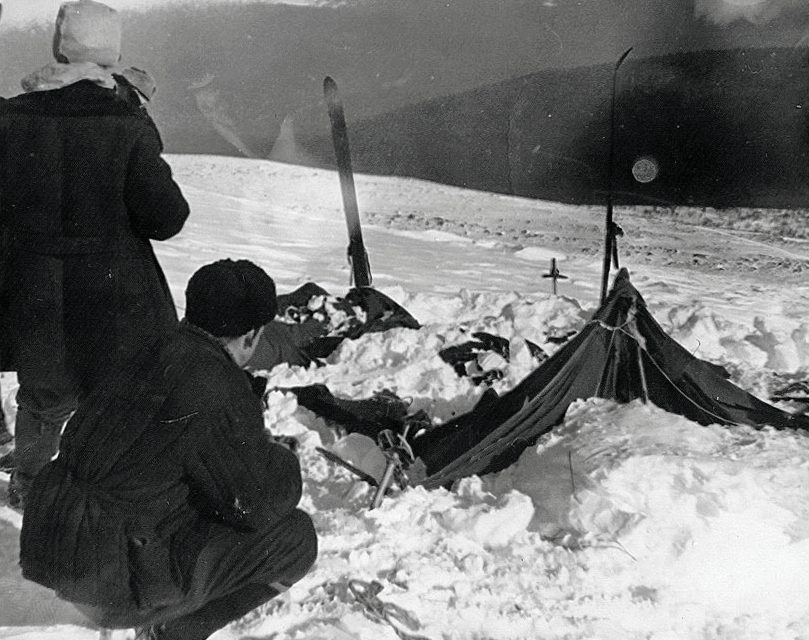
When rescuers finally reached the abandoned tent on the slope of a mountain the local Mansi people called Kholat Syakhl, which translates, with grim aptness, as "Dead Mountain", they found it half-buried in snow and slashed open from the inside. The nine experienced hikers who had pitched it were gone. Their boots and coats were still inside. Outside, footprints led downhill toward the treeline, made by people in socks or bare feet, into a Siberian February night where the temperature was around minus 25 degrees Celsius. Over the following weeks, searchers found the bodies, one by one, in conditions that made no obvious sense. For more than sixty years, no one could say with confidence what had killed them. That, more than anything, is why the Dyatlov Pass incident became one of the longest-running mysteries of the twentieth century.
The case has attracted a staggering amount of speculation: secret weapons tests, Soviet cover-ups, escaped prisoners, yetis, aliens. Most of it is noise. But underneath the noise is a real tragedy with strange features, and in recent years a serious scientific explanation has emerged that accounts for the strangeness without resorting to anything paranormal. It's worth walking through carefully, separating what we actually know from what people have imagined.
The expedition
In late January 1959, a group of ten students and graduates, mostly from the Ural Polytechnic Institute in Sverdlovsk (now Yekaterinburg), set out on a long cross-country ski trek through the northern Urals. They were not amateurs. These were fit, trained, experienced winter hikers, attempting a demanding route that would have earned them the highest Soviet hiking certification. The group was led by 23-year-old Igor Dyatlov, after whom the pass and the whole affair are now named.
One member, Yuri Yudin, turned back early because of illness. That stroke of luck left him the sole survivor and, for decades afterward, a haunted witness to a trip he hadn't finished. The remaining nine pressed on. From their diaries and photographs, recovered later, we can reconstruct their journey up to the evening of 1 February 1959, when they pitched their tent on an exposed slope of Kholat Syakhl rather than descending to the shelter of the forest below. Pitching there, on open ground in worsening weather, was an unusual choice and has itself been part of the puzzle, though experienced hikers sometimes camp high deliberately to avoid losing hard-won altitude.
And then the diaries stop. Whatever happened, happened that night.
What the searchers found
When the group failed to return or send word, a search was launched in late February. The scene that searchers uncovered over the following weeks is the heart of the mystery, so it's worth setting it out plainly.
The tent was found on the slope, partially collapsed and covered in snow. It had been cut open from the inside: the hikers had sliced their way out rather than using the entrance. Most of their warm clothing, footwear and equipment was left behind. A line of footprints led away downhill toward the forest, about 1.5 kilometres below, made by people who were barefoot or in socks or a single shoe.
At the treeline, near the remains of a small fire under a large cedar, searchers found the first two bodies, dressed only in underclothes. Three more, including Dyatlov himself, were found at intervals between the cedar and the tent, in postures suggesting they had been trying to climb back up toward the camp when they died. All five of these appeared to have died of hypothermia, which, in the cold and underdressed, is exactly what you'd expect.
The last four bodies were not found until May, when the snow melted. They lay in a ravine some distance further into the forest, under several metres of snow. And it was these four that turned a sad accident into a lasting enigma.
The official Soviet investigation in 1959 closed the case with one of the strangest verdicts in the history of forensics. It concluded that the hikers had died from a "compelling natural force" that the party had been unable to overcome. The files were then classified and effectively buried for decades, which, predictably, did far more to fuel conspiracy theories than any specific finding ever could.
The injuries that fed the conspiracies
The four bodies in the ravine showed severe physical trauma. Two had major chest fractures; one had a serious skull fracture. The forensic examiner reportedly compared the force required to cause such injuries to that of a car crash. And yet there were no corresponding external wounds, no obvious cuts or bruising on the skin above the broken bones in the way you might expect from a beating. One of the bodies, that of Lyudmila Dubinina, was missing her tongue, eyes and some soft facial tissue.
This combination of massive internal injuries without external marks, a missing tongue, people fleeing half-dressed into lethal cold, and a tent cut open from within is what generated decades of lurid theories. The skin of some bodies was described as having an orange or tanned tint, and traces of radioactivity were reportedly found on some clothing, both of which got woven into stories of secret weapons and radiation. So let's address those strange details directly, because each has a fairly grounded explanation.
The missing soft tissue (tongue, eyes, lips) is almost certainly the result of ordinary decomposition and scavenging by small animals and the action of water, given that Dubinina's body lay face-down in or near running water under snow for months. It is a grim but well-understood post-mortem process, not evidence of an attacker. The orange skin tone is a known effect of bodies exposed to cold and the elements over time. And the radioactivity, on close reading of the case, was limited and could plausibly relate to camping-lantern mantles or the ordinary background of the era; it was never the smoking gun it's often presented as. The hard problem is the trauma: the broken ribs and skull. That needed an explanation, and for sixty years it didn't really have a satisfying one.
Where opinion splits: For decades the field split into camps. Some pointed to an avalanche, but veteran searchers objected that the slope's angle looked too gentle, no classic avalanche debris was seen, and the tent, though damaged, was still partly standing. Others favoured infrasound from wind generating panic, a katabatic windstorm, or simple misadventure. A noisy fringe insisted on military tests or cover-ups. The avalanche idea kept being raised and kept being dismissed on the grounds that the physical evidence didn't seem to fit. Resolving that objection is exactly what the recent science set out to do.
The 2021 breakthrough: a very unusual avalanche
In 2019, partly in response to renewed public interest, Russian authorities reopened the case and again concluded that an avalanche was the most likely cause. But it was two scientists working independently, publishing in 2021, who finally gave that explanation real physical teeth and addressed the long-standing objections head-on.
Alexander Puzrin of ETH Zürich and Johan Gaume of EPFL in Lausanne, specialists in snow mechanics and avalanche dynamics, built detailed models of the specific conditions on Kholat Syakhl that night. Their proposal was not a classic, roaring avalanche but a small, delayed slab avalanche, and the details matter because they resolve almost every objection that had killed the avalanche theory before.
Here is the mechanism they reconstructed. To pitch their tent on the windswept slope, the hikers cut into the snow, making a flat shelf and effectively carving a step into the hillside, with a wall of snow above them on the uphill side. The slope looked gentle on the surface, but beneath a layer of wind-deposited snow lay older, weaker snow. Through the night, strong katabatic winds (cold air pouring downhill) continued to load fresh snow onto the slope above the cut. The team's modelling showed that the cut the hikers themselves had made, combined with this continued snow loading and the particular layered structure of the snowpack, could destabilise a relatively small, dense slab of snow many hours after the tent was pitched. That slab could then slide down and strike the people lying in the tent.
"The truth, of course, is that no one really knows what happened that night. But we do provide strong quantitative evidence that the avalanche theory is plausible."— Alexander Puzrin, on the 2021 study he co-authored with Johan Gaume, published in Communications Earth & Environment
Why a small slab explains the broken bones
The cleverest part of the Gaume–Puzrin work addresses the very thing that had always seemed to rule avalanches out: how could a small snow slab cause car-crash injuries while leaving no external wounds, when avalanche victims usually suffocate rather than break their ribs?
To answer this, the researchers reached for an unexpected source. They reportedly drew on crash-test data, including animation work originally developed for a Disney film, to model how a rigid block of dense snow striking a human body lying on a hard, uneven surface would distribute force. Their conclusion was that a heavy slab landing on people who were lying down on the unyielding floor of the snow shelf, possibly on top of their stiff skis and gear, could indeed generate enough localised force to fracture ribs and skulls. The bodies, pinned between the falling slab above and the hard surface below, would absorb the blow internally. Because the load was delivered through a broad mass of snow rather than a sharp impact, you could get severe internal fractures with little external bruising, exactly the otherwise baffling pattern the autopsies described.
The injuries, in other words, may have happened in the tent, not in the ravine where the bodies were eventually found. That single insight reorders the whole sequence of events into something coherent.
A coherent, tragic sequence
Put together, the reconstruction that now best fits the evidence runs roughly like this. The hikers settled into their tent on the cut shelf for the night. Hours later, in the dark and the wind, a slab of snow released from the loaded slope above and slid onto the tent, injuring several of them seriously (broken ribs, at least one fractured skull) and threatening to bury them all. In a panic, unable to dig out the buried entrance, they cut their way out through the fabric and dragged their injured companions away from the slope, downhill toward the only shelter available: the forest treeline more than a kilometre below.
There, in the dark and the appalling cold, underdressed because they'd had no time to grab boots and coats, they tried to survive. They lit a small fire under the cedar. Some, perhaps the most badly hurt or the first to fail, died of their injuries and the cold near the fire. Others tried to climb back to the tent for supplies and died of hypothermia on the way, which matches the bodies found in climbing postures between the cedar and the camp. The last group, including the worst-injured, sheltered in or fell into the ravine, where they too died and were buried by snow that wouldn't melt until spring. Hypothermia produces well-documented strange behaviour, including "paradoxical undressing," where sufferers in the final stages feel a false sensation of heat and remove their clothing. That may explain why some were found with so little on.
What remains uncertain
It would be dishonest to oversell this. The 2021 study is a model and an argument, not a confession or a recovered video. The authors themselves are careful to say they have demonstrated that the slab-avalanche scenario is physically plausible and consistent with the evidence, not that they've proved it beyond all doubt. Some experienced mountaineers still find aspects of the avalanche picture unconvincing, and certain details, like the exact timeline and why an experienced group made some of the choices it did, will probably never be fully nailed down. The people who could tell us are dead, the original investigation was incomplete by modern standards, and six decades have passed.
But "we can't be 100 percent certain" is a very different claim from "this is unexplainable." For the first time, there is a single, physically grounded scenario that accounts for the cut tent, the half-dressed flight, the hypothermia deaths, the bizarre internal injuries without external wounds, and the missing soft tissue, all without invoking a single secret weapon, monster, or alien. The strange details that fed sixty years of conspiracy theories turn out, one by one, to have natural explanations. That doesn't make the deaths any less terrible. Nine capable young people died frightened and in pain on a freezing mountainside, and the slow accumulation of ordinary misfortunes that killed them is, in its way, more sobering than any conspiracy.
"The Dyatlov hikers were killed by something unexplainable — a secret weapon, a monster, or a force science still can't account for."
A 2021 study by avalanche scientists Johan Gaume and Alexander Puzrin showed that a small, delayed slab avalanche, triggered partly by the hikers cutting into the slope to pitch their tent, could plausibly explain the severe internal injuries, the panicked flight, and the hypothermia deaths. The "impossible" details each have natural explanations.
Why this one still grips us
The Dyatlov Pass incident has everything a great mystery needs: a remote and forbidding setting, a sinister-sounding mountain name, young and sympathetic victims, a secretive Soviet state, and a puzzling forensic picture that resisted explanation for two generations. It's no wonder it spawned books, films and an entire subculture of investigation. The classified files and the inconclusive original verdict practically guaranteed that the gaps would be filled with the darkest possible imaginings.
What the modern science offers is something quieter but more valuable: a way to honour what actually happened to those nine people rather than turning them into props in a ghost story. The most likely truth is that they were skilled and careful, that they made a reasonable choice that, through a chain of bad luck and hidden snowpack physics, turned catastrophic, and that they then fought hard to survive a situation that had become unsurvivable. The mountain didn't curse them. The snow above their tent did what snow occasionally does, in a way nobody at the time understood well enough to predict. Understanding it now is the closest thing to justice the dead are likely to get.
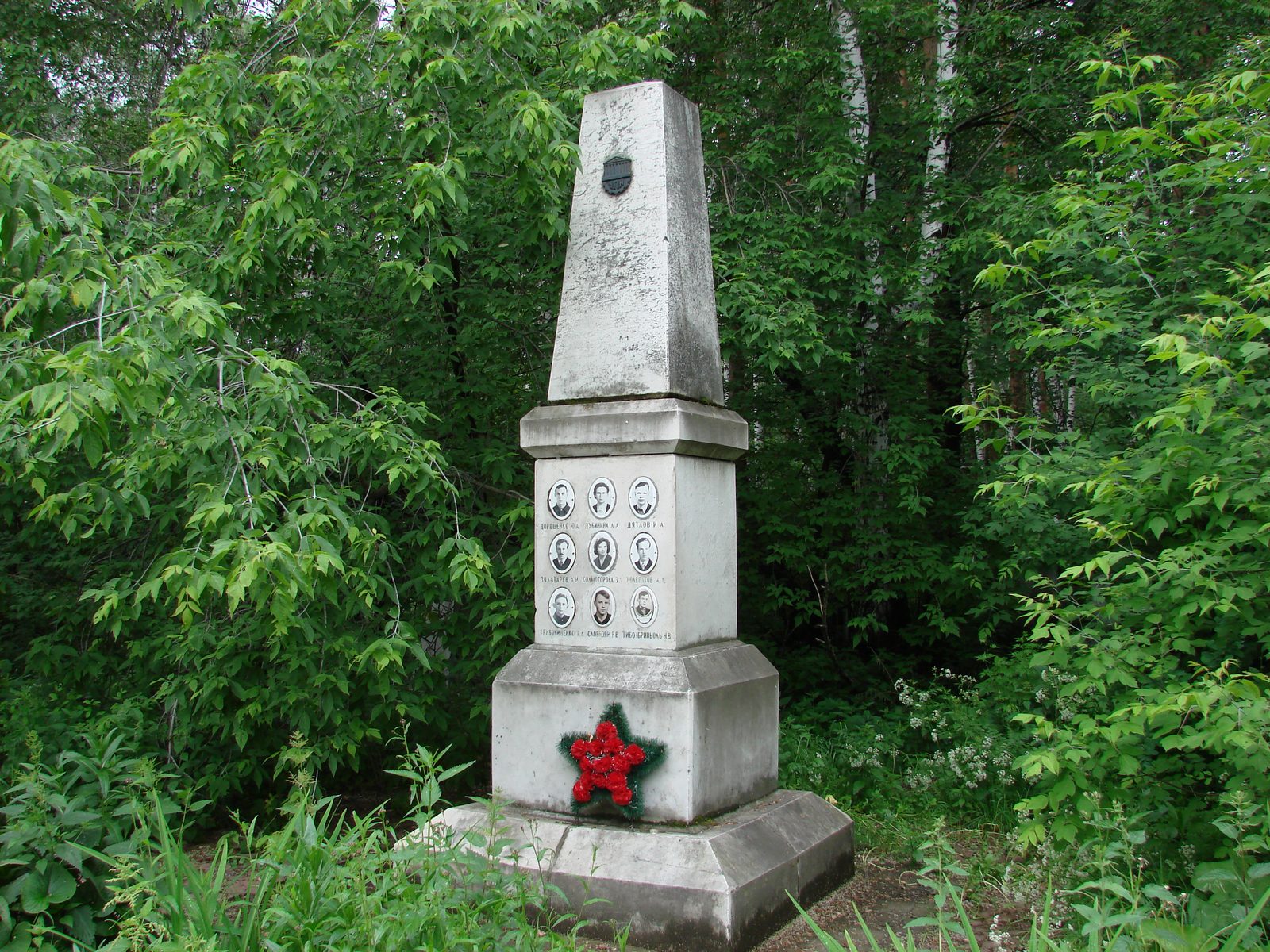
Image: a memorial photograph of the Dyatlov group during their 1959 expedition, from the recovered camera films later released by the investigation (public domain, via Wikimedia Commons).
Read next: Roopkund: The Himalayan Lake of a Thousand Skeletons and Ötzi the Iceman: The Alpine Murder That Took 5,300 Years to Solve.
Sources & notes
- Johan Gaume and Alexander M. Puzrin, "Mechanisms of slab avalanche release and impact in the Dyatlov Pass incident in 1959," Communications Earth & Environment (Nature Portfolio, 2021).
- Donnie Eichar, Dead Mountain: The Untold True Story of the Dyatlov Pass Incident (Chronicle Books, 2013).
- Russian Prosecutor General's Office, statements on the 2019–2020 reinvestigation concluding an avalanche was the likely cause.
- Robin George Andrews, "Has Science Solved One of History's Greatest Adventure Mysteries?", National Geographic (2021) — reporting on the Gaume–Puzrin study.
- Encyclopaedia Britannica, "Dyatlov Pass incident."