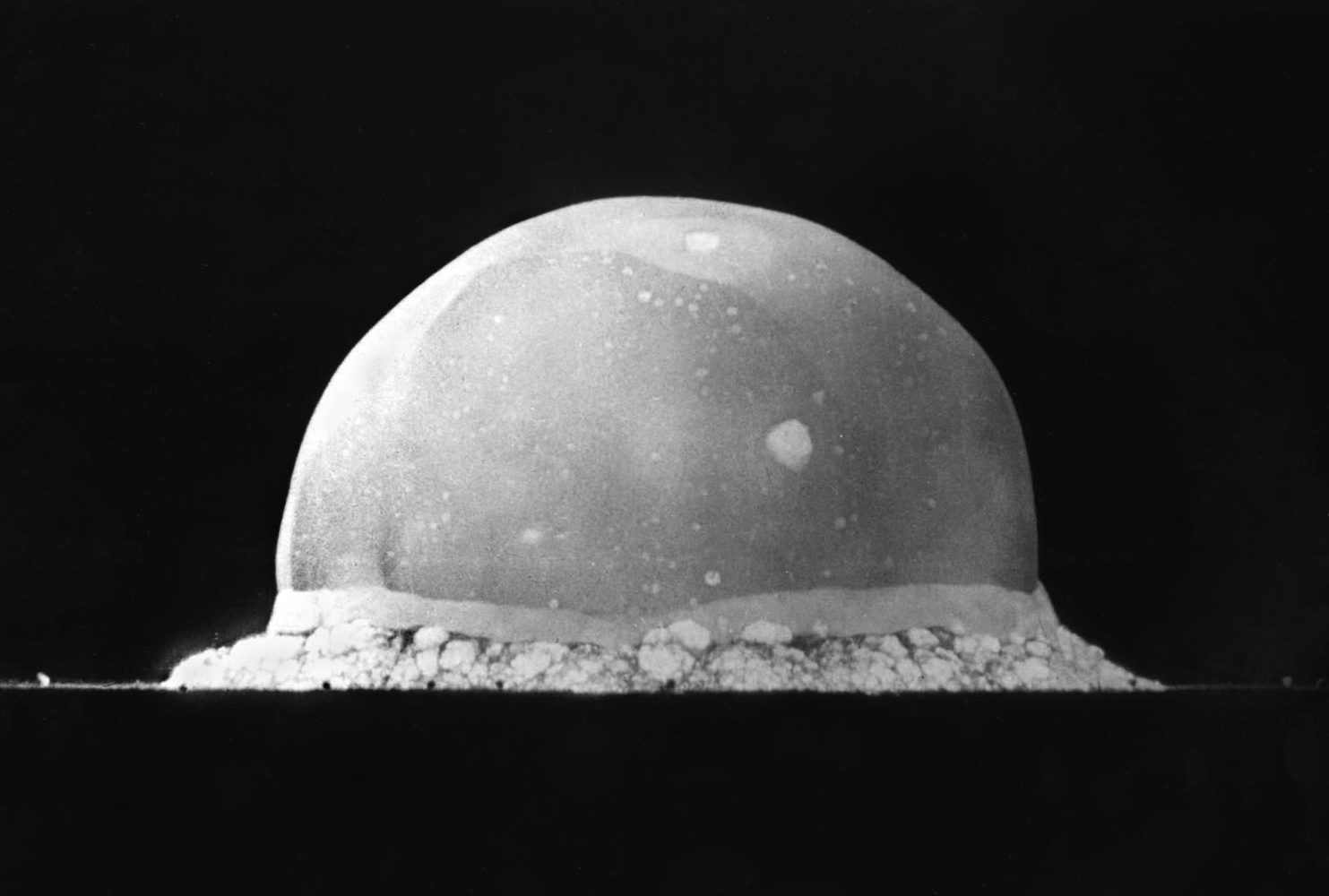
At 5:29 in the morning on 16 July 1945, in a stretch of New Mexico desert the Spanish had once called the Jornada del Muerto — the Journey of the Dead Man — the sky turned a colour nobody in the history of the world had ever seen before. Scientists lying face-down in trenches miles away felt a wave of heat on the backs of their necks, like opening an oven door. A few seconds later the sound arrived, rolling across the basin and bouncing off the distant mountains. The first nuclear weapon had worked. The men who built it didn't cheer, not at first. Mostly they just stared.
The test was code-named Trinity, and it was the culmination of the most expensive, most secret, and arguably most consequential scientific project ever undertaken. We call it the Manhattan Project, though almost none of the real work happened in Manhattan. In the space of barely three years, a sprawling, improvised empire of laboratories and factories turned a line of abstract physics into a device that could erase a city. How that happened — and what it cost the people who made it — is a story that still casts a long shadow over the world we live in.
The fear that started it all
The Manhattan Project was born out of dread, not ambition. In late 1938 two chemists in Berlin, Otto Hahn and Fritz Strassmann, split the uranium atom, and the physicist Lise Meitner — by then a refugee from Nazi Germany — worked out what had really happened and gave the process its name: fission. The implications spread through the physics community fast. If splitting one atom released energy and spare neutrons, and those neutrons split more atoms, you might get a self-sustaining chain reaction. And a chain reaction meant, in principle, a bomb of unimaginable power.
What made this terrifying rather than merely interesting was the calendar. It was 1939. Germany, where the discovery had been made, was sliding toward war. A handful of émigré scientists who had fled fascism, including the Hungarian Leó Szilárd, became convinced that Hitler might get such a weapon first. Szilárd drafted a letter, persuaded Albert Einstein to sign it because Einstein's name would actually reach the president, and in October 1939 it landed on Franklin Roosevelt's desk. The letter warned that "extremely powerful bombs of a new type" might now be possible. Roosevelt's response was cautious at first, but the seed was planted.
From a committee to an empire
For a couple of years American research crept along at the pace of an academic side-project. What changed everything was the entry of the United States into the war after Pearl Harbor, combined with a British report — the Maud Committee's findings — concluding that a uranium bomb was not just theoretically possible but probably practical within a few years. In 1942 the effort was handed to the U.S. Army Corps of Engineers, whose New York office gave the project its deliberately bland cover name, the "Manhattan Engineer District." The name stuck, even as the work scattered across the continent.
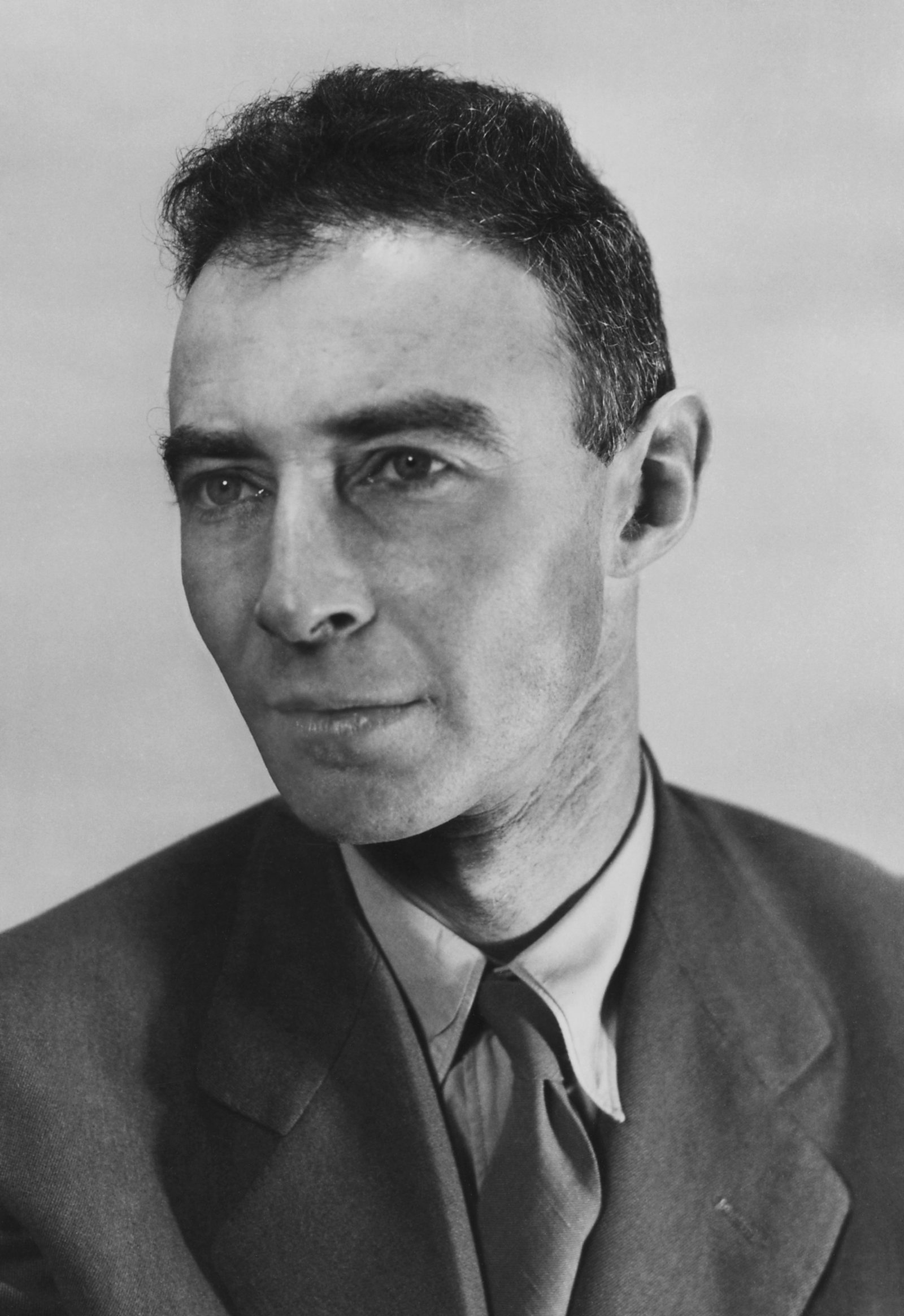
The man put in charge was Brigadier General Leslie Groves, a blunt, demanding engineer fresh from building the Pentagon. Groves wanted results and had little patience for academic dithering. His first major decision was choosing a scientific director, and his choice surprised almost everyone: J. Robert Oppenheimer, a brilliant, chain-smoking theoretical physicist with left-wing associations, no Nobel Prize, and no experience running anything larger than a seminar. It was a gamble. It turned out to be inspired.
At its peak the Manhattan Project employed around 130,000 people and cost roughly two billion dollars in 1940s money — tens of billions today. Yet the secrecy was so tight that the overwhelming majority of those workers had no idea what they were actually building. Many only learned the purpose of their labour from the newspapers, after Hiroshima.
Three secret cities
One of the strangest facts about the project is that it conjured whole towns out of nothing, none of which appeared on any map. At Oak Ridge, Tennessee, vast plants used staggering amounts of electricity to separate the rare, fissionable uranium-235 from the far more common uranium-238 — a fiendishly difficult task because the two isotopes are chemically identical and differ only slightly in weight. At Hanford, Washington, enormous reactors were built to manufacture an entirely new element, plutonium, which the physicists had realised could also be used in a bomb.
And at Los Alamos, on a remote mesa in New Mexico, Oppenheimer gathered the design team — the men and women who would actually turn this raw material into a working weapon. It was an extraordinary concentration of talent: Enrico Fermi, who had already built the world's first nuclear reactor under a Chicago squash court in 1942; Hans Bethe; Richard Feynman, then a young prankster who amused himself by cracking the safes that held atomic secrets; Niels Bohr; and dozens more. Many were refugees from the very European tyrannies the bomb was meant to defeat.
They lived behind fences, used post-office boxes for addresses, and were forbidden to say the word "atomic" — or even "physicist" — in public. Children born at Los Alamos had the same mysterious birthplace on their certificates: a single PO box in Santa Fe.
Two bombs, two designs
The science split into two parallel problems, because there were two fissionable materials and they behaved differently. The uranium bomb used a "gun-type" design — fire one piece of uranium-235 into another to suddenly assemble a critical mass. It was considered so reliable that it was never even tested before being used; the Hiroshima bomb, "Little Boy," was the first of its kind ever detonated, and it was detonated over a city.
Plutonium was the harder puzzle. It couldn't be used in a gun-type bomb because it would predetonate, fizzling before it fully reacted. The solution was implosion: surrounding a sphere of plutonium with precisely shaped explosive "lenses" that, when fired in perfect synchrony, would crush the core inward and squeeze it to criticality. This was a brutal engineering challenge, and it was the implosion design that the Trinity test was meant to prove. That is why Trinity happened at all — nobody dared use an untested plutonium bomb without seeing one work first.
Trinity
By the summer of 1945 the war in Europe was already over; Germany had surrendered in May, and it later emerged that the German bomb programme had never come close. The original justification — beat Hitler — had evaporated. But the project had its own momentum now, and the war against Japan ground on. The test went ahead.
The tension in those final hours was almost unbearable. There was real uncertainty about whether the device would work at all, and a darker, quieter worry — entertained seriously enough to be calculated and dismissed — that the explosion might somehow ignite the atmosphere. Fermi, coping with stress in his own way, took bets on exactly that, which did not amuse General Groves. When the bomb finally fired, it released energy equivalent to around 20,000 tons of TNT, melting the desert sand into a glassy green mineral later christened "trinitite." The light, witnesses said, was brighter than the midday sun.
"We knew the world would not be the same. A few people laughed, a few people cried. Most people were silent. I remembered the line from the Hindu scripture, the Bhagavad Gita... 'Now I am become Death, the destroyer of worlds.' I suppose we all thought that, one way or another."— J. Robert Oppenheimer, recalling the Trinity test in a 1965 television interview
That line has become the most famous thing Oppenheimer ever said, and it's worth being careful about it. He did not shout it in the desert at the moment of the blast, as some retellings imply. He recounted it years later, in 1965, as the thought that passed through his mind. The director Kenneth Bainbridge put the same feeling more bluntly, turning to Oppenheimer right after the test and saying, "Now we are all sons of bitches." Both reactions, the scriptural and the profane, capture something true about that morning.
Hiroshima, Nagasaki, and the argument that never ends
Less than a month later, on 6 August 1945, the uranium bomb "Little Boy" was dropped on Hiroshima, killing tens of thousands of people instantly and many more in the weeks and years that followed from burns, injury and radiation. Three days after that, on 9 August, the plutonium bomb "Fat Man" — the same implosion design proven at Trinity — destroyed Nagasaki. Japan announced its surrender on 15 August. The Second World War was over.
Why exactly those bombs were used, and whether they needed to be, is one of the most debated questions in modern history, and an honest account has to leave it open rather than pretend it's settled.
Where opinion splits: Did the atomic bombs end the war and save lives, or were they unnecessary? The traditional view holds that the bombs forced a Japanese surrender and spared the enormous casualties of an invasion. Revisionist historians argue Japan was already near collapse and that the Soviet declaration of war on 8 August was at least as decisive, with some suggesting the bombs were aimed partly at intimidating Moscow. The debate involves contested casualty estimates and unknowable counterfactuals, and it has never been fully resolved.
What's not in dispute is the human cost on the ground, which was horrific, and which fell overwhelmingly on civilians. Any clear-eyed history of the project has to hold two things at once: the genuine wartime fear that drove it, and the catastrophe it unleashed.
The makers' second thoughts
Many of the scientists who built the bomb spent the rest of their lives reckoning with it. Leó Szilárd, who had helped start the whole thing, circulated a petition before Hiroshima urging that the bomb not be used on a city without warning; it went nowhere. After the war, Oppenheimer became a prominent voice against the even more powerful hydrogen bomb and for international control of atomic energy. In a famous meeting he told President Truman that he felt he had "blood on my hands," a remark that reportedly disgusted Truman, who afterwards called him a "cry-baby scientist."
It didn't end well for Oppenheimer. In the paranoid climate of the early Cold War, his old left-wing associations were used against him, and in 1954 a security hearing stripped him of his clearance in a proceeding many regard as a political show-trial. The man who had led the project was, in effect, cast out by the government he had served. In 2022, decades after his death, the U.S. Department of Energy formally vacated that 1954 decision, acknowledging the process had been flawed.
"Einstein was the father of the atomic bomb."
Einstein did not work on the Manhattan Project — he was denied a security clearance and was a committed pacifist. His role was a single 1939 letter to Roosevelt, which he later called the "one great mistake" of his life. The bomb's actual architects were people like Oppenheimer, Fermi and Bethe.
What it changed
It's tempting to think of the Manhattan Project purely as the story of a weapon, but its consequences ran wider than that. It established a new and permanent relationship between government, the military, and science — the model of huge, state-funded "big science" that gave us everything from the space programme to particle accelerators. It created the National Laboratories that still exist today. And it taught governments that with enough money, secrecy and talent, the abstract speculations of physicists could be turned into world-altering hardware in a matter of years.
Above all, it opened the nuclear age, and there is no closing it again. The knowledge cannot be un-learned. Within four years the Soviet Union had its own bomb, partly thanks to espionage that had penetrated Los Alamos itself — the physicist Klaus Fuchs, it turned out, had been passing secrets to Moscow the whole time. The arms race that followed put humanity, for the first time, in a position to destroy itself. We have lived under that shadow ever since.
The men in the desert
Standing in that New Mexico morning, the scientists understood, with a clarity that visited very few generations, that they had crossed a line for the whole species. Some made their peace with it; some never did. Oppenheimer, asked later whether he had regrets, gave answers that were tangled and pained, the answers of a man who believed both that the work had to be done and that it had ruined something. "The physicists have known sin," he said in 1947, "and this is a knowledge which they cannot lose."
That, in the end, is what makes the Manhattan Project more than a chapter in the history of physics. It was a moment when human cleverness raced far ahead of human wisdom, and the people who did the racing were the first to feel how vertiginous the gap was. The desert sand turned to glass, and the world it lit up is still the one we're living in.
Image: the Trinity test fireball, photographed 16 milliseconds after detonation, 16 July 1945 (U.S. Government, public domain, via Wikimedia Commons).
Further reading
- Richard Rhodes, The Making of the Atomic Bomb (Simon & Schuster, 1986) — the definitive narrative history.
- Kai Bird and Martin J. Sherwin, American Prometheus: The Triumph and Tragedy of J. Robert Oppenheimer (Knopf, 2005).
- Robert Jungk, Brighter than a Thousand Suns: A Personal History of the Atomic Scientists (1958).
- U.S. Department of Energy, "The Manhattan Project: An Interactive History" and the 2022 order vacating Oppenheimer's 1954 security decision.
- Atomic Heritage Foundation / National Museum of Nuclear Science & History, oral histories and primary-source archives.