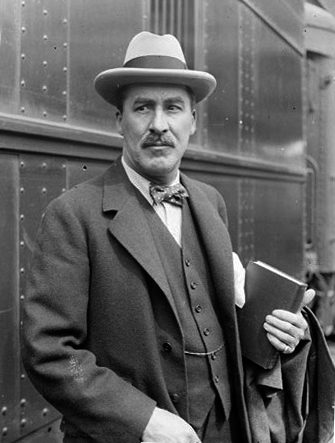
On 26 November 1922, in the Valley of the Kings, Howard Carter chipped a small hole in a sealed doorway, held up a candle, and put his eye to the gap. Hot air escaped, making the flame flicker, and for a long moment he said nothing. Behind him, his patron Lord Carnarvon could bear it no longer and asked, "Can you see anything?" Carter's answer has become one of the most famous lines in the history of archaeology. "Yes," he said. "Wonderful things." Beyond the candlelight, glinting gold everywhere, lay the only near-intact royal tomb ever found in Egypt: the burial of a boy king almost nobody had heard of.
That boy was Tutankhamun, and the irony at the centre of his fame is delicious. In life he was a minor, short-reigning pharaoh whom later Egyptians tried hard to erase from history. In death, precisely because he was forgotten, he became the most famous pharaoh of them all.
A patron running out of patience
The discovery almost didn't happen. Howard Carter had been searching the Valley of the Kings for years, funded by the wealthy English aristocrat Lord Carnarvon, and finding very little. By 1922, most experts believed the valley was exhausted, and that every royal tomb worth finding had already been dug up, often by tomb robbers thousands of years earlier. Carnarvon was losing faith and money, and he told Carter that the coming season would be the last he'd pay for.
Carter went back to a patch of ground he'd never fully cleared, near the entrance to another tomb, where some ancient workmen's huts stood. On 4 November 1922, his crew uncovered a step cut into the rock. Then another, and another: a staircase descending to a sealed, plastered doorway stamped with ancient seals. Carter, with remarkable self-discipline, refilled the stairs and sent a telegram to Carnarvon in England, then waited weeks for him to sail to Egypt before opening it. They broke through together later that month. The last season had produced the find of the century.
Why this tomb survived when others didn't
This is the thing to understand, and it explains everything about why Tutankhamun matters so much. Nearly every other royal tomb in Egypt had been comprehensively looted in antiquity. The fabulous grave goods of the great pharaohs (the Ramesses, the Thutmoses, the most powerful kings) were almost all stripped away by robbers within generations of burial. We know those kings were buried with staggering wealth; we just never got to see it.
Tutankhamun's tomb was different. It had been entered by robbers, probably twice, not long after the burial; there's evidence of hurried disturbance and resealing. But for whatever reason the thieves never cleaned it out, and then the tomb's entrance was buried under rubble and debris, including those workmen's huts built over it during the construction of a later king's tomb. It was effectively hidden and forgotten for over three thousand years.
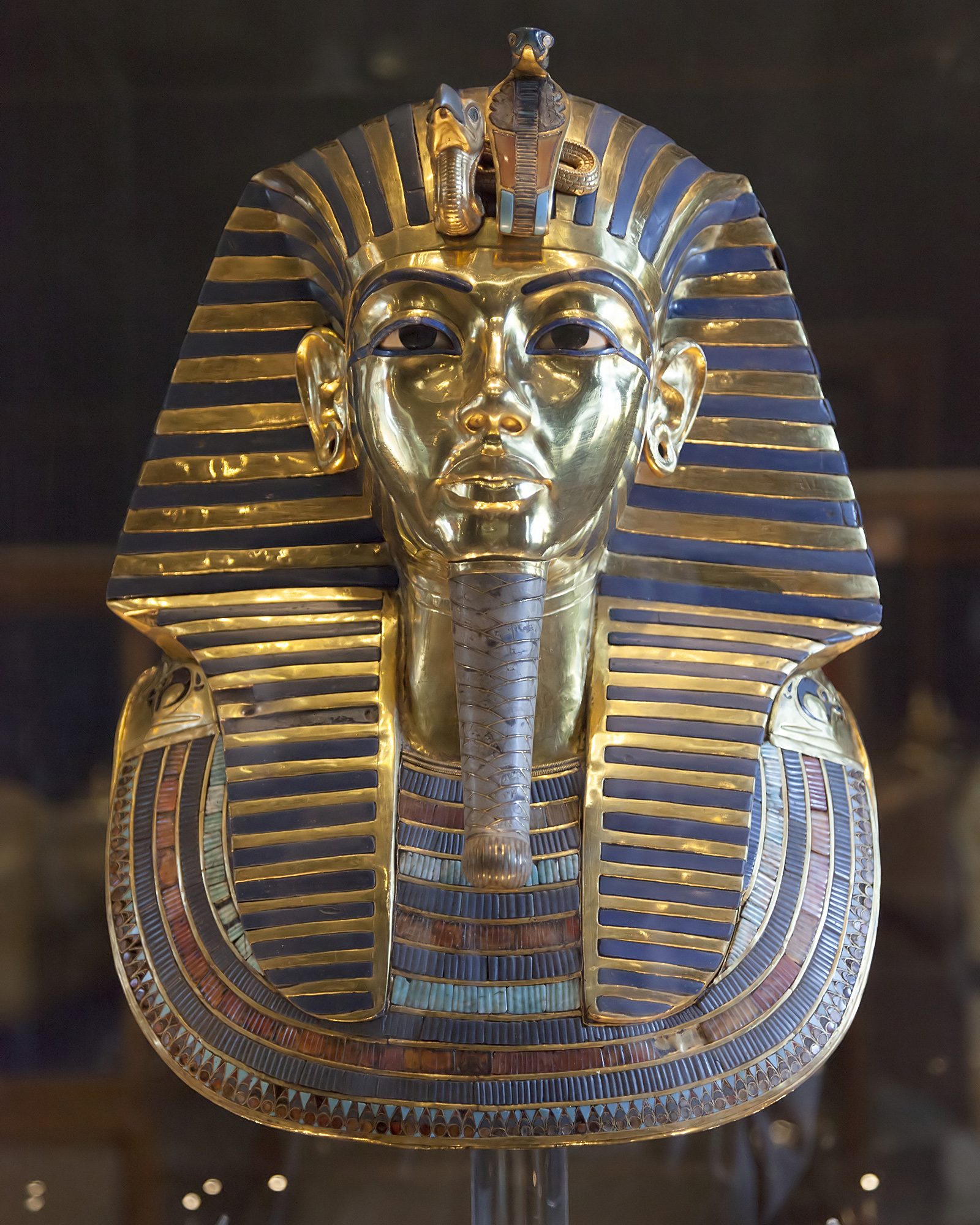
So when Carter opened it, he found something no one had ever seen: a pharaoh's burial more or less as the ancient Egyptians had left it. Around 5,000 objects, packed into four small chambers. Chariots, thrones, beds, weapons, jewellery, statues, board games, food, wine, clothing, and at the heart of it all the king himself, inside a nest of shrines and coffins, his face covered by that breathtaking golden mask.
Tutankhamun's tomb is famous for its riches - but it was actually small and cramped for a pharaoh, and shows signs of a rushed, improvised burial. The theory many Egyptologists favour is that he died unexpectedly young, before his own grand tomb was ready, and was hurried into a smaller tomb meant for someone else. The most intact royal burial we have may be one of the most hastily arranged.
The boy behind the gold
Who was he, actually? For all the treasure, Tutankhamun was a historically minor figure. He came to the throne as a child, probably around the age of nine, and died young, around eighteen or nineteen, after a reign of roughly nine or ten years. He almost certainly didn't make the major decisions of his early reign himself; powerful officials would have governed in his name.
His real historical significance lies in what came just before him. He was very likely the son of the pharaoh Akhenaten, the so-called "heretic king," who had turned Egypt upside down by trying to abolish the traditional gods in favour of the worship of a single deity, the sun-disk Aten, and who had moved the capital to a brand-new city. It was a religious revolution that the powerful priesthoods and much of the country hated.
The young Tutankhamun, or rather his advisers, reversed all of it. His name was even changed: he was born Tutankhaten ("living image of the Aten") and became Tutankhamun ("living image of Amun"), signalling the return of the old god Amun and the traditional religion. He restored the temples, moved the capital back, and undid his father's revolution. And it's because he was associated with that hated heretical period that later pharaohs tried to scrub him, his father, and the whole episode from the official record, which is the very reason his tomb was forgotten and left undisturbed long enough to survive. His obscurity preserved him.
The "curse of the pharaohs"
And now the part everyone really wants to talk about: the curse. The story is that opening Tutankhamun's tomb unleashed a deadly curse on those who disturbed it, killing them off one by one in mysterious circumstances. It is one of the most persistent legends of the twentieth century. It is also, by any sober reading of the evidence, nonsense, but the way it grew is fascinating.
The legend caught fire because of one real death. In April 1923, only a few months after the tomb was opened, Lord Carnarvon died in Cairo. The cause was mundane and well documented: he'd nicked an infected mosquito bite while shaving, and in the pre-antibiotic age the resulting blood poisoning and pneumonia killed him. But the timing was irresistible to the press. Newspapers, hungry for sensation and egged on by popular novelists and spiritualists of the era, ran wild with the idea of an ancient curse striking down those who violated the boy king's rest.
"A pharaoh's curse killed everyone who entered Tutankhamun's tomb."
There was no curse. No ancient curse inscription was found at the tomb threatening intruders. Most people present at the opening lived long, ordinary lives - Howard Carter himself, the one most responsible for disturbing the tomb, died of natural causes in 1939, about 17 years later. Studies of those involved found their lifespans were unremarkable. The "curse" was largely a press invention fed by one well-timed, entirely natural death.
The hard evidence demolishes the legend. Howard Carter, the man who opened the tomb, handled the mummy, and led the whole operation (exactly the person a curse should have struck first), lived another seventeen years and died of cancer in 1939, in his mid-sixties. Researchers who later looked at the people present at the tomb's opening or the unwrapping of the mummy found that, on the whole, they lived perfectly normal lifespans. There was no statistical pattern of early death at all. And no actual curse text was ever found inside the tomb threatening intruders; that detail was simply made up.
"At first I could see nothing, the hot air escaping from the chamber causing the candle flame to flicker, but presently, as my eyes grew accustomed to the light, details of the room within emerged slowly from the mist, strange animals, statues, and gold - everywhere the glint of gold."— Howard Carter, The Tomb of Tut-ankh-Amen (1923), describing the first glimpse inside
Cause of death
If there was no curse, what did kill Tutankhamun himself, so young? This remains one of the real open questions, and it's where modern science has done serious work on the mummy through X-rays, CT scanning, and DNA analysis.
What killed Tutankhamun is still debated. Early speculation about a blow to the head (suggesting murder) has been largely set aside; the skull damage is now generally attributed to the embalming process or Carter's rough handling of the mummy. CT and DNA studies have pointed instead to a badly broken leg, possible bone disease, and malaria infection - perhaps a combination that overwhelmed a frail young man. He also shows signs of physical impairments, possibly from his family's heavy inbreeding. But no single cause is universally accepted, and the picture keeps shifting as techniques improve.
What the scientific studies do suggest is a less heroic figure than the golden mask implies. The DNA and imaging point to a young man who may have walked with a cane (several were found in his tomb), who had a foot deformity, and whose parents appear to have been brother and sister, the kind of close royal inbreeding that can carry serious health consequences. The famous golden face was idealised, as Egyptian royal art always was. The body inside tells a frailer human story.
The wave of Egyptomania that followed
The discovery landed like a bomb on the wider world, not just on Egyptology. It came at a moment when newspapers and photography could spread images globally almost overnight, and the sheer visual splendour of the finds, that mask above all, triggered a wave of "Egyptomania" that swept through fashion, architecture, jewellery and design in the 1920s. Tutankhamun became a global celebrity three thousand years after his death.
For scholars, the value was beyond price. Because the tomb was so nearly complete, it gave an unparalleled window into exactly how a New Kingdom pharaoh was buried: the rituals, the objects, the layering of shrines and coffins, the food and furniture meant to accompany a king into the afterlife. Almost everything we'd previously known about royal burials had to be reconstructed from looted, fragmentary tombs. Here, suddenly, was the real thing, intact.
And there's a quiet lesson tucked inside the whole story. Tutankhamun was deliberately erased by his own civilisation because of who his father had been, in an attempt to make him vanish from history. It failed in the most spectacular way imaginable. The pharaohs who tried to forget him are far less famous today than the boy they tried to delete. His obscurity, the thing meant to be a punishment, is exactly what saved his tomb from the robbers and handed him, three millennia later, an immortality none of his greater contemporaries got to keep. Wonderful things, indeed.
A 2010 study that put Tutankhamun's mummy through CT scanning and DNA analysis painted a far more fragile picture than the golden mask suggests. The boy king seems to have had a club foot and a bone disorder that would have left him walking with a cane (over a hundred walking sticks were found in his tomb, which suddenly makes sense), and traces of malaria were found in his system. The genetics also pointed to something the dynasty preferred not to advertise: his parents were almost certainly brother and sister. Royal inbreeding, meant to keep the bloodline pure, may have left the most famous pharaoh in history a sickly teenager.
Image: the golden funerary mask of Tutankhamun, Egyptian Museum, Cairo (public domain, via Wikimedia Commons).
Read next: Thutmose II: The First Royal Tomb Found Since Tutankhamun and The Lost Sacred Lake of Karnak: Ritual Waters Buried for Millennia.
Sources & further reading
- Howard Carter and A. C. Mace, The Tomb of Tut-ankh-Amen (3 vols., 1923-1933) — Carter's own account of the discovery and excavation.
- Nicholas Reeves, The Complete Tutankhamun: The King, the Tomb, the Royal Treasure (Thames & Hudson, 1990).
- T. G. H. James, Howard Carter: The Path to Tutankhamun (Tauris Parke).
- Zahi Hawass et al., "Ancestry and Pathology in King Tutankhamun's Family," JAMA (2010) — the major CT and DNA study of the royal mummies.
- The Griffith Institute, University of Oxford, "Tutankhamun: Anatomy of an Excavation" (Carter's original records); Encyclopaedia Britannica, "Tutankhamun."