Here is the strange thing about Cleopatra: almost everything you picture when you hear her name was put there by her enemies. The bath of milk, the legendary beauty, the snake at her breast, the seductress who toppled great men with a look: much of it traces back, directly or indirectly, to Roman propaganda crafted by the very man who needed her destroyed. The real Cleopatra, the one who actually ran a kingdom, spoke nine languages, and held off the most powerful empire on earth for two decades, has spent two thousand years buried under a caricature. It's worth digging her back out.
She was Cleopatra VII Thea Philopator, the last pharaoh of ancient Egypt, and she was nobody's fool and nobody's plaything.
Not actually Egyptian, exactly
First, a fact that surprises a lot of people. Cleopatra wasn't ethnically Egyptian in the way the word suggests. She belonged to the Ptolemaic dynasty, a Greek-Macedonian family descended from Ptolemy, one of Alexander the Great's generals, who'd seized Egypt after Alexander's death in 323 BCE. For nearly three centuries this Greek-speaking family ruled Egypt as pharaohs while remaining culturally Greek, often marrying within the family, brother to sister, to keep the bloodline and the throne concentrated.
By the time Cleopatra was born, around 69 BCE, the Ptolemies had been in Egypt for about 250 years. And here she broke with her own dynasty in a telling way. Cleopatra was, by the report of the ancient sources, the first Ptolemaic ruler in all those generations who actually bothered to learn the Egyptian language. Her ancestors had governed Egypt for two and a half centuries without speaking the language of most of their subjects. She learned it, along with, we're told, the tongues of the various other peoples she had to deal with.
According to the ancient biographer Plutarch, Cleopatra spoke many languages and rarely needed an interpreter, conversing directly with Ethiopians, Arabs, Hebrews, Medes, Parthians and others. She is also said to have been the first ruler of her entire Greek dynasty to learn Egyptian itself. The "seductress" of legend was, by ancient testimony, a formidable linguist and diplomat.
A throne won the hard way
Cleopatra's path to power was anything but romantic. Ptolemaic family politics were a snake pit, literally murderous, with relatives routinely killing one another for the throne. When her father died around 51 BCE, Cleopatra was meant to rule jointly with her younger brother Ptolemy XIII, whom she also, by custom, married. The two of them promptly fell into a civil war, and for a time the brother's faction drove her out of Alexandria entirely.
This is the context for her famous first meeting with Julius Caesar, and it's far more calculated than the legend lets on. In 48 BCE the Roman civil war spilled into Egypt; Caesar arrived in Alexandria in pursuit of his rival Pompey. Cleopatra, locked out of her own capital, needed a powerful ally to get back in. The story goes that she had herself smuggled into Caesar's presence wrapped in a carpet or a bedroll, a piece of audacious political theatre rather than seduction for its own sake. She needed to reach the one man who could restore her throne, past the guards of the brother trying to kill her. So she did.
It worked. Caesar backed her, her brother died in the fighting that followed, and Cleopatra was restored as ruler of Egypt. She and Caesar became lovers, yes, and she bore a son she named Caesarion, "little Caesar." But to read this purely as a love affair is to miss the strategy entirely. Cleopatra had secured the protection of the most powerful man in the Mediterranean. That's statecraft.
The reality behind the "seductress"
So let's deal directly with the image. The popular Cleopatra is defined almost entirely by her supposed irresistible beauty and her conquests of men. But here the ancient evidence is interesting, and it cuts against the legend.
Plutarch, writing about a century and a half after her death and drawing on earlier accounts, actually says her beauty was not in itself incomparable or the kind that stopped people in their tracks. What was irresistible, he says, was her presence: her wit, her charm, the persuasiveness of her conversation, the sheer pleasure of her company, and that remarkable voice. In other words, the most influential ancient source on Cleopatra describes a woman who captivated people through intelligence and charisma, not through looks.
"For her beauty, as we are told, was in itself not altogether incomparable, nor such as to strike those who saw her; but converse with her had an irresistible charm... there was sweetness also in the tones of her voice; and her tongue, like an instrument of many strings, she could readily turn to whatever language she pleased."— Plutarch, Life of Antony (early 2nd century CE), trans. Bernadotte Perrin
"Cleopatra was a legendary beauty who seduced her way to power over weak men."
Our best ancient source says her looks were not exceptional; her power lay in intelligence, wit, charm and political skill. She was a working monarch who managed Egypt's economy, religion and diplomacy, and aligned herself with Caesar and Antony as a calculated survival strategy against Rome - not a romantic plaything.
Why Rome hated her so much
To understand the caricature, you have to understand the politics. After Caesar was assassinated in 44 BCE, the Roman world split between his heir Octavian and his lieutenant Mark Antony. Antony took the eastern Mediterranean, met Cleopatra, and the two became allies and lovers. She bore him three children. He gave her and her children territories and titles. Together they represented a real alternative power centre in the East, fabulously wealthy Egypt backing a Roman strongman.
Octavian, fighting Antony for control of the whole Roman world, needed to turn Roman public opinion against him. And he found his perfect weapon in Cleopatra. It was politically dangerous to declare war on a fellow Roman, Antony. It was much easier to declare war on a foreign queen, an exotic Eastern seductress who had supposedly bewitched a noble Roman and turned him against his own country. So Octavian's propaganda painted Antony as a man enslaved by lust, drowning in Oriental luxury, unmanned by a scheming foreign woman.
That propaganda worked, and crucially, it largely won the historical record, because the winners write history. Octavian became the emperor Augustus and ruled Rome for over forty years. The version of Cleopatra that survived into Roman literature, in poets like Horace and Virgil and the later historians, is overwhelmingly his version: the dangerous foreign temptress, the threat to Roman virtue. We have been reading his campaign literature ever since.
How much of the surviving Cleopatra is real and how much is Augustan spin? Nearly all our written sources are Roman, hostile, and later than her lifetime - there is no surviving account from Cleopatra's own side. Historians broadly agree the "seductress" image is heavily distorted by propaganda, but they debate how far we can reconstruct the real woman underneath: her actual policies, her religious self-presentation as the goddess Isis, even basic facts of her appearance. We are always reading her through her enemies.
The ruler behind the romance
Set the love affairs aside for a moment and look at the job she was doing. Cleopatra ruled Egypt for roughly two decades, one of the richest and most important kingdoms of the ancient world, and she largely kept it stable and independent at a time when Rome was swallowing kingdom after kingdom around the Mediterranean.
Egypt was the breadbasket of the region; its grain and wealth were exactly what Rome wanted. Cleopatra's central problem, throughout her reign, was how to keep her country free in the shadow of an empire that could crush it. Her alliances with Caesar and then Antony are best understood as her answer to that problem: binding Egypt to the most powerful Romans available, buying time and protection, even bargaining power. For twenty years it worked. She presented herself to her Egyptian subjects as a living embodiment of the goddess Isis, managed the kingdom's religion and administration, navigated famine and economic strain, and held the throne through a viper's nest of court intrigue. These are not the achievements of a decorative seductress.
The end at Actium
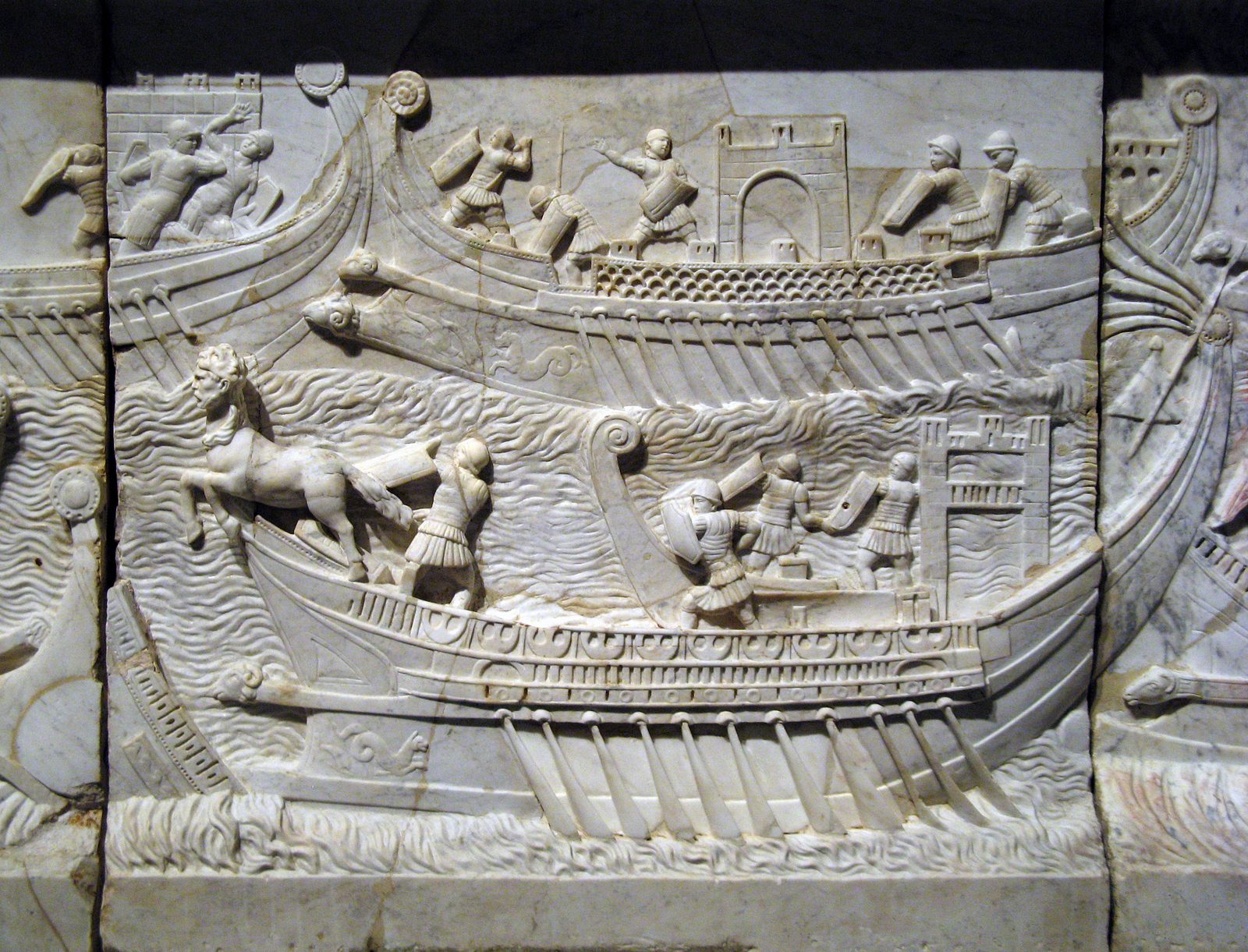
It came apart in 31 BCE at the naval Battle of Actium, off the coast of Greece, where Octavian's fleet defeated the combined forces of Antony and Cleopatra. The two of them fled back to Egypt. Within a year Octavian's forces closed in on Alexandria, Antony's remaining support collapsed, and the end arrived.
Antony, the Roman sources say, took his own life after a false report that Cleopatra was already dead. Cleopatra, facing capture and the near-certainty of being paraded as a trophy through the streets of Rome in Octavian's triumph, chose death over that humiliation. The famous version has her killed by the bite of an asp, an Egyptian cobra, smuggled to her in a basket of figs. Whether it was really a snake, or poison administered some other way, is uncertain; the snake is symbolically perfect (the cobra was an emblem of Egyptian royalty), which is part of why we should hold it a little loosely.
With her death in 30 BCE, the Ptolemaic dynasty ended, and Egypt, after three thousand years of pharaohs, became a province of Rome. Cleopatra was the last pharaoh. Everything after her was Roman.
The woman we can't quite reach
What I find most haunting about Cleopatra is how completely she's been overwritten. We have no surviving account in her own words, no history written from Egypt's side, nothing that escaped the filter of the Romans who defeated her and then defined her. Shakespeare, the Hollywood films, the operas: they all build on that inherited caricature, sometimes brilliantly, but they build on her enemies' foundations.
And yet, even through that hostile filter, a different figure keeps showing through: the only Ptolemy who learned Egyptian, the linguist who needed no interpreters, the ruler who held a coveted kingdom independent for two decades against the rising tide of Rome, the strategist who attached herself to Caesar and Antony not out of weakness but out of a clear-eyed read of where power lay. She lost in the end, but she was outmatched by the entire Roman state, not by her own folly.
The seductress is the version that won the propaganda war. The shrewd, multilingual, dangerous-to-Rome stateswoman is the version that's probably closer to the truth. Two thousand years later, it's worth insisting on the second one. She earned it.
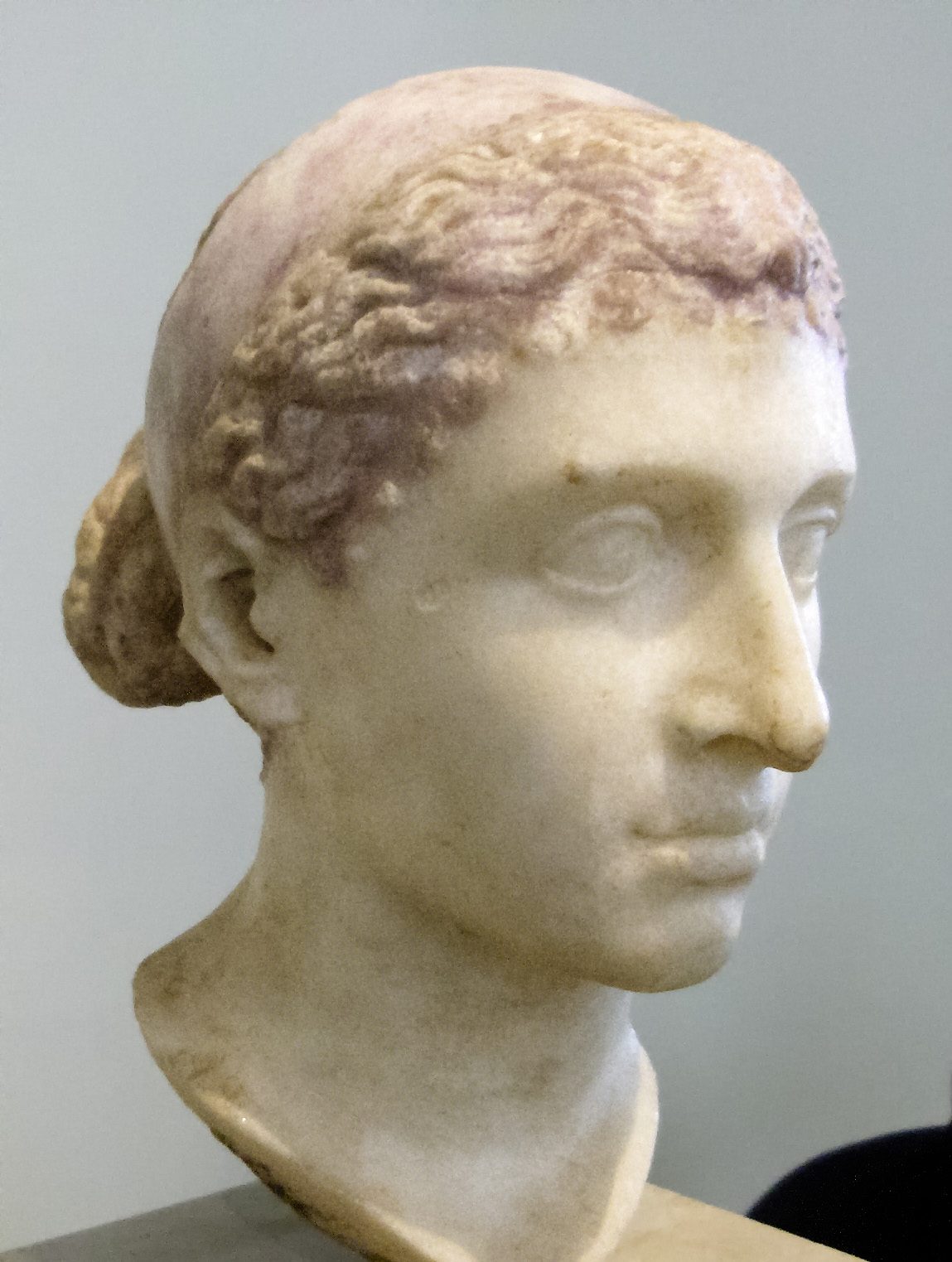
Image: ancient marble portrait bust traditionally identified as Cleopatra VII, Altes Museum, Berlin (public domain, via Wikimedia Commons).
Read next: The Library of Alexandria: Not One Great Fire but Centuries of Neglect and The Rosetta Stone: How a Slab of Rock Unlocked Ancient Egypt.
Sources & further reading
- Plutarch, Life of Antony (early 2nd century CE) — the single most influential ancient source on Cleopatra, though written by a Greek under Roman rule and far from neutral.
- Joyce Tyldesley, Cleopatra: Last Queen of Egypt (Profile Books, 2008).
- Duane W. Roller, Cleopatra: A Biography (Oxford University Press, 2010).
- Stacy Schiff, Cleopatra: A Life (Little, Brown, 2010).
- Encyclopaedia Britannica, "Cleopatra"; the British Museum and Altes Museum collection notes on Ptolemaic Egypt.