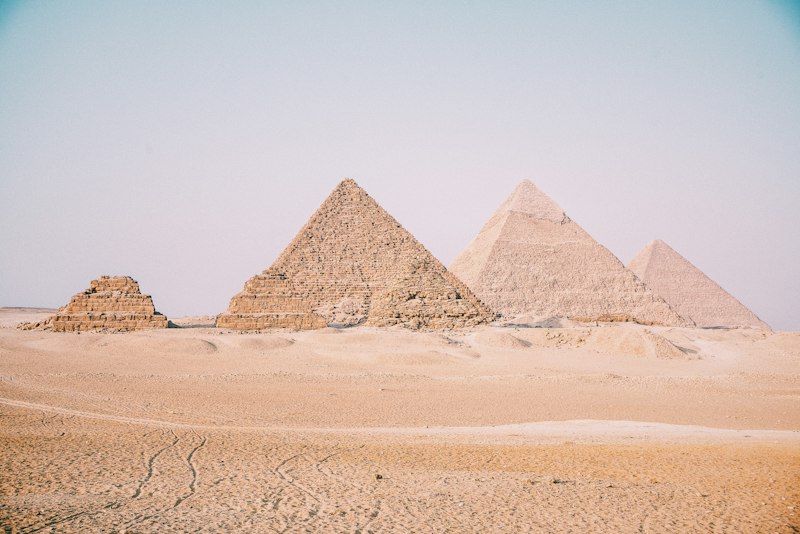
Among the Seven Wonders of the Ancient World, the Hanging Gardens of Babylon remain the most enigmatic. Unlike the Great Pyramid of Giza, which still stands today, no definitive archaeological evidence of the Gardens has ever been found. Yet their legend has captivated humanity for over two thousand years.
A Paradise in the Desert
According to ancient accounts, the Gardens were an extraordinary feat of engineering — terraced levels of lush greenery rising high above the flat, sun-baked plains of Mesopotamia. Greek historians described them as a towering structure filled with exotic trees, flowering shrubs, and cascading waterfalls, all sustained by an ingenious irrigation system that drew water from the Euphrates River.
The most popular legend credits King Nebuchadnezzar II (reign 605–562 BCE) with building the Gardens for his wife, Amytis of Media, who missed the green hills and valleys of her homeland. Whether this romantic origin is true remains debated, but Nebuchadnezzar certainly had the resources and ambition for such a project — he also rebuilt the Ishtar Gate and expanded Babylon into one of the greatest cities of the ancient world.
Engineering Marvel
If the Gardens existed as described, they would have required remarkable hydraulic engineering. Ancient writers mention chain pumps, water screws, and elevated aqueducts that lifted water dozens of meters into the air. Some historians believe the system resembled an early Archimedean screw, centuries before Archimedes himself was born.
The terraced structure was said to be built with stone slabs layered with reeds, bitumen, and lead sheets to prevent water from seeping through — a waterproofing technique that Babylonian builders were known to use in their canal systems.
Did They Really Exist?
The great mystery is that no Babylonian text has ever mentioned the Hanging Gardens. Cuneiform tablets describe Nebuchadnezzar's other building projects in lavish detail, yet the Gardens are conspicuously absent. This has led some scholars, notably Stephanie Dalley of Oxford University, to propose that the Gardens were actually located in Nineveh, built by the Assyrian king Sennacherib around 700 BCE.
Dalley's theory points to Sennacherib's detailed inscriptions about an elaborate palace garden with raised walkways and a sophisticated aqueduct system — descriptions that closely match the Greek accounts of the Hanging Gardens. The confusion, she argues, arose because ancient Greek writers sometimes conflated Babylon and Nineveh.
Legacy
Whether in Babylon or Nineveh, the concept of the Hanging Gardens represents something deeply human: the desire to create paradise on earth. The idea that an ancient king would reshape nature itself as an act of love continues to inspire architects, artists, and dreamers to this day. Modern "vertical gardens" and green skyscrapers owe a conceptual debt to this ancient wonder — proof that great ideas never truly vanish, even when the structures that embodied them do.