Stand on Salisbury Plain just before dawn on the longest day of the year, and you'll be in a crowd. Thousands of people gather at Stonehenge every summer solstice to watch the sun rise in line with the ancient stones — exactly as someone, five thousand years ago, designed it to. That's the part that stops you cold. Whoever raised these stones could not write, left no records, and has been dead for two hundred generations. And yet they built a machine of rock so precisely aligned to the heavens that it still works. We come to gawk at the mystery. They built the mystery on purpose.
Stonehenge is one of those monuments everyone can picture and almost nobody actually understands. It's older than the pyramids of Giza. It was built in stages across more than a thousand years. And despite a century of serious archaeology, the biggest question of all — what was it for? — still doesn't have a settled answer.
The stones themselves
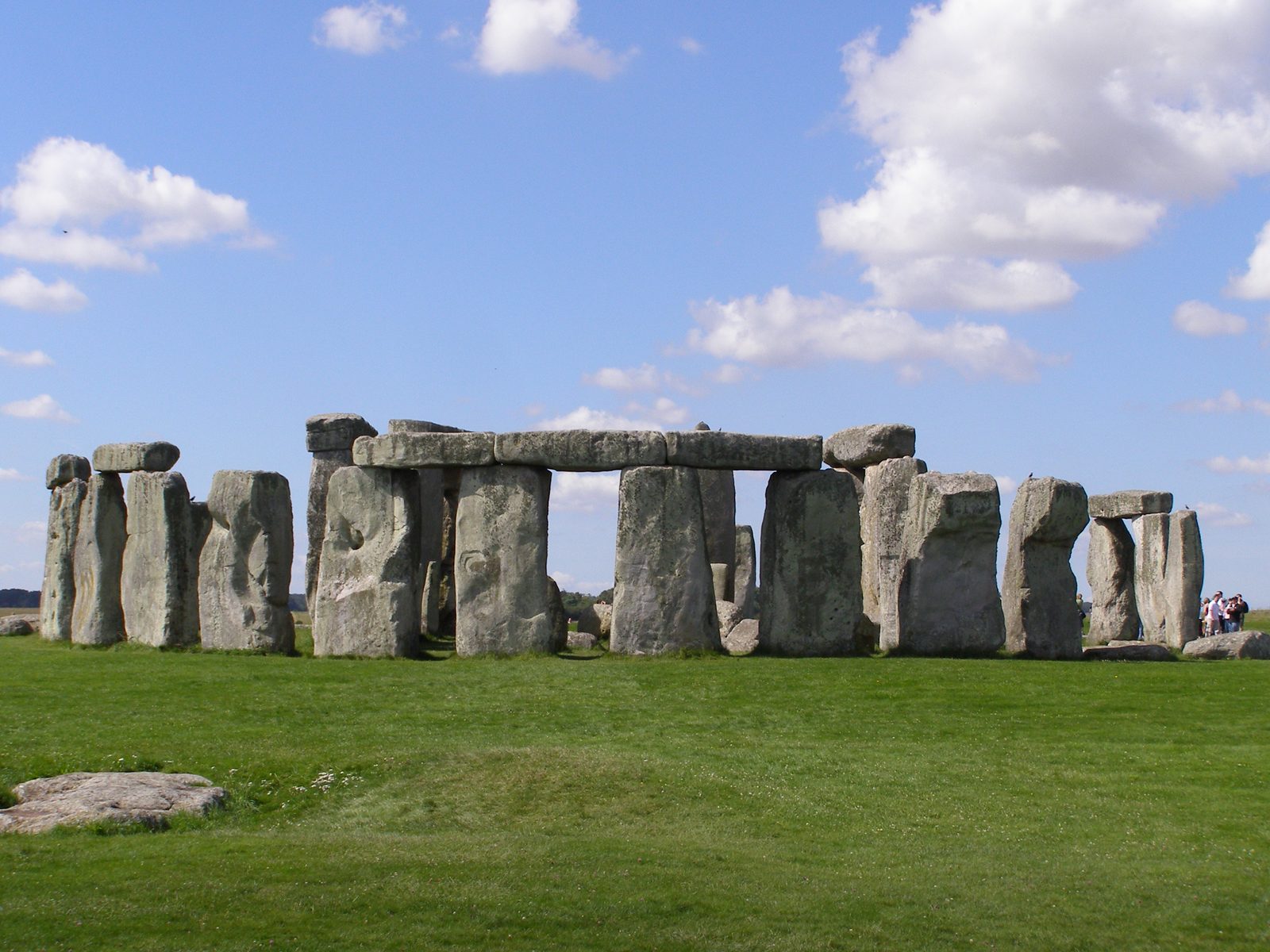
The Stonehenge we see today is a ruin of something once more complete, and it's made of two very different kinds of stone. The huge uprights with the lintels balanced across their tops are sarsens — a hard local sandstone, some weighing around 25 tonnes, hauled from about 25 km away. These form the famous outer circle and the inner horseshoe of giant "trilithons" (two uprights capped by a third stone).
Then there are the smaller bluestones, weighing two to four tonnes each, set up inside the sarsen ring. They're called bluestones because of the bluish tinge of the rock when it's wet or freshly broken. And those stones are the source of one of the great puzzles in European prehistory — because they did not come from anywhere near Salisbury Plain.
The bluestone mystery
Geologists have traced the bluestones to a very specific place: the Preseli Hills in west Wales, roughly 200 kilometres away. Let that sink in. Around 3000 BCE, people somehow moved dozens of multi-tonne stones across 200 km of hills, rivers, forest and possibly sea — without the wheel in any practical form, without metal tools, without draught animals doing the heavy hauling in the way we'd imagine. And they did it not because they had to (there was perfectly good stone much closer) but because these particular stones, from that particular place, mattered to them.
How they moved them is still argued over — log rollers, timber sledges hauled by huge teams of people, or partly by raft along the coast and rivers. Recent research has even suggested that some of the bluestones may have first stood in an earlier stone circle in Wales, at a site called Waun Mawn, before being dismantled and dragged east — meaning Stonehenge might partly be a second-hand monument, a beloved older circle physically relocated by a migrating community. That idea is contested, but it captures how strange and emotionally charged this stone-moving must have been.
Stonehenge is older than you probably think. The first phase - a circular ditch and bank with a ring of pits - was dug around 3000 BCE, and the great sarsen stones went up around 2500 BCE. That makes the monument roughly the same age as, or older than, the Great Pyramid of Giza. People were raising these stones while woolly mammoths, astonishingly, were still alive on a remote Arctic island.
Built over a thousand years
One of the most common misunderstandings is that Stonehenge was a single building project. It wasn't. It was built, rearranged, and added to over something like 1,500 years, by generations who can have had only the dimmest memory of why their ancestors started it.
The earliest phase, around 3000 BCE, wasn't about the big stones at all — it was a large circular earthwork enclosure with a ring of pits (known as the Aubrey Holes) just inside it. Crucially, this early Stonehenge was a cemetery: cremated human remains have been found in and around those pits, making it one of the largest known burial grounds of its time in Britain. Centuries later, around 2500 BCE, came the colossal sarsens and the rearranged bluestones, shaped and joined with woodworking joints — mortise-and-tenon and tongue-and-groove — translated into solid rock. The stones were then shuffled around again in later centuries. Stonehenge was less a finished cathedral than a sacred site that each era reshaped to its own needs.
So what was it for?
This is where the honest answer is: we don't fully know, and the best scholars disagree. But the theories aren't wild guesses — each rests on real evidence.
The astronomical alignment is undeniable. The monument's main axis lines up with the sunrise at the summer solstice and the sunset at the winter solstice. For a farming people whose survival depended on the turning year, a giant stone device that marked the sun's extreme points would have been powerful — part calendar, part temple. Many researchers now think the winter solstice may actually have been the more important one, a midwinter gathering tied to feasting and the dead.
That ties into a second major theory, championed by the archaeologist Mike Parker Pearson: that Stonehenge was fundamentally a monument to the ancestors and the dead — a "domain of stone" for the deceased, linked to a nearby "domain of timber" for the living at the great wooden settlement of Durrington Walls. Excavations there found evidence of enormous midwinter feasts, with pig bones from animals slaughtered at around nine months old (i.e., midwinter), suggesting thousands of people travelled there to feast and, perhaps, to carry their dead to the stones.
Where opinion splits: Calendar? Temple? Tomb? Healing centre? There's real evidence for several. The solstice alignment points to a ritual calendar; the cremation burials point to a cemetery; the feasting at nearby Durrington Walls points to a place of mass gathering; and the unusual number of injured and sick bodies buried in the region has even fuelled a theory that the "magical" bluestones were thought to heal. The frustrating, fascinating truth is that over 1,500 years it was probably several of these at once - its meaning shifting with each generation that inherited it.
The Druid myth
Ask people who built Stonehenge and a lot will say "the Druids." It's a great story. It's also wrong by a margin of thousands of years.
"Stonehenge was built by the Druids as a site for their rituals."
The Druids were Iron Age Celtic priests who appear in the record around 2,000 years ago. Stonehenge was already ancient ruins by then - the stones went up some 2,000-2,500 years before the Druids existed. The Druid connection is an 18th-century romantic invention, popularised by antiquarians like William Stukeley. The real builders were Neolithic and early Bronze Age farming communities whose name for themselves we will never know.
The link wasn't malicious — it came from early antiquarians genuinely trying to make sense of a monument with no written history. But it stuck, which is why modern Druidic groups now hold solstice ceremonies there: a tradition that feels ancient and is actually about three centuries old, performed at a monument fifty centuries old. History does love these layered ironies.
What the first writers made of it
Long before archaeology, medieval writers tried to explain the impossible stones — and reached, naturally, for magic. In the 12th century, Geoffrey of Monmouth famously claimed the wizard Merlin had magically transported the stones from Ireland (where giants had supposedly brought them from Africa) to form a memorial for fallen British nobles.
"There is not a stone among them which lacketh in virtue of leechcraft… they did wash the stones and pour the water into baths, whereby they that were sick were made whole."— Geoffrey of Monmouth, History of the Kings of Britain, c. 1136, on the supposed healing power of the stones
It's pure legend, of course. But notice how even a 12th-century myth gropes toward an idea — that the stones had healing power — which a modern theory would later echo. People across nine hundred years have looked at Stonehenge and felt the same pull: that these stones mean something, that they were raised for a purpose worth almost unimaginable effort.
The answer in stone, the question in the graves
Stonehenge endures as a symbol because it collapses the distance between us and the deep past. It is proof that people five thousand years ago — people we tend to imagine as primitive — were capable of long-term planning, sophisticated astronomy, large-scale social organisation, and a spiritual life rich enough to justify dragging mountains across a country.
We will probably never recover the exact beliefs that raised it. The builders left us the answer carved in stone and took the question to their graves. But that may be the most honest thing about Stonehenge: it is a five-thousand-year-old monument to the fact that humans have always looked at the sky, counted the days, buried their dead with care, and reached for something larger than themselves. We don't need to know precisely what they believed to recognise, standing among the stones at dawn, exactly what they felt.
More than a circle: the sacred landscape
One thing that gets lost when Stonehenge appears on a postcard is that it never stood alone. It sits at the centre of one of the richest prehistoric landscapes on earth, and you can't really understand the stones without the land around them. Within a few kilometres lie hundreds of burial mounds (barrows) where Bronze Age elites were laid to rest, many positioned so the stones would be visible — people wanted to be buried within sight of the monument.
There's the Stonehenge Avenue, a ceremonial earthwork pathway that runs from the monument toward the River Avon and happens to align with the solstice axis, suggesting a processional route. There's the Cursus, an enormous earthwork enclosure nearly three kilometres long that predates the stones. And there's Durrington Walls, a massive settlement and timber-circle complex a couple of miles away, where the builders and celebrants seem to have actually lived and feasted. More recently, archaeologists even found a ring of huge buried shafts forming a vast circle around Durrington — hints that the whole area was engineered on a scale we're still only beginning to map. Stonehenge, in other words, was the jewel at the centre of a deliberately shaped sacred world.
How on earth did they build it?
The engineering still impresses modern builders. The sarsens were shaped using nothing but stone hammers — pounding the rock into form, a staggeringly labour-intensive process — and then raised upright into deep pits and levered vertical. The lintels were lifted some four to five metres and held in place with carpentry joints carved in stone: mortise-and-tenon holes and tongue-and-groove edges, techniques borrowed straight from woodworking. The lintels of the outer circle were even subtly curved to follow the ring and tilted to look level from the ground, an early bit of visual correction.
Estimates suggest moving and raising the largest stones would have required hundreds of people hauling on ropes and timber sledges, coordinated over years. There were no machines, no iron, no draught animals doing the lifting. Just rope, wood, stone tools, antler picks, and enormous numbers of organised, motivated human beings. That level of cooperation, sustained across generations, may be the most impressive thing about Stonehenge — more than the astronomy, it's evidence of a society able to dream big and work together for centuries to make the dream real.
Who actually built it — and what ancient DNA revealed
For a long time the builders of Stonehenge were faceless "Neolithic people." Now, thanks to ancient DNA, we can say something genuinely startling about them. The farmers who raised the great sarsens around 2500 BCE were largely descended from migrants whose ancestry traces back to Anatolia (modern Turkey) — early farming peoples who had spread across Europe and reached Britain around 4000 BCE, bringing agriculture and, eventually, monument-building with them.
But here's the twist that genetics uncovered. Within a few centuries of Stonehenge's great stones going up, the population of Britain was almost completely transformed. Around 2450 BCE, a new group arrived from continental Europe — the so-called Beaker people, named for their distinctive bell-shaped pottery — and within a handful of generations they had replaced something like 90% of the island's existing gene pool. In other words, the people who built Stonehenge were, genetically, almost entirely supplanted not long after they finished it. The monument outlived its makers' very bloodline. Whoever was holding solstice ceremonies there a few centuries on may have had little ancestral connection to the people who dragged the stones into place — inheriting the temple, but not the lineage, of its builders. It's one of the eeriest things archaeology has turned up: a monument that survived the disappearance of an entire population.
A monument still fought over
Stonehenge may be five thousand years old, but it still generates very modern arguments. For years a bitter controversy has raged over plans to deal with the busy A303 road that runs right past the stones, including proposals for a road tunnel beneath the World Heritage landscape. Supporters say it would remove traffic noise and restore the ancient setting; archaeologists and campaigners have fought it fiercely, warning that excavating the tunnel could destroy as-yet-undiscovered prehistoric remains buried across the site. The dispute has gone through courts and consultations for years.
It's a strangely fitting epilogue. People are still arguing about how to treat this patch of Salisbury Plain, still wrestling with what the place means and what we owe it — exactly as people have, in their own ways, for five thousand years. Stonehenge has never stopped being contested ground. That might be the most human thing about it.
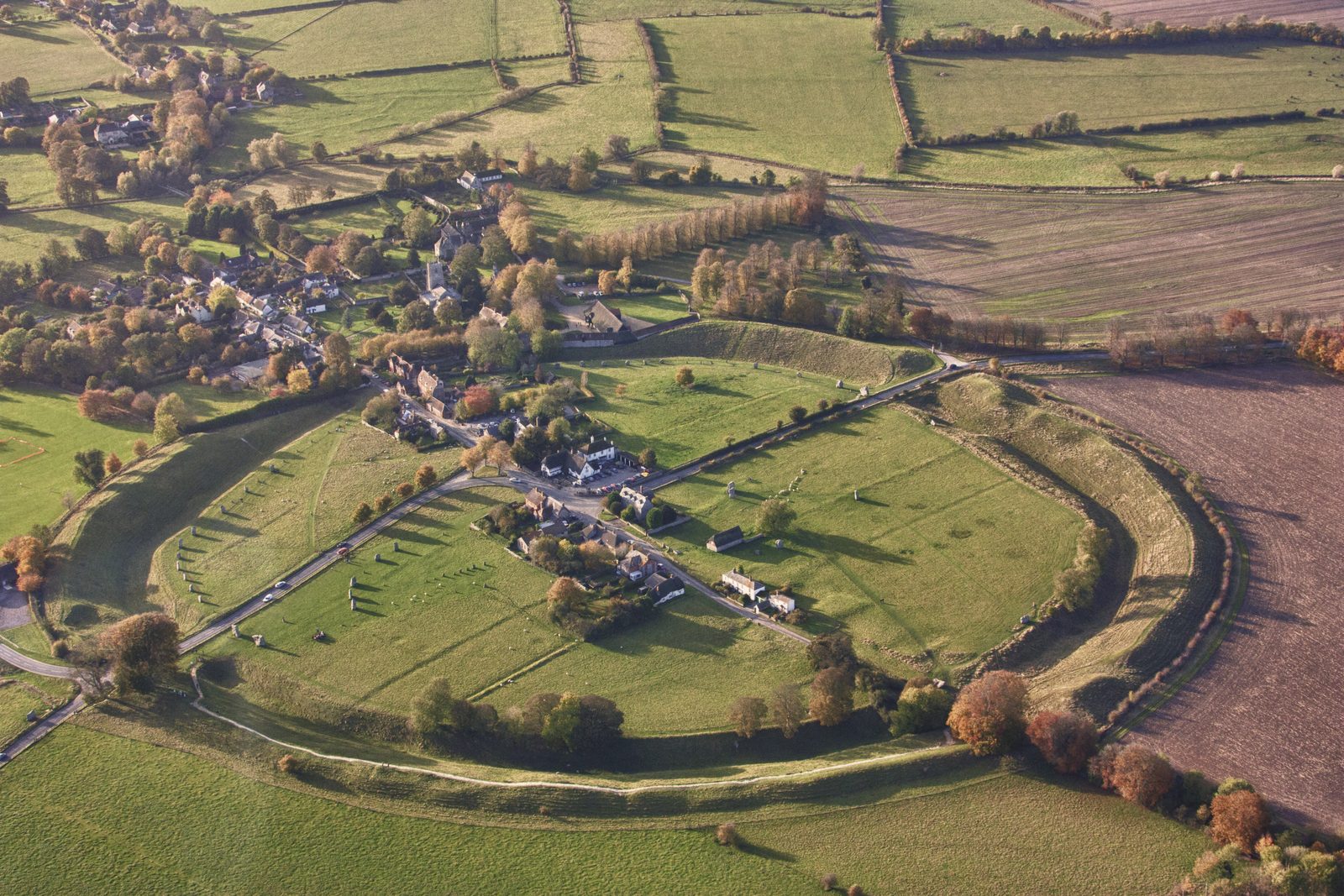
Image: Stonehenge on Salisbury Plain, Wiltshire (via Wikimedia Commons).
Sources & notes
- Mike Parker Pearson, Stonehenge: A New Understanding (2012) — by the leader of the Stonehenge Riverside Project.
- Rosemary Hill, Stonehenge (Wonders of the World series).
- English Heritage, official Stonehenge research and history pages.
- Parker Pearson et al., research on the Waun Mawn stone circle and the Welsh bluestone origins (published in Antiquity).
- Geoffrey of Monmouth, The History of the Kings of Britain (c. 1136) — as a primary source on the medieval Merlin legend.