Sometime around the first century of our era, a painter working at the edge of the largest sand desert on Earth finished a man's face on a plastered wall and added, beside it, a single short word: zky, blessed, or pious. The face has heavy brows, a level gaze and the faint smile of someone confident of his place. He is not a god or a pharaoh. He is a private citizen of a town that most history books, until quite recently, did not admit existed. His name and his portrait have outlasted his kingdom, his gods and the wells that kept his city alive. We are still working out almost everything else about him.
The town was called Qaryat Dhat Kahil (the village of the god Kahl), and today it is known as Qaryat al-Faw. It sits about 700 kilometres south-west of Riyadh, on the north-western rim of the Rub al-Khali, the Empty Quarter, in a gap where a long escarpment breaks and lets travellers through. For a stretch of roughly six centuries it was one of the busiest places in the interior of Arabia. Then the trade moved, the wells fell quiet, and the sand closed over it so completely that when scholars drew maps of the ancient world, the space where it stood was left white.
That blank is the real subject here. For a long time the accepted story of Arabia before Islam was that there was almost nothing to tell: roaming herders, poetry passed by mouth, no writing, no towns, an interval that later tradition would call the Jahiliyyah, the age of ignorance. Qaryat al-Faw is the town that argues back. It had streets on a grid, a market you could get lost in, temples to a shelf of gods, and citizens who wrote their names on their tombs in more than one alphabet. It is not the exception that proves the desert was empty. It is the clue that the emptiness was in our maps, not in the ground.
A town where the map says nothing should be
Stand at Qaryat al-Faw and the location looks, at first, like a mistake. To the south and east runs the Rub al-Khali, a quarter of a million square kilometres of dune with no permanent water and, for long seasons, no reason to be there at all. This is about the harshest ground the peninsula has to offer. Building a city on its shoulder is like building one on the beach of a sea nobody can drink.
But the desert is not the point. The point is the gap. The Arabic word faw means a break or pass in a line of hills, and the town grew in exactly such a break, where the long ridge of Jabal Tuwaiq gives out and a natural corridor opens between the highlands of the south-west and the plains that run north-east towards the Gulf and Mesopotamia. Anyone moving goods overland across the middle of Arabia had to funnel through gaps like this one. A place that sat on the funnel could tax the traffic, feed it, water it and house it. Qaryat al-Faw was a service station on a continental scale, and the desert at its back was not a threat so much as the reason the road existed.
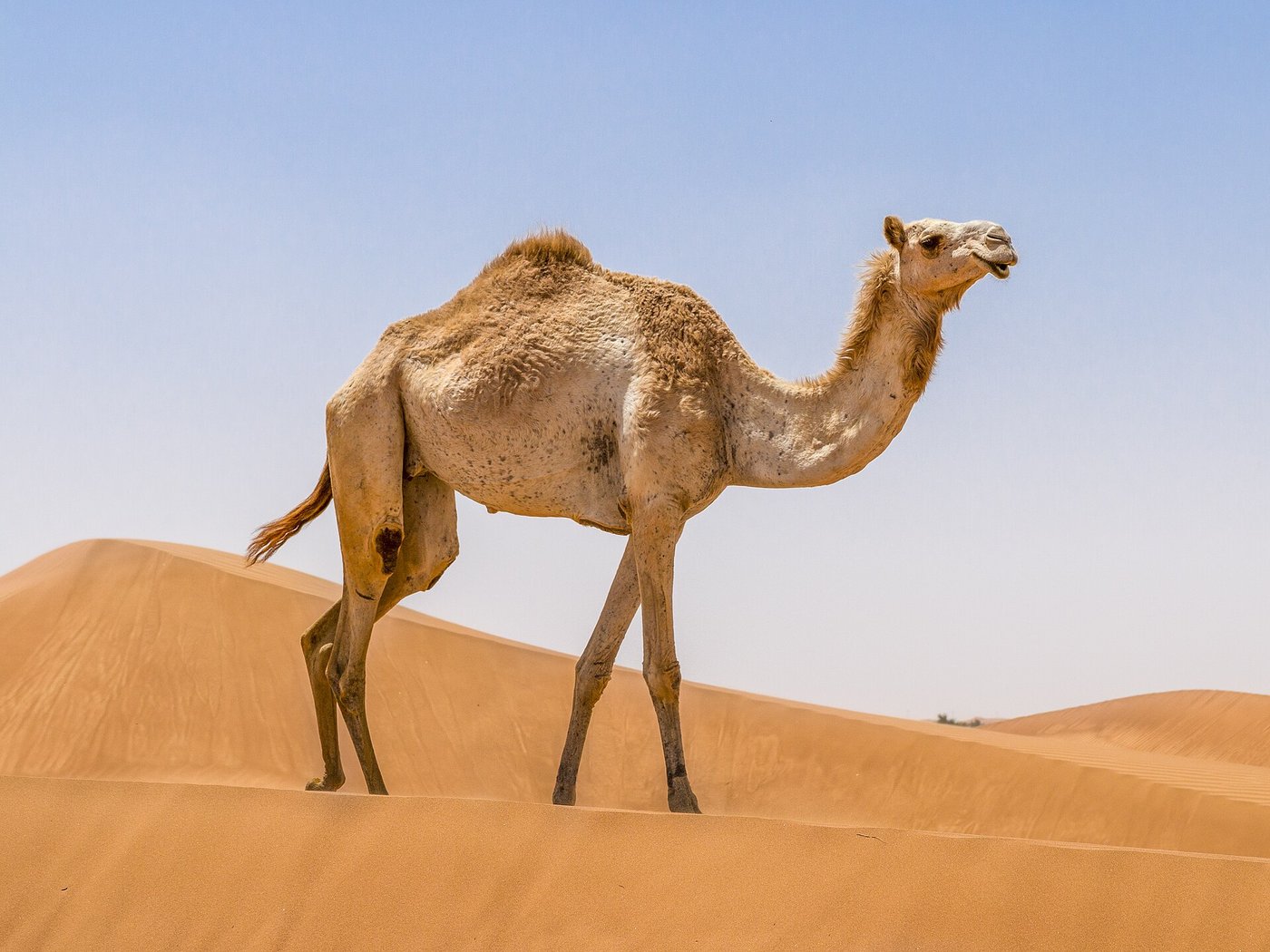
Water was the trick that made it work. The excavators counted more than seventeen wells sunk into the ground beneath and around the town, reaching down to aquifers fed from the highlands. Fields were watered, date palms grew, and the place earned another of its old names, Dhat al-Jnan, the town of gardens. A traveller coming off the dunes would have seen green before he saw walls, the surest sign in that country that people had learned to stay.
The people who called it a capital
The town belonged, for its greatest period, to a people called the Kindah, a confederation of Arab tribes who used Qaryat al-Faw as their base and, in effect, their capital. They were not a walled-in city state minding its own patch. The Kindah were a mobile power with reach, and later Arab memory would remember them as king-makers who at one point held sway over a large slice of central and northern Arabia. Their town on the desert edge was the fixed heart of a shifting realm.
Over the centuries the place also felt the weight of bigger southern kingdoms. The great powers of what is now Yemen (the Sabaeans and then the Himyarites) reached north along the trade roads, and for stretches of its life Qaryat al-Faw sat under their influence. That pull from the south shows up everywhere in the town: in its gods, in the script its people first used to write, in the style of its art. This was never an isolated pocket. It was plugged into the whole network of the peninsula, and the goods and ideas of half of Arabia passed through its gate.
What moved through? The short answer is everything the ancient world paid well for. The incense road carried frankincense and myrrh out of the southern highlands towards the markets of the Mediterranean and Mesopotamia, and Qaryat al-Faw sat on one of its inland arteries. Alongside the aromatic gums went textiles, leather, dates, horses and, from far outside Arabia, the luxuries that turn up in the town's ruins: worked glass, fine pottery, and metalwork in styles borrowed from the Hellenistic and Roman worlds to the north-west and the Parthian world to the north-east.
A market you could get lost in
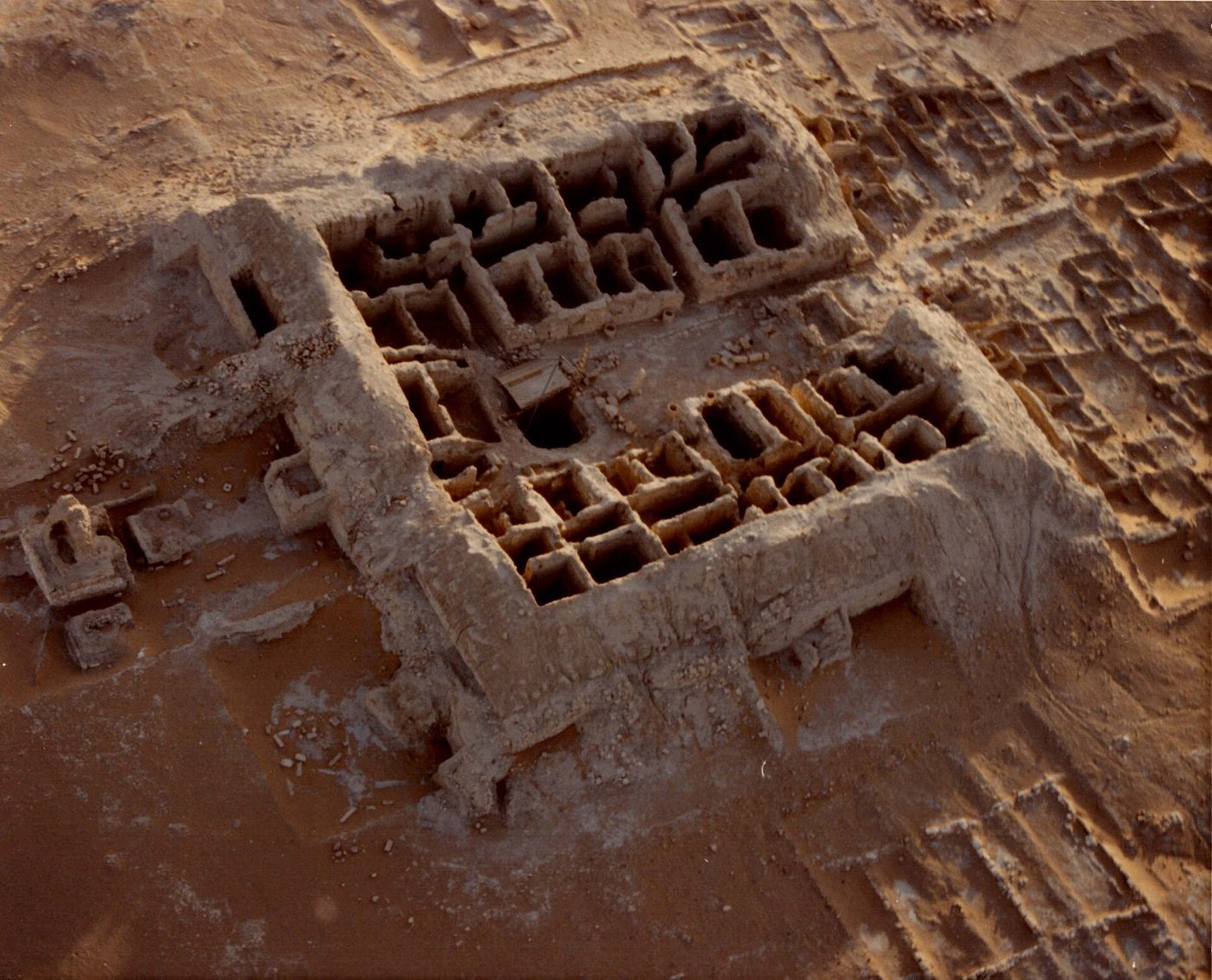
The building that best sums up the town is its market. This was no scatter of stalls. The excavators uncovered a substantial souk laid out as a planned structure, built of stone and mud brick, rising through more than one storey and ringed by tall storage towers (seven of them) where goods could be locked away and, very likely, taxed and tallied on the way in and out. A three-storey market in the middle of Arabia is exactly the kind of thing the old "empty desert" picture had no room for, and here it is, foundations and all.
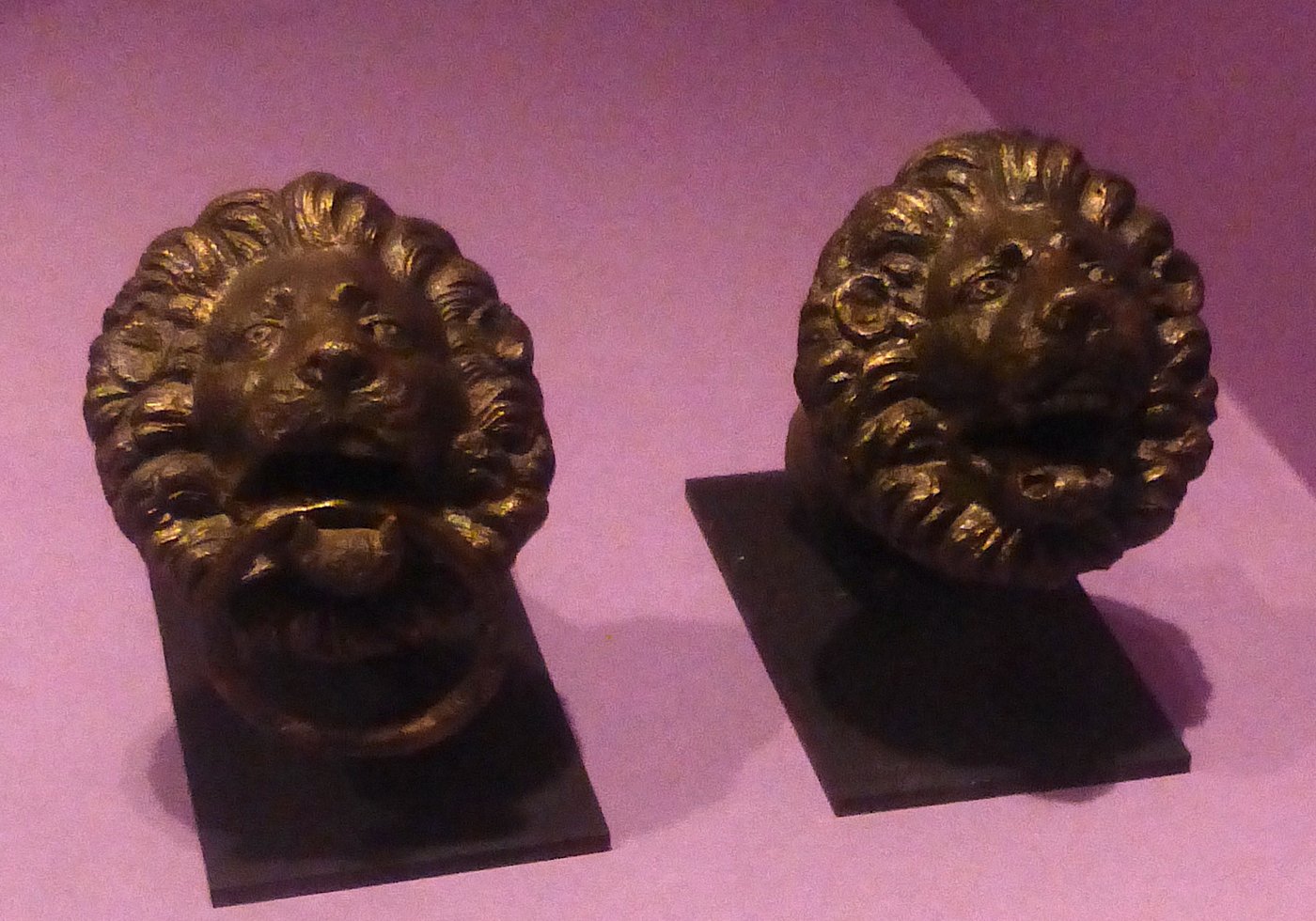
Around the market lay the rest of a real town. There were streets on something like a grid. There was a residential quarter of courtyard houses, and a grander building the diggers read as a palace or the seat of the ruling family, its walls once plastered and painted. There were workshops. There were the wells and the water channels that fed the gardens. And set a little apart, as the dead usually are, there were the cemeteries, with tombs that ranged from simple graves to built stone mausolea for people who could afford to be remembered.
Among the finds are inscribed stone slabs that read less like poetry than like paperwork. Some record, in the formal language of the day, the dedication or ownership of a tomb: a named person, a named structure, the protection of a named god invoked over it. Strip away the antiquity and you are looking at a real-estate document: this grave belongs to this family, hands off. It is a small, dry thing, and it demolishes a large idea. People who register property in writing, and expect the register to be honoured after they are dead, are not living in an age of ignorance. They are living in a town with rules.
Gods enough for a crossroads
A trading town draws in more than goods, and Qaryat al-Faw's religion shows it. The presiding deity was Kahl, so bound up with the place that the town's oldest name simply means "the village of Kahl". But he did not rule alone. The inscriptions and shrines name a crowd of others (Shams the sun, Athtar, and Wadd, a god of the moon and of love carried up from the south, who had a temple here that the excavators mapped out down to its plastered floors).
This mixture is telling. The gods of the deep south of Arabia stand beside local ones, because the people who prayed at Qaryat al-Faw came off roads that ran in every direction. A caravan town cannot afford to be narrow about whose god is whose; the merchant sleeping in your inn has his own protector and his own coins, and both are welcome. The religious life of the place was as plural as its market, and for the same reason.
The paintings that answer back
Most lost cities go silent. Their people vanish, and we are left to guess at them from postholes and potsherds and the accounts their neighbours wrote. Qaryat al-Faw is unusual, almost unnerving, in how much it still says for itself, because its people painted, and some of the paint survived.
On the plastered walls of tombs and grander rooms, the town left frescoes. There are banqueting scenes, with figures reclining to eat and drink in a manner borrowed from the Hellenistic world. There are camels and their drivers, the animals that made the whole economy turn. There are decorative and mythological motifs, including one fragment read as a zodiac. The style is a magpie's mix: local subjects handled with techniques and poses picked up from the Mediterranean and the Near East, exactly what you would expect of artists whose customers had seen the wider world.
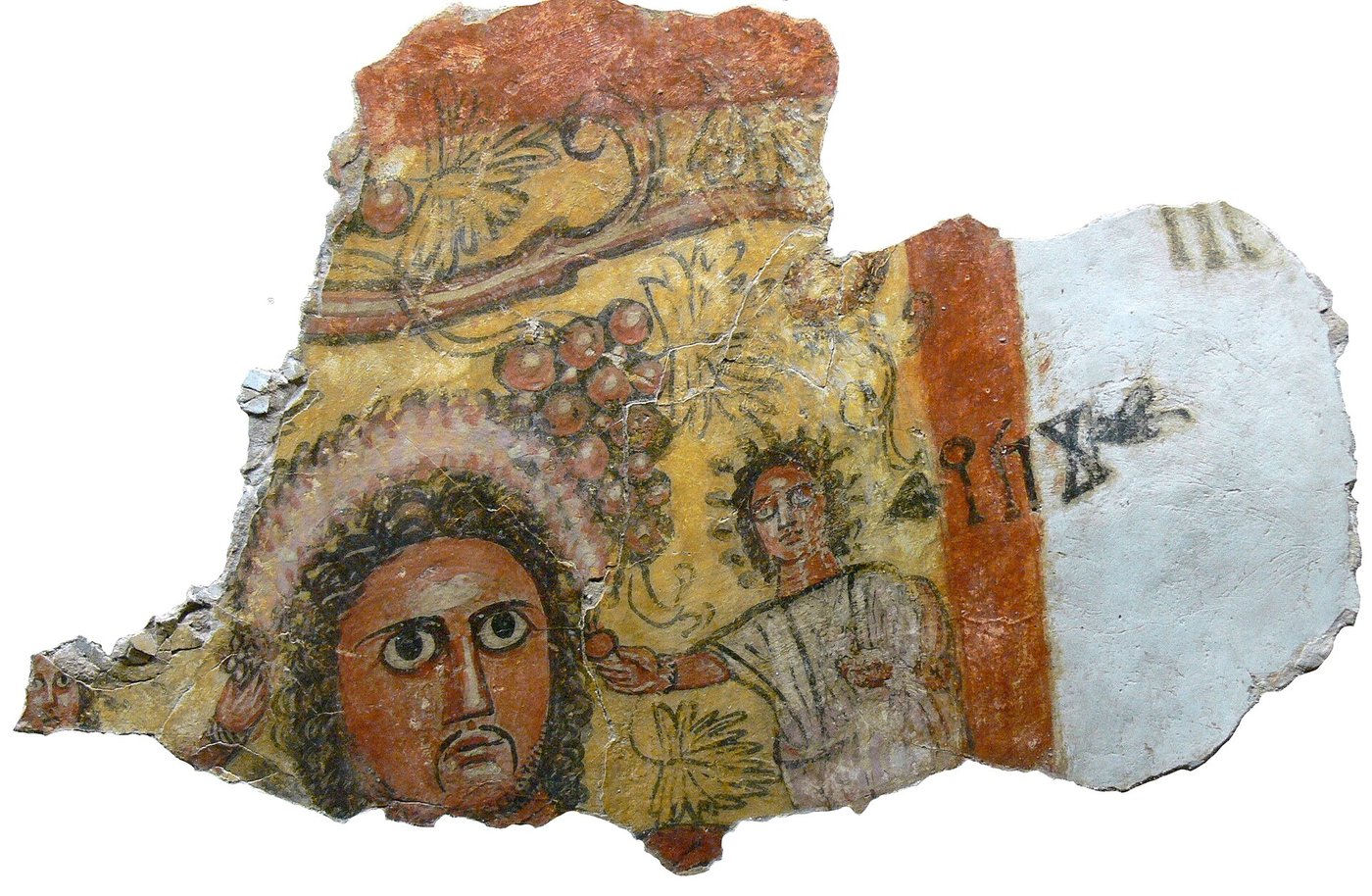
And then there is the face from the start of this piece, with its one-word label. A portrait that comes with writing on it is a rare and generous thing to inherit. It means the person who made it assumed a viewer who could read, in a place where reading was ordinary enough to caption a painting. The desert that later ages imagined as mute turns out to have been captioning its own pictures.
The myth: Arabia before Islam was an illiterate wilderness of nomads and oral poetry, no cities, no records, a blank age waiting to be written into history by others.
The reality: Qaryat al-Faw was a settled, planned town whose people wrote constantly (on tombs, on dedications, beside their paintings) in more than one script and more than one language. The blank was never in the sand. It was in the sources later readers happened to have, and in the assumptions they carried to the map.
The many alphabets of one small town
The writing at Qaryat al-Faw does not come in one flavour, and that is what makes it so interesting. The town used the elegant, geometric letters of the Ancient South Arabian script, the musnad, carried up from Yemen along with its gods. It also has graffiti in the related desert scripts that scholars group under names like Thamudic, the everyday scratchings of ordinary people on rock. And, most important of all, it has Arabic.
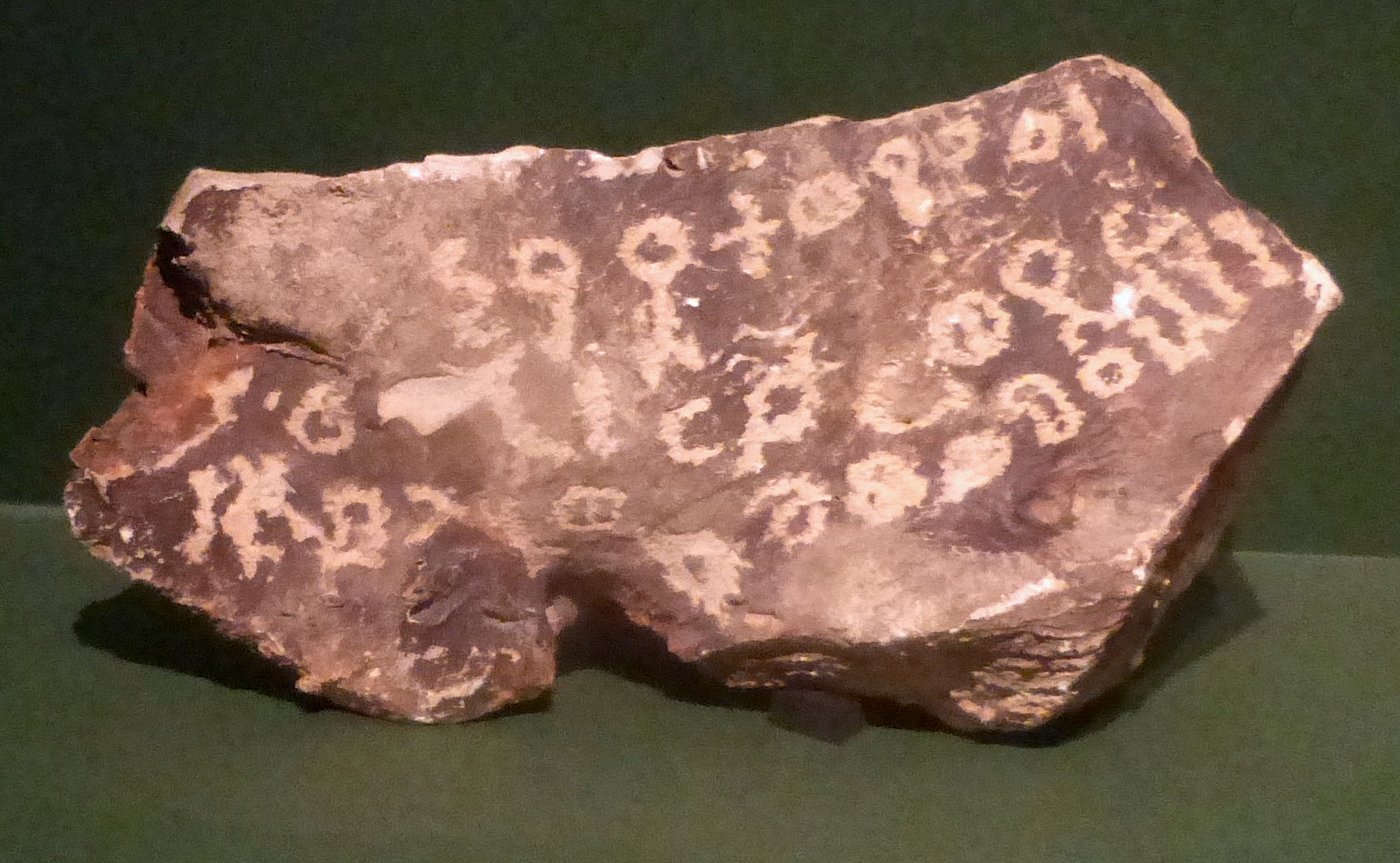
One of the town's most famous objects is a tomb inscription set up by a man usually given as Igl, son of Hafam, for members of his family, invoking the god Kahl over the grave. It is written in the South Arabian musnad letters, but the language underneath the letters is not South Arabian. It is Arabic, or something very close to its ancestor, generations before Islam and before the Arabic script we know today took shape. Texts like this are among the earliest solid traces of the Arabic language written down at all. The tongue that would one day carry the Qur'an across three continents can be caught here, in a desert town, on a family tomb, being used to say the plainest human things: this is ours, keep it safe, may the god watch over it.
Why the wells fell silent
Qaryat al-Faw did not fall in a battle that anyone recorded, and it was not buried in a single catastrophe. Around the end of the third century of our era, the Kindah appear to have pulled up and moved south towards Hadhramaut, and over the following generations the town wound down and was left to the sand. The hard question is why a place that had thrived for six centuries simply stopped being worth living in.
No single cause is agreed. The most popular explanation is the road itself: as ships grew better at running the Red Sea and the sea route carried more and more of the incense and luxury trade, the slow overland caravans lost their edge, and an inland town that lived off them lost its reason to exist. Others point to shifting politics as the southern kingdoms rose and fell, or to the long drying of the interior making the wells and gardens harder to keep. Most likely it was all of these at once, tightening over decades. Cities on the edge of a desert do not need a disaster to end. They need only for the traffic to find a better way round.
Whatever the mix, the result was clean. The people took what they could carry and left, the water table was no longer worked, the mud brick slumped, and the dunes did the rest. For something like fifteen hundred years Qaryat al-Faw was a low spread of mounds in an empty place, its market and its painted faces sealed under sand, waiting.
The man who dug it back into the record
The waiting ended with one person's stubbornness. From the early 1970s the Saudi archaeologist Abdulrahman al-Ansary, working out of King Saud University in Riyadh, led season after season of excavation at the site, and kept at it for the better part of forty years. His teams recovered the market, the temples, the houses, the tombs and the paintings, and pulled thousands of objects out of the ground; the inventory runs to many thousands of registered finds. He wrote the town back into the history of the peninsula almost single-handedly, and gave it a book-length portrait at a time when few outside the region were paying attention.
The recognition, when it came, came fully. In 2024 the cultural landscape of the Al-Faw area was inscribed on the UNESCO World Heritage List, one of a run of pre-Islamic Arabian sites the world has finally started to see. The town that used to be a white space on the map now has the same formal standing as the pyramids or Petra, not because anything about it changed, but because we did.
What the recognition cannot do is fill the last silence. We have the man's painted face and his one-word label. We do not have his voice. We know the god he trusted, the market he shopped in, the script his neighbours scratched on rocks, the water that kept his gardens green and the road whose failure emptied his town. We do not know what he thought when the caravans grew thinner, or whether he was among those who packed up and walked south, or whether he stayed. The Empty Quarter is very good at keeping things. On its north-western edge it kept a whole city, and a painted stranger who was blessed, or pious, and who has been looking steadily back at us for two thousand years, waiting to be read.
Read next: Ubar: The 'Atlantis of the Sands' That Fell Into a Sinkhole.
Sources & further reading
- Abdulrahman al-Ansary, Qaryat al-Fau: A Portrait of Pre-Islamic Civilisation in Saudi Arabia (1982) — the excavator's own account of the town, its market, temples and finds.
- UNESCO World Heritage Centre, "Cultural Landscape of Al-Faw Archaeological Area" (inscribed 2024) — the official description of the site and why it was listed.
- Christian Julien Robin, work on the Kindah and the kingdoms of pre-Islamic Arabia in late antiquity.
- M. C. A. Macdonald, "Reflections on the linguistic map of pre-Islamic Arabia," Arabian Archaeology and Epigraphy (2000) — on the scripts and languages of the peninsula, including early Arabic.
- "The Protohistoric and Antique Landscapes of Qaryat al-Faw," Proceedings of the Seminar for Arabian Studies — on the recent Saudi Heritage Commission survey of the wider site.
- "Qaryat al-Faw," Wikipedia — a referenced overview of the town, its history and its rediscovery.
Image credits (via Wikimedia Commons): aerial view of the Al-Faw site — Heritage Commission (CC BY-SA 4.0); camel in the Rub al-Khali — Darthjipsu (CC BY-SA 4.0); lion-head door fittings from Qaryat al-Faw — Nesnad (CC BY 4.0); wall-painting fragment with the zky inscription — JRB2023, photo by Juan de Lara (CC BY 4.0); Thamudic inscription fragment — Nesnad (CC BY 4.0).