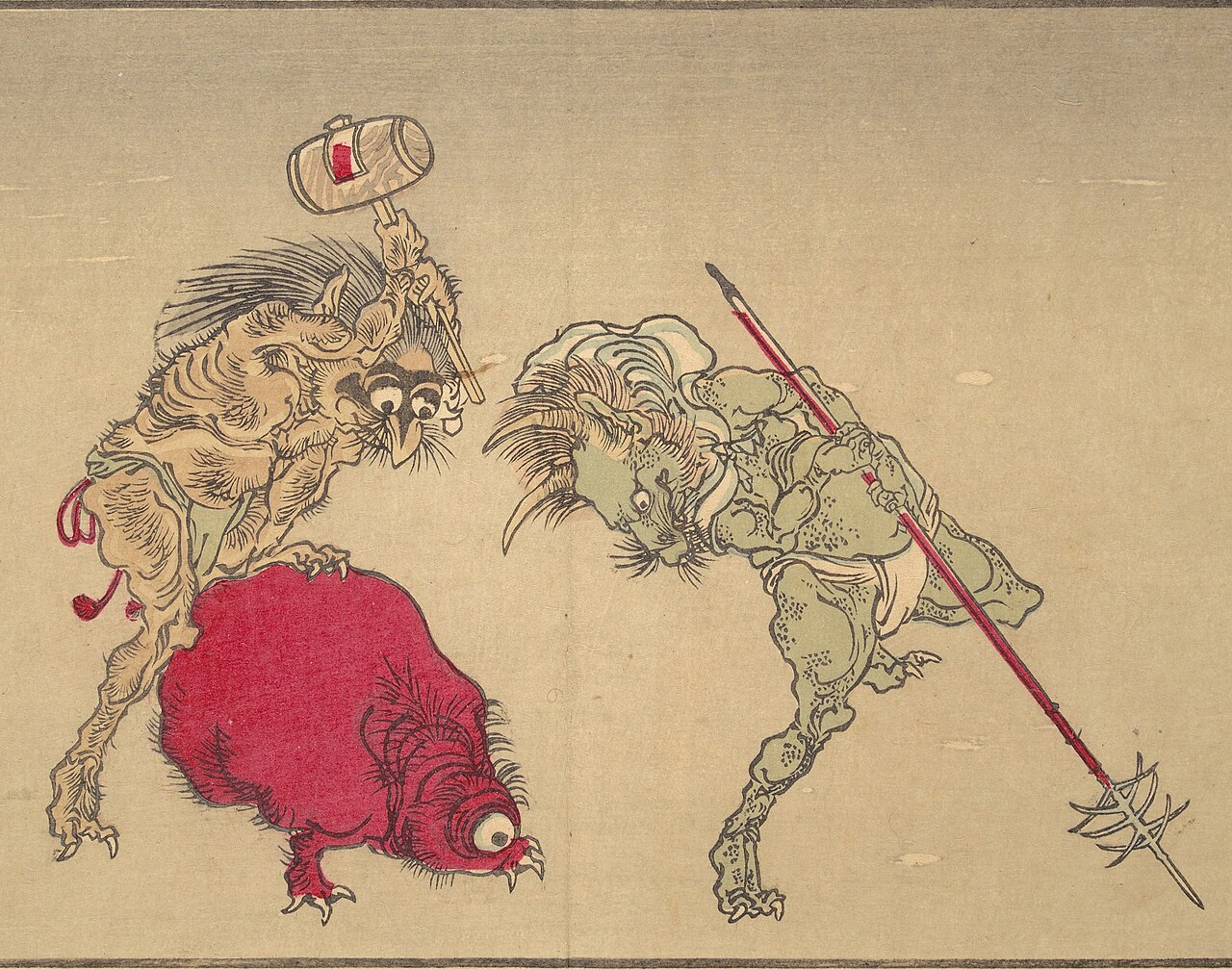
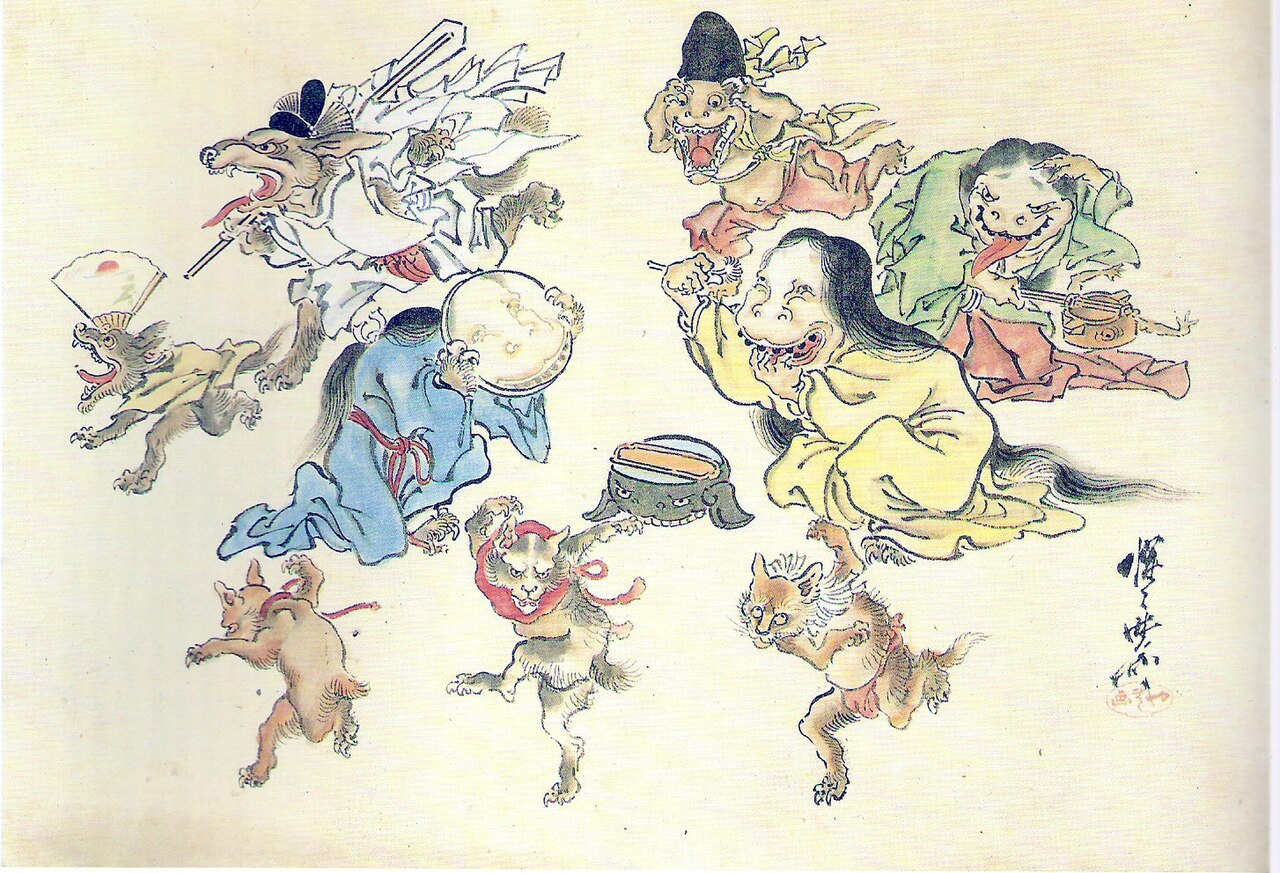
Imagine walking home through an old Japanese town after dark, and turning a corner into a procession you were never meant to see: a parade of impossible creatures shuffling down the night street. A one-eyed umbrella hopping on a single leg. A faceless figure in a fine kimono. A long-necked woman smiling at you from a doorway. An old paper lantern with a tongue. This is the Hyakki Yagyō, the Night Parade of One Hundred Demons, and the creatures in it have a name that covers a whole hidden world of Japanese folklore: yōkai.
Yōkai are notoriously hard to define, which is part of their charm. The word is often translated as "monster," "spirit," "goblin," or "apparition," but none of those quite fits. A yōkai can be a terrifying flesh-eating ogre or a harmless spirit that lives in your rice cooker. It can be ancient and godlike or born last week from a discarded sandal. What ties them together is that they are the supernatural made local and specific: the strange given a face, a habit, and a name. Here are the ones worth knowing.
First, what exactly is a yōkai?
The yōkai grow out of a particular way of seeing the world. In the Shinto-influenced imagination, almost anything can hold a spirit: a mountain, a river, a fox, a fork in the road, an old tea kettle. Yōkai are what happens when that animist sense of a living, watchful world meets human fear, mischief, and storytelling. They explain the unexplained: a sudden chill, a drowning, a noise in an empty house, a traveller who never came home. Give the unknown a shape and a personality, and it becomes a little less unbearable.
It helps to know that yōkai are not quite the same as yūrei, the ghosts of the dead who linger with unfinished business, though the categories blur, and you'll see words like obake ("changing thing"), mononoke, and ayakashi used for overlapping ideas. A yōkai is less a soul than a presence: a being of the in-between, most active at dusk and in the dead hours of the night, in the liminal places (bridges, crossroads, riverbanks, abandoned houses) where the ordinary world feels thin. Many are tied to a specific spot or a specific moment, which is exactly why they made such good explanations for the otherwise inexplicable.
For most of history yōkai lived in oral folklore, varying from village to village. Then, in the Edo period (1603–1868), something wonderful happened: artists and writers began to catalogue them. The illustrator Toriyama Sekien produced encyclopedias of yōkai in the 1770s, drawing each creature as if it were an entry in a natural-history guide, complete with description. He even invented some. This is why we can talk about specific, named yōkai at all: a golden age of Japanese pop culture turned a swarm of local ghost stories into a shared bestiary.
One whole class of yōkai is the tsukumogami: ordinary household objects that, on reaching their hundredth birthday, wake up. An umbrella becomes the one-legged, one-eyed karakasa-obake; a paper lantern grows a face and a lolling tongue; sandals, tea kettles, and prayer beads all stir to life. The idea carries a small moral: treat your possessions with care, because one day they may be watching you back. It's animism turned into a gentle warning against waste.
Kappa, the river imp
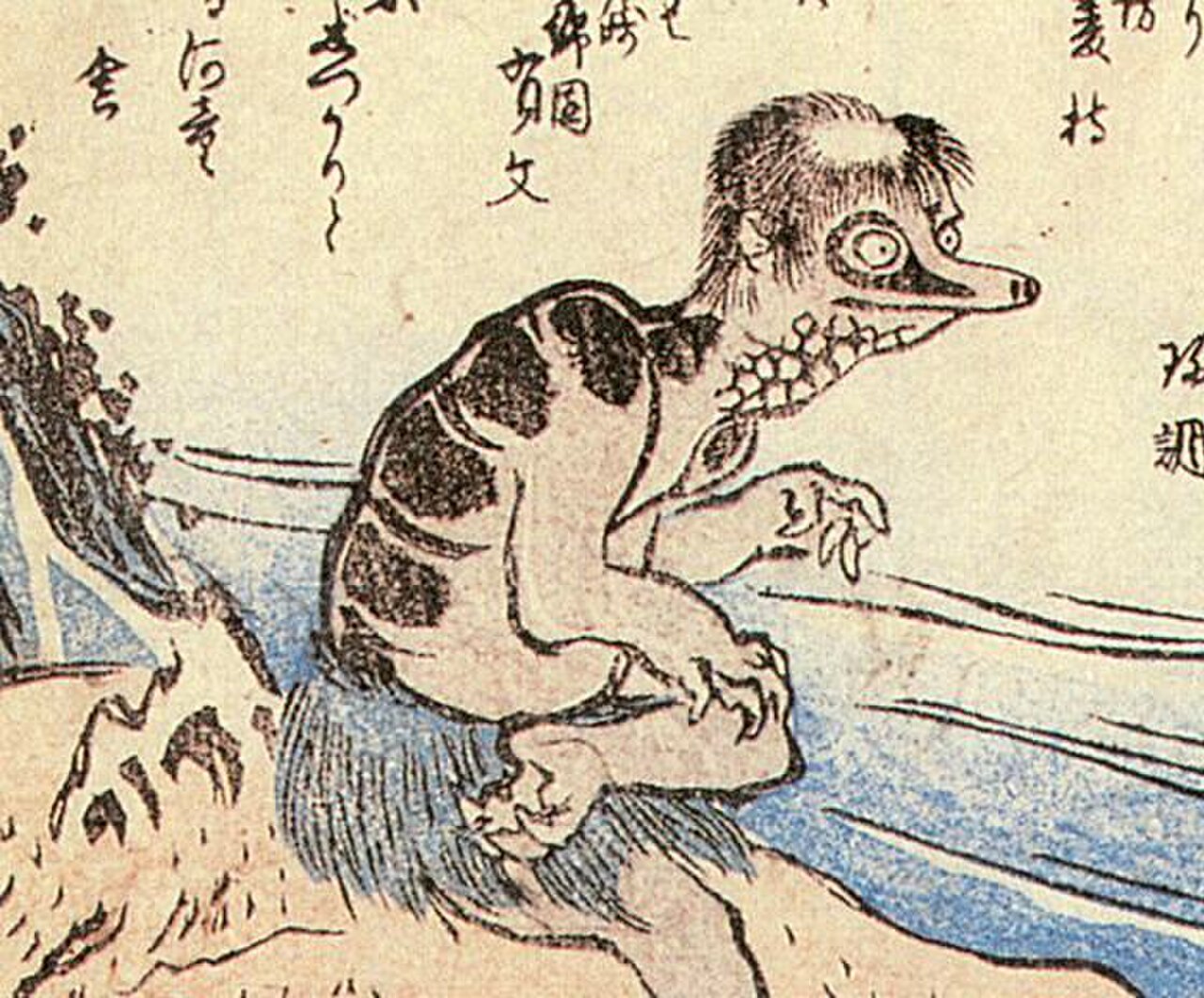
If Japan has a national yōkai, it's the kappa. Picture a creature roughly the size of a child, green or blue-skinned, with webbed hands and feet, a turtle-like shell, a beak, and, most importantly, a shallow dish on the top of its head holding water. That dish is the source of its power and its great weakness. Spill the water and the kappa is helpless.
Kappa live in rivers, ponds, and rice paddies, and their reputation runs from mischievous to murderous. At their worst they drag horses, cattle, and unwary children into the water and drown them; folklore credits them with a grisly fondness for a mythical organ called the shirikodama, supposedly pulled from a victim's body. At their most harmless they are pranksters who pass wind loudly and peek up kimonos. They love cucumbers (to this day a cucumber sushi roll is called a kappamaki), and they are obsessed with politeness and sumo wrestling. The classic piece of folk wisdom: if a kappa challenges you, bow to it. Being a stickler for courtesy, it will bow back, spilling the water from its dish and losing its strength.
Tengu, the mountain lords
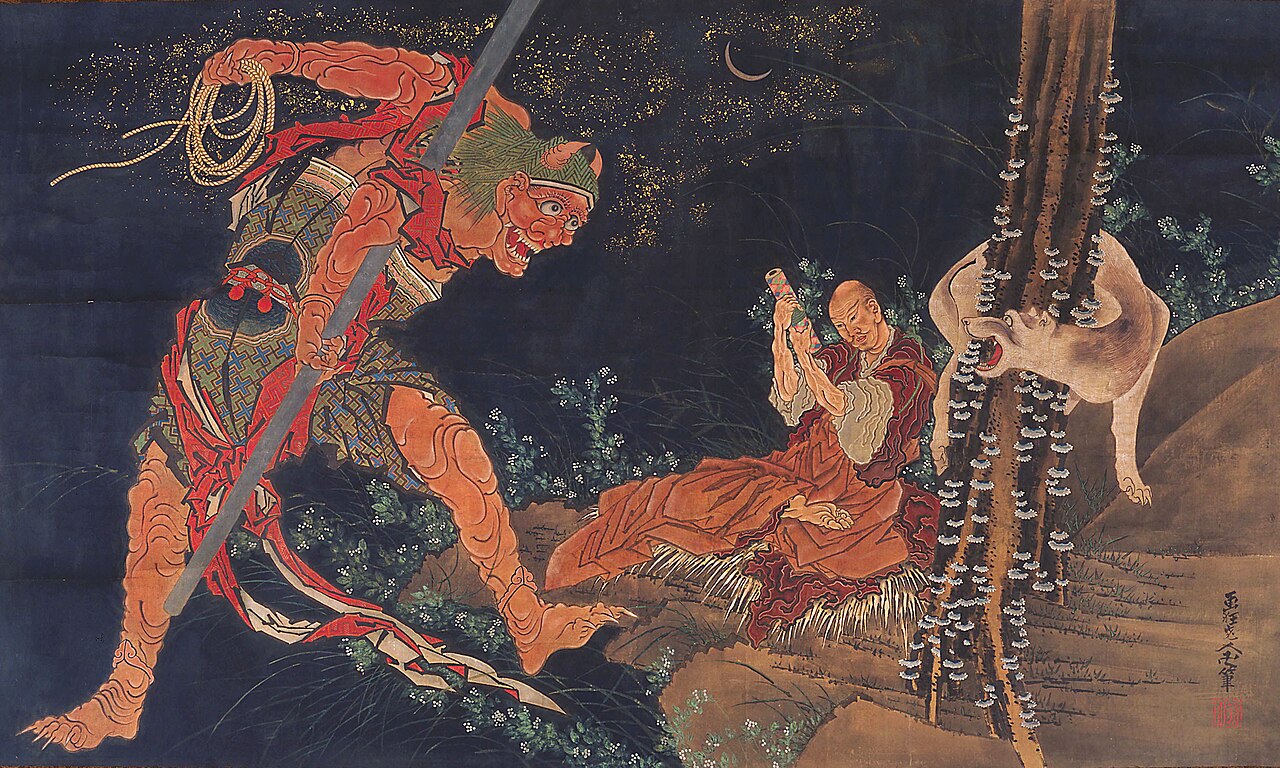
High in the cedar forests of the mountains live the tengu, and they have one of the most interesting backstories of any yōkai because their reputation completely flipped over the centuries. In early Buddhist tradition the tengu were dangerous, arrogant demons: spirits of vanity and corruption who led monks astray and delighted in human pride. They were the kind of being you prayed to be protected from.
Over time, that softened. The tengu became the fierce but honourable guardians of the mountains and forests, associated with the yamabushi, the wandering ascetic monks of the peaks. They are usually shown one of two ways: as the crow-like karasu-tengu, with a beak and black wings, or as the more human konoha-tengu, a red-faced man with a famously long nose. They are imagined as supreme masters of martial arts and swordsmanship, and there are legends of great warriors who learned the blade from a tengu in the mountains. Proud, powerful, and quick to punish arrogance in humans, they sit somewhere between monster and minor god.
Oni, the ogres of hell
The oni is the brute of the Japanese imagination: a huge, hulking ogre, usually with red or blue skin, wild hair, a fanged mouth, one or more horns, and an iron club called a kanabō, often wearing nothing but a tiger-skin loincloth. Oni are the muscle of the supernatural world: bringers of disaster, disease, and misfortune, and the torturers and guards of the Buddhist hells, where they herd and punish the damned.
They are also, importantly, still part of everyday life. Every year at Setsubun, in early February, Japanese families drive out the bad luck of the previous year by throwing roasted soybeans out the door and around the house, shouting "Oni wa soto, fuku wa uchi!" ("Demons out, fortune in!") It's a centuries-old ritual aimed squarely at the oni, and it's a lovely example of how a fearsome yōkai becomes domesticated into a children's festival without ever quite losing its menace.
Kitsune, the fox who wears a human face
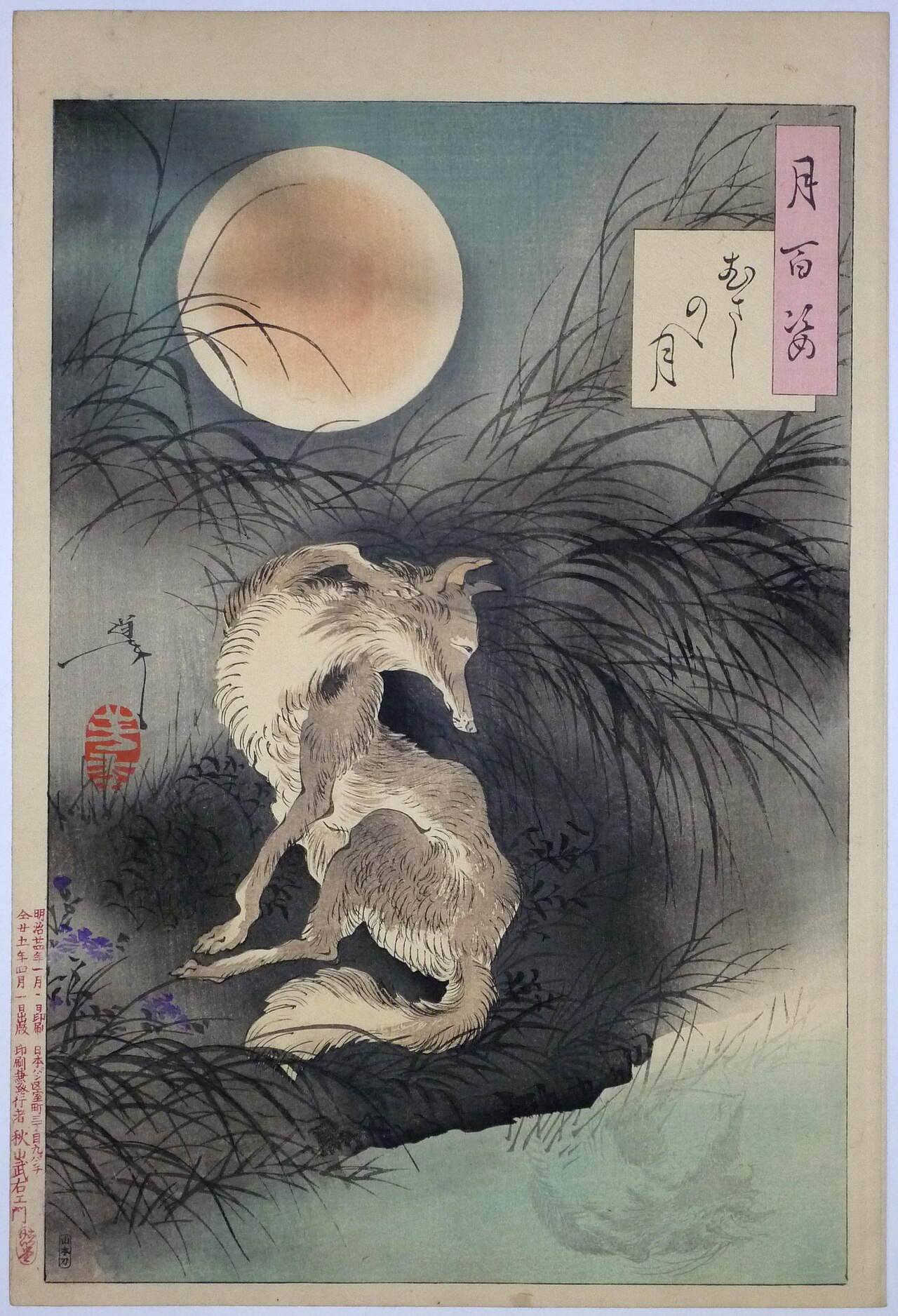
Few yōkai are as beloved or as ambiguous as the kitsune, the fox spirit. Foxes in Japanese folklore are intelligent, magical, and long-lived, and the older and wiser one grows, the more tails it gains, up to nine, at which point the kyūbi no kitsune is a creature of immense, near-divine power. Their signature trick is shapeshifting, most famously into a beautiful woman who may marry an unsuspecting man and live with him for years before some small slip (a shadow, a reflection, a stray tail) gives her away.
The kitsune sits right on the line between sacred and sinister. The benevolent zenko are the messengers of Inari, the Shinto deity of rice, fertility, and prosperity; their fox statues guard thousands of shrines across Japan. But the wild nogitsune are tricksters who deceive, seduce, and torment for sport, lighting the night with eerie kitsunebi, "fox-fire." A kitsune can bring you a fortune or ruin your life, and you may not know which you're dealing with until it's far too late.
Yuki-onna, the woman in the snow
Yōkai are not all goblins and ogres; some are eerie and beautiful, and none more so than the Yuki-onna, the "snow woman." She appears during blizzards as a tall, unearthly woman with skin as white as the snow and, in many tellings, no warmth at all in her body. She drifts across the drifts leaving no footprints, and a traveller caught in the storm may see her floating toward him. It is the last thing he ever sees, as she breathes a killing frost over him or simply leads him deeper into the white until he freezes.
But the Yuki-onna is more than a snow-demon, and her best-known story gives her real pathos. In the version popularised by Lafcadio Hearn in his collection Kwaidan, she spares a young man on the condition that he never speak of meeting her, then later appears in his life as a human woman, marries him, and bears his children, only to vanish in grief and fury when, years on, he finally breaks his promise and tells the tale. She is one of the great examples of how yōkai can be frightening and tragic at the same time.
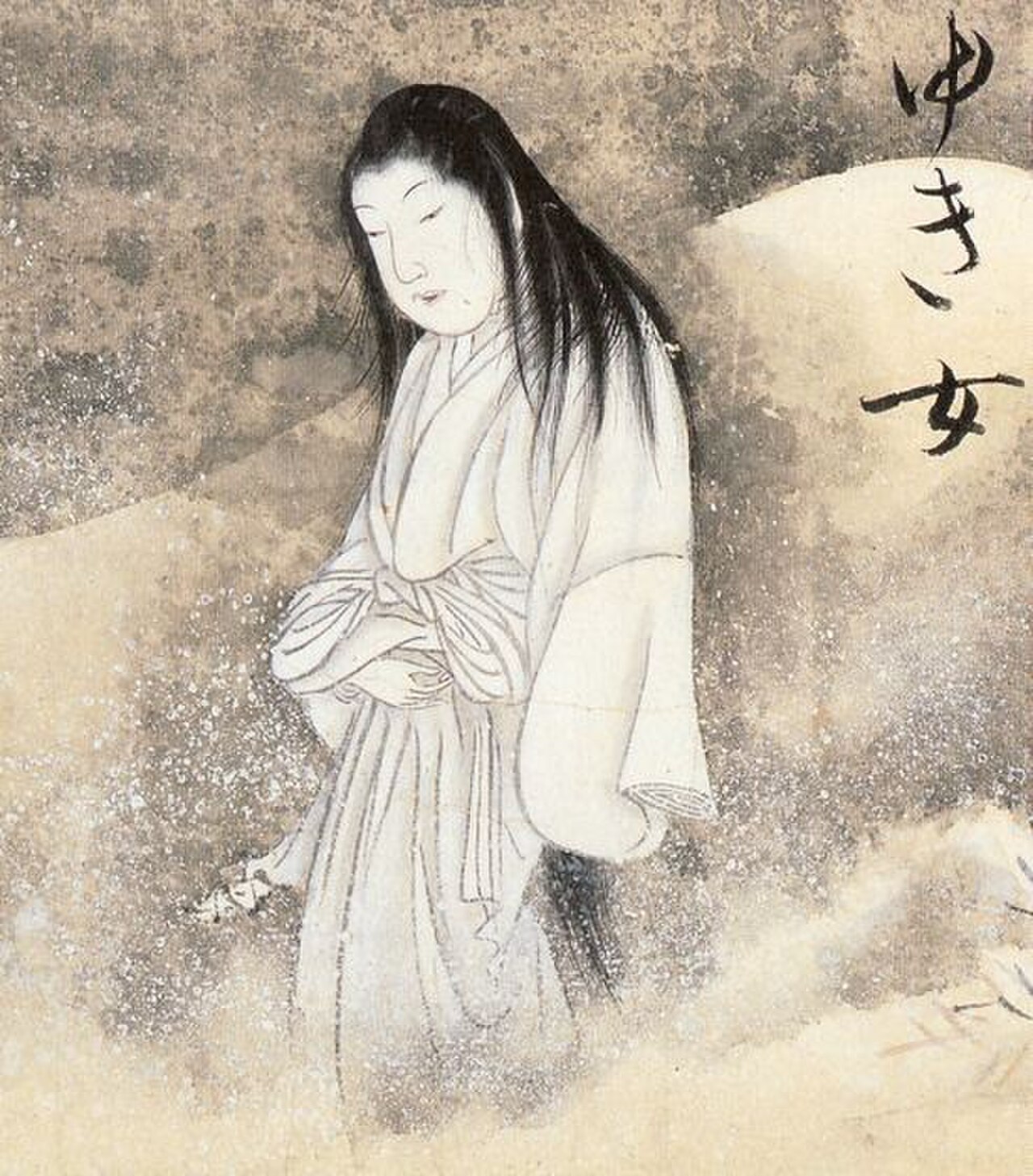
"She was very pale; but her beauty was almost supernatural… a white woman, bending above him, and breathing upon him; and her breath was like a bright white smoke."— Lafcadio Hearn, "Yuki-Onna," from Kwaidan: Stories and Studies of Strange Things (1904)
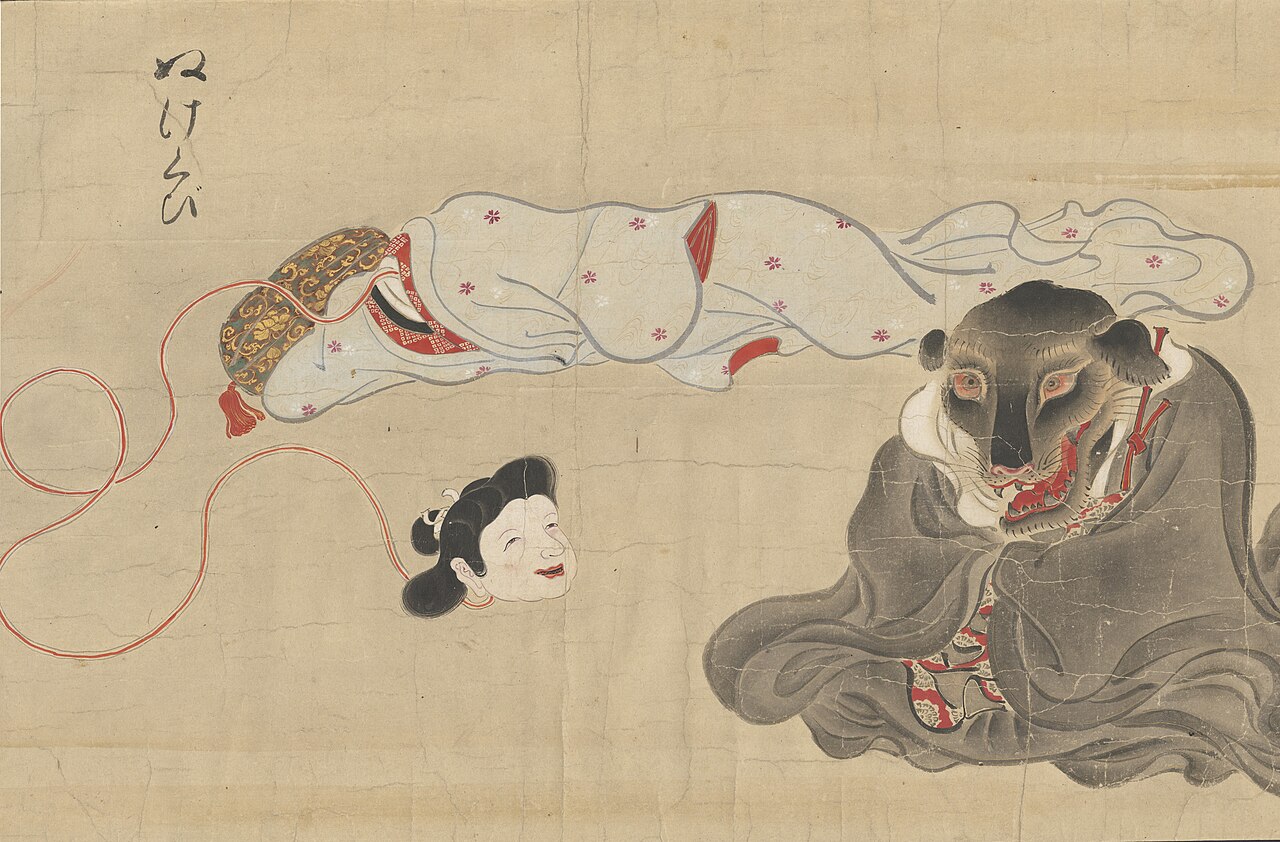
Rokurokubi, the neck that never ends
This one preys on a very domestic kind of dread. By day, a rokurokubi looks like a perfectly ordinary woman: a wife, a servant, a neighbour. But at night, when she sleeps or thinks herself unobserved, her neck stretches out to an impossible length, snaking through the house to spy, to startle, or to lap at lamp oil. A close cousin, the nukekubi, is even stranger: her entire head detaches and flies off into the dark on its own errands, leaving the body behind, and she must reattach before dawn or die.
What makes the rokurokubi so unsettling is the idea hiding inside it: that the person beside you, the one you think you know completely, might become something else entirely the moment you look away. It's the monster as the secret life of the familiar.
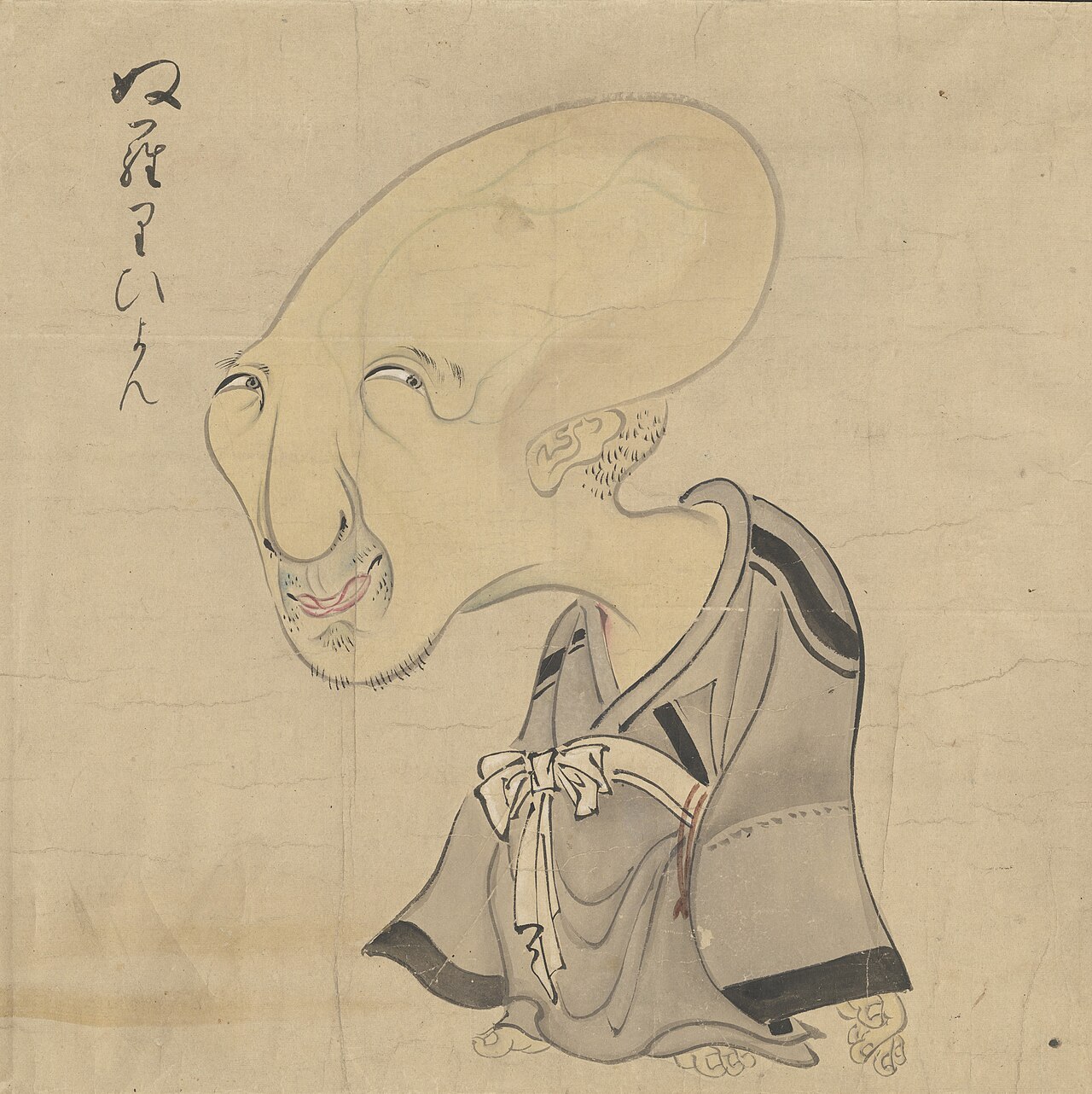
Nurarihyon, the uninvited master of the house
To close, here is a small, strange, and very human one. The Nurarihyon is usually drawn as a dignified old man with an enormous, elongated, gourd-shaped head, dressed in fine robes. His "haunting" is almost a piece of social comedy: he slips into your home in the evening, at the busiest hour when the household is distracted with dinner, and makes himself thoroughly at home, sitting in the best seat, drinking your tea, smoking your tobacco, behaving for all the world like the master of the house. And the strangest part of the legend is that the family, somehow, cannot bring themselves to challenge him. They treat him as though he belongs there. He drinks his tea and leaves, and only afterwards does anyone think to ask who on earth that was.
Later tradition even promoted him to the supreme commander of all yōkai, the unflappable leader of the Night Parade. There's something perfect about that: the boss of the monsters isn't the biggest or the fiercest, but the one with the sheer nerve to walk into your house, sit down, and dare you to say a word.
"Yōkai are basically Japanese demons — evil spirits you're supposed to fear and fight."
Most yōkai aren't evil so much as other. Many are mischievous, comic, tragic, or simply indifferent; some are protective, some are worshipped, and some are barely more than a household nuisance. They reflect a worldview in which the supernatural is woven into everyday life: not a war between good and evil so much as a crowded, unpredictable world where the strange has a face and a name.
Why the monsters never died
You might expect that modern, electrified, sceptical Japan would have left the yōkai behind. The opposite happened. In the twentieth century the artist Shigeru Mizuki almost single-handedly revived the old bestiary for a mass audience, and from there the yōkai poured into manga, anime, film, and video games. Anyone who has played a monster-collecting game, watched a Studio Ghibli film thick with forest spirits, or met a shape-shifting creature in a Japanese cartoon has been wandering through the Night Parade without knowing it. The tsukumogami, the kappa, the kitsune, and the rest are arguably more famous now, worldwide, than at any point in their long history.
That's the quiet triumph of the yōkai. They began as a way for frightened, curious people to make sense of a strange world, to give the dark a shape they could name, laugh at, ward off, or pity. Centuries later, the names still work. The umbrella still hops. The fox still wears a human face. And somewhere, just out of sight, the parade is still moving down the night street.
Scholars debate how much today's media yōkai still count as "folklore" and how much they've become pure entertainment, detached from the local beliefs that bore them. Where does a living tradition end and a franchise begin? But that line has always been porous. Toriyama Sekien was already turning village ghost stories into commercial bestsellers in the 1770s. The yōkai have survived precisely because every age gets to redraw them.
Read next: Angkor: The Canals That Built a Megacity, and the Floods That Broke It and Vlad the Impaler: The Real Dracula.
Sources & further reading
- Michael Dylan Foster, The Book of Yōkai: Mysterious Creatures of Japanese Folklore — the best single English-language introduction.
- Toriyama Sekien, Gazu Hyakki Yagyō ("The Illustrated Night Parade of a Hundred Demons," 1776) and his later illustrated yōkai encyclopedias.
- Lafcadio Hearn, Kwaidan: Stories and Studies of Strange Things (1904) — including the classic "Yuki-Onna."
- Komatsu Kazuhiko, the leading modern scholar of yōkai, on their role in Japanese culture; and the manga of Shigeru Mizuki, who revived them for the modern age.