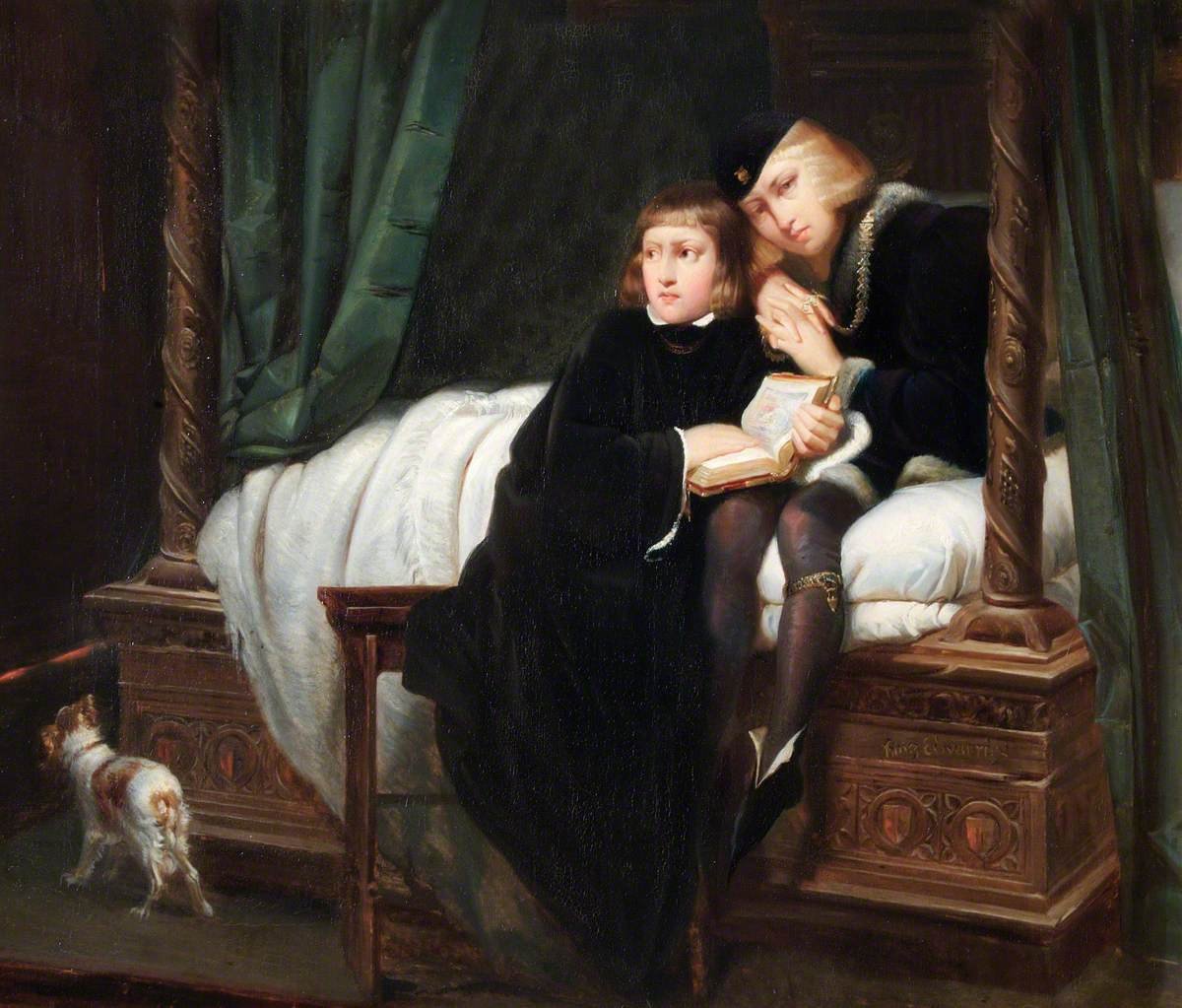
Through the summer of 1483 the two boys were seen less and less. Passers-by who had watched them shooting at the butts and playing in the garden of the Tower of London noticed that the games stopped, then that the faces at the windows grew rarer, then that there were no faces at all. An Italian visitor in the city wrote that men who spoke of the elder boy, the uncrowned king, had begun to weep, as if he were already gone. He could not say how they had died, or whether they had died at all. Nobody could. More than five hundred years later, nobody can, and a marble urn a short walk from that spot holds the bones most likely to answer the question, sealed by an order no one has been willing to lift.
This is the oldest unsolved missing-persons case in English history, and it has never gone cold in the ordinary sense. Every generation reopens it. The two children at its centre were a king and a prince; the men who might have wanted them dead were among the most powerful in the land; and the one piece of physical evidence that could settle even part of it sits in a church, behind stone, under a rule that says it must not be touched. The mystery of the Princes in the Tower is a locked box in more than one sense.
Two boys and an empty throne
Edward IV died on 9 April 1483, worn out at forty after a reign that had clawed the crown back from civil war. He left two sons. The elder, also Edward, was twelve, and had been raised at Ludlow on the Welsh march under the eye of his mother's family, the Woodvilles. The younger, Richard of Shrewsbury, Duke of York, was nine. On paper the succession was simple. The elder boy was already Edward V. All that remained was to bring him to London, set the crown on his head, and let the machinery of a royal minority run until he was old enough to rule alone.
Nothing about it turned out simple. A boy king meant a regency, and a regency meant power for whoever held it. The dead king's brother, Richard, Duke of Gloucester, had been named Lord Protector. The queen's kin, the Woodvilles, had raised the heir and meant to keep him close. Two factions, one child, and a crown that would not sit still: the ingredients were laid out before anyone had done a single wrong thing.
It helps to remember how recent the last bloodletting was. The Wars of the Roses had not ended so much as paused. Men now in their forties had watched kings deposed, restored and killed inside their own lifetimes. To them a disputed minority did not look like a constitutional puzzle. It looked like the opening of a familiar and dangerous game, and everyone reached for advantage at once.
The road that ended at the Tower
Edward V set out for his coronation and never arrived at one. At Stony Stratford, on the way to the capital, his uncle Gloucester and the Duke of Buckingham met the royal party, sent the boy's escort away, and arrested the men closest to him: his half-brother Richard Grey, his chamberlain Thomas Vaughan, and his uncle Anthony Woodville, Earl Rivers. The three were taken north and, in late June, beheaded at Pontefract without any trial worth the name. The twelve-year-old king rode on to London in the keeping of the uncle who had just stripped away everyone he trusted.
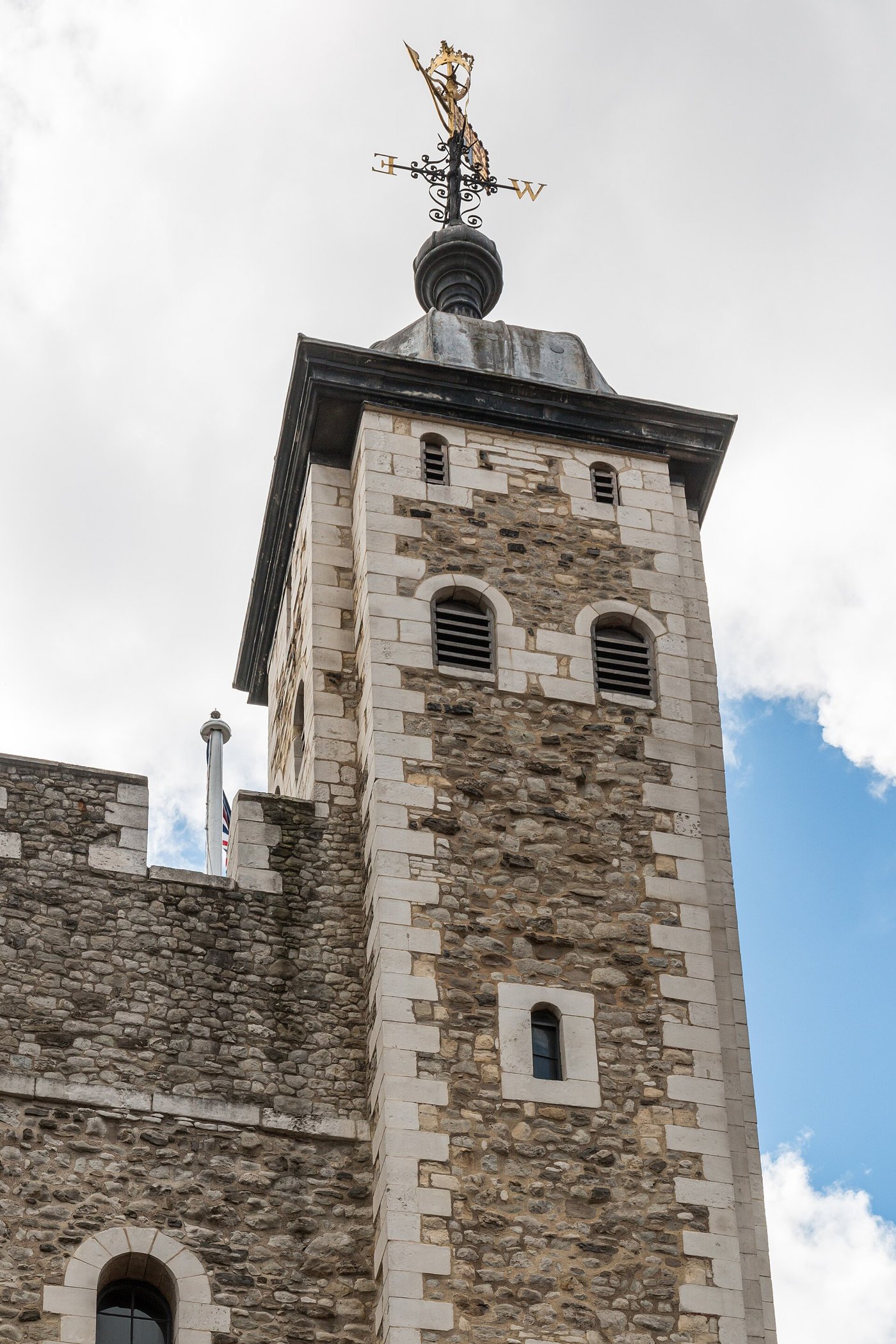
He was lodged in the Tower. That word carries four centuries of menace it did not yet have, and the difference matters. In 1483 the Tower of London was a fortress, a mint, an armoury and a royal residence all at once, and it was the customary place for a monarch to stay in the days before a coronation. Putting Edward there was, on its face, correct procedure. What made it sinister came later, and gradually.
The image of the Tower as a place of torment belongs mostly to the Tudor century and after. In the 1480s it was where the sovereign kept treasure, minted coin, stored weapons and slept before great ceremonies. Kings held court there. The royal apartments were comfortable, not cells. This is why lodging the young king inside the walls raised no alarm at first: it was exactly where a king-in-waiting was supposed to be. The building did its darkening in hindsight, once people knew how the story went.
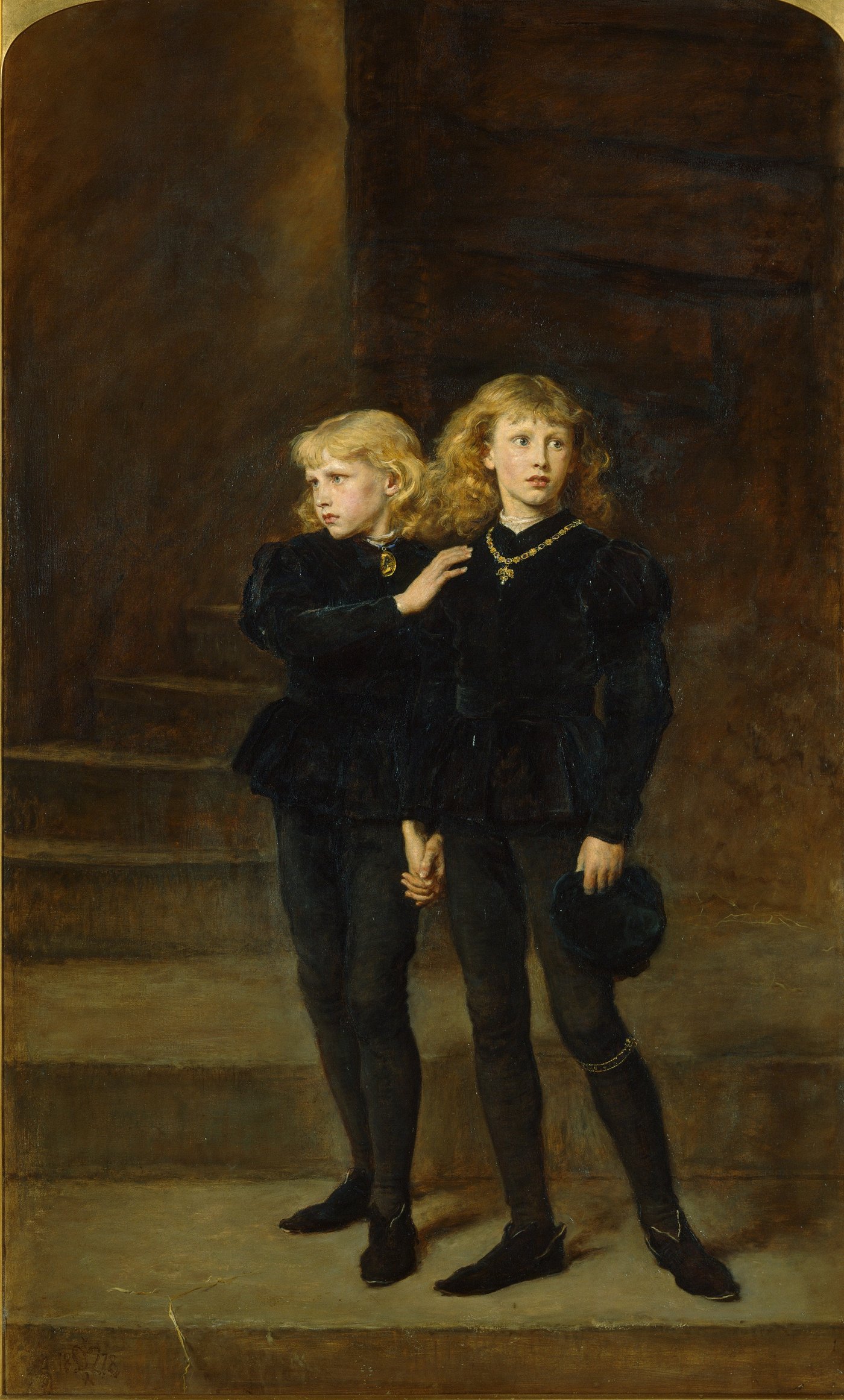
In mid-June the second boy joined the first. Richard of York had been sheltering with his mother, Elizabeth Woodville, who had fled into sanctuary at Westminster Abbey with her daughters the moment the arrests began. Under heavy pressure (and, some said, the threat of force at the abbey doors) she gave him up, on the argument that his brother needed a companion and that a child could hardly be a threat to anyone. The nine-year-old was escorted to the Tower to join the twelve-year-old. The brothers were together. Neither would be seen at liberty again.
Then the ground shifted under both of them. Word spread of a supposed impediment to their parents' marriage: that Edward IV had promised himself to another woman, Lady Eleanor Butler, before he ever wed Elizabeth Woodville, and that the earlier promise made the later marriage void. If that were true, the king's children were illegitimate, and illegitimate children could not inherit. A bishop, Robert Stillington, was said to have brought the story forward. An assembly accepted it. On 6 July 1483, three months after his brother's death, Richard, Duke of Gloucester, was crowned King Richard III. The boy who had been Edward V was now, in the eyes of the new regime, nobody in particular, and he was inside a fortress his uncle controlled.
The witnesses, and what they did not know
Here is the hard fact at the centre of everything: no contemporary source records the deaths of the princes. Not one. There is no body found in 1483, no confession taken, no royal announcement, no funeral. What survives is an absence: two boys who are present in the record through the early summer and then simply stop being mentioned as living people. The whole vast literature of the mystery is built on that silence, and on the guesses people made to fill it.
The closest thing to an eyewitness is Dominic Mancini, an Italian cleric who was in London through the spring and summer of 1483 and left around the time of Richard's coronation. His account, written that December, describes the young king being withdrawn to the inner rooms of the Tower and shown to the public more and more rarely, until he disappeared from view. Mancini reports that people already feared the worst. But he is careful, and honest, about the limit of his knowledge. He did not know whether Edward had been killed, and if so how. He wrote down the fear, not the fact.
Mancini matters because he was there, he was neither English nor a partisan, and he wrote before the Tudors existed to shape the story. That also makes him frustrating. He records rumour and mood (men weeping at the mention of the boy, a city bracing for bad news), but he sailed home in July 1483, so his testimony stops exactly where we most want it to continue. He tells us what London believed by midsummer. He cannot tell us what actually happened inside the Tower after he had gone.
The other early sources are no more conclusive. The Crowland Chronicle, written by someone close to the government, notes the rumour that the boys had died but stops short of saying how or on whose order. London's civic chronicles, set down later, name suspects and methods with a confidence the earlier writers never had. The pattern is worth noticing. The nearer a source stands to 1483, the less it claims to know. The certainty grows as the distance grows, which is the opposite of how reliable knowledge usually behaves.
The story England was handed
The version most people carry in their heads did not come from a witness. It came from Sir Thomas More, writing around 1513, thirty years after the events, under the first secure Tudor king. In More's telling the murders were arranged by Sir James Tyrrell, a servant of Richard III, and carried out by two hired men, Miles Forest and John Dighton, who smothered the sleeping children with their own pillows and bedding. The little bodies, he wrote, were buried at the foot of a staircase, then dug up and moved by a priest to some spot that died with him. Tyrrell, More added, confessed to the whole thing years afterwards, shortly before he was executed for an unrelated treason in 1502.
It is a vivid, novelistic account, and it has one large problem: almost none of it can be checked. No record of Tyrrell's supposed confession survives beyond More's say-so. The named killers are shadows. More himself was a child in 1483, was writing under a dynasty with every reason to blacken Richard's name, and left the work unfinished, which suggests he was not wholly satisfied with it either. Then William Shakespeare took the outline, gave the world a limping, gleeful monster of a king who orders the children's deaths on stage, and set the story in a form no history book has been able to dislodge since.
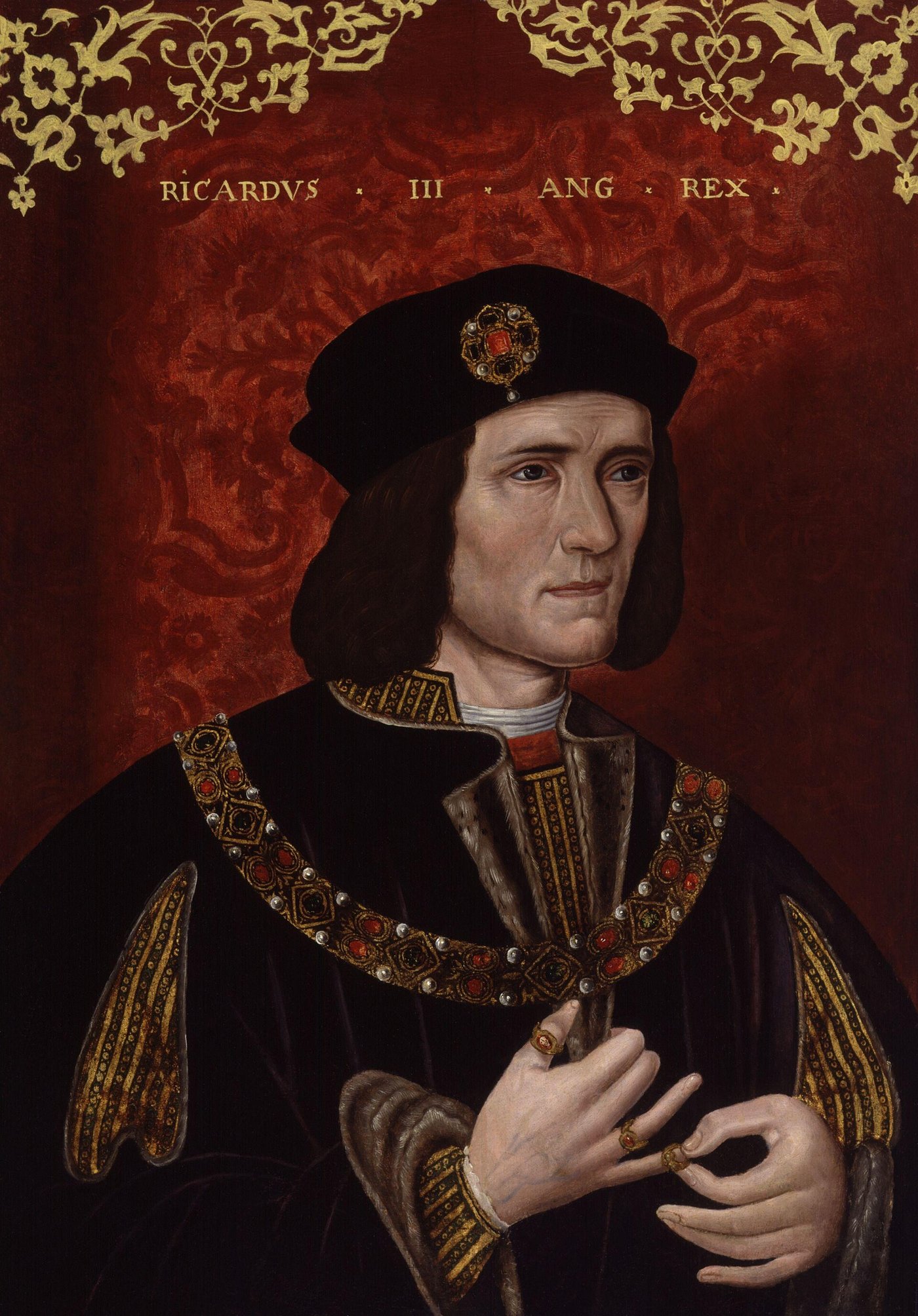
The popular verdict is settled: the wicked uncle had the boys murdered in their beds to clear his own path to the throne, and Shakespeare simply dramatised a known crime.
The verdict is popular, not proven. No contemporary source names Richard as the killer, describes the murders, or produces a body. The detailed version (Tyrrell, the pillows, the buried and reburied corpses) comes from Tudor writers a generation later, working for the regime that had beaten Richard at Bosworth and needed him to be a villain. Richard had a clear motive and the boys in his keeping, which makes him the obvious suspect and always will. But motive and opportunity are not evidence of the act, and on the act itself the record is blank. He has been convicted for five hundred years in a court that never heard from the defence.
None of this makes Richard innocent. He had the strongest motive, the boys were in his power, and their disappearance served him more than anyone. If a modern detective drew up a shortlist he would be at the top of it. The point is narrower and more uncomfortable: what we have against him is a strong suspicion dressed, over centuries, as a proven fact. And he is not the only name on the list.
Who else had reason
Start with the man who gained the throne in the end. Henry Tudor took the crown at Bosworth in 1485, and his claim was thin. He needed the sons of Edward IV to be gone as badly as Richard ever had, because living princes with better blood than his own would have made his reign impossible. If the boys were still alive in the Tower when Henry took London, he had both the motive and, now, the means. Some have argued the murders belong to the earliest days of his reign, not to Richard's at all, and that the Tudor version was written precisely to fix the blame elsewhere.
Then there is Henry Stafford, Duke of Buckingham, Richard's chief ally in the summer of 1483 and, by autumn, the leader of a rebellion against him. Buckingham had royal blood of his own and a nature that reached for more than it held. He had the access, the standing and, some think, an ambition that would not have balked at removing two children who stood between him and a crown. His revolt collapsed and he was executed, taking whatever he knew with him.
And there is the possibility that nobody planned it. The fifteenth century killed children easily, without malice, through fever and infection. If one or both boys sickened and died in the Tower of natural causes, a nervous regime might well have hidden the deaths rather than announce them and invite the charge of murder, producing exactly the silence we find. It is the least dramatic solution and, for that reason, the one most often passed over. It fits the evidence as well as any.
The bones under the stair
For nearly two centuries the question had no physical evidence attached to it at all. Then, in 1674, it acquired some. Workmen were pulling down a stone staircase on the south side of the White Tower (the stair that had led up to the chapel of St John) when, about ten feet down in the rubble, they struck a wooden chest. Inside were the bones of two children.
The find landed in a receptive age. Charles II, on the throne after his own family's near-destruction, was quick to accept that these were the murdered princes at last come to light. He had the bones gathered up and, in 1678, placed in Westminster Abbey. Sir Christopher Wren designed a white marble urn for them, carved with an inscription that names Edward V and his brother Richard and lays their deaths at their uncle's door. The urn stands in the Henry VII Lady Chapel, in the corner known as Innocents' Corner, a few hundred yards from where the children were last seen alive. It has stayed there ever since.
The trouble is that everything about the identification rests on assumption. The bones were found near where the story said bodies had been buried, at roughly the depth the story implied, and they belonged to two children. That was enough for a seventeenth-century king who wanted the case closed. It is nowhere near enough for anyone asking the question seriously. Nobody in 1674 could tell how old the bones were, whether they were even from the right century, whether the two children were related, or how they had died.
1933: the urn is opened
The one modern examination happened in 1933, when the urn was opened and the bones laid out for study by the archivist Lawrence Tanner and the anatomist William Wright, with a dental surgeon to read the teeth. They found the remains of two children whose ages, judged mainly from the teeth and jaws, fell close to those of the princes: the younger perhaps nine to eleven, the elder around twelve or thirteen. To the men of 1933 that near-match felt like confirmation. They came away satisfied that these were indeed Edward and Richard.
By the standards of their own field today, they could not have known any such thing. The examination could not establish the sex of either child, so it is not even certain the bones belonged to two boys. It could not date the remains, which the Tower's long history (Roman, Saxon, medieval) means could be centuries older than 1483. It could not show the two were siblings. Animal bones were reportedly mixed in with the human ones. The age estimates that seemed to clinch it only work if you already assume the bones are the princes; take that assumption away and they prove nothing about identity at all. The 1933 study did not solve the case. It dressed an old assumption in the language of science and put it back in the urn.
Strip the 1933 findings back to what they actually support and you are left with a modest sentence: the urn holds the bones of two young people who died at some unknown time. Everything beyond that (that they are male, that they are brothers, that they died in 1483, that they are Edward and Richard, that they were murdered) is inference, assumption or inherited belief, not demonstrated fact. The bones have never been radiocarbon dated. Their DNA has never been read. The single most testable object in the whole five-hundred-year mystery has been examined properly exactly once, badly, nearly a century ago.
The test that is never allowed to happen
This is where the case turns strange. The tools to answer the central questions now exist. Radiocarbon dating could place the bones within a range and settle at a stroke whether they even date from the right era. Ancient-DNA analysis, of the kind that has grown routine, could determine sex, establish whether the two children were siblings, and test their maternal line against known descendants. We even have a reference point: in 2012 the skeleton of Richard III himself was dug up from beneath a car park in Leicester and identified partly through DNA traced down the female line of his family. The forensic machinery is built, tested and waiting.
It does not get used, because permission is refused. The bones lie in a royal peculiar, a church answerable directly to the Crown, and human remains interred there cannot be disturbed without the reigning monarch's consent. That consent has been sought more than once, by historians and film-makers, and it has not been given. The reasons offered are partly about precedent (open one royal tomb for curiosity and you invite requests to open others) and partly about the dignity of the dead. The effect is that the one object able to speak sits mute, a few feet of stone away from anyone who wants to listen, held shut by a rule rather than a fact.
So the situation is this. A question that has consumed historians for five centuries could be partly answered in a matter of weeks by a laboratory. The evidence exists. The methods exist. The living descendants for comparison can be traced. The only missing element is a signature on a permission that no one in authority has been willing to provide. The mystery endures not because it is unsolvable but because it has been decided, for now, that it should not be solved.
The case that says nobody died
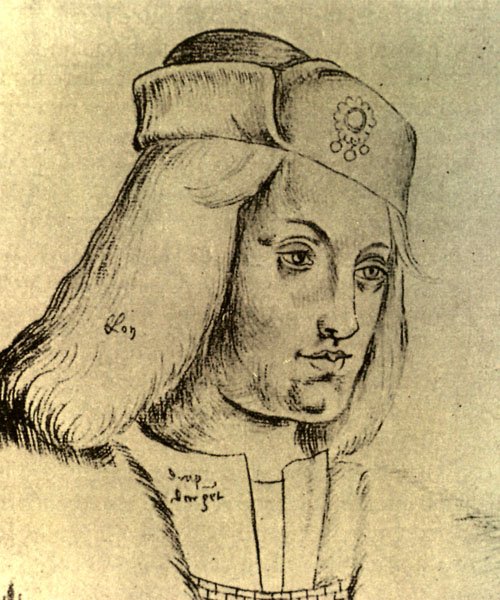
There is a whole other reading of the mystery, and it has been gaining ground rather than losing it. What if the boys were not murdered at all? What if one or both simply survived and vanished into other lives? The idea is not new. Within a decade of the disappearance, a young man surfaced in Europe insisting he was Richard of York, the younger prince, alive and grown. Perkin Warbeck was backed by Margaret of Burgundy, sister of Edward IV, recognised by foreign courts, and treated seriously enough that Henry VII spent years and a great deal of effort destroying him before hanging him in 1499. The official line was that Warbeck was a boatman's son from Tournai. Not everyone was convinced then, and not everyone is now.
In recent years a long-running research effort, the Missing Princes Project led by the historian Philippa Langley (the same researcher whose work helped locate Richard III's grave), has pushed the survival theory hard. Applying the methods of a cold-case police inquiry to the archives, the project has surfaced documents it reads as “proof of life”: material suggesting the elder prince stood behind a rising in 1487 and that Warbeck really was the younger. A 2024 documentary and a 2025 book laid the argument out for a wide audience under a bold banner: that history's greatest cold case had been solved, and the answer was that the princes lived.
Not everyone agrees, and the disagreement is sharp. Critics point out that the documents are open to gentler readings, that pretenders had every reason to claim royal blood whether or not they carried it, and that “solved” is a heavy word for evidence that remains circumstantial. What the survival case has undeniably done is break the spell of the Tudor version. For five hundred years the question was mostly who killed the princes. Now, seriously, in print, the prior question is back on the table: whether anyone killed them at all.
Why it will not let go
Most historical mysteries fade because the trail goes cold and stays cold. This one refuses to, and the reason is the peculiar shape of it. Almost every other cold case is starved of evidence. This one has evidence (two skeletons, in a known place, under a known lid) and has chosen not to read it. The gap between what could be known and what is allowed to be known is what keeps the thing alive. Frustration is a kind of fuel.
The two boys, meanwhile, have long since stopped being children in the public imagination and become something more useful and less human: a symbol to hang an argument on. To one side they are proof of Richard's wickedness, to another proof of Tudor slander, to a third proof that they never died at all. Everyone who takes up the case remakes them slightly in the image of what they want the past to be. The actual Edward and Richard, a nervous twelve-year-old who was king for eleven weeks and his little brother of nine, are almost lost under the weight of it.
That is what the urn in Innocents' Corner really holds. Perhaps the princes, perhaps two strangers from some older century, but certainly a question that a single afternoon in a laboratory could turn from legend into fact. The bones are patient. They have kept their secret through the reigns of thirty-odd monarchs, and they will keep it a while longer, waiting on a permission that could be granted tomorrow and has not been granted yet. Somewhere in a church in Westminster, the answer is already lying in the dark. All it is waiting for is leave to speak.
Read next: Joan of Arc: The Peasant Girl Who Crowned a King and The Green Children of Woolpit: Medieval England's Strangest Visitors.
Sources & further reading
- Dominic Mancini, The Usurpation of Richard III (De occupatione regni Anglie per Riccardum tercium), ed. and trans. C. A. J. Armstrong (Oxford University Press, 2nd ed. 1969).
- Thomas More, The History of King Richard III, ed. Richard S. Sylvester (Yale University Press, 1963).
- Nicholas Pronay and John Cox (eds.), The Crowland Chronicle Continuations, 1459–1486 (Richard III and Yorkist History Trust, 1986).
- Lawrence E. Tanner and William Wright, “Recent Investigations Regarding the Fate of the Princes in the Tower,” Archaeologia, vol. 84 (1934).
- Alison Weir, The Princes in the Tower (Bodley Head, 1992).
- Philippa Langley, The Princes in the Tower: Solving History's Greatest Cold Case (History Press, 2025), and the associated Missing Princes Project.
Image credits (via Wikimedia Commons): the two princes in the Tower — Paul Delaroche (public domain); the White Tower — Dietmar Rabich (CC BY-SA 4.0); the princes on the stair — John Everett Millais (public domain); Richard III — unknown artist, National Portrait Gallery (public domain); Perkin Warbeck — Jacques Le Boucq (public domain).