The storm came up in the strait between Kythera and the Peloponnese on the night of 16 September 1802, and the little brig riding it was carrying an impossible cargo. In her hold sat seventeen wooden crates, and inside them lay pieces of the Parthenon: carved figures that had stood on the Acropolis of Athens for more than two thousand years. By the following morning the ship had struck rock near the harbour of Avlemonas, filled with water, and settled onto the seabed with all of it still aboard. Nobody drowned. The marble did.
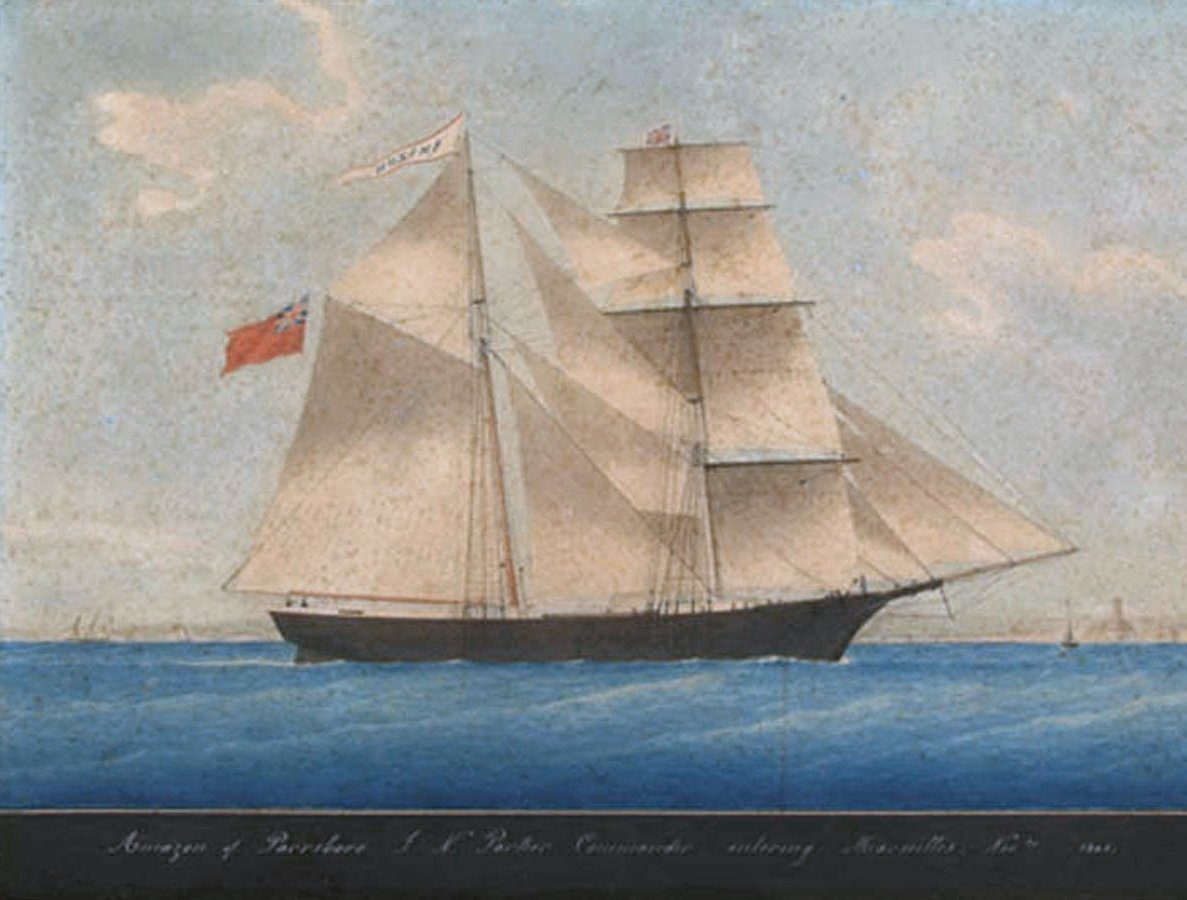
The ship was called the Mentor, and she belonged to Thomas Bruce, seventh Earl of Elgin. For the next two years teams of sponge divers went down into the clear water off Kythera to bring the crates back up, one at a time, and in the end they recovered every one. The sculptures went on to London, to the British Museum, and to two centuries of argument that has still not ended. But for a while, long enough to matter, the most famous carvings in Europe lay drowned off a small Greek island, and the sea very nearly kept them.
A ship with an unusual cargo
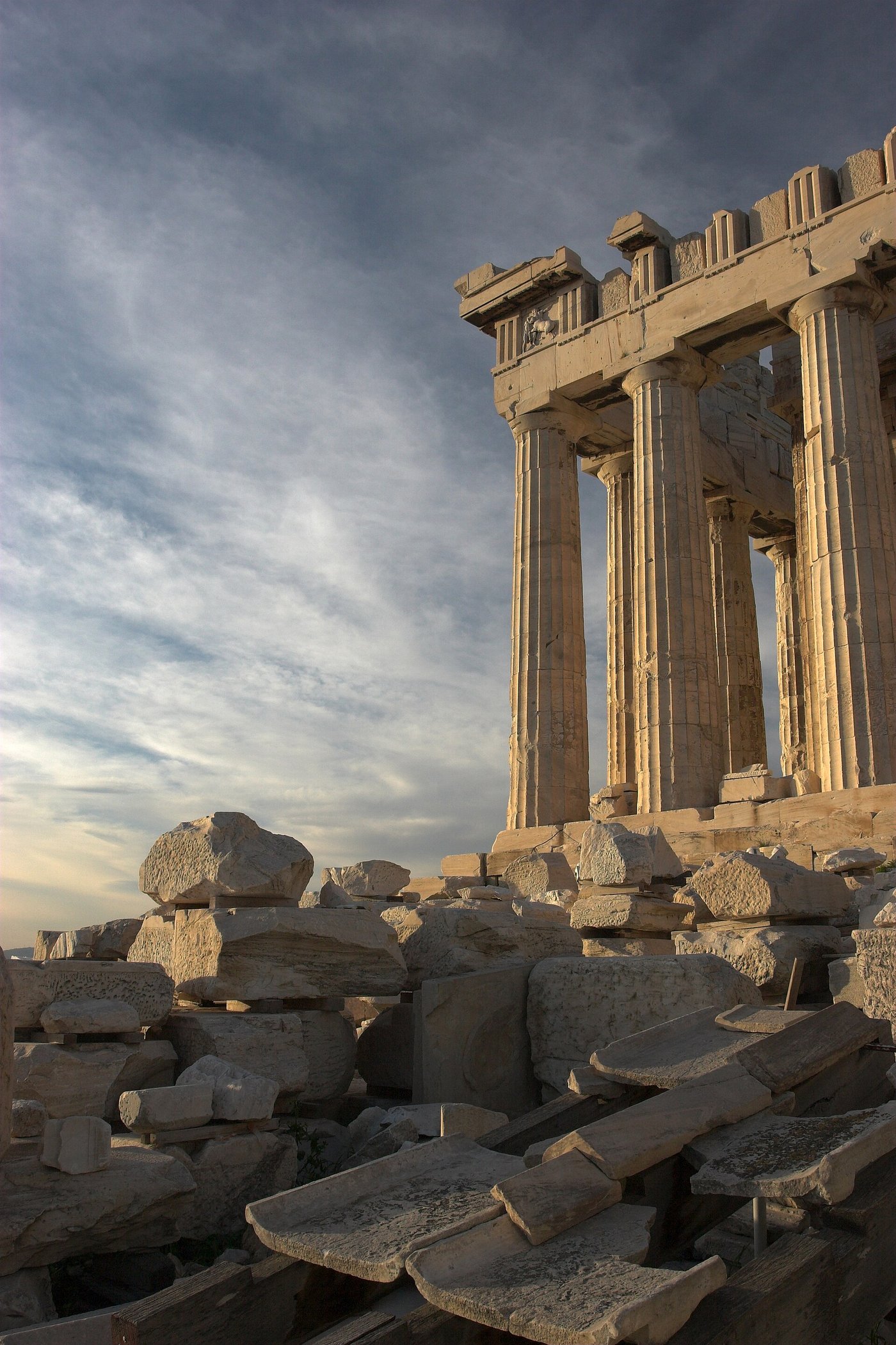
To understand how the Parthenon ended up on the bottom of the sea, you have to start with a diplomat in a hurry. Lord Elgin was appointed British ambassador to the Ottoman Empire in 1799, and Greece then was Ottoman territory, ruled from Constantinople. Athens was a provincial town living among its own ruins. The Parthenon, built in the fifth century BC as a temple to Athena, had already led several lives by the time Elgin's agents reached it. It had been a church, then a mosque. In 1687 a Venetian shell had struck the gunpowder the Ottomans were storing inside it, and the explosion tore the roof off and scattered columns across the hill.
Elgin's original plan was modest and, by the standards of the day, respectable. He wanted his artists to draw the sculptures and take plaster casts, so that the fashionable houses of Britain could copy their proportions. That was how a wealthy man improved his country's taste in 1800: he brought the classical world home in the form of drawings and moulds. What changed the plan was ambition, opportunity, and a piece of paper whose exact wording nobody can now produce.
The man who wanted the marbles
Elgin was a Scottish nobleman with expensive ideas and, increasingly, money troubles. He hired a team led by an Italian painter, Giovanni Battista Lusieri, and set them loose on Athens. At first they sketched and measured. Then, in 1801, Elgin obtained a document from the Ottoman authorities (a firman, an official order) that his people used to justify a far larger operation: not just drawing the sculptures but prising them off the building and carrying them away.
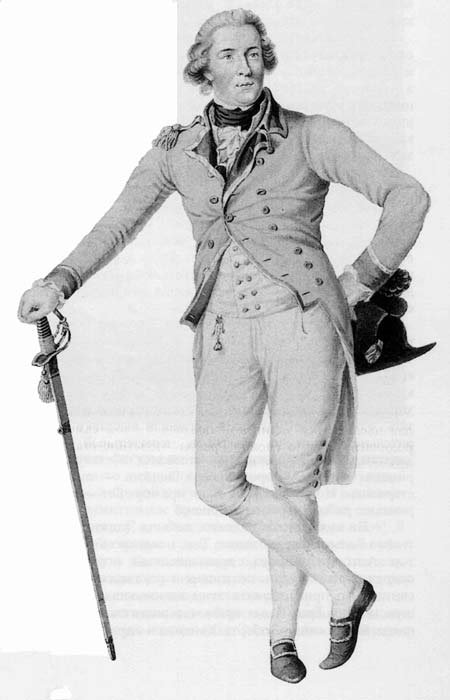
Here is the first of the story's hard knots. No one has ever found the original firman. What survives is an Italian translation of the text, kept among the papers of one of Elgin's chaplains, and it is far vaguer than the licence his workmen claimed. It speaks of scaffolding, of drawing and moulding, of removing pieces of stone with inscriptions, not of stripping the standing sculpture off the most famous temple in the world. Whether the local Ottoman governor stretched the permission, or was bribed into stretching it, or simply looked the other way, is something historians have argued over ever since. What is not in doubt is what happened next.
Taking down a temple
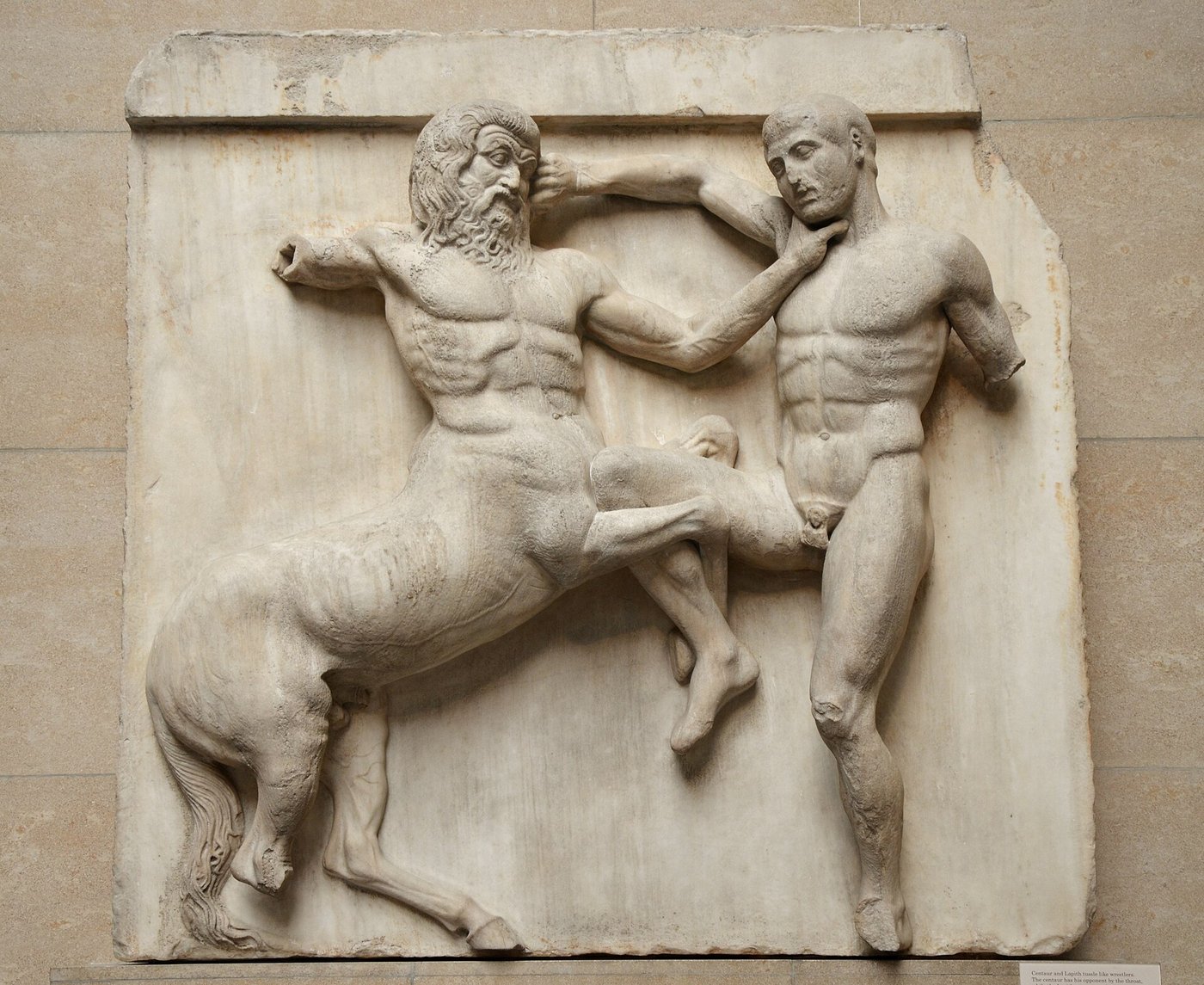
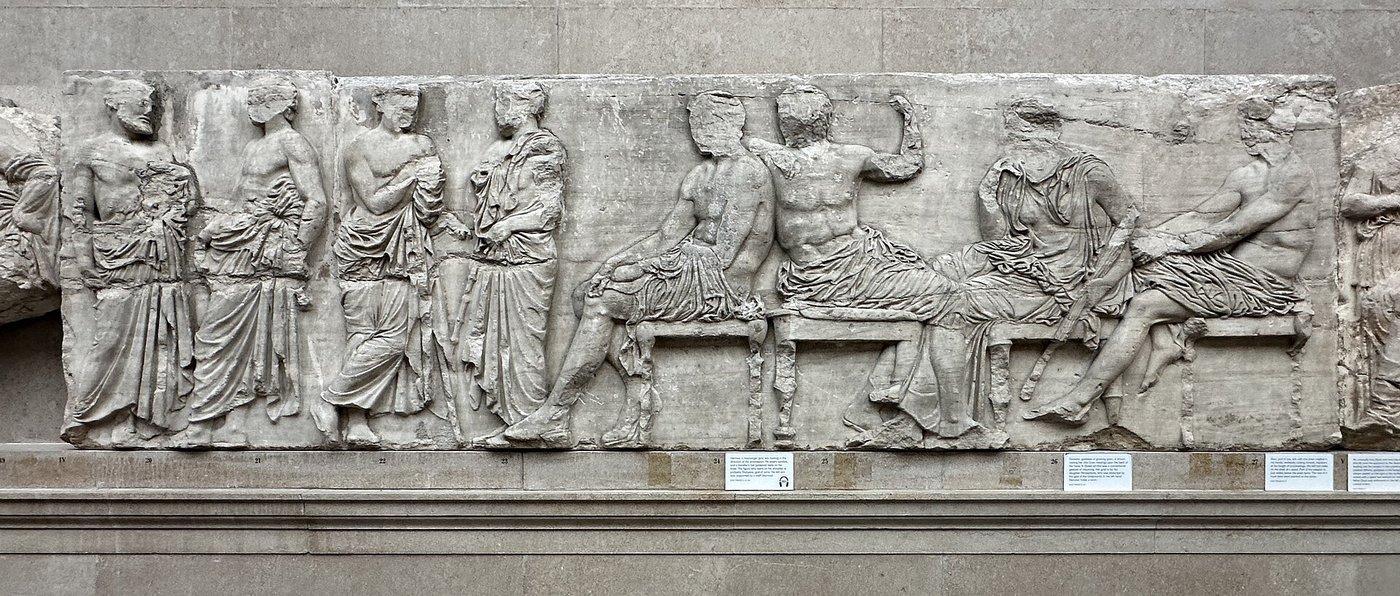
Between 1801 and 1804 Elgin's crews took down roughly half of the sculpture that still survived on the Parthenon. They removed a long stretch of the frieze (the carved procession that had run around the top of the building) along with figures from the pediments at each end and many of the square relief panels called metopes. Getting the marble down was brutal work. Some pieces were sawn from their settings to make them lighter. In at least one case a cornice was allowed to crash to the ground, and a workman was reported to have wept as it fell.
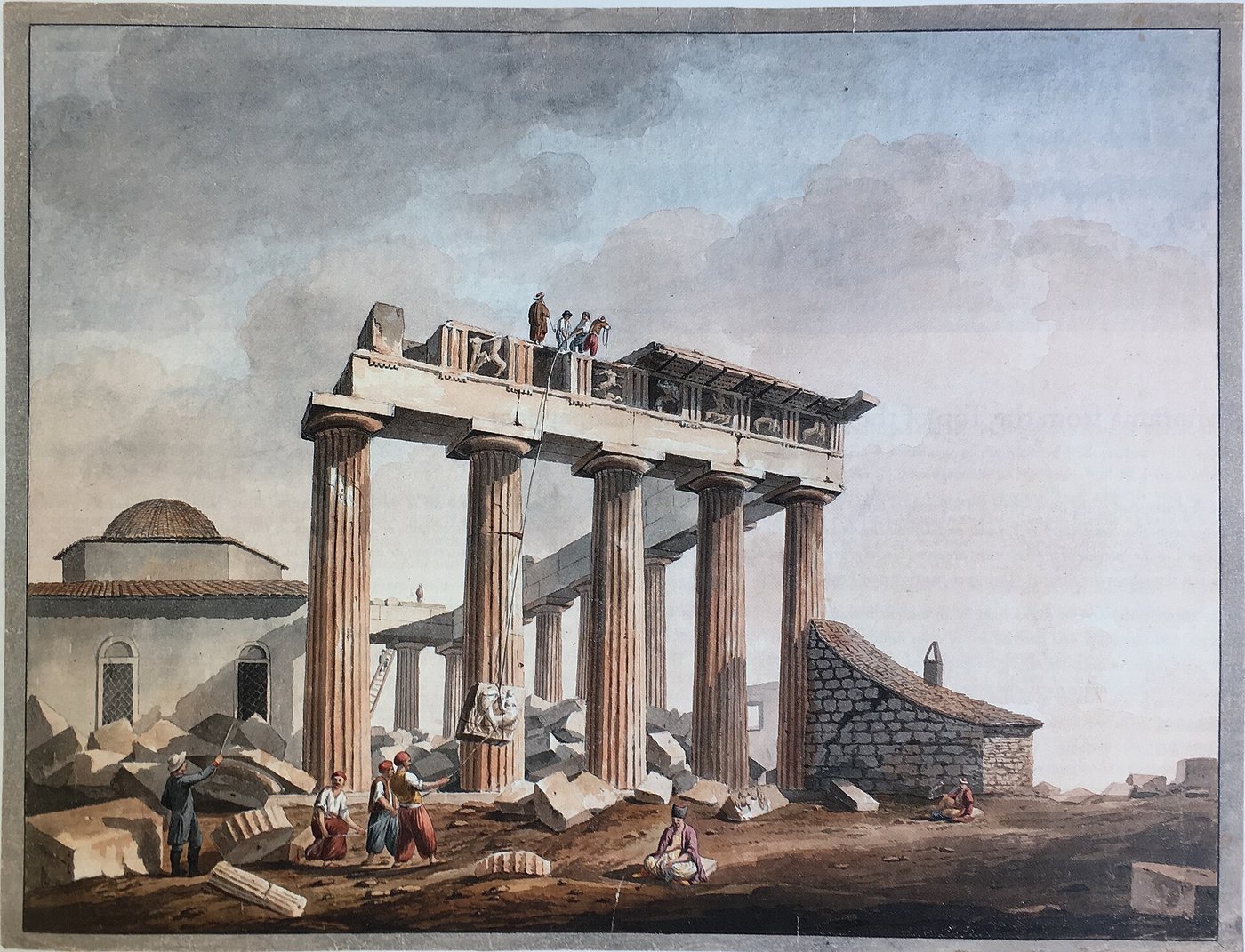
The pieces were crated and carried down to the harbour at Piraeus, and from there they had to cross the sea. Elgin's agents shipped them out in batches, wherever they could find room on a passing vessel. But there was more marble than there were ships willing to take it, and the crates piled up. To move his own cargo on his own schedule, Elgin used his own brig. That was the Mentor.
"Dull is the eye that will not weep to see / Thy walls defaced, thy mouldering shrines removed / By British hands, which it had best behoved / To guard those relics ne'er to be restored."— Lord Byron, Childe Harold's Pilgrimage, Canto II (1812)
Byron loathed what Elgin had done, and said so in verse that half of literate Britain then read. He coined a word for it (he called the earl and his kind despoilers), and he made the removal a scandal rather than a triumph. Not everyone agreed. To many at the time, rescuing ancient art from a neglected corner of a crumbling empire was exactly what a cultured gentleman ought to do. That disagreement, fully formed by 1812, is essentially the same argument being had today.
The last voyage of the Mentor
In September 1802 the Mentor loaded seventeen crates at Piraeus and set sail for Malta, the first leg of the long haul to England. Aboard were carved blocks, a throne, and other antiquities Elgin's people had gathered. The ship rounded the southern capes and entered the waters off Kythera, the island the Venetians had called Cerigo, which sits at the hinge between the Aegean and the open Mediterranean. It is a beautiful, dangerous stretch of sea, exposed to weather from several directions at once.
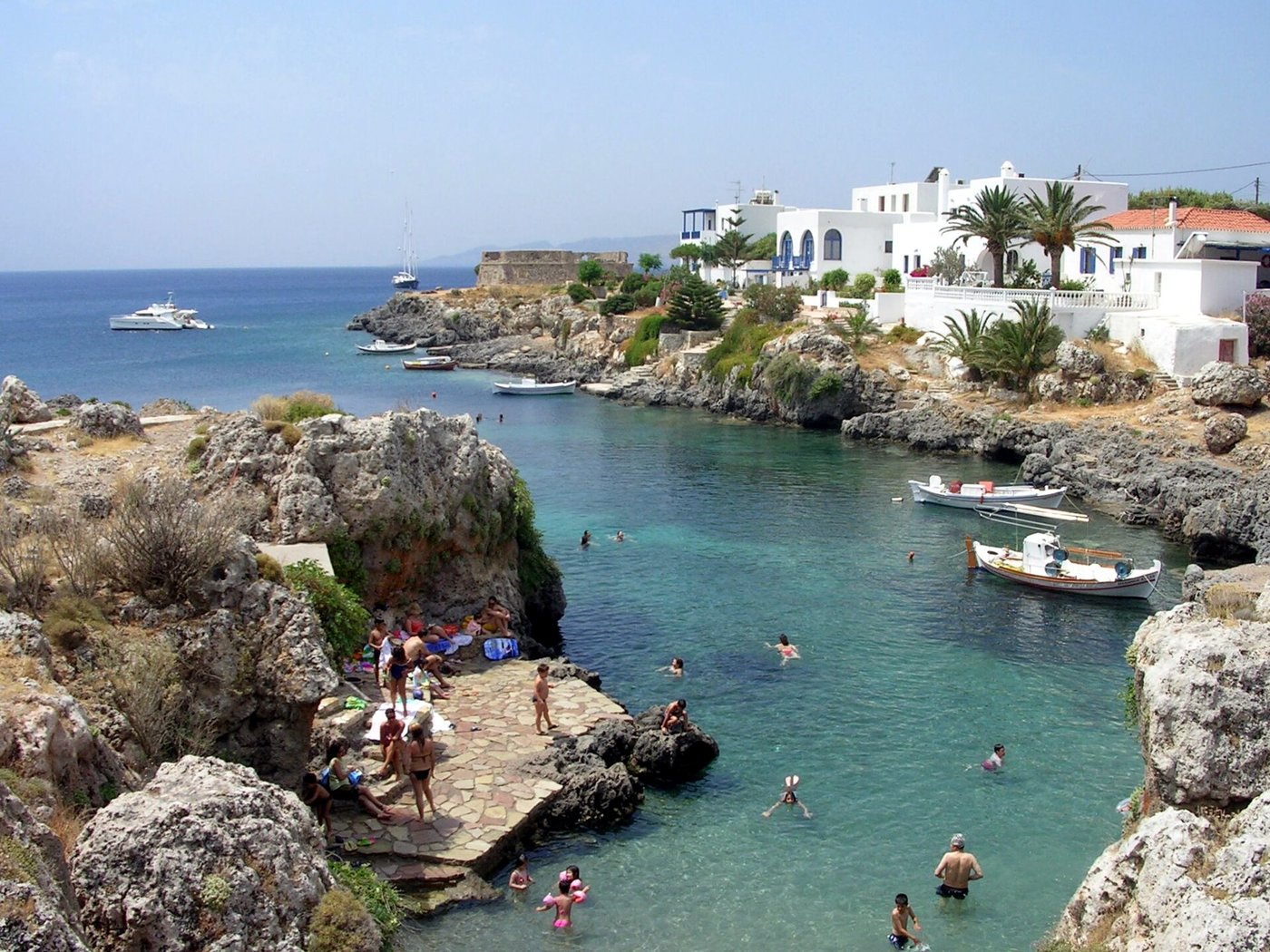
The weather turned. The Mentor was driven towards the coast and struck rock near the small harbour of Avlemonas, on the island's eastern side. She began to fill at once. The crew got off (every man aboard reached land alive, which given the night is close to miraculous), but there was no saving the ship or lifting the cargo before she went down. The Mentor sank in something over twenty metres of water, close enough to shore that you could see the spot from the rocks, and there she stayed, with the seventeen crates in her belly.
News of the loss reached Elgin like a physical blow. He had spent a fortune on the marbles, more than he had, and now the choicest part of the haul was sitting on the seabed of a foreign island. The Napoleonic Wars were on. French agents in the region would have been glad to see the cargo lost, or to claim it themselves. Elgin could not simply write the crates off. He had to get them back, and to do that he needed men who could work underwater for hours at a time, in the years before anyone had a practical diving suit.
Two years of divers
The men he needed were sponge divers, and the eastern Aegean bred the best in the world. Elgin's secretary, William Richard Hamilton, organised the salvage and brought in divers from the islands of Kalymnos and Symi, whose people had gathered sponges from the sea floor for generations. They dived on a held breath, weighted with a stone, going down again and again to depths that would frighten a modern amateur. There were no tanks, no masks, no schedule of decompression stops. There was a rope, a lungful of air, and the bottom.
The work was slow and awful. The crates were heavy, waterlogged, and jammed inside the broken hull. To reach them the divers had to smash and saw through the ship's own timbers, the deck and the planking, hammering the Mentor apart to free what she was carrying. It took the whole of 1803, and reached into the following years, to lift the crates one by one and float them ashore. The last of the marbles did not leave Kythera until well after the wreck. But in the end the divers won: all seventeen crates came up. Not a single sculpture was lost to the sea.
That fact is worth sitting with. The Parthenon frieze that visitors file past in London today, the horsemen and the gods and the long line of the procession, spent a stretch of the early 1800s underwater off a Greek island, hauled up piece by piece by men holding their breath. The marble you can touch was very nearly the marble the sea kept.
"Elgin rescued the sculptures. Left on the Parthenon they would have been destroyed, so removing them was an act of preservation, not theft."
There is truth in it and also a large hole. The Parthenon had suffered badly, above all in the 1687 explosion, and some later damage did come from souvenir-hunters and lime-burners. But Elgin's own removal broke pieces, sawed others down, and dropped at least one to the ground. And the "safety" argument sits awkwardly beside the plain facts of the Mentor: for two years the sculptures were not safe at all. They were on the seabed, and only luck and hard diving brought them back.
The marbles that survived the wreck reached England over the following years. Elgin, ruined by the whole venture and by a costly divorce, eventually sold the collection to the British government in 1816 for £35,000, far less than he had spent. Parliament debated whether to buy them at all; some members thought the purchase disgraceful. The sculptures went to the British Museum, where they were installed and, much later, given the long top-lit hall, the Duveen Gallery, in which most of them still stand.
The wreck that would not stay quiet
For a long time the Mentor was just a story: a footnote in the biography of the marbles, a place on a chart. Then Greek underwater archaeologists went looking, and found that the wreck still had plenty to say. Since the site was properly surveyed, teams from the Ephorate of Underwater Antiquities, working for years under the archaeologist Dimitris Kourkoumelis, have gone down season after season to excavate what settled into the seabed when the ship broke up.
What they have brought back is not more Parthenon marble (that all went to London) but the intimate wreckage of a working ship and the people on her. Gold jewellery: a ring, a pair of earrings. Coins. Pieces from a set of chess or draughts. A token for a card game. The leather sole of a shoe. Fragments of cooking pots, ship's rigging, a small Egyptian scarab and figurines that were part of Elgin's wider magpie collecting. There were even amphora handles from the third century BC, ancient when the Mentor sank, that had somehow found their way aboard. The finds sketch the life of the vessel with a strange tenderness: someone on that ship played chess, wore gold, and lost a shoe to the sea.
And then, in 2026, the divers found a piece of worked marble in the seabed that specialists believe may come from the Parthenon itself: a fragment that slipped from a crate, or was never boxed at all, and lay in the sand for 224 years while the argument over its siblings raged on in London and Athens. If it is confirmed, it means the salvage of 1803 was not quite complete after all. The sea kept one small piece back, and only gave it up in our own time.
Should the sculptures go back? Greece has asked for their return since it won independence, and the request has hardened into a formal, sustained campaign, now centred on the Acropolis Museum built in Athens partly to house them. The British Museum has long argued that it holds the marbles legally and shows them to a world audience for free, and that a law prevents it from giving away its collection. Recent talks have floated ideas short of outright return: long loans, exchanges, shared stewardship. Nothing is settled. The wreck off Kythera is a reminder that the objects at the centre of it all have already survived one journey that nearly ended them for good.
What the sea gave back
The Mentor is a small wreck with a large shadow. No treasure fleet, no famous battle, just a private brig that went down in a storm with a rich man's crates aboard. But the cargo makes it one of the strangest shipwrecks in the Mediterranean, because for two years it held sculptures that millions of people would later travel to see, and because a diver in 2026 may have pulled a splinter of the Parthenon out of the same patch of sand where it landed in 1802.
There is a neatness to it that no one designed. The marbles came off the temple by force, crossed a hostile sea, sank, were fought back from the seabed by men holding their breath, and ended up behind glass in another country, still argued over. Somewhere in that chain the sea took its cut and held it for two centuries. When you next see a photograph of the frieze in London (the horses, the riders, the long slow procession), it is worth remembering that a good part of it once lay drowned off a small Greek island, and that it took two years and a great deal of nerve to decide it would not stay there.
Read next: Uluburun: The Bronze Age Wreck Whose Cargo Came From Three Continents and Vasa: The Warship a Gust of Wind Sank on Its Maiden Voyage.
Sources & further reading
- Dimitris Kourkoumelis and the Ephorate of Underwater Antiquities, reports on the excavation of the Mentor wreck off Avlemonas, Kythera (2011 onwards).
- William St Clair, Lord Elgin and the Marbles (Oxford University Press, 3rd edition, 1998) — the standard account of the removal and its aftermath.
- British Museum, "The Parthenon Sculptures" — the museum's statement of its case, collection history and the terms of the 1816 purchase.
- Lord Byron, Childe Harold's Pilgrimage, Canto II (1812) and The Curse of Minerva (1811) — the contemporary attack on Elgin.
- Greek Reporter and Archaeology magazine, coverage of the 2025–2026 excavation seasons and the marble fragment found in the wreck (2026).
Image credits (via Wikimedia Commons): the Parthenon from the south — Thermos (CC BY-SA 2.5); Thomas Bruce, seventh Earl of Elgin — George Perfect Harding, after Anton Graff (public domain); removal of marbles from the Parthenon — Edward Dodwell, c.1801 (public domain); Avlemonas harbour, Kythera — Lapost (CC BY-SA 3.0); Parthenon frieze in the British Museum — APK (CC BY 4.0); Parthenon sculptures in the British Museum (featured) — Carole Raddato (CC BY-SA 2.0).