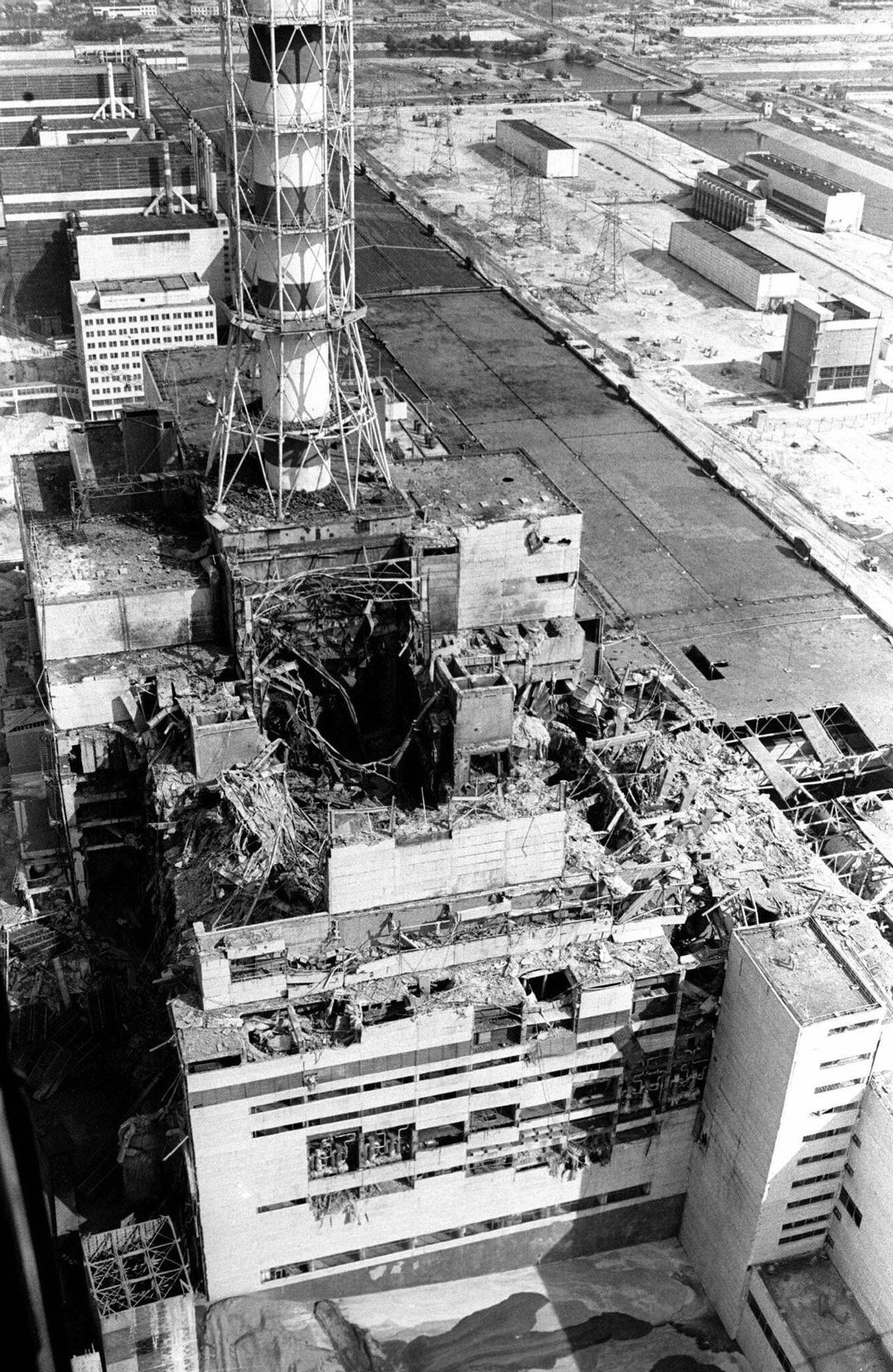
At 1:23 on the morning of 26 April 1986, a handful of engineers at the Chernobyl Nuclear Power Plant in Soviet Ukraine were running a safety test. The irony is almost too heavy to bear: the test was meant to make the reactor safer. Instead, within about forty seconds, reactor number four tore itself apart in a steam explosion that blew the 1,000-tonne lid clean off the core and flung burning radioactive graphite across the site. There was no mushroom cloud, no bang most people would recognise as a disaster. Just a dull thump in the dark, a strange shimmering glow over the building, and the beginning of the worst nuclear accident in history.
What makes Chernobyl so haunting isn't only the scale of the contamination. It's that the catastrophe was caused not by a bomb or an earthquake but by a chain of human decisions, design flaws, and institutional lies: a failure of a system as much as a machine.
The test that went wrong
The accident happened during a test of the reactor's emergency systems. The engineers wanted to know whether, in a power cut, the spinning momentum of the slowing turbines could generate enough electricity to keep the cooling pumps running for the brief gap before backup diesel generators kicked in. A sensible question. The execution was a disaster.
To run the test, operators disabled safety systems and pushed the reactor into a dangerously unstable low-power state. Reactor power dropped far lower than planned, nearly stalling, and to recover it the crew pulled out most of the control rods, the very things that absorb neutrons and keep the reaction in check. The reactor was now balanced on a knife edge, with almost nothing holding it back. When they finally triggered the test and then hit the emergency shutdown button, the reaction didn't stop. It surged.
The emergency shutdown button - AZ-5, the "scram" that should have saved the reactor - may have been what finally detonated it. Because of a now-infamous flaw in the Soviet RBMK reactor design, the control rods had graphite tips that briefly increased reactivity as they entered the core. So at the critical instant, pressing the panic button to insert all the rods at once gave the dying reactor one last, fatal spike of power. The safety device helped trigger the explosion.
The flaw they weren't told about
That control-rod flaw points to the deeper cause: the RBMK reactor design itself was dangerously flawed, and the operators had not been properly warned. The reactor had what engineers call a "positive void coefficient," meaning that as cooling water turned to steam, the reaction sped up instead of slowing down, a built-in tendency toward runaway power. Combined with the graphite-tipped rods, it was a machine with a hidden temper. Soviet authorities had known about aspects of these flaws from earlier incidents but kept them secret, even from the people operating the reactors. The men in the control room that night were, in a real sense, set up to fail by a system that prized secrecy over safety.
The liquidators
What happened next is, in its way, as remarkable as the disaster itself: a vast, desperate, and astonishingly brave clean-up. The first firefighters arrived within minutes, not understanding that the debris they were standing among was lethally radioactive; many received fatal doses that night and died agonising deaths from acute radiation sickness in the following weeks.
Then came the liquidators: an army of perhaps 600,000 soldiers, miners, engineers and ordinary workers drafted from across the Soviet Union to contain the catastrophe. Miners dug beneath the reactor to stop the molten core burning into the groundwater. Soldiers nicknamed "bio-robots" ran onto the roof for as little as 40–90 seconds each (because actual robots failed in the extreme radiation) to shovel chunks of radioactive graphite back into the gaping reactor by hand. Helicopter crews dumped sand, clay and boron onto the burning core. Within months, the ruined reactor was entombed in a hastily built concrete-and-steel "sarcophagus." The human cost of that containment is impossible to tally precisely, but it was enormous.
The lies, and the cloud
The Soviet government's first instinct was to hide it. The nearby city of Pripyat, home to about 50,000 people, many of them families of plant workers, was not evacuated until roughly 36 hours after the explosion, after residents had already absorbed dangerous doses. Officials downplayed the accident internally and said nothing publicly.
The truth came out in an almost humiliating way. Two days later, workers at a nuclear plant in Sweden, over a thousand kilometres away, detected radioactive particles on their own clothing and traced the fallout back to the Soviet Union. Only then, with the evidence quite literally blowing across Europe, did Moscow admit something had happened. The disaster became a symbol of the Soviet system's secrecy and dysfunction, and many historians argue it accelerated the reforms and erosion of trust that helped bring down the USSR a few years later.
How many people did Chernobyl ultimately kill? This is fiercely contested. The direct, immediate toll - firefighters and workers who died of acute radiation sickness - is around 30-50 people, and that figure is solid. But the long-term deaths from cancers caused by the fallout are estimated anywhere from a few thousand (the more conservative UN-linked assessments) to tens of thousands (some other studies). The honest position is that the eventual cancer deaths are spread across millions of people and decades, which makes them real but extremely hard to count precisely.
The Elephant's Foot
Deep beneath the ruined reactor lies one of the most dangerous objects ever created by accident. As the core melted, it fused with sand, concrete and steel into a mass of lava-like radioactive material called corium. One infamous formation, a wrinkled grey-black mass, was nicknamed the "Elephant's Foot." When it was discovered months after the disaster, it was so intensely radioactive that simply standing near it for a few minutes would deliver a fatal dose; being in its presence for around five minutes meant near-certain death.
Because no human could safely approach it, one of the now-famous photographs of the Elephant's Foot was reportedly taken using a camera on a wheeled rig pushed around a corner, or with a mirror, and even so, the radiation fogged the film, giving the images their grainy, ghostly quality. The corium has cooled and weakened over the decades, but it remains a permanent, lethal reminder of what happened in the seconds the reactor ran wild. It is, in a real sense, a man-made mineral that should not exist, and it will stay dangerous for a very, very long time.
The zone, four decades on
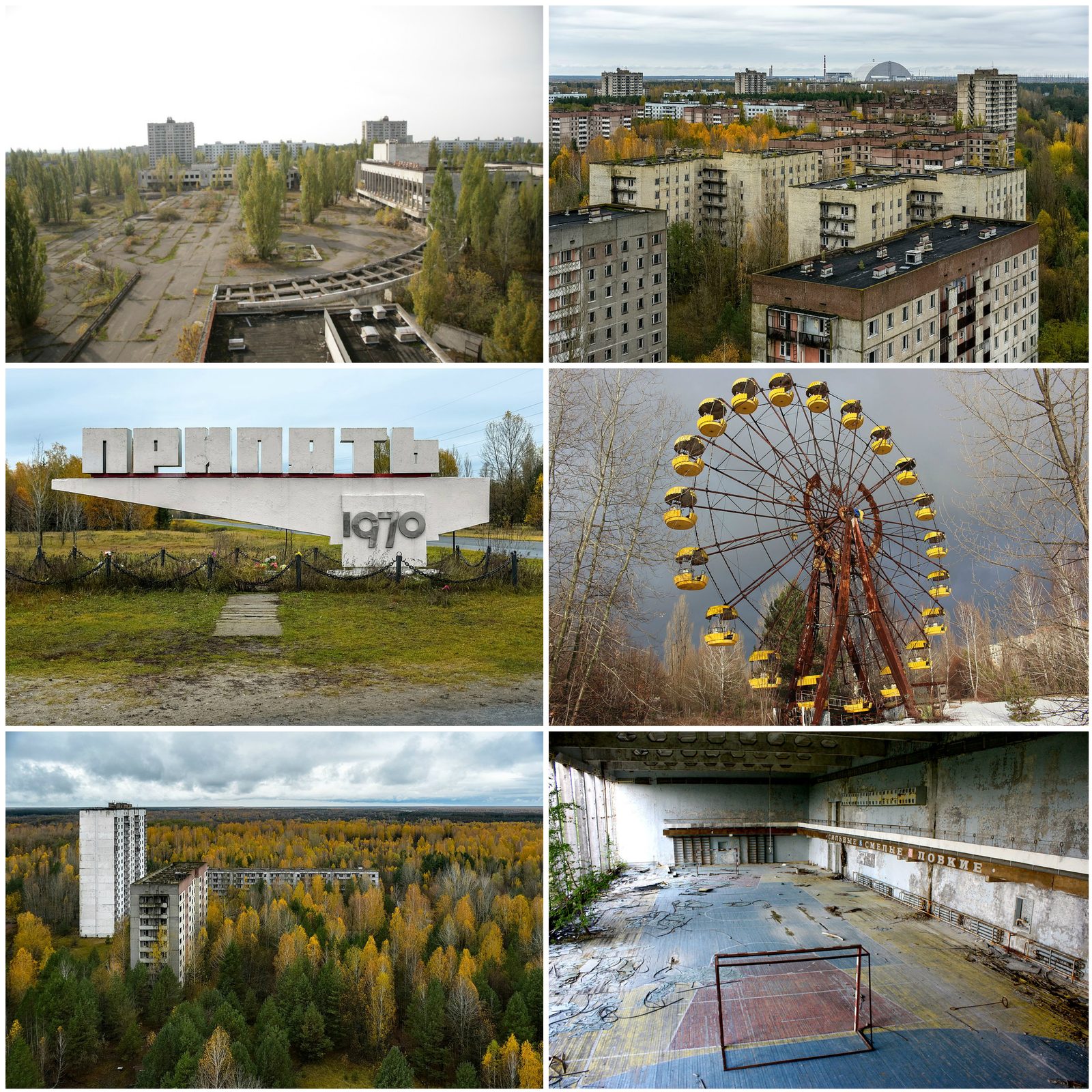
Around the plant lies the Chernobyl Exclusion Zone, an area of roughly 2,600 square kilometres that remains officially off-limits to permanent habitation. Pripyat still stands: apartment blocks, a school with books on the desks, the famous fairground Ferris wheel that was due to open days after the disaster and never carried a single passenger. It is one of the eeriest places on earth: a modern city frozen at the exact moment its people fled.
And yet the zone has produced an unexpected twist. With humans gone, wildlife has returned in abundance. Wolves, boar, elk, lynx, and herds of rare Przewalski's horses now roam the contaminated forests. It turns out that, for many animals, the lingering radiation is less harmful than the simple presence of people. The most radioactive place in Europe has accidentally become one of its largest wildlife refuges, a strange and sobering lesson about humanity's footprint on the planet.
Humans never entirely left, either. A small number of mostly elderly residents, known as the samosely or "self-settlers", returned to their home villages in the zone in defiance of the evacuation, choosing to live out their lives on contaminated but familiar land rather than die displaced in unfamiliar cities. Many lived for decades. In more recent years the zone has even drawn tourists, especially after the 2019 television dramatisation renewed global fascination, with guided tours walking visitors through Pripyat's frozen streets. There's something very human in all of it: the old people who would rather go home than be safe, the travellers drawn to stand at the edge of catastrophe, the animals reclaiming the ruins. Life, in every sense, kept insisting on the place we tried to abandon.
"When the truth is replaced by silence, the silence is a lie."— a line widely attributed to the poet Yevgeny Yevtushenko, often quoted about Chernobyl and Soviet secrecy
A cleanup that will outlive us all
In 2016, thirty years after the explosion, a vast €1.5 billion arch, the New Safe Confinement and one of the largest moveable structures ever built, was slid into place over the original crumbling sarcophagus, sealing the ruined reactor for another century. The cleanup, in other words, is not finished and will outlive everyone reading this.
Chernobyl endures in the imagination because it sits at the intersection of so many modern anxieties: the awesome power of the atom, the fragility of complex technology, and above all the danger of institutions that lie to the people who depend on them. The reactor exploded because of a flawed design and a botched test, but it became a catastrophe because of secrecy, denial, and delay. That second lesson, unlike the radiation, never really decays.
The men who drained the water
In the days after the explosion, engineers realised a second, even more terrifying disaster was looming. Beneath the burning reactor were tanks of water, and above them the molten radioactive core was slowly melting downward. If that superheated mass reached the water, the resulting steam explosion could have been catastrophic, potentially spreading far more contamination across Europe. The water had to be drained, and the valves to do it were underneath the reactor, submerged in highly radioactive water in pitch darkness.
Three men volunteered to go in: Alexei Ananenko, Valeri Bezpalov and Boris Baranov. Wading through contaminated water by torchlight, they found and opened the valves, draining the pool and almost certainly preventing a far greater disaster. For years a myth circulated that all three died within days; in reality, remarkably, they survived the mission (one lived for decades afterward). Their story is one of the heroic moments of the catastrophe: ordinary technical workers walking into the dark to do something most people couldn't imagine doing.
"Everyone who lived near Chernobyl, and everyone involved in the cleanup, died horribly within days."
The immediate deaths from acute radiation sickness numbered around 30-50, mostly first-responders and plant staff exposed to extreme doses that first night. The vast majority of the 600,000 liquidators, and the evacuated residents, did not die quickly - though many faced raised long-term cancer risk. Even the three "divers" who drained the water survived. The catastrophe was real and deadly, but the "everyone dropped dead" image is Hollywood, not the record.
Legasov and the price of the truth
If there is a tragic hero in the bureaucratic half of the story, it is Valery Legasov, the senior scientist who led the Soviet delegation to the international inquiry. In a marathon presentation in Vienna, Legasov stunned the world by laying out the accident in unusually frank detail. But he reportedly grew tormented, caught between the technical truth about the reactor's design flaws and a system that wanted those flaws kept quiet, and increasingly sidelined for speaking too candidly. On the second anniversary of the disaster, in April 1988, he took his own life. He left behind audio recordings detailing what he saw as the deeper causes: not just operator error, but a flawed reactor and a culture of secrecy that ran all the way to the top. His death helped force a fuller public reckoning with the design problems that the explosion had exposed.
The accident that changed nuclear power
Chernobyl didn't just devastate one corner of Ukraine; it reshaped the entire global conversation about nuclear energy. In the immediate aftermath, the remaining RBMK reactors across the Soviet Union were modified to fix the worst of the design flaws: the control rods were redesigned and the reactors made harder to push into the unstable states that doomed reactor four. Safety culture, training, and international cooperation on nuclear matters were all overhauled, and bodies like the IAEA gained a far more serious role in cross-border safety.
But the deeper legacy was psychological. Coming just seven years after the partial meltdown at Three Mile Island in the United States, Chernobyl hardened public fear of nuclear power for a generation. Reactor construction slowed dramatically in many countries; some nations turned away from nuclear energy altogether. Decades later, that fear was reawakened by the 2011 Fukushima disaster in Japan. The tragic irony, which energy experts still debate, is that this fear may have pushed many countries to lean longer on coal and gas, with their own, quieter death tolls from pollution and their contribution to climate change. Chernobyl thus sits at the centre of one of the hardest arguments of our time: how to weigh a rare but terrifying catastrophe against the steady, invisible harms of the alternatives. However you come down on it, the explosion in reactor four is still shaping decisions about how the world makes its electricity, nearly forty years on.
Image: the abandoned city of Pripyat in the Chernobyl Exclusion Zone (via Wikimedia Commons).
Read next: The Bhopal Gas Tragedy: The Night a City Could Not Breathe and Tunguska: The Blast That Flattened a Forest and Left No Crater.
Sources & further reading
- Serhii Plokhy, Chernobyl: History of a Tragedy (2018) — award-winning, authoritative account.
- Adam Higginbotham, Midnight in Chernobyl (2019).
- Svetlana Alexievich, Voices from Chernobyl — oral histories of survivors.
- IAEA and UNSCEAR reports on the health and environmental consequences of the Chernobyl accident.