In October 1854 a Scottish surgeon walked into the Admiralty in London carrying news that no one there wanted to hear. His name was John Rae, and he had spent years mapping the frozen coast of Arctic Canada for the Hudson’s Bay Company. That spring, out on the Boothia Peninsula, Inuit hunters had told him what had become of Sir John Franklin and the men who sailed with him to find the North-West Passage. They were dead. All of them. Some, at the very end, had eaten the bodies of the others to stay alive a little longer. Rae had bought the proof from the Inuit (a silver fork, an order of knighthood, a small plate engraved with Franklin’s name), and he had come home to say so plainly. For telling the truth, he would be shut out of the honours he had earned for the rest of his life.
Everything the Inuit told Rae in 1854 turned out to be right. It took a century and a half for Britain, and then Canada, to admit it. The story of the Franklin expedition is usually told as a mystery: two ships that vanished, a puzzle of ice and bone. But the deeper story is about whose word counts. For generations the people who actually knew where the ships had gone were disbelieved, mocked, and written out of the account. When searchers finally started listening to them, they found both wrecks in a matter of years. This is how that happened.
Ships built to beat the ice
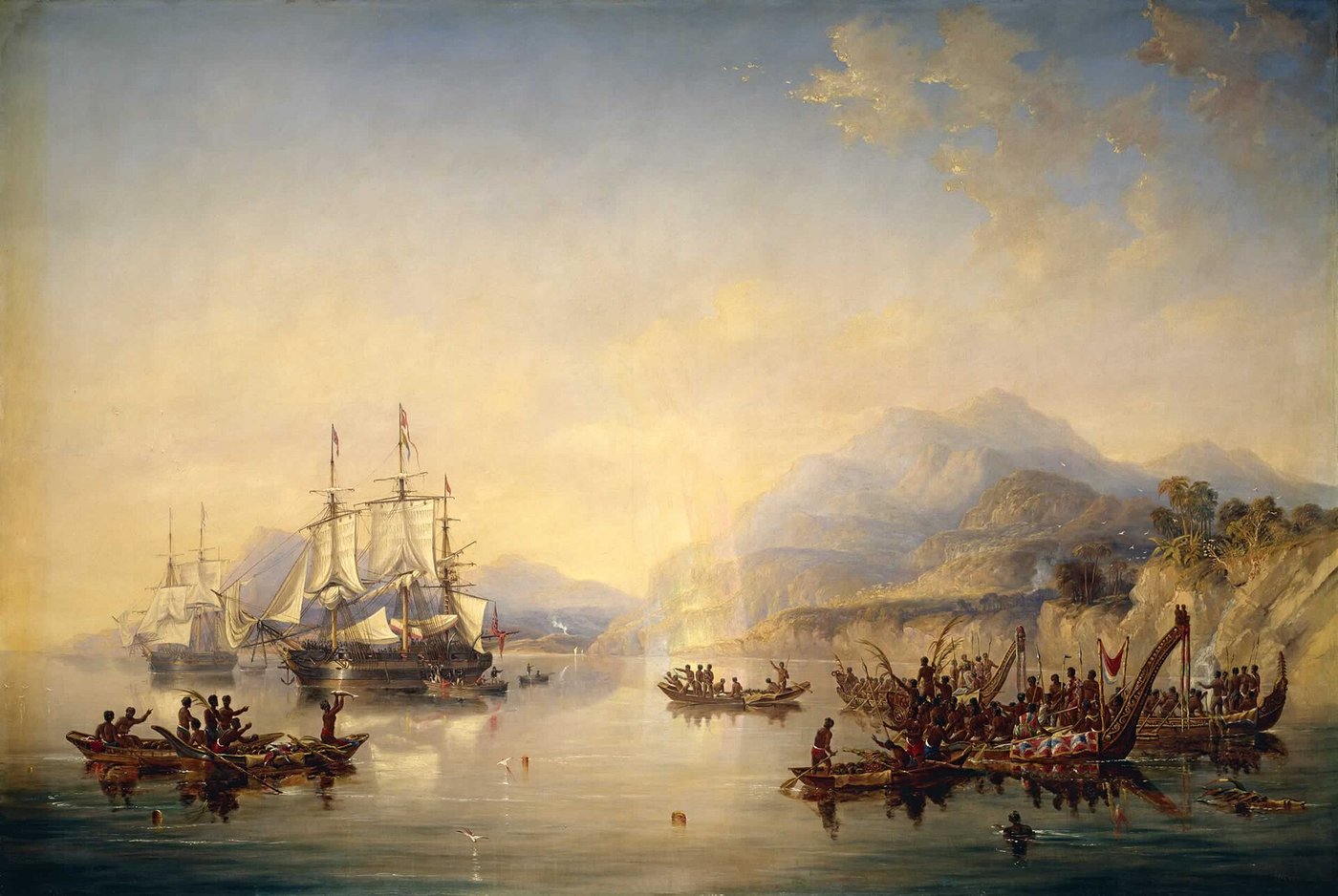
They were not fragile ships. HMS Erebus and HMS Terror were bomb vessels, built to fire heavy mortars, which meant their hulls were already braced to take enormous shock. Before they sailed north the Navy rebuilt them for the ice. The bows were plated with iron. The decks were doubled. Below the waterline the timbers were packed so thick that the ships were, for their day, close to armoured.
They were also modern in a way no polar ship had been. Each was fitted with a steam engine (a converted railway locomotive, dropped into the hold) driving a screw propeller that could be lifted out of harm’s way when the ice closed in. Pipes carried hot water through the living quarters. There was a library of more than a thousand books, hand organs that played tunes, and enough tinned and salted food, in theory, for three years and more. When the two ships left Greenhithe on the Thames on 19 May 1845, they were the best-provisioned Arctic expedition Britain had ever sent. That was rather the point. Nobody expected them to need rescuing.
The men aboard
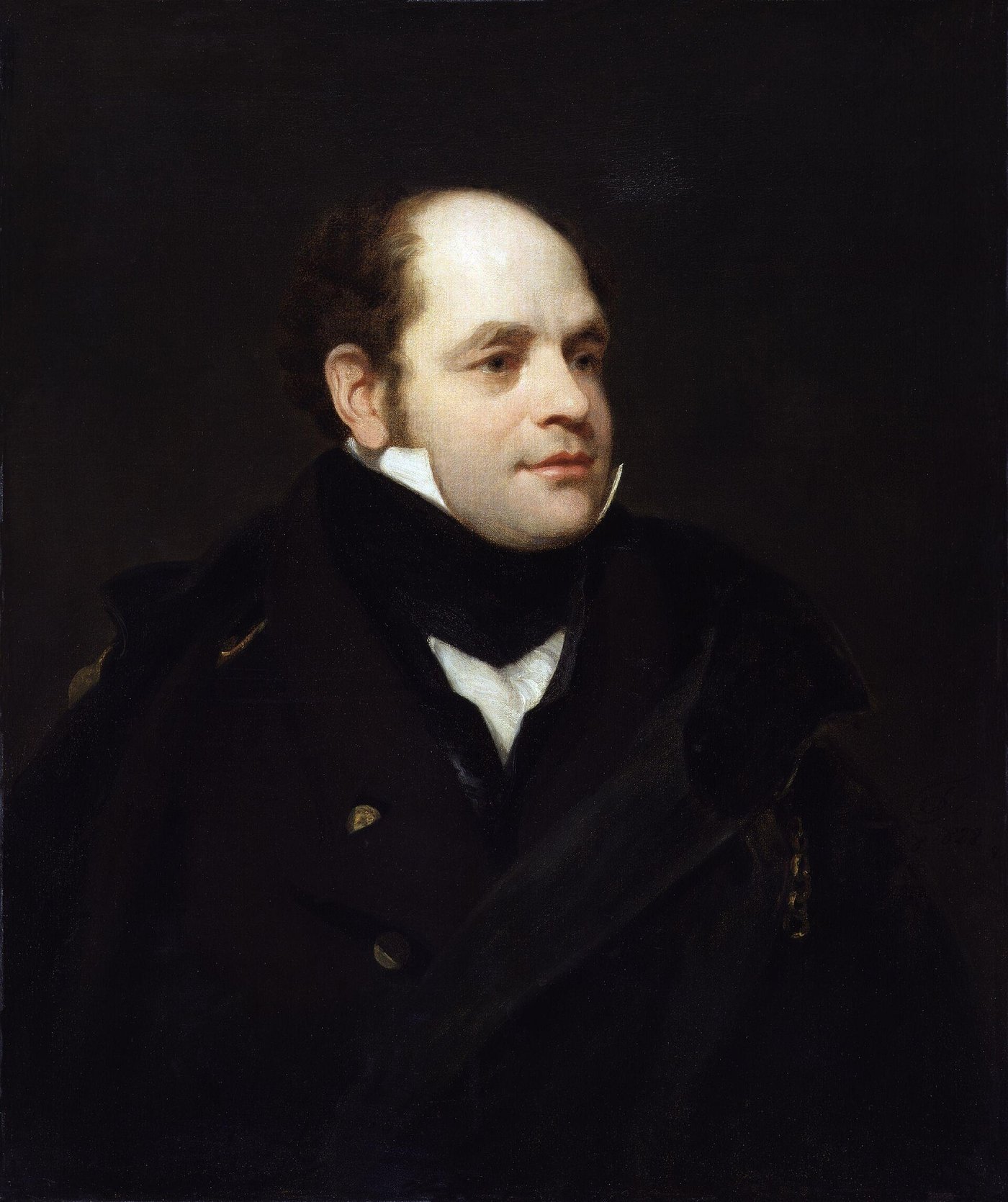
Command went to Sir John Franklin, who was fifty-nine and had already nearly died in the Arctic once. On an earlier overland journey in the 1820s he had lost more than half his party to starvation and had, by his own account, been reduced to eating lichen scraped from rocks. It earned him the nickname “the man who ate his boots.” He was not the Admiralty’s first choice for this command (he was thought a little old for it), but he wanted it badly, and he got it.
Under him were two capable officers. Francis Crozier, an Irishman, commanded the Terror; he was a seasoned polar sailor who had already been to both ends of the earth. James Fitzjames, younger and ambitious, commanded the Erebus. Around them were 129 men in all, once five had been sent home sick from Greenland. They were sailors, marines, ice masters, a surgeon or two, a man to mend the engines. Whalers in Baffin Bay saw the ships one last time in late July 1845, moored to an iceberg, waiting for a lane to open westward. After that, for the outside world, silence fell for years.
Three graves on Beechey Island
The first hard evidence of where the ships had gone came in 1850, when a scatter of search parties converged on a bleak scrap of land called Beechey Island. There they found the marks of a winter camp: the foundations of a storehouse, hundreds of empty food tins stacked in careful piles, and three graves.
The headboards gave three names and three dates in the first months of 1846. John Torrington, a stoker, twenty years old, died on the first day of that year. John Hartnell and William Braine followed within weeks. The neat graves told searchers that the expedition had spent its first winter here in reasonable order, with the discipline to bury its dead properly and mark them. What the graves did not give was a note. Sailors of the age routinely left a written record in a cairn, a sealed message saying where they meant to go next. At Beechey there was nothing. Wherever Franklin had sailed after that first winter, he had left no forwarding address.
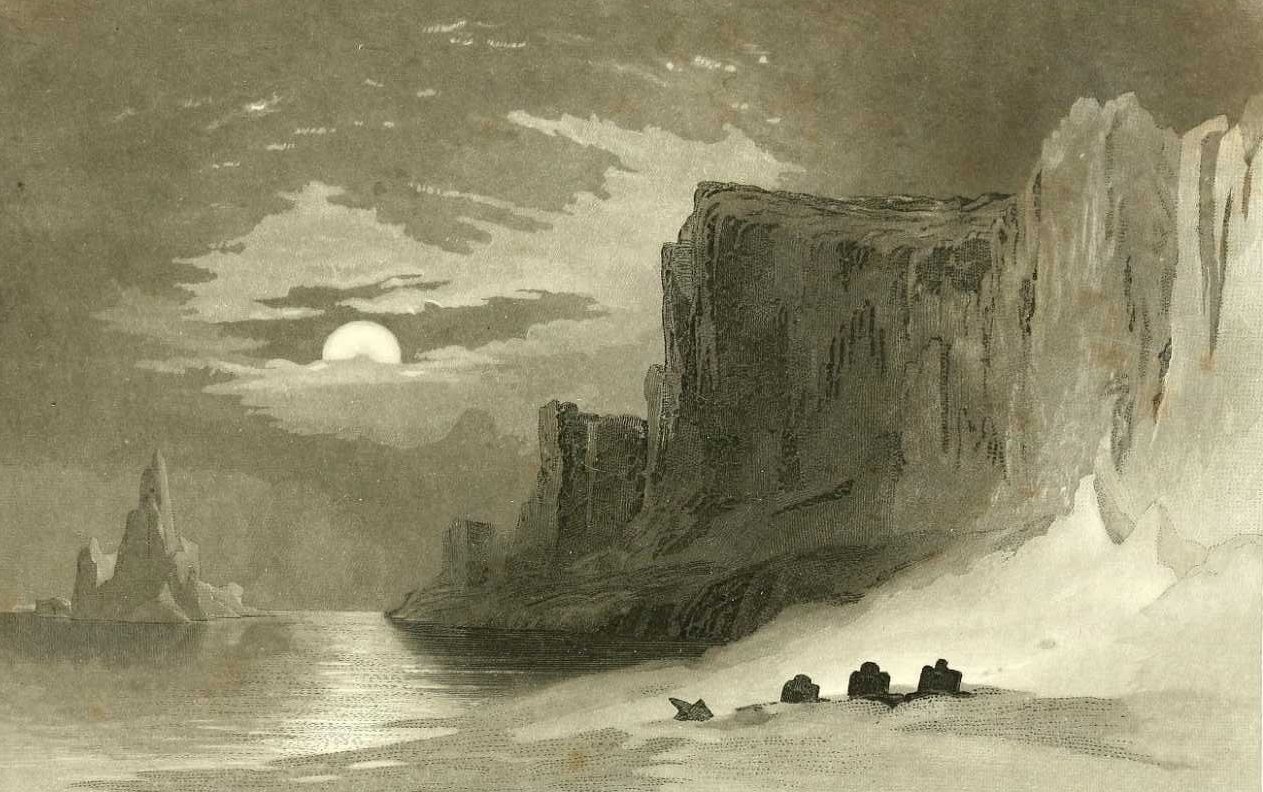
More than a century later those three bodies would be dug up and would start one of the longest-running arguments in the whole affair. But that comes later. In 1850 the graves only deepened the puzzle. The ships had been here, and then they had gone on, into a maze of islands and ice where no one could follow.
One note, written a year apart
The single most important document from the whole expedition is a printed Navy form, filled in by hand, found stuffed in a cairn on King William Island in 1859. It is small and unremarkable to look at. It is also the only written word the expedition ever left about its own fate, and it is strange in a way that still unsettles people who study it.
The form was written on twice, by two different hands, almost a year apart. The first entry, from 28 May 1847, is brisk and cheerful. It records that the ships had wintered off King William Island, that a party had been out surveying, and it ends with two words: “All well.” Around the margins of that same sheet, crammed into the white space, is a second message dated 25 April 1848. Its tone is completely different. It reports that the ships had been trapped in the ice since September 1846 and were now being abandoned. That Sir John Franklin had died on 11 June 1847. That nine officers and fifteen men were dead. And that the 105 survivors, under Crozier, would set out the next day for the Back River on the mainland, hundreds of miles to the south.
The second message ends: “Sir John Franklin died on the 11th of June 1847; and the total loss by deaths in the Expedition has been to this date 9 officers and 15 men.” Below it, Crozier added a last line: “and start on to-morrow, 26th, for Back’s Fish River.” It is the final dated word from anyone aboard. Not one of the 105 men who walked south from that spot was ever seen alive by a European again.
Read the two messages together and something jumps out. In May 1847, all well. Eleven months later, the commander dead, two dozen men gone, both ships given up. Something between those dates went badly, quickly wrong, and the note does not say what. Franklin had died only two weeks after the cheerful “all well” was written, though the men could not have known then how much worse it would get.
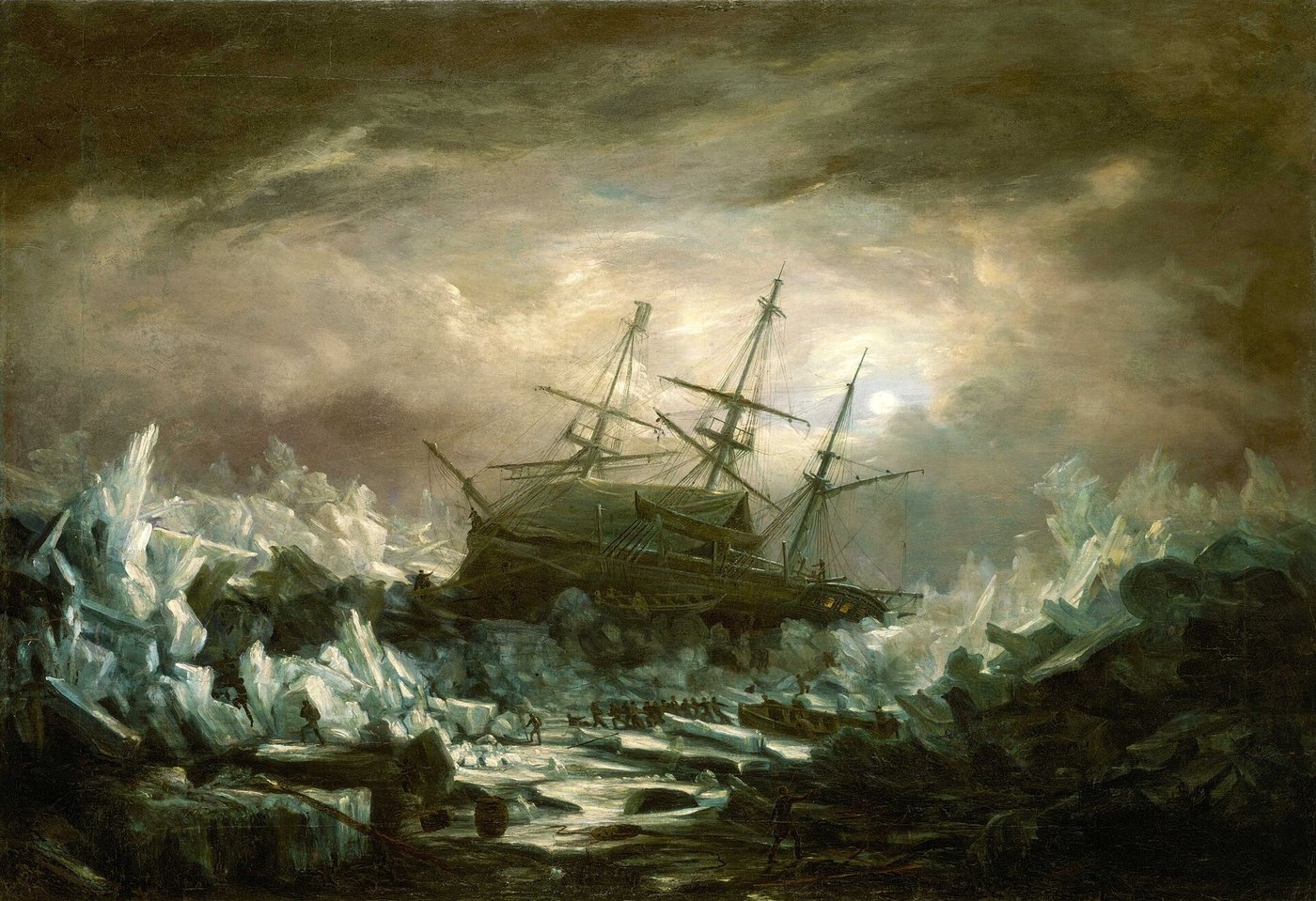
The whole tragedy hides in the gap between the two entries on that one sheet. On 28 May 1847 the expedition was, by its own account, fine. By 25 April 1848 it had lost its commander and twenty-three others and was walking away from the ships on foot, dragging boats on sledges, into a country with almost nothing to eat. Whatever turned the first date into the second happened out of sight, and no record of it survives.
The march that no one survived
What happened after the men left the ships has to be pieced together from bones and scattered objects, because there is no note to guide us. The picture is grim. Search parties in later years found skeletons strung out along the southern shore of King William Island and the coast beyond, the men fallen where they walked. In one place searchers came upon a ship’s boat, mounted on a heavy sledge, with two skeletons inside it and a load of things that made no sense to drag across the ice while starving: silk handkerchiefs, scented soap, slippers, books, a great weight of chocolate and tea.
The boat, oddly, was pointing north, back towards the ships, not south towards safety. It suggests that some of the men, weakening, may have turned around and tried to struggle back to the vessels they had left. Nobody knows how many died on the ice, how many made it to the mainland, or whether any lived through even a single further winter. The Inuit, who moved through this country and knew how to survive it, would later say they had come across the bodies and the last living men. It was their account, not any European search, that first explained the end.
What the Inuit told John Rae
John Rae was not looking for Franklin when he found the answer. In the spring of 1854 he was surveying the coast of the Boothia Peninsula, on foot and by sledge, living much as the Inuit did, which was exactly why he survived where Navy parties starved. Near Pelly Bay he met Inuit who had objects that could only have come from the lost expedition. As he asked around, a consistent story emerged. Some years before, a large party of white men (perhaps forty) had been seen dragging a boat and sledges south, near the mouth of a great river. They were thin and clearly starving. Later, the Inuit had found their bodies, and the state of some of the remains left no doubt: the last survivors had turned to cannibalism.
Rae bought the relics the Inuit carried (silver cutlery bearing officers’ crests, a small silver plate engraved with Franklin’s name, part of an Order of the Bath), and he understood at once what he was holding. He wrote it all down carefully and took it home. He did not soften the cannibalism, because it was the plain report of the only witnesses there were.
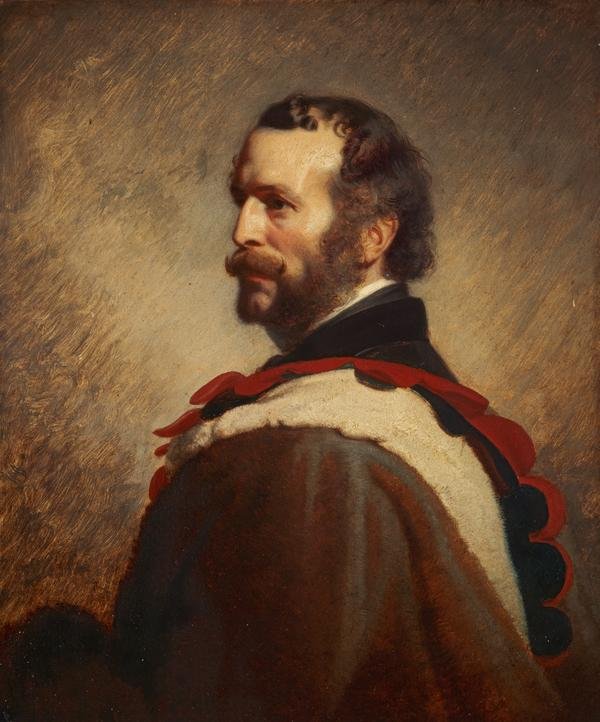
The reaction in Britain was not gratitude. It was fury. The idea that officers and men of the Royal Navy might have eaten one another was intolerable, and the messenger paid for the message. The loudest voice against Rae belonged to Charles Dickens, then the most famous writer in the country, who used his own magazine to tear the report apart. He did not doubt it politely. He argued that the Inuit were “covetous, treacherous and cruel,” that their word was worthless, and that the noble sailors would never have done such a thing. He even hinted, without a shred of evidence, that the natives themselves might have murdered the survivors.
The Victorian version, argued in print by Dickens and widely believed: British seamen of good character would never have resorted to cannibalism, and the Inuit account was the invention of an unreliable, possibly murderous people whose testimony no gentleman should trust.
The Inuit account was accurate in nearly every particular: the starving march, the boat, the location, the deaths, and the cannibalism. It was the British establishment, defending its own image, that was wrong. Modern forensic study of the bones has confirmed the cannibalism the Inuit described, and satellite-guided searches following Inuit directions found both ships almost exactly where their descendants said they would be.
Rae was eventually paid the reward for establishing the expedition’s fate. But he was never knighted, as other Arctic explorers of far smaller achievement were, and the taint of the cannibalism report clung to him until he died. He had done everything right (travelled well, listened to the people who knew, reported honestly), and it ruined his standing. The lesson later searchers drew from his treatment was not a good one: that Inuit testimony was something to be explained away rather than followed.
How Britain chose to remember it
With Rae discredited, the job of shaping the story fell to others, chiefly to Franklin’s widow. Lady Jane Franklin refused to let her husband be remembered as the leader of a starving, broken column. She campaigned relentlessly, funded search expeditions out of her own money, and worked to cast the whole disaster as a tale of heroic sacrifice: brave Englishmen who had, in dying, completed the discovery of the North-West Passage. It was her money that paid for the 1859 voyage of the Fox, which found the note in the cairn and the skeletons on the shore.
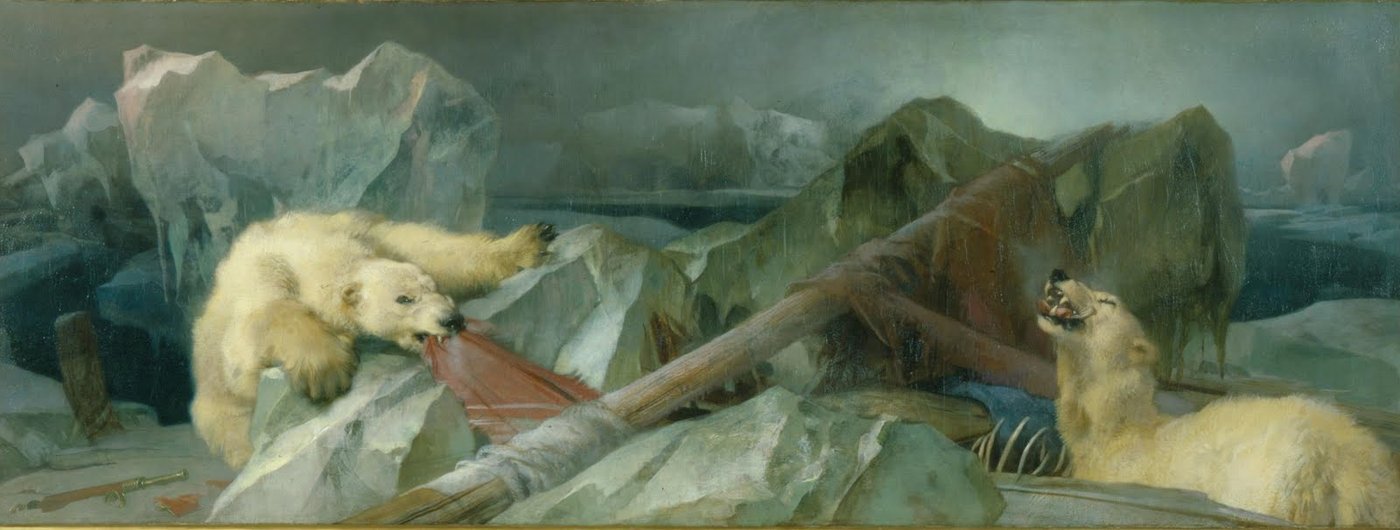
The country wanted the heroic version, and it got it. Painters produced grand, mournful canvases of doomed ships and lonely graves. The men became martyrs of science and empire, their end a noble tragedy rather than a slow horror of scurvy and hunger. What dropped almost entirely out of this picture were the Inuit, the people who had actually witnessed the end, tried to explain it, and been called liars for their trouble.
The quarrel over what killed them
For most of the twentieth century the accepted answer to why the men died so fast was simple: lead. In the 1980s a Canadian scientist, Owen Beattie, exhumed the three well-preserved bodies from Beechey Island. The cold had kept them almost intact; John Torrington’s face is still recognisable in the photographs. Beattie’s tests found high levels of lead in the bones and hair, and suspicion fell on the tinned food. The tins had been supplied in a hurry by a contractor and sealed with lead solder; the theory ran that lead had leached into the food and slowly poisoned the whole crew, clouding their judgement and hastening their collapse.
It was a tidy story, and for years it was told as fact. It has since come apart at the edges. Later studies compared the lead in the sailors’ bones with the lead in ordinary Victorians, who lived surrounded by the stuff (in pipes, paint, glazes and tinned goods of every kind), and found the expedition’s levels were not the smoking gun they had seemed. Some researchers point instead to the ship’s own water system as a lead source; others doubt lead was decisive at all.
No single cause explains the deaths, and honest researchers still disagree about the weight of each. Scurvy, from the failure of the anti-scurvy supplies over a third and fourth year, was almost certainly central. Tuberculosis was already in some of the men, including young Torrington. Simple starvation finished the rest. A 2024 study of one crew member’s remains found severe zinc deficiency, a sign of a diet with too little meat, which would have wrecked the men’s ability to fight off infection. Lead may have played a part, or almost none. What is clear is that the “lead poisoning” headline was always too neat.
A jaw, a name, and a knife
The forensic work also settled the question that had ruined John Rae. Beginning in the 1990s, the anthropologist Anne Keenleyside examined hundreds of bones from a site on King William Island. Nearly a quarter of them carried cut marks: the fine, deliberate scoring left by a metal blade cutting flesh from bone. Later work found breaks and polishing on the bones consistent with the men extracting marrow. The Inuit had been telling the truth in 1854. The cannibalism was real.
Then, in 2024, the story reached a name. Researchers took DNA from a jawbone found among the scattered remains and matched it, through a living descendant, to Captain James Fitzjames, the ambitious young commander of the Erebus. The same jawbone bore cut marks. It meant two things at once. The dead could now be given back their names, one by one. And the cannibalism at the end had not stopped at the ordinary sailors: it had reached the officers’ table too. Fitzjames, who had sailed north dreaming of glory, was in the end butchered by his own starving crew.
Believing the Inuit at last
The wrecks themselves were the final vindication. For 150 years, expedition after expedition had searched the wrong places, guided by charts and theories and the fixed belief that the ships had been crushed and lost far out in the ice. The Inuit had always said otherwise. Their oral histories, passed down through generations, described where a large ship had been seen, where one had sunk with its masts showing above the water, where men had boarded an abandoned vessel and found a dead man inside.
The person who did most to gather these accounts was Louie Kamookak, an Inuit historian from Gjoa Haven who spent decades interviewing elders and matching their stories to the written record. He argued, patiently and for years, that the answers were sitting in his community’s own memory. When a Canadian search finally took that memory seriously, the results were almost embarrassing in their speed. In September 2014, following the pattern of Inuit accounts, searchers found HMS Erebus in shallow water in Wilmot and Crampton Bay, close to where Inuit had described a ship sinking, in water shallow enough that the Inuit said its masts had once stood above the surface. Two years later, in 2016, an Inuk crew member named Sammy Kogvik mentioned a mast-like pole he had once seen sticking out of the ice in a place called Terror Bay. The searchers changed course on his word. HMS Terror was there, sitting upright on the seabed, astonishingly preserved.
Both ships were found within two years, once searchers did the one thing their predecessors had refused to do for a century and a half: believe the people who had been there.
The knowledge that was there all along
The wrecks are now a national historic site, jointly cared for by Parks Canada and by Inuit through the Inuit Heritage Trust; the artefacts brought up from the Erebus are co-owned. In 2025 the work shifted from active excavation towards long-term monitoring, planned together with the Inuit whose ancestors watched the last of Franklin’s men walk south. A heritage centre in Gjoa Haven, expanded that same year, now tells the story with the Inuit account at its centre rather than its margins.
It is tempting to file Franklin under mystery: the lost ships, the bones on the ice, the note written a year apart. But the real puzzle was never geographical. The information was never really missing. It was carried in Inuit memory the whole time, offered freely to John Rae in 1854, and refused because it did not flatter the people who received it. The ships were found the moment someone chose to listen. That is the thing the affair leaves behind: not a riddle about ice, but a plain and awkward lesson about who gets believed, and how long the truth can be made to wait.
Read next: Mary Celeste: A Sound Ship, Six Months of Food, and No One Aboard and The Lost Colony of Roanoke: Where the Colonists Most Likely Went.
Sources & further reading
- Ken McGoogan, Fatal Passage: The Story of John Rae — the fullest account of Rae’s Arctic career, his 1854 report, and the campaign against him.
- Owen Beattie and John Geiger, Frozen in Time: The Fate of the Franklin Expedition — the classic account of the Beechey Island exhumations and the original lead-poisoning theory.
- Russell Potter, Finding Franklin: The Untold Story of a Lost Expedition — on the searches, the Inuit testimony, and the discovery of the wrecks.
- Anne Keenleyside et al., “The final days of the Franklin expedition,” Arctic (1997) — the forensic study confirming cut marks and cannibalism on King William Island.
- Douglas Stenton, Robert Park et al., DNA identification of Captain James Fitzjames, Journal of Archaeological Science: Reports (2024) — naming a victim and confirming cannibalism reached the officers.
- Parks Canada, Wrecks of HMS Erebus and HMS Terror National Historic Site — official records of the 2014 and 2016 discoveries and the Inuit-led stewardship of the sites.
Image credits (via Wikimedia Commons): HMS Erebus and Terror — James Wilson Carmichael (public domain); Sir John Franklin — Thomas Phillips (public domain); ship beset in the ice — William Smyth (public domain); the graves on Beechey Island — Elisha Kent Kane (public domain); John Rae — Stephen Pearce (public domain); Man Proposes, God Disposes — Edwin Landseer (public domain).