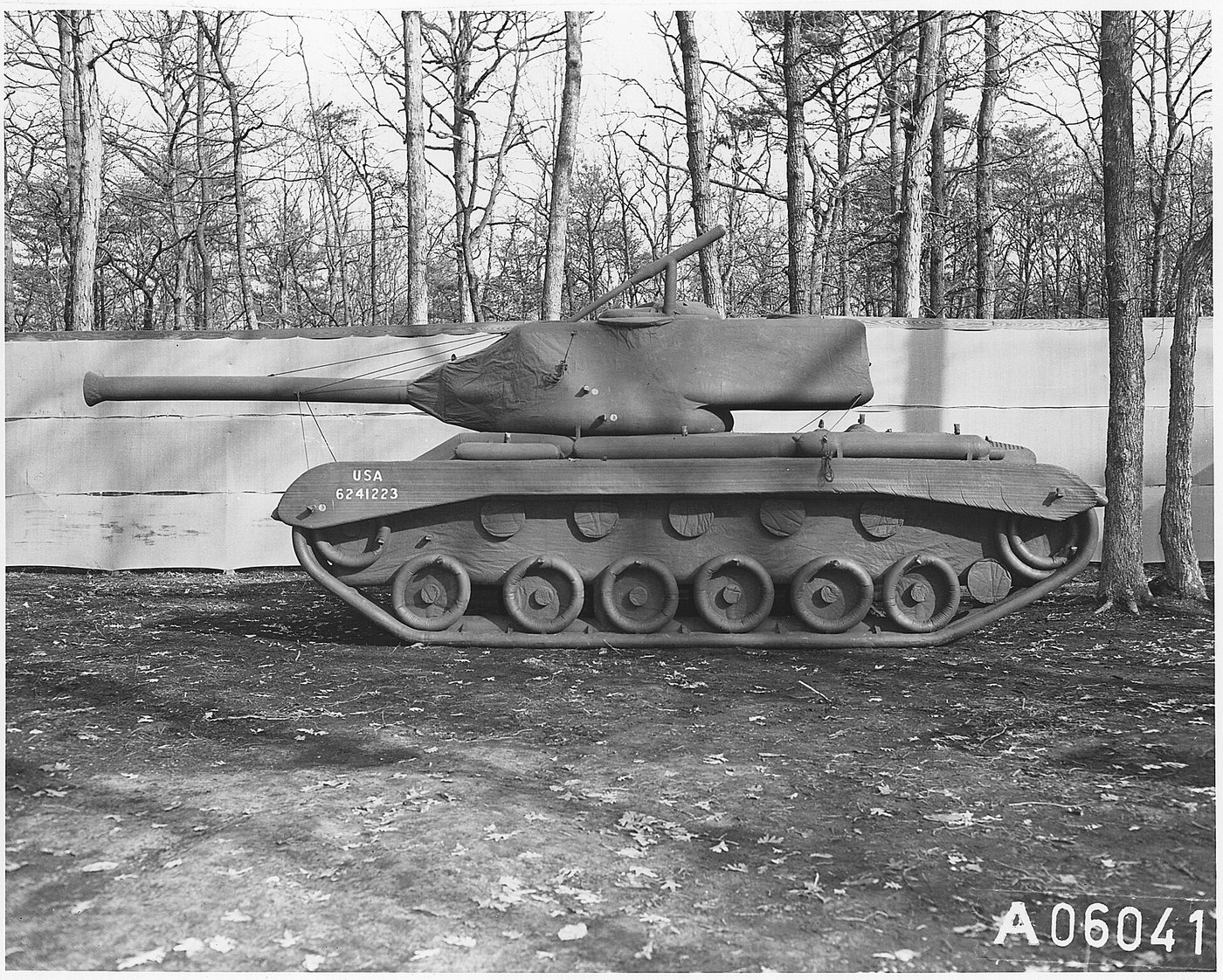
One afternoon in the autumn of 1944, somewhere in the fields of liberated France, a man on a bicycle rounded a hedge and stopped dead. Four American soldiers were lifting a Sherman tank. Not towing it, not winching it, but lifting it, the whole thirty-ton machine swinging in the air as they turned it to point down a different lane. The Frenchman stared. One of the soldiers, an artist named Arthur Shilstone, caught his eye and shrugged. “The Americans,” he said, “are very strong.” The tank weighed about as much as a large dog. It was made of rubber, and the men had been blowing it up with an air compressor an hour before.
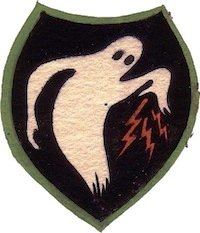
That was the trick, and it was also a state secret. The soldiers belonged to a unit that did not appear on any order of battle, whose real work would stay classified for half a century after the war ended. Officially they were the 23rd Headquarters Special Troops. Unofficially, and only decades later, they became the Ghost Army: a travelling company of about eleven hundred men whose job was to be divisions that were not there, to draw German fire towards empty fields, and to make the enemy count tanks that a couple of soldiers could carry between them.
A unit that was not on any list
The idea came out of the British, who had been fooling the Germans with dummy tanks and painted canvas since the desert war in North Africa. The Americans watched it work and decided to build a mobile deception unit of their own: one that could pack up its illusions, drive to wherever the front needed a lie told, and put on a convincing show of strength in a day. The 23rd was activated early in 1944 and shipped to Europe not long after the Normandy landings.
It was really four small units bolted into one. The 603rd Engineer Camouflage Battalion handled the visual side: the inflatable tanks, trucks, guns and aircraft, and the paint and netting that dressed a fake camp. A signal company ran the radio deception, faking the chatter of headquarters that had packed up and gone. The 3132 Signal Service Company Special carried the sound. And the 406th Engineer Combat Company did the real soldiering: security, bulldozing, and the occasional actual fight, because a unit this odd still had to defend itself. Between them they ran more than twenty deception operations across France, Belgium, Luxembourg and Germany, from the hedgerows after D-Day to the banks of the Rhine.
Nobody was supposed to know they existed. The men wore the shoulder patches of whichever division they were pretending to be that week, painted false markings on their trucks, and were forbidden to talk about the work to anyone, including other Americans. A soldier who let slip what he did could be transferred out or worse. The secrecy was not vanity. The entire value of the unit rested on the Germans believing the tanks were steel.
The art students who went to war
To sell an illusion you need people who understand how the eye is fooled, and the army went looking for them in an unusual place. Recruiters swept through art schools, advertising agencies and design studios, and the 603rd filled up with painters, illustrators, set designers and architects. It may have been the most talented single unit in the American army, and almost none of its talent was military.
Among the men sketching in their off hours were some who would become famous names. Ellsworth Kelly, later one of the giants of American abstract art, served as a private in the camouflage battalion. Bill Blass, who would go on to dress First Ladies and build a fashion empire, spent the war inflating rubber trucks. The photographer Art Kane was there, and the wildlife painter Arthur Singer, whose birds would one day fill a set of national postage stamps. They filled their sketchbooks with the ruins and the refugees and each other, and carried those drawings home. A war fought with art supplies produced a startling amount of art.
The mix of temperaments was strange and it mattered. These were men trained to notice how light falls, how a shadow gives away a shape, how a crowd reads a scene at a glance. They knew that a real tank leaves ruts and a fake one does not, that a camp with no cooking smoke looks wrong, that soldiers who never seem to eat or wash give the game away. Deception, done well, is a design problem. The army had, almost by accident, hired exactly the right people to solve it.
Tanks you could fold and carry
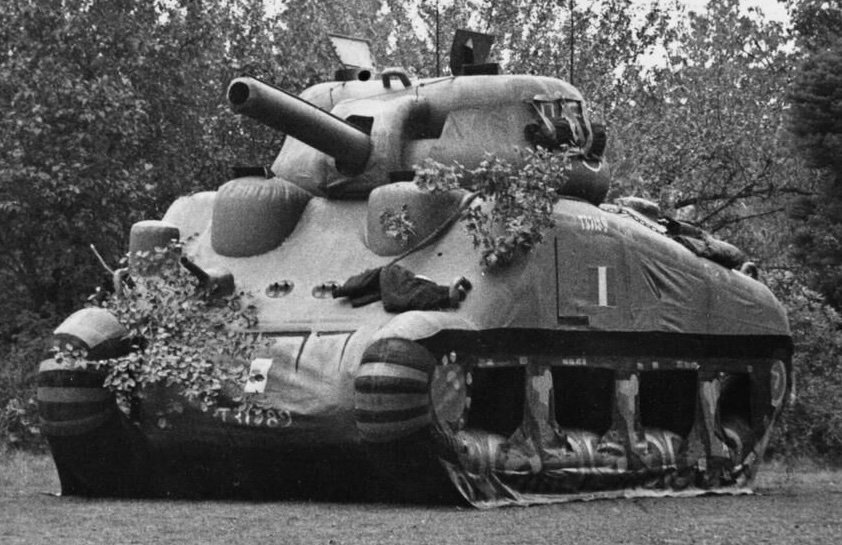
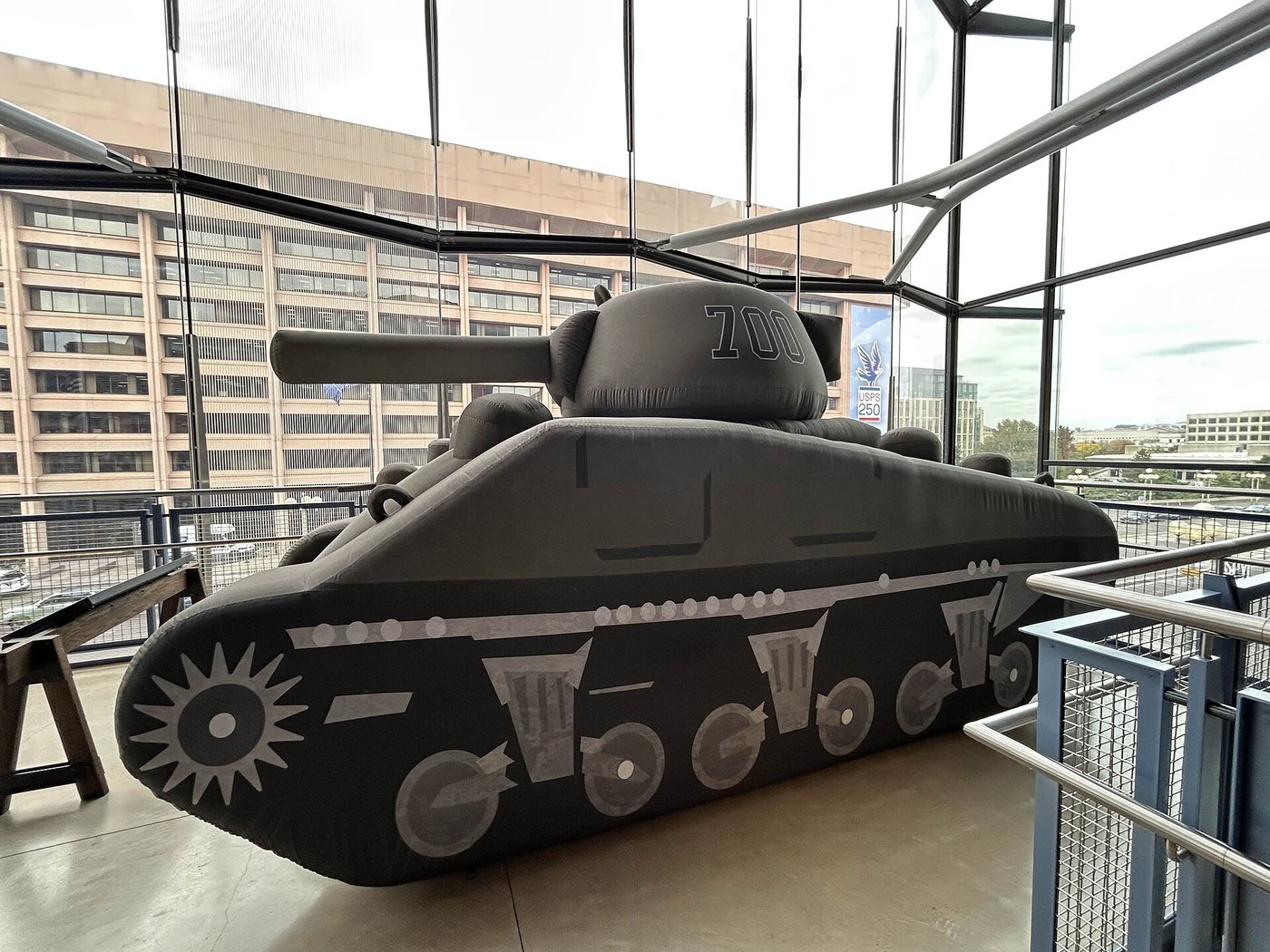
The inflatables were the part everyone remembers, and they were better than the word “balloon” suggests. A rubber Sherman came flat in a bag. A team pumped it up with a compressor, staked it down, and in minutes there stood a tank that looked right from a few hundred metres and looked very right from a reconnaissance aircraft two miles up. There were inflatable trucks, jeeps, artillery pieces and even dummy aircraft for fake airfields. A whole armoured column could be conjured from a few lorry-loads of rubber and a strong day’s work.
The trick was never the balloon on its own. A field full of rubber tanks sitting in perfect rows, with no tracks in the mud, no men, no noise and no smoke, would fool nobody for long. So the men learned to dress the lie. They cut fake tank tracks into the ground with special tools. They lit cooking fires and hung out washing. They drove a few real vehicles in looping patterns to churn up convincing traffic. They left a tank corner poking out from under a net, as if someone had tried and failed to hide it, because a thing half-concealed is more believable than a thing on open show. The inflatable was the actor. The performance was everything around it.
A real M4 Sherman weighed around thirty tons and needed a crew of five and a tank of fuel to move a mile. The Ghost Army’s version weighed roughly forty kilograms and moved wherever four soldiers felt like carrying it. That gap, a war machine reduced to something two strong men could lift over their heads, is the idea in miniature. The Germans were meant to be counting steel and horsepower. They were counting air.
Sound with nothing behind it
The eye is only one sense to fool, and at night it is nearly useless. So the Ghost Army learned to lie to the ear as well, and this may have been the cleverest thing they did. The sonic men of the 3132 worked with engineers from Bell Laboratories, who recorded the real sounds of an army at work (tanks grinding into position, bridge-builders hammering, trucks in convoy, men shouting orders) onto reels of wire. Each kind of unit had its own soundtrack, and each could be mixed and layered so that a listener heard a whole column moving in the dark.
The recordings played through enormous speakers mounted on halftracks, powerful enough to be heard up to fifteen miles away. The Bell engineers worked out the sound the way gunners work out artillery, adjusting the mix and volume so the noise seemed to come from a particular place at a particular distance. A German observer on a cold night, hearing engines and treads and the clank of armour gathering across the valley, had every reason to believe a division was assembling to attack him at dawn. There was nothing there but a few trucks and a record player the size of a wardrobe.
Sound is uniquely hard to argue with. You cannot see through a noise the way you can eventually see that a tank has not moved in three days. The dark did the rest. Night after night the sonic units could make an empty stretch of front roar with menace, and send the enemy’s attention, and sometimes his shells, towards a threat that would never come.
Fake generals and phantom radios
The third and fourth layers were the subtlest. Radio deception meant impersonating the wireless traffic of a unit that had actually left. When a real division pulled out of the line to strike elsewhere, its familiar radio operators went with it, and each operator has a personal rhythm on the key, a “fist” the enemy’s listeners come to recognise. So the Ghost Army’s signalmen studied those men, learned to copy their touch, and kept the departed division chattering on the airwaves as if it had never moved. To German radio intelligence, the division was still exactly where it had always been.
Then there was the part the men called atmosphere, which was pure theatre. Officers with the unit would sew on the patches of a general’s staff, pin on ranks they had not earned, and drive into a nearby town to be seen. They lounged in cafes and let slip loud, careless remarks about the big push coming. They painted the right divisional signs on their jeeps and made sure the locals, and any watching informer, saw them. A whole headquarters could be suggested by a handful of actors playing colonels, spending an afternoon being indiscreet on purpose. The Germans built their picture of the front from scraps: a radio fist here, a shoulder patch there, a rumour in a bar. The Ghost Army fed them the scraps and let them assemble the wrong picture themselves.
Bettembourg: the week the bluff nearly broke
The danger in all this was simple. A unit pretending to be a powerful force has, by definition, almost no power. If the enemy ever called the bluff and attacked, there was nothing behind the rubber but a few hundred lightly armed men and a lot of air.
That nearly happened in September 1944 near the town of Bettembourg, in Luxembourg. General Patton’s Third Army had outrun its fuel and left a gap in its line, and the Ghost Army was sent to plug it: to impersonate an armoured division holding ground that, in truth, almost nobody held. For several days the men inflated tanks, blared sound and filled the airwaves, standing in for thousands of soldiers who did not exist. It worked, which was the terrifying part. If the Germans had probed hard at that stretch of front, they would have rolled through a division made of canvas and found the road to Patton’s flank wide open. The screen held only because the enemy believed it, and belief was the only defence the unit had.
Because the props were rubber and the unit was full of artists, the Ghost Army is easy to picture as a lark: clever boys playing dress-up well behind the fighting, never really in danger, putting on a show while the war happened somewhere else.
They worked at the very front, often ahead of the units they were faking, deliberately drawing attention to themselves in places where a real defence was absent. They were shelled and strafed like any other soldiers, and a few of them were killed. Their whole purpose was to attract the enemy’s fire onto their own position and away from the men who could not survive it. It was one of the more nerve-wracking jobs in the theatre, precisely because being noticed was the point and being attacked was the risk.
Crossing the Rhine
Their masterpiece came at the very end of the war. In March 1945 the Ninth Army needed to cross the Rhine, the last great barrier into Germany, and it needed the Germans looking the wrong way when it did. The Ghost Army was given the job of pointing them there.
In an operation around the town of Viersen, the unit impersonated two entire infantry divisions massing at a false crossing point, well away from where the real assault would go in. They set out around six hundred inflatable dummies, ran the full sonic and radio show, and staged the atmosphere of an army preparing to force the river. German guns and attention swung towards the fake build-up. When the true crossing came, it went over against far lighter resistance than anyone had feared. It is impossible to put an exact figure on what that saved, but the men who planned it were sure the deception drew fire that would otherwise have fallen on the soldiers actually going into the water. On this one, the rubber divisions may have been worth several real ones.
The hardest thing to measure about deception is its result. A successful ruse leaves no wreck to photograph and no casualty list to compare, because its whole achievement is an attack that never came or came somewhere else. Estimates that the Ghost Army saved thousands of lives are reasonable, and also unprovable, because you cannot run the war again without them. What can be said is narrower and firmer: again and again, German forces reacted to units that did not exist, shelling empty fields, holding back from thin lines, bracing for assaults at the wrong place. The enemy’s own behaviour is the evidence. He kept fighting ghosts.
Fifty years of saying nothing
When the war ended, the men went home and did not talk about it. The techniques were still useful, the Cold War was starting, and the whole business stayed classified. Soldiers who had spent a year impersonating armies told their families they had been in the engineers, or the signal corps, and left it there. Some carried the silence for the rest of their lives. Wives and children learned only late, or never, what the quiet man at the dinner table had done in France.
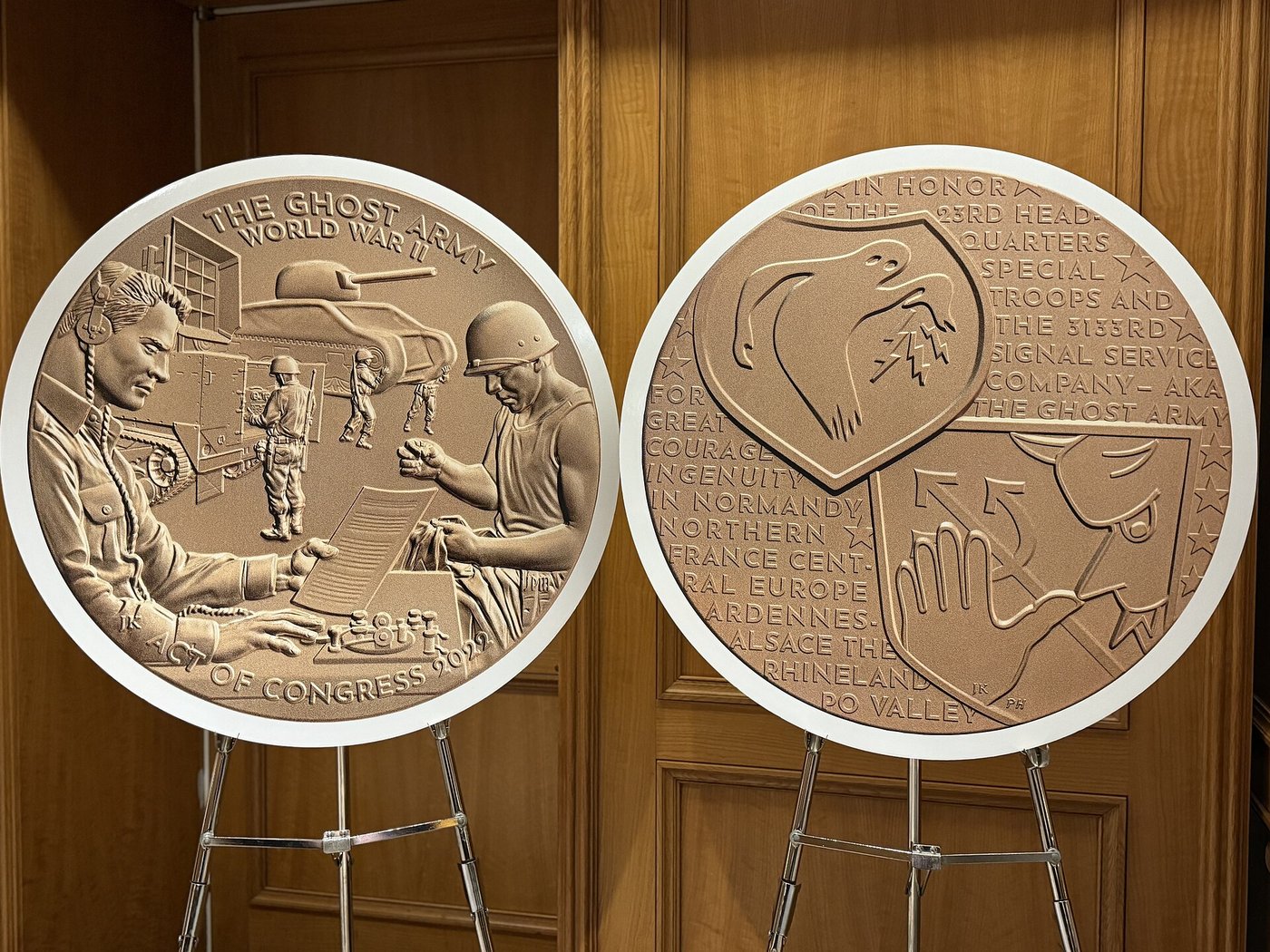
The records were finally declassified in 1996, and slowly the story came out: the books, a documentary, museum exhibitions built around a few surviving rubber tanks and stacks of soldiers’ sketches. And in 2024, eighty years after they blew up their first tank in a French field, the surviving members of the Ghost Army were awarded the Congressional Gold Medal, the highest honour the American legislature can give. By then only a handful were still alive. Three of them, all around a hundred years old, sat in the Capitol and watched a nation finally thank them out loud for a war they had spent a lifetime not discussing.
The strength of a thing that isn’t there
There is a neat lesson buried in the Ghost Army, and it is not really about tanks. It is that a great deal of what an enemy fears is supplied by the enemy himself. The Germans lost sleep, held back divisions and wasted shells over armies assembled entirely in their own heads, from clues a few hundred artists had scattered on purpose. Force can be imitated. Nerve, timing and an eye for how people jump to conclusions can, for a while, do the work of steel.
The men understood the joke of it. They had spent the war as the least powerful unit at the front and, on their best days, the most useful: soldiers who won ground by never firing, who saved lives by making themselves the loudest and most obvious target on the field, then vanished before anyone came to check. Somewhere in a warehouse there is still a rubber Sherman, folded flat in its bag, waiting to be a division again. Two men could carry it out. For a year, in the right light, it was enough to stop an army.
Read next: Nazi Wonder Weapons: From the V-2 to the Orbital Sun Gun and The First Battle of Panipat: How Babur Founded the Mughal Empire.
Sources & further reading
- Rick Beyer & Elizabeth Sayles, The Ghost Army of World War II (Princeton Architectural Press, 2015).
- Jonathan Gawne, Ghosts of the ETO: American Tactical Deception Units in the European Theater, 1944–1945 (Casemate, 2002).
- The Ghost Army Legacy Project, unit history and veteran records, ghostarmy.org.
- The National WWII Museum, New Orleans, “Ghost Army: The Combat Con Artists of World War II” exhibition materials.
- Smithsonian Magazine, “The Ghost Army of WWII Used Art to Deceive the Nazis” (2022); coverage of the 2024 Congressional Gold Medal ceremony in the Washington Post and Army Times.
Image credits (via Wikimedia Commons): featured, inflatable dummy weapons — US National Archives / US Army (public domain); dummy Sherman tank — United States Army (public domain); Ghost Army inflatable tank on museum display — ArtemisiaGentileschiFan (CC0); 23rd Headquarters Special Troops shoulder patch — US Department of the Army (public domain); Ghost Army Congressional Gold Medal — Bedelstein (public domain).