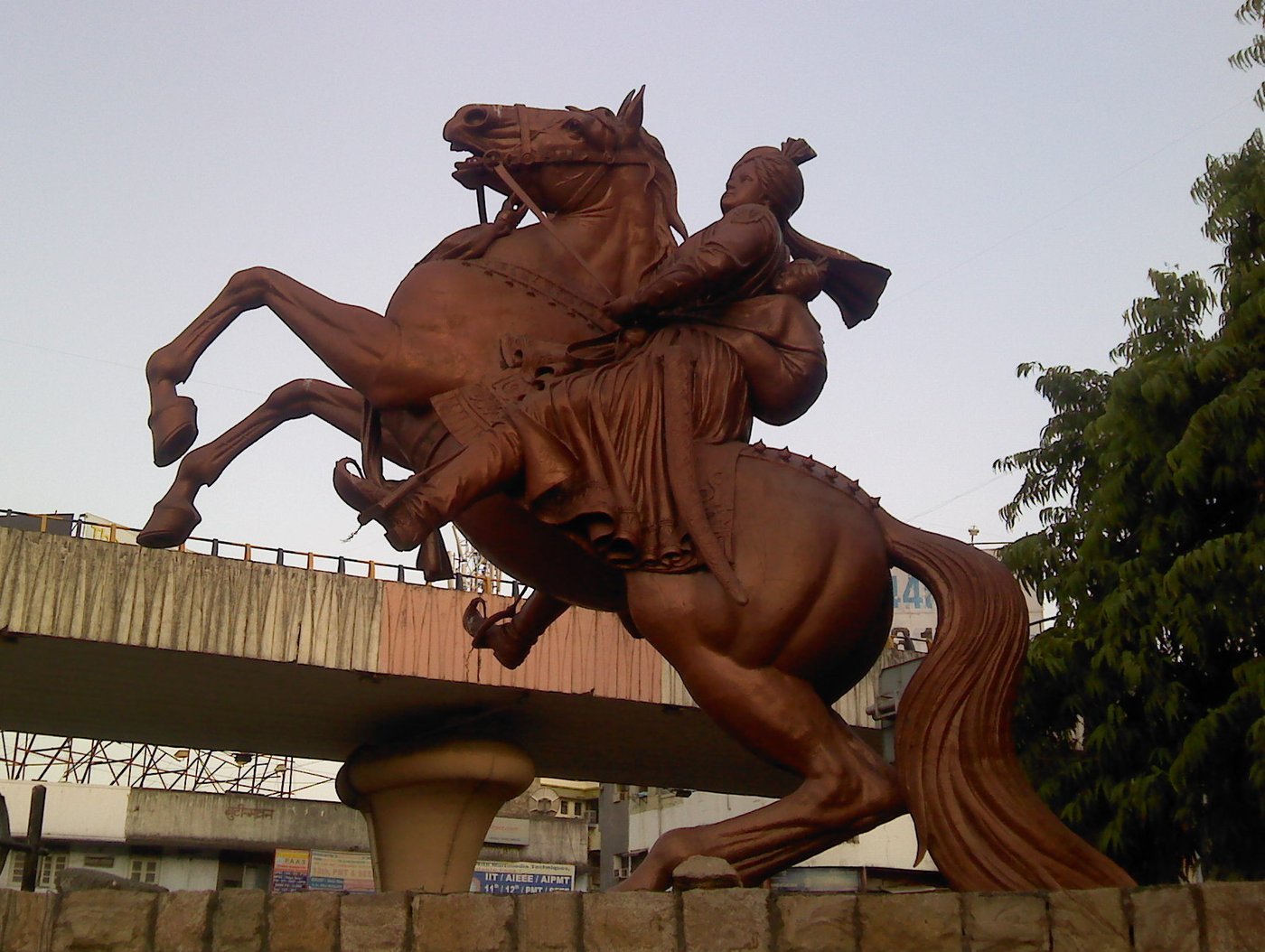
Some time in the small hours of 4 April 1858, a woman in a cavalry sash lowered herself over the northern wall of a burning fort in central India. British guns had breached the town the morning before, and the streets below were already lost. She had a sword, a good horse waiting in the dark, and a small boy strapped against her back: a five-year-old she had raised as her own since the day her husband died. She rode out through a gap in the enemy lines and did not stop for the better part of a day and a night. She was the Rani of Jhansi, and she had about ten weeks left to live.
Almost everyone in India knows how the story ends: a queen in armour, cut down at a gallop, the last serious commander of the great revolt of 1857. What fewer people know is how much of that image was built after her death, and how much the plain record still argues with the legend. She was braver than the tidy version allows, and more cornered. Her most famous words were written by a novelist ninety years later. Even the leap that made her name may never have happened the way the sign at the fort says it did. This is what can be pinned down about Lakshmibai, and what the record refuses to give up.
A girl named Manu
She was born Manikarnika Tambe, called Manu at home, in the holy city of Benares (modern Varanasi), most likely around 1828, though the year is uncertain and some accounts push it as late as 1835. Her family were Karhada Brahmins, respectable but not rich. Her mother, Bhagirathi, died when Manu was about four, and her father, Moropant Tambe, took a post in the household of Baji Rao II, the last Peshwa of the Marathas, then living out his exile on a British pension at Bithur near Kanpur.
So the girl grew up around a fallen court, in the company of boys who would later carry the revolt with her: Nana Sahib, the Peshwa's adopted heir, and a sharp young man named Tatya Tope. The much-loved stories of her learning to ride, fence and shoot as a child belong to the legend rather than the documents; they may be true, but no contemporary record proves them. What is clear is that she came from the world of the dispossessed Maratha aristocracy, people who had watched the British take their thrones one treaty at a time. That memory sat underneath everything she later did.
Married into a throne
In May 1842 Manu was married to Gangadhar Rao Newalkar, the Raja of Jhansi, a small but prosperous state in Bundelkhand. She was a child, as brides then were; the marriage was completed only when she was older. On her wedding day she took the name by which history knows her: Lakshmi Bai, after the goddess of fortune. Jhansi was her home for the rest of her life, and she came to love its blunt hilltop fort with a fierceness that later surprised her enemies.
In 1851 she gave birth to a son. He lived barely four months. The loss was more than personal, because a Hindu ruler without an heir was, under the rules the British had begun to enforce, a state waiting to be swallowed. Gangadhar Rao's health was failing. On his deathbed in November 1853 he adopted a boy from a branch of his own family (a five-year-old called Anand Rao, renamed Damodar Rao) and, the day before he died, wrote formally to the East India Company asking that the child be recognised as his heir and Lakshmibai be allowed to rule as regent. Then he died, on 21 November 1853, and left her a widow in her mid-twenties with a kingdom she was not sure she would be allowed to keep.
A signature that erased kingdoms
She was right to be unsure. The Governor-General, Lord Dalhousie, had a policy that historians call the Doctrine of Lapse, and it was as cold as it sounds. If an Indian ruler under Company protection died without a natural-born son, the British could simply refuse to recognise an adopted heir and take the state for themselves. It was annexation dressed as paperwork, and Dalhousie applied it to one kingdom after another. Jhansi was next.
Lakshmibai did not go quietly. She wrote a formal protest in February 1854. She hired an Australian lawyer then working in India, John Lang, to argue her case, and he later left a vivid description of a small, determined woman who received him from behind a curtain and would not be talked out of her rights. She cited old treaties, some going back to 1817, that had recognised Jhansi's line. None of it worked. In 1854 the Company annexed the state, granted her a pension, and told her to leave the fort and live in the town palace. According to one much-repeated account she answered with a single line, "I will not give up my Jhansi", but that line, as we will see, has a complicated history.
When the British annexed Jhansi under the Doctrine of Lapse in 1854, they set Lakshmibai a pension of about 5,000 rupees a month and made her responsible, out of it, for debts they claimed her late husband had left. She was moved out of the fort her family had held and into a palace in the town. In the space of a single ruling, a reigning queen became a pensioner living beside the throne she had lost, and the men who signed the order were four hundred miles away.
The summer the army turned
For three years she lived that reduced life, petitioning, waiting, raising her adopted son. Then, in the spring of 1857, the Bengal Army mutinied. It began at Meerut on 10 May and ran across northern India like a grass fire: Delhi, Kanpur, Lucknow. In early June it reached Jhansi. The Indian troops of the garrison rose, seized the fort's magazine, and killed their British officers. What happened next is the darkest and most disputed episode of Lakshmibai's life.
The British families of Jhansi took shelter in the town's smaller fort. After a few days, short of water and hope, they surrendered on a promise of safe conduct. They were led out to a garden called Jokhan Bagh and there, on 8 June 1857, almost all of them were killed: men, women and children together. Only a tiny handful escaped. The question that has never been fully answered is how much the Rani knew, allowed or ordered.
Her own account, sent in letters to the nearest British official, Major Erskine, was that she had been helpless: the mutineers had turned their guns on her too, extorted money from her, and forced her hand, and she wished only for the return of proper authority. Erskine believed her and let her take charge of the district in the Company's name. His superiors in Calcutta were far more sceptical. Later, objects belonging to the murdered British were reportedly found in her palace, and her own father had been active among the rebels. No document proves she gave the order; none clears her completely either. It is the one place where the heroine of the story stands in real shadow.
The massacre at Jokhan Bagh is the hinge on which every reading of Lakshmibai turns. To her defenders she was a captive of the mutineers, writing desperate letters to the British and stripped of her guards. To her accusers she was at least complicit, and the loot found later in her palace proves it. The honest answer is that the surviving evidence points both ways and settles nothing. British officers on the spot disagreed with each other at the time, and historians still do. She may have been a bystander to a horror she could not stop, or a ruler who let it happen. The record will not choose for us.
Queen in her own right
Whatever the truth of June, the months that followed showed what she could do when left to rule. With the British gone, Lakshmibai took up the government of Jhansi in earnest. She had coins struck, repaired the fort, raised and paid troops, and even cast her own cannon. When two neighbouring states, Orchha and Datia (no friends of hers), sent armies to help themselves to a leaderless kingdom, she beat them off. For close to a year she governed a working state in the middle of a collapsing empire, and governed it well enough that her people remembered it long after.
She was not, in her own mind, necessarily a rebel yet. She kept writing to the British, still hoping for recognition of her adopted son and her regency. But events had moved past letters. To the men now marching to reconquer central India, a queen holding a fortified city with her own artillery was an enemy, whatever she called herself. The decision about what she was would be made for her, by a general with four thousand troops and a siege train.
Hugh Rose comes to the walls
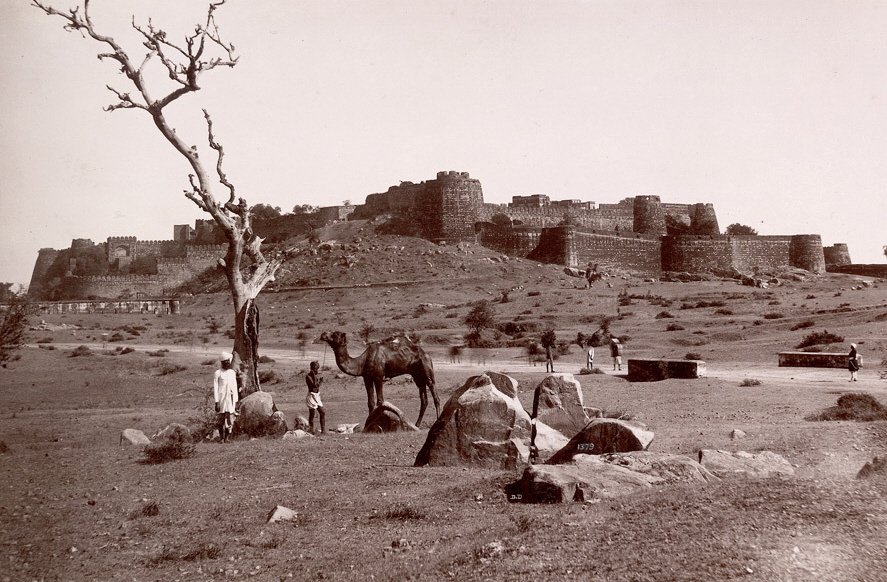
That general was Sir Hugh Rose, commanding the Central India Field Force. He was a careful, relentless soldier who marched his men through the hot season when the rebels expected him to wait, and by late March 1858 he was outside Jhansi. The fort stood on a spur of grey rock, its walls thick and loopholed, its guns well served. Rose ringed it and opened fire on 22 March. For days the two sides traded artillery across the cleared ground, the Rani's gunners answering shot for shot from the ramparts.
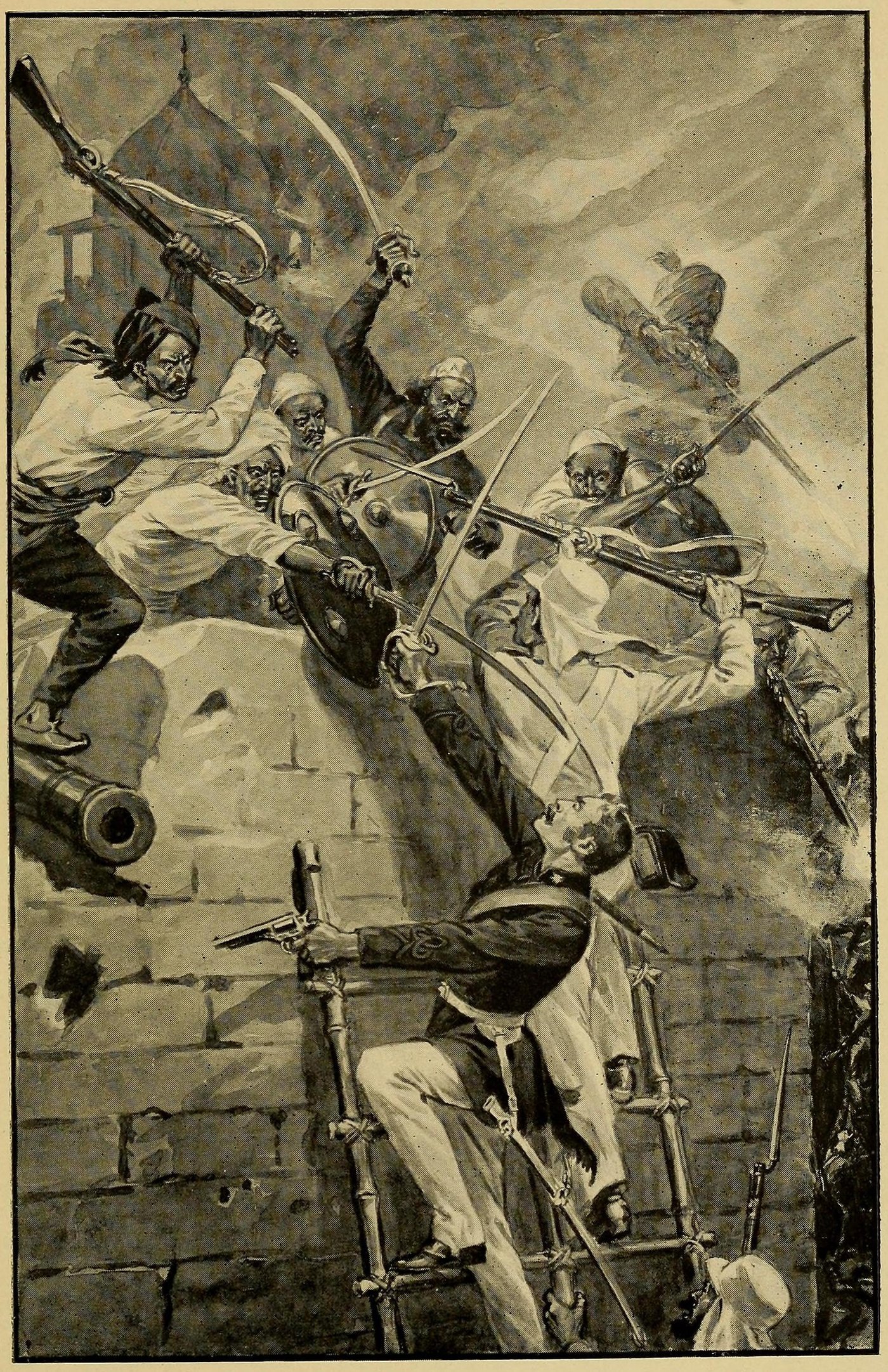
Then came the moment that turns up in every account: a relief army appeared. Tatya Tope, her childhood companion, marched to break the siege with a force far larger than Rose's. Rose did something reckless and brilliant: he split his small army, leaving part to hold the trenches and taking the rest to meet Tatya Tope at the Betwa river on 1 April. He won. The relief force broke and scattered, and the defenders of Jhansi watched their last hope stream away across the plain. Two days later, before dawn on 3 April, Rose's men went in, up scaling ladders and through a breach in the wall, and fought their way into the town. By nightfall the streets were his. Only the fort still held, and inside it the Rani had a decision to make.
Out through the lines
She chose not to die in the fort. Some time that night she gathered a few hundred riders, took her adopted son Damodar Rao, and broke out. This is the moment the legend fixes on: the Rani, it is said, put the boy on her back, spurred her horse off the high fort wall, and landed clear to gallop away. A stone at Jhansi fort still marks the spot "from where Rani Lakshmibai jumped".
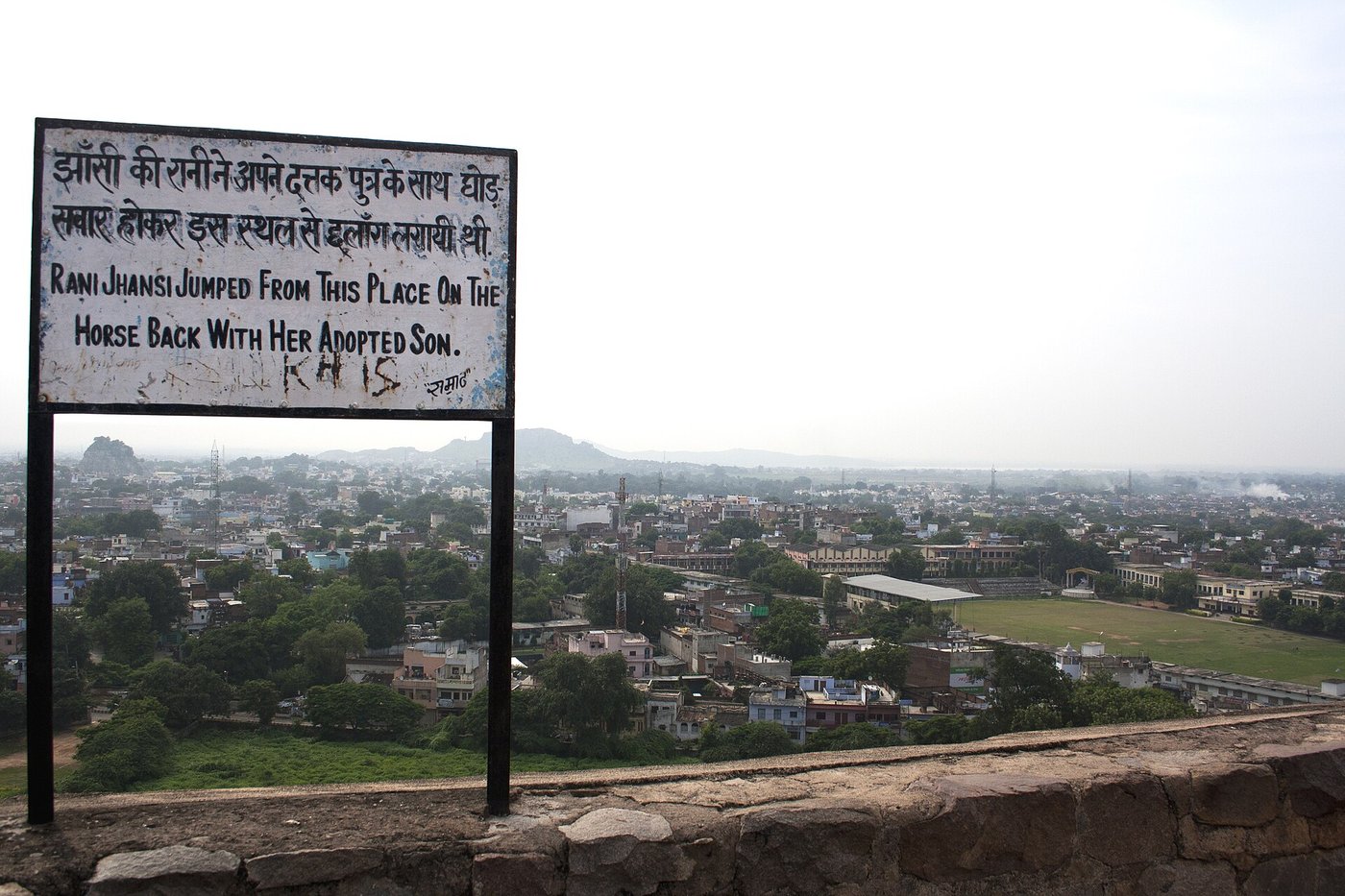
The horse and the boy are real. The wall-leap almost certainly is not, or not as the sign tells it. The soberer accounts, including British ones, describe her slipping out through a weak point in the cordon in the dark, the child tied to her, with a small escort of loyal cavalry. One British officer even claimed his commander had deliberately left a gap in the lines to tempt her out into the open, though that story is doubted too, since Rose knew perfectly well how well she rode. However she got clear, what came next is not in dispute. She rode roughly a hundred and sixty kilometres to Kalpi, hard, with British cavalry hunting her, reaching safety after a day that would have broken most soldiers. The endurance was real. The theatrical leap was mostly added later.
"To escape the fall of Jhansi the Rani tied her little son to her back, put her horse to the fort wall, and leapt clear, a jump of many feet onto the ground below, from which she galloped to freedom."
The son on her back and the desperate night ride are well attested. The jump from the wall is not. Contemporary reports, British and Indian alike, describe her leaving through a gap in the besiegers' lines with a small mounted escort: a breakout, not a leap. The marked "jump" spot at Jhansi fort is a later shrine to the story, not evidence for it. The real feat was the ride: about 160 kilometres in a day, pursued the whole way.
Kalpi, and advice no one took
At Kalpi she joined the other rebel leaders (Tatya Tope, Rao Sahib, and the rest), and here the story turns tragic. By every serious account she was the best soldier among them, and the least listened to. When she urged that the flanks be protected, or that a strong position not be thrown away in a reckless attack, the men in command overruled her. Rose kept coming. He beat the rebel army at Kunch and again near Kalpi, and in late May the last defences on the Yamuna gave way. The revolt in that country was visibly dying.
They gambled on one more throw. Instead of scattering, the leaders struck north for Gwalior, a great fortress-city whose ruler was loyal to the British but whose army was not. In the first days of June the Gwalior troops changed sides, the maharaja fled, and the rebels held one of the strongest forts in India almost without a fight. There was a durbar, and celebration, and talk of a restored Maratha empire. Lakshmibai, the accounts agree, had no patience for the feasting. She wanted the defences readied, because she knew exactly who was coming.
The last morning above Gwalior
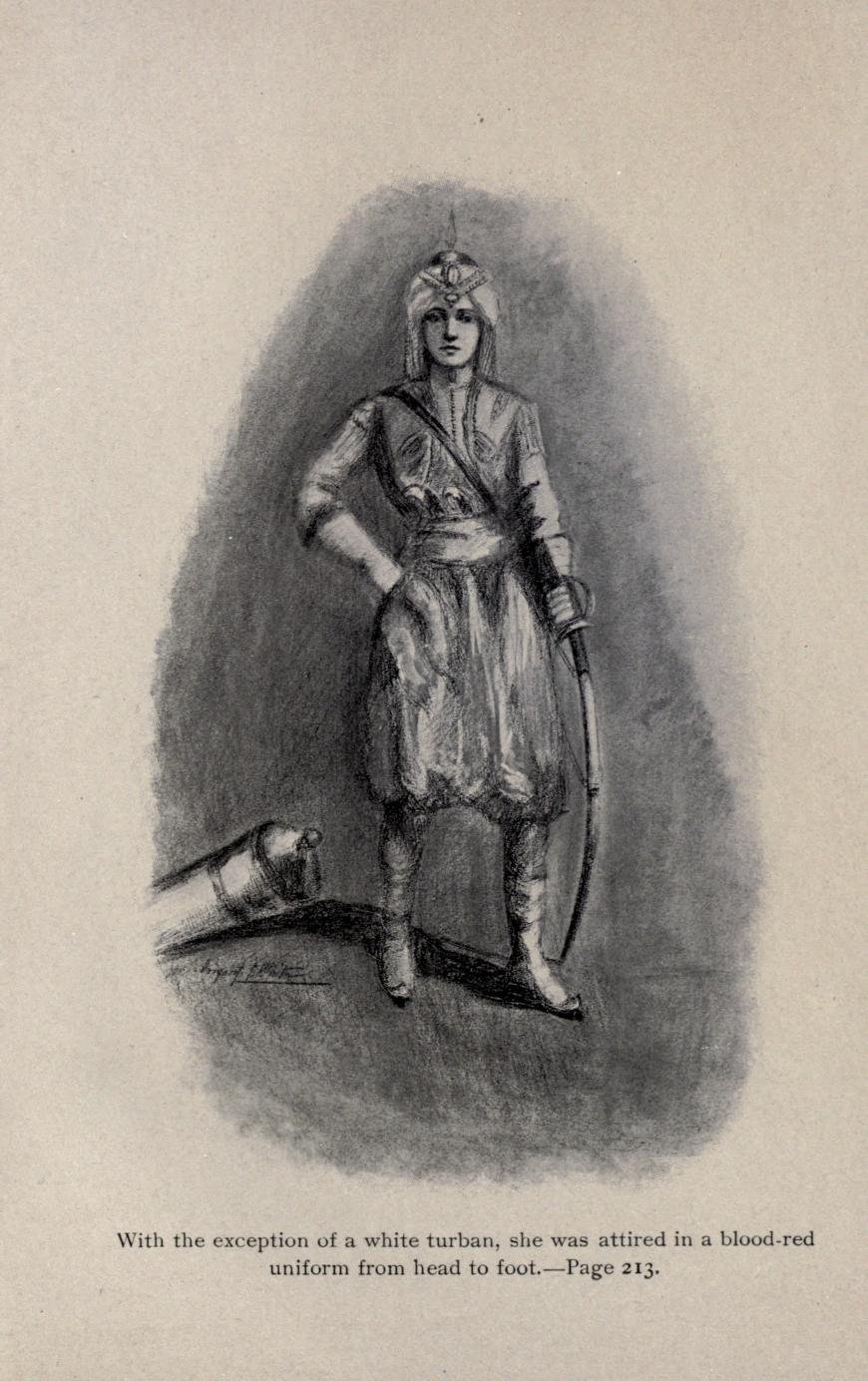
He came within a fortnight. On 17 June 1858, at a place called Kotah-ki-Serai in the broken ground east of Gwalior, Rose's cavalry, the 8th Hussars among them, ran into rebel forces that the Rani herself was commanding. The fight was sudden and confused. The Hussars charged, scattered her bodyguard, and in the melee she was killed. She had dressed as a cavalry trooper, and she died as one, sword in hand, somewhere in the dust of that morning.
Exactly how she fell, no one can say. The accounts disagree on the wound, the hand that struck it, the precise spot. What they agree on, without exception, is that she died fighting and did not surrender. Her own people carried her body away and cremated it before the British could reach it, so there was no grave to find and no corpse to display. Two days later Rose took Gwalior, and the great revolt of 1857 lost its last commander who could hold an army together. She was, at most, thirty.
What her enemies said of her
The tributes that matter most came from the men who had spent months trying to kill her. Hugh Rose, writing his official despatch after her death, called her "the best and bravest of the rebel leaders", an extraordinary thing for a Victorian general to set down about an Indian woman in arms against the Crown. In his fuller assessment he described her as clever, generous to her followers and dangerous precisely because of it, "the most dangerous of all the rebel leaders". Another officer, less generously, muttered that "the Jhansi ranee" had died too easy a death. A cavalryman said simply that she had "fought like a soldier".
"The Indian Mutiny has produced but one man, and that man was a woman."— words long attributed to Sir Hugh Rose on the Rani of Jhansi; whether he wrote them exactly so is uncertain, but the sense of them runs through every British account of her.
Her most famous line in India, "Main apni Jhansi nahi doongi" (I will not give up my Jhansi), is a different case. It is quoted as history, printed in textbooks, spoken in films. But it cannot be traced to anything she is documented to have said. It appears to have been given to her by the novelist Vrindavan Lal Verma in his hugely popular 1946 book about her, at a moment when a colonised country badly needed a heroine who would not surrender. The words fit her so well that they became her, which is its own kind of truth, but they are literature, not record.
The boy on her back, and what came after
The child who rode out of Jhansi against her spine lived a long, sad, ordinary life. Damodar Rao, the adopted son whose disputed inheritance had started the whole tragedy, survived the war, hid in forests with a few retainers, and eventually surrendered to the British. They gave him a small pension, took the fortune held in his name, and let him fade into poverty. He died in 1906, an old man in Indore, having spent his life petitioning politely for a little more money and being remembered by almost no one. The throne he was born to inherit had cost his mother her life and given him nothing.
The Rani herself outgrew the record almost at once. Within a generation she was a goddess of the freedom struggle, painted on horseback with her son and her sword, quoted saying things she never said, leaping walls she probably never leapt. It is easy to be irritated by the embroidery. It is also worth asking why it stuck to her and not to the dozens of other leaders of 1857. The answer is that the plain facts, once you strip the legend away, are already extraordinary: a widowed queen who governed a state alone, cast her own guns, held a fort against a British army, broke out with a child on her back, and died in a cavalry charge rather than give in. The legend did not invent her courage. It only had to decorate it.
Read next: The First Battle of Panipat: How Babur Founded the Mughal Empire and The Koh-i-Noor: How One Diamond Passed Through Five Empires.
Sources & further reading
- Rainer Jerosch, The Rani of Jhansi, Rebel Against Will (2007) — a critical modern biography that weighs the British and Indian sources against each other.
- Joyce Lebra-Chapman, The Rani of Jhansi: A Study in Female Heroism in India (University of Hawaii Press, 1986) — on how the historical woman became a national symbol.
- John Lang, Wanderings in India (1859) — the lawyer's first-hand account of meeting Lakshmibai during the annexation dispute.
- Christopher Hibbert, The Great Mutiny: India 1857 (1978) — a readable narrative of the revolt, including the siege of Jhansi and the Gwalior campaign.
- Encyclopaedia Britannica, "Lakshmi Bai, Rani of Jhansi" — a concise, sourced summary of the documented facts and the disputed points.
Image credits (via Wikimedia Commons): equestrian statue of Rani Lakshmibai (featured) — Ganesh Dhamodkar (CC BY 3.0); engraved portrait from "Lachmi Bai, Rani of Jhansi, the Jeanne d'Arc of India" (1901) — unknown artist (public domain); the fort of Jhansi — Lala Deen Dayal (public domain); the storming of Jhansi — from Edward Gilliat's "Heroes of the Indian Mutiny" (public domain); the marked leap spot at Jhansi Fort — Avinashmaurya (CC BY-SA 3.0).