A tank so heavy no bridge in Europe could hold it. A cannon the size of a house that fired seven-tonne shells from forty kilometres away. A mirror in orbit designed to set cities on fire with focused sunlight. A jet-powered flying wing that looks, unsettlingly, like a stealth bomber built half a century too early. These sound like the props of a pulp science-fiction serial, and yet every one of them was a real programme, funded, designed, and in several cases actually built by Nazi Germany. The Third Reich poured genius and treasure into weapons so outlandish they read like fiction. The history is fascinating. It is also a warning.
Before the tour, one thing has to be said plainly, because it frames everything that follows. These were the weapons of a genocidal state, and many of them were built on a foundation of mass death: not on the battlefield, but in the factories, by concentration-camp prisoners worked to death as slave labour. The engineering can be astonishing. The purpose behind it never stops being monstrous. Hold both of those facts at once, and the story of the Nazi "wonder weapons" becomes something more useful than a list of curiosities: a study in how brilliance unmoored from conscience curdles into horror.
The V-2: the rocket that reached space and was built in hell
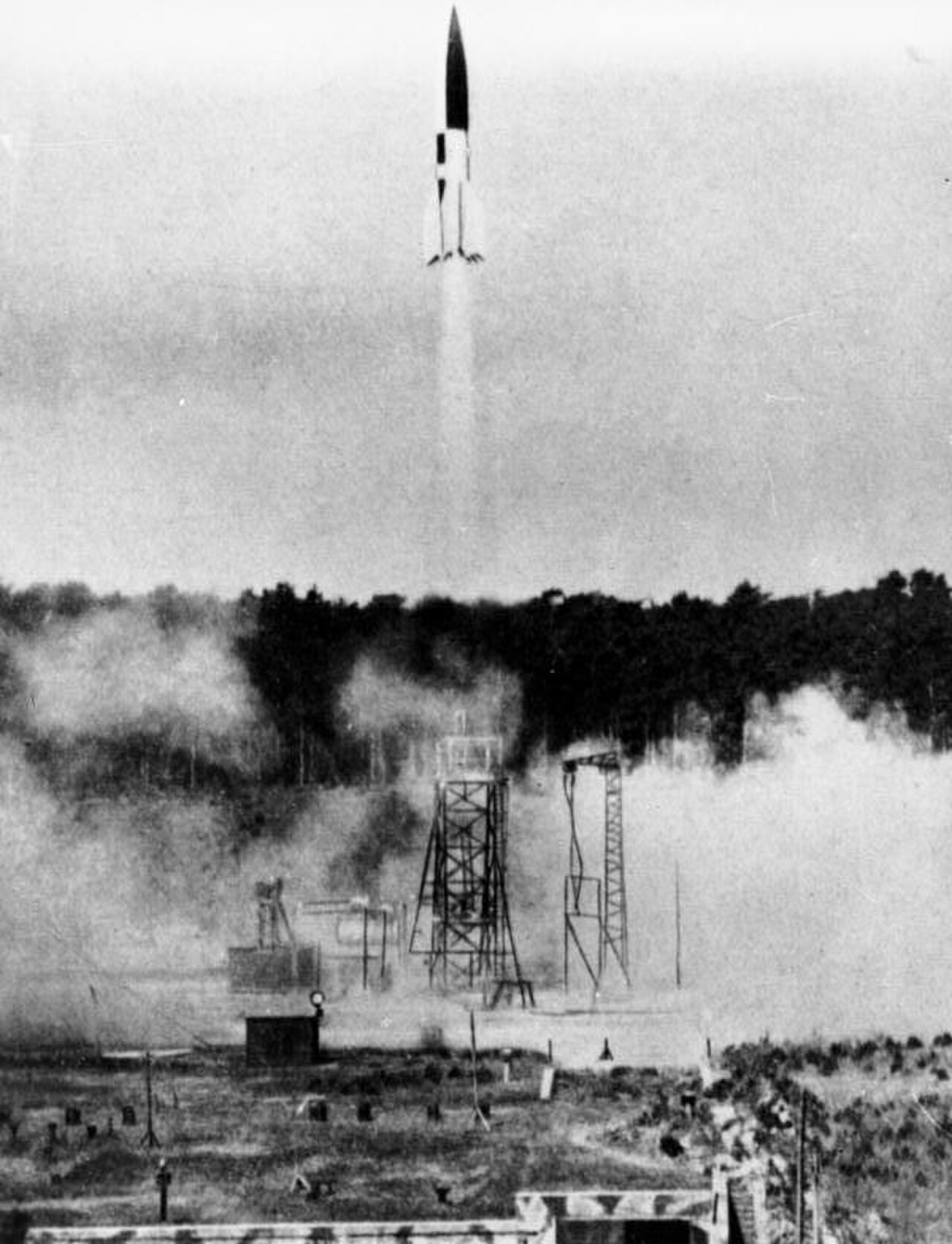
Start with the most consequential of them all. The V-2, properly the Aggregat-4, was the world's first long-range guided ballistic missile, developed at Peenemünde under a young engineer named Wernher von Braun. It was a real technological leap: a liquid-fuelled rocket that climbed beyond the edge of the atmosphere, briefly becoming the first human-made object to cross into space, then plunged down on its target faster than sound, giving no warning and no defence. Thousands were fired at London, Antwerp, and other cities in the last year of the war.
And there is one fact that should never be left out. The V-2 was mass-produced in an underground factory called Mittelwerk, using prisoners from the Mittelbau-Dora concentration camp. The conditions were so lethal that more people died building the V-2 than were ever killed by it: an estimated twenty thousand prisoners worked to death in the tunnels, against roughly nine thousand victims of the missile itself. It is one of the few weapons in history that killed more of its makers than its targets.
After the war, von Braun and many of his rocket team were brought to the United States under Operation Paperclip. Von Braun went on to design the Saturn V that carried Apollo astronauts to the Moon. The same line of engineering that terrorised London in 1944 put men on the Moon in 1969, a direct, uncomfortable thread running from the slave-built tunnels of Mittelwerk to one of humanity's proudest achievements.
The Sun Gun: a mirror to burn cities from orbit
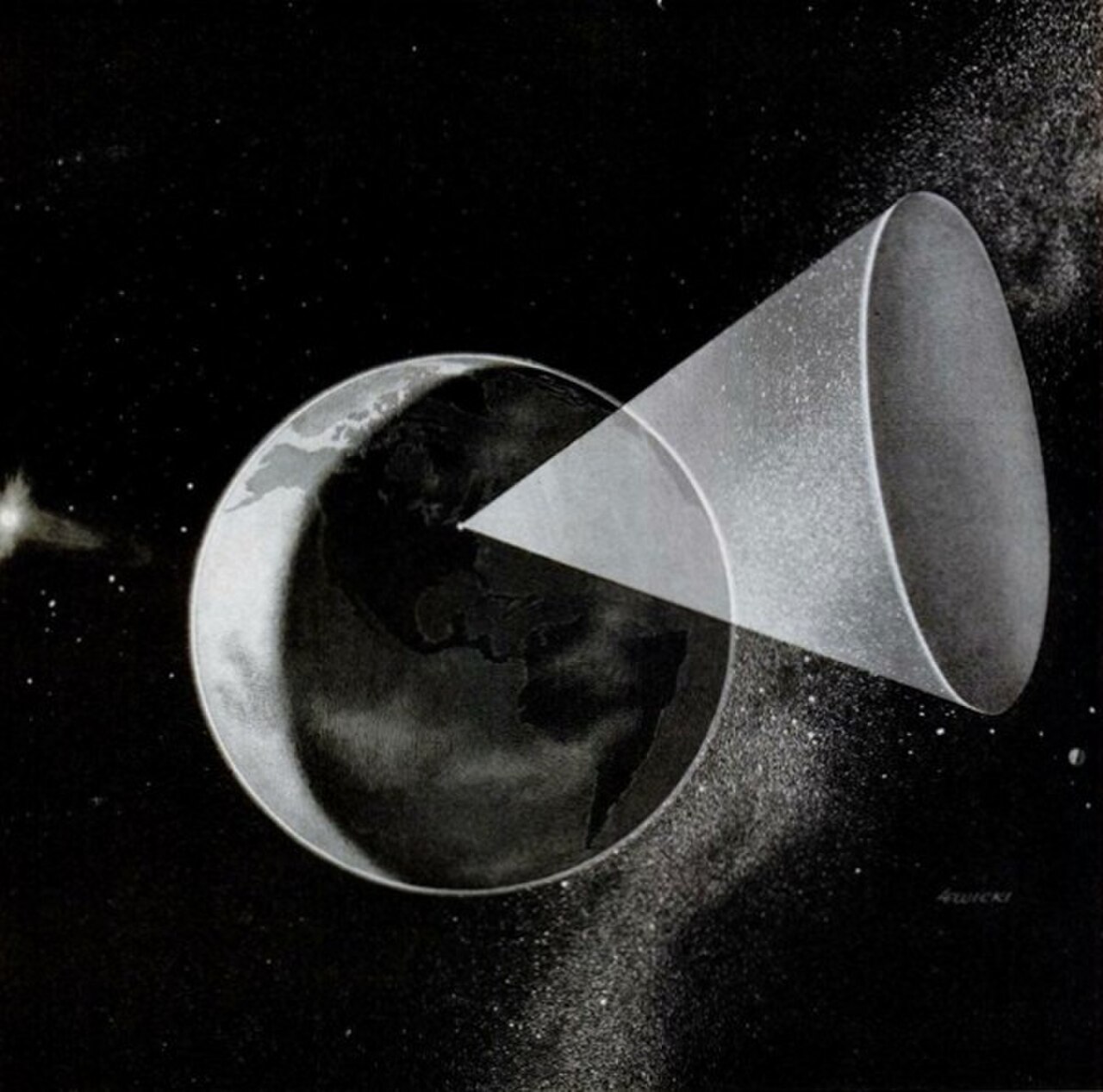
If the V-2 was the programme that worked, the Sonnengewehr, the "Sun Gun", was the one that belonged in a comic book, and the Nazis studied it anyway. The concept, which drew on an earlier idea by the rocketry pioneer Hermann Oberth, was a gigantic concave mirror placed in orbit around the Earth, kilometres across, that would focus the sun's rays onto a single point on the ground, boiling reservoirs, incinerating cities, scorching whole regions at the press of a button. German researchers reportedly discussed it in earnest, estimating it might take fifty or a hundred years to build.
It was, of course, hopelessly beyond the reach of 1940s technology. There was no way to lift thousands of tonnes of material into orbit, no way to build or aim such a structure. But the very fact that it was discussed at all tells you something about the imaginative scale of Nazi weapons research: a regime willing to sketch an orbital death-ray with total seriousness while it was already losing the war on the ground.
The Horten Ho 229: a stealth bomber out of time
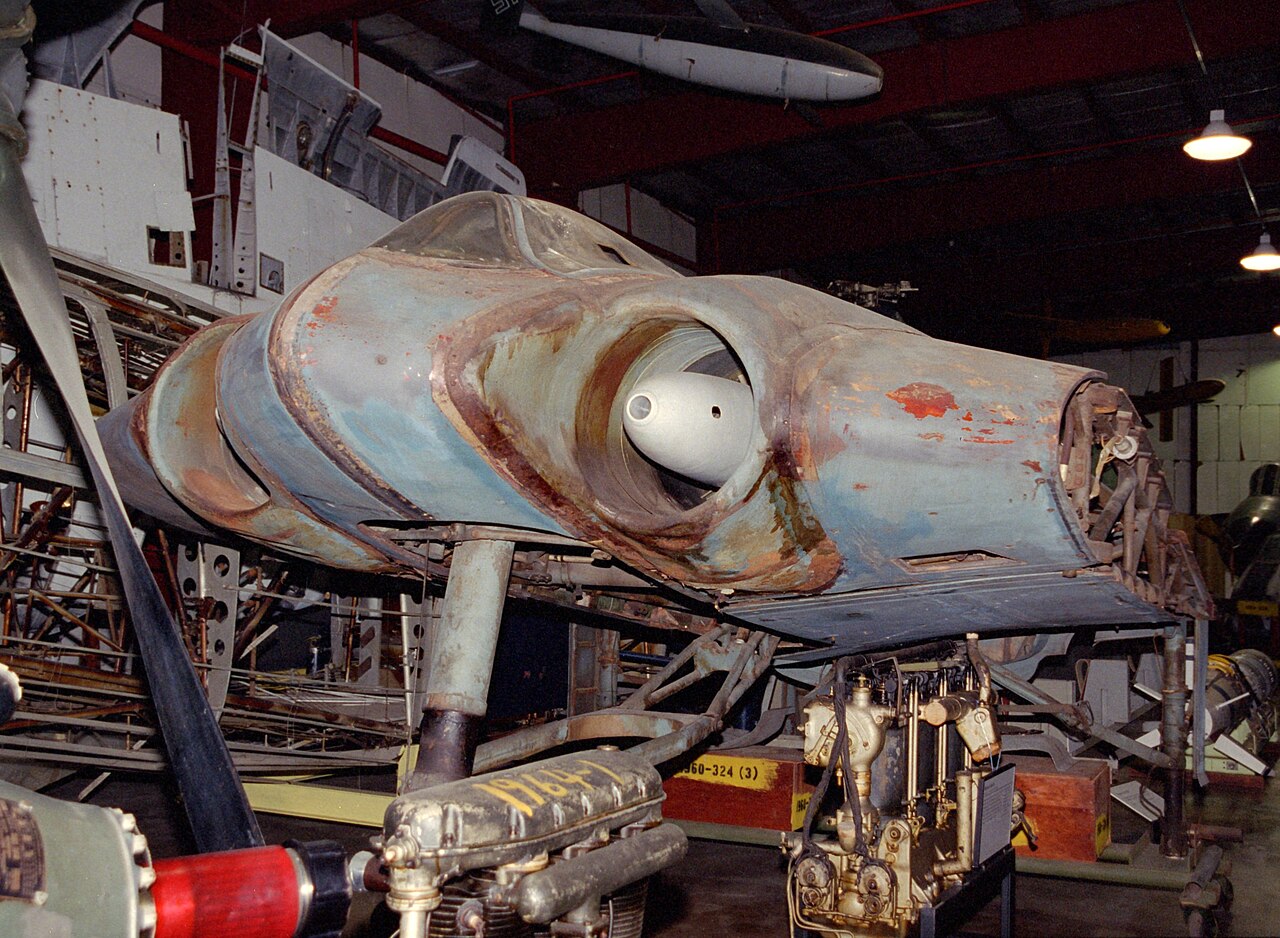
Some of these projects are unsettling not because they failed but because they were ahead of their time in ways that feel almost anachronistic. The Horten Ho 229 is the prime example. It was a jet-powered flying wing (no tail, no fuselage, just a smooth, swept blended shape) designed by the Horten brothers and intended as a fast, long-range fighter-bomber. Look at a photograph of the surviving prototype and you will think of the B-2 Spirit stealth bomber, which entered American service in the 1990s. The resemblance is striking.
There has been long debate about whether the Ho 229 was deliberately designed to evade radar. Some claim its wooden, glue-laminated construction was meant to absorb radar waves, while others argue any stealth quality was incidental. Either way, only a few were built and none saw combat; the war ended first. The single surviving airframe sits today in the collection of the Smithsonian. It remains one of the eeriest "what-ifs" in aviation history: a shape from the future, grounded in 1945.
The Panzer VIII Maus: the tank too heavy to use
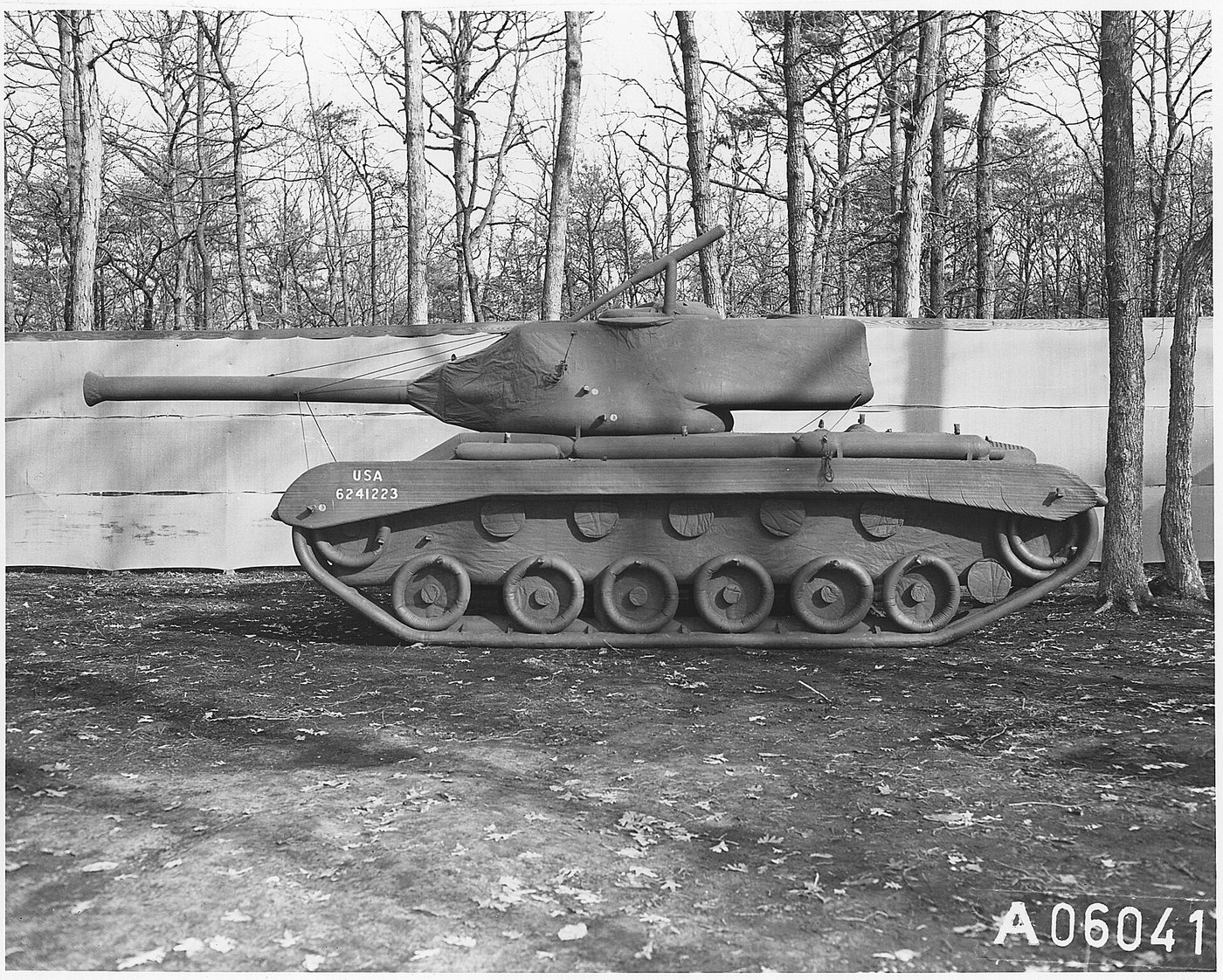
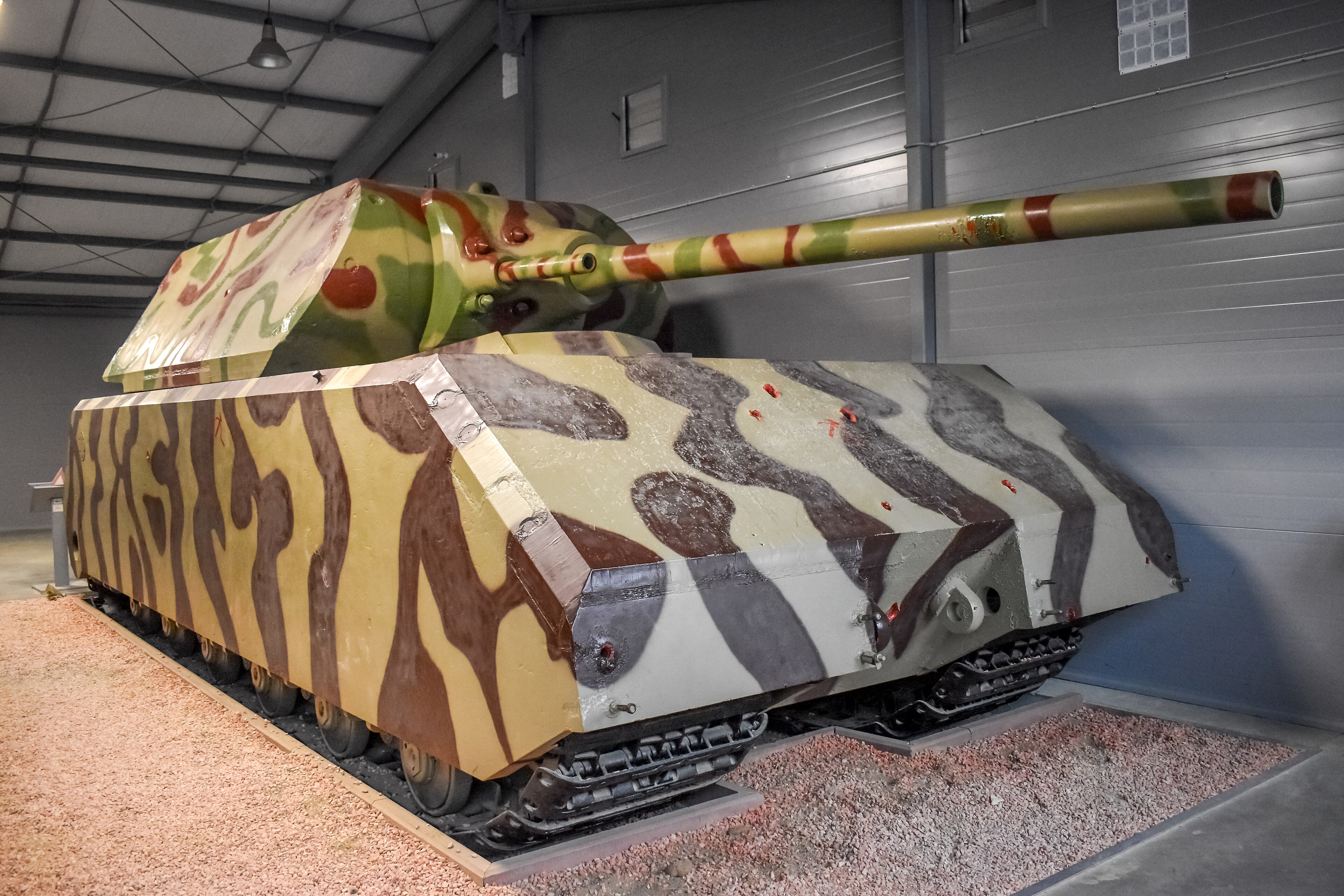
Hitler had a weakness for the colossal, and nothing captures it better than the Maus ("Mouse"), a darkly ironic name for the heaviest armoured vehicle ever built. The Panzer VIII Maus weighed around 188 tonnes, more than twice a modern main battle tank, sheathed in armour up to a quarter of a metre thick and mounting a 128 mm main gun. On paper it was nearly invulnerable.
In practice it was a monument to impracticality. It was so heavy that it could not cross the great majority of European bridges without collapsing them, so it was designed to wade through rivers with a snorkel, drawing power from another Maus on the bank. It was desperately slow, gulped fuel a collapsing Reich could not spare, and was a nightmare to transport. Only two were ever built, and neither saw real combat. The Maus is the perfect emblem of a certain kind of late-war German thinking: technically brilliant, strategically senseless, and utterly detached from the reality of the war being lost around it.
Schwerer Gustav: the largest gun ever fired in anger
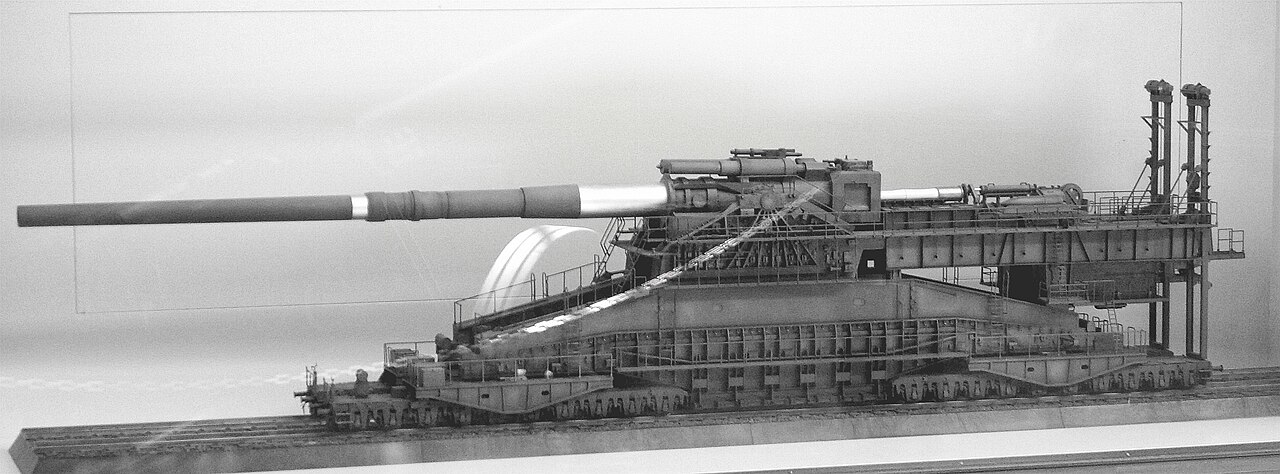
If the Maus was the biggest tank, Schwerer Gustav was the biggest gun: the largest-calibre rifled weapon ever used in combat. This was an 80 cm railway cannon, a gun so vast it had to be assembled on twin sets of railway tracks and could only move by rail. It fired shells weighing up to seven tonnes over distances of nearly forty kilometres, and a single shot could punch through many metres of concrete or rock.
The logistics were almost comic in their excess. Gustav required a crew running into the thousands to assemble, guard, and operate, took days to set up, and could manage only a handful of shots per day. It was used most famously in the 1942 siege of Sevastopol, where its monstrous shells did real damage to fortified targets. But as a weapon of war it was an extravagance: enormous resources tied up to deliver a few rounds, when those same men and that same steel could have built fleets of conventional artillery. It is engineering as spectacle, which is a recurring theme in this catalogue.
The Me 163 Komet: the rocket fighter that killed its own pilots
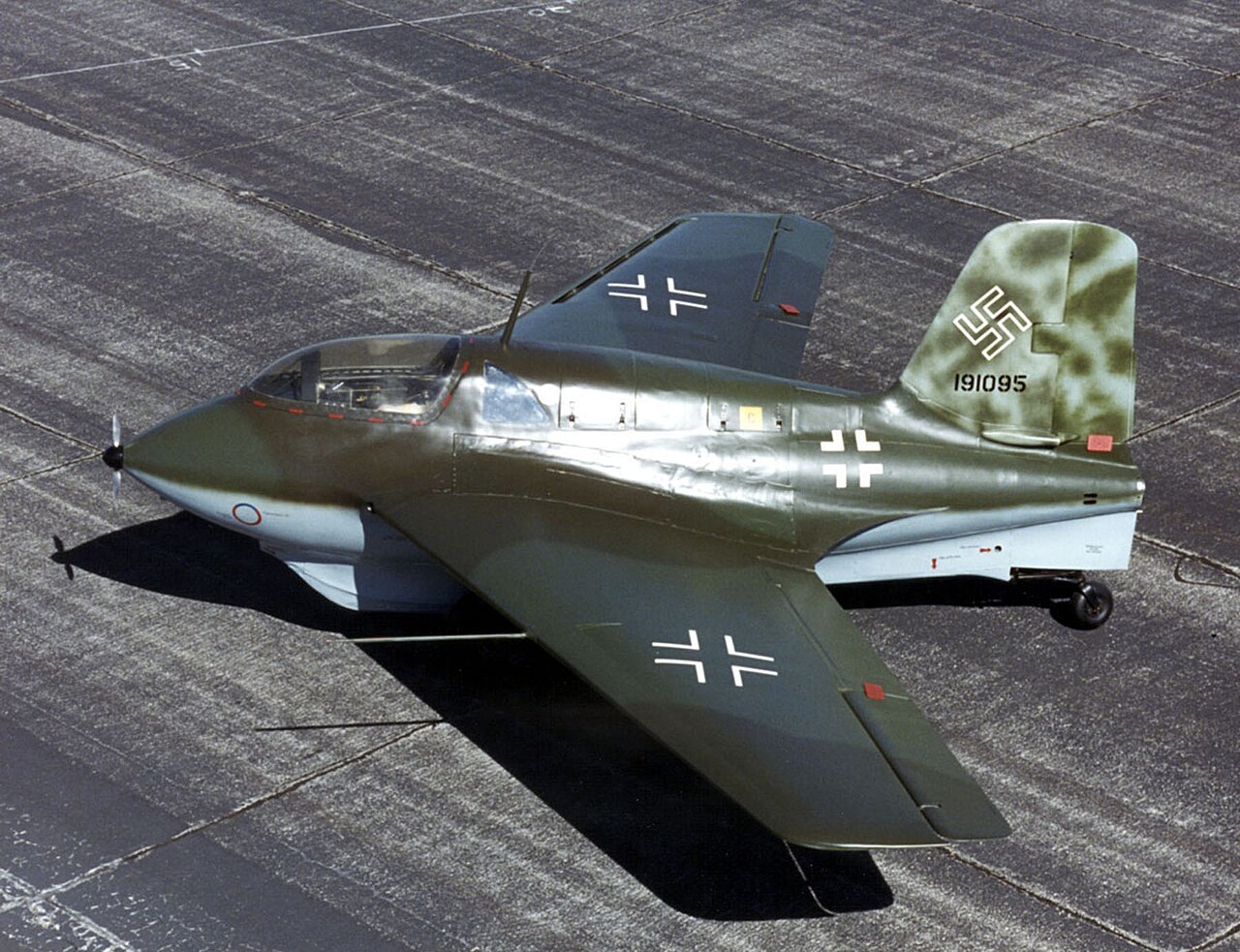
The Messerschmitt Me 163 Komet was the only rocket-powered fighter ever to enter operational service, and it was terrifyingly fast, capable of well over 950 km/h at a time when its propeller-driven opponents struggled to reach two-thirds of that. It would rocket almost vertically up into a bomber formation, make a lightning firing pass, and glide back down. On paper, an interceptor from the future.
In reality it was nearly as dangerous to fly as to face. Its engine ran on two hypergolic propellants so volatile that they could ignite or explode on contact, and one of them was a concentrated hydrogen-peroxide compound corrosive enough to dissolve organic material, including, horrifically, a pilot. Landings were made without power on a skid, often ending in crashes that detonated leftover fuel. The Komet probably killed more of its own pilots through accidents than it ever shot down. Like so much here, it was a brilliant idea wrapped around a lethal flaw.
The V-3: the supergun aimed at London
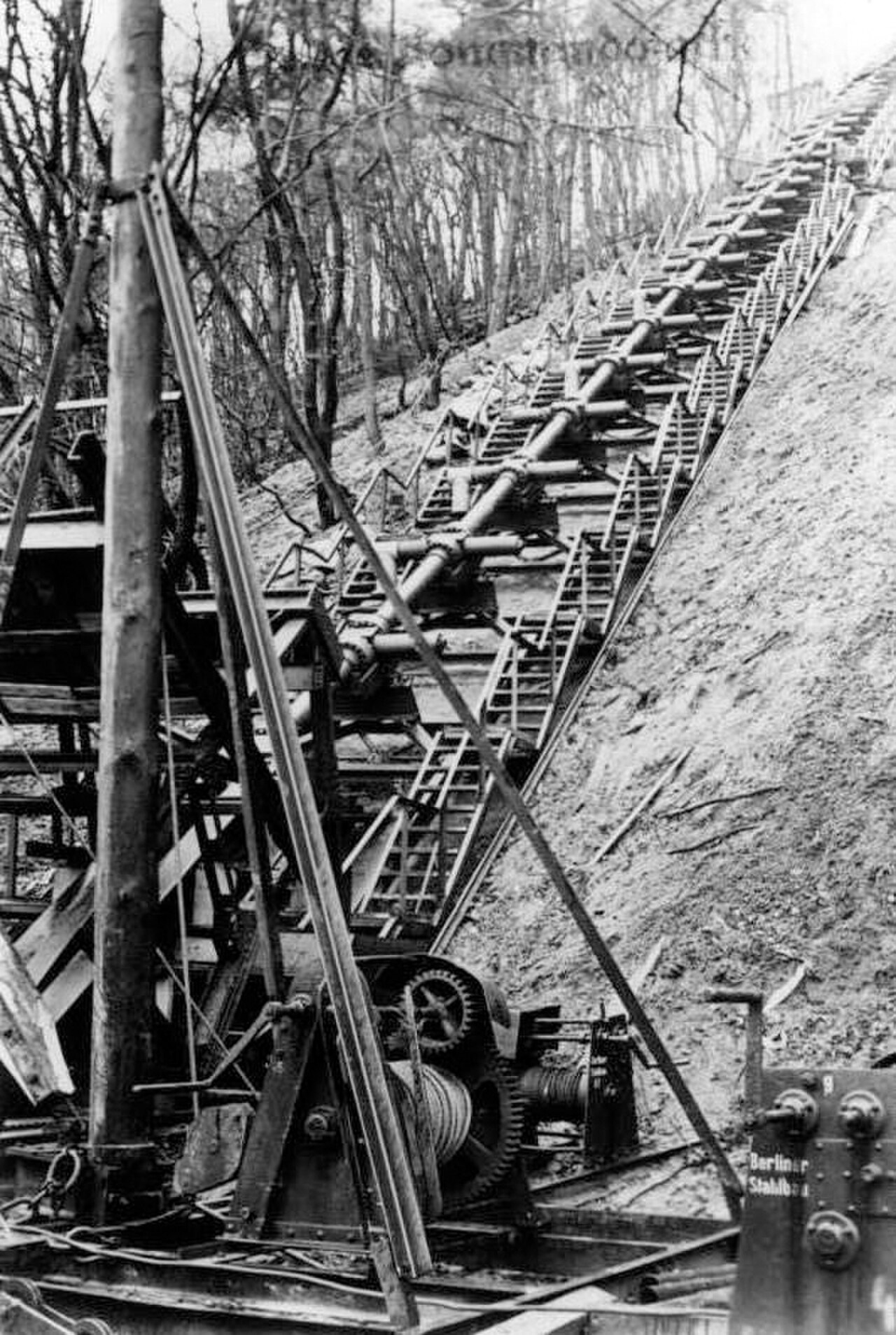
The V-3 (codenamed Hochdruckpumpe, "high-pressure pump," and nicknamed the "England Gun") was perhaps the most audacious artillery scheme of the war. It was a "multi-charge" supergun: instead of one explosion firing a shell up a barrel, a series of secondary propellant charges arranged along an enormous barrel, over 130 metres long, would fire in sequence as the shell passed, accelerating it to tremendous velocity. A battery of these guns, buried in the hills at Mimoyecques in occupied France, was meant to rain shells on London continuously, day and night.
It never happened. The technical problems were severe, and the site was relentlessly attacked by Allied bombers, including, eventually, the heavy "Tallboy" earthquake bombs. (The American naval aviator Joseph P. Kennedy Jr., elder brother of the future president, died when his explosives-packed aircraft detonated prematurely on a mission against German V-weapon sites in the same campaign.) The buried supergun complex was wrecked before it could fire a shot at England. The multi-charge principle itself, however, was sound, and versions of the idea have resurfaced in artillery research ever since.
Fritz X: the first true smart bomb
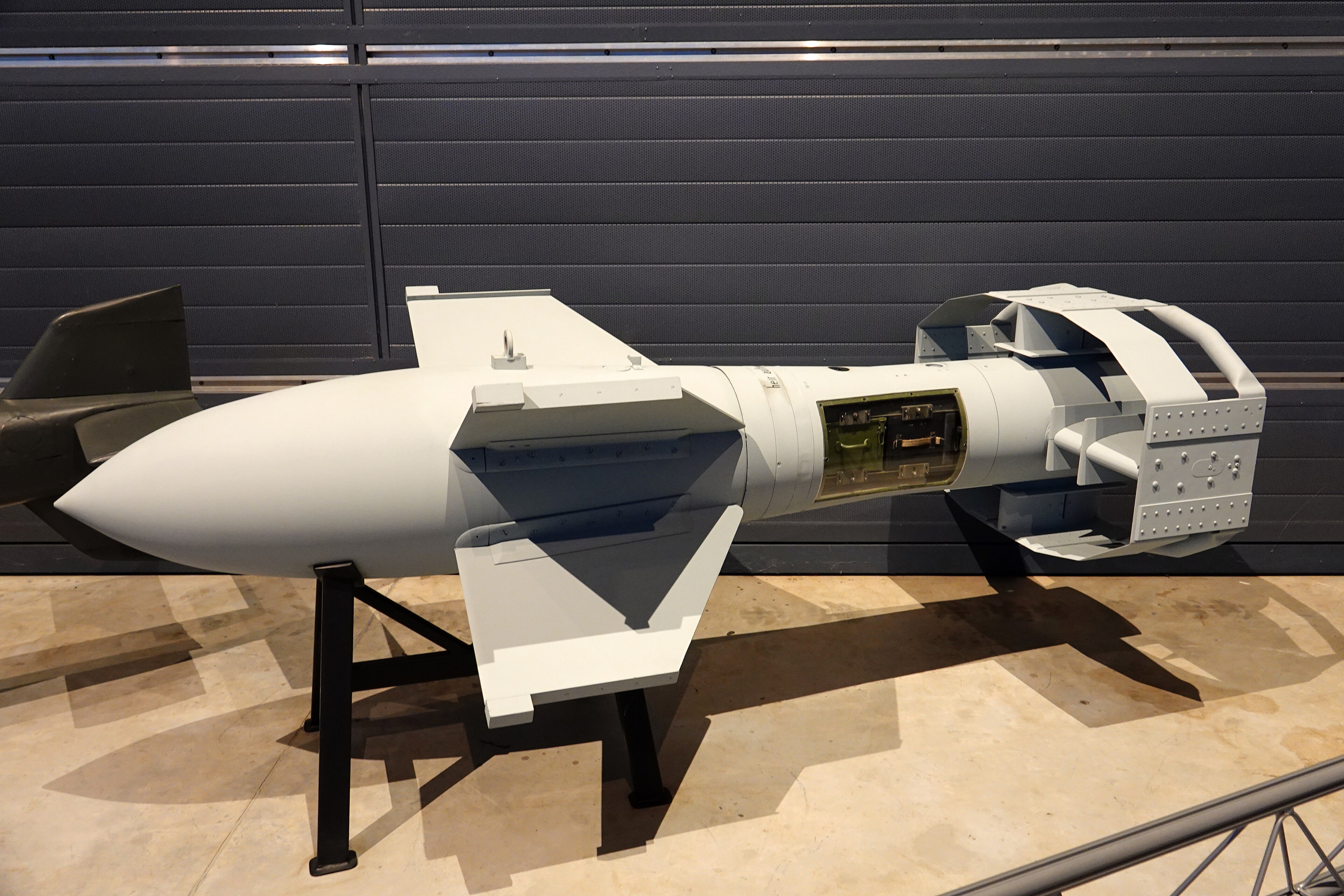
Not every fantastical Nazi project failed, and the most significant success on this list is also the one that most directly shaped the modern world. The Fritz X was a radio-guided, armour-piercing glide bomb: a free-falling weapon with control surfaces and a guidance link that let a bombardier in the launching aircraft steer it onto a target as it fell. In other words, the first precision-guided munition ever used successfully in combat, and the direct ancestor of every "smart bomb" in use today.
Its most dramatic moment came in September 1943. When Italy surrendered and its fleet sailed to join the Allies, German aircraft attacked, and a Fritz X struck the Italian battleship Roma, detonating a magazine and sinking her with enormous loss of life. A guided weapon had sunk a battleship from the air. The age of precision-guided warfare, which now dominates every modern military, began with this strange, deadly device.
"The Nazis built an anti-gravity device called Die Glocke — 'The Bell' — and had secret flying saucers and exotic super-science the world has covered up ever since."
Die Glocke is almost certainly a postwar invention. The story traces to a single 1990s account with no credible documentation, and it has since metastasised through conspiracy books and the internet. There is no contemporary evidence it existed. It's worth flagging precisely because the real projects are so extraordinary: the documented history is strange enough without the fabricated "Nazi UFO" mythology grafted onto it. Separating the documented from the invented is part of taking the subject seriously.
Paper dreams: the bombers meant for New York
Two more deserve a mention, because they show how far the imagination ran. The Amerikabomber programme sought a bomber that could cross the Atlantic, strike New York City, and return, an intercontinental reach that no one then possessed. And the Silbervogel ("Silver Bird"), designed by Eugen Sänger, was even wilder: a rocket-powered "antipodal bomber" that would be launched up a rail track, climb to the edge of space, and then skip across the upper atmosphere like a stone across a pond, bouncing halfway around the globe to bomb a target and glide on. It was never built (it was beyond the materials and physics of the day), but the skip-glide concept did influence later thinking about spaceplanes and hypersonic flight. Real engineers, on real payrolls, were drawing spacecraft to bomb America in the early 1940s.
It's tempting to imagine these "wonder weapons" nearly won the war, or could have if they'd arrived sooner. Most historians strongly disagree. The Wunderwaffen are better understood as a symptom of a regime in trouble: a scattershot grasping for miracle solutions that squandered scarce resources, engineering talent, and slave labour on extravagant projects, when conventional production and sounder strategy would have served Germany's war far better. The wonder weapons didn't lose the war for Germany, but the obsessive, wasteful pursuit of them certainly didn't help. Awe at the engineering shouldn't be mistaken for military significance.
The lesson under the steel
What stays with you, after the orbital mirrors and the underwater tanks and the rocket planes, is the disturbing gap at the centre of it all: extraordinary human ingenuity, put to work by a regime with no moral floor, and powered in its grimmest moments by the deaths of enslaved prisoners. These projects "sound fictional" because they were dreamed at the very limits of imagination, and that's exactly what makes them a warning rather than a marvel. Brilliance is not the same thing as wisdom, and a civilisation can build a rocket to the edge of space and a death camp to assemble it in the same breath. The technology dazzles. The history insists we remember what it was for.
Read next: Apollo 11: The Moon Landing That Nearly Ran Out of Fuel.
Sources & further reading
- Michael J. Neufeld, The Rocket and the Reich and Von Braun: Dreamer of Space, Engineer of War — essential on the V-2 and the moral compromises of the rocket team.
- Wolfgang W. E. Samuel, American Raiders, and standard histories of Operation Paperclip.
- Smithsonian National Air and Space Museum materials on the Horten Ho 229.
- Imperial War Museum and standard references on the V-3 (Mimoyecques), Schwerer Gustav, Me 163 Komet, Panzer VIII Maus, and the Fritz X guided bomb; and, on the myth, the critical literature debunking "Die Glocke."