The story that went round the world on 28 January 2013 was that Timbuktu had lost its library. French and Malian columns were closing on the city after ten months of occupation, and as the fighters pulled out they were said to have set fire to the building that held the town’s great collection of old manuscripts. The mayor, reached by telephone from the capital, called it a devastating blow. Wire services ran the number: tens of thousands of documents, some of them a thousand years old, gone in a single night. It was the ending everyone had been dreading, and it arrived on cue.
Most of it was wrong. The fire was real, and so was the loss, but the loss was a fraction of what the headlines described, and the reason for that had been unfolding in the opposite direction for the better part of a year. While the world watched the militants tear down shrines in the square, the books had been slipping out of Timbuktu a few trunks at a time: loaded onto donkey carts at night, packed under sacks of rice in the back of hired cars, floated down the Niger in low wooden canoes. By the time the building burned, the thing the fire was meant to destroy had mostly already left.
A city that was made of books
To understand why anyone would risk their life for a metal box of paper, you have to know what Timbuktu once was. It sits on the southern edge of the Sahara, where the desert meets the bend of the Niger, and for centuries that position made it rich. Caravans came down out of the sand carrying salt cut from mines in the deep desert; boats came up the river carrying gold from the forests to the south. The two met at Timbuktu and were traded, and the town grew fat on the difference.
Gold and salt built the walls. Books furnished the rooms. By the sixteenth century, under the Songhai empire, Timbuktu had become one of the great centres of learning in the Muslim world, a place where a young man might come from a thousand miles away to sit with a famous teacher. The mosques of Sankore and Djinguereber doubled as universities. Students read grammar, then logic, then law, then astronomy, working their way up through a teacher’s personal library one borrowed volume at a time. A visiting scholar from the north, Leo Africanus, noted with some surprise that the most profitable trade in the city was not gold or slaves or cloth but manuscripts, which sold for more than almost anything else on the market.
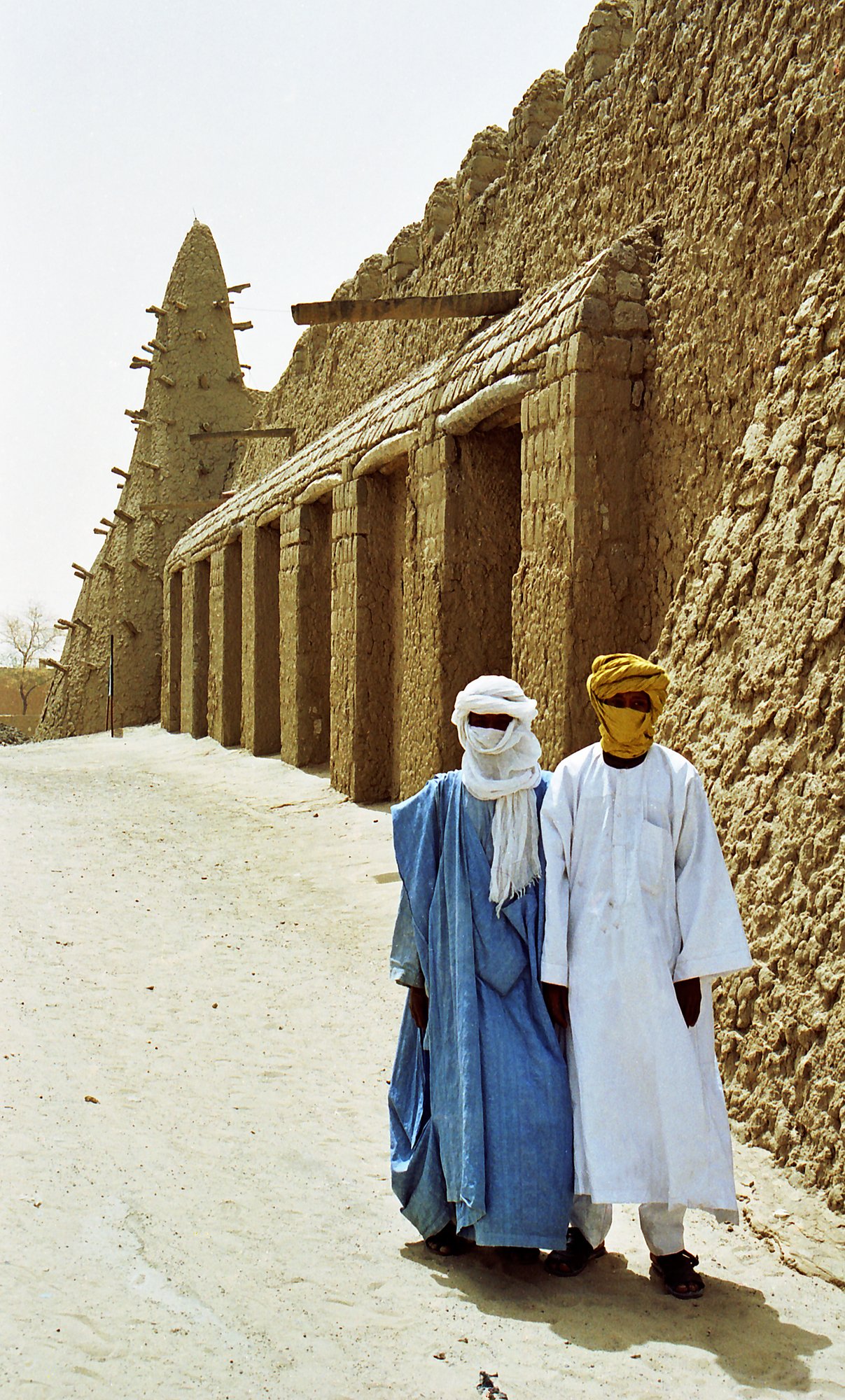
Those books did not vanish when the empire did. They stayed, out of sight, in private hands. A family that had produced a scholar kept his library, and their children kept it after them, and so on down the generations until the collection was less a library than an inheritance: sometimes treasured, sometimes forgotten, wrapped in cloth in a back room, walled up, or buried in the yard against the day soldiers came. Timbuktu did not have one library. It had hundreds, scattered through the courtyards of the old town, and most outsiders had no idea they existed.
The first time the books were carried out
The building that burned in 2013 was named after a man who had lived through the last catastrophe on this scale, four hundred years earlier. Ahmad Baba al-Timbukti was the most celebrated scholar of his age, a jurist who wrote something like seventy works on law, grammar and the lives of learned men. In 1591 his world ended. The sultan of Morocco, hungry for the gold trade, sent an army across the desert with firearms the Songhai had never faced. At the battle of Tondibi the empire broke. The soldiers marched into Timbuktu, and they did not spare the scholars.
Ahmad Baba was arrested, chained and deported to Marrakesh. His library went with the plunder. Years later, still in exile, he wrote a line that has followed his name ever since: the soldiers, he said, had taken sixteen hundred of his books, and his was the smallest library of any of his friends. It is the kind of detail that rearranges your sense of a place. If the least bookish scholar in the town owned sixteen hundred volumes, the reading city on the edge of the Sahara had held a staggering amount of paper.
When Ahmad Baba complained that Moroccan soldiers had stolen sixteen hundred of his manuscripts in 1591, he added that his was the modest end of the shelf, smaller than any of his friends’ collections. It is one of the few hard figures we have for how much was read in Timbuktu at its height, and it comes to us as a grievance rather than a boast.
That first sacking matters for another reason. For a long time European writers insisted that sub-Saharan Africa had produced no written history worth the name: that the continent south of the desert had no records, no scholarship, nothing but oral memory. One British historian was still saying so on television in the 1960s. The manuscripts of Timbuktu are the flat contradiction of that idea: shelf after shelf of African writing in Arabic and in local languages set down in Arabic script, chronicles and law and science, kept by African families for five hundred years. The books were not only worth saving in 2012 because they were old. They were worth saving because of what they had already outlasted, and what people had tried to make them mean.
Inheritances wrapped in cloth
The man at the centre of the modern rescue grew up inside one of those inheritances. Abdel Kader Haidara was the son of a Timbuktu scholar whose own collection ran to thousands of volumes. When his father died, the family’s manuscripts became Haidara’s responsibility, and in time that turned into a profession. He spent years travelling the villages of the Niger bend by camel and canoe on behalf of a state library, coaxing families into parting with manuscripts they had guarded for generations, or into letting them be catalogued and preserved. He knew, better than almost anyone alive, where the books of the region actually were: not in one guarded vault, but spread across countless homes, each with its own suspicious owner and its own hiding place.
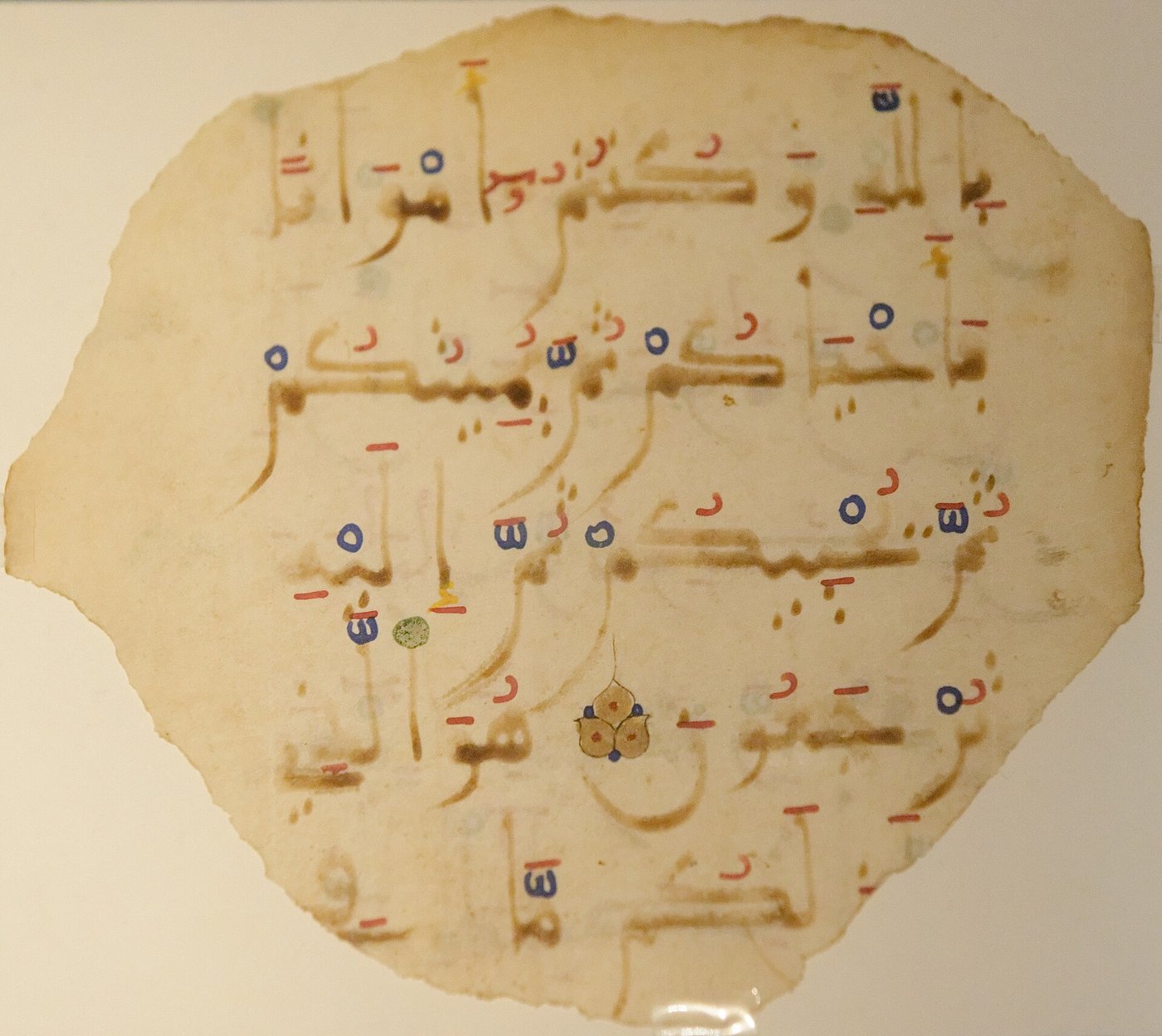
By 2012 a good part of that scattered heritage had been drawn together into private libraries with proper names and, in a few cases, proper buildings. Haidara had helped build several of them. Then there was the state institution: the Ahmed Baba centre, which had opened a new, South-African-funded home in 2009 and held tens of thousands of manuscripts of its own. On paper it was a moment of arrival. The books that had survived by hiding were finally coming into the light, being numbered and shelved and photographed. The trouble with bringing everything into the light is that it also becomes easy to find.
What is actually in the trunks
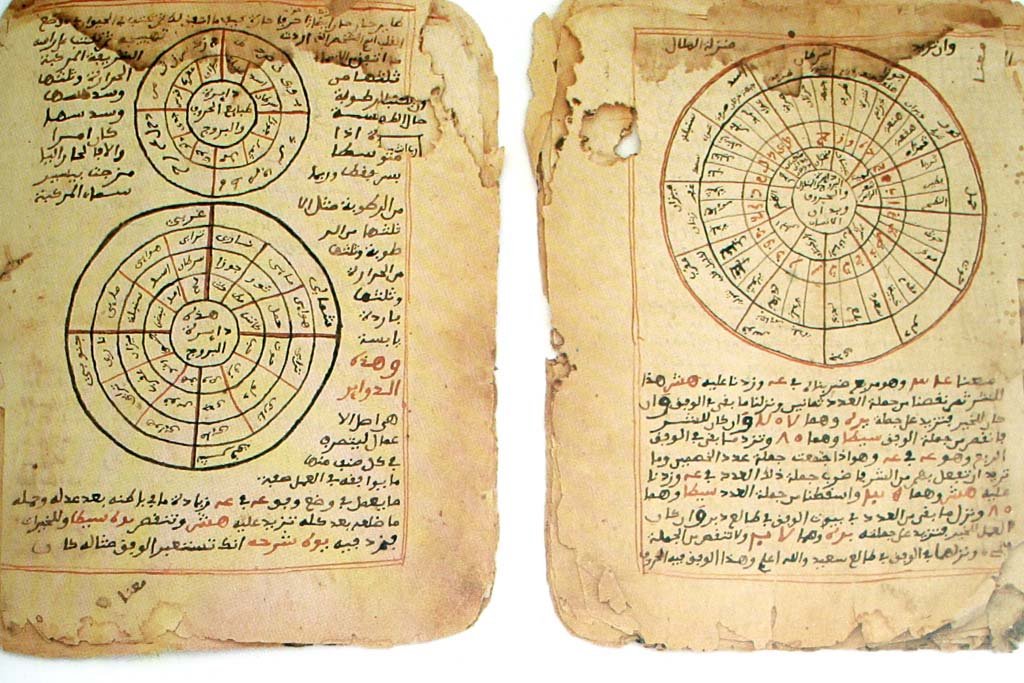
People picture the manuscripts as Qurans, and many of them are, some very beautiful, in gold and the looping Maghrebi hand of the western Muslim world. But the collections are far stranger and more human than that. Turn the pages and you find legal opinions on whether a particular marriage was valid, and letters between merchants haggling over the price of salt. You find tables charting the movements of the planets and instructions for reading the sky, medical notes on treating fevers and setting bones, poems, dream interpretations, arguments between rival scholars conducted in the margins over decades. One page can be a diagram of the heavens. The next, in the same trunk, can be a receipt.
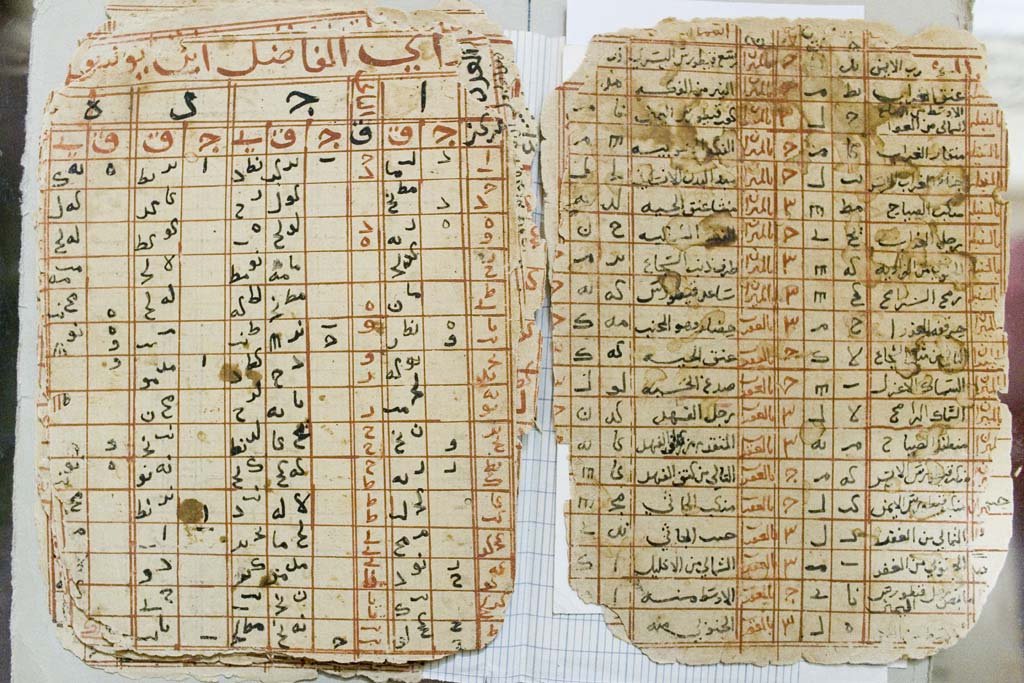
Some of the manuscripts are documents in the plainest sense. One of Ahmad Baba’s own works is a treatise on the enslavement of West Africans, arguing which peoples could and could not lawfully be sold under Islamic law, an uncomfortable, complicated text that shows the region arguing with itself about slavery centuries before Europe did. Others are the great chronicles, the tarikhs, written in Timbuktu in the seventeenth century, which are still the main written source historians have for the Songhai empire and its fall. Take the manuscripts away and a large part of the medieval history of West Africa becomes guesswork. That is the real weight in the trunks: not gold leaf, but the only surviving record of what happened here.
The men who came for the shrines
In the spring of 2012 the Malian army in the north collapsed. A Tuareg rebellion took the region, and then armed Islamist groups linked to al-Qaeda pushed the rebels aside and took it for themselves. By April they held Timbuktu. What followed was a hard, joyless kind of rule: music banned, women ordered to cover, hands and backs given over to public punishment.
Then they turned on the town’s saints. Timbuktu had long venerated its holy men, and their tombs were domed mud shrines dotted through the streets, some of them centuries old and listed by UNESCO as treasures of the world. To the occupiers this was idolatry. They came with pickaxes and brought the shrines down, one after another, in front of the cameras. The message was not lost on anyone who owned a library. A movement that would smash a saint’s tomb for showing the wrong kind of devotion was not going to look kindly on shelves of astrology, figurative decoration and centuries of independent thought. The books that had survived by staying hidden were suddenly in a town where hiding had become a matter of life and death.
A man decides to move a library
Haidara did not wait to be told the manuscripts were in danger. He worked it out himself, and he started buying trunks. Metal footlockers, the cheap kind sold in every market for storing clothes, bought quietly and in such numbers that the price of a trunk in Timbuktu began to climb and he had to send agents to buy more in Mopti, downriver, so as not to draw attention. Into the trunks went the manuscripts, wrapped and padded, and the trunks were carried first to safe houses around the city, spread thin, a few in this courtyard, a few in that, so that no single raid could take a whole collection.
None of this was free. Trunks cost money, couriers cost money, bribes and boats and safe houses all cost money, and Haidara was suddenly running a logistics operation out of a mobile phone. He pulled together an organisation of family members and neighbours, and he raised funds however he could: from European cultural foundations, from a crowdfunding appeal that let strangers around the world pay to move manuscripts they would never see, from anyone who understood what was at stake. The people doing the carrying were not soldiers or spies. They were relatives, students, teenagers: the sort of people who could pass through a checkpoint without being interesting.
Down the river in footlockers
Getting a trunk out of Timbuktu was only the start. Bamako, the capital and the nearest safe city, lay the better part of a thousand kilometres to the south-west, and every route ran through territory held either by the militants or by an edgy, suspicious Malian army. So the trunks travelled the way everything travels in that part of the world: slowly, and by whatever was going. Some went overland, buried in the cargo of buses and hired four-by-fours under vegetables and firewood and passengers’ luggage. Some went down the Niger by canoe, riding low in the water past villages, because the river drew less attention than the roads.
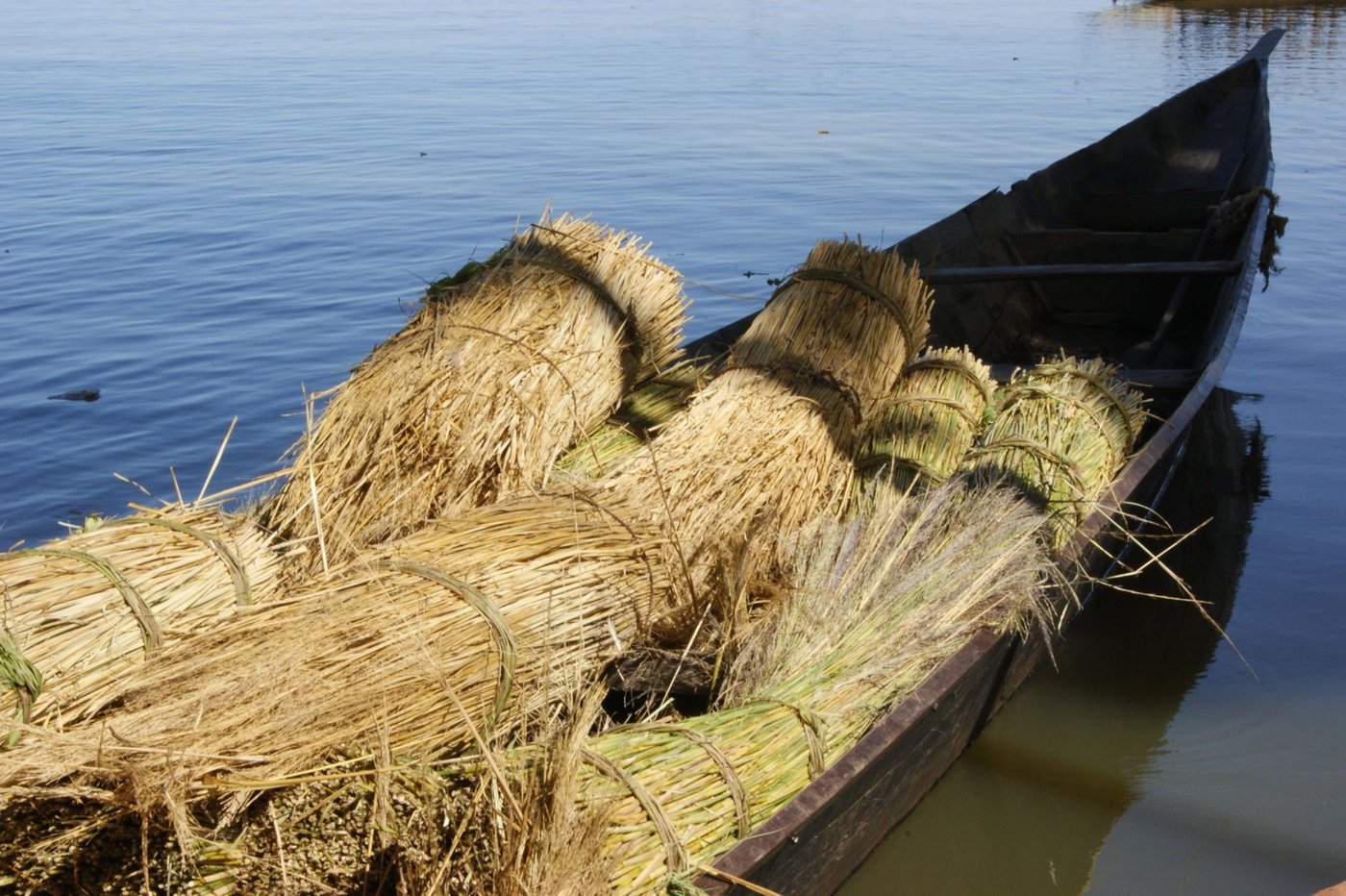
Every leg had its own way of going wrong. At the militants’ checkpoints the danger was obvious: a trunk of astrological charts and painted Qurans was exactly the sort of thing the occupiers wanted burned, and a courier caught with one had no good story to tell. But the government side was almost as bad. Malian soldiers, twitchy about weapons coming south, would break the locks and turn out the contents, and old paper is not improved by being tipped onto a roadside and pawed through by nervous men with rifles. On the river there were bandits, and at least one boatload of manuscripts was seized and only freed after a ransom was found and paid. The wonder is not that some manuscripts were lost or damaged on the way. It is how few.
Not every threat wore a uniform. On the Niger, a canoe carrying trunks of manuscripts was stopped by bandits and held until the rescuers could raise the money to buy it back. The books that survived a decade of desert wars nearly ended as a hostage negotiation on the river.
The fire that came too late
In January 2013 France sent troops to break the occupation, and the militants began to fall back. On the night the fighters left Timbuktu, some of them stopped at the Ahmed Baba centre (the fine new building, the public face of the manuscripts) and set it alight. In the morning the reading room was a wreck of ash and scorched boxes, and that image, understandably, became the story. A librarian surveying the ruin, a mayor on the phone talking of catastrophe: it looked like the end that the whole occupation had been building towards.
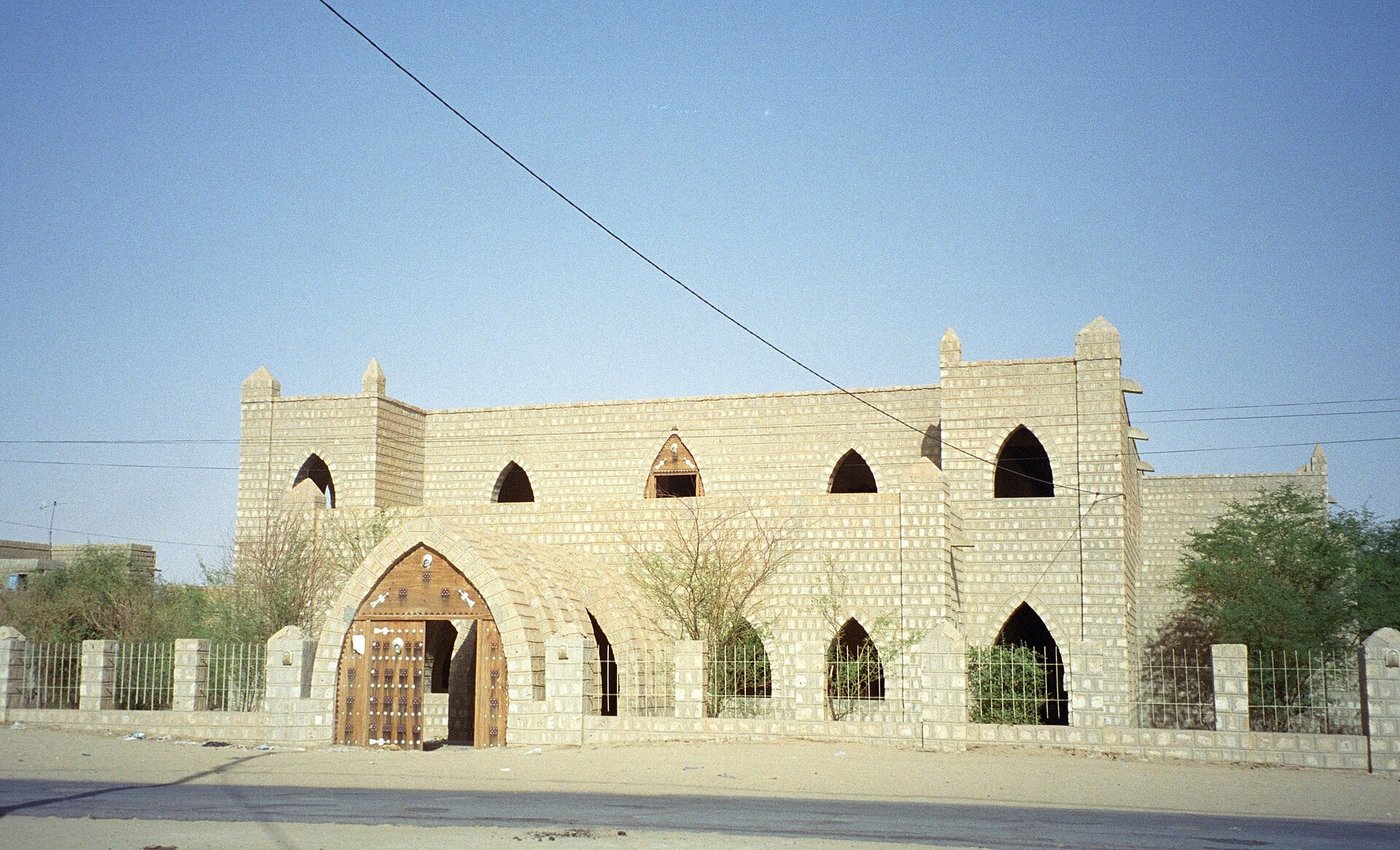
The truth took days to catch up with the picture, and it never quite did. Most of the centre’s manuscripts had already been evacuated south in the quiet operation of the previous year, and much of what was left had been kept in an older store the fire did not reach. When a United Nations team later counted the damage, the number of manuscripts actually destroyed or looted came to a few thousand: a real wound, every one of them irreplaceable, but a small share of the tens of thousands the building had once held, and a tiny share of the region’s books. The world had reported a library reduced to ash. What had really happened was that the arsonists arrived to burn a collection that had, for the most part, already walked out the back.
Retreating militants burned the Ahmed Baba centre, and with it the whole of Timbuktu’s ancient library: tens of thousands of manuscripts, some a thousand years old, lost.
The fire was real, but most of the manuscripts had already been smuggled to Bamako, and much of the rest survived in a separate store. A UN mission put the true loss at a few thousand items out of tens of thousands, a painful figure, but nothing like the total destruction first reported.
The number nobody can settle
How many books were saved? The figure you will see everywhere is three hundred and fifty thousand, carried out of the north to safety. It is a wonderful, round, headline-friendly number, and a number of scholars are wary of it. The problem starts with what counts as a manuscript. In some inventories a single work bound in one cover is one manuscript; in others every loose page of a broken volume is logged separately, so a decayed book of a hundred leaves becomes a hundred manuscripts. Count the second way, especially when donors are watching and money is being raised, and the totals swell fast.
Estimates of how many manuscripts survive in the Timbuktu region run from a few hundred thousand to more than half a million, and historians disagree sharply over the true figure. Much of the gap is a counting problem: whether a damaged volume is one manuscript or a stack of loose pages, each logged on its own. The rescue was real and the collections are vast, but the tidy number attached to them should be read with care.
None of this makes the rescue smaller. Whether the true figure is three hundred thousand or a good deal less, an enormous body of writing was moved out of a war zone by hand and kept from harm, and the people who did it took real risks for no reward beyond the books themselves. But it is worth holding the honest version alongside the heroic one. The manuscripts do not need to be rounded up to be astonishing, and a story told in careful numbers ages better than one told in slogans.
The enemy that followed them south
Here is the part the triumphant version tends to skip. The Sahara, for all its dangers, had been a near-perfect place to keep paper. It was dry, and dark, and stable, and for centuries that desert climate had done the preserving for free. Bamako is the opposite. It is green, humid, and for months of the year it rains. The manuscripts that had survived four hundred years in the desert were now stacked in metal trunks in rented rooms in one of the wettest places their keepers could have chosen, and the damp went to work at once. Mould crept across pages that fire had never touched. The rescue had swapped a quick death for a slow one.
So a second, quieter operation began, the unglamorous twin of the smuggling: unpacking the trunks, drying and cleaning the pages, sorting them into archival boxes, and photographing everything that could be photographed before the climate finished what the militants had started. Conservators from abroad joined the effort, and a vast digitisation project set out to capture tens of thousands of manuscripts as images, so that even a book lost to mould would survive as a scan a scholar in another country could read. The manuscripts had always been kept safe by being copied and cared for by hand. Now the copying was being done with cameras and hard drives, but the principle was the same one that had carried the books this far: a text survives because people refuse to let it disappear.
Going home
More than a decade on, the trunks are being opened again, and the books are being carried the other way. With the immediate danger past and the humidity of Bamako still gnawing at the collections, the manuscripts have begun the long journey back to Timbuktu, flown north in batches to the dry air that kept them for so long. The books that were smuggled out one canoe at a time are coming home by the planeload.
It is easy to tell this as a clean victory, and in the ways that matter it was one. But the manuscripts of Timbuktu have now been carried out of their city twice, four hundred years apart, and both times by people who understood that a library is not really a building. Ahmad Baba lost his sixteen hundred books to soldiers and spent his exile writing more. The families of Timbuktu lost buildings and shelves and, in the end, a few thousand irreplaceable pages, and saved the rest in the boots of cars and the bottoms of boats. The desert kept the books, but only because, in every generation, somebody decided they were worth the risk of keeping. The next time is always coming. The question the trunks leave behind is who will move them when it does.
Read next: Mansa Musa: The Richest Man in History and the Hajj That Crashed a Currency and Nalanda: The Ancient University That Was Fading Before the Fire.
Sources & further reading
- Joshua Hammer, The Bad-Ass Librarians of Timbuktu and Their Race to Save the World’s Most Precious Manuscripts (Simon & Schuster, 2016).
- John O. Hunwick, Timbuktu and the Songhay Empire: Al-Sa’di’s Tarikh al-Sudan down to 1613 and Other Contemporary Documents (Brill, 1999).
- “What’s in the Manuscripts of Timbuktu? A Survey of the Contents of 31 Private Libraries,” History in Africa (Cambridge University Press, 2020).
- UNESCO, reports and briefings on the destruction of cultural heritage in Timbuktu, 2012–2013.
- SAVAMA-DCI and Google Arts & Culture, Mali Magic / The Manuscripts of Timbuktu digitisation project.
- PBS NewsHour and Associated Press, reporting on the return of the Timbuktu manuscripts, 2025.
Image credits (via Wikimedia Commons): Timbuktu astronomy and mathematics manuscript — Elias Altmimi, EurAstro Mission to Mali (public domain); Djinguereber Mosque — Ondrej Havelka (CC BY-SA 4.0); Mamma Haidara Library Quran folio — Marie-Lan Nguyen (public domain); Timbuktu astronomical tables — EurAstro Mission to Mali (public domain); pirogue on the Niger River — Annabel Symington (CC BY 2.0); Ahmed Baba centre (CEDRHAB), Timbuktu — upyernoz (CC BY 2.0).