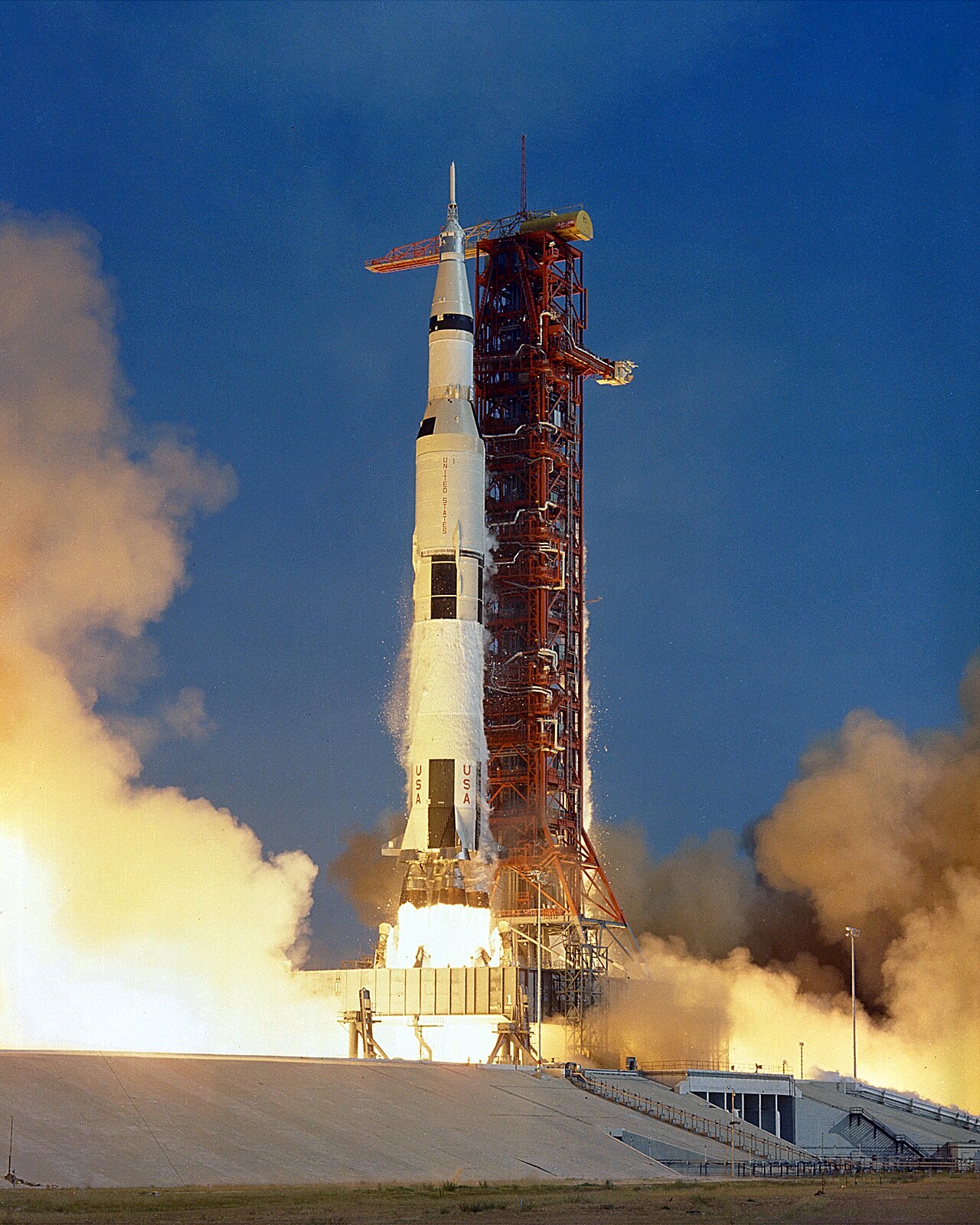
On 16 July 1969, a Saturn V rocket thundered off a Florida launch pad carrying three men toward the Moon. Among the crowd watching with pride was the rocket's chief architect, Wernher von Braun, the visionary who had made the American space programme possible. Twenty-five years earlier, that same man had worn the uniform of an SS officer, and the rockets he built then had rained down on London and Antwerp, assembled in an underground factory by concentration-camp prisoners worked to death by the thousand. The rocket that took America to the Moon had a shadow reaching back into the darkest corner of the twentieth century. The name of the operation that brought that shadow across the Atlantic was Paperclip.
Operation Paperclip is one of the most morally tangled episodes of the early Cold War: a secret United States programme that recruited some sixteen hundred German scientists, engineers, and technicians from the wreckage of the Third Reich and brought them, with their expertise and often their hidden pasts, to work for the American government. It gave the United States the men who would build its missiles and win the race to the Moon. It also shielded former Nazis, some of them complicit in atrocity, from the justice being handed down to their countrymen at Nuremberg. Both of those things are true at once, and that is the whole difficulty of it.
The race for the brains of the Reich
In the spring of 1945, as Germany collapsed, the victorious Allies realised they were about to inherit something priceless: the most advanced military science on earth. Nazi Germany, for all its evil, had led the world in rocketry, jet propulsion, aerodynamics, chemical weapons, and aviation medicine. As the Reich fell, its scientists, blueprints, and laboratories suddenly became spoils of war, and the two emerging superpowers both moved to grab them.
The United States and the Soviet Union effectively found themselves in a scramble for German expertise, each determined both to acquire it and to deny it to the other. American intelligence teams raced across a shrinking Germany to reach laboratories and scientists before the Soviets did, and, in the most famous case, von Braun and much of his rocket team deliberately manoeuvred to surrender to the Americans rather than the Red Army. The Cold War had not yet officially begun, but its opening move was this contest over who would own the scientific corpse of the Reich.
What Paperclip was
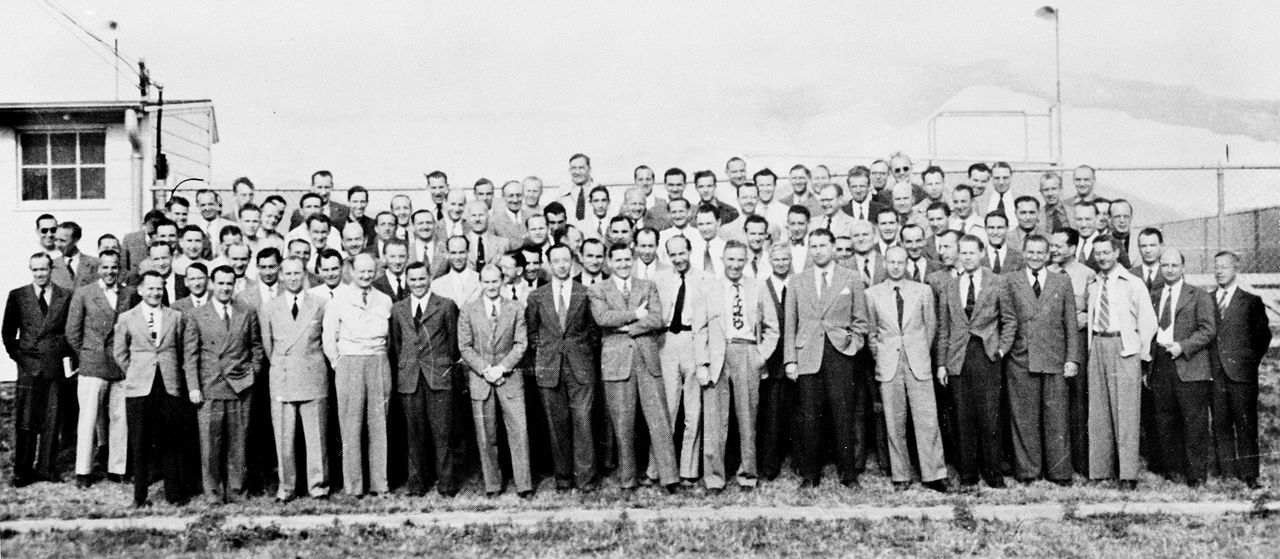
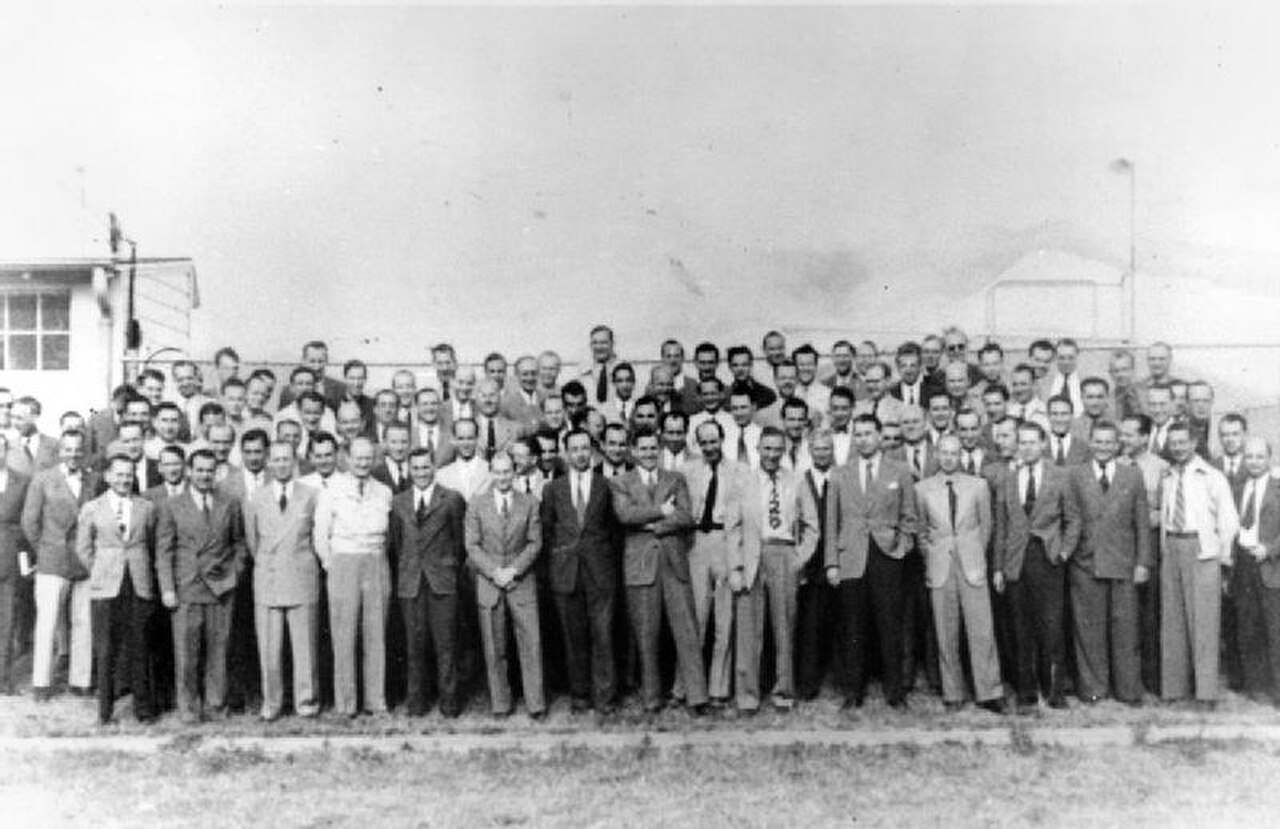
The programme began under the name Operation Overcast and was soon renamed Operation Paperclip, run by a body called the Joint Intelligence Objectives Agency (JIOA). Its purpose was to identify valuable German specialists, bring them to the United States, and put their knowledge to work for the American military, and, just as importantly, to keep that knowledge out of Soviet hands. Over the years that followed, roughly sixteen hundred scientists and their families were brought across, settling at military bases and research centres from Texas to Alabama.
There was, however, a serious legal and moral obstacle, and how the programme dealt with it is the heart of the scandal. Many of these men were not innocent technicians. They had been members of the Nazi party; some had held rank in the SS; a number were connected to slave labour and to human experimentation. President Truman had explicitly ordered that active Nazis and war criminals be excluded from the programme. So the officials running Paperclip did something extraordinary: they had the incriminating dossiers rewritten.
"Paperclip" is said to come from the paperclips that intelligence officers attached to the files of the scientists they wanted to keep, flagging the cases where a man's Nazi past had to be smoothed over or written out so he could be cleared for a US visa. The very name of the operation is a quiet admission that its central act was the doctoring of records: bright new "clean" biographies clipped over the incriminating truth.
Not everyone approved
It would be wrong to imagine that no one at the time saw the problem. Officials in the State Department, which controlled visas, resisted admitting men with Nazi records, and there were repeated bureaucratic clashes between those who wanted the scientists at any cost and those who thought the country was betraying its principles. When word of the programme reached the public, prominent Americans objected openly. Albert Einstein was among a group who petitioned President Truman against bringing former enemy scientists into American life, and newspaper columnists and scientists' organisations raised alarms about rehabilitating servants of the Reich.
The objections were, for the most part, overridden. The intelligence agencies running Paperclip judged that the strategic prize was too great and the Soviet threat too pressing to let scruples get in the way, and so, quietly and persistently, they found ways around the rules. That tension, between the officials who warned and the officials who pressed ahead, is itself part of the story: the moral cost of Paperclip was not invisible at the time. It was seen, argued over, and set aside.
Wernher von Braun: the star of the programme
No one embodies Operation Paperclip like von Braun. Charismatic, brilliant, and boundlessly ambitious about spaceflight, he had been the technical director at the German rocket centre at Peenemünde, where he led the development of the V-2, the world's first long-range ballistic missile. He was also a member of the Nazi party and a commissioned officer in the SS. And the V-2 he created was mass-produced at the Mittelwerk underground factory using prisoners from the Mittelbau-Dora concentration camp, in conditions so lethal that more people died building the rocket than were ever killed by it.
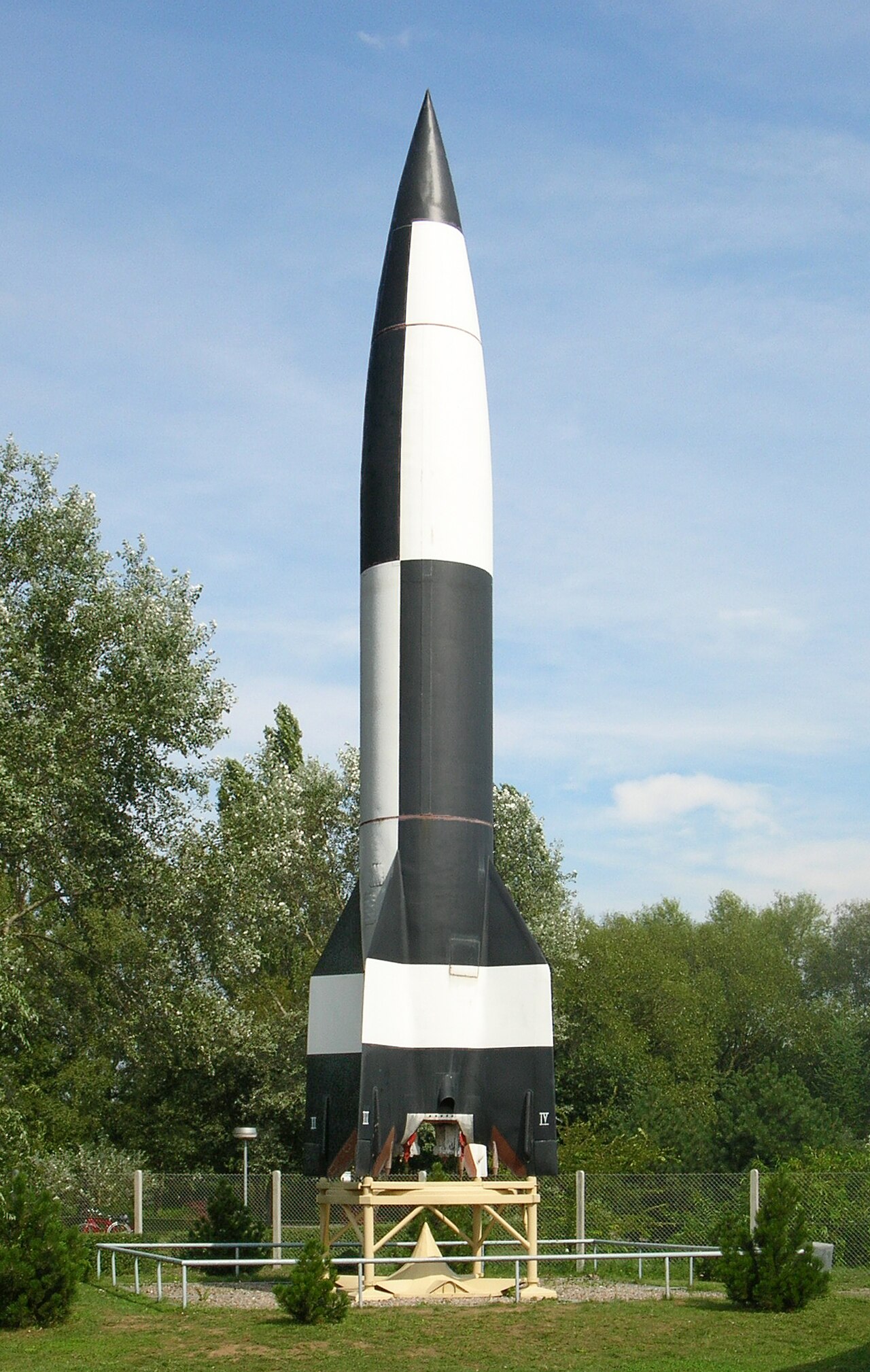
How much von Braun knew of, or bore responsibility for, the horrors at Mittelwerk remains debated to this day. What is not in doubt is that after the war, all of it was set aside. Brought first to Fort Bliss in Texas, he and his team developed missiles for the US Army, and von Braun rose to become one of the most celebrated figures in America: a household name who promoted spaceflight on television, directed NASA's Marshall Space Flight Center, and designed the Saturn V, the giant rocket that made the Moon landings possible. The former SS officer became an American hero.
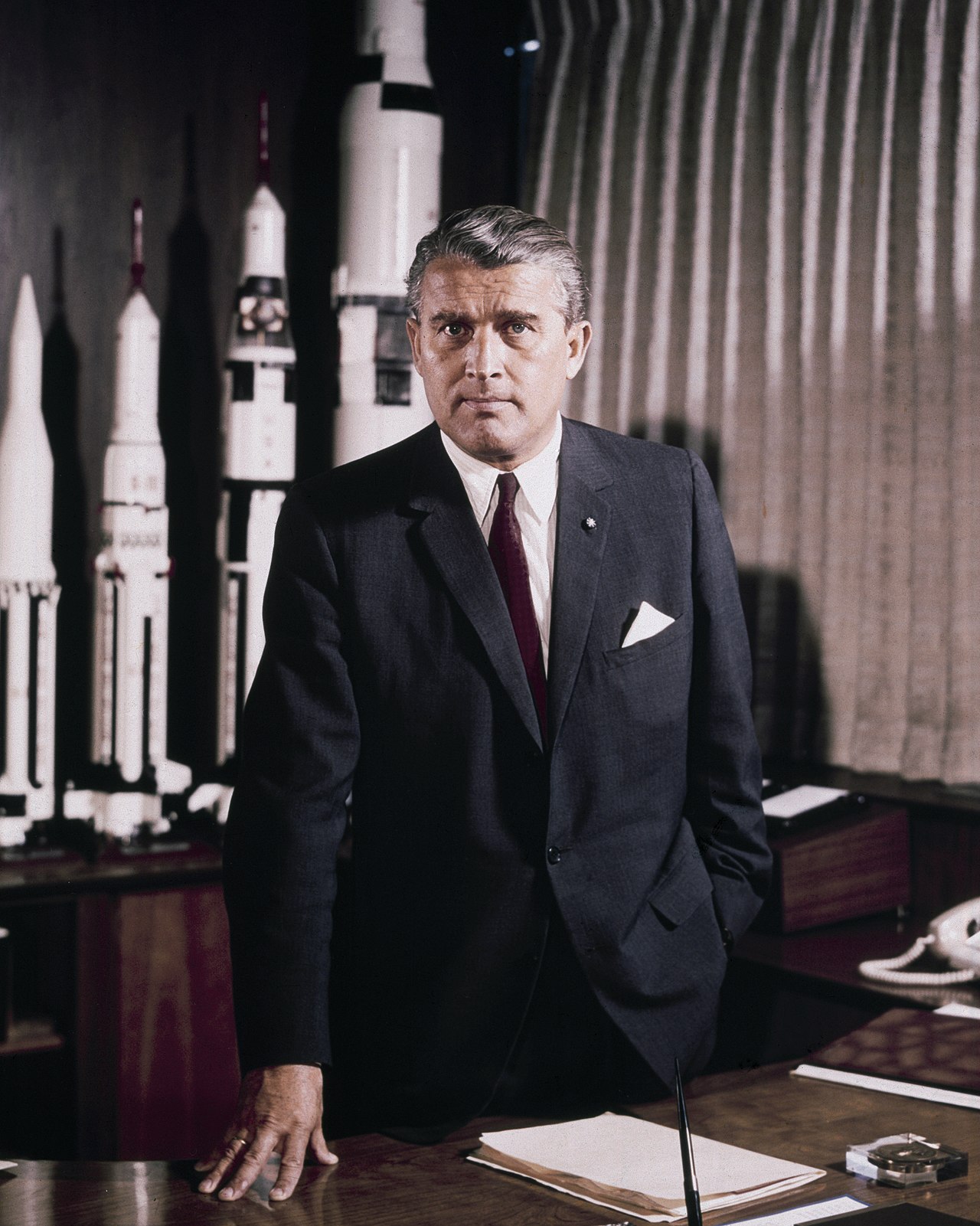
"'Once the rockets are up, who cares where they come down? That's not my department,' says Wernher von Braun."— from Tom Lehrer's satirical song "Wernher von Braun" (1965), capturing the unease many felt about America's celebrated rocketeer
The others in the files
Von Braun was the famous face, but Paperclip brought over many others, and some of their cases were darker still. Arthur Rudolph, who had been operations director at the Mittelwerk slave-labour factory, came to the United States and rose to become the project director for the Saturn V programme, one of the most important managers of the Moon rocket. His story would have a late reckoning.
Hubertus Strughold, celebrated in America as the "father of space medicine" for his work on keeping humans alive in the extreme environment of spaceflight, had been connected to a research establishment implicated in cruel human experiments on concentration-camp prisoners. Kurt Debus, who became the first director of the Kennedy Space Center, had been a member of the SS. Others still, drawn from Germany's chemical-weapons and aviation-medicine establishments, carried associations that would have been unthinkable had their records been read honestly. The paperclips did their work: the pasts were filed away, and the careers went on.
What America got for it
It would be dishonest to pretend the programme didn't deliver, because it delivered spectacularly. Von Braun's team gave the US Army its first generation of ballistic missiles, the Redstone and Jupiter, putting American nuclear deterrence on a modern footing at the height of the Cold War. When the Soviet Union stunned the world by launching Sputnik in 1957, it was a von Braun rocket that lofted America's first satellite, Explorer 1, in reply. And when America put its first astronaut, Alan Shepard, into space in 1961, he rode atop a Mercury-Redstone rocket, another direct descendant of the German team's work. At almost every early milestone of the American space effort, the fingerprints of the Paperclip scientists were somewhere on the hardware. And it was von Braun's Saturn V, and Rudolph's management of it, that carried Apollo to the Moon in 1969, one of the supreme achievements in human history.
American aviation, aerospace medicine, and weapons research were all accelerated by the imported German expertise. In cold strategic terms, Paperclip was a triumph: it handed the United States a commanding lead in the technologies that would define the second half of the twentieth century, and it denied that same lead to the Soviet Union. The men who had built the Reich's wonder-weapons now built America's.
The Soviet mirror
It's worth remembering that the United States was not alone in this. The Soviet Union ran its own programme to harvest German expertise, culminating in Operation Osoaviakhim in October 1946, when thousands of German specialists and their families were rounded up, often at gunpoint in the middle of the night, and transported east to work in the USSR. If the American approach was to recruit and quietly launder, the Soviet approach was frequently to seize and deport. Both superpowers built their early rocket and weapons programmes on German foundations. The scientific inheritance of the Third Reich was split, like Germany itself, between East and West.
The reckoning
For decades the uncomfortable truths of Paperclip stayed largely buried, but they did not stay buried forever. In 1984, Arthur Rudolph, the Saturn V programme director, reached a stark agreement with the US Department of Justice's Nazi-hunting unit: facing investigation over his role at the Mittelwerk slave-labour factory, he renounced his American citizenship and left the country rather than fight the case. It was a quiet, astonishing admission that one of the managers of the Moon rocket had a past that could not survive scrutiny.
Strughold's legacy, too, was eventually reassessed; honours once given in his name were stripped as his wartime associations drew renewed attention. And as archives opened and historians dug in, most prominently in Annie Jacobsen's investigation of the programme, the full shape of Paperclip came into public view: not a handful of harmless boffins, but a deliberate, organised decision to place strategic advantage above justice, and to bring men with blood-linked pasts into the heart of American science.
"Paperclip just brought over some brilliant scientists who happened to be German. Von Braun wasn't really a Nazi — he only joined to keep working, and none of them did anything wrong."
Many Paperclip recruits were Nazi party members; several, including von Braun and Debus, held SS rank; some were directly connected to slave labour and human experimentation. Their records were knowingly altered to circumvent a presidential ban on admitting active Nazis. How much personal guilt each man bore varies from case to case and is still debated, but the programme's deliberate laundering of Nazi pasts is a matter of record, not opinion.
Was it worth it?
This is the question Paperclip forces, and it does not have a comfortable answer. On one side sits a serious strategic and scientific case: in a dangerous new world facing a nuclear-armed Soviet Union, denying Moscow the Reich's best minds while arming Washington with them may have shaped the balance of the Cold War, and it gave humanity the Moon landing, an achievement that still inspires. On the other side sits the moral cost: the United States shielded men complicit in the crimes of the Nazi state, denied a measure of justice to their victims, and told itself a flattering story about its own heroes while filing the truth away under a paperclip.
Defenders argue Paperclip was a grim necessity of the Cold War: if America hadn't taken these men, the Soviets would have, and the results (deterrence, the space race, Apollo) justified the compromise. Critics argue that a nation which had just fought a war against Nazism betrayed its own stated principles by rehabilitating its servants, and that expedience was allowed to override justice. Both are arguing about the same hard trade-off: how much moral compromise a country should accept in the name of security and progress.
What is useful against what is right
Operation Paperclip remains one of the sharpest case studies we have in the ethics of pragmatism, the permanent, uncomfortable tension between what is useful and what is right. It gave America the stars, quite literally, and it did so by making peace with a past it preferred not to examine. Every time a nation weighs strategic advantage against moral principle (in intelligence, in technology, in whom it chooses to work with), it is standing, whether it knows it or not, in the long shadow of the paperclip.
The Saturn V remains a monument to human genius and daring. But the honest way to remember it is to hold both halves of the story together: the brilliance that reached the Moon, and the moral debt that came bundled in the same files, clipped out of sight. Progress and compromise, it turns out, sometimes arrive in the same crate, and a nation that wants the one has to be honest about how often it has quietly accepted the other.
Read next: Nazi Wonder Weapons: From the V-2 to the Orbital Sun Gun and Apollo 11: The Moon Landing That Nearly Ran Out of Fuel.
Sources & further reading
- Annie Jacobsen, Operation Paperclip: The Secret Intelligence Program that Brought Nazi Scientists to America — the major popular investigation of the programme.
- Linda Hunt, Secret Agenda: The United States Government, Nazi Scientists, and Project Paperclip.
- Michael J. Neufeld, Von Braun: Dreamer of Space, Engineer of War — the definitive biography, careful on the questions of guilt and responsibility.
- Records of the Joint Intelligence Objectives Agency (JIOA) and US Department of Justice proceedings, including the 1984 Arthur Rudolph case; and standard histories of the early US space programme.