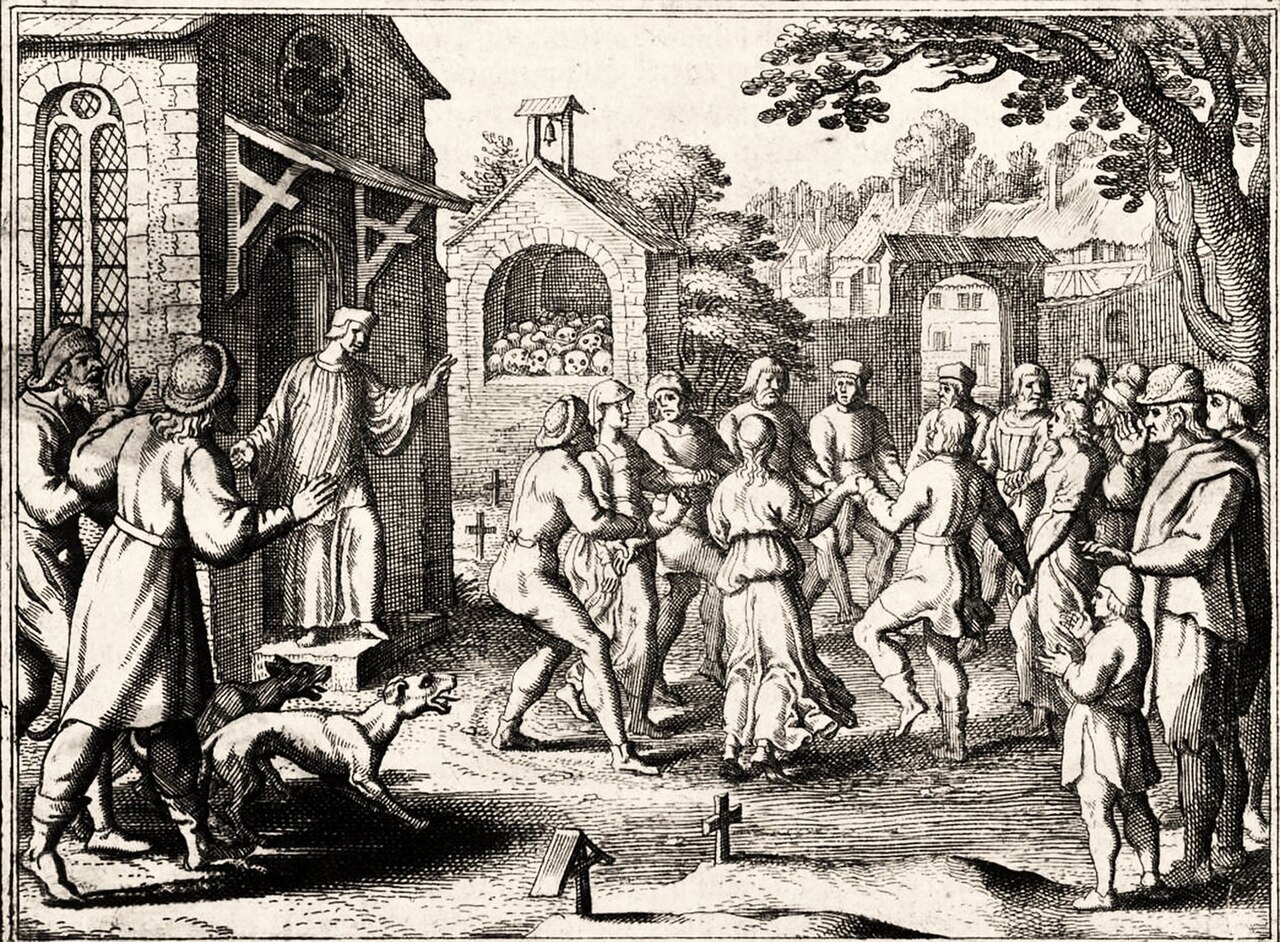
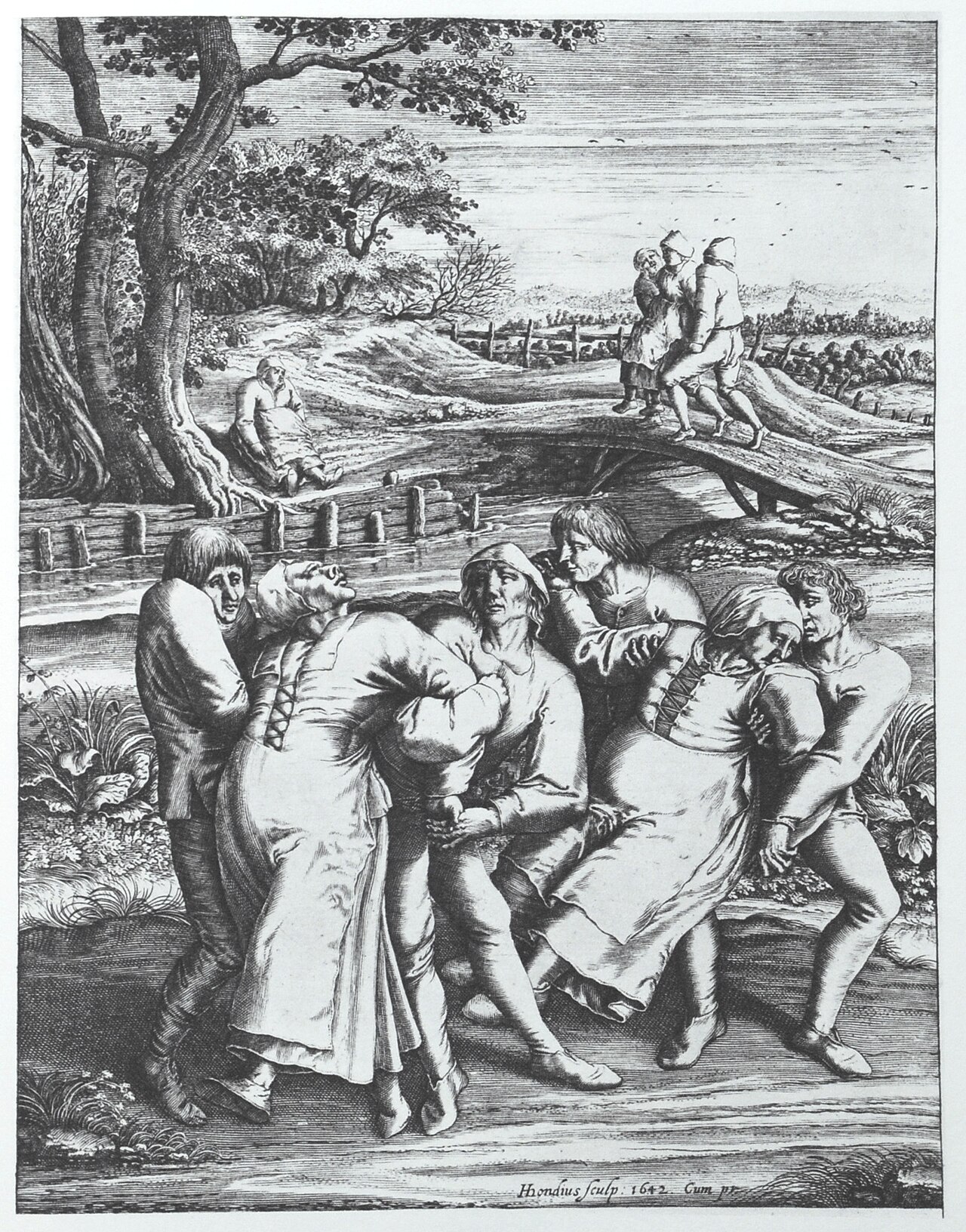
One day in July 1518, in the crowded streets of Strasbourg, a woman stepped out of her house and began to dance. There was no music, no festival, no obvious reason. She simply danced, silently, feverishly, alone, and she did not stop. She danced through that day and into the night, and when she collapsed from exhaustion she got up and danced again. Within a week she had been joined by more than thirty others. Within a month, by some accounts, around four hundred people were dancing in the streets, and people were beginning to die. This is not a folk tale or a metaphor. It happened, it was recorded by city officials and physicians at the time, and more than five hundred years later we still cannot fully explain it.
The woman's name, according to the surviving record, was Frau Troffea. Her solitary dance outside her own front door is the first known case in one of the strangest documented events in European history: the Dancing Plague of 1518. What makes it so unsettling is not that it sounds like a legend, but that it doesn't. It sits in the archives of a real city, attested by sober municipal accounts, doctors' notes, and chroniclers who watched it happen and had no idea what they were looking at. Neither, in honesty, do we.
A city already on edge
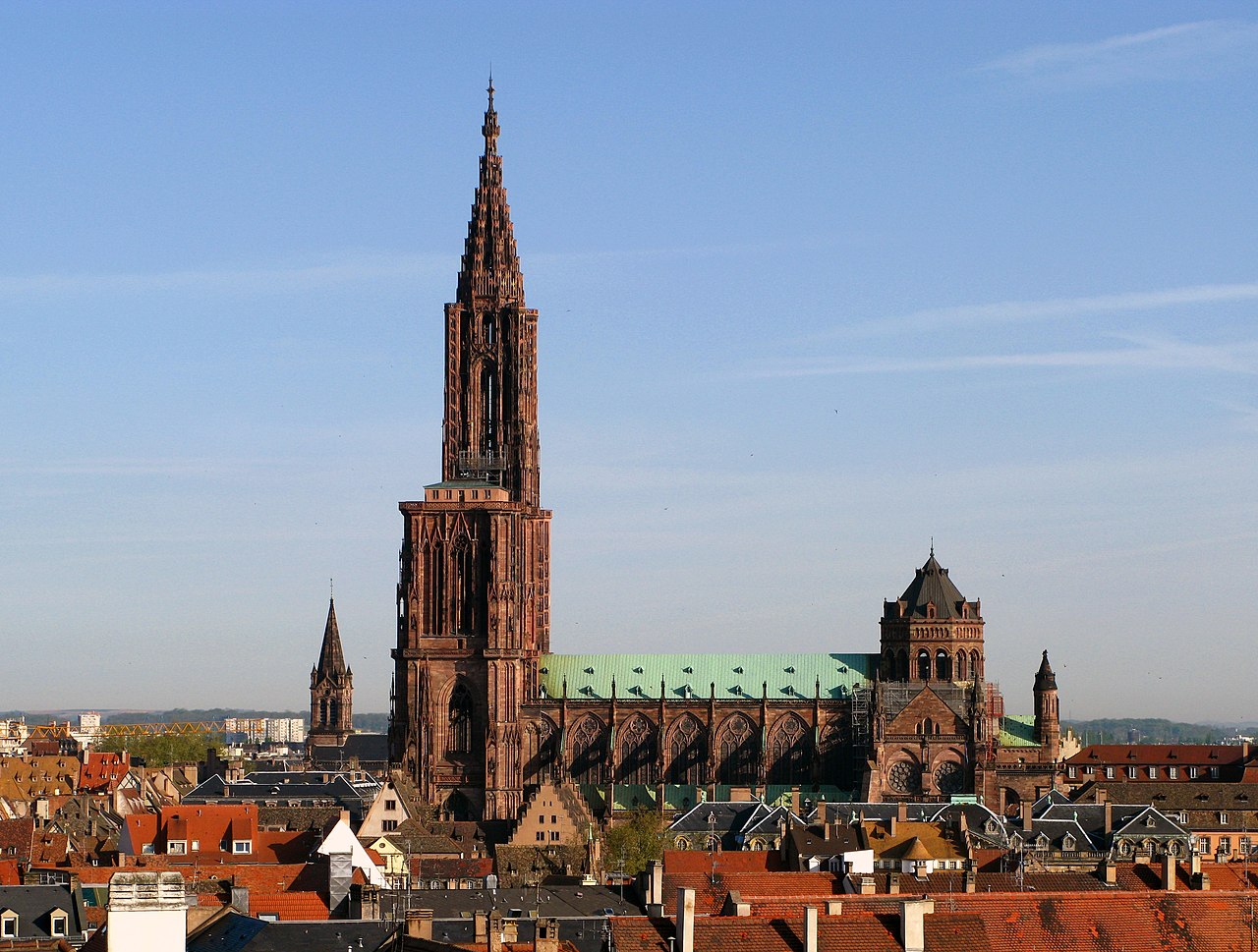
To understand the dancing, you first have to understand the place. Strasbourg in 1518 was not a happy city. The years leading up to that summer had been brutal across Alsace: failed harvests, soaring grain prices, and the kind of grinding hunger that pushes ordinary people to the edge of survival. On top of the famine came disease: smallpox, syphilis, and the ever-present fear of plague returning. The poor were crowding into the city looking for relief that wasn't there.
There was spiritual dread layered on top of the physical misery. This was a devout population that understood suffering as sin and divine punishment, and that lived with a vivid, literal fear of curses and saints' wrath. That combination of bodies pushed past endurance and minds steeped in fear of supernatural retribution turns out to matter enormously when we try to explain what came next. Strasbourg was a tinderbox of stress, and in July 1518 something set it alight.
The dance spreads
When Frau Troffea kept dancing, the reaction of her neighbours was at first probably annoyance, then alarm. Her husband reportedly tried to stop her; she danced on. After days of it, exhausted and bleeding from her feet, she was still going. And then the thing that no one expected: other people started to join. Not in celebration. They seem to have been swept into the same compulsive, joyless motion, unable to stop themselves.
The numbers in the contemporary accounts are striking. Within roughly a week, dozens were dancing. Within about a month, the chroniclers put the figure in the hundreds, perhaps as many as four hundred people moving through the streets in this involuntary frenzy. And crucially, they were not enjoying it. Witnesses described expressions of terror and desperation, people crying out for help even as their limbs kept moving, dancing until they dropped. Some, according to the records, danced themselves into heart attacks, strokes, and fatal exhaustion. For a stretch of that summer, the city authorities were reportedly recording deaths from dancing.
This was not the only outbreak of its kind. "Dancing mania" had erupted before along the Rhine and Mosel. A large episode struck Aachen and the Rhineland in 1374, and there are scattered medieval reports stretching back further. The 1518 Strasbourg event is simply the best-documented, because a literate city government wrote so much of it down. Whatever caused it, it was a recurring phenomenon of late-medieval Europe, not a one-off freak event.
The cure that made it worse
Here is where the story tips from tragic into almost unbelievable. The city's privileged class and its physicians met to decide what to do, and the doctors delivered a diagnosis rooted in the medical theory of the day. This was the era of the four humours, and the learned conclusion was that the dancing came from "hot blood", an overheating of the body that needed to be worked out of the system. The prescribed cure was, astonishingly, more dancing. The patients, the physicians reasoned, simply had to keep going until the fever in the blood burned itself out.
So the authorities leaned in. They are said to have cleared spaces for the afflicted to dance, opened up guildhalls and a grain market, and even built a wooden stage. Worse still, they hired musicians (pipers and drummers) to keep the rhythm going, and reportedly paid healthy people to dance alongside the sufferers to encourage them. It was, by any modern reading, the single worst possible response. Instead of calming an outbreak that seems to have fed on suggestion and spectacle, the city turned it into a public event with a soundtrack. Predictably, more people were drawn in, and more of them collapsed and died.
The turn to Saint Vitus
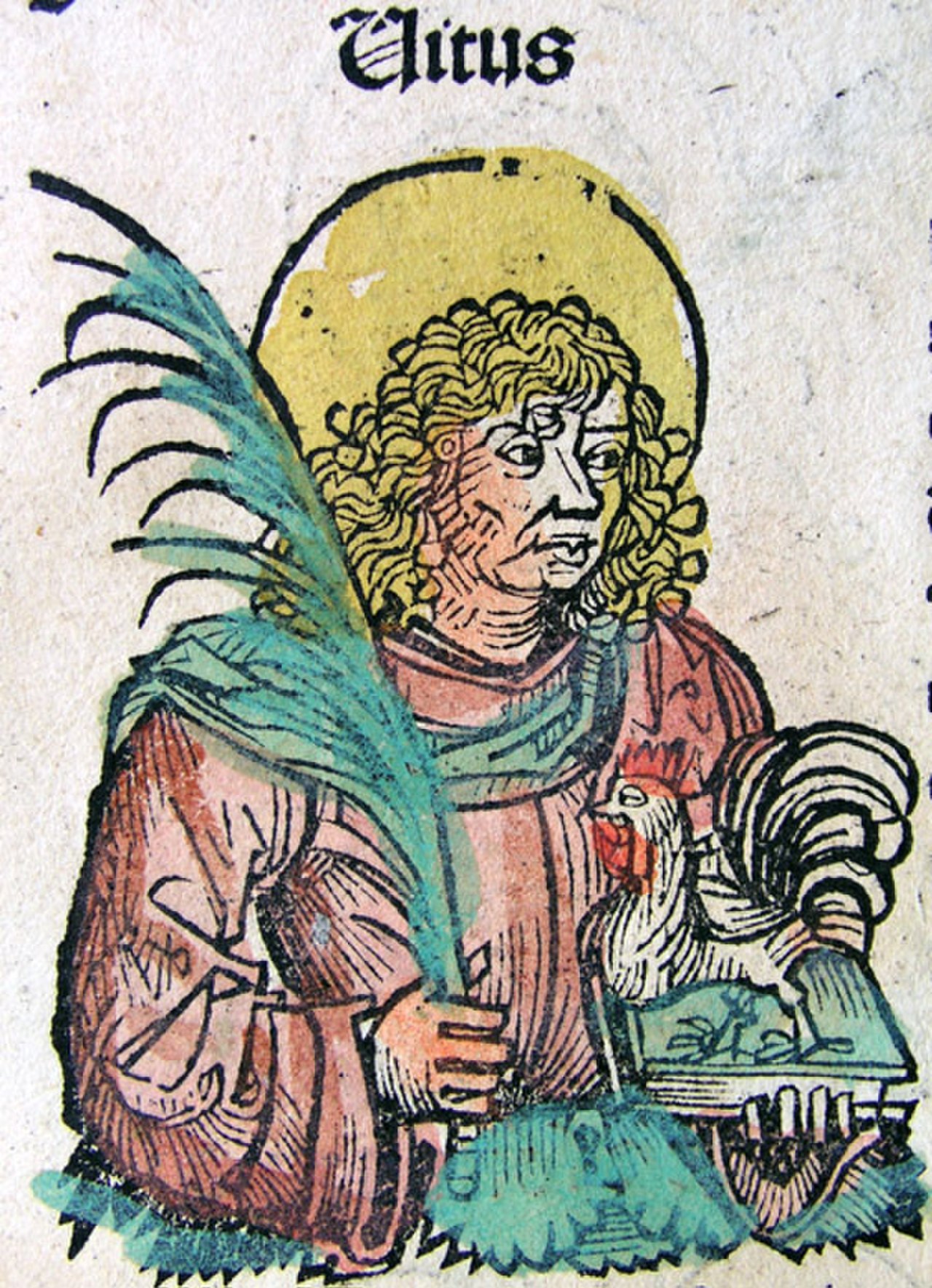
Eventually the city changed course completely. When it became clear that the "dance it out" approach was killing people, the authorities reversed: they banned music and public dancing, shut down the stages, and forbade gatherings. And then they turned from medicine to religion. The dancers were rounded up and taken out of the city to a shrine in the hills, a chapel dedicated to Saint Vitus near Saverne in the Vosges mountains.
Saint Vitus is central to this whole story, because of a particular belief attached to him. In the popular imagination of the region, Saint Vitus had the power to inflict, and to cure, a curse of compulsive dancing. ("Saint Vitus's Dance" survived for centuries afterwards as a name for involuntary movement disorders.) The dancers were brought before his altar, given red shoes, and led through rites meant to lift the affliction. Whether by the power of belief, the removal of the crowd and the music, or simply the passing of time, the outbreak finally subsided over the late summer. The dancing stopped almost as mysteriously as it had begun.
So what happened?
This is the part everyone wants answered, and it's the part the historical record cannot settle. Across five centuries, the explanations have fallen into a few broad camps, and each has a problem.
The most popular pop-science theory blames ergot, a fungus, Claviceps purpurea, that grows on damp rye and produces alkaloids chemically related to LSD. Eat bread baked from infected grain and you get ergotism, known in the Middle Ages as "St Anthony's Fire," which can cause hallucinations, convulsions, and a burning sensation in the limbs. After a wet, hungry season, contaminated rye is entirely plausible in 1518 Alsace. It's a tidy story: bad bread, mass hallucination, dancing in the streets.
The trouble is that ergotism doesn't really fit. Ergot poisoning tends to cut off blood flow to the extremities. It causes gangrene, seizures, and agony, not the sustained, coordinated, days-long dancing that witnesses described. People convulsing from ergot alkaloids could not have danced for days. And ergotism would have struck whole families sharing the same bread, not produced a slowly spreading wave of dancers across a city. As an explanation for this event, the fungus is a poor match.

"They all ate mouldy bread and tripped on natural LSD — the dancing plague was just a city-wide ergot trip."
Ergotism causes seizures and gangrene, not the sustained, rhythmic dancing that was actually described, and it wouldn't spread person-to-person the way this did. Most historians who have studied the records consider the ergot explanation unconvincing on its own; the evidence points somewhere stranger.
A sickness of the mind
The explanation favoured by the historian who has studied the event most closely, John Waller, is what's now called mass psychogenic illness, historically "mass hysteria." The idea is that under conditions of extreme, prolonged stress, the human mind can produce very real physical symptoms, and that under the right cultural conditions those symptoms can spread from person to person by suggestion. The dancers weren't faking and weren't choosing to dance; they were, in effect, in an involuntary trance state, their bodies hijacked by a psychological crisis.
What makes Waller's argument compelling is the way it ties together the two things we already know about Strasbourg in 1518. First, the population was under crushing physical and emotional strain: starving, frightened, primed for breakdown. Second, and just as important, this specific region carried a firmly held belief in exactly this kind of curse: the dancing affliction of Saint Vitus. People expected that divine wrath could seize a body and force it to dance to death. When a society believes wholeheartedly that such a thing can happen to you, the belief itself can become a kind of trigger, a script the stressed mind can fall into and then transmit to others. The compulsion spread not through the air or the food, but through the shared imagination of a terrified city.
"There has been a strange epidemic lately… Many hundreds in Strasbourg began to dance and hop, women and men, in the public market, in alleys and streets, day and night."— paraphrasing the contemporary Strasbourg chronicles and physicians' notes that documented the outbreak as it happened
This had happened before, and would again
Strasbourg in 1518 was the most thoroughly documented case, but it was not unique, and that pattern is one of the strongest clues we have. Compulsive dancing epidemics flared repeatedly in medieval Europe, almost always along the Rhine and Mosel rivers and almost always in the wake of hardship. A major outbreak struck Aachen and the Rhineland in 1374, in the aftermath of devastating floods and on the heels of the Black Death, sending crowds dancing through town after town. An earlier account from 1237 describes a large group of children who reportedly danced and hopped the whole way from Erfurt to the nearby town of Arnstadt before collapsing.
It's worth distinguishing these northern dancing manias from the rather different Italian phenomenon of tarantism, in which people in the south of Italy believed the bite of a tarantula could only be cured by frenzied dancing to specific music. That is the origin of the lively folk dance still called the tarantella. The two are often lumped together, but the northern epidemics seem to have been involuntary affliction, while tarantism was a more ritualised, almost therapeutic response to a believed poisoning. What they share is the central role of belief: in each case, a culture had a script for what dancing meant, and bodies under stress fell into it.
A contagion carried by the mind
It's tempting to file the Dancing Plague under "weird history" and move on, a bizarre medieval curiosity, good for a strange-but-true list. But it's more than that, because if the psychogenic explanation is right, the dancing plague is a window into something disturbing about human beings: that under enough pressure, and with the right shared beliefs, a population can lose control of its own bodies, en masse, and that the contagion can be carried purely by the mind.
And this isn't safely locked in the past. Episodes of mass psychogenic illness still happen: outbreaks of unexplained fainting, twitching, laughing, or illness that sweep through schools, factories, and communities under stress, spread by anxiety and suggestion rather than any germ. In 1962 a "laughter epidemic" rippled through schools in Tanganyika (modern Tanzania), forcing some to close as uncontrollable laughing and crying jumped from student to student for months. Comparable outbreaks of involuntary twitching, fainting, or illness in schools and workplaces have been documented again and again into our own century. The cultural script changes (we no longer fear the curse of Saint Vitus), but the underlying mechanism appears to be a permanent feature of the human animal. The people of Strasbourg danced because of what they believed and what they feared. That is not a medieval problem. That is a human one.
No single explanation has won the argument outright. Sceptics note that the records are thin and were written by people as baffled as we are, and that "mass hysteria" can become a catch-all label that explains everything and therefore nothing. Others keep returning to some physiological trigger, ergot or another toxin, perhaps combined with psychological contagion. The honest answer is that the Dancing Plague of 1518 remains unexplained. We know it happened; we are still arguing about why.
The last dance
By September 1518 the streets of Strasbourg were quiet again. The stages were gone, the pipers silent, the survivors sent home or recovering at the shrine in the hills. The city went back to its ordinary worries: the grain price, the next harvest, the next outbreak of disease. But it had lived through something it could not name, and it left behind just enough of a paper trail that we are still puzzling over it half a millennium later.
That, in the end, is what makes the Dancing Plague so haunting. It is not a ghost story dressed up as history. It is history that happens to read like a ghost story: fully documented, soberly recorded, and still resistant to every tidy explanation we throw at it. A real woman really did step into a real street and dance until she couldn't, and then a whole city followed her, and nobody, then or now, has been able to say for certain why. The music has long since stopped, but the question it left behind is still turning.
Read next: The Green Children of Woolpit: Medieval England's Strangest Visitors.
Sources & further reading
- John Waller, A Time to Dance, a Time to Die: The Extraordinary Story of the Dancing Plague of 1518 — the definitive modern account and the source of the mass-psychogenic-illness argument.
- John Waller, "In a spin: the mysterious dancing epidemic of 1518," Endeavour (2008).
- Contemporary Strasbourg municipal records and physicians' notes; the chronicle tradition associated with the city, including Sebastian Brant.
- Encyclopaedia Britannica and historical surveys of "dancing mania" / choreomania and the cult of Saint Vitus.