On 24 January 2026, Egypt's Ministry of Tourism and Antiquities announced something that sounds almost too modest to be news: archaeologists working in the northern corner of Karnak had found a pond. It was about fifty square metres of stone-lined basin, buried under centuries of silt and rubble in the precinct of the god Montu, and it had taken eight years of patient digging to bring it fully into daylight. No gold came out of it. No royal mummy, no painted coffin, nothing that photographs well on a museum poster. And yet Egyptologists reacted to the announcement the way astronomers react to a new signal from a distant star. For the first time in the history of the discipline, someone had excavated an Egyptian sacred lake properly, from the top down, recording every layer. After two hundred years of digging in Egypt, nobody had ever done it before.
To understand why a rectangular hole full of old water matters, you have to stop thinking of an Egyptian temple as a building. It was not a church or a cathedral. It was a machine: a working model of how the universe had come into being, rebuilt in stone and operated daily by professional staff. And at the centre of that machine sat the water.
The place where the world began
Every version of the Egyptian creation story starts in the same way. Before anything existed, there was Nun: a dark, still, endless body of water with no shore, no surface and no bottom. Nothing lived in it. It simply was. Then, out of that water, a mound of earth rose (the first solid thing), and on that mound the first god stood up and began making everything else.
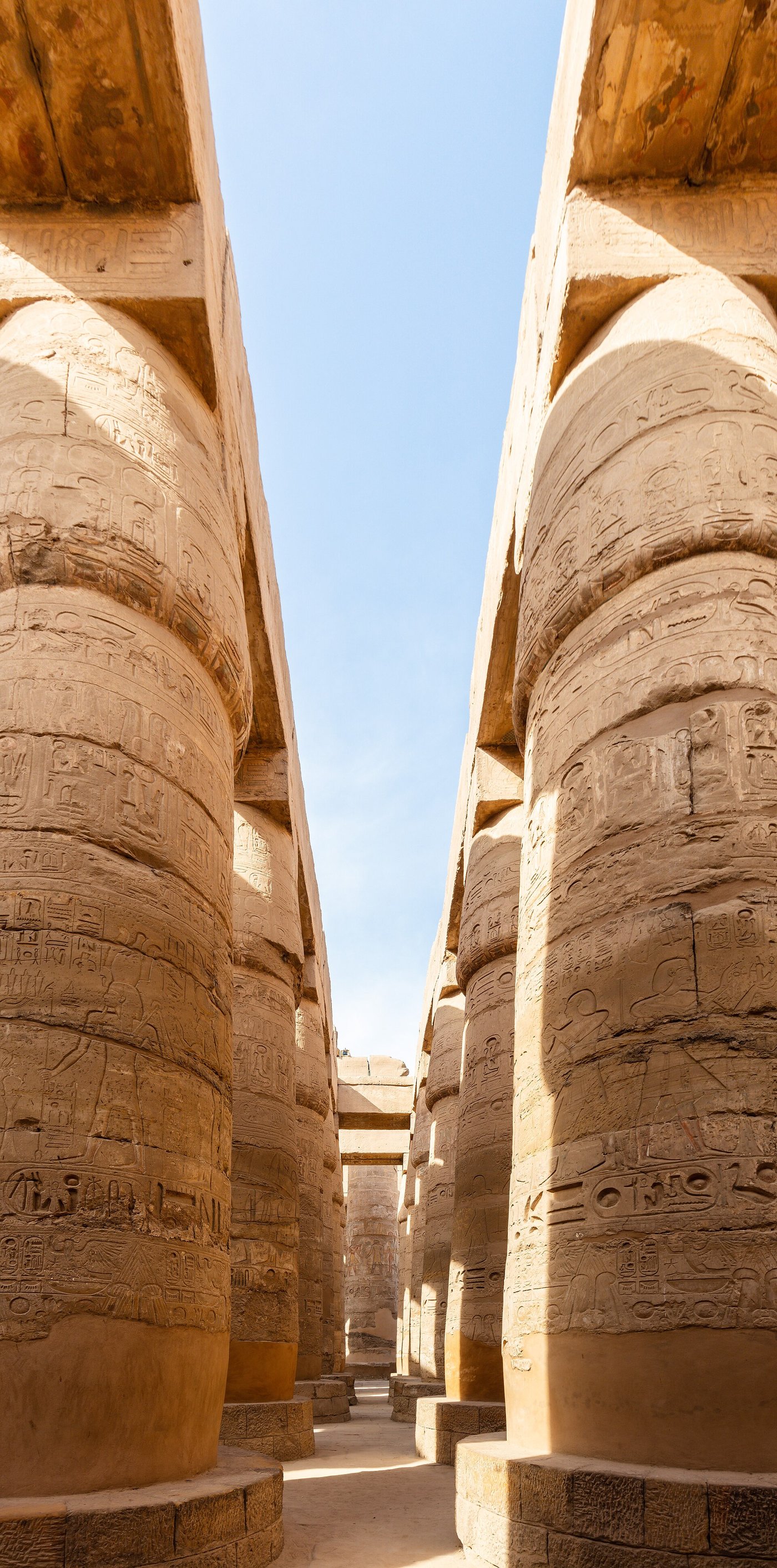
This was not a story Egyptians told once a year at a festival. It was the operating principle behind their architecture. A temple was deliberately built to reproduce that first morning. The floor of the innermost sanctuary sits higher than the floor at the entrance, and the ceiling drops as you walk inwards, so that the deepest room is a small, low, dark chamber: the primeval mound, rising out of the dark. The columns in the outer halls are carved as papyrus and lotus stems, the marsh plants that grew at the water's edge. Star patterns cover the ceilings. Walk from the gate to the sanctuary and you are walking backwards through creation itself.
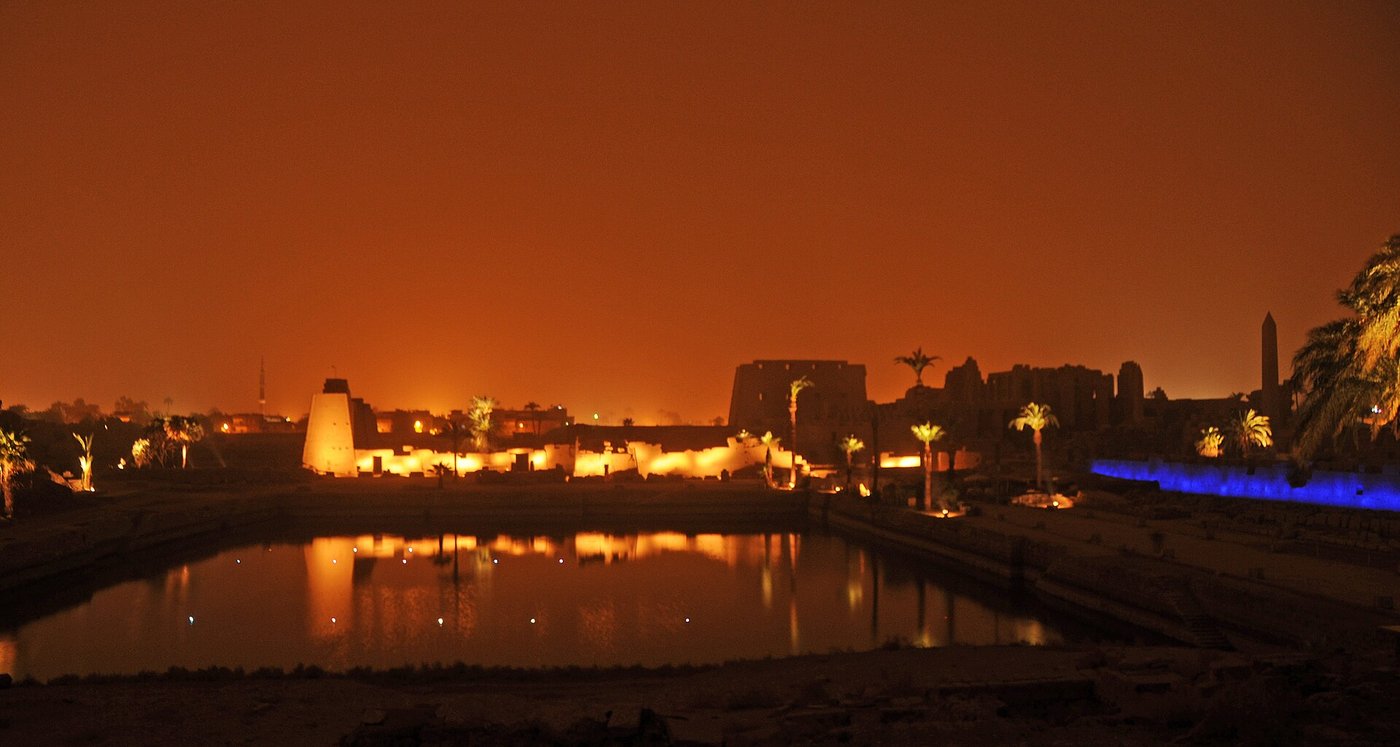
And to complete the model, the temple needed the water. A sacred lake was Nun made small enough to keep on the premises: the primordial ocean, contained, maintained and available. Priests washed in it before entering the god's presence, not because they were dirty, but because purification meant being briefly returned to the state of things before the world began, and then emerging again, remade. Sacred boats were floated on it during festivals. Water for offerings and libations was drawn from it. Some temples kept birds on it that were sacred to the resident god.
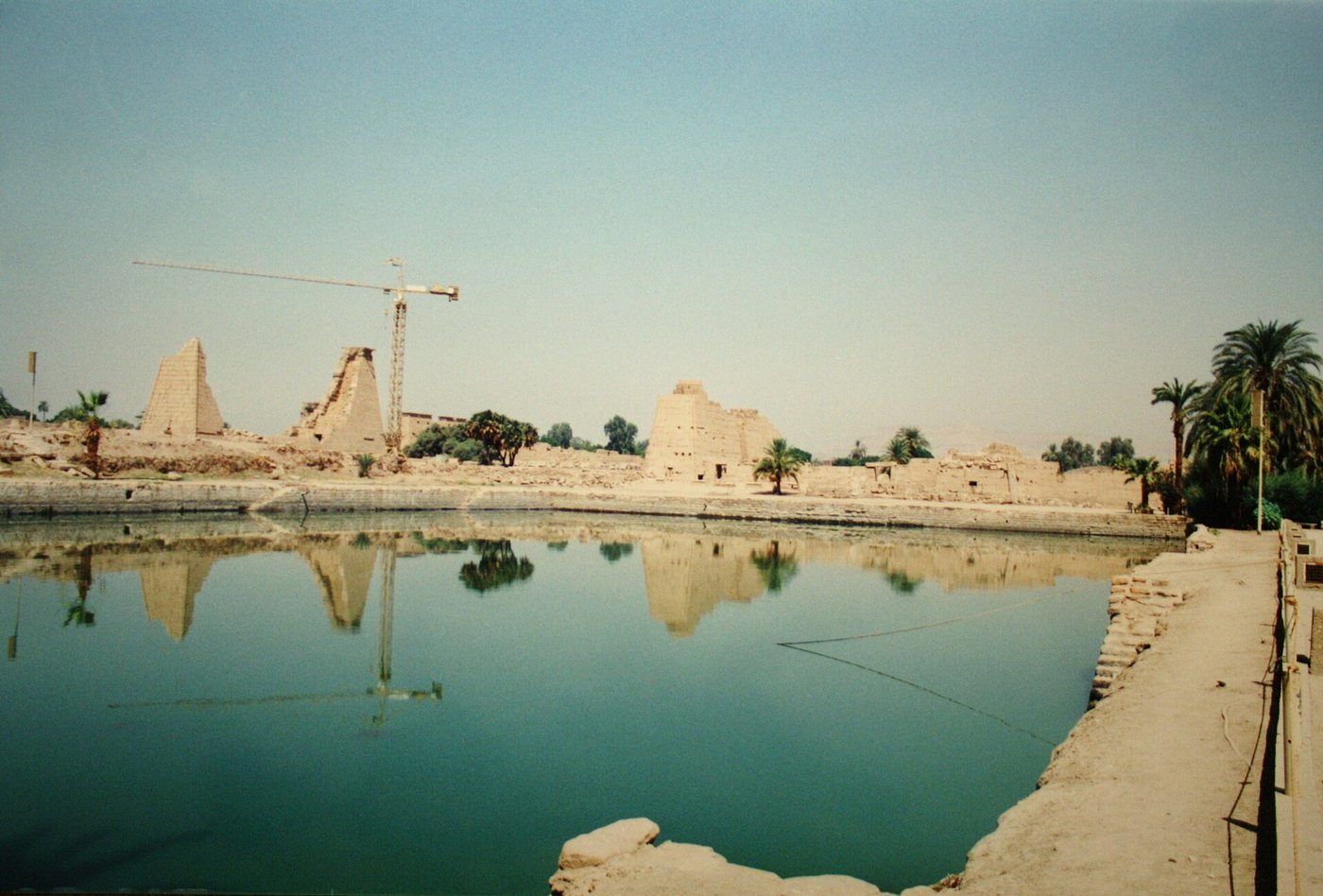
The famous Sacred Lake at Karnak is not filled from the Nile. It has no inlet channel. It sits below the local water table and fills itself from groundwater seeping in through the ground, which is why it has held water continuously for well over three thousand years while canals, harbours and river channels all around it silted up and vanished. The Egyptians did not invent this by luck. They chose the spot precisely because the water came up on its own, which made the lake look self-generating. Water that appeared from nowhere was exactly the point.
What was found
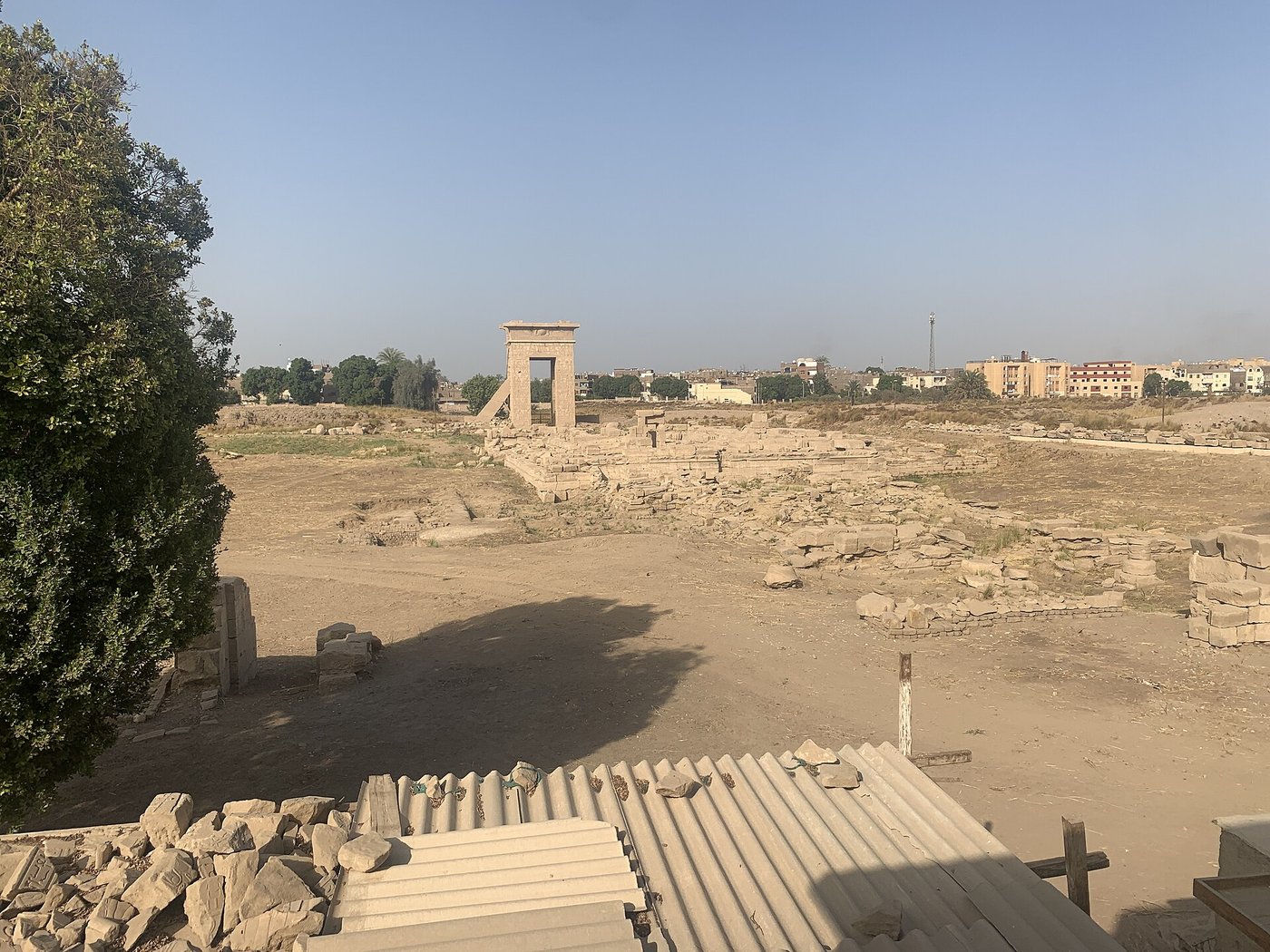
The new lake lies in the precinct of Montu, at the northern end of the Karnak complex: a walled enclosure with its own temples, gates and priesthood, effectively a separate institution sharing a postcode with the vastly larger domain of Amun-Re next door. The excavation was run jointly by the Chinese Academy of Social Sciences and Egypt's Ministry of Tourism and Antiquities, a partnership that began work at the Montu precinct in 2018 and has been grinding through its layers ever since.
What emerged is a rectangular basin, roughly fifty square metres in area, lined with cut stone and reached by steps. It is smaller than the great lake beside the Amun temple, which is about the size of a football pitch, but its proportions, its construction and its position relative to the temple buildings all match what Egyptologists expect of a ritual basin rather than a well or a cistern. Together with the Montu precinct's already-known lake, it forms something not seen anywhere else: two sacred lakes set on a north–south axis inside a single enclosure wall.
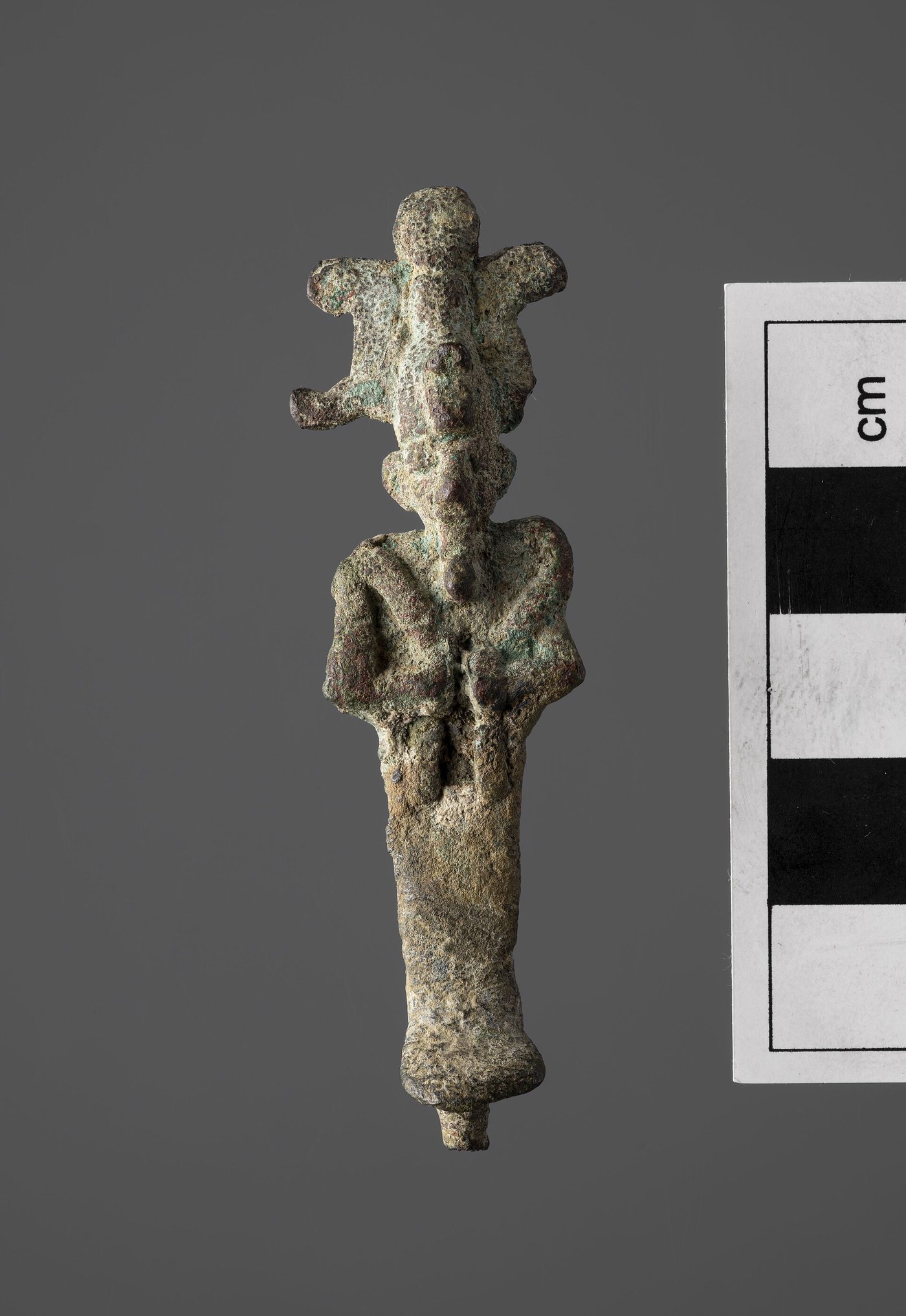
The mission also opened the ground around a nearby chapel of Osiris and found three separate shrines, along with dozens of small Osiris statuettes in different sizes and materials, and a substantial quantity of animal bone. The bone matters as much as the statues. It is physical residue of offerings made over a long stretch of time, and residue can be dated, sorted and counted in ways that a beautiful object sitting in a museum case cannot.
Sacred lakes were essential theological instruments: they allowed a temple to function on its own terms and to carry out the rituals that were required of it.Vincent Rondot, Egyptologist and honorary director of the Department of Egyptian Antiquities, Musée du Louvre, commenting on the Karnak find
Why nobody had done this before
This will surprise anyone who assumes Egypt has been thoroughly excavated. Sacred lakes are among the most recognisable features of an Egyptian temple. There are dozens of them, at Dendera, Edfu, Tanis, Medinet Habu and elsewhere. They appear in temple plans drawn in the nineteenth century. Tourists have photographed the one at Karnak for a hundred and fifty years.
But recognising a thing is not the same as excavating it. Early archaeology in Egypt was driven by museums and by patrons who wanted objects: statues, stelae, coffins, jewellery. A basin full of mud offered none of those. Digging one out is expensive, slow and physically miserable: you are working below the water table, so the trench refills as fast as you empty it, and the deposits are waterlogged sediment rather than clean sand. There was no obvious reward at the end. So generation after generation of excavators cleared the buildings, drew the lake as an outline on the plan, and moved on.
What changed is what archaeologists now consider valuable. Waterlogged mud, which nineteenth-century diggers regarded as an obstacle, is one of the best preservation environments there is. Airless, wet sediment keeps organic material that would have rotted to nothing in dry ground: seeds, pollen, wood, textile, insect remains, fish bones. Each layer of silt in a lake bed represents a period of time, stacked in order like pages. Read carefully, that sequence can show when the lake was built, when it was cleaned out, when it was neglected, what plants grew around it, what was thrown into it and when people stopped coming.
The claim: Egypt's monuments have been picked over so completely that nothing important is left to find at a site as famous as Karnak.
The reality: Karnak covers roughly two square kilometres and was built, rebuilt, extended and repaired for around two thousand years. Large parts of it have never been excavated to modern standards, and some have never been excavated at all. What has changed is not the amount of ground left but the questions being asked of it. The old digs wanted objects; the new ones want the sediment, the seeds and the sequence, and those were exactly what earlier excavators shovelled away.
Karnak, the building that never stopped
It helps to grasp the sheer scale of what surrounds this new discovery. Karnak was not built by one king in one campaign. Work began in a serious way in the Middle Kingdom, around 2000 BC, and continued into the Roman period: something close to two thousand years of near-continuous construction. Thirty-odd rulers added to it. Each wanted his own contribution visible, which produced a site of gates behind gates, halls inside halls, obelisks squeezed between earlier walls, and sanctuaries buried inside later additions like the innermost layers of an onion.
At its height the temple of Amun at Karnak was among the wealthiest institutions in the ancient world. It owned farmland, herds, ships, workshops, mines and tens of thousands of workers. It employed scribes, brewers, bakers, weavers, doctors, musicians and butchers. The Great Harris Papyrus, an inventory compiled at the end of the reign of Ramesses III, records donations to Egypt's temples on a scale that reads like a national budget, and Amun's share dwarfs everyone else's. When Egyptologists say the priesthood of Amun eventually rivalled the crown, they are not speaking figuratively. By the end of the New Kingdom, the High Priest of Amun at Thebes was in practice governing the south of the country.
Montu, whose precinct now holds the new lake, was a much older presence at Thebes. He was a falcon-headed war god, the local power in the region before Amun rose to national prominence and absorbed most of the attention and the income. Kings of the Eleventh Dynasty were named after him (four of them were called Mentuhotep, "Montu is content"), and his temple at Karnak kept operating for centuries afterwards, in the shadow of its enormous neighbour. That relative obscurity is now an advantage: less disturbed by tourism, less picked over by early excavators, and therefore better preserved.
The god in the water
The Osiris chapels found alongside the lake fit the setting exactly. Osiris was the god who was murdered by his brother Set, dismembered, scattered, gathered up again by his wife Isis, and restored to a kind of life: not the ordinary living kind, but rule over the dead. He was the guarantee that death was a passage rather than an ending, and Egyptians of every rank hoped to become "an Osiris" themselves after dying.
Water ran through his story from beginning to end. His body was thrown into the Nile. The annual flood that soaked the fields and made Egyptian agriculture possible was understood as Osiris returning, and the green shoots that came up afterwards were his body renewing itself. Every year at the festival of Khoiak, priests packed damp Nile silt and barley seed into small moulds shaped like the god, watered them, and watched the grain sprout out of the figure over the following days. These "corn Osirises" were then wrapped, mourned and buried. It was a piece of theatre about resurrection performed with mud and seed, and it was done in temple precincts across Egypt.
Small votive figures of Osiris like the ones recovered at Karnak were produced in vast quantities from the Late Period onwards. An ordinary person could buy one, have it dedicated in a temple, and secure a small permanent share in the god's attention. Dozens of them clustered near a chapel and a sacred lake are not a treasure hoard. They are the accumulated hopes of individual people, left behind over generations at a spot where the boundary between the living world and the world before creation was believed to be thin.
How far can a sacred lake be read as an astronomical or calendrical instrument? Some researchers argue that lake positions and temple axes at Karnak were aligned to solstice sunrises and to the heliacal rising of Sirius, which announced the flood, making the whole complex a working calendar as well as a theological model. Others point out that Karnak grew by accretion over two millennia, with each king building against what was already there, and that alignments found in such a palimpsest can easily be coincidence dressed up as design. The new excavation, with datable layers rather than assumed dates, is the sort of evidence that could eventually settle parts of the argument.
Reading mud
The most valuable thing the Montu lake may produce is not an object at all. It is a timeline.
Consider what a properly excavated lake bed can answer. When was the basin cut, and under which king? How often was it dredged, and does the dredging stop at some identifiable point that would show the moment the institution ran short of money or staff? What does the pollen in the lower layers say about the plants growing around it, and does that change as the centuries pass? Are there fish bones, and if so, were fish being kept in it, offered in it, or simply living there? Is there charcoal from a fire, or debris from a collapse, marking a violent episode? And at the very top, where the sediment gives way to windblown sand and broken stone, when exactly did the water stop being sacred and become just a hollow in the ground?
These are questions about the ordinary working life of an ancient institution, and they are almost impossible to answer from monumental inscriptions, which record what kings wanted remembered rather than what actually happened week to week. A temple wall says a pharaoh built gloriously for his father Amun. A lake bed says the maintenance stopped in a particular generation and never resumed.
There is a wider reason to care. Egypt's groundwater has been rising for decades, largely as a consequence of the Aswan High Dam ending the annual flood cycle and of intensive year-round irrigation around ancient sites. Damp is eating into the stone of temples up and down the Nile valley, drawing salts through the sandstone that crystallise and flake away carved surfaces. The deposits in a sacred lake are a long-term record of what the local water table has done over three thousand years, which makes an excavation of this kind useful not only to historians of religion but to the engineers trying to work out how to keep Karnak standing.
Why it lands now
There is something appropriate about this find arriving in the 2020s. The great age of Egyptian archaeology was built on spectacle: Belzoni hauling colossal heads down to the river, Carter opening Tutankhamun's tomb, crowds around glass cases full of gold. That work produced the collections and much of the public appetite for Egypt, and it also destroyed an enormous amount of information that nobody at the time thought was information at all.
What is happening in the Montu precinct is the opposite kind of archaeology. Eight years of work in a wet trench to record a basin that most visitors would walk past without a second look. The results will arrive as stratigraphic reports and sediment analyses rather than as headline objects. But they will tell us how an Egyptian temple actually worked (how it was maintained, how long it kept going, how it wound down), and that is the question the gold could never answer.
The Egyptians believed the first water had no beginning and no end, and that everything solid had risen out of it and would one day sink back. They built a small copy of that water inside their temples so the world could be started fresh each morning. Three thousand years on, in a country whose rising water table is itself now a problem, archaeologists are carefully lifting the mud out of one of those copies, layer by layer, to find out what happened in between. It is a slow, unglamorous, wholly modern way of asking a very old question.
Read next: Tutankhamun's Tomb: Why a Minor King's Grave Survived Intact and Thutmose II: The First Royal Tomb Found Since Tutankhamun.
Sources & further reading
- Egyptian Ministry of Tourism and Antiquities, announcement of the sacred lake discovery at the Montu precinct, Karnak, January 2026.
- HeritageDaily, "Discovery of monumental sacred lake at Karnak", January 2026.
- Richard H. Wilkinson, The Complete Temples of Ancient Egypt (Thames & Hudson, 2000) — the standard survey of temple design, including sacred lakes and their ritual use.
- Elizabeth Blyth, Karnak: Evolution of a Temple (Routledge, 2006) — the building history of the complex across two millennia.
- Barry Kemp, Ancient Egypt: Anatomy of a Civilization, 3rd edition (Routledge, 2018) — on temples as economic and political institutions.
- Centre Franco-Égyptien d'Étude des Temples de Karnak (CFEETK), published site reports and excavation archive.
Image credits (via Wikimedia Commons): Karnak Sacred Lake and excavations — Gary Todd (CC0); the Sacred Lake at Karnak — David Broad (CC BY 3.0); Precinct of Montu — Marsupium (CC BY 4.0); Great Hypostyle Hall, Karnak — Diego Delso (CC BY-SA 4.0); bronze Osiris statuette, Museo Egizio, Turin — unknown ancient craftsman, photograph released CC0.