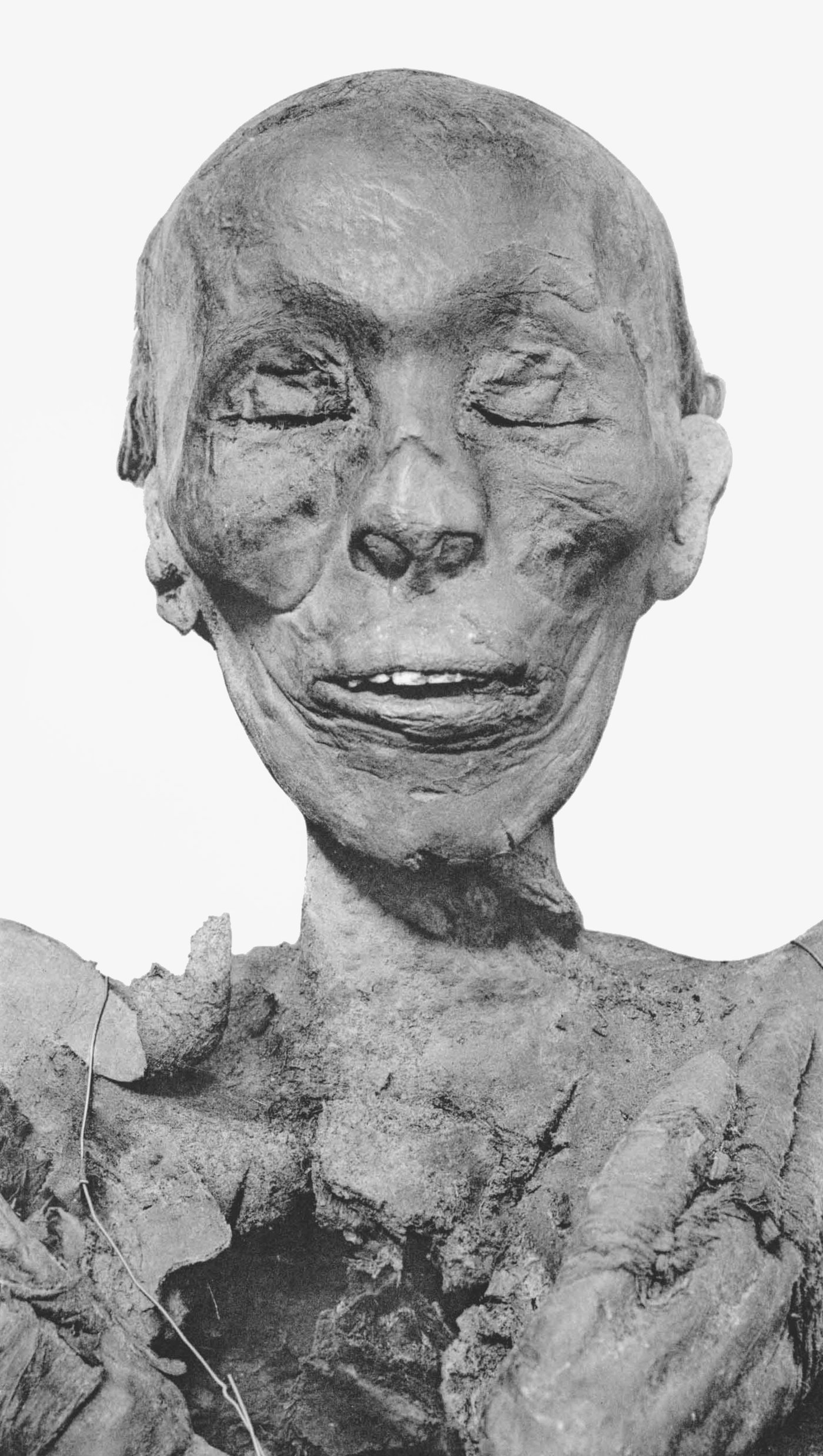
On the first day of July 1886, in a workroom of the museum at Bulaq in Cairo, Gaston Maspero cut the wrappings from a royal mummy that had been labelled, in ink and in confidence, as Thutmose II. The body underneath was not a comfortable sight. The skin was blotched with raised, scabby patches, as if some illness had passed over him before the embalmers ever reached the corpse. For more than a century that battered figure was the closest thing the world had to the pharaoh himself: a king known from his father's monuments, his wife's ambition and his son's conquests, but almost never from anything that was his alone. He had no tomb anyone could point to. Then, in the autumn of 2022, a British-Egyptian team clearing a dry watercourse behind the Theban hills put a spade into soft ground and began, without knowing it, to give him one back.
The find was announced to the world in February 2025, and it carried a line that sounded almost impossible: this was the first tomb of an Egyptian pharaoh to be identified since Howard Carter opened Tutankhamun's in 1922. A hundred and three years lay between the two discoveries. In that time Egyptology had grown into a science of ground-penetrating radar, satellite survey and DNA, and still no one had found the burial place of a king. The strange part is what was waiting when they did. The room was almost empty. There was no golden mask, no nested coffins, no king. What Thutmose II left behind was a puzzle about where his body had gone.
The king wedged between other people
To understand why his tomb went missing for so long, it helps to see how thinly he sits in the record. Thutmose II ruled Egypt in the early Eighteenth Dynasty, somewhere around 1480 BCE, in the golden middle of the New Kingdom. He was the son of Thutmose I, a soldier-king who pushed Egypt's borders to the Euphrates. To keep the bloodline tight he married his own half-sister, Hatshepsut, who held the title of great royal wife. Their union produced a daughter, Neferure. His heir, though, came from a lesser wife named Iset: a boy who would grow up to be Thutmose III, the general later writers called the Napoleon of Egypt.
Look at that family and you can see the problem. On one side stood a conquering father, on the other a stepson who would win seventeen campaigns and stretch the empire wider than ever. And between them, sharing his own throne room, was Hatshepsut, who after his death took the regency for the child king, then set aside the word "regent" and had herself crowned pharaoh in her own right, one of the very few women ever to rule Egypt outright. Beside these three, Thutmose II barely registers. His reign was short. Estimates run anywhere from three years to a little over a decade, and the honest answer is that we do not know. He commissioned no great temple that survives whole, fought no war that anyone recorded at length.
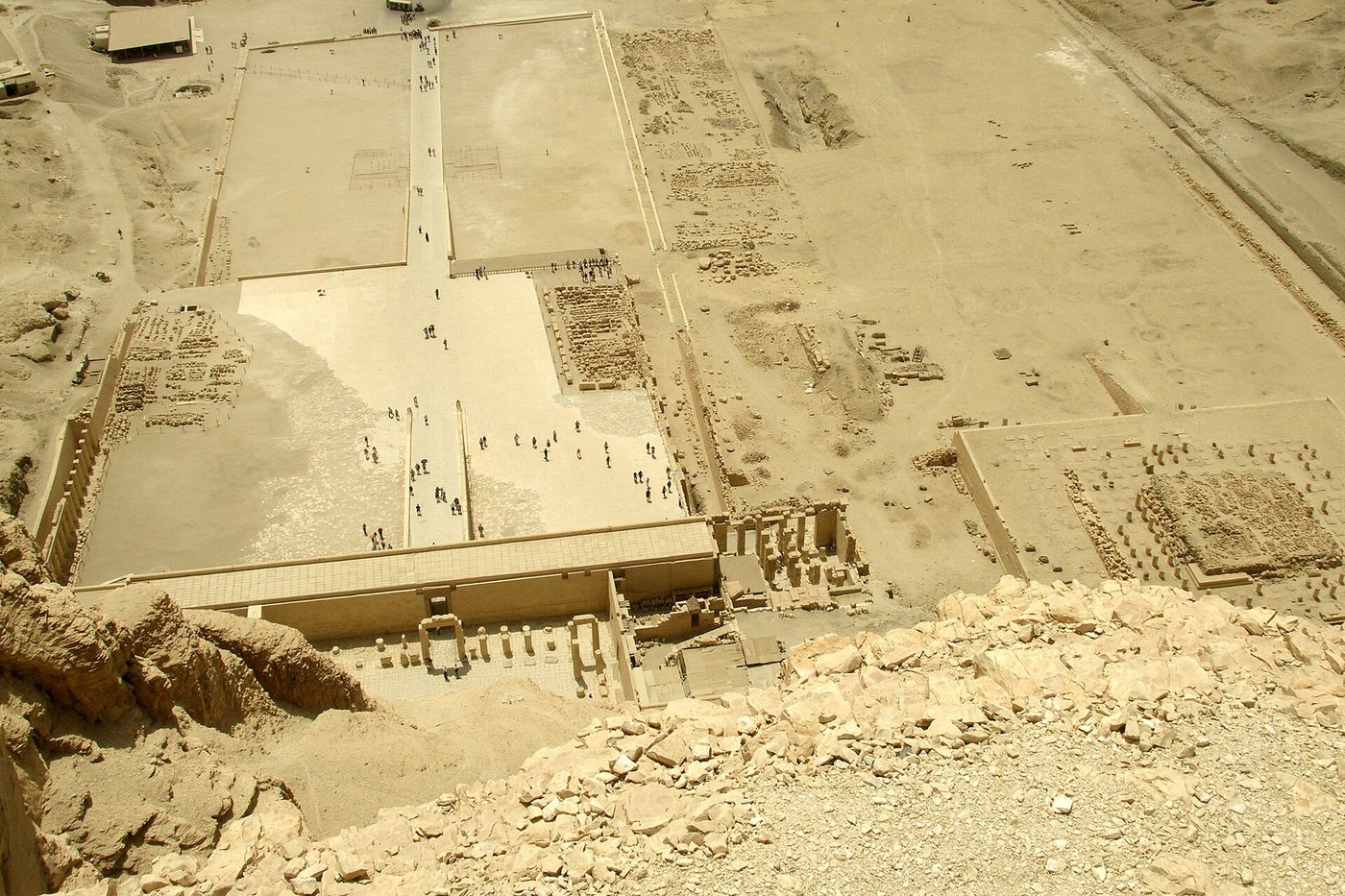
That thinness shaped where people looked for him. For generations the assumption was that any Eighteenth Dynasty king belonged in the Valley of the Kings, the narrow gorge where Tutankhamun and most of his successors were cut into the rock. A tomb there, KV20, had once been linked to Thutmose II, though it is now read as Hatshepsut's. His actual resting place stayed blank. He was a name on a king list with nowhere to put him.
A softness in the ground
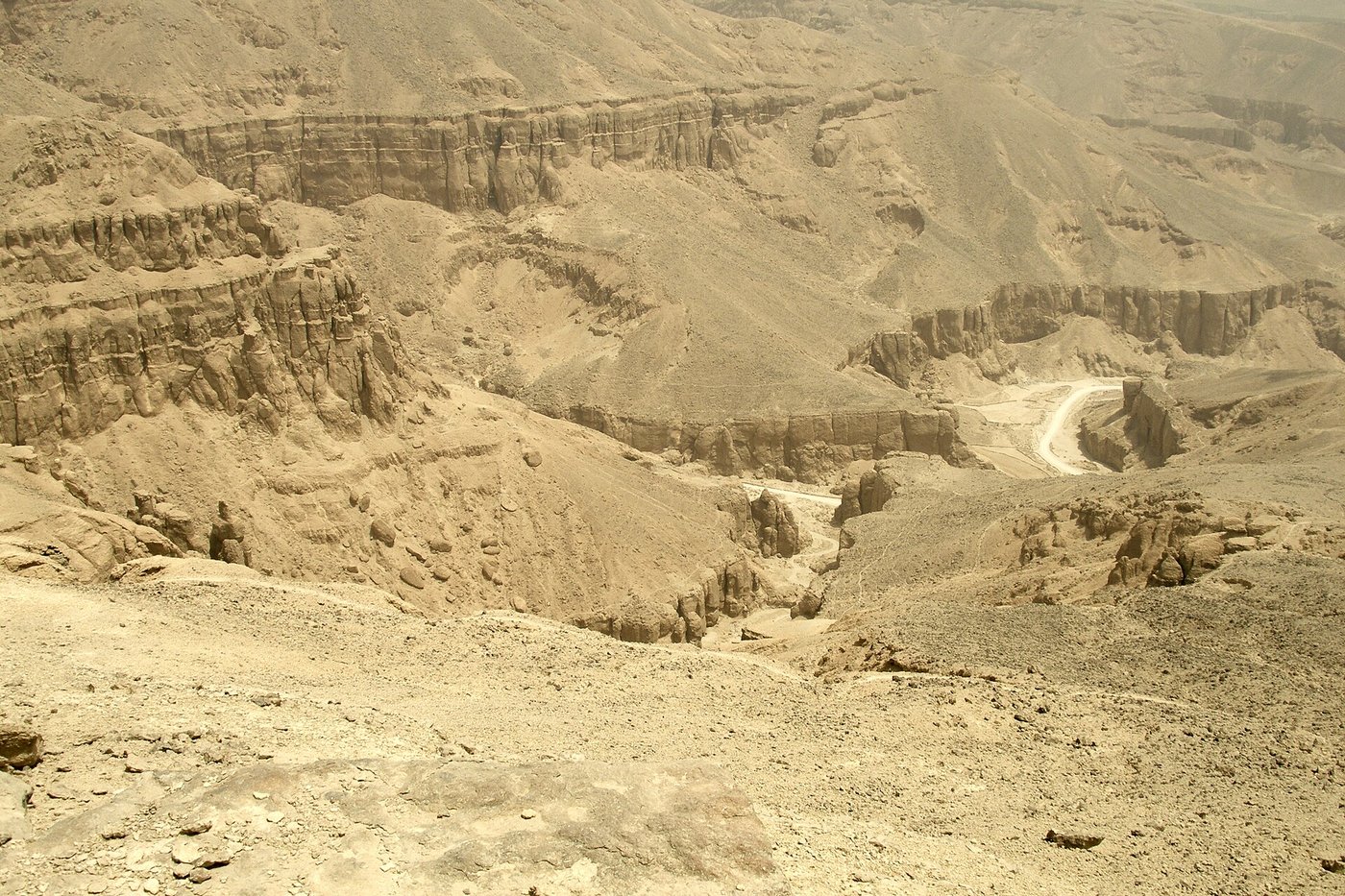
The team that changed this was not hunting for a pharaoh at all. Piers Litherland, an Egyptologist working with the New Kingdom Research Foundation alongside Egypt's antiquities service, had spent years combing the Western Wadis, a maze of dry, rubble-choked ravines on the far side of the Theban mountain from the Valley of the Kings, about two and a half kilometres away. This is quiet country, the sort of place where earlier expeditions dug for a season and moved on. Litherland's people were mapping the tombs of royal women and lesser members of the court.
On 31 October 2022, working in a spot catalogued as Wadi C, two of the Egyptian team, Ashraf Omar Ali and Heraji Sayed Ahmed, noticed something under their feet: a patch of surface that gave slightly, a softness that did not match the packed valley floor. Clearing it revealed the corner of a foundation deposit and, below that, the mouth of a stairway cut into bedrock. Sixteen limestone steps ran down into the dark, opening onto a corridor. The scale was modest and the location was telling. It sat close to the burials of three wives of Thutmose III, and close to the ground Hatshepsut had first chosen for herself. Everything about it said queen. The team logged it as the tomb of a royal woman and kept digging.
Why they were sure it was a wife
That first guess was not carelessness. It was the most likely reading of the evidence they had. Egyptian cemeteries cluster by rank and family, and this pocket of the Western Wadis was a women's neighbourhood. A modest tomb dropped into the middle of it, near the graves of Thutmose III's wives, had every reason to belong to a queen or a princess. Nothing yet spoke a name.
The corridor itself made progress brutally slow. At some point in antiquity the valley had done what desert valleys do on the rare day it rains: filled with a flash flood that drove water, rock and mud down into the tomb. The passage beyond the stairs was choked to the ceiling with a solid plug of collapsed limestone and hardened silt. To go forward meant emptying it by hand, bucket by bucket, in a space too low to stand in. As Litherland later described it, he ended up crawling through a gap near the top of one blocked corridor, over fallen slabs whose surfaces had grown sharp mineral crystals from centuries of soaking and drying: thorns of rock that tore at his hands and clothes as he wormed past them.
What lay at the end of that crawl told him he had been wrong about the queen. When the burial chamber finally opened up, the walls and the fallen ceiling carried decoration that no royal wife of the period would have been given. Fragments of plaster from the ceiling were painted deep blue and scattered with yellow stars, the night sky of a king's tomb. Among the debris were pieces of a religious text written in cursive script: the Amduat, the "Book of What Is in the Underworld", a guide to the sun god's night journey that in this era was reserved almost entirely for the burial of a pharaoh. A queen did not sleep under the Amduat. A king did.
"The emotion of getting into these things is just extraordinary. When I came out my wife was waiting outside and the only thing I could do was burst into tears."— Piers Litherland, field director, New Kingdom Research Foundation, describing the moment the decorated chamber came into view
Two centimetres that named a king
A starred ceiling proves rank, not identity. It says king; it does not say which one. For the name, the excavation came down to the smallest things in the tomb: broken vessels. Scattered through the flood debris were fragments of alabaster jars, some of them worked into the shape of ducks, the fine sort of grave goods a royal burial was stocked with. Painstakingly, the team began to fit the pieces together and read the inscriptions painted and incised on them.
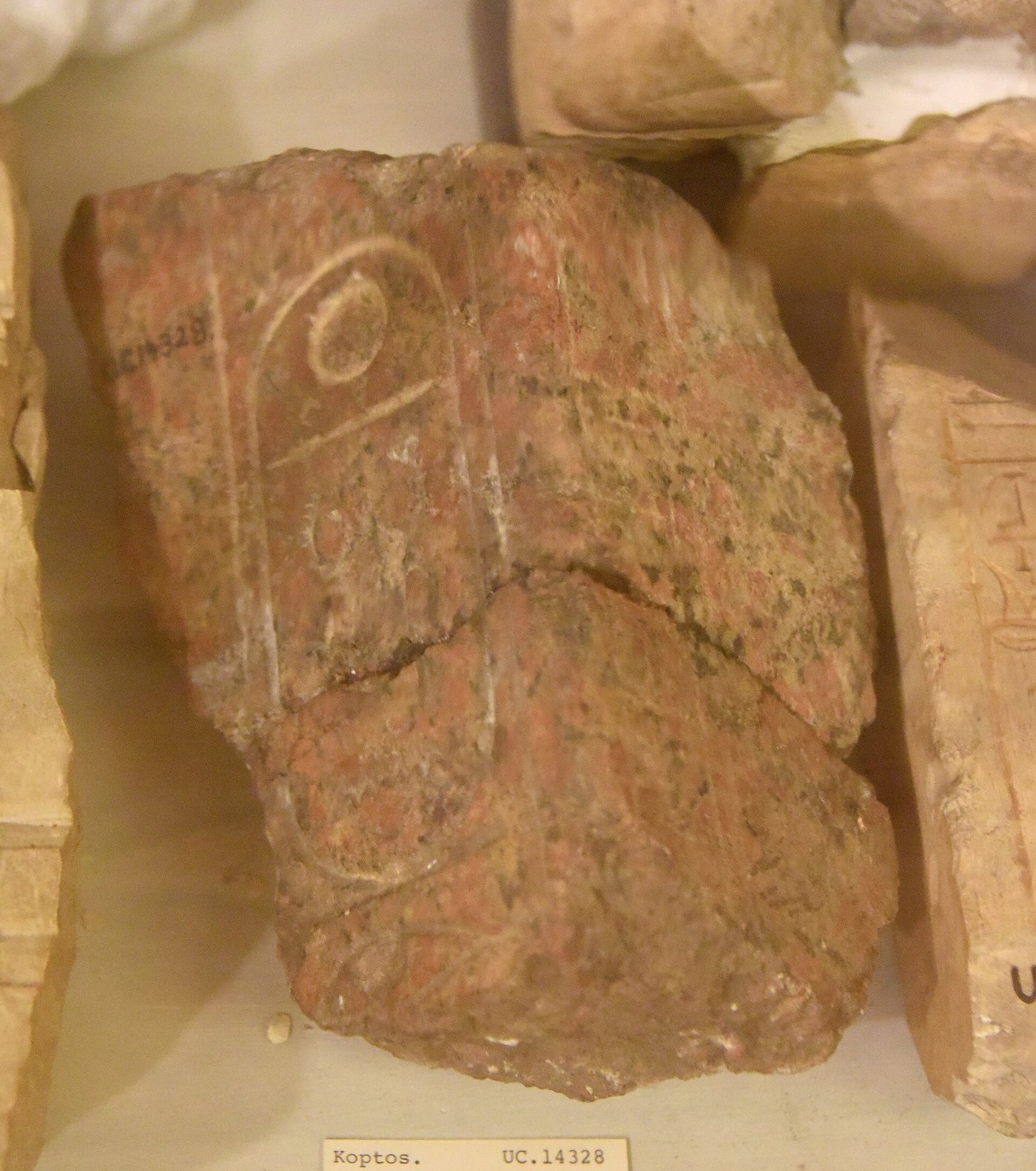
Some fragments gave a royal title and the start of a name ("Son of Ra, of his body, Thut…") with a throne name beginning "Aakheper…ra". On its own that was maddening, because it could belong to Thutmose I or Thutmose II; both shared elements of those names. The piece that settled it was tiny, barely two centimetres across. On it were the words identifying the great royal wife who had provided for the burial: Hatshepsut. That single detail closed the circle. Thutmose I's wife was not Hatshepsut; Thutmose II's was. A jar naming Thutmose alongside Hatshepsut as the wife who buried him could belong to only one man.
There is something moving in that detail, beyond the archaeology. These jars are, so far, the only objects known to survive from the actual burial of Thutmose II. And the fragment that identifies them does so by naming his wife as the one who saw him into the ground. It is a rare thing for a king's grave goods to be signed with the woman who buried him. Given what Hatshepsut did next (taking the throne, ruling for two decades, having her own name later chiselled off monuments by those who resented a female pharaoh), that little painted label reads almost like a first move in a long story of a woman running Egypt.
The room with the king taken out of it
So they had the tomb, and they had the name. What they did not have was Thutmose II. The burial chamber held no body, no coffin, no canopic jars with his organs, none of the packed treasure that made Tutankhamun's four small rooms a legend. The obvious explanation for an empty Egyptian tomb is robbery; nearly every royal burial was plundered in antiquity, some within a generation. But this one did not look robbed. Robbers smash and snatch and leave a mess of what they cannot carry. Here the emptiness was too clean, too complete, as if the room had been deliberately cleared rather than ransacked.
The clue was the water. The tomb had been built in a bad place: low in the valley, in the path of the rare but violent floods that tear through these wadis. Litherland's reading of the debris and the plastering is that the burial went ahead, and then, only a handful of years later, a flood broke in and filled the chamber. Faced with their king's tomb drowning in mud, the people responsible did not abandon him. They went in, recovered the body and the burial equipment, and carried the whole burial out to be set up again somewhere safer, higher, above the reach of the flood. The blocked and re-plastered corridors, sealed and sealed again, read to him not as the work of thieves but as the careful hands of officials moving a king.
The blotchy, scabbed mummy unwrapped in 1886 shows us a diseased young king who died of illness, and that is Thutmose II.
The skin lesions are real, and they have fed a century of guesses about smallpox or some wasting disease. But the identification of that body is now openly questioned. The mummy from the Deir el-Bahari cache long called Thutmose II looks, to some who have re-examined it, too old for a king thought to have come to the throne as a youth and died after a short reign. The cache was a jumble of royals hurriedly rewrapped and relabelled by later priests, and mistakes were made. If the tomb team is right that the real body was moved to a second, still-lost tomb, then the famous scabby mummy may not be Thutmose II at all, and we may never have seen his face.
The tomb that has not been opened yet
This is where the story stops being about a discovery and starts being about a hunt. If Thutmose II was carried out of the flooded tomb and reburied, that second tomb should still be out there, somewhere above the old one, and, because it was a planned move rather than a panicked one, it might still hold everything: the coffin, the equipment, perhaps the king himself, untouched. That is the prize that has Egyptologists holding their breath.
Litherland's team believes it has a candidate. Not far off, they have found a large artificial mound: roughly twenty-three metres of piled limestone chip and plaster, laid down by hand and disguised to look like a natural slope of the hillside. It sits above the flood line. To someone hiding a king from robbers and rainwater alike, it is exactly the kind of thing you would build. Digging through it is slow, delicate work, and as this is written the mound has not given up whatever lies beneath it. It may be nothing. It may be the intact burial of a pharaoh, the first found since Tutankhamun and this time deliberately concealed rather than merely missed.
Two questions hang over the find, and both may take years to answer. Is there really a second tomb inside that mound, and is it intact? Or has the theory outrun the evidence? And whose body was in the Deir el-Bahari cache all this time? Until someone excavates the mound and, if a mummy turns up, tests it, both remain undecided. The excavators are confident. Confidence is not the same as a coffin.
What an empty room leaves behind
It is easy to feel a little cheated by a tomb with no treasure in it. Tutankhamun spoiled us; we expect gold. But the value of C4 is not in what it holds, it is in what it settles and what it opens. It fills a gap that had sat blank in the Egyptian king list for as long as anyone had studied it. It puts a real place on the ground under a king who had only ever been a name. And it hands us a live mystery with an address: a man-made hill, a drowned first tomb, and a body that was carried out of the mud once already and may be waiting to be found a second time.
For a pharaoh who spent three and a half thousand years wedged between a famous father, a formidable wife and a conquering son, it is a strange kind of afterlife. Thutmose II, overlooked in life and overshadowed ever since, has become one of the most talked-about figures in Egyptian archaeology, not for what he did, but for where he went. The next season of digging may finally tell us whether the king who left an empty room behind is still out there, under a heap of rubble raised to hide him, keeping his one appointment with the people who buried him.
Read next: Tutankhamun's Tomb: Why a Minor King's Grave Survived Intact and The Mummy That Was Buried With Homer's Iliad.
Sources & further reading
- Piers Litherland and the New Kingdom Research Foundation, field reports on the Western Wadis survey and the identification of tomb C4.
- Egyptian Ministry of Tourism and Antiquities, statement on the discovery of the tomb of Thutmose II (February 2025).
- CNN, "Tomb of ancient Egyptian king Thutmose II unearthed in 'remarkable' discovery" (February 2025).
- Live Science, "Tomb of Thutmose II is 1st ancient Egyptian pharaoh's burial to be found in 100 years" (2025).
- G. Elliot Smith, The Royal Mummies (Catalogue Général, Cairo, 1912), on the mummy attributed to Thutmose II.
- Chris Naunton, "Tomb of Thutmose II found!" — commentary on the discovery and the second-tomb theory (2025).
Image credits (via Wikimedia Commons): the mummy attributed to Thutmose II — G. Elliot Smith (public domain); Deir el-Bahari and the Theban cliffs — Vyacheslav Argenberg (CC BY 4.0); the Valley of the Kings — Vyacheslav Argenberg (CC BY 4.0); granite cartouche fragment of Thutmose II — Osama Shukir Muhammed Amin FRCP(Glasg) (CC BY-SA 4.0); statue of Thutmose III — Marsupium (CC BY 4.0).