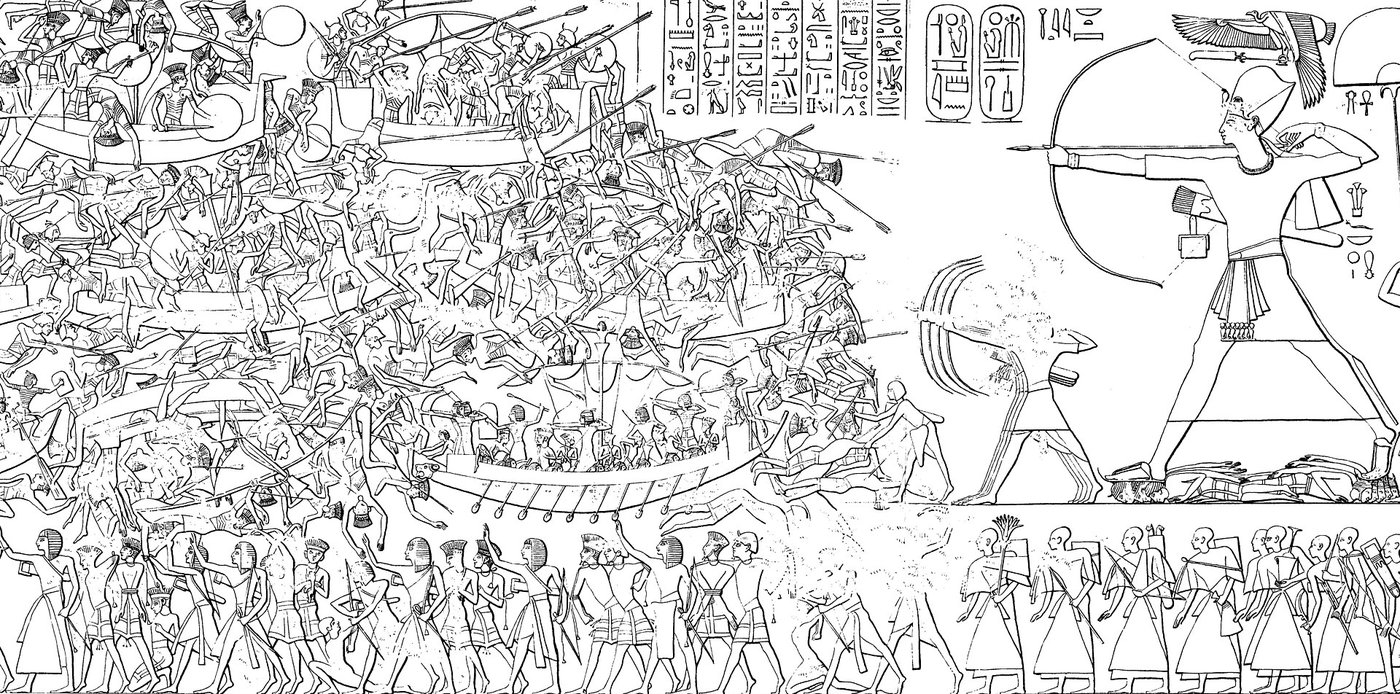
Around 1177 BC, in one of the mouths of the Nile, the water was full of men who could not swim to safety. Egyptian archers stood on the banks and on the decks of their own ships, and they shot into a fleet that had come a very long way to be there. The foreign boats had high prows carved like birds, and they were crammed not only with fighters but with people who had brought everything they owned. When it was over, the pharaoh's scribes climbed the walls of a temple at Thebes and cut the victory into stone, the way you fix a thing so it can never be taken back. The enemy in that carving has no country written beside it. It has only a set of names, and a look.
We call them the Sea Peoples. It is worth saying at once that they never called themselves that. The phrase is modern (a French coinage of the nineteenth century, peuples de la mer, first used by the Egyptologist Emmanuel de Rougé in 1855 and made famous by Gaston Maspero), and it has done something strange to the way we picture them. Two small words turned a tangle of displaced and desperate groups into a single villain: a horde that rose out of the water, torched the great kingdoms of the eastern Mediterranean, and vanished. For most of a century that was the story. A wave of raiders had ended an age.
The trouble is that the more closely you look at the evidence, the less it holds that shape. The invaders on the temple wall are travelling with their wives, their children and their cattle. The kingdoms they are supposed to have destroyed were already cracking from the inside. And when scientists finally opened the graves of one group that settled down, the people the Bible calls the Philistines, the bones pointed not to a nation of pirates but to migrants who had crossed the sea from the failing Aegean world, looking for somewhere the crops still grew. This is the story of how a refugee crisis got remembered as an army.
One wall, and only one side of it
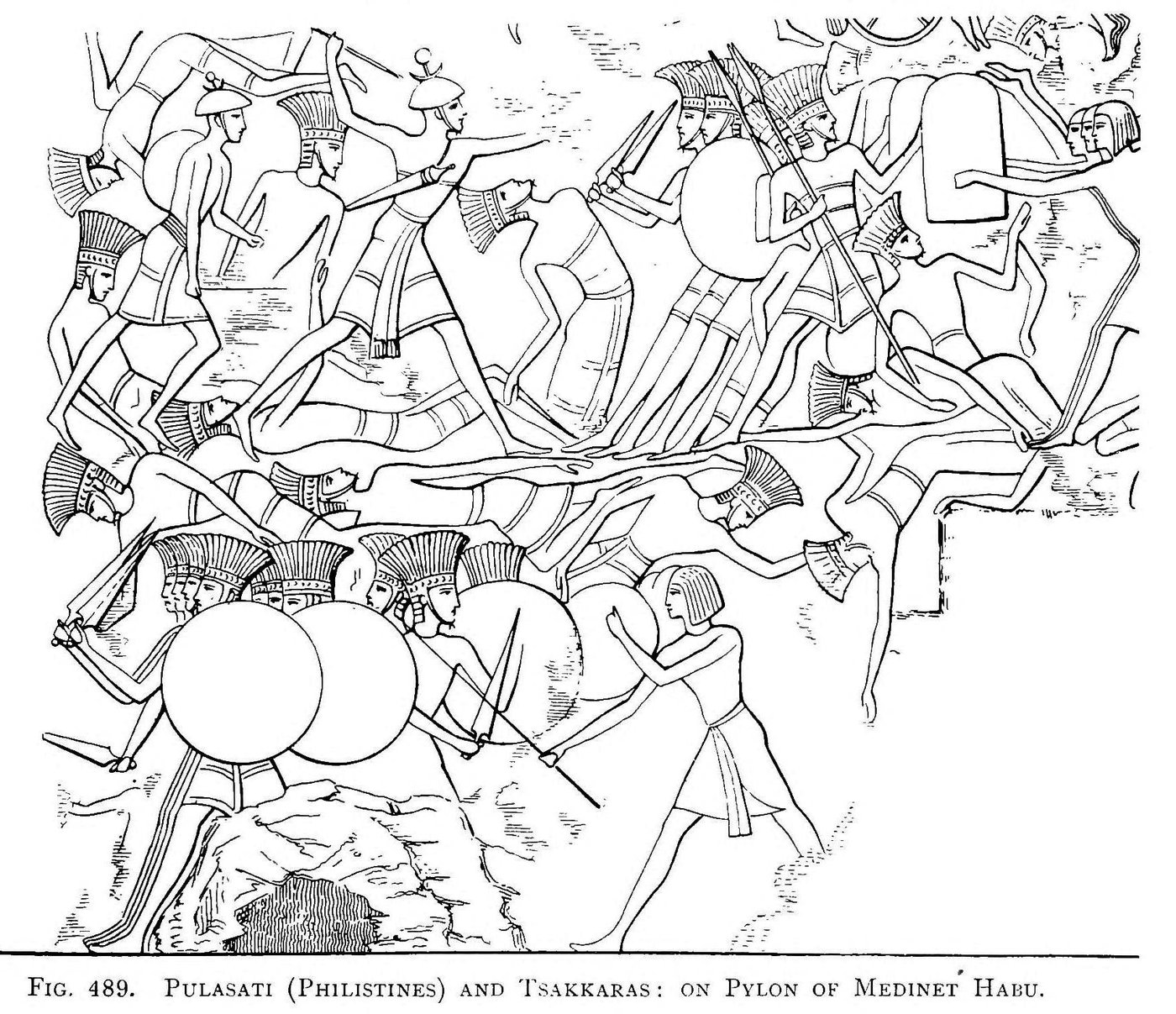
Almost everything most people think they know about the Sea Peoples comes from a single building: the mortuary temple of Ramesses III at Medinet Habu, on the west bank at Luxor. Its walls carry the longest hieroglyphic inscription in Egypt, and among the scenes of the king at war is the earliest depiction of a sea battle anywhere in human record. Ships tangle, bodies fall into the water, the pharaoh looms over the chaos at many times life size. It is magnificent, and it is propaganda.
That matters more than it sounds. A victory monument is written by the winner to flatter the winner, and it tells you what the winner wanted remembered, not what happened. Ramesses needed the Sea Peoples to be a terrifying, unified enemy, because defeating a terrifying, unified enemy is what made him a great king. The wall gives us their boats and their headdresses in wonderful detail. It gives us almost nothing about where they came from, why they were on the move, or whether they thought of themselves as one people at all. Read it as history and you inherit the pharaoh's opinion of them by accident.
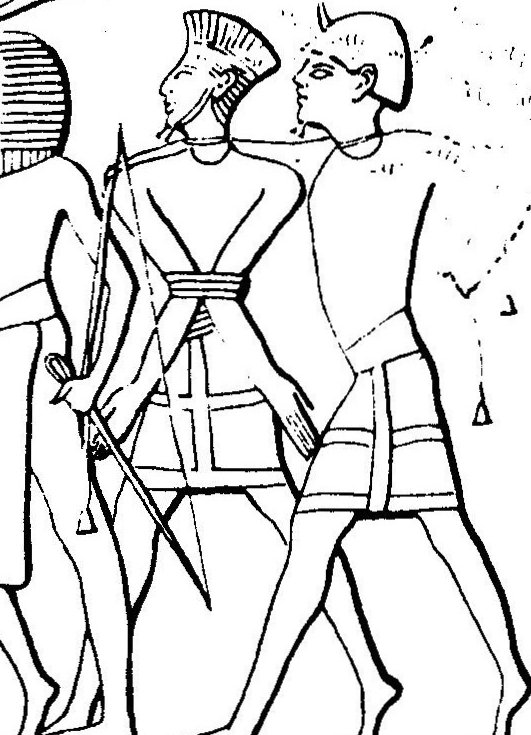
Look at what the carvers chose to show and a different picture leaks through the propaganda. Behind the fighting, the reliefs include ox-carts with solid wheels, piled high, with women and children riding on top. These are not the baggage of a raiding party that means to grab what it can and sail home. They are the possessions of people who are not going back. The Egyptians drew a migration and labelled it an invasion, and for three thousand years we took them at their word.
A handful of names with nowhere to put them
The Egyptian records do not say “the Sea Peoples.” They give lists of separate groups, and the same names keep surfacing across different reigns: the Peleset, the Tjeker, the Shekelesh, the Denyen, the Weshesh, the Sherden, the Lukka, the Ekwesh. Some of these words look tantalisingly like places we know. The Sherden echo Sardinia; the Shekelesh echo Sicily; the Lukka are almost certainly the people of Lycia, on the southern coast of Anatolia; the Ekwesh may be the Achaeans, the very Greeks Homer sends to Troy. But an echo is not a map. Nobody can say for certain whether a group was named after the land it came from or the land it later seized, and a single name in these lists might cover people from several shores who happened to be sailing together.
What the names do tell us is that this was never one nation. It was a coalition, and a shifting one: the sort of thing that forms when a whole region comes apart and people band together by the boatload to survive. Group with a Sardinian-sounding name and group with a Greek-sounding name turn up in the same alliance, and turn up again generations apart in different quarrels. That is the fingerprint of a scattering, not a conquest launched from a capital.
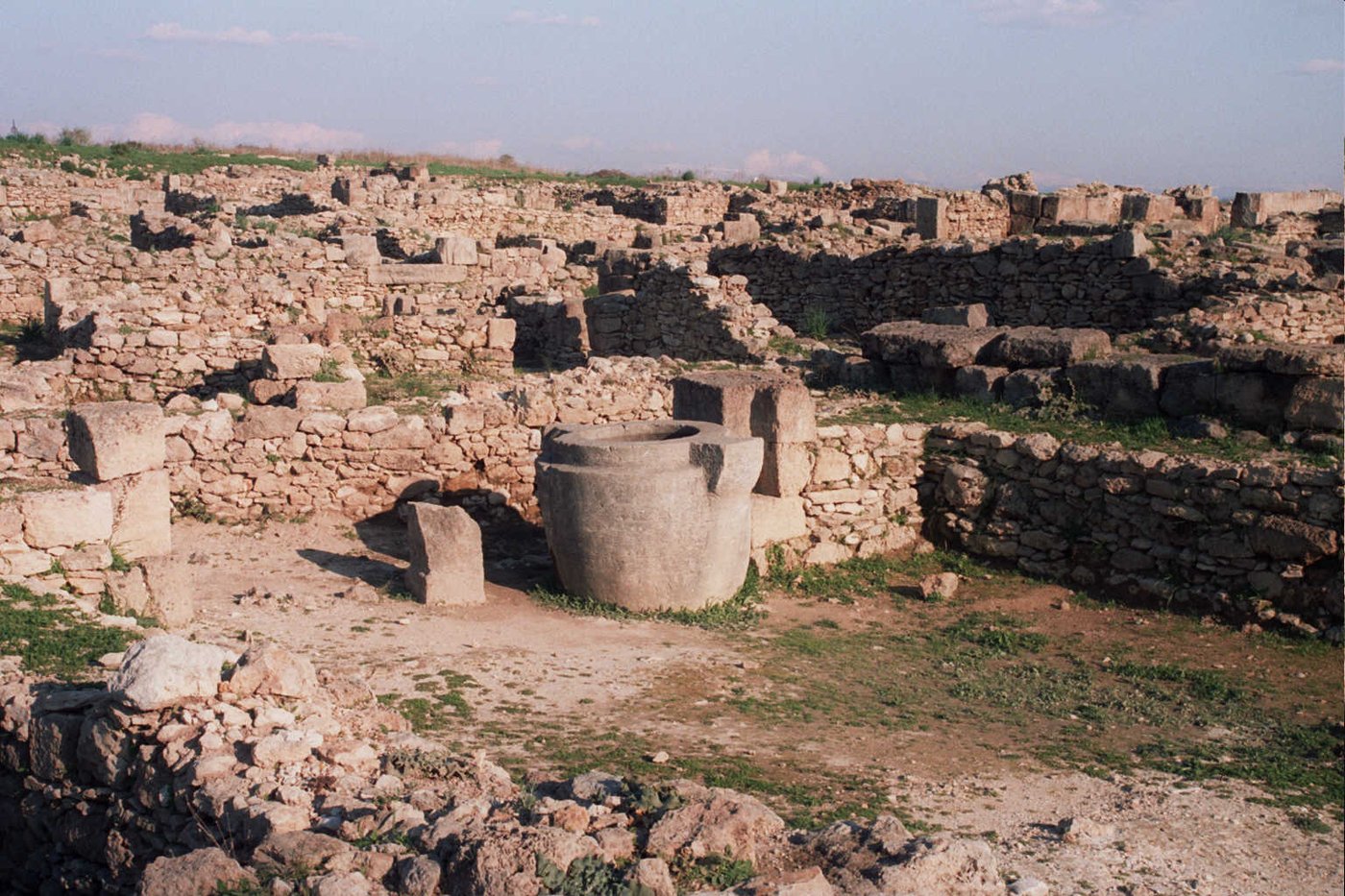
The great trading city of Ugarit, on the Syrian coast, burned around the same time and never rose again. In its ruins archaeologists found a clay tablet, baked hard by the very fire that destroyed the palace, carrying a letter from its final king, Ammurapi, to the ruler of Cyprus: “My father, the enemy's ships came here; my cities were burned, and they did evil things in my country. Does not my father know that all my troops and chariots are in the land of Hatti, and all my ships are in the land of Lukka? The seven ships of the enemy that came here inflicted much damage upon us.” Seven ships were enough to finish a city that had grown rich for centuries. It is the closest thing we have to a voice from inside the collapse: a king asking for help that never came, from a coast that was already gone.
They were on both sides of the war
Here is the detail that breaks the horde story cleanly in half. The Sea Peoples were not only Egypt's enemies. They were also, at various times, its soldiers.
The Sherden are the clearest case. They first appear as sea raiders harassing the Egyptian coast in the reign of Ramesses II, in the early thirteenth century BC. Ramesses beat a group of them, and then hired them. Within a few years Sherden warriors, with their distinctive horned helmets and round shields, were serving as the pharaoh's own bodyguard, and they fought for Egypt at the great battle of Kadesh against the Hittites. The same name that meant “pirate” in one decade meant “royal guard” in the next. These were fighting men for hire, moving where the work and the food were, sometimes attacking a kingdom and sometimes defending it. That is the behaviour of people cut loose from a home, not the army of a nation with a grievance.
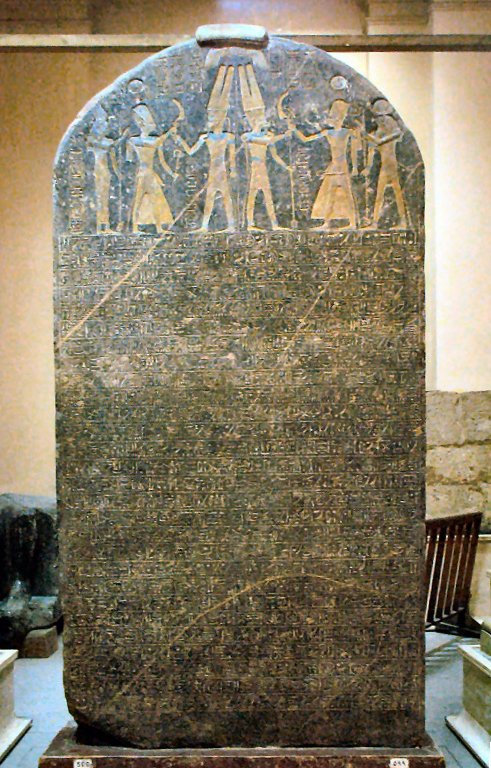
Go back a generation before Ramesses III and the pattern is already there. Around 1208 BC the pharaoh Merneptah faced an invasion of the western Delta: not a sea assault, but a land war led by a Libyan king who had brought allies with him. Merneptah's great inscription at Karnak names those allies, and they are Sea Peoples: Ekwesh, Teresh, Lukka, Sherden, Shekelesh. They came as hired muscle in someone else's war, with their families in tow, trying to force their way into Egypt to settle. The threat did not begin with Ramesses III. It had been building for at least a generation, wave after wave, and each wave looked less like a raid and more like a people trying to get in out of the storm.
A world that was already falling
To understand why so many people were suddenly at sea, you have to look at the world they were leaving. The late thirteenth and early twelfth centuries BC were the end of the first age of international civilisation. Egypt, the Hittite empire in Anatolia, the palace kingdoms of Mycenaean Greece, the merchant cities of the Syrian coast: all of them were bound together by trade in tin, copper, gold and grain, and by a constant traffic of letters between kings who addressed one another as brothers.
Within about two generations, most of it was gone. The Hittite empire dissolved. Mycenaean palaces burned and were not rebuilt; the very art of writing was lost in Greece for centuries. City after city along the eastern Mediterranean shows a layer of ash and then either silence or a poorer, thinner settlement on top. The causes are still argued, but the leading suspects are a run of severe droughts, failed harvests and famine, earthquakes, and the way a tightly connected trading system can fail all at once when a few links snap. Pull the food out from under a crowded, interdependent world and people do the oldest thing there is. They move, by whatever road is open. For coastal populations, that road was the sea.
Seen against that background, the Sea Peoples stop looking like the cause of the catastrophe and start looking like part of it. They were the collapse in motion: the displaced human wreckage of kingdoms that were dying for reasons that had little to do with them. Some raided because raiding was how you ate when the markets were gone. Some sold their swords. Some just kept sailing, families and oxen and all, until they hit a coast that would either kill them or take them in.
A single, mysterious nation of sea-raiders erupted out of nowhere, swept across the eastern Mediterranean in a coordinated campaign of destruction, wiped out the great Bronze Age powers one after another, and then disappeared as suddenly as it had come.
There was no single nation and no coordinated campaign. “Sea Peoples” is a modern label stuck onto many different groups, drifting and regrouping over decades as the world they came from fell apart around them. They were as often mercenaries and settlers as raiders, and they arrived with their households, not just their weapons. They did not appear from nowhere and they did not vanish; several of them settled down and can be traced for centuries afterwards. They were less the cause of the Bronze Age collapse than its most visible symptom.
The infants in the Ashkelon ground
For a long time the argument stayed stuck, because the Egyptian wall could not be cross-examined and no group of Sea Peoples had left a written account of itself. The breakthrough came not from a temple but from a cemetery, and from the one group of Sea Peoples we can follow after the fighting stopped: the Peleset, who settled the southern coast of Canaan and became the Philistines of the Hebrew Bible.
The Philistines have a bad name that they have never quite lost. In English the word still means a person with no culture, thanks to the Bible's account of them as the crude enemies of the Israelites. But archaeology at their cities, Ashkelon and Ashdod and Ekron and Gath, has been telling a more interesting story for decades. When the Philistines arrive on that coast in the early twelfth century BC, they bring with them pottery, cooking habits, building styles and even food preferences that are not local at all. The pottery in particular is unmistakable: it is made in the style of the Aegean, the Mycenaean Greek world across the sea. Something had crossed the water and put down roots.
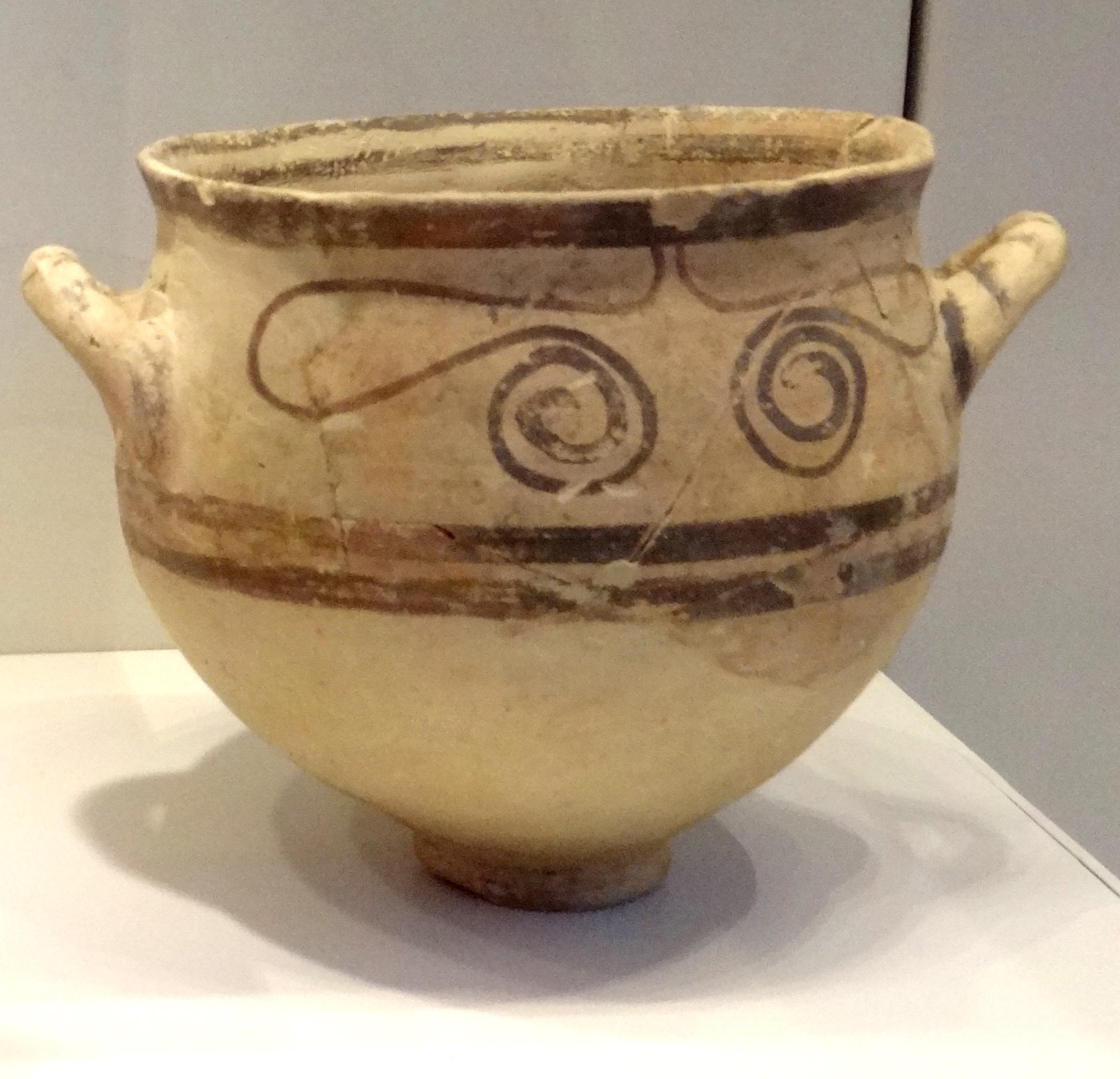
In 2019 a team led by researchers from the Max Planck Institute and the Leon Levy Expedition did what the pottery could only hint at. They recovered ancient DNA from ten individuals buried at Ashkelon across the Bronze and Iron Ages, including infants who had died in the earliest Philistine layers, and they read the genomes. The result, published in Science Advances, was clear. At the moment the Philistines appear, a new strand of ancestry appears with them, ancestry that matches the peoples of southern Europe: Greece, Crete, Sardinia and Iberia. It had not been there in the same soil a few generations earlier. The newcomers really had come from across the Mediterranean, exactly as the pottery suggested and the old texts implied.
There was a second finding, quieter but just as human. Within a couple of generations, that European genetic signal fades and blends back into the local Levantine population. The migrants did not stay a race apart. They married the people already living on the coast, and their descendants became, genetically, Canaanites again, while keeping the Philistine name, gods and culture for centuries. The invasion, at the level of blood, lasted about as long as it takes for strangers to become neighbours.
Not a people, but a moment
So who were the Sea Peoples? The honest answer is that they were never a “who” in the way the question wants. They were a moment: the years when an over-connected world lost its footing and threw people onto the sea in every direction at once. Some of those people came from the Aegean, some from Anatolia, some from the islands, some perhaps from coasts we cannot name because the writing that named them burned. What they shared was not blood or a homeland but a predicament.
That is why the debate about them is so hard to close, and why serious scholars still disagree about the most basic points.
The sharpest open question is how much damage the Sea Peoples actually did. One camp still reads them as a real engine of the collapse: actual fleets that sacked actual cities, Ugarit among them, and tipped a fragile system over the edge. Another camp sees them mainly as refugees swept along by a disaster with deeper roots in drought, earthquake and economic failure, whose reputation as destroyers is largely a gift from Ramesses III's spin doctors. Most historians now sit somewhere in between: not the sole cause, not innocent bystanders, but one strand in a knot of troubles that no single kingdom could survive. The wall at Medinet Habu will not settle it, because the wall was built to win an argument, not to record one.
What has changed is the centre of gravity. A hundred years ago the Sea Peoples were the answer, the reason the Bronze Age ended. Now they are mostly a question, and a mirror. When we look at them we are looking at what happens to ordinary people when the systems that feed and connect them fail: they scatter, they fight, they beg, they take what they can, and they end up remembered by their enemies rather than in their own words.
A word that outlived the ships
The strangest afterlife belongs to the Peleset. They lost, in the sense that mattered to Ramesses: they were turned back from Egypt and pinned to a strip of coast. Then they did the thing that lasts longer than any battle. They stayed. Their name for that coast, Philistia, passed into Greek as Palaistinê and into Latin as Palaestina, and from there it spread across maps and centuries until it became the name of a whole land, still argued over today. A word that the Egyptians carved as the name of a defeated enemy is now the name of a homeland.
Think about that the next time you meet the Sea Peoples as the shadowy villains of the Bronze Age collapse. The most famous of them are not remembered as raiders at all in the place they actually landed. They are remembered as people who arrived by boat with everything they owned, married into the neighbourhood, and left their name on the ground. The horde on the temple wall was, in the end, a great many families looking for a shore. History gave them a fearsome collective name and a bad reputation. The evidence, slowly, is giving them back their humanity.
Read next: The Bronze Age Collapse: When the First Connected World Fell Apart and Hattusa: The Vanished Empire Behind the World's Oldest Peace Treaty.
Sources & further reading
- Eric H. Cline, 1177 B.C.: The Year Civilization Collapsed (Princeton University Press, 2014; revised 2021) — the standard popular account of the collapse and the Sea Peoples' place in it.
- Feldman, M. et al., “Ancient DNA sheds light on the genetic origins of early Iron Age Philistines,” Science Advances 5:7 (3 July 2019) — the Ashkelon genome study.
- Trude and Moshe Dothan, People of the Sea: The Search for the Philistines (Macmillan, 1992) — decades of excavation at the Philistine cities.
- Robert Drews, The End of the Bronze Age: Changes in Warfare and the Catastrophe ca. 1200 B.C. (Princeton University Press, 1993).
- The Epigraphic Survey, Medinet Habu, vols. I–II (Oriental Institute, University of Chicago) — the definitive publication of the reliefs and inscriptions of Ramesses III.
- The letter RS 20.238 of Ammurapi of Ugarit, in J. Nougayrol et al., Ugaritica V (1968) — the “seven ships” tablet.
Image credits (via Wikimedia Commons): Sea Peoples warrior at Medinet Habu — Oltau (CC BY-SA 4.0); captive Peleset and Tjeker — drawing after Arthur Evans (public domain); the Merneptah Stele, Cairo — Webscribe (CC BY-SA 3.0); the ruins of Ugarit — Loris Romito (CC BY-SA 3.0); Philistine pottery — Hanay (CC BY-SA 3.0). Featured image: the sea battle relief of Ramesses III at Medinet Habu, epigraphic drawing (public domain).