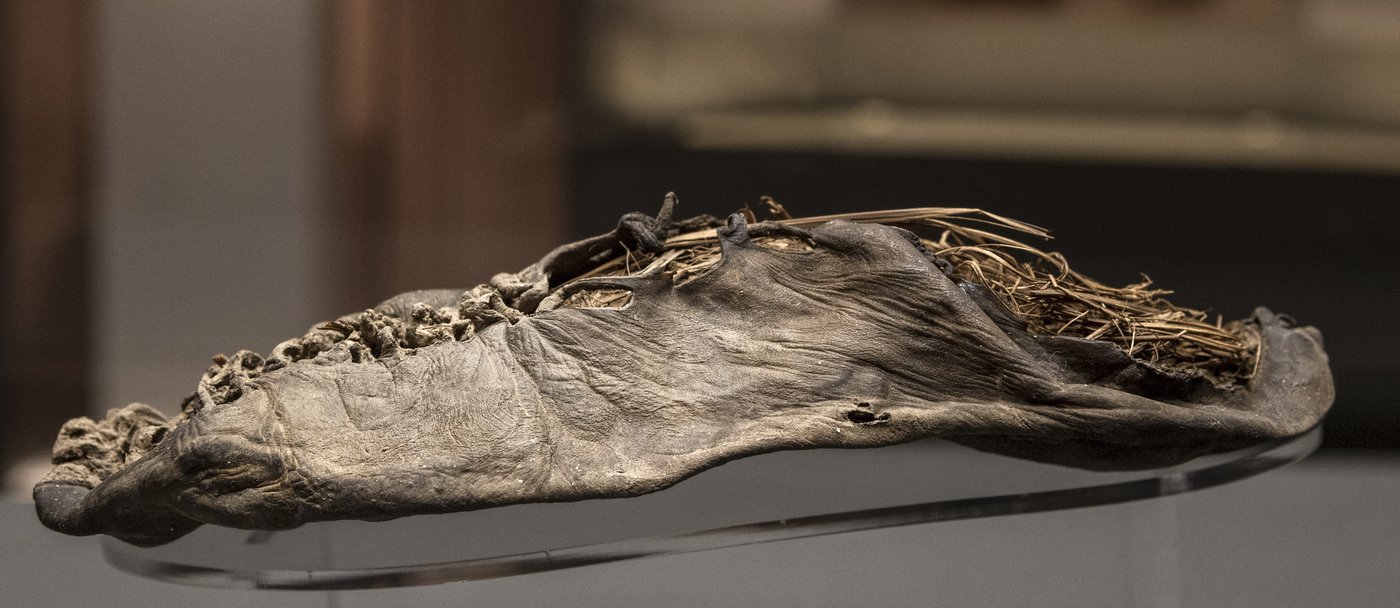
In September 2008, an archaeology student working in a cave in southern Armenia lifted something out of the dirt that did not belong in a Copper Age trench. It was a shoe. Not a fragment of one, not a print pressed into clay, but a whole shoe: a single fold of soft brown leather, laced across the top, worn down at the heel and moulded to the shape of a right foot. It had been stuffed with dry grass to hold its form. The grass was still inside. The leather still bent. When the radiocarbon results came back, the shoe turned out to be about five and a half thousand years old, which made it older than the pyramids at Giza and older than the standing stones of Stonehenge, and made the person who once tied it into a stranger separated from the student by more than two hundred human generations.
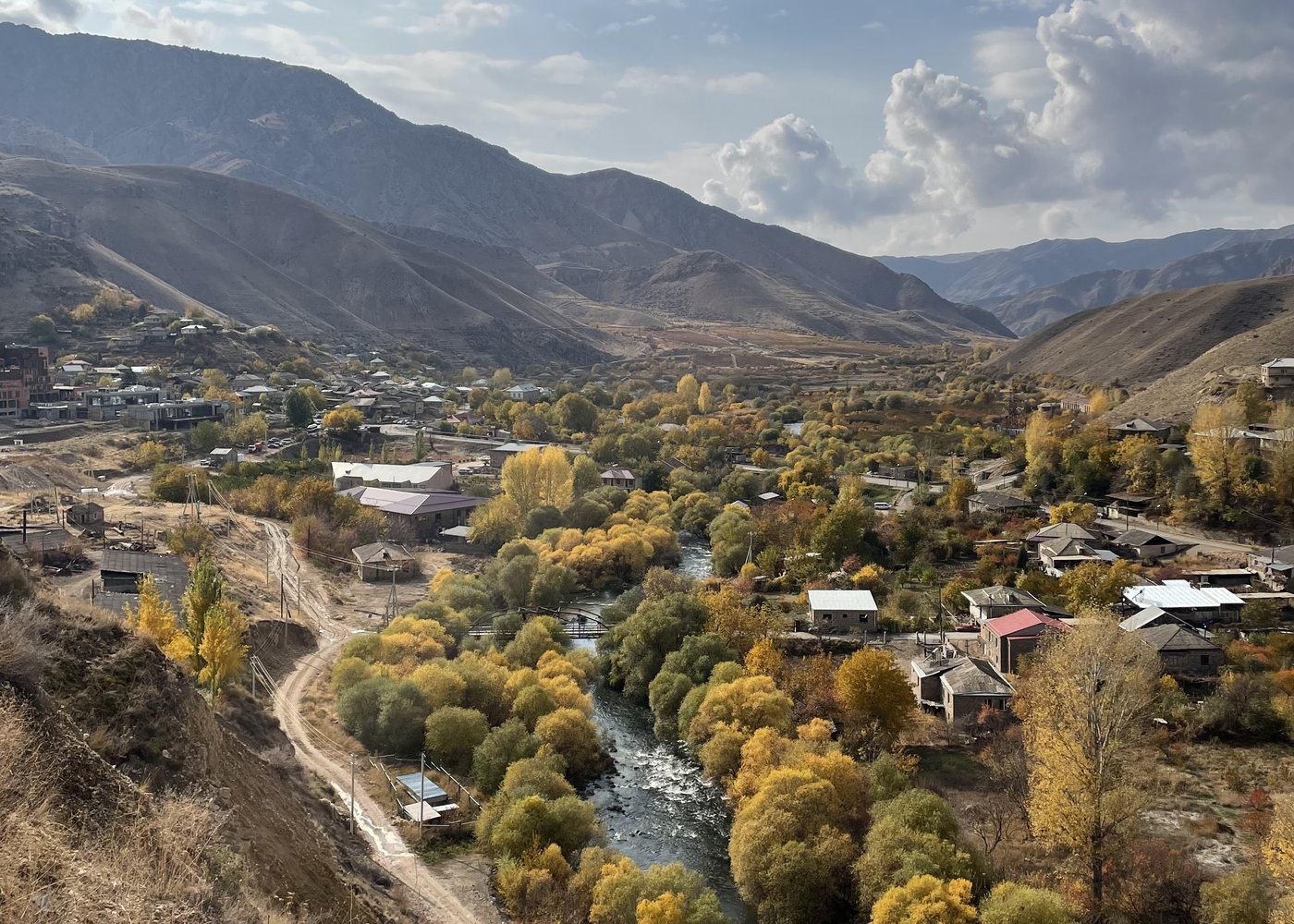
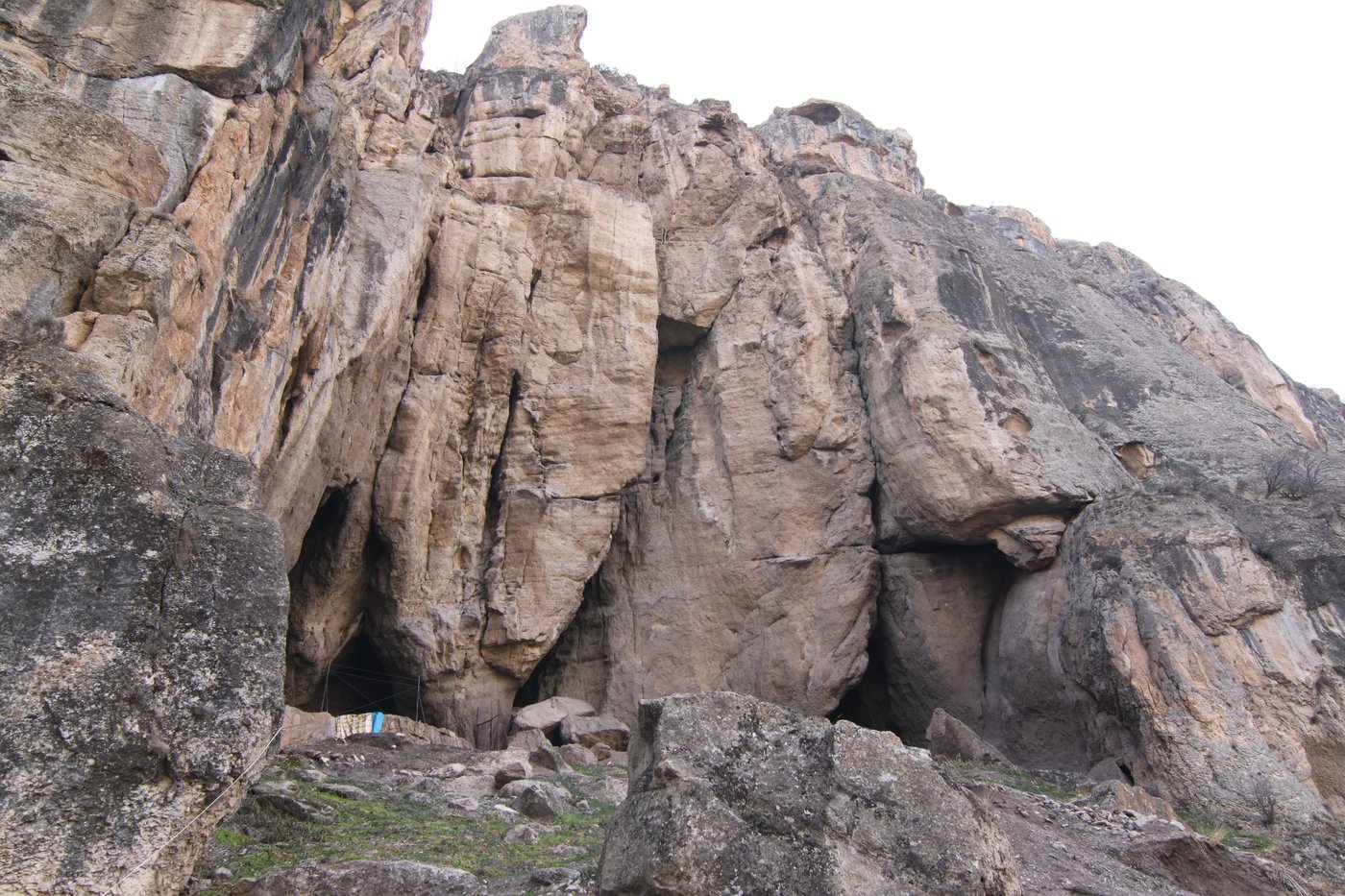
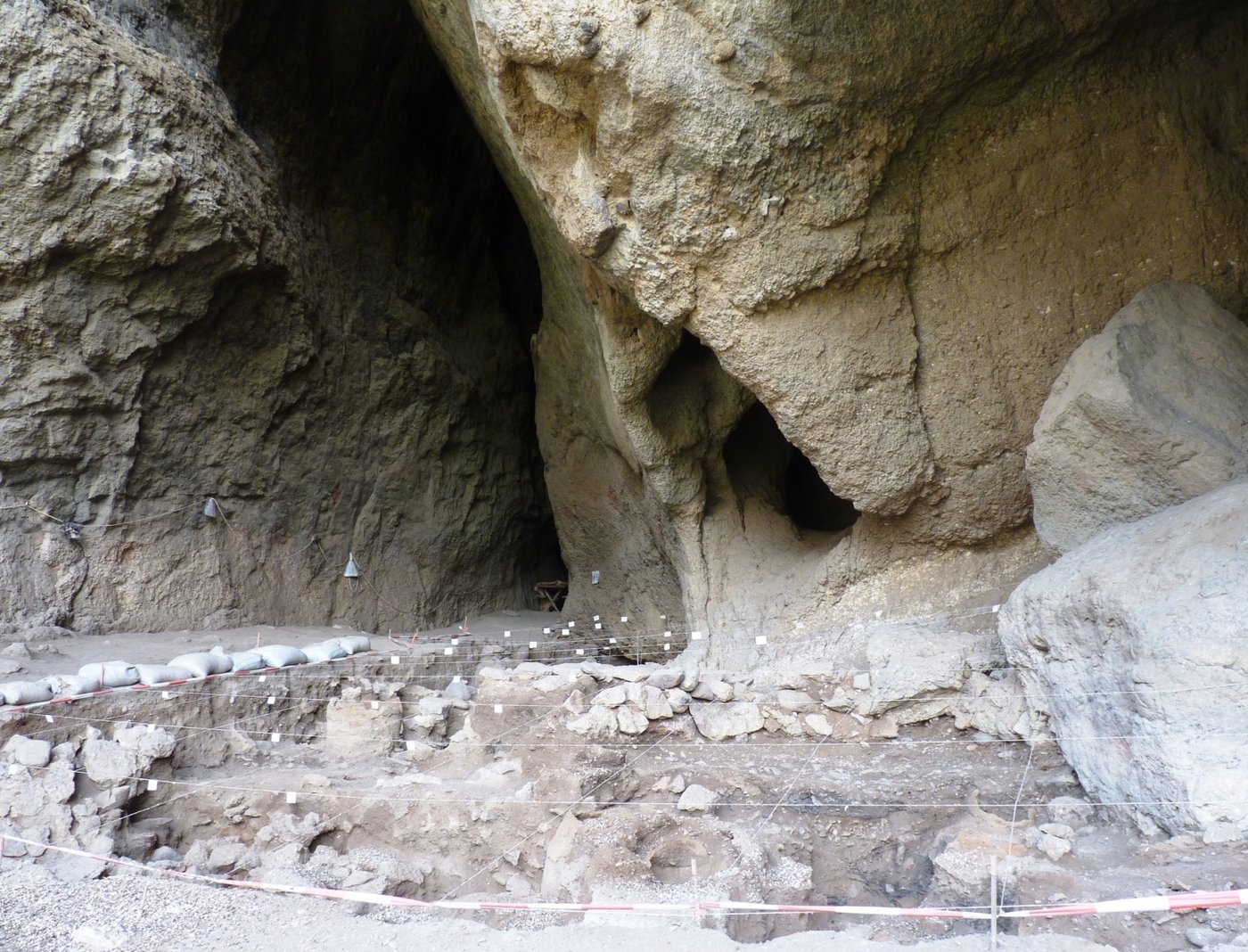
The cave is called Areni-1, after the village of Areni in the Vayots Dzor province, and it sits in a limestone cliff above a bend of the Arpa river. Locals have long known it as the Birds’ Cave, for the swifts and pigeons that nest in its mouth. What no one knew until recently was that the same dry air keeping the birds comfortable had been preserving the leftovers of a village that used the cave six thousand years ago: their footwear, their food, their wine-making floor, and, in the dark at the back, their dead. The shoe was only the find that made headlines. It was not the strangest thing the cave gave up.
A gorge, a river, and a hole in the rock
Vayots Dzor is a hard, folded country of red cliffs and thin rivers in the south of Armenia, close to the border with the Nakhchivan exclave. The Arpa cuts through it, and where the road runs beside the water there is a low band of caves in the rock. Areni-1 is one of them: three connected chambers reaching back into the cliff, dry and cool, with a single wide entrance that lets in light and keeps out rain.
Excavation there began in 2007, led by an Armenian, Irish and American team under Boris Gasparian, Ron Pinhasi and Gregory Areshian. They were not expecting much. Caves near villages are usually disturbed, dug over by treasure hunters or fouled by centuries of penned animals. Areni-1 had indeed been used as a stock pen, and that turned out to be what mattered. Herders had driven sheep and goats into the mouth of the cave for thousands of years, and the animals had left behind a deep, trodden carpet of dung. That carpet did something no archaeologist could have arranged on purpose. It sealed the older layers underneath like a lid on a jar.
Below the dung, the diggers found floors that had barely been touched since the fourth millennium BC. This was the Chalcolithic, the Copper Age, a long stretch before writing reached this part of the world, before the wheel was common, before bronze. People here lived in villages, kept animals, grew grain and fruit, and worked copper. Most of what we know about them comes from their pottery and their bones, because almost nothing else survives that long. At Areni-1, for once, the perishable things had not perished.
The shoe that fit a right foot
Consider what a shoe has to survive to reach us. Leather is skin, and skin is food for bacteria and fungi and time. In an ordinary grave a leather shoe is gone within a few centuries, leaving at most a stain or a metal buckle. To find one intact from the Copper Age is like finding a snowball that has kept its shape through a summer.
The Areni-1 shoe is a moccasin, in the plain sense of the word: one piece of tanned cowhide, cut and folded around the foot and drawn together with a leather thong that ran through slits along the top and around the heel. It is 24.5 centimetres long, which is roughly a modern European size 37 or a small women’s shoe today, though it may well have been worn by a man; feet were smaller then. It was shaped to a right foot and worn enough to have taken the print of its owner’s stride. Inside it, packed tight, was dried grass.
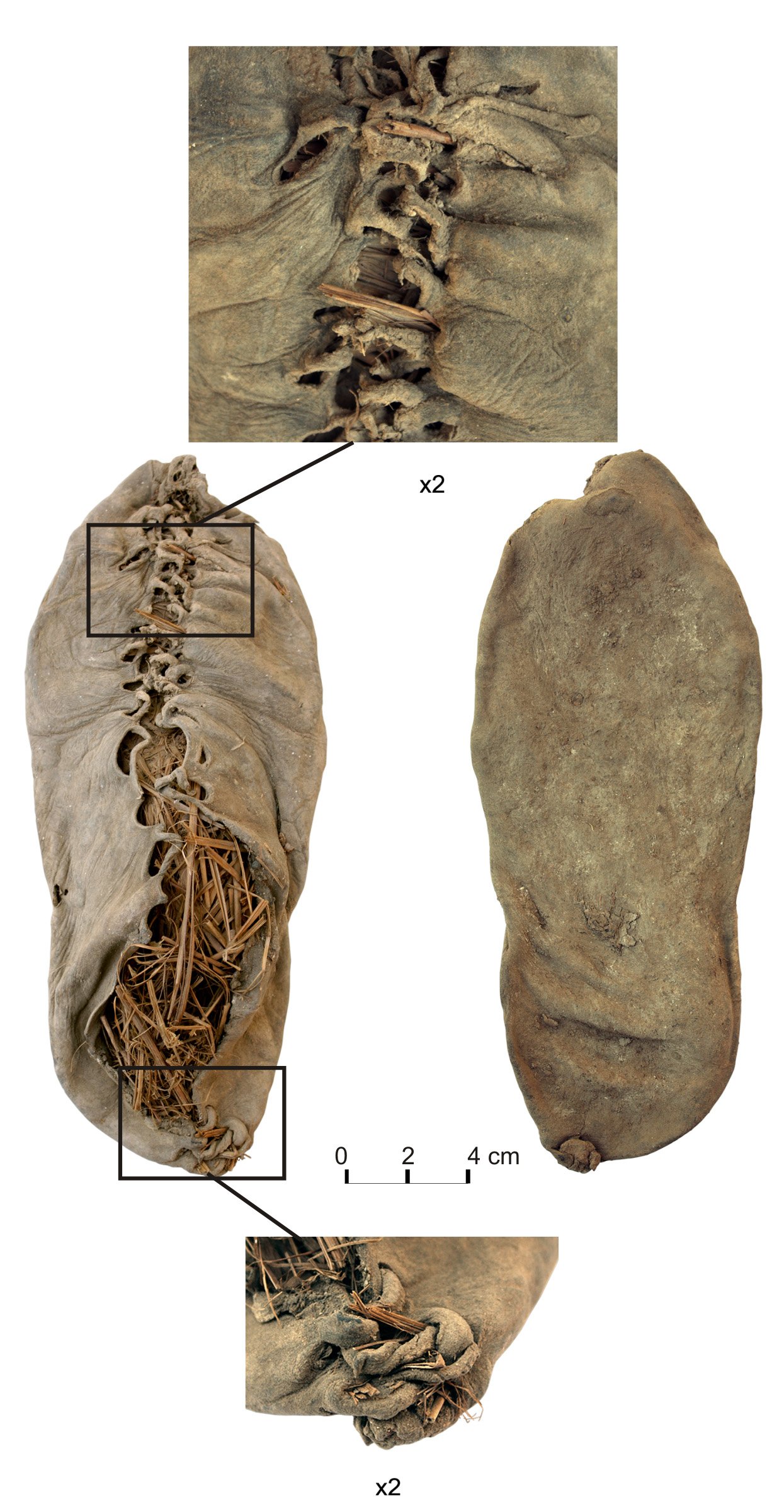
Nobody can say for certain why the grass was there. It might have been stuffing to keep the shoe’s shape while it sat unused, the way we crumple paper into boots today. It might have been insulation against the cold, or the beginnings of a lining. What matters is that the grass, being plant matter of a known kind, could be dated on its own, quite apart from the leather, and it gave the same answer. Two materials, two clocks, one age.
The shoe was stuffed with meadow grasses, packed firmly from toe to heel. There is no sign of wear on the grass, so it was probably put in after the shoe stopped being worn, to hold the leather open and stop it curling as it dried. It is a small, familiar gesture. Whoever did it was tidying a shoe away for later, exactly as you might, and then, for reasons lost to us, the shoe was never worn again.
How a shoe outlives a civilisation
Preservation like this is not luck alone; it is chemistry and shelter working together. Areni-1 has a stable, dry microclimate. The temperature barely shifts across the year, the humidity stays low, and water does not pool on the floors. Bacteria and moulds, which need moisture to do their slow work, simply cannot get started. In that sense the cave behaves less like a grave and more like a larder.
On top of the dryness came the seal. The thick, hard-packed layers of sheep and goat dung that later herders left across the cave floor dried into a crust, capping the Copper Age deposits and cutting them off from air and disturbance. The very thing that would make most archaeologists groan, a cave full of animal muck, is why the shoe and the grass and everything around them came through the millennia so well. The find was protected by exactly the mess that usually destroys such sites.
The age was not a guess. Samples of the leather and the grass were sent to the Oxford Radiocarbon Accelerator Unit and to the University of California, Irvine. Both returned dates in the range of roughly 3627 to 3377 BC. Because the leather and the grass are different materials that would have to be faked or contaminated in exactly the same way to agree by accident, the match is what gives the result its weight. The team published the shoe in the journal PLoS ONE in 2010.
A winery under the same roof
The shoe was famous for a year. Then the same cave produced something that mattered more to the history of how people live. In a chamber not far from where the footwear lay, the team uncovered a shallow clay basin, about a metre across, its floor sloped and pressed smooth, draining towards a deep buried jar. Around it stood more large vessels. In and near them were grape pips, dried grape skins, the pressed remains of whole bunches, and the desiccated stems that hold a cluster together.
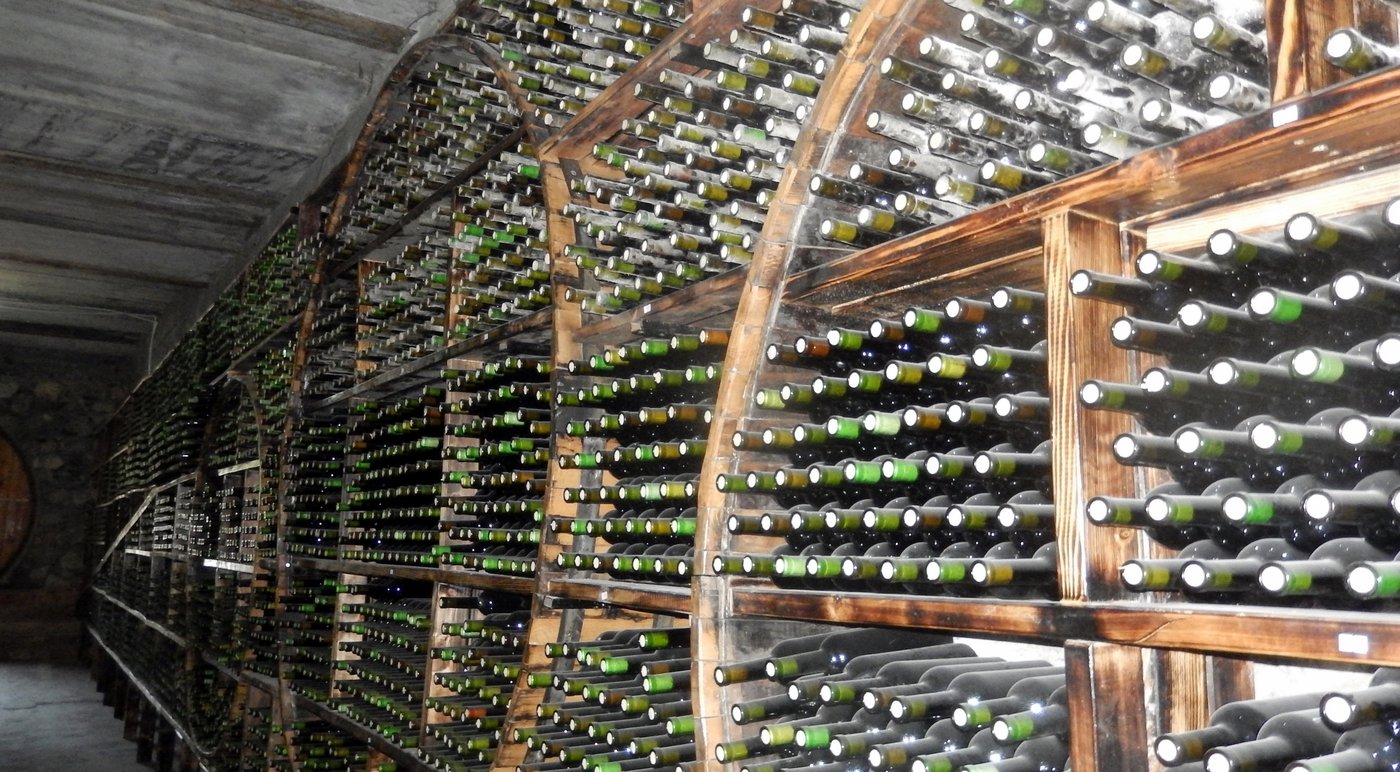
Put the pieces together and the basin explains itself. People stood in it and trod the grapes; the juice ran down the slope into the jar below; and there, out of the air, it fermented into wine. Chemical tests on the pottery found tartaric acid, the signature acid of grapes, and malvidin, the pigment that gives red wine and red grapes their colour. This was not a store of table grapes. It was a place where wine was made, from domesticated vines, around 4000 BC. No older winemaking set-up has been found anywhere as a complete, working whole.
The claim: Areni-1 is where wine was invented, the oldest wine in the world.
The reality: there is chemical evidence for grape wine well before 4000 BC; a pottery jar from Hajji Firuz Tepe in Iran, for instance, held wine residue two thousand years earlier. What makes Areni-1 unique is not the drink but the plant. It is the oldest known winery: the pressing floor, the fermentation vat and the cups, all found together, showing not just that people drank wine but that they had worked out how to make it on purpose and at scale.
Wine, and the dead it was poured for
Why make wine inside a cave, and not in the village outside where people actually lived? The answer seems to lie a few steps further into the dark. The winemaking area sat close to a cluster of graves. Drinking cups were found near them. The likeliest reading is that this wine was not everyday refreshment but something poured for the dead: made in a place set apart, drunk in the presence of burials, part of whatever these people did to mark the end of a life.
That would fit the cave’s whole character. Areni-1 was not a house. It was a place people came to for particular purposes: to press wine, to store things, and to bury a few of their children with care in the cool dark. A cave that keeps a steady temperature and stays dry is a good cellar. It is also, for the same reasons, a good tomb.
The skulls at the back of the cave
In the deeper chambers the excavators found human burials, and among them three ceramic vessels, each holding the skull of a child between roughly six and sixteen years old. The skulls had been placed in the pots deliberately. Why only the heads, and why these children, no one can say. But it is one of them that gave the cave its eeriest discovery.
Inside one of the skulls, researchers found preserved brain tissue. Not a fossil, not a cast, but the shrivelled, actual remains of a child’s brain, close to six thousand years old: among the oldest human brain matter ever recovered. Analysis picked up traces of proteins linked to blood, which some have read as a sign of a wound or a blow before or around the time of death. It is thin evidence for so heavy a conclusion, and it may never firm up. What is certain is the tissue itself, sitting in a Copper Age skull, in a pot, in a cave, kept by the same dry stillness that had held the shoe.
Soft tissue is meant to be the first thing to go. That a child’s brain survived nearly six thousand years is remarkable even for a cave this dry, and researchers are still working out the exact chemistry that allowed it. The low, steady humidity clearly matters, and there are hints that the tissue was chemically altered in ways that helped it last. The proteins that suggest injury are real but hard to interpret; blood-related molecules can appear for more than one reason. The safest thing to say is that the cave preserved a piece of a person we can barely read, and left most of the story out.
What else the dust kept
Once you accept that Areni-1 does not throw its organic things away, the rest of the inventory reads like a list nobody expected to be able to write about the Copper Age. A skirt woven from straw, worn and knotted, thought to be the oldest of its kind. Dried apricots and other fruit. Bundles of cord and rope. Seeds, husks and stems by the thousand. The withered body of a goat. Reeds, and baskets, and the small refuse of ordinary work.
None of these things is spectacular on its own. That is exactly why they matter. Almost everything we usually know about people this old is made of the hard leftovers (stone, bone, fired clay), the parts of life that happen to be indestructible. The soft, daily world of clothes and food and containers, the world people actually touched, is normally gone without trace. Areni-1 handed a slice of it back. You can hold, in your mind, a village that trod grapes and dried apricots and tied children’s heads into pots and stuffed grass into a shoe to keep it in shape for a wearing that never came.
The size of an ordinary life
The pyramids tell you about kings. The great tombs tell you about wealth and power and the fear of death among people who could afford to spend a nation on it. Areni-1 tells you about a foot. It tells you that six thousand years ago somebody with a right foot slightly larger than their left laced up a soft leather shoe, wore it until the heel gave, packed it with grass, and set it aside. It tells you they made wine, buried their young, and lived a life whose shape we would half recognise.
The famous finds from the ancient world are mostly about permanence: the monuments built to outlast everyone. The cave in Vayots Dzor got its immortality by accident, under a crust of dung, in the dark, saving the things nobody meant to save. What it leaves behind is not a wonder. It is the far rarer thing: the ordinary, kept.
Read next: Tollund Man: The Bog Body Still Wearing the Noose That Hanged Him and Plain of Jars: The Stone Urn in Laos That Held 37 People.
Sources & further reading
- Ron Pinhasi, Boris Gasparian, Gregory Areshian and colleagues, “First Direct Evidence of Chalcolithic Footwear from the Near Eastern Highlands,” PLoS ONE (2010) — the paper announcing the shoe.
- Hans Barnard, Gregory Areshian, Boris Gasparian and colleagues, “Chemical evidence for wine production around 4000 BCE in the Late Chalcolithic Near Eastern highlands,” Journal of Archaeological Science (2011).
- “Earliest Known Winery Found in Armenian Cave,” National Geographic (2011).
- UNESCO World Heritage Centre, Tentative List: “Areni-1 (Birds’) Cave: Prehistoric Life and Winemaking in the Arpa River Gorge.”
- Boris Gasparian and colleagues, reports on the Areni-1 cave excavations, for the burials, the skull vessels and the preserved brain tissue.
Image credits (via Wikimedia Commons): the Areni-1 leather shoe — David Castor (CC0); the Arpa valley at Areni — Dor Shabashewitz (CC BY 4.0); the cave entrance — Serouj (CC BY 3.0); the shoe as excavated — Pinhasi R, Gasparian B, Areshian G et al., PLoS ONE (CC BY 2.5); the winemaking basin and vat — Armineaghayan (CC BY-SA 4.0); the cave interior — Kiwiodysee (CC BY-SA 3.0). Featured image: the Areni-1 shoe — David Castor (CC0).