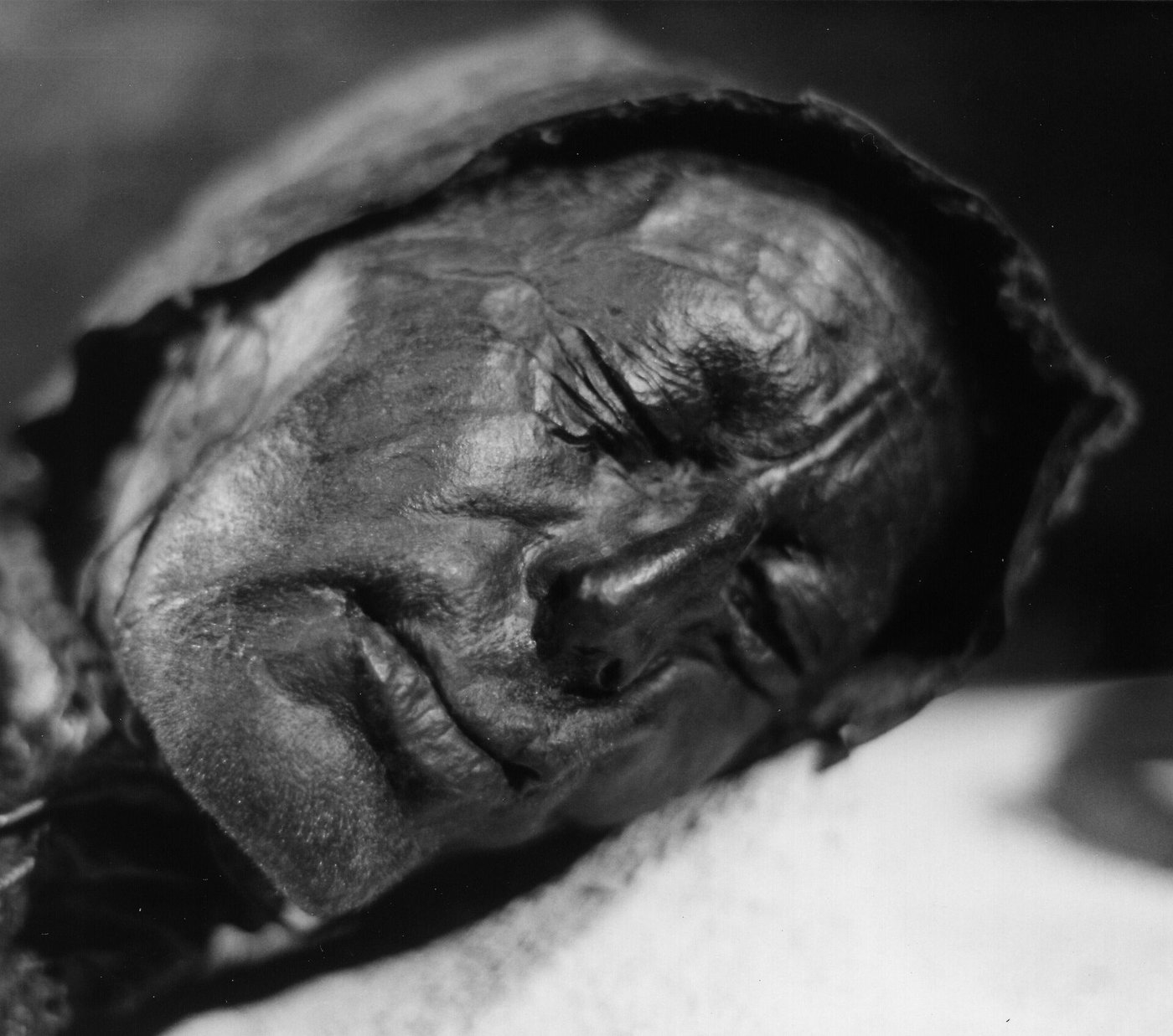
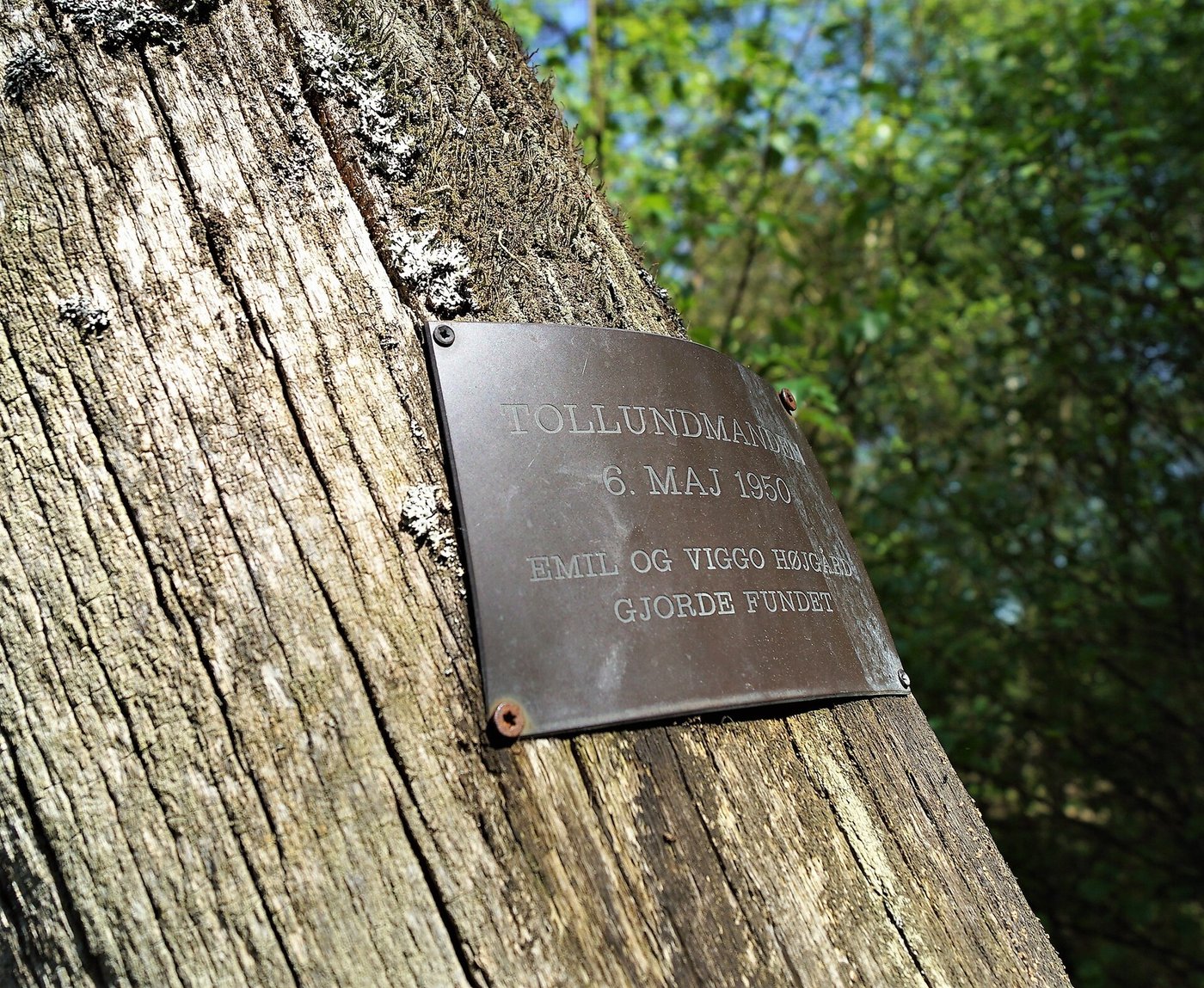
On the morning of 8 May 1950, two brothers cutting peat in a small bog west of Silkeborg leaned on their spades and looked down at a man’s face. It was calm, the eyes shut, a day or two of stubble on the chin, and it lay so near the surface that their first thought was not archaeology but murder. They sent for the police. A local boy had vanished years before, and for a while people stood around the black trench half-expecting to have found him. The face was older than that. It was older than Denmark, older than the Danes, older than the Latin name for the country. The man had lain in the peat for roughly two thousand four hundred years, and around his neck was the rope that had killed him.
He is called the Tollund Man, after the hamlet nearest the bog, and he is the reason a great many people who have never been to Jutland can picture the face of a stranger who died in the fourth century BC. Photographs of that face have been printed in schoolbooks across Europe. It is not a skull and it is not a mummy in the Egyptian sense. It is skin and stubble and closed eyelids, a man who looks less dead than deeply, unreachably asleep. How he came to be lying in a bog, why someone put a noose on him first, and how the ground held on to him for so long are three separate puzzles, and the bog answered them in a strange order.
The brothers, the police and the professor
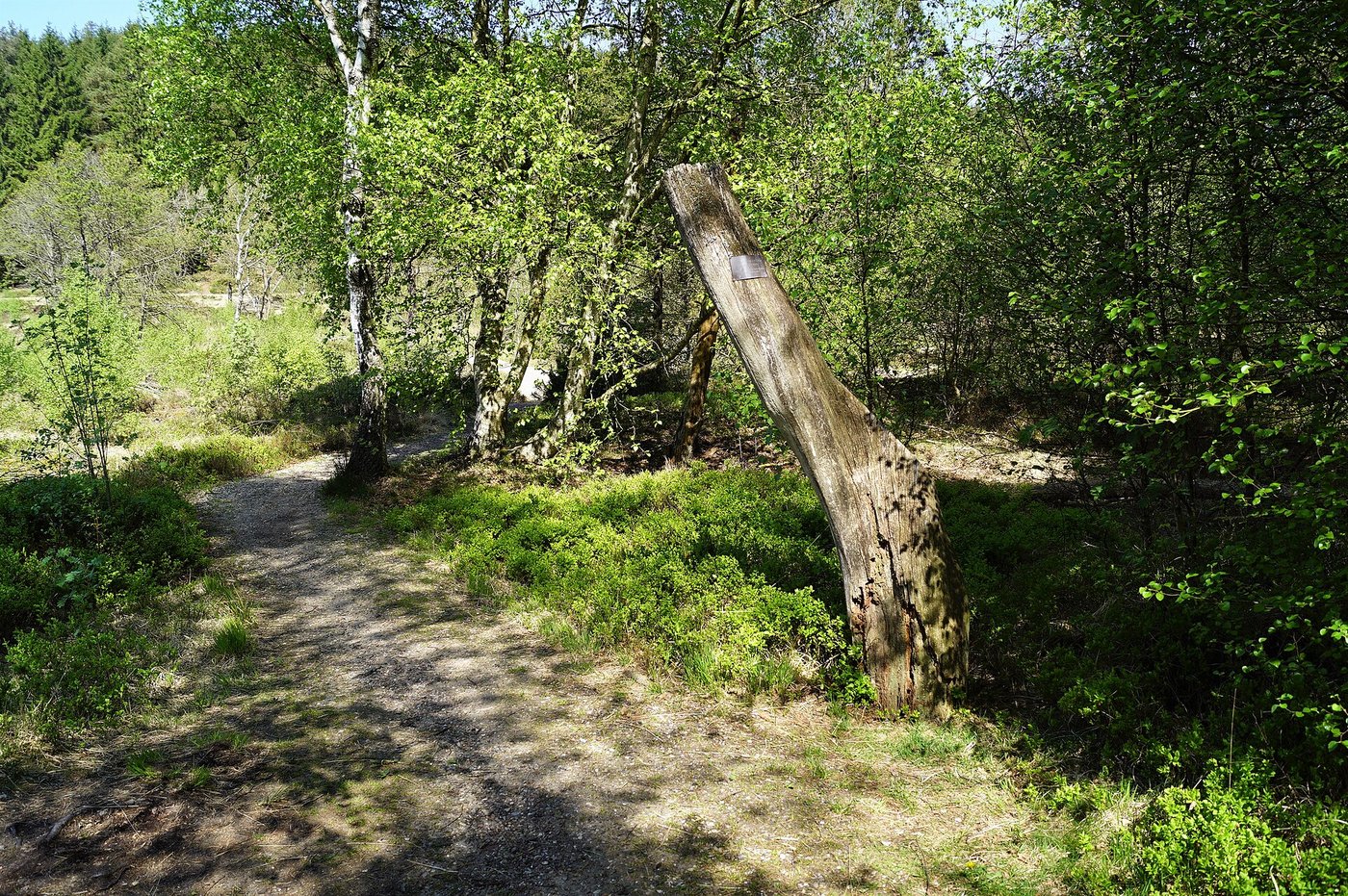
The place is called Bjældskovdal, a stretch of low peat land about ten kilometres out from Silkeborg in central Jutland. The brothers, Viggo and Emil Højgaard, were digging fuel, the way families in the district had done for generations, cutting the wet peat into bricks to be dried and burned. Two metres down, well below the reach of anything modern, the spade came up against a body lying on its side with its knees drawn up, as though it had settled down to rest and simply stayed.
Because the flesh was intact, the police treated the find as a possible crime and only slowly let go of the idea. Word reached the museum in Silkeborg, and from there it reached Peter Vilhelm Glob, a young archaeologist at Aarhus who would spend a good part of his life with the bog people. Glob came out, looked at the man in the trench, and recognised at once that this was not a recent death but an ancient one: the peat around him, the tools, the setting all pointed back into prehistory. He had the body lifted in a single block of peat, boxed, and carried off to be studied. The block was heavy, the work was hard, and one of the men helping to shift it out of the bog collapsed and died of a heart attack, a modern death folded, by chance, into the recovery of a very old one.
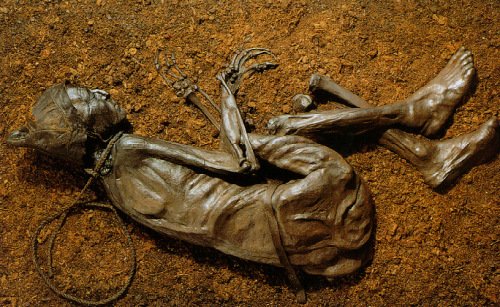
What Glob and the National Museum in Copenhagen had on their table was a nearly whole human being from the pre-Roman Iron Age: a man of perhaps thirty to forty, a little over one and a half metres tall, lying curled on his right side. The soft parts had gone the colour of the peat, a deep tanned brown. The eyes were closed and the mouth was set in something close to peace. And drawn tight around the throat, then trailing down the back, was a rope of plaited leather.
Why the bog kept him
A bog is not a neutral grave. It is a slow chemical bath, and its recipe decides what survives. Sphagnum moss, the plant that builds a raised bog, releases acids as it grows and dies, so the water is sour, close to the acidity of vinegar in places. The moss also packs down into a dense, waterlogged mat that shuts out oxygen. Cold, acid and airless: three conditions that between them stop the ordinary business of rot almost dead, because the bacteria that break a body down cannot work without air and cannot thrive in acid.
There is a further trick, and it is particular to sphagnum. As the moss decays it gives off a large sugar-like molecule (researchers call it sphagnan) that grabs on to nitrogen and effectively tans skin from the outside in, the way an oak-bark pit tans leather. Hair, skin, nails, the tough tissues rich in protein: these the bog preserves, often beautifully. What it does not keep is bone. The same acids that pickle the skin dissolve the calcium out of the skeleton, so that many bog bodies, the Tollund Man among them, end up soft-boned or almost boneless, a tanned hide holding a shape the frame no longer supports.
The leather noose was still knotted when he was lifted, and it had pressed a clear furrow into the skin under the chin and up the sides of the neck. The telling detail is where the furrow stops: it fades at the nape, at the back of the neck, exactly where a hangman’s knot would sit and take the weight. That pattern, deep at the front and sides and absent behind, is what a rope does when a body hangs from it, and it is different from the even, all-round mark of a garrote used to strangle someone on the ground. Later examination of the neck found changes consistent with hanging rather than throttling. It is one of the few things about his death that can be read almost directly off the body.
What he was wearing, and what he was not
For a man about to be shown to strangers for the next several thousand years, he was dressed very simply. On his head sat a pointed cap of skin, sheep and perhaps goat, worn with the fur turned inward and fastened under the chin by a hide thong. Around his waist was a smooth hide belt. That was all. He wore no tunic, no cloak, no shoes; whatever he had on when he died had either been taken off him or had not survived, though the cap and belt came through the centuries in good order. A naked man in a leather cap is not how anyone in Iron Age Jutland dressed to go about the day, and the plainness has always seemed deliberate, a stripping-down rather than an accident of preservation.
The face carried its own small human details. There was stubble on the chin and upper lip, a few days’ growth, which tells you he had been shaving or trimming and had stopped, or had simply not been tended in his last days. The bog acids had dyed his hair a reddish brown; whatever colour it had been in life, the peat has the final say on that. Under the cap the hair was cropped short. These are the things that make people stand quietly in front of the case in Silkeborg: not the fact of an ancient death, but the ordinary grooming of a particular man who had a particular morning, once.
His last meal, read from the inside
One of the strangest gifts a bog body can give is a stomach. Because the gut and its contents are soft, protein-rich tissue, the bog preserves them along with the skin, and that means the last meal of a man dead since the fourth century BC can be laid out on a bench and sorted seed by seed. When the Tollund Man was first studied, the contents of his stomach and intestines were examined and found to be a porridge or gruel: no meat, no fruit, just a mash of grain and the seeds of wild plants of the fields.
A fresh study in 2021, led by Nina Nielsen at the Silkeborg Museum, went back through the gut with modern methods and set the menu out in detail. His final meal, eaten perhaps twelve to twenty-four hours before he died, was a porridge built mainly on barley, with the seeds of pale persicaria and flax and a scatter of other field weeds, and there were traces of fish as well. Mixed in was chaff and other threshing waste (the sweepings of the barn floor), which may be ordinary Iron Age thrift or may point to something done for the occasion. The same analysis turned up the eggs of intestinal parasites, whipworm and others, so like most people of his age he was carrying worms. There was no summer fruit or green leaf in the mix, which points to a death in the cold months, in winter or early spring.
Nothing in the meal is exotic. That, oddly, is the point that has stayed with researchers: a man who was about to be killed with some care ate the same plain porridge as everyone else, at an ordinary interval before the end. Whatever was done to him was not preceded by a feast or a fast that left a mark. He was fed, and then, most of a day later, he was taken out and hanged.
A gift laid in the bog
Why kill a man and then put him gently in the ground, eyes closed, in a place chosen for its wetness? The answer most archaeologists reach for is sacrifice. Northern European bogs of this period are full of things deliberately given up to them: swords bent double so no one could use them again, cauldrons, ornaments, whole wagons, animals, and pots of food. A bog was a threshold, neither solid land nor open water, and across the Iron Age it seems to have been treated as a doorway to whatever powers were thought to live below. A body laid there was, on this reading, the most valuable kind of offering.
There is a written scrap that fits, though it must be handled with care. Around AD 98 the Roman writer Tacitus described the tribes across the Rhine in his book Germania, and he wrote of a goddess he called Nerthus, an earth mother carried in a covered wagon, whose rites ended with slaves being drowned in a lake. He also wrote, in a different passage, that certain offenders (cowards, deserters, the disgraced) were pressed down into the mud of a bog under a hurdle. Tacitus was a Roman describing peoples he had never lived among, and his account is second-hand and shaped to a Roman moral. But it shows that the idea of the bog as a place for both sacred death and shameful death was known to outsiders, and it gives two rival frames for what happened at Bjældskovdal.
The bog bodies were executed criminals and outcasts: murderers, thieves and cowards put to death and thrown into the swamp to be rid of them, the Iron Age equivalent of an unmarked grave.
Some bog bodies may indeed be punished offenders, and Tacitus makes the idea plausible. But the Tollund Man was not thrown away. He was laid on his side with his knees drawn up and his eyes and mouth closed, as if arranged for sleep. Someone posed him. He had eaten a normal meal not long before. The hanging looks deliberate and controlled rather than frenzied. Casual disposal of a hated criminal does not usually come with a tidy, gentle burial. The weight of the evidence, most researchers now think, leans towards a chosen victim given to the bog on purpose, though the honest position is that we cannot climb inside the heads of the people who did it, and a single body cannot settle a debate that ranges across dozens of finds.
What tips many specialists towards sacrifice rather than punishment is exactly that arranging of the body. A community disposing of a shameful death has little reason to close the dead man’s eyes. Someone at Bjældskovdal did. It is a small, deliberate act of tenderness at the end of a killing, and it does not sit easily with contempt.
The head they could save, the body they could not
Here the story turns, because the man who is so famous for being almost perfectly preserved is, in truth, only partly the original. In 1950 nobody in Denmark had ever fully conserved a bog body, and the techniques to keep waterlogged tissue from shrinking and cracking as it dried barely existed. The conservators made a hard choice. They could not save all of him with what they had, so they concentrated on what mattered most: the head.
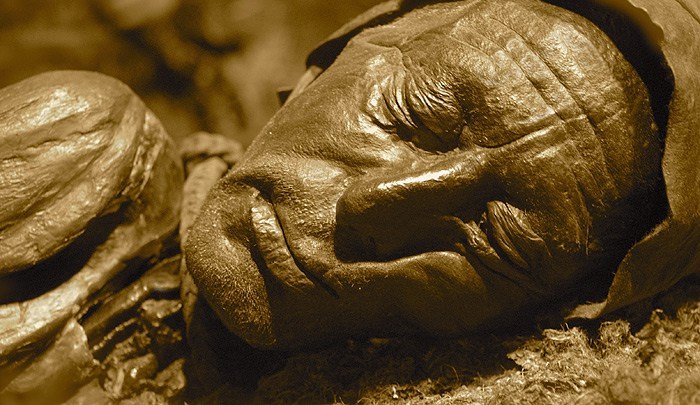
The head was steeped for months in a series of baths that slowly replaced the bog water with waxes and preservatives, so that it kept its shape as it dried. The feet and a thumb were saved as well. The rest of the body could not be treated to the same standard and shrank badly. What visitors see below the neck today, when the Tollund Man lies curled in his case at the Silkeborg Museum, is largely a careful reconstruction built to carry the original head and to show the pose he was found in. The most photographed face in European prehistory sits on a body that is mostly modern craft, a fact the museum has never hidden, and one that makes the survival of the face itself all the more remarkable.
He was not alone down there
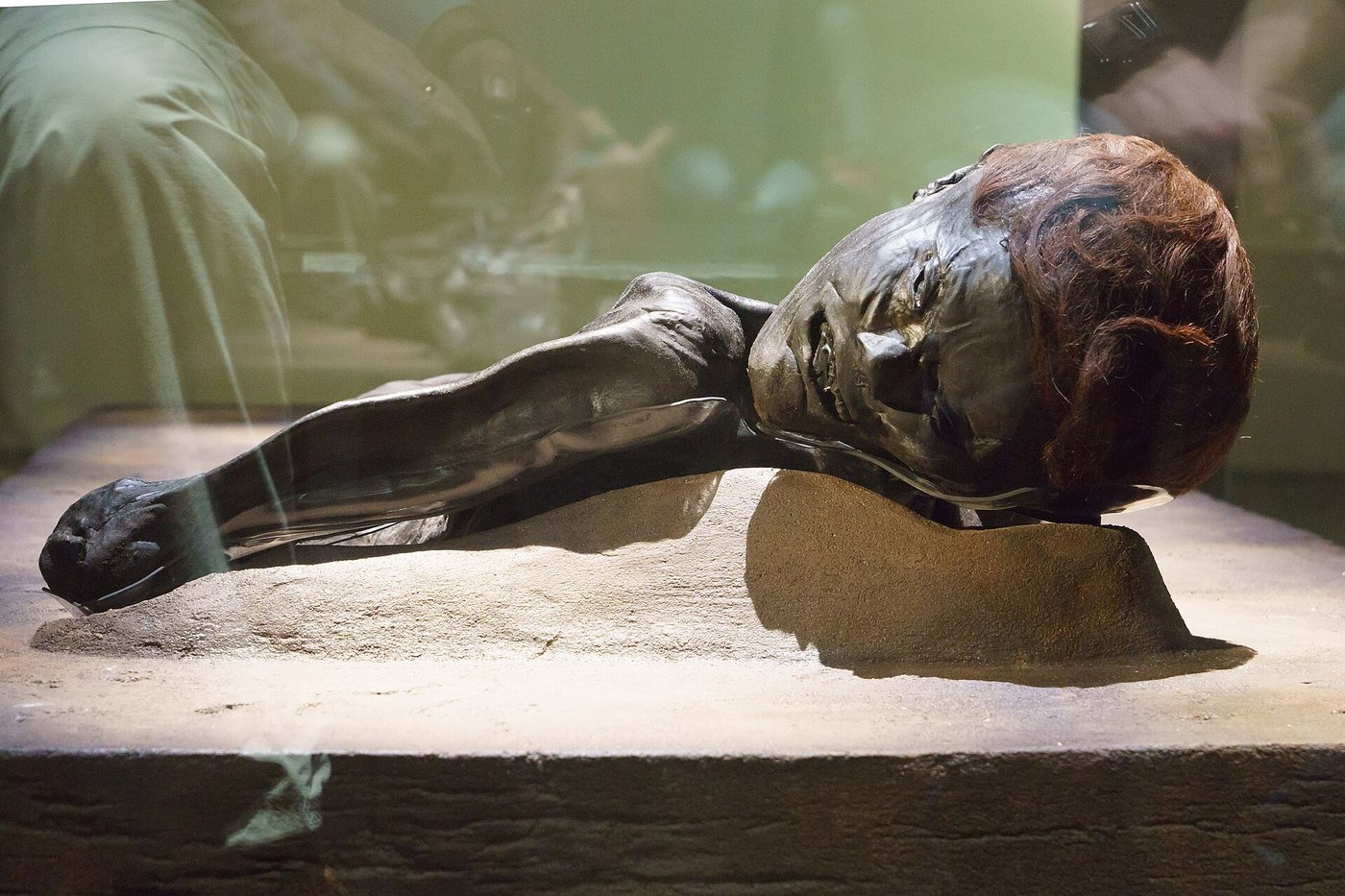
The Tollund Man is the most serene of a scattered company. Two years after his discovery, and only a short way off, peat cutters found the Grauballe Man, another Jutland body from around the same centuries. His preservation was even more complete, down to the whorls of his fingerprints, and by then the science had advanced enough to conserve the whole of him. But where the Tollund Man looks asleep, the Grauballe Man does not: his throat had been cut from ear to ear, a wound so wide it is unmistakable, and his face is fixed in something harder to look at.
Further afield the roll grows longer. Denmark alone has yielded the Huldremose Woman, an older woman found in 1879 still wearing her woollen clothes. In an English peat bog at Lindow, in Cheshire, a body came up in 1984 whose injuries were so many (a blow to the head, a cord tightened at the throat, a cut to the neck) that some read them as a threefold killing. No two of these deaths are quite alike. Some look like careful ritual, some like execution, some remain arguments with no end in sight. What they share is the bog, and the accident that a landscape used for burning fuel turns out to be a landscape that keeps the dead.
The Tollund Man reached far beyond archaeology. When P. V. Glob published The Bog People in the 1960s, the face travelled into art and poetry, and the Irish poet Seamus Heaney opened a famous poem with a plain vow, “Some day I will go to Aarhus / To see his peat-brown head”, written while thinking about ancient sacrifice and the violence of his own time. A man hanged in the fourth century BC became, for readers who had never heard of Bjældskovdal, a way of talking about how the living do harm to one another. Few archaeological finds have crossed so completely out of the trench and into the language.
The account that will not close
Set the pieces beside each other and a rough shape appears, with the middle left out. A man in his thirties or forties ate a plain porridge on a cold day around 400 BC. Some hours later he was stripped to a cap and a belt, a leather rope was drawn tight around his neck, and he was hanged. Then, instead of being flung aside, he was carried into the wet ground, curled on his side, and his eyes were closed by someone’s hand. The bog took him, tanned him, dissolved his bones and held the rest. Two brothers cutting fuel gave him back to the daylight twenty-four centuries later, and the first people to see him thought they were looking at a recent crime.
What the bog will not give up is the reason. It kept the porridge and the noose and the stubble and the shut eyes, every physical fact of a killing, and none of the meaning behind them: not the man’s name, not whether he went willingly, not what his people believed they were buying with him. You can stand in front of the case and read the death almost move by move, and still know nothing of the one thing that would explain it. The Tollund Man is proof of how much a body can say and where its speech runs out. He looks asleep because someone wanted him to, and that person’s thoughts are the part the peat did not keep.
Read next: Ötzi the Iceman: The Alpine Murder That Took 5,300 Years to Solve and Areni-1: The Cave That Kept the World's Oldest Shoe.
Sources & further reading
- P. V. Glob, The Bog People: Iron Age Man Preserved (English translation, 1969) — the book that made the Tollund Man famous.
- N. H. Nielsen and colleagues, “The last meal of Tollund Man: new analyses of his gut content,” Antiquity (2021).
- “Diet and radiocarbon dating of Tollund Man: new analyses of an Iron Age bog body from Denmark,” Radiocarbon (Cambridge University Press).
- The Silkeborg Museum’s Tollund Man project (tollundman.dk) — find, conservation and display.
- “Tollund Man: what we know about Europe’s most famous bog body,” National Geographic.
- Tacitus, Germania (c. AD 98), for the Roman account of Nerthus and of bodies pressed into the bog.
Image credits (via Wikimedia Commons): find position of the Tollund Man — Chocho8 (CC BY-SA 4.0); the Bjældskovdal bog — Nils Jepsen (CC BY-SA 4.0); preserved head — Chocho8 (CC BY-SA 4.0); the Grauballe Man, Moesgaard Museum — Colin / Wikimedia (CC BY-SA 4.0); memorial stone at the find spot — Nils Jepsen (CC BY-SA 4.0). Featured image: the head of the Tollund Man — Sven Rosborn (public domain).