On the morning of 30 June 1908, a trader named Semenov was sitting on the porch of the supply station at Vanavara, in the middle of the Siberian taiga, when the northern sky tore open. He said the whole sky split in two above the forest, and a wall of fire filled the gap. The heat came before the sound. It was so fierce that he thought his shirt had caught light and reached to pull it off. Then the sky closed, a blow like a cannon struck the ground, and he was thrown backwards off the porch. He was more than sixty kilometres from whatever had happened. He never saw the thing that did it, and neither, for the next nineteen years, did anyone who came looking.
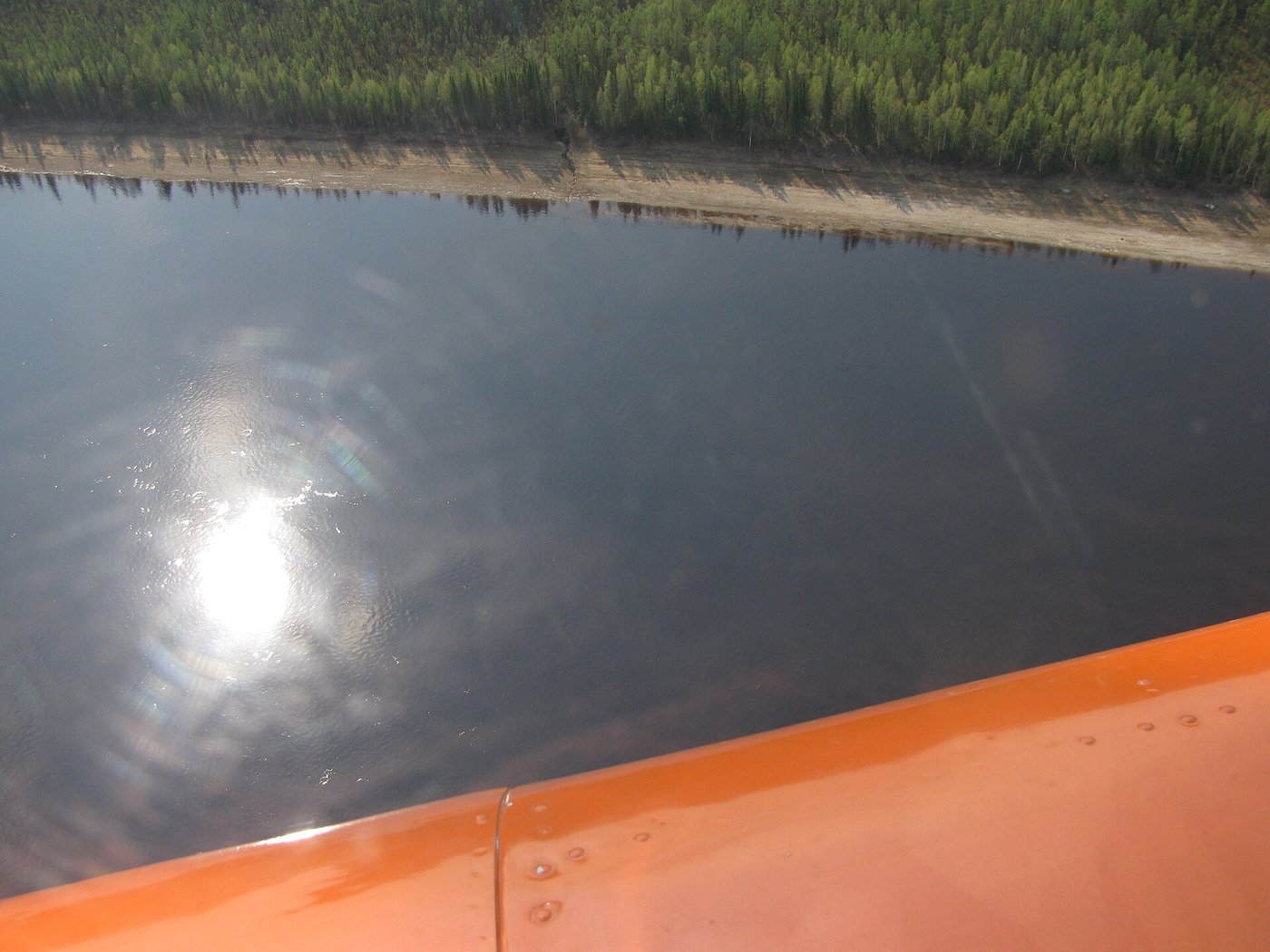
What happened over the Podkamennaya Tunguska River that morning was the largest impact event in recorded history, and it is also the strangest, because it left almost nothing behind to study. There was no smoking pit, no lump of star-iron, no wreck to photograph. There was only a forest lying flat across an area the size of a large city, and a story that took most of a century to piece together from tree stumps, barometer traces and the memories of reindeer herders. This is how a blast that no scientist witnessed was slowly reconstructed from the wreckage it left in the wood.
A quarter past seven in the morning
The event happened at about seven fifteen local time. Across central Siberia, hundreds of people at scattered farms, trading posts and Evenki camps saw a column of bluish light, brighter than the sun, moving across the sky. Moments later came a flash, then a series of booms like artillery fire, and a shock wave strong enough to knock people down, shatter windows and rattle crockery hundreds of kilometres away. Herders were flung into the air along with their tents. Reindeer bolted; some were found dead.
The blast did not stay in Siberia. The pressure wave rolled outward and circled the whole planet, and sensitive barographs in Britain traced it passing overhead, not once but twice, coming and going around the curve of the Earth. Seismographs as far off as Germany and Java registered a tremor. And for several nights afterwards the skies of northern Europe and western Russia glowed a strange pale silver. In London people reported being able to read a newspaper outdoors at midnight without a lamp. Somewhere over the taiga, an enormous amount of fine dust had been thrown high into the atmosphere, and it caught the sun that never quite set at those latitudes in high summer.
Nobody in the wider world connected these glowing nights to a disaster in Siberia, because nobody in the wider world knew a disaster had happened. The nearest railway was hundreds of kilometres away. The few local newspaper notices that mentioned a fireball were brief and were soon forgotten. The energy released has since been estimated at roughly ten to fifteen megatons of TNT, around a thousand times the bomb that would later fall on Hiroshima, and it went off in one of the emptiest places on the map, which is very likely the only reason this is a scientific curiosity and not one of the great massacres of the twentieth century.
The man who would not let it go
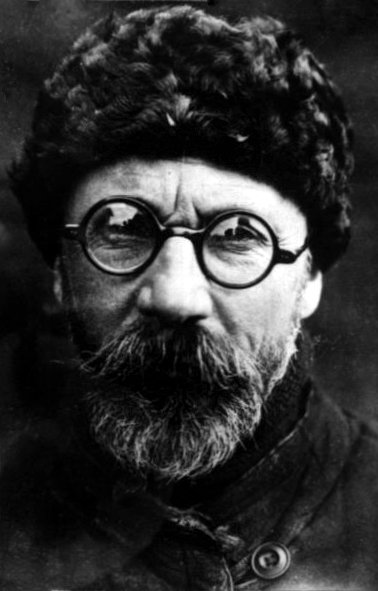
The person who eventually dragged Tunguska into the record was a Russian mineralogist named Leonid Kulik. He was a meteorite hunter by trade and by temperament: stubborn, single-minded, and convinced that somewhere in that forest lay the largest iron meteorite ever to strike the Earth. In 1921 he led a survey across Siberia collecting reports of falling stones, and it was then that he first gathered the tangled eyewitness accounts of the 1908 fireball. He became certain a giant meteorite was waiting to be found, and that finding it would be the making of his career.
Getting there was another matter. The site sat deep in trackless taiga, across bog and river, in a climate that allowed only a short working season. It was not until 1927, nineteen years after the blast, that Kulik and a small party finally pushed through to the devastated zone, guided by Evenki hunters who were deeply reluctant to take him. The local people regarded the burnt ground as cursed, the work of Ogdy, a god of fire and thunder, and they did not want to go back.
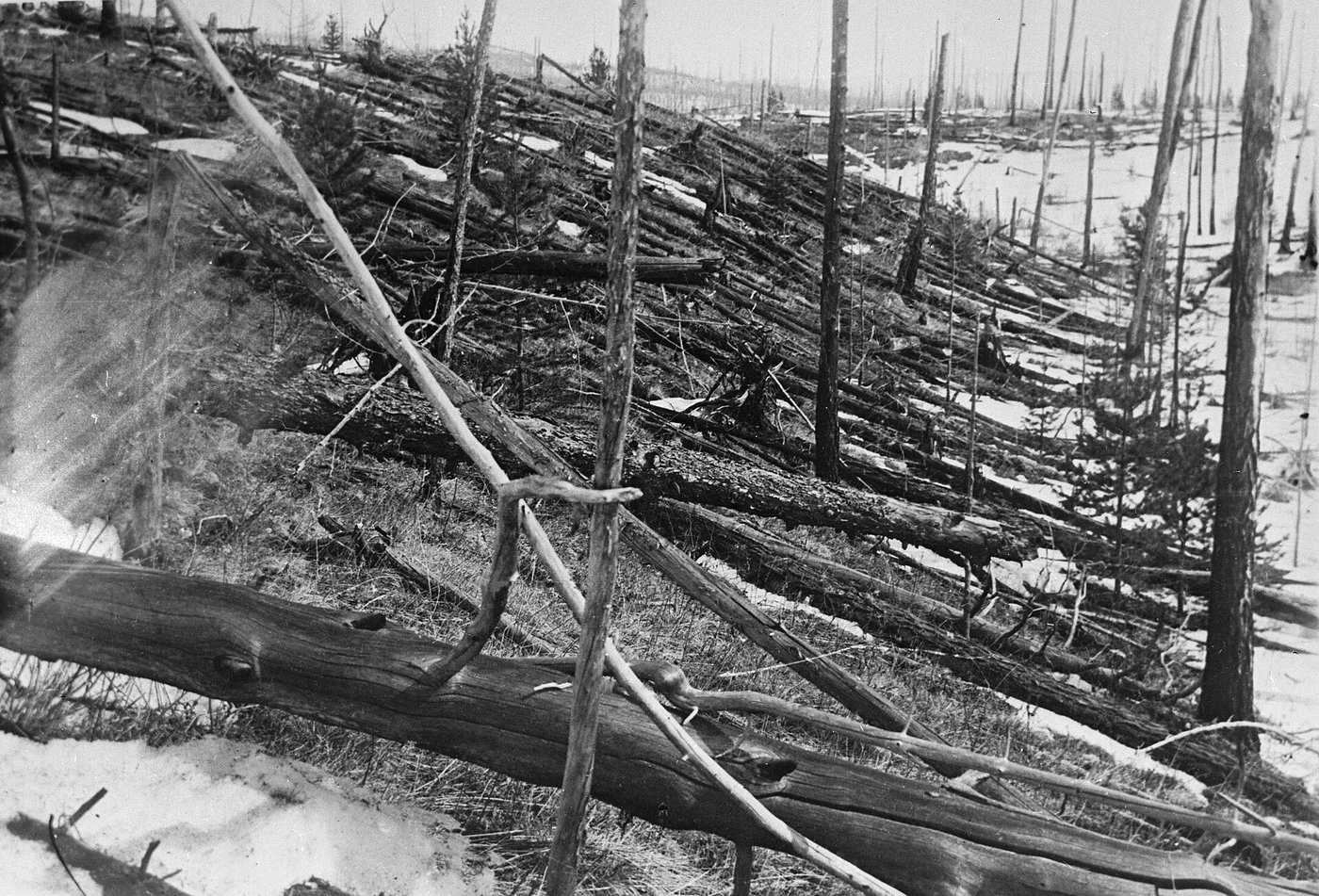
When Kulik climbed a ridge and looked out over the valley, he was staring at something no one had described to him properly, because words had failed the herders who tried. For as far as he could see, the forest was down. Millions of full-grown trees lay flat on the ground, snapped off near the root and stripped of their branches, and, the detail that would matter most, they were all lying the same way, their bare trunks pointing outward like the spokes of a wheel, or like grass combed by a single enormous hand.
The scale is hard to hold in the mind. The flattened forest covered roughly 2,150 square kilometres and held an estimated eighty million trees. Mapping the direction each fallen trunk pointed let later researchers trace every line back to a single point in the sky. The pattern is not a neat circle but a splayed shape, sometimes described as a butterfly, distorted by the angle at which the object came in. It is, in effect, a photograph of the blast taken by the forest itself.
The forest that stayed standing
Kulik pressed on toward the centre of the pattern, expecting the ground to open into an enormous crater. Instead, at the very heart of the flattened zone, he found the opposite of what he was looking for. The trees there were not thrown down at all. They were still standing upright, but dead, scorched, and stripped bare of every branch: a grove of blackened poles rooted in a wide, marshy bog. Kulik called them the telegraph poles.
It is one of the eeriest scenes in the history of science, and at the time it made no sense. Everywhere around, the forest had been blown flat by a force coming from a single direction. At the middle, the force had come straight down, pressing the trees into the permafrost rather than pushing them over, and shearing off their limbs where they stood. A meteorite that had punched into the ground could not do that. Whatever had done this had never touched the earth at all.
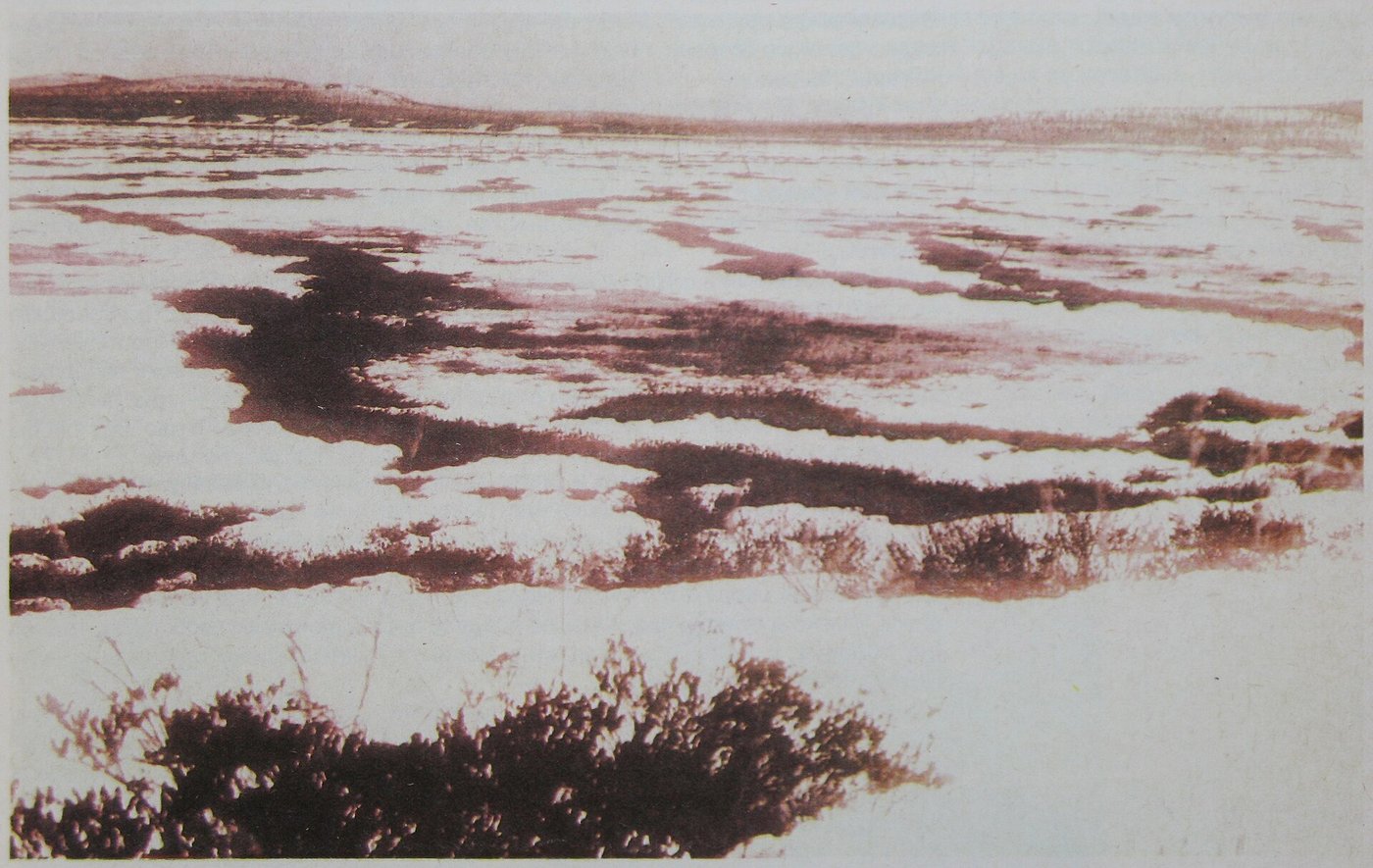
Kulik searched for the crater for years. He came back in 1928, again in 1929 and 1930, and organised an aerial survey in 1938. He drained boggy hollows he was sure were impact pits and drilled into them looking for buried iron. He found peat and old roots. There was no meteorite, no metal, no hole: nothing that a falling rock is supposed to leave. The absence became the mystery. A blast that could flatten a forest to the horizon had somehow arrived without a projectile.
Every meteorite hunter's instinct says a strike this size must leave a pit and scattered fragments of iron or stone. Tunguska has neither. Decades of drilling, dredging and searching have turned up no primary crater and no large piece of the object. That single fact, a colossal explosion with no impact site, is the knot the whole puzzle is tied around, and it is what let the wilder theories flourish.
Death rays and buried monsters
An event with a missing cause is an invitation, and Tunguska has been claimed by nearly everyone. Because there was no rock to point to, people were free to supply their own. The vacuum filled with theories that ranged from the plausible to the frankly cinematic, and some of them still circulate today.
The myth: Tunguska was a secret weapon, an antimatter blast, a tiny black hole passing through the Earth, or a crashing alien spaceship, a mystery science cannot explain.
The reality: the standing dead trees at the centre, the radial flattening, the global pressure wave and the microscopic mineral fragments in the soil all point one way, to a natural object that exploded in the air. Nikola Tesla was nowhere near a working death ray in 1908; an antimatter or black-hole event would have left signatures that are simply not there. The physics of an airburst accounts for everything the site actually shows.
The core explanation is now well understood, even if the details are still argued over. A body from space, a chunk of rock or ice tens of metres across, entered the atmosphere at tens of kilometres a second. The air in front of it could not get out of the way fast enough. Pressure and heat built until the object broke apart and vaporised in a single catastrophic burst several kilometres up, dumping its enormous kinetic energy into the sky in a fraction of a second. That is why there is no crater. The thing never landed. It became a fireball and a shock wave, and the shock wave did the rest.
This kind of explosion is called an airburst, and once you picture it, the strange scene on the ground clicks into place. The blast wave spread down and out from a point in the air. Directly beneath, it pushed straight down: the standing telegraph poles. Further out, it caught the trees side-on and flattened them, always pointing away from the centre. The same downward-then-outward pattern was later recognised in the forests around nuclear tests, which is one reason the Tunguska site became an object of quiet interest to weapons scientists.
Ice or stone
If the object exploded in the air, what was it, and why did it leave no obvious trace? Here the story splits, and for most of a century two camps have pulled at it.
In 1930 the British astronomer F. J. W. Whipple suggested the culprit was a small comet: a loose ball of ice and dust. A comet would explain the lack of a solid meteorite, because ice vaporises completely and leaves nothing to find. It would also explain those glowing nights over Europe, since a comet would have injected a vast cloud of fine dust and water into the high atmosphere. Against this, others argued the energy and the way the object drove so deep into the air before bursting looked more like a denser, rockier body, a stony asteroid that shattered under pressure, rather than a fluffy snowball that would have broken up much higher.
For decades the comet-versus-asteroid question turned on almost nothing, because there was almost nothing to test. The breakthroughs came from the microscopic scale. Soviet expeditions in the 1960s sifted tiny glassy and magnetic spherules from the soil. Later teams reported minute diamonds and metal-rich grains. Each new sample nudges the picture, and the debate is really about which fits better, not whether something from space did it. On that, everyone now agrees.
The lake that might be a wound
In 2007 an Italian team from the University of Bologna added a twist. A few kilometres north-north-west of the accepted epicentre lies Lake Cheko, a small, oddly deep, funnel-shaped body of water about half a kilometre across. The Bologna group, led by Luca Gasperini, proposed that Cheko was not an ordinary Siberian lake at all, but a crater, gouged out by a surviving chunk of the Tunguska object that made it to the ground after the main airburst. They pointed to the lake's shape, its depth, and a dense object their instruments detected in the sediment at the bottom, which they wondered might be a buried fragment.
The idea is attractive because it would finally give the mystery a physical piece to hold. But most researchers are not convinced. Critics note that trees around Lake Cheko appear to be older than 1908 (hard to explain if the lake was blasted into being that year), and that its sediments seem to have been laid down slowly over a much longer period, with no shocked or melted material of the kind a real impact crater should contain. The question is not settled, but the weight of opinion sits against the lake being a scar from that morning.
What the tree rings kept
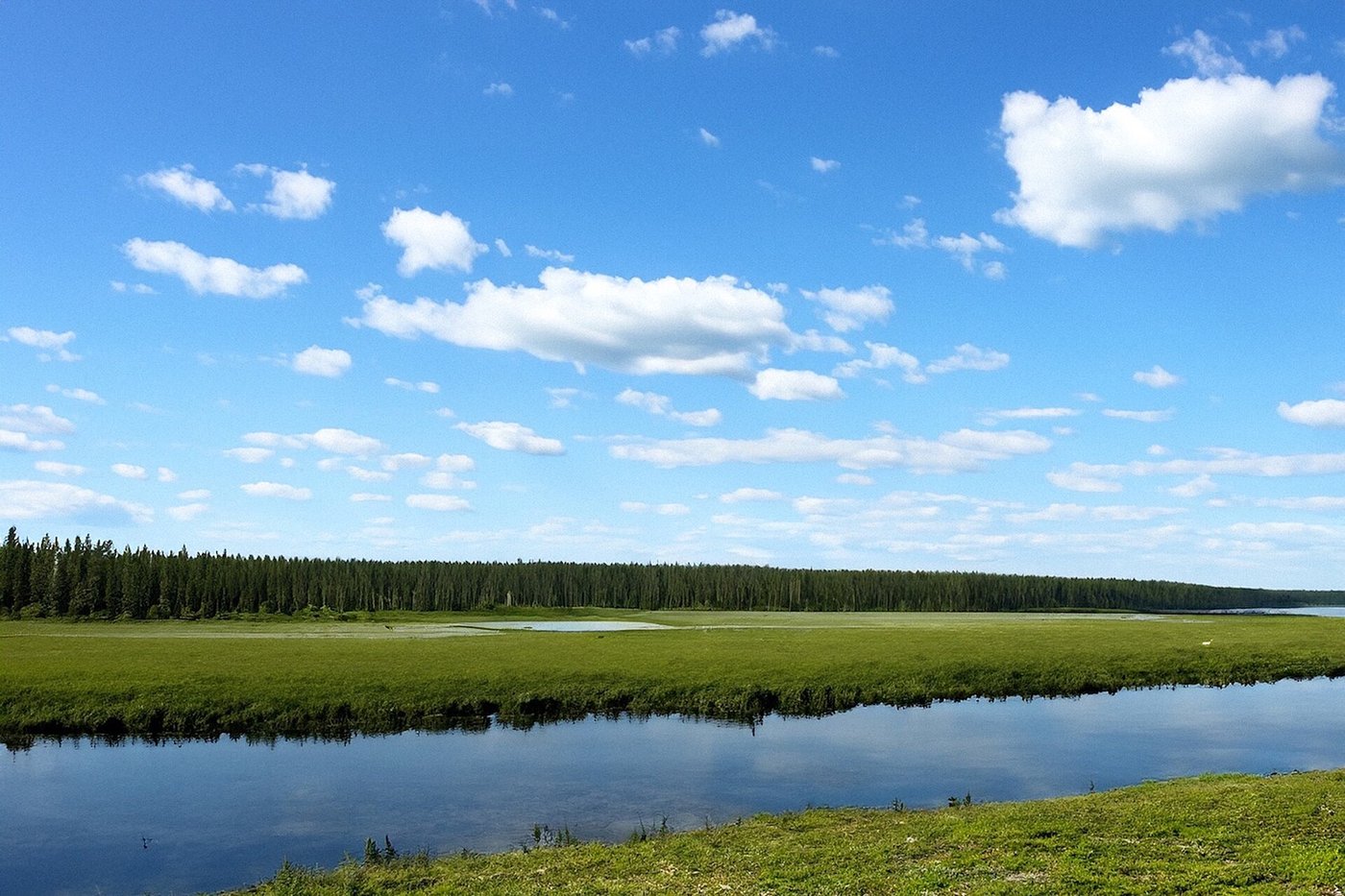
The most recent work has gone back to the one witness that stood through the whole event and is still there: the wood. Trees that survived the blast on the fringes of the zone kept a record of 1908 in a single growth ring, and in the sticky resin that oozed over their wounds. Scientists have now pulled microscopic spherules straight out of that 1908 layer and put them under electron microscopes.
The grains are rich in iron and nickel, in ratios that match meteoritic material and not the local rock: a chemical fingerprint of something that came from beyond the Earth. Combined with computer models of how a body breaks up in the atmosphere, the picture that has firmed up in recent years points to a stony asteroid, very roughly sixty metres across, entering at around twenty kilometres a second and detonating some five to six kilometres above the taiga with an energy in the region of fifteen megatons. The exact numbers still shift as the modelling improves, but the family of the object is no longer really in doubt.
The strength of the tree-ring evidence is that it is dated and sealed. A spherule found loose in the soil could have arrived at any time. A spherule locked inside the resin and wood of the 1908 ring was captured in the days around the event and has sat there ever since. That is why these tiny grains, iron-and-nickel-heavy and extraterrestrial in composition, carry more weight than a century of searching the bog for a boulder that was never going to be there.
The near miss we keep on having
For a long time Tunguska felt like a freak, a once-in-history event too vast and too remote to seem quite real. Then, on a February morning in 2013, a much smaller rock, perhaps twenty metres across, came in over Chelyabinsk in the Russian Urals and burst high in the sky. It shattered windows across the city and hurt around fifteen hundred people, almost all from flying glass. It was caught on hundreds of dashboard cameras. Suddenly the Siberian forest did not look like a fluke. It looked like the large end of something that happens all the time.
Objects the size of the Chelyabinsk rock arrive every few decades; a Tunguska-scale body is thought to come perhaps once every few centuries to a millennium, though the timing is a matter of odds, not a schedule. Most burst harmlessly over ocean or empty land and are never noticed, exactly as Tunguska nearly was. The difference now is that we are watching. Surveys track thousands of near-Earth objects precisely because of what the flattened forest showed: that the sky does not need to score a direct hit on the ground to level everything for hundreds of square kilometres.
Kulik never found his meteorite. He went to war in 1941, was captured, and died of typhus in a German prison camp in 1942, the crater he had staked his life on still missing. He was chasing the wrong thing in the right place. The object he wanted had turned to fire and dust over the treetops decades before he arrived, and left its message not in a lump of iron but in eighty million fallen trunks, all pointing patiently back at the empty patch of sky where it had been. The forest has grown back now. The trees still remember which way to lie.
Read next: The Dyatlov Pass Incident: Nine Hikers, One Frozen Mountain.
Sources & further reading
- Steel, D. & others, coverage of the Tunguska event and its centenary, Scientific American, "The Tunguska Mystery — 100 Years Later" (2008).
- American Physical Society, "June 30, 1908: The Tunguska Event", APS News (2018).
- NASA History, "115 Years Ago: The Tunguska Asteroid Impact Event" (2023).
- Gasperini, L. et al., "A possible impact crater for the 1908 Tunguska Event" and the subsequent Lake Cheko debate, Terra Nova (2007–2012).
- Jenniskens, P. et al., analysis of the 2013 Chelyabinsk airburst, Nature / Science (2013).
Image credits (via Wikimedia Commons): Podkamennaya Tunguska River from a helicopter — ShavPS (CC BY-SA 3.0); Leonid Kulik portrait — Yevgeny Krinov, expedition member (public domain); dead trees at the blast centre — unknown photographer, Vokrug Sveta, 1931 (public domain); Vanavara — Svetlana Sibiryakova (CC BY-SA 4.0); featured image, the flattened forest photographed by Leonid Kulik's expedition (public domain).