In the summer of 1834 a French traveller named Charles Texier rode up onto a windswept plateau in the middle of Anatolia and found himself walking through the ruins of a city that, as far as he knew, had no business being there. The walls ran for miles. Gateways were guarded by carved lions, and on a rock face a short way off a long procession of figures filed across the stone, crowned and armed and clearly divine. Texier had come looking for a Roman town he had read about in an old geography book. What he had found was much older and far stranger, and he could not put a name to any of it. He sketched the lions, copied writing he could not read, and rode home none the wiser. It would take another seventy years, and thirty thousand tablets of baked clay, before anyone could tell him he had been standing in the capital of a lost superpower.
The city was Hattusa, and the people who built it were the Hittites. For roughly four centuries they were one of the great powers of the ancient world, a match for Egypt and Babylon, holding most of what is now Turkey and reaching down into Syria. Then, around 1200 BC, they were gone: not conquered and absorbed, but simply gone, their capital abandoned and burnt, their name fading out of the world so completely that within a few generations almost no one remembered they had existed at all. For close to three thousand years the Hittites survived only as a puzzle: a name in other people's books that no one could pin to a place.
The empire the world managed to forget
It is hard to lose an empire. Rome left roads and law codes and a language that half of Europe still speaks in pieces. Egypt left pyramids no one could miss. The Hittites left a hole. By the time European scholars began reading the ancient Near East in the nineteenth century, the great Bronze Age power of Anatolia had shrunk to a handful of confusing references.
Most of those references were biblical. The Hebrew scriptures mention the "sons of Heth" and the "Hittites" dozens of times: Abraham buys a burial cave from them, Esau marries their daughters, and King David sends Uriah the Hittite to die at the front so that he can take the man's wife. For a long time this was all anyone had, and it did not add up to much. These Hittites read like one more small tribe among the many that filled the hills of Canaan, easy to skim past. A few sharp-eyed readers noticed that Egyptian and Assyrian inscriptions also spoke of a land called Kheta or Hatti, and that this Hatti seemed to be no small tribe but a rival kingdom whose kings wrote to pharaohs as equals. The two pictures would not fit together. A minor Canaanite clan could not also be a great power that fought Egypt to a standstill. Something was missing.
What was missing was the ground itself. The answer lay under a Turkish village called Boğazköy, on the plateau where Texier had wandered, and it stayed there, unread, for another two generations.
A curse, and a capital built on top of it
The plateau was a strange place to plant a capital. It sits high and cold, cut by ravines, a long way from the sea and from the rich river valleys where most ancient cities grew. It had one great virtue: it was hard to reach and easy to defend. A ridge of rock rises out of the plain, and the Hittites wrapped it in walls and towers until the whole hillside became a fortress.
There is a nice irony buried in the founding. One of the oldest documents ever recovered from the site is the work of a king named Anitta, who lived before the Hittite empire proper. Anitta records that he stormed the town, levelled it, sowed the ruins with weeds, and laid a curse on anyone who should rebuild it and make it a royal seat. A century or so later a Hittite king did exactly that. He rebuilt the cursed town, moved his court there, and thought so well of the place that he took his own throne-name from it: Hattusili, "the man of Hattusa." The curse, plainly, did not take.
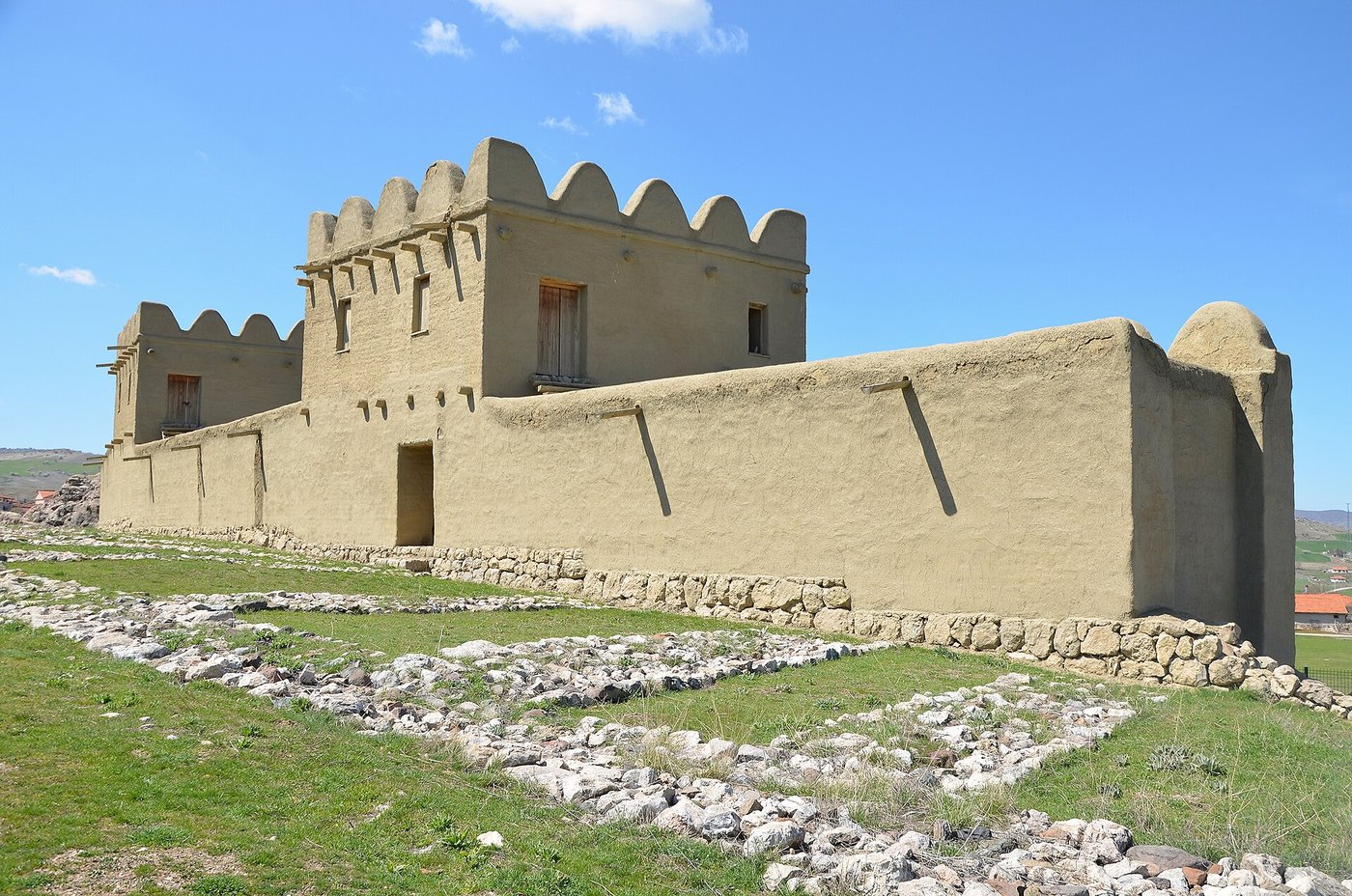
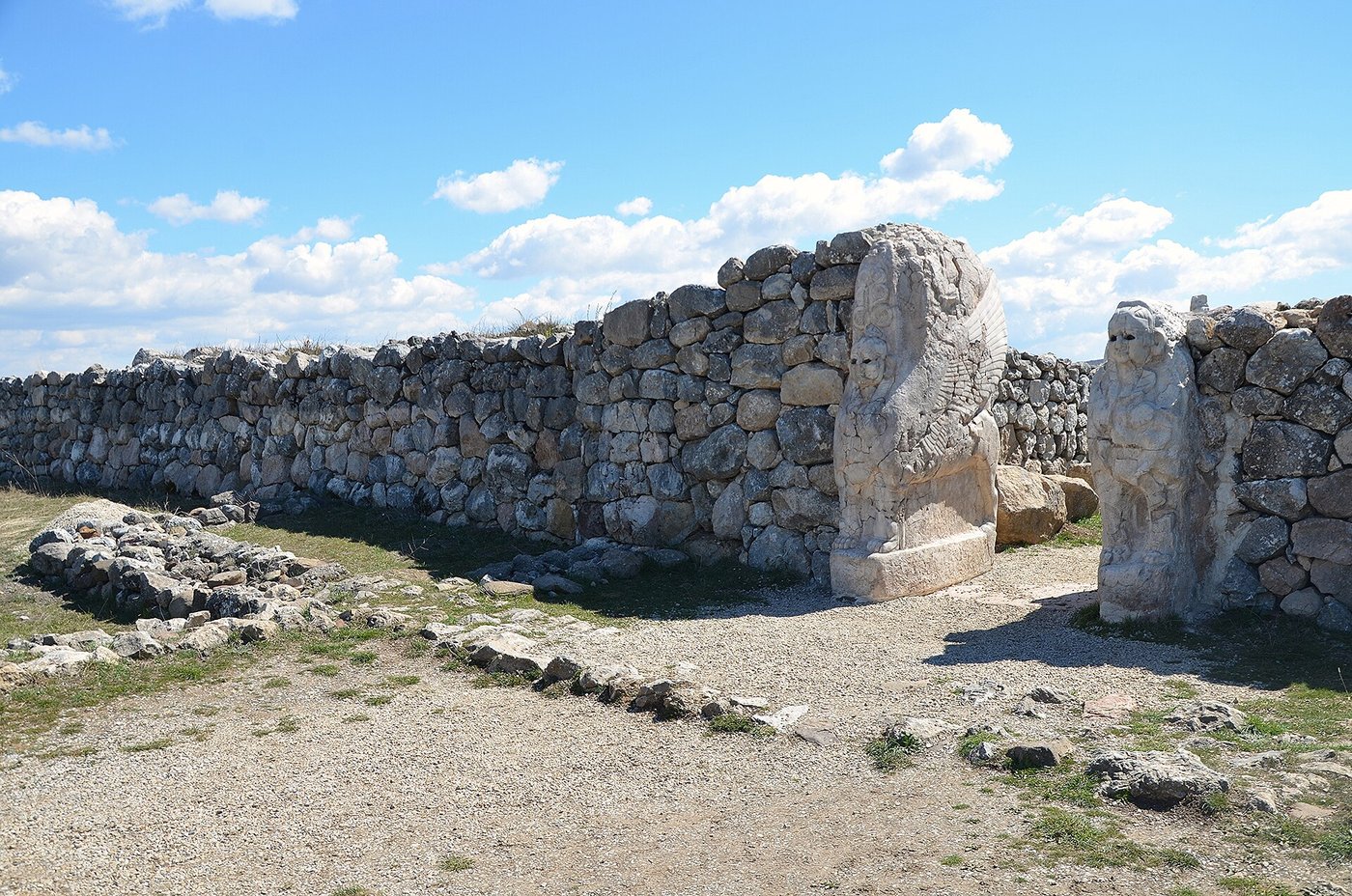
At its height Hattusa spread across more than a square mile, ringed by a double wall with a walkway on top and towers set at regular intervals. The stone foundations still run across the hillside; the mud-brick walls above them are long gone, though archaeologists have rebuilt one bright stretch to show what the traveller of 1834 was really looking at. Inside stood temples by the score, storerooms, and a citadel called Büyükkale, "the great fortress," where the kings kept their palace and, as it turned out, their filing system.
Lions, a warrior, and a tunnel under the rampart
The Hittites liked a gate to make a point. At the southern edge of the city the wall climbs a great artificial bank called Yerkapı, "the earth gate," faced in smooth stone and pierced by a corbelled tunnel more than seventy metres long that runs clean through the rampart from top to bottom. Nobody is quite sure what the tunnel was for (a sally port, a processional way, something ritual), but a person can still walk through it today, out of the daylight and back into it, under the weight of the wall.
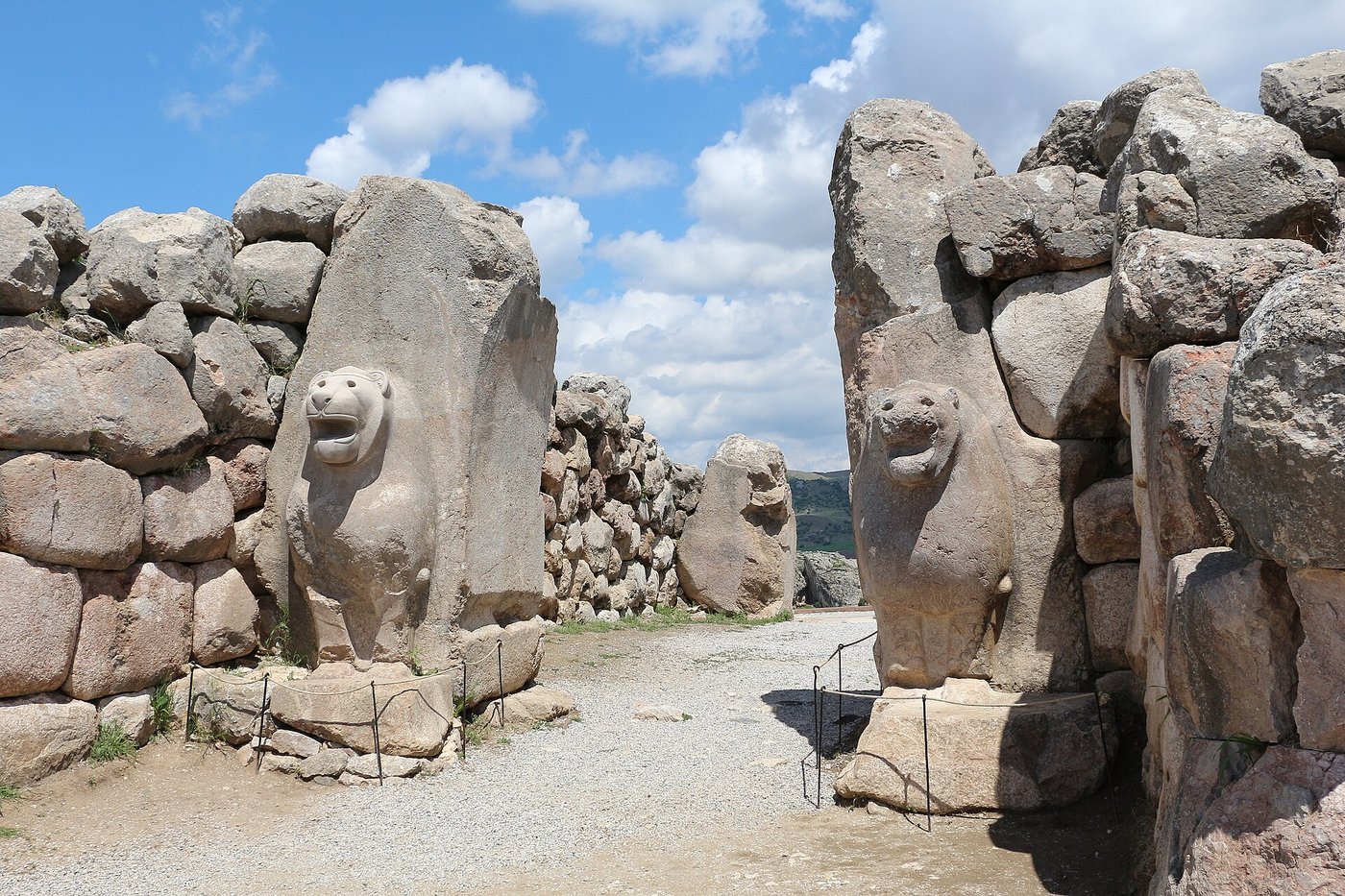
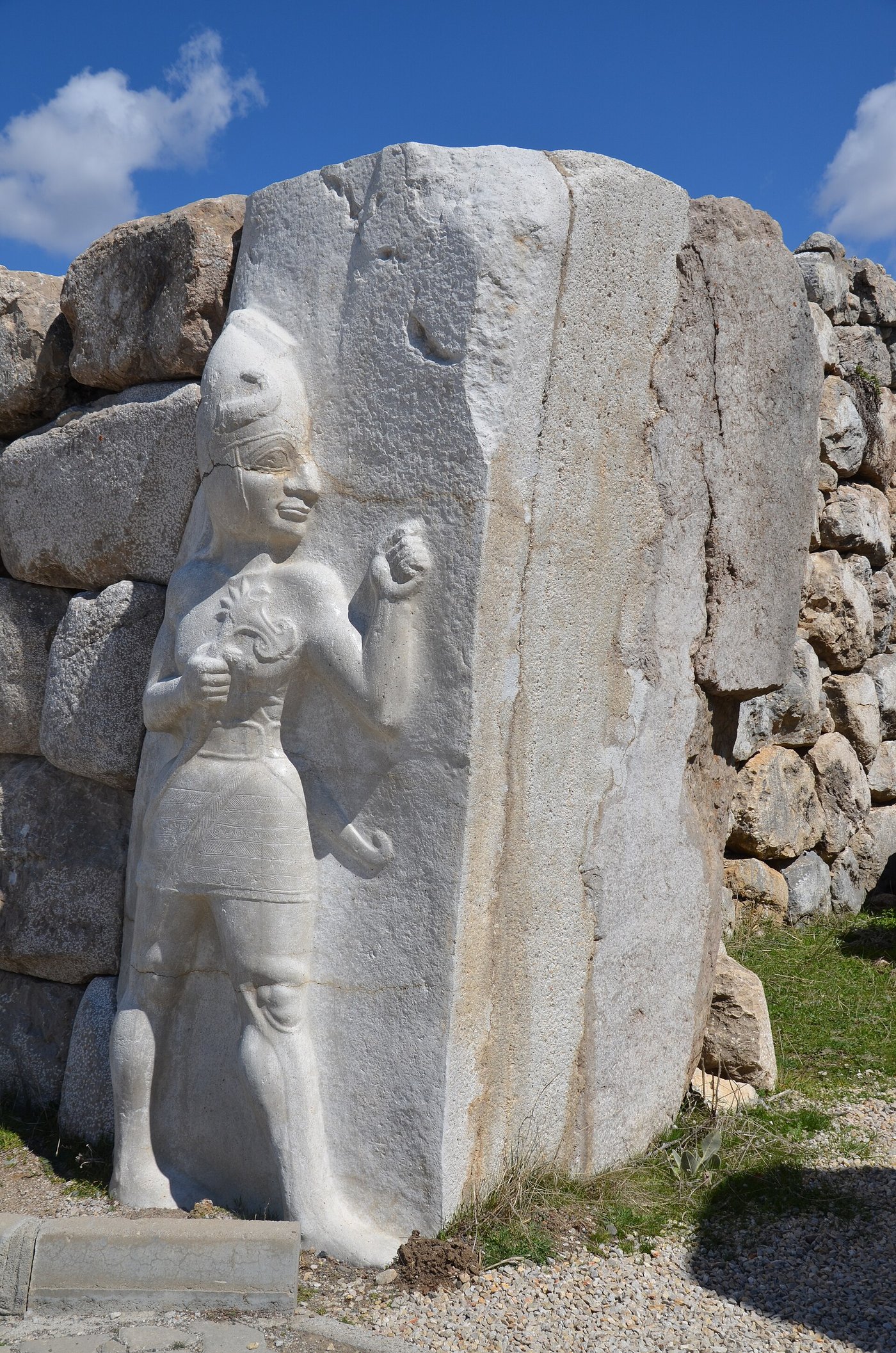
The famous gates are guarded by carvings cut straight into the great blocks of the jambs. At one, two lions lean out of the stone, chests forward, mouths open, worn by three thousand winters but still plainly on duty. At another, a tall figure strides out of the rock in a kilt and a horned helmet, an axe over his shoulder and a short sword at his waist. He was long called a warrior, though he is almost certainly a god, set there to guard the threshold. The Hittites carved him with real care: you can read the muscles of his arm and the curls at his neck. The one on the gate now is a copy; the original was carried off to a museum in Ankara to save it from the weather.
Thirty thousand tablets in the mud
In 1906 a German archaeologist named Hugo Winckler began to dig at Boğazköy, and the hole in history began to fill. On the citadel, in the ruins of the palace and its temples, he struck the royal archives: room after room of clay tablets, some whole, most in fragments, thousands upon thousands of them, baked hard by the very fire that had destroyed the city. In the end the site would yield something like thirty thousand tablets and pieces. It was one of the great libraries of the ancient world, and it had been sitting under a village all along.
Some of the tablets were written in Akkadian, the diplomatic language of the age, which scholars could already read. Those alone were a revelation. Here was the correspondence of the kings of Hatti with the pharaohs of Egypt and the kings of Babylon and Assyria, one great power writing to another. The missing empire was missing no longer. But most of the archive was in another language, written in the same cuneiform signs but making no sense: the Hittites' own tongue, unread for three thousand years.
Cracking it fell to a Czech scholar, Bedřich Hrozný, during the First World War. He worked through the strange sentences looking for a handhold, and he found one in a line about bread. The Hittites, like their neighbours, sometimes wrote the odd familiar word in plain Sumerian, and one such word, NINDA, was known to mean "bread." The sentence around it ran, more or less, "now bread you will eat, water you will drink." Hrozný noticed that the word for what you do to water looked a great deal like the Latin and German and English words for the thing itself. If watar meant water, then this lost Bronze Age language was not some isolated oddity. It was Indo-European: a distant cousin of Greek, Latin, Sanskrit and English, the oldest member of that huge family anyone had ever found written down.
The sentence that unlocked Hittite was gloriously ordinary: nu ninda-an ezzatteni, watar-ma ekutteni, "now you will eat bread and drink water." Hrozný fixed on watar. To an English speaker it needs no translation at all; the same root gives German Wasser and English water. From that one word he reached the astonishing conclusion that the language of a forgotten Anatolian empire belonged to the same family as his own, and that it was the earliest branch of it ever recorded. A shopping-list phrase about supper turned out to be a doorway into the deep history of half the world's languages.
The biggest chariot battle ever fought
The tablets did more than restore an empire. They gave both sides of one of the most famous quarrels of the ancient world, and corrected the winner.
Around 1274 BC the young pharaoh Ramesses II marched north into Syria to break Hittite control of the region and ran straight into the army of the Hittite king Muwatalli II near the town of Kadesh, on the Orontes river. What followed was, by the standards of the Bronze Age, an enormous battle: thousands of chariots, tens of thousands of men, two empires throwing their full weight at each other over a single stretch of ground. Ramesses was very nearly destroyed. Fooled by two Hittite spies into thinking the enemy was far away, he let his army straggle out along the road, and the Hittite chariots fell on his divisions while they were still strung out and unready.
You would never guess any of that from the Egyptian side. Back home, Ramesses had the battle carved onto temple walls up and down the Nile, at Karnak, at Abu Simbel, at his own memorial temple, and in every version he is the hero: abandoned by his troops, rescued by his own courage and his god, single-handedly scattering the Hittite host. For three thousand years that was the only account anyone had, and it read like a great victory. Then the tablets at Hattusa gave up the other side of the story, and the Hittite letters make it plain that Kadesh settled nothing. The Egyptians did not take the city. Muwatalli held the ground and, if anything, tightened his grip on Syria afterwards. The greatest triumph in Ramesses' propaganda was, on the evidence, a bloody draw.
The silver tablet
What is remarkable is what the two sides did next. Not straight away (it took about fifteen years, a change of king in Hatti, and a shared nervousness about the rising power of Assyria), but around 1259 BC the Hittite king Hattusili III and the same Ramesses II put their quarrel formally to rest. They drew up a treaty.
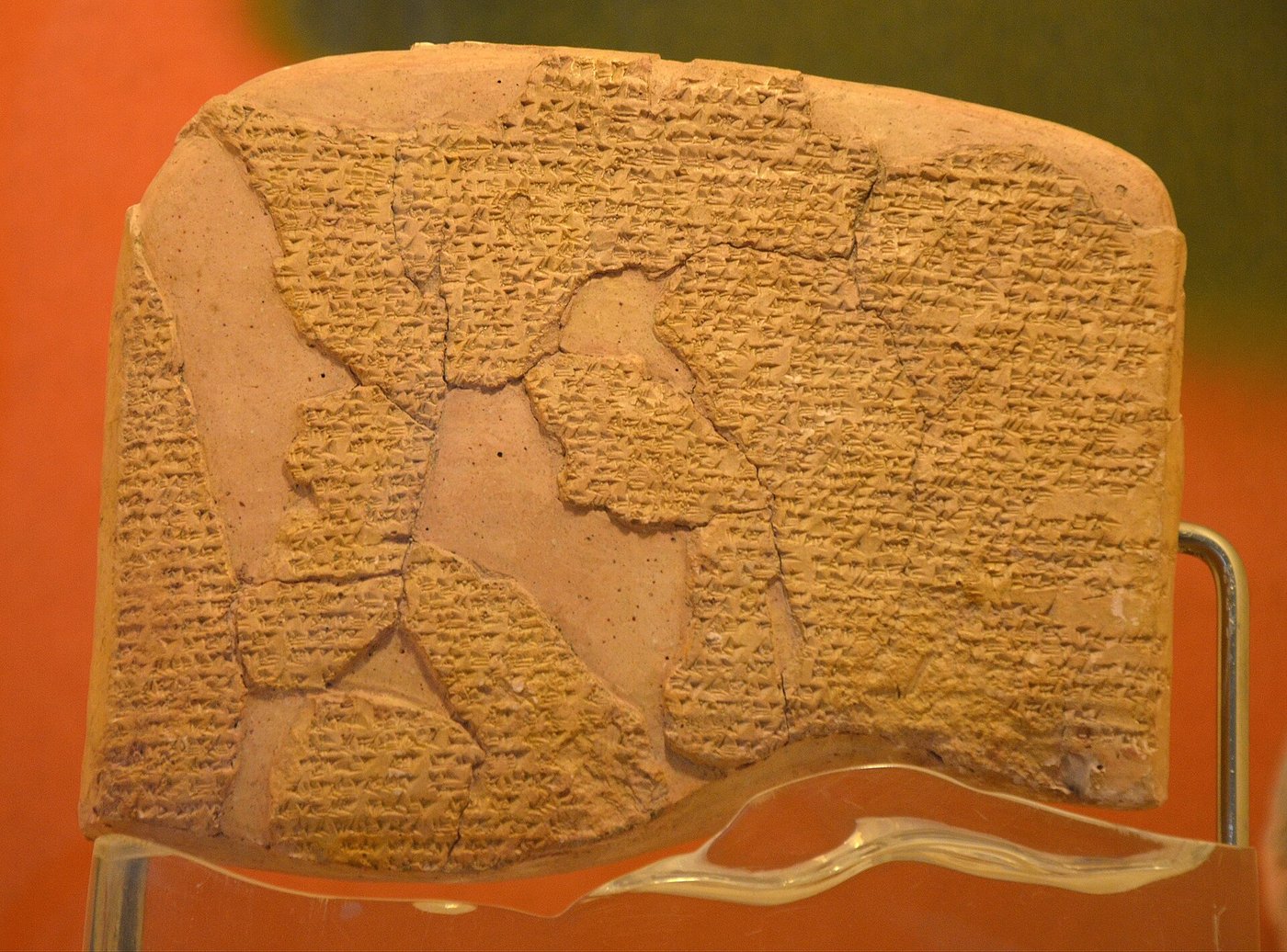
We have it because both sides kept it, and this is what makes it unique in all of ancient history. The Egyptian version was carved in hieroglyphs on the walls of the temple at Karnak and the Ramesseum, written from Egypt's point of view. The Hittite version was pressed into clay in cuneiform and stored in the archive at Hattusa, written from Hatti's. The originals that passed between the two courts were engraved on tablets of silver, long since melted down and lost. But the copies survived at both ends, and when scholars finally set the Egyptian and the Hittite texts side by side they found the same agreement, negotiated by two governments who each thought they had the better of it. No other treaty from the ancient world has come down to us in the words of both parties.
The texts match closely, but not perfectly, and the gaps are telling. Each side wrote the preamble to flatter itself. In the Egyptian version it is the beaten Hittite king who comes humbly seeking peace; in the Hittite version the roles are reversed, and it is Egypt that sues for terms. Neither king would let a clay tablet call him the loser. The heart of the deal, though, is identical in both: no more war between them, a shared front against outside enemies, mutual help if either was attacked, and (strikingly modern, this) a promise to send back each other's fugitives, with a clause insisting the returned men not be punished. It was less a peace ending a war than an alliance of two tired giants who had decided they were worth more to each other alive.
The popular version: the Treaty of Kadesh is "the world's first peace treaty," a Bronze Age flash of enlightenment, and a bronze copy of it hangs at the United Nations in New York as the ancestor of all modern diplomacy.
The truer version: it is the oldest surviving treaty we can read from both sides, which is not the same as the first treaty ever made. Kings had been swearing pacts for centuries before it; this one simply happens to have survived twice over. Nor was it born of high ideals. It was cold self-interest between two powers that had fought to exhaustion and now feared Assyria more than they feared each other. The peace held, all the same, for as long as both kingdoms lasted, and it was later sealed the old-fashioned way, with a marriage: a Hittite princess sent south to become one of Ramesses' queens. The bronze plaque at the UN is real, a gift from Turkey in 1970, and hangs near the Security Council. The document deserves its fame. It just was not a fairy tale.
A thousand gods and a green stone
The Hittites were famous, even in their own day, for the crowd of gods they kept. Their own scribes called it "the thousand gods of Hatti," and they meant it almost literally. As the empire swallowed new peoples it swallowed their gods too, adding them to the roll rather than replacing them, so that the Hittite heavens filled up with storm gods and sun goddesses and mountain spirits gathered from every corner of Anatolia and Syria.
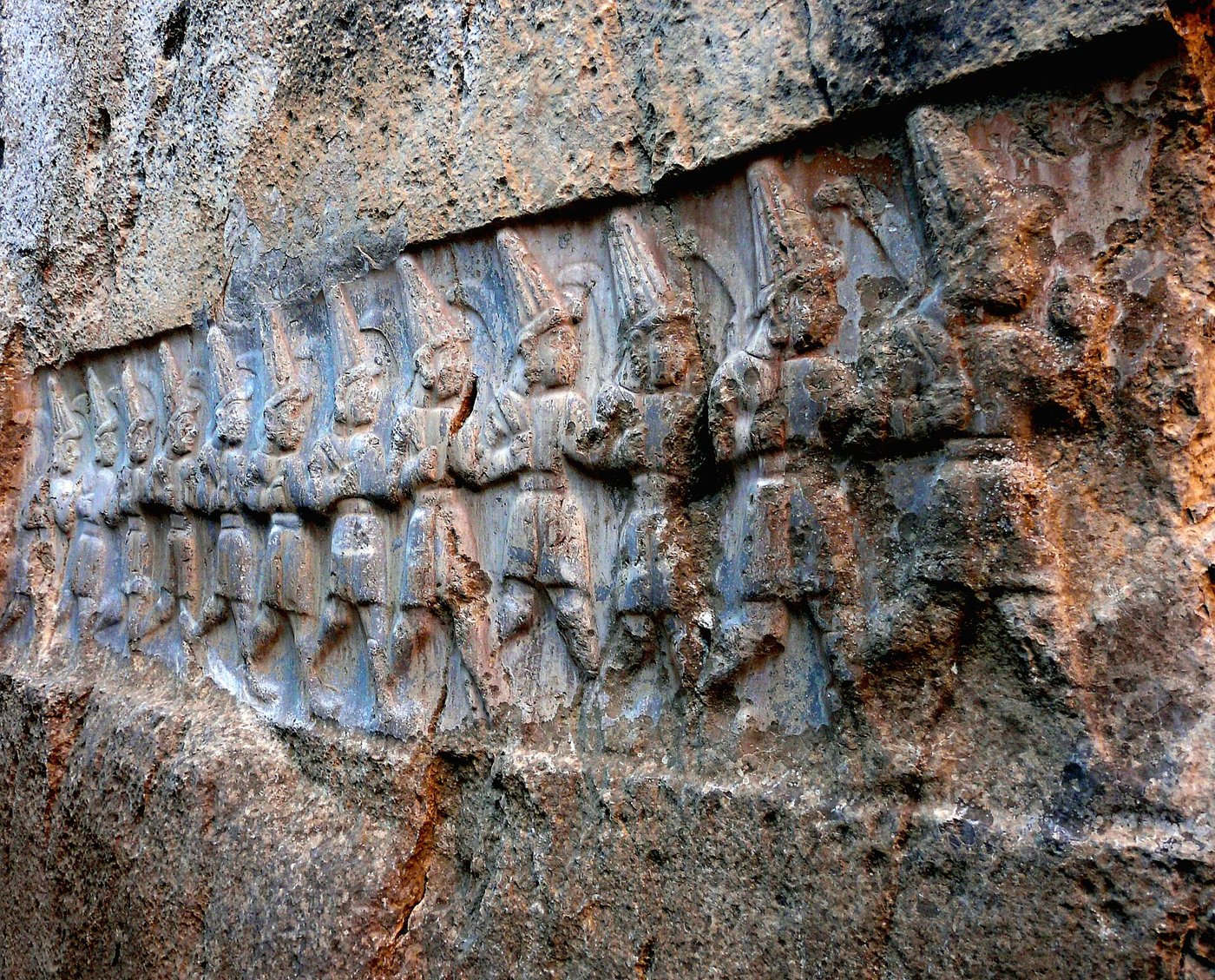
You can still meet them. A short walk from the city walls, at the rock sanctuary Texier had sketched, two natural galleries of stone open to the sky, and along their walls the gods march in carved procession: the place now called Yazılıkaya, "the inscribed rock." From one side comes a line of male gods, from the other a line of goddesses, and they meet in the middle where the great storm god Teshub, lord of the Hittite sky, faces the sun goddess Hebat, she standing on a panther, he on the bowed necks of two mountain gods. It is the closest thing we have to a group portrait of a Bronze Age pantheon, cut into living rock and open to the weather for well over three thousand years.
Down in the city, in the largest temple, sits a mystery of a humbler kind. On the floor of the Great Temple stands a smooth block of green stone, a cube of polished serpentine or nephrite roughly a metre across, quite unlike anything else on the site. Nobody knows what it was for. It may have been a base for a statue, or a gift from a foreign king, or something with a meaning the tablets never bothered to write down because everyone already knew it. Visitors today call it the wishing stone and rub it for luck. The Hittites, who had a god for almost everything, left no note explaining it at all.
The city that let itself out
And then, around 1200 BC, it ended. Hattusa was abandoned and the empire dissolved, part of the wider unravelling that historians call the Bronze Age collapse, when kingdoms across the eastern Mediterranean fell one after another in the space of a couple of generations. For a long time the story told about Hattusa was a simple, dramatic one: the city was stormed and burnt by raiders (the mysterious Sea Peoples, perhaps), and the Hittites were put to the sword.
The truth the diggers have pieced together is quieter and, in its way, sadder. When archaeologists looked closely at the burnt city, they found that the great buildings had been emptied before they burned. The archives had been thinned of their most important records; the storerooms and treasuries were largely cleared; the valuables were gone. This was not a city caught by surprise and sacked. This was a city whose rulers packed up and walked away, taking the crown's business with them, and left the shell behind to whatever came next. The fire came afterwards, set by someone (squatters, raiders, no one is sure) long after the state that mattered had already gone.
Why the Hittites left is a question that has gained a sharp new answer in the last few years. In 2023 a team studying the growth rings of ancient juniper trees from a burial mound in central Turkey found the signature of a savage drought: three consecutive years, around 1198 to 1196 BC, of extraordinary dryness, sitting inside a longer slide toward a harsher climate. A high, dry capital that had always depended on its harvests to feed a large population and a standing army would have been desperately exposed. Drought did not kill the Hittites by itself (there were rebellions, cut trade routes, and pressure on every frontier), but three failed harvests in a row may have been the shove that toppled an empire already leaning.
How much weight the drought should carry is not settled. Tree rings from one region are a narrow window, and the Bronze Age collapse was a tangle of causes (earthquakes, migrations, broken trade, internal revolt) that struck many states at once, each in its own way. What the excavations at Hattusa do seem to show is a managed retreat rather than a massacre: a government that saw the end coming and chose where to spend its last strength. The last king we can name, Šuppiluliuma II, left inscriptions boasting of battles by land and sea, the words of a ruler fighting hard against a tide he could not turn. Where the court went, and whether the king went with it, we do not know. The plateau kept the walls and gave up the people.
The sphinx that came home
The Hittites have a strange afterlife. Having been forgotten for three thousand years, they are now, in a modest way, everywhere: in the family tree of the English language, in the small print of the history of diplomacy, on a wall at the United Nations. And their monuments have had adventures of their own. Two stone sphinxes that once guarded a gate at Hattusa were taken to Germany for conservation before the First World War; one came back, the other stayed in a Berlin museum for the better part of a century. Turkey asked for it, argued for it, and at last, in 2011, threatened to cancel the German excavation permits at Boğazköy altogether. The sphinx came home. It sits now in a small museum beside the ruins, a few hundred metres from the gate it was carved for.
There is something fitting in that long tug-of-war over a single carved head, because the Hittites are a people we have had to reassemble piece by piece, out of the ground and out of other people's records, and even now they hold a few things back. We can read their language and their laws, follow their kings to war and home again, stand in their temples and rub their green stone for luck. But we still cannot say for certain why they left, or where the last of them went. An empire that once wrote to pharaohs as an equal slipped out of the world so completely that it took a French traveller's confusion, a German's spade and a Czech's word for water to prove it had ever been there at all. The lions still lean out of the gate on the empty plateau, guarding a city whose people packed up thirty-two centuries ago and never said where they were going.
Read next: The Bronze Age Collapse: When the First Connected World Fell Apart.
Sources & further reading
- Trevor Bryce, The Kingdom of the Hittites and Life and Society in the Hittite World — the standard modern histories of the empire and its people.
- J. G. Macqueen, The Hittites and Their Contemporaries in Asia Minor — a readable one-volume introduction to the archaeology.
- Sturt W. Manning et al., "Severe multi-year drought coincident with Hittite collapse around 1198–1196 BC," Nature (2023) — the tree-ring study behind the drought argument.
- Eric H. Cline, 1177 B.C.: The Year Civilization Collapsed — the wider story of the Bronze Age collapse that swept the Hittites away.
- The Boğazköy–Hattusa excavation reports of the German Archaeological Institute, and the UNESCO World Heritage listing for Hattusa.
- Translations of the Egyptian–Hittite treaty in James B. Pritchard (ed.), Ancient Near Eastern Texts Relating to the Old Testament.
Image credits (via Wikimedia Commons): the Lion Gate, Hattusa — Bernard Gagnon (CC BY-SA 3.0); reconstructed mud-brick city wall — Carole Raddato (CC BY-SA 2.0); the Hittite copy of the Treaty of Kadesh, Istanbul — Carole Raddato (CC BY-SA 2.0); the twelve underworld gods at Yazılıkaya — Ywpark2003 (CC0); the warrior god of the King’s Gate — Carole Raddato (CC BY-SA 2.0); the Sphinx Gate — Carole Raddato (CC BY-SA 2.0).