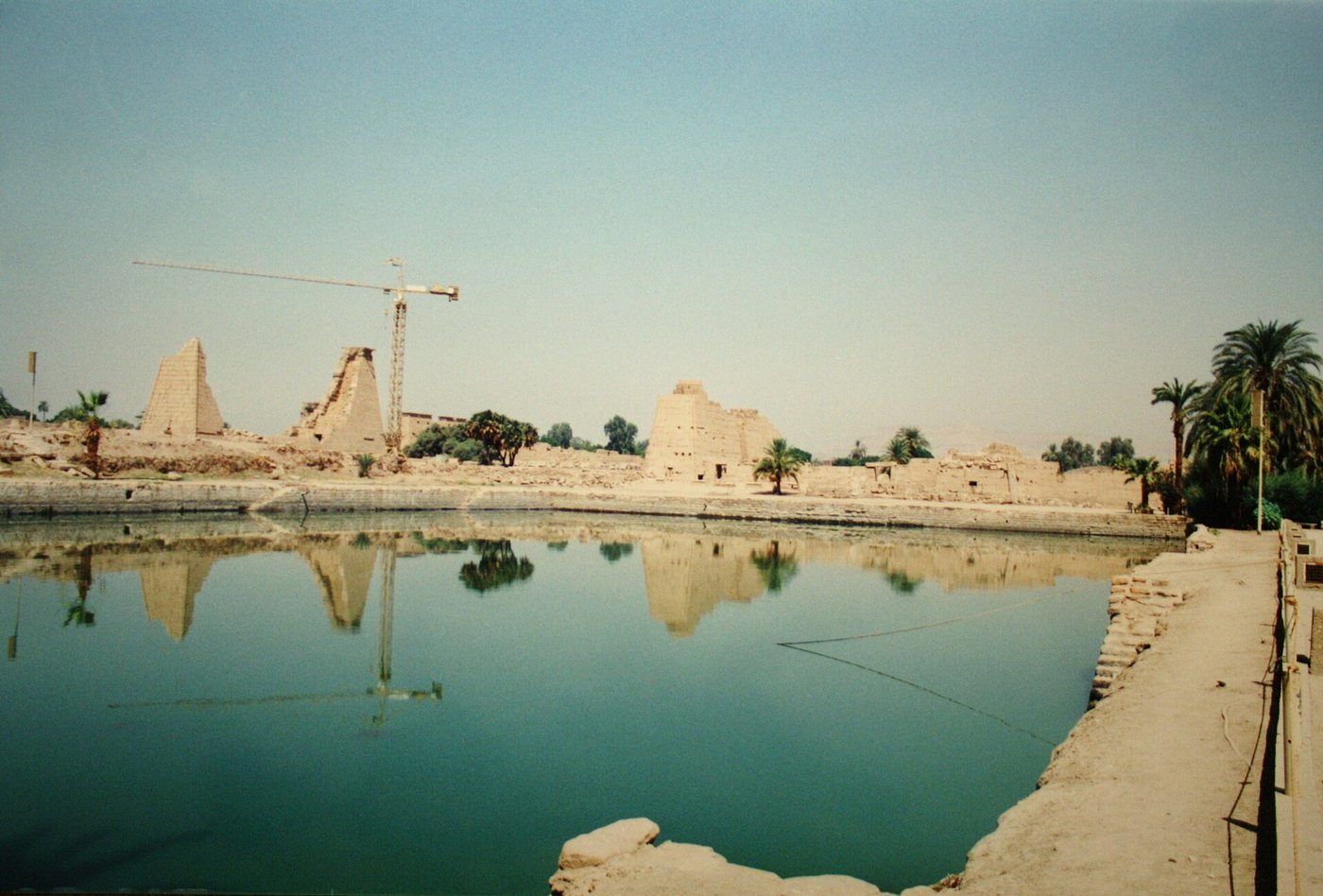
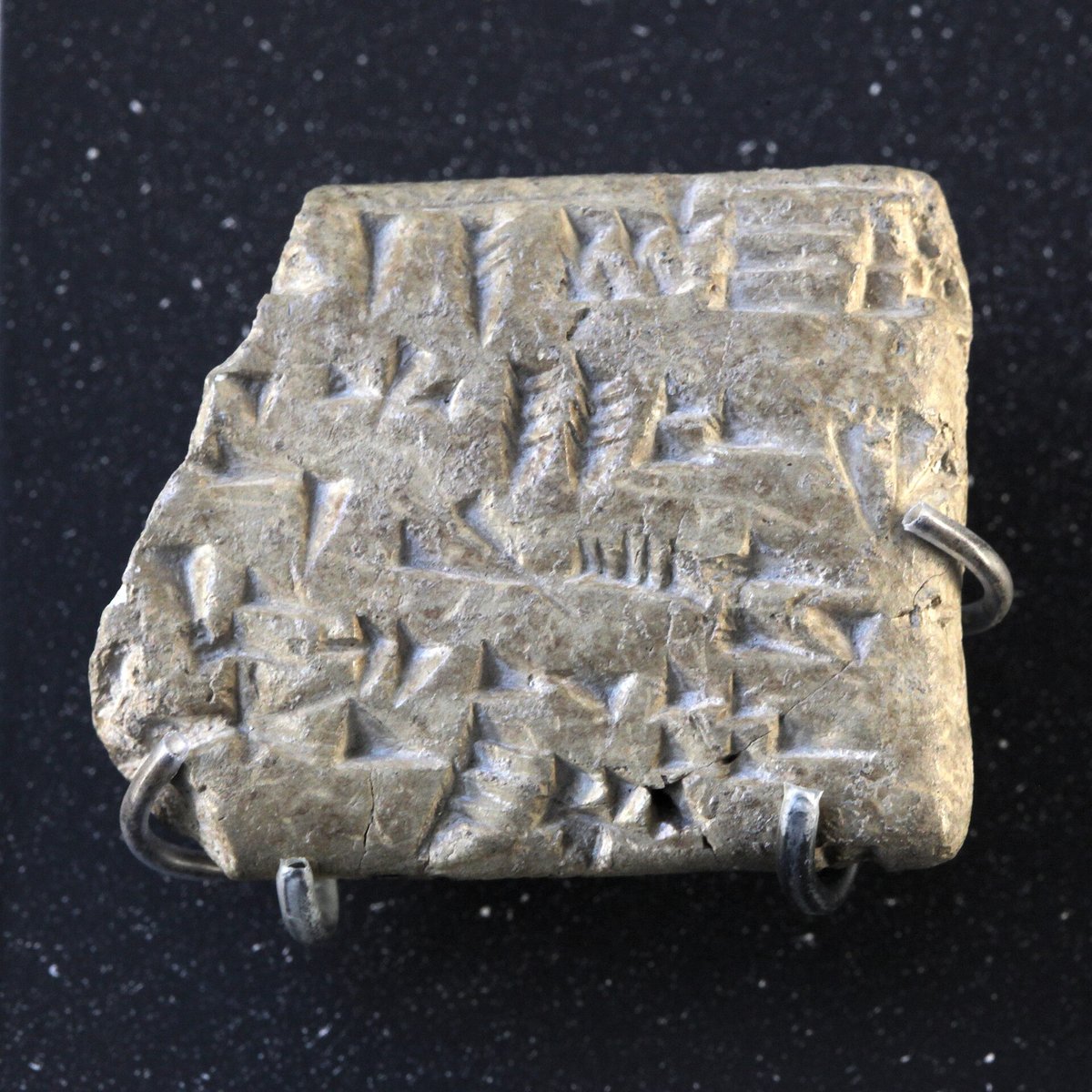
Sometime around 1185 BCE, a scribe in the great port city of Ugarit, on the coast of what is now Syria, pressed a final, frightened message into wet clay. The king had written to a neighbour for help, and the reply that survives is one of the most chilling documents to reach us from the ancient world: the enemy's ships had already come, they had set fire to the towns, and they had done "very great damage." No relief arrived. Ugarit, a wealthy, literate, cosmopolitan city that had stood for centuries, was burned to the ground and never lived in again. Some of those last tablets were found in the ashes, and there is a haunting tradition that a batch of them lay in a kiln, baked hard by the very fire that destroyed the city, as though the letters and the town had been fired in the same oven. Within a single lifetime, Ugarit was not the only place to fall silent. Across the eastern Mediterranean, an entire interconnected world of kingdoms and palaces went up in flames, and we still argue about why.
The event historians call the Late Bronze Age Collapse is one of the strangest and most unsettling episodes in the human record. Around 1200 to 1150 BCE, a whole family of advanced, connected civilisations (the mighty Hittite Empire, the palace kingdoms of Mycenaean Greece, the trading cities of the Levant, and more) fell apart in the space of a few decades. Cities were destroyed, palaces abandoned, trade routes severed, and in some places writing itself was forgotten for centuries. It was not the fall of a single empire but the near-simultaneous collapse of an entire international system, and for over three thousand years no one has been able to say for certain what did it.
The first connected world
To understand how much was lost, you have to picture what existed first, because the Late Bronze Age was not a scatter of isolated tribes but an international age. In the centuries before the collapse, the great powers of the eastern Mediterranean and the Near East were woven together into a single web of diplomacy, trade, and royal marriage. Egypt of the pharaohs, the Hittite Empire in Anatolia, the kingdoms of Babylon and Assyria, the palaces of Mycenaean Greece, the island of Cyprus, and rich coastal cities like Ugarit all knew one another, wrote to one another, and depended on one another.
We know this in astonishing detail because their letters survive. Kings addressed each other as "brother," exchanged lavish gifts, complained about late shipments of gold, and negotiated the marriages of their daughters. Goods travelled enormous distances: a single merchant ship wrecked off the coast of Turkey at Uluburun was found to be carrying copper and tin ingots, Canaanite jars, Egyptian jewellery, Baltic amber, and ebony from Africa, a floating snapshot of a globalised economy running more than three thousand years ago. This was a world that had learned to move raw materials, luxuries, and ideas across the sea. And that very connectedness, so much like our own, may have been its fatal weakness.
The age is named for bronze, the alloy that made the era's tools and weapons, and bronze is where the fragility hides. Bronze is mostly copper mixed with tin, and while copper was reasonably available, tin was rare and had to be hauled in from far away, some of it apparently from as far off as Afghanistan. That meant every sword, ploughshare, and cauldron in the Mediterranean depended on long-distance trade routes reaching deep into Asia. Cut those routes, and a civilisation that ran on bronze could quite literally be starved of the metal that armed and fed it. The Bronze Age had built itself on a supply chain, and supply chains break.
The domino years
Then, over a span that historians usually place between about 1200 and 1150 BCE, it all came undone. The pattern is what makes it so eerie: not one kingdom falling to a stronger rival, but power after power collapsing almost together, as if a single shockwave were rolling through the region.
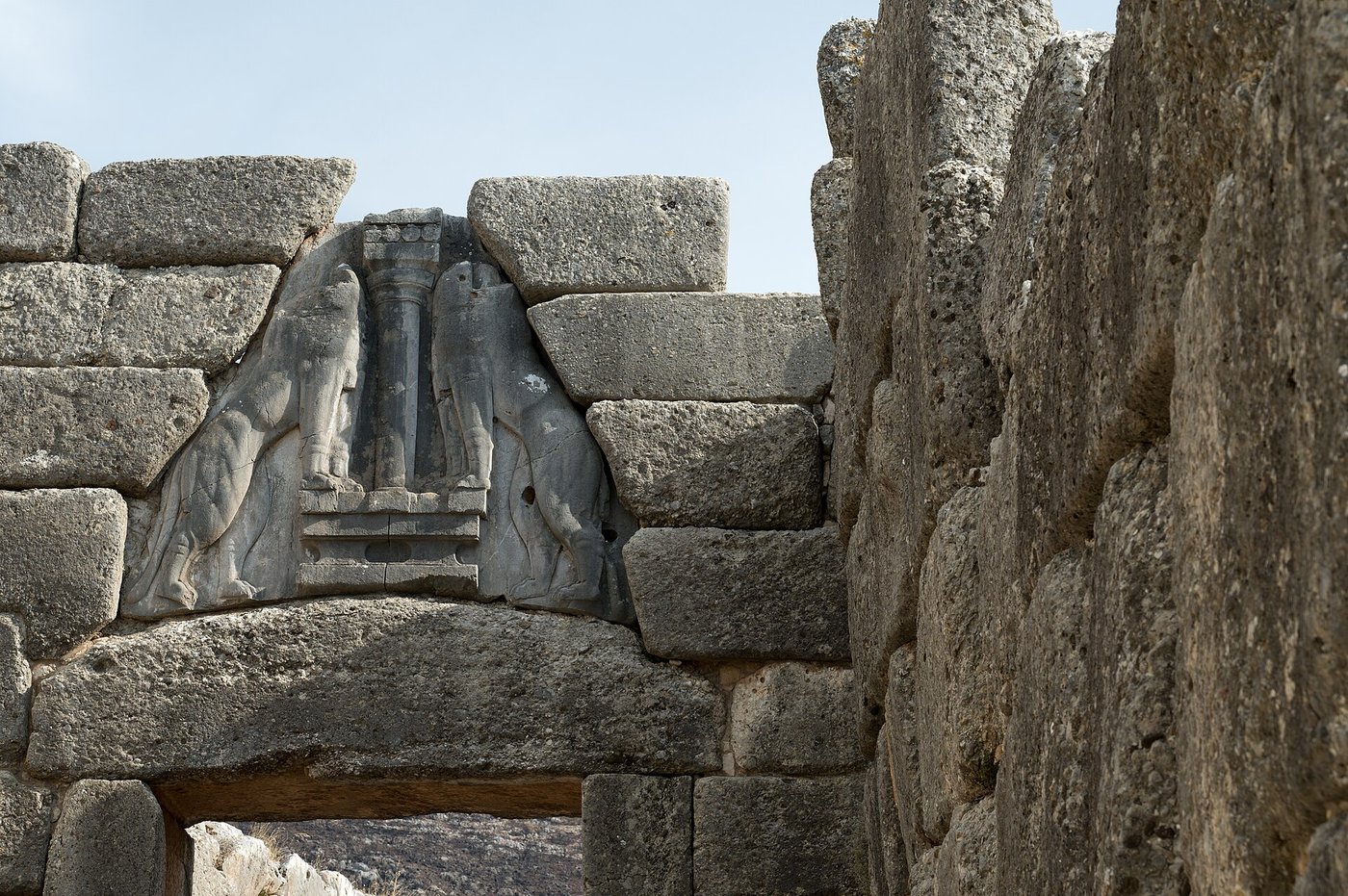
The Hittite Empire, one of the superpowers of the age, simply disintegrated; its grand capital at Hattusa was abandoned and burned, and the empire that had once fought Egypt to a standstill vanished from history. In Greece, the Mycenaean palaces (the world of Agamemnon and the citadels behind the legends of the Trojan War) were destroyed or deserted one after another, at Pylos, Mycenae, Tiryns and beyond. Along the Levantine coast, city after city was reduced to a burnt layer in the soil: Ugarit, Emar, and others were destroyed, many never to be rebuilt. Cyprus was convulsed. Even Egypt, the most durable power of them all, was shaken to its foundations and would soon slide into a long decline. In the archaeological record, this shows up as a horizon of destruction, a band of ash and rubble that turns up at site after site across the whole region, marking the moment the lights went out.
The Sea Peoples
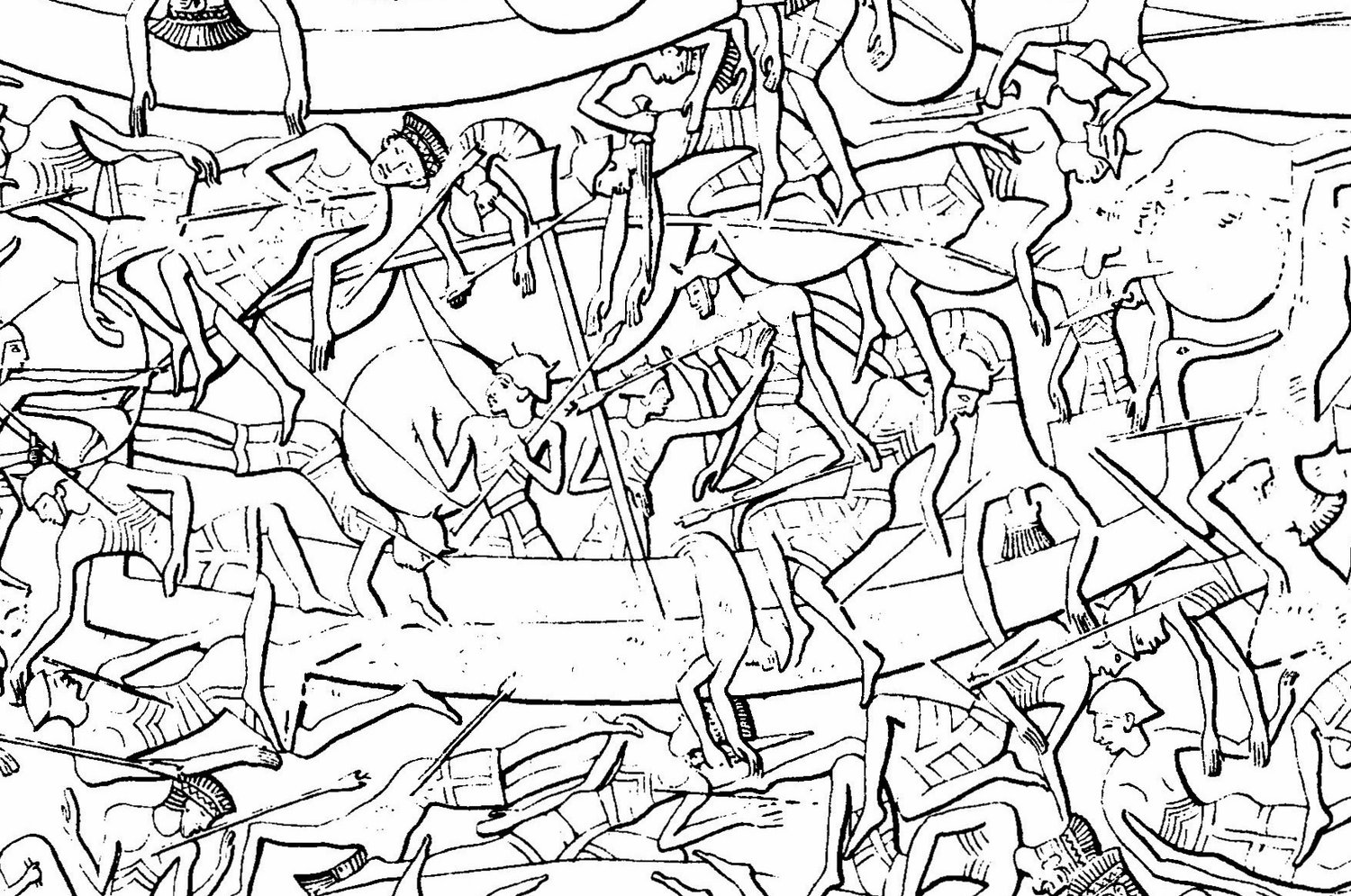
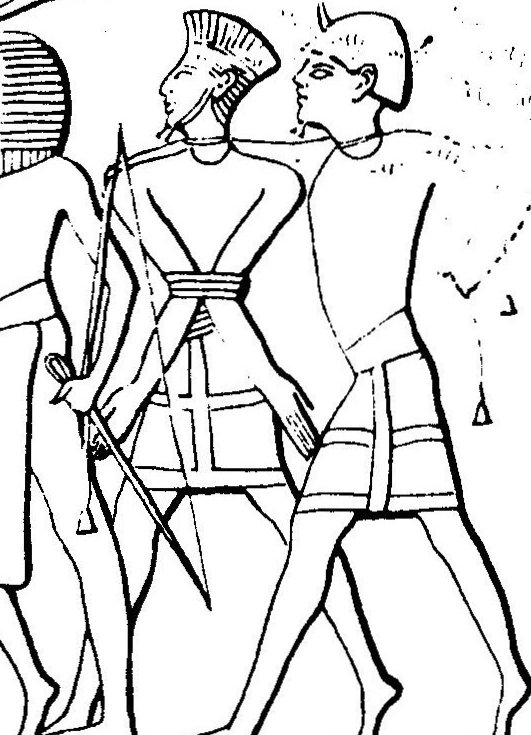
At the centre of the mystery stands a shadowy cast of villains known only by a name the Egyptians gave them: the Sea Peoples. In the surviving records, above all in the inscriptions of the pharaoh Ramesses III, they appear as a coalition of foreign raiders and migrants who came out of the sea and the north, destroying everything in their path and pushing at last against the borders of Egypt itself. Ramesses claimed to have defeated them in a great battle in the Nile Delta around 1177 BCE, a date the historian Eric Cline made famous as a symbolic marker for the whole collapse.
But who were they? This is where the mystery deepens rather than clears. The Egyptian texts list several groups by name (the Peleset, the Sherden, the Shekelesh, the Denyen, the Tjeker, the Weshesh, and others), but they do not really tell us where these people came from. Scholars have connected some of the names to the Aegean, to western Anatolia, to Sardinia and Sicily and the wider central Mediterranean, but the truth is that "the Sea Peoples" were probably not a single nation at all. The best guess of many modern historians is that they were a churning, mixed movement of displaced populations (refugees, raiders, and whole families on the move) driven from their own broken homelands and washing up, sometimes violently, on richer shores. In other words, they may have been as much a symptom of the collapse as a cause of it.
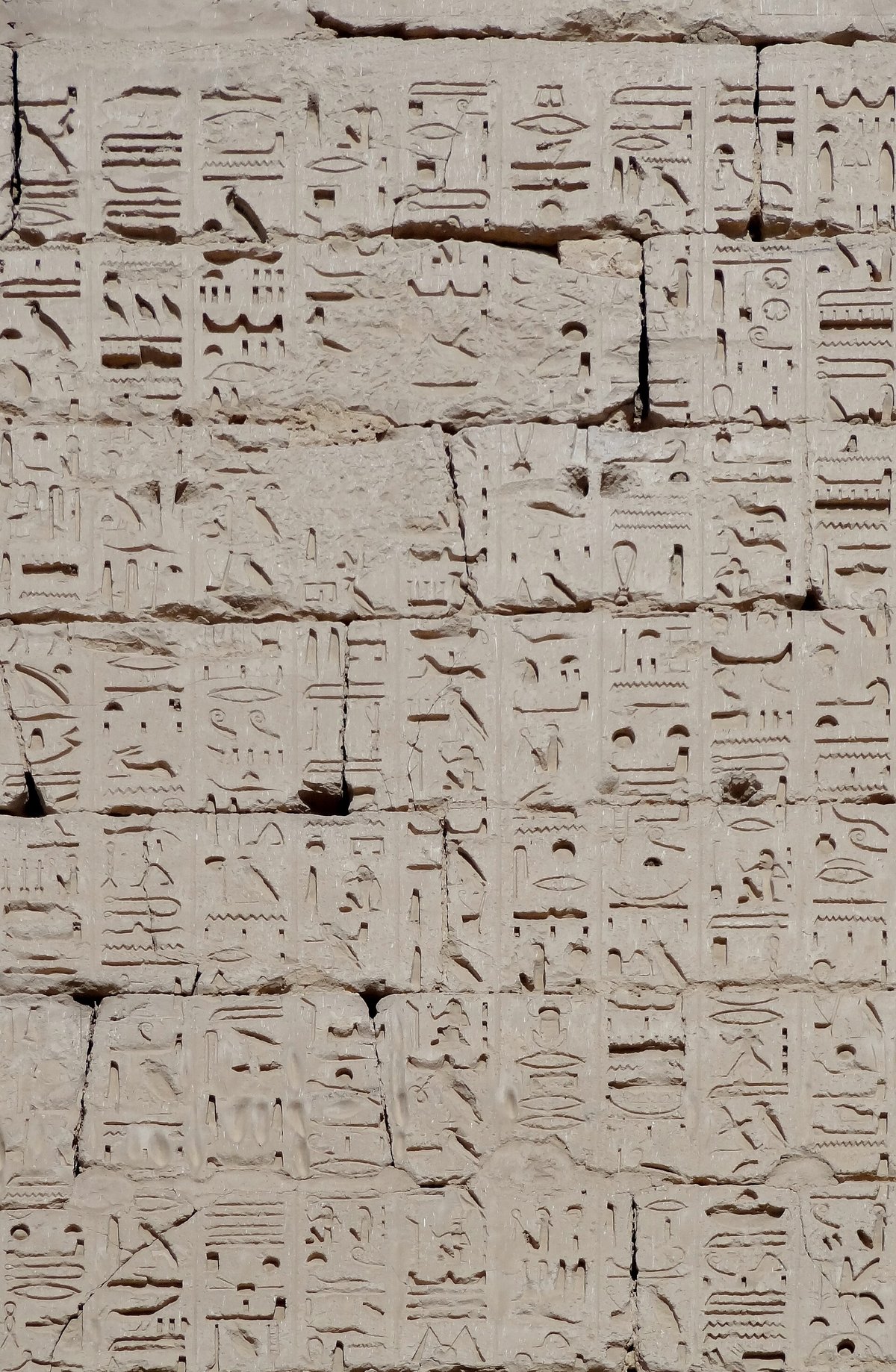
"The foreign countries made a conspiracy in their islands. All at once the lands were removed and scattered in the fray. No land could stand before their arms… They were coming forward toward Egypt."— from the inscriptions of Ramesses III at Medinet Habu (c. 1180 BCE), describing the Sea Peoples — one of the only contemporary accounts of the wave that struck the Bronze Age world
One thing does seem clear: at least some of these wanderers eventually settled down. The Peleset of the Egyptian texts are widely identified with the Philistines, who established themselves on the coast of the southern Levant: the same Philistines who appear, centuries later, as the great rivals of the ancient Israelites in the Hebrew Bible. If that link holds, then one of the most famous peoples of scripture began as a fragment of the Bronze Age catastrophe, survivors of a lost world looking for a new home.
The great whodunnit
For a long time, the Sea Peoples took the blame for everything: a horde of barbarians who smashed the civilised world, and that was that. But the more closely archaeologists looked, the less that simple story held up. How could one loose confederation of seaborne raiders topple the Hittite Empire, wreck the Mycenaean palaces, burn the Levantine cities, and shake Egypt, all at roughly the same time, across such a vast area? The Sea Peoples began to look less like an all-conquering army and more like one thread in a much larger unravelling. So historians went looking for the deeper causes, and found not one, but several, all striking at once.
The first suspect is climate. A growing body of evidence (from ancient pollen trapped in lake beds, from cave formations, from studies of sea-surface temperatures) points to a serious, prolonged drought settling over the eastern Mediterranean right around the time of the collapse. And crucially, the ancient people themselves seem to be telling us about it. In the last letters from the doomed cities, kings write desperately about grain: pleas to send food, warnings that people are starving, one Hittite request for emergency shipments framed almost as a matter of life and death. A drought that wrecked the harvests across an entire interconnected region could have set the whole system tottering before a single raider appeared.
The second suspect is earthquakes. The eastern Mediterranean sits on a restless meeting of tectonic plates, and some geologists have argued that the collapse coincided with an "earthquake storm": a decades-long cluster of major quakes rippling along the fault lines and toppling cities in sequence. Several of the destroyed sites do show signs consistent with seismic damage: collapsed walls, crushed skeletons, buildings thrown down. An earthquake alone would not end a civilisation, but a run of them, striking cities already weakened by hunger and unrest, could have been the blow that broke fragile states.
Was there a single trigger, or none? An older school looked for one master cause: the Sea Peoples, or a great drought, or a mega-quake. The influential modern view, argued forcefully by Eric Cline, is that there was no single culprit at all: the collapse was a "perfect storm," a cascade in which drought, famine, earthquakes, internal rebellion, and migration each amplified the others until a tightly connected system failed all at once. Critics counter that "everything, together" can become a way of explaining nothing, and that we should weigh the causes rather than simply pile them up. The debate is really about how complex societies die: with one dramatic push, or by a thousand simultaneous cuts.
The system that ate itself
This brings us to the most modern, and perhaps the most disturbing, explanation of all: that the Bronze Age world collapsed not despite its sophistication but because of it. The Late Bronze Age kingdoms were highly centralised and highly specialised. Wealth and power flowed through palace bureaucracies; food, metal, and luxury goods moved along international trade routes that everyone depended on and no one fully controlled. It was efficient, and brittle.
In a system like that, shocks do not stay local. A drought in one region raises grain prices everywhere. A severed tin route disarms distant armies. A wave of refugees fleeing one ruined kingdom becomes the raiders threatening the next. A palace that collapses stops paying and protecting the people who fed it, so they revolt or scatter, and the countryside that supported the next palace begins to fail too. Each failure knocks over the domino beside it. This idea, sometimes called a general systems collapse, suggests that the very interconnectedness that made the Bronze Age rich also meant that when enough parts failed together, the whole network could come down faster than any of its members could have imagined. The world did not just get invaded. In a sense, it short-circuited.
The long darkness
What followed was not a quick recovery but a real dark age. In Greece, the effect was almost total: the Mycenaean world vanished so completely that even writing was forgotten. The Linear B script used to run the palaces disappeared, and the Greeks would not write again for something like four hundred years, until an entirely new alphabet arrived. Population fell, villages shrank, monumental building stopped, and the memory of the palaces faded into the half-legendary world of Homer's epics: poems composed centuries later about a golden age the poets themselves could no longer clearly see.
Elsewhere the darkness was patchier but real. Trade withered, cities contracted, and the grand international system of "brother" kings writing to one another was simply gone. Yet collapse, as always, was also a strange kind of clearing. Out of the wreckage came new things: smaller, tougher societies, and above all the spread of iron, which was more common than tin and did not depend on those long, vulnerable trade routes. The Iron Age that followed was in many ways the child of the Bronze Age's death. The old world had to fall before the next one could be born.
"A single mysterious super-people — the Sea Peoples — swept in out of nowhere (some say from Atlantis) and wiped out every Bronze Age civilisation in one great invasion."
The Sea Peoples were real, but they were almost certainly not a single nation, and they did not do it alone. They look more like a mixed movement of people already displaced by the crisis than a mysterious army that started it. The collapse was regional and multi-causal (drought, famine, earthquakes, broken trade, and internal breakdown feeding one another), and the "one invasion" story is a simplification the ancient Egyptians themselves helped create by carving their enemies onto a wall. There is no Atlantis here, and no need for one. The truth, a whole connected world failing at once, is far more sobering.
A network that looks uncomfortably like ours
It is tempting to file all this under ancient history, safely sealed off from us by three thousand years. But the reason scholars keep returning to the Late Bronze Age Collapse is that it feels uncomfortably familiar. Here was a network of prosperous, technologically advanced, closely interconnected societies, proud of their reach, dependent on long supply chains, and reliant on a stable climate, that turned out to be far more fragile than anyone living in it could have believed. It did not take a single apocalypse to bring it down. It took several ordinary disasters arriving close together, in a system too tightly wound to absorb them.
We live in the most connected world there has ever been, more dependent than ever on distant supplies, stable weather, and systems we mostly trust without understanding. The Bronze Age offers no neat prophecy, but it does offer a warning written in ash across an entire region: that complexity and connection are strengths right up until the moment they become the very channels through which collapse travels. The scribe in burning Ugarit did not know he was living at the end of an age. He was simply asking for help that never came. Three thousand years later, his last clay letter still sits in the ruins, a message, in a way, addressed to anyone confident that their own connected world is too big and too clever to fall.
Sources & further reading
- Eric H. Cline, 1177 B.C.: The Year Civilization Collapsed — the leading modern account, and the source of the "perfect storm" / systems-collapse argument and the symbolic 1177 BCE date.
- Robert Drews, The End of the Bronze Age — an influential study focusing on changes in warfare and the military dimension of the collapse.
- The inscriptions of Ramesses III at Medinet Habu — the principal contemporary Egyptian record of the Sea Peoples.
- The Ugarit archives, including the final correspondence of King Ammurapi warning of enemy ships; and the Amarna and Hittite letters illuminating the diplomacy and grain crises of the age.
- Palaeoclimate research on Late Bronze Age drought (pollen cores from the Levant and Cyprus) and the "earthquake storm" hypothesis for seismic destruction across the region.
Image credits (via Wikimedia Commons): Battle of the Delta relief, Medinet Habu — Oltau (CC BY-SA 4.0); Medinet Habu inscriptions — Olaf Tausch (CC BY 3.0); Lion Gate, Mycenae — Zde (CC BY-SA 4.0); Sea Peoples relief detail — Oltau (CC BY-SA 4.0); Ugarit cuneiform tablet (Louvre AO 19992) — Rama (CC BY-SA 3.0).