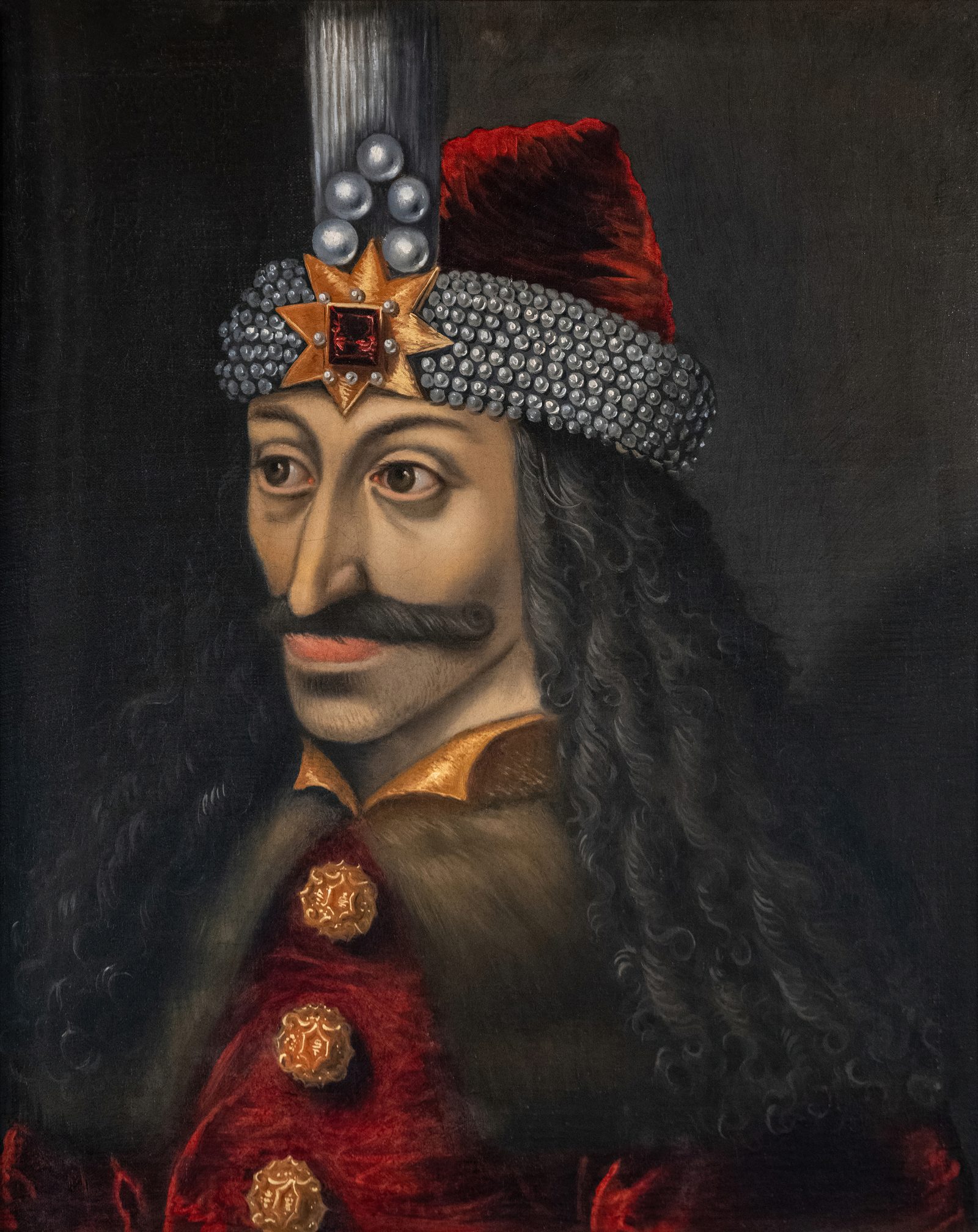
In 1462 an invading Ottoman army, one of the most powerful military forces on earth, marched toward the Wallachian capital of Targoviste. They were veterans; they had seen war. But as they neared the city they came upon something that reportedly stopped the advance cold: a forest of stakes stretching across the valley, and impaled upon them the rotting bodies of some twenty thousand people. Even the Sultan, Mehmed II, the conqueror of Constantinople, is said to have turned back, remarking that he could not take the country of a man capable of such things. The man who built that forest of the dead was Vlad III, prince of Wallachia. History remembers him by a darker name: Vlad the Impaler. And centuries later, a novelist would borrow another of his names: Dracula.
Here's the thing that makes Vlad so unsettling: he was a real ruler, not a fictional monster, and pulling the history apart from the horror story tells you a lot about how legends are made.
A hostage childhood
Vlad III was born around 1431 in Transylvania, into the ruling family of Wallachia, a principality wedged between the Kingdom of Hungary and the expanding Ottoman Empire. It was a terrible place and time to be a small state. His father was Vlad II, known as Vlad Dracul ("Vlad the Dragon"), a member of the chivalric Order of the Dragon, sworn to defend Christendom against the Ottomans. From that title comes the family name that would echo through history: Dracula means, roughly, "son of the Dragon."
To keep the peace, Vlad's father handed over young Vlad and his brother Radu to the Ottomans as hostages. Vlad spent formative years in captivity at the Ottoman court, an experience that, historians often argue, hardened him, taught him the politics of fear, and left him with a lasting hatred. While he was a hostage, his father and older brother were murdered by rival Wallachian boyars (the nobility), his brother reportedly buried alive. Vlad came out of captivity an angry young man with a throne to reclaim and scores to settle.
The throne, and the terror
Vlad finally secured the Wallachian throne in 1456, and he ruled the way a man forged in betrayal might: with absolute, theatrical brutality. His signature method of execution, impalement, was chosen precisely because it was slow, public, and unforgettable. Victims were left on stakes for all to see, a standing advertisement of what crossing him cost.
And he used it constantly. He impaled enemy soldiers, criminals, the dishonest, the disloyal and, famously, the very boyar class he blamed for his family's destruction. One notorious account describes him inviting the boyars to a feast, then seizing the older ones and impaling them, and marching the rest off to forced labour building a fortress until the clothes rotted from their backs. Whether every grim story is literally true, the pattern is well attested: Vlad governed by manufacturing terror, and he was extraordinarily good at it.
In Romania, Vlad is not generally remembered as a monster - he's something closer to a national hero. To many Romanians he was a fierce defender of the homeland against Ottoman conquest and a ruler who imposed brutal but real order, cracking down on crime and corruption. The blood-soaked villain is largely how foreign (especially German) pamphlets chose to portray him. Whether Vlad is a tyrant or a patriot has, quite literally, depended on which country was telling the story.
The war with the Sultan
Vlad's defining conflict was with the Ottoman Empire. When he refused to pay the traditional tribute and rejected the Sultan's demands, war became inevitable. In 1462 Mehmed II, fresh from taking Constantinople nine years earlier, invaded with a massive army.
Vastly outnumbered, Vlad fought a brutal guerrilla campaign: scorched earth, poisoned wells, hit-and-run raids, and a daring night attack on the Ottoman camp that aimed to assassinate the Sultan himself. And then there was the psychological warfare: the "forest of the impaled" outside Targoviste, a deliberate spectacle of horror designed to break enemy morale. It is one of history's starkest examples of terror used as a calculated weapon of war.
"The Sultan, having seen so many corpses impaled… was overcome with amazement and said that he could not conquer the country of a man who could do such terrible and unnatural things."— from a 15th-century account of Mehmed II's 1462 campaign in Wallachia (as relayed by later chroniclers)
The night that nearly killed a sultan
The most audacious episode of Vlad's war with the Ottomans came in June 1462, and it deserves telling in full because it shows he was far more than a sadist with a taste for stakes. He was a daring battlefield commander. Heavily outnumbered as Mehmed II's enormous army advanced through Wallachia, Vlad launched what's known as the Night Attack. Under cover of darkness, his men infiltrated the vast Ottoman camp, reportedly with Vlad himself riding in, aiming to reach and kill the Sultan in his own tent.
It was a decapitation strike centuries before the term existed. The raid caused chaos and heavy casualties in the Ottoman camp, but Vlad's men, in the dark and confusion, struck the wrong tents and failed to find Mehmed himself. The Sultan survived, and the sheer weight of the Ottoman army still forced Vlad onto the back foot. Yet the boldness of the attempt rattled the invaders and entered legend. Combined with the scorched earth, the poisoned wells, and the infamous "forest of the impaled" that greeted the Ottomans outside Targoviste, it's clear Vlad waged a sophisticated campaign of asymmetric and psychological warfare against a vastly superior foe. He was terrifying, but he was also, in purely military terms, clever and brave.
How a prince became a vampire
So how did a 15th-century warlord become the most famous vampire in fiction? The answer is a centuries-long game of telephone.
In Vlad's own lifetime and just after, German-language pamphlets circulated lurid stories of his cruelties across Europe, early "true crime" bestsellers helped along by the newly invented printing press. These cemented his reputation in the West as a bloodthirsty tyrant. The "blood" association and the dramatic name "Dracula" lingered in the European imagination for centuries.
Then, in 1897, the Irish author Bram Stoker published his novel Dracula. Stoker borrowed the name and a vague Transylvanian/Carpathian setting, and he clearly knew a little about a historical warlord called "Dracula." But, and this surprises people, Stoker's Count Dracula is mostly invented. The vampire mythology, the fangs, the aversion to sunlight and garlic, the shape-shifting into a bat: that's Gothic fiction and folklore, not the biography of Vlad III. Stoker hung his fictional monster on a real name and a real reputation for cruelty, and the two fused permanently in popular culture.
"Vlad the Impaler was a vampire who drank blood, and Bram Stoker's Dracula is basically his life story."
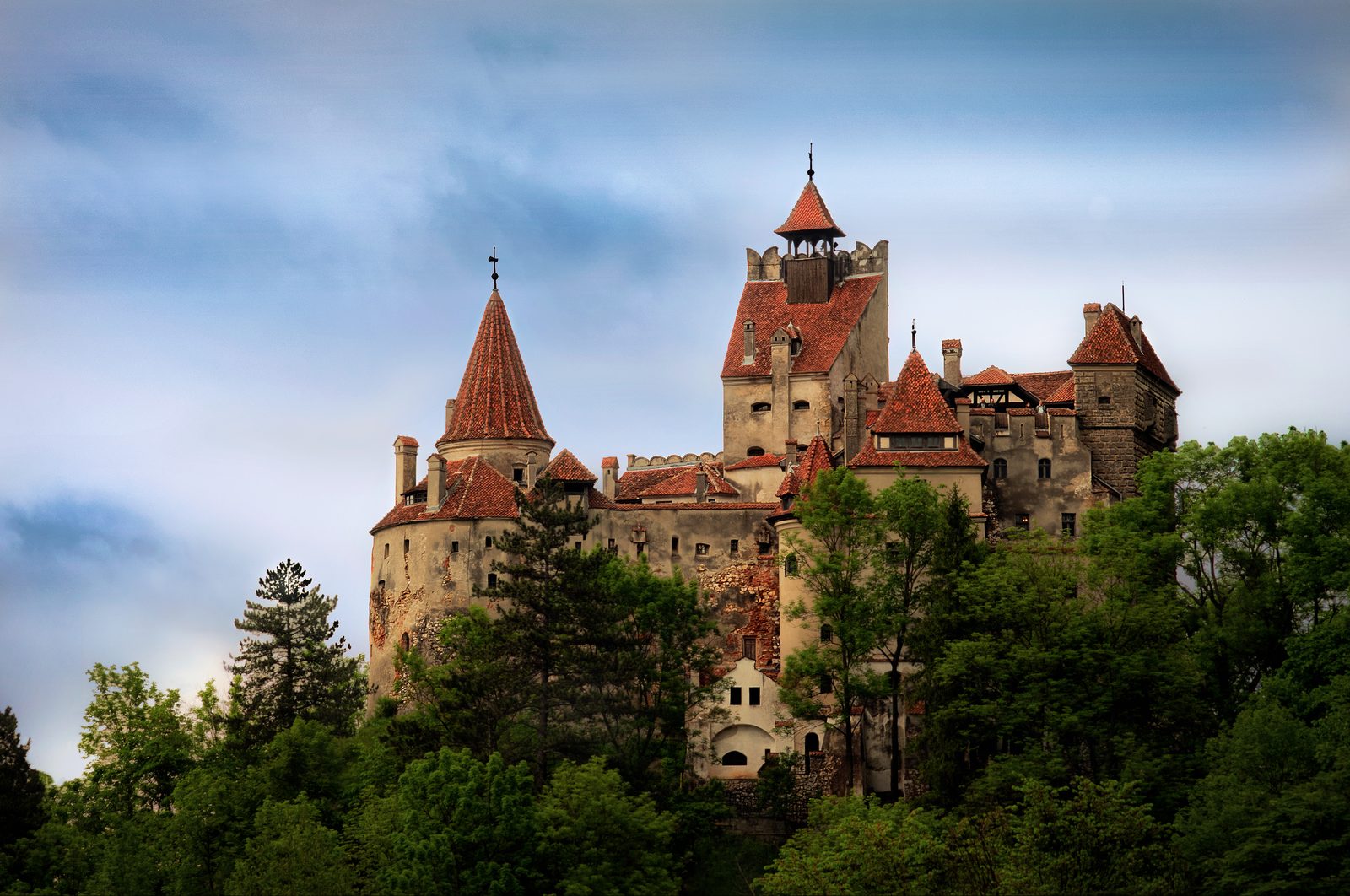
Vlad was a real prince and warrior - violent, yes, but a flesh-and-blood ruler, not a supernatural being. There's no historical evidence he drank blood. Stoker took the name "Dracula" and the Transylvanian flavour, then built an almost entirely fictional vampire around them. Bran Castle, sold to tourists as "Dracula's Castle," has only the flimsiest connection to the real Vlad.
A grisly end and an immortal afterlife
Vlad's reign was not all triumph. After his 1462 campaign he was imprisoned for years by the King of Hungary (partly on the strength of those hostile pamphlets), lost his throne, and only briefly regained power. He was killed in battle around late 1476 or early 1477, fighting the Ottomans once more. By some accounts his head was cut off and sent to the Sultan in Constantinople as a trophy, a final, fitting echo of the impaler's own taste for displaying the bodies of his enemies. His burial place is disputed to this day; the tomb traditionally said to be his was reportedly found empty when opened, a detail that has only fed the legend.
That's the strange duality of Vlad III. In Romania, a statue-worthy patriot who held the line against an empire. In the West, a byword for cruelty. And in global pop culture, the accidental ancestor of every brooding vampire in every film since. Few historical figures have been remembered in three such different ways at once. The real man was neither a saint nor a supernatural fiend. He was a product of a savage age, who fought monstrous odds with monstrous methods, and whose name proved far too good a story to leave in the past.
The golden cup: rule by fear at home
Vlad's terror wasn't aimed only at enemy armies. It was the basis of how he governed his own country, and there's a famous legend that captures it perfectly. The story goes that Vlad had a solid gold cup placed at a public fountain in the centre of a town square, free for anyone to drink from. In most kingdoms it would have vanished within the hour. In Vlad's Wallachia, it is said, the cup sat there untouched for his entire reign, because everyone knew, with total certainty, the unspeakable fate that awaited a thief.
True or not, the legend tells you how Vlad's rule was remembered: as a brutal but effective war on crime and disorder. He came to a fractured, lawless principality riven by scheming nobles and imposed savage order on it. To the merchants and common people who benefited from safe roads and harsh, predictable justice, this could look like strong leadership. To his victims, it was a reign of pure terror. Both were true. Vlad understood, with chilling clarity, that fear consistently applied is a tool of statecraft, and he wielded it more ruthlessly than almost any ruler of his age.
Brother against brother
One of the most poignant threads of Vlad's story is his younger brother, Radu, known as Radu the Handsome. The two boys were Ottoman hostages together, but their paths split utterly. Where captivity seems to have filled Vlad with hatred of the Ottomans, Radu converted to Islam, became a favourite at the Ottoman court, and ultimately fought for the Sultan, against his own brother.
After Mehmed II's 1462 invasion failed to crush Vlad outright, the Ottomans installed Radu as their preferred ruler of Wallachia, and many of Vlad's own exhausted, terrified boyars defected to the gentler brother. Vlad lost his throne not only to a foreign empire but to his own sibling, a personal betrayal layered on top of a political one, in a family already shattered by murder and hostage-taking. It's a reminder that behind the horror-movie reputation was a very human story of a broken family torn apart by empire.
Tyrant or national hero? Western pamphlets and the Dracula legend fixed Vlad in the popular mind as a sadistic monster. But Romanian tradition, and some historians, frame him as a ruthless-yet-necessary defender who held a small nation against the most powerful empire of the age and stamped out the corruption tearing it apart. The same impalements read as either psychopathic cruelty or calculated wartime deterrence depending on who's telling the story. Vlad may be history's clearest case of "monster to his enemies, hero to his own."
The pamphlets that built a monster
It's worth dwelling on how Vlad's monstrous reputation spread, because it's a striking early example of media shaping history. Vlad ruled at the exact moment the printing press was transforming Europe, and lurid accounts of his cruelties, printed in German in cities like Nuremberg and Strasbourg, became some of the earliest "bestsellers" of the print era. These pamphlets came with woodcut illustrations, the most infamous showing Vlad calmly dining at a table set amid a forest of impaled victims. They were printed and reprinted for decades, sensational and politically convenient for his enemies.
It's no accident that the most horrifying portrait of Vlad comes from German-speaking lands, with whose merchants in Transylvania he had violently clashed. Meanwhile, a parallel tradition of stories circulating in Russia painted a more admiring picture of a harsh but just ruler. Same man, same deeds, opposite spin, depending on who controlled the printing presses. In a very real sense, "Vlad the Impaler" the bogeyman is a product of 15th-century mass media as much as of 15th-century battlefields, and that printed reputation is the thread Bram Stoker would eventually pick up four centuries later. Vlad may be one of the first people in history whose image was, quite literally, mass-produced into a monster.
Digging for the real Vlad
Even Vlad's death and burial refuse to be tidy. He was killed fighting the Ottomans around the turn of 1476–77, but the sources disagree on exactly how: killed in battle, cut down in an ambush, or even, in one account, accidentally struck by his own men. The traditional story holds that he was buried at Snagov Monastery, on an island near Bucharest. Yet when archaeologists reportedly opened the supposed tomb there in the early 20th century, it was said to be empty or to contain only animal bones, deepening the mystery and feeding the legend that, fittingly for "Dracula," there was no body in the grave.
That ambiguity is part of why Vlad has been so easy to mythologise. A ruler whose reputation was mass-produced by the printing press, whose deeds were spun in opposite directions by his enemies and his countrymen, and whose very grave may be empty: he's almost custom-built to slip out of history and into legend. Modern historians keep working to recover the real man from beneath the Dracula varnish, sifting the German pamphlets, the Ottoman chronicles, and the Romanian and Russian traditions against one another. What emerges is neither the cartoon sadist nor the spotless hero, but something more interesting: a brilliant, brutal, traumatised ruler who did monstrous things in a monstrous time, and whose name we now, somewhat unfairly, attach mainly to a fictional count in a cape.
Image: Bran Castle, Transylvania, Romania (via Wikimedia Commons).
Read next: The Fall of Constantinople, 1453: Cannon Against a Thousand-Year Wall and The First Battle of Panipat: How Babur Founded the Mughal Empire.
Sources & further reading
- Radu Florescu & Raymond McNally, Dracula: Prince of Many Faces — the standard biography untangling history from legend.
- M. J. Trow, Vlad the Impaler: In Search of the Real Dracula.
- Bram Stoker, Dracula (1897) — the novel that fused the name to the vampire myth.
- Encyclopaedia Britannica, "Vlad III Dracula"; the 15th-century German pamphlet tradition and Russian Skazanie o Drakule as primary-source material.