In the year 548, on the orders of a general who had made himself king, masons at Marib cut a wall of text into stone: one hundred and thirty-six lines of it, the longest inscription any ruler of that country ever left. It is a boast, and most of it is about war and plague and the grand embassies that came to bow at his court. But near the middle it turns, almost in passing, to a repair: the great dam of Marib had burst again, and Abraha had mended it, feeding an army of workmen through a hot Arabian summer to close the breach. He had every reason to think the wall would stand as it always had. It had stood, in one form or another, for well over a thousand years. Within a generation of that carving, it was gone for good, and the kingdom it had watered went with it.
The dam at Marib is one of those places where the story people know and the story the ground tells have come apart. The famous version is a short, moral one: a proud and pampered people, blessed with gardens on both banks of a river, grew ungrateful, and so a flood was sent to sweep their paradise away in a single night. It is a good story, and a very old one, and versions of it were circulating in Arabia long before they were written down. The harder version, the one you can read off the stones and the silt, took a thousand years to unfold, had almost nothing to do with a single storm, and turns on the least dramatic force in history: the daily, unglamorous work of keeping a machine in repair.
Two towers and no dam between them
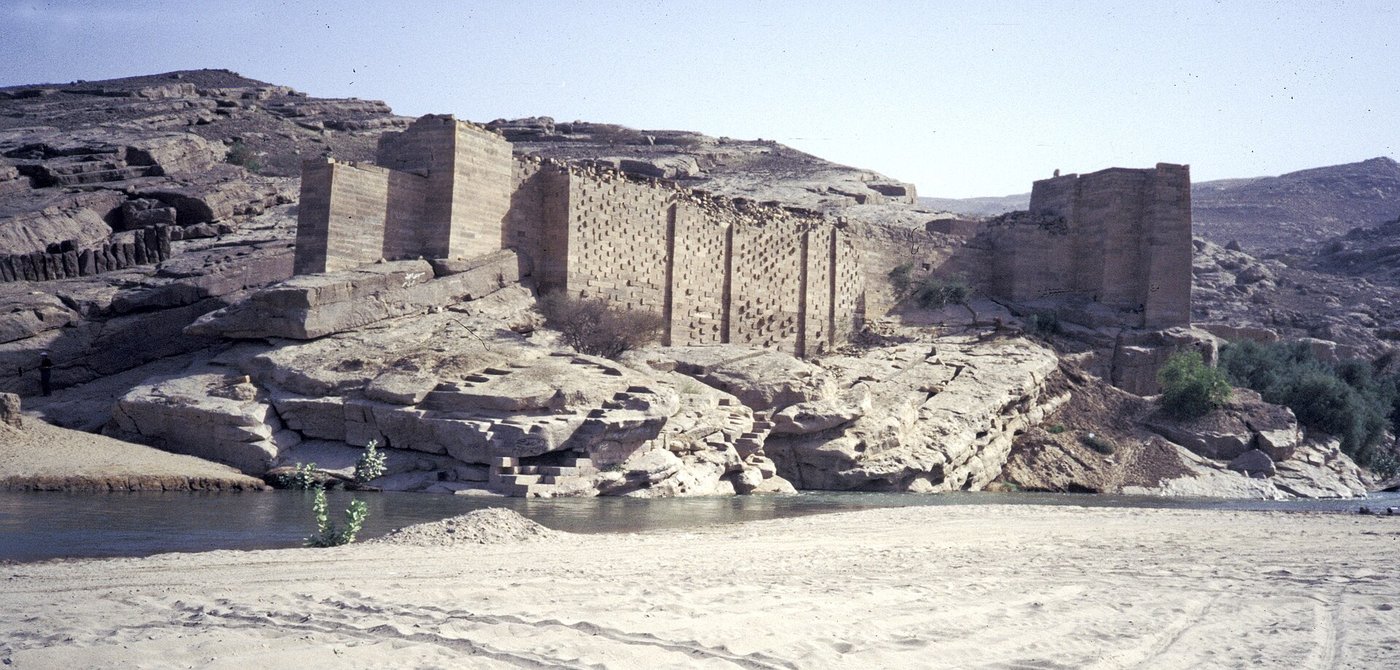
Come to the site today and the first thing you notice is what is missing. Two great blocks of ancient stonework stand about six hundred metres apart on either side of a wide, dry valley, the Wadi Dhana, where it breaks out of the highlands of Yemen onto the desert. They are massive, sloped, faced with cut stone, and they plainly belong together. Between them there is nothing but air and gravel. A visitor’s eye wants to draw the line across, and that line, the earth wall that once ran from one work to the other, is exactly what did not survive.
This is the wrong picture to carry into the story, though, because it makes the dam look like a single wall that either held or failed. It was never that simple. The two stone structures are not the dam; they are its plumbing. Each was a sluice, a controlled outlet where water could be let out of the reservoir and steered into the fields. The real dam was the thing that has vanished: a long, sloping bank of packed earth and rubble, faced with stone, that ran across the whole valley floor and turned a seasonal torrent into a manageable supply. Earth is cheap and strong and, if you keep at it, endlessly repairable. It is also the first thing to go when nobody is keeping at it.
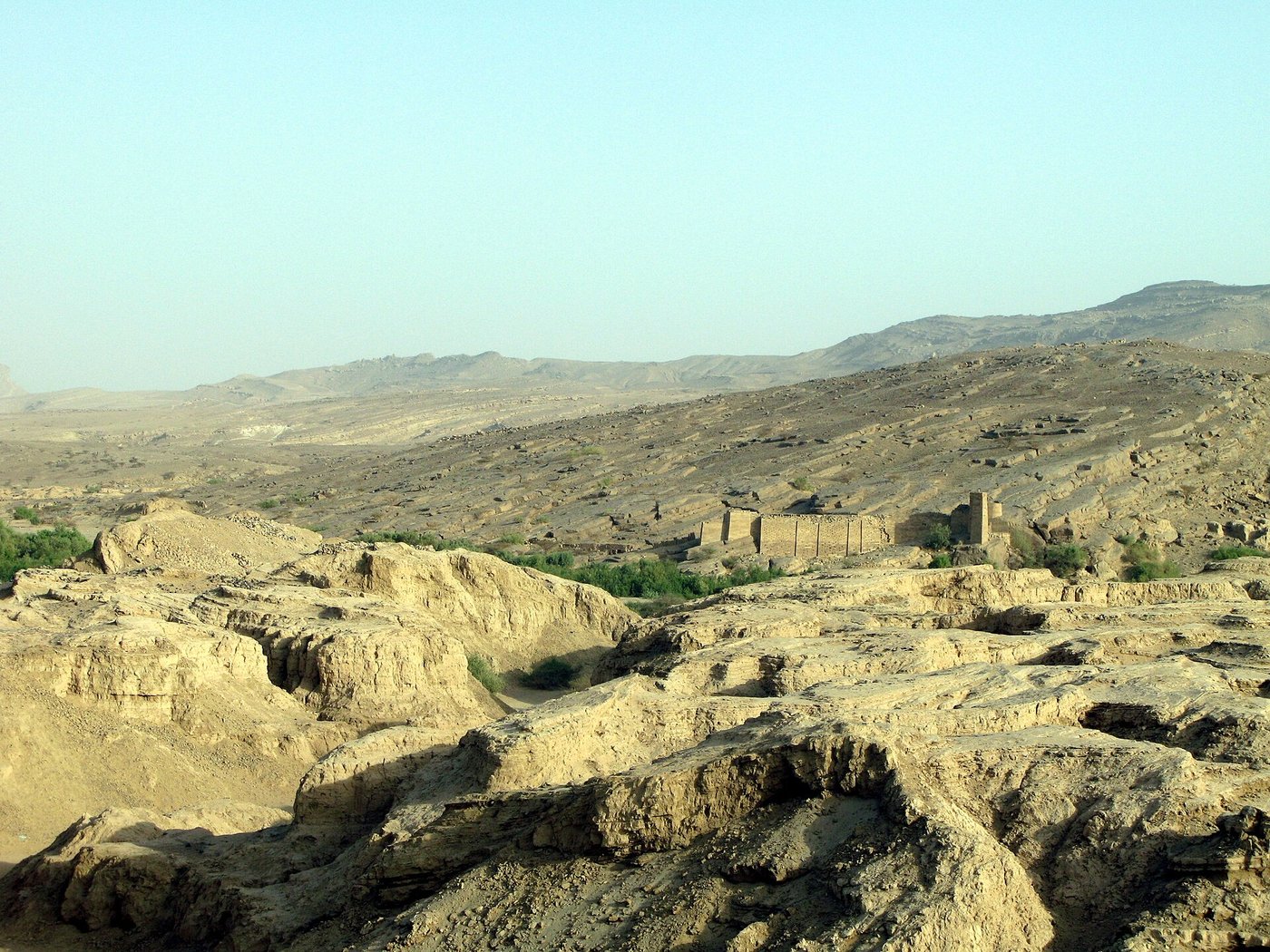
Understanding the valley helps. Yemen sits at the edge of the summer monsoon. For most of the year the Wadi Dhana is a dry bed of stones, but twice a year, when the rains fall on the highlands above, it fills in hours with a brown, violent flood carrying the runoff of a catchment the size of a small country. Left alone, that water races across the desert and is gone. The whole purpose of Marib was to catch it: not to hold it for months, but to grab each surge as it came, spread it across the fields, and let it soak in before it could escape. The dam was less a lake than a gate on a flash flood.
The dam that stored almost nothing
People hear the word dam and think of a reservoir, a deep still lake behind a concrete wall. Marib was not that, and the difference is the key to everything that follows.
Marib was a diversion dam, not a storage dam. Its job was to intercept the twice-yearly floods of the Wadi Dhana and shunt them sideways through the two sluices into a network of canals, settling basins and distribution tanks, and from there onto roughly a hundred square kilometres of fields, some twenty-five thousand acres, split between the north bank and the south. The water was meant to move through, not to sit. That is why the sluices, and not the barrier, were the clever part: gates that could open the moment a flood arrived and shut again before the next one silted the whole system solid.
At its full development the earth barrier ran for around five hundred and eighty metres and stood perhaps fourteen metres high, with five spillway channels to bleed off water it could not use, two stone-faced sluices, a settling pond to drop the worst of the mud, and a canal a kilometre long carrying the flow to a masonry distribution tank. It was not built in a day, or a century. The earliest earthworks in the valley may go back to around 1700 BC. The monumental version, the one with cut stone and inscriptions, took shape in the eighth century BC and was rebuilt, raised and refaced for the next thousand years and more.
What that engineering bought was startling in a land with no rivers to speak of. Two green belts of date palms, cereals and orchards ran along both banks below the dam, fed entirely by floodwater steered onto them by human hands. Arab memory kept the shape of it exactly: the oasis of Marib was remembered as two gardens, one on the right and one on the left. In a desert, that was not a metaphor. It was a map.
The kingdom the water built
Around those two gardens grew Saba (the Sheba of the Hebrew Bible and the Qur’an), and for a long stretch of the first millennium BC it was the richest and most powerful state in southern Arabia. Its wealth had two engines, and the dam was one of them. The other was smoke.
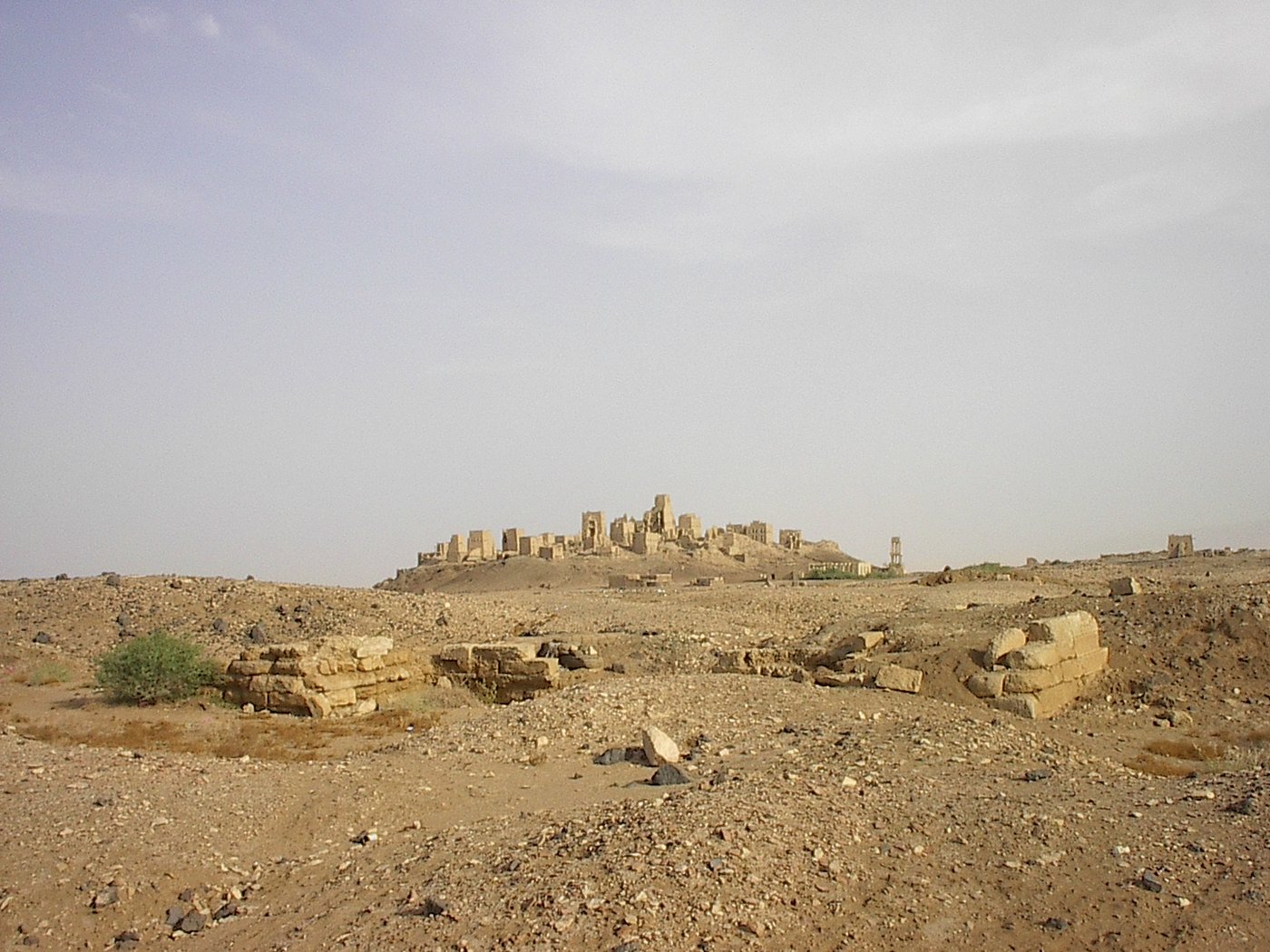
Southern Arabia was the world’s source of frankincense and myrrh, the aromatic resins burned in temples from Rome to the Ganges and worth, at times, something close to their weight in silver. The caravan roads that carried them north ran through the Sabaean heartland, and Marib sat where the incense road met the farmed oasis. A traveller arriving from the desert would have seen, improbably, a walled city of mud-brick towers rising out of green fields, ringed by temples, with the dam and its canals glittering to the west. The Assyrians knew of Saba. So did the Greeks, who called the region Arabia Felix, Fortunate Arabia, and half-believed it floated on perfume.
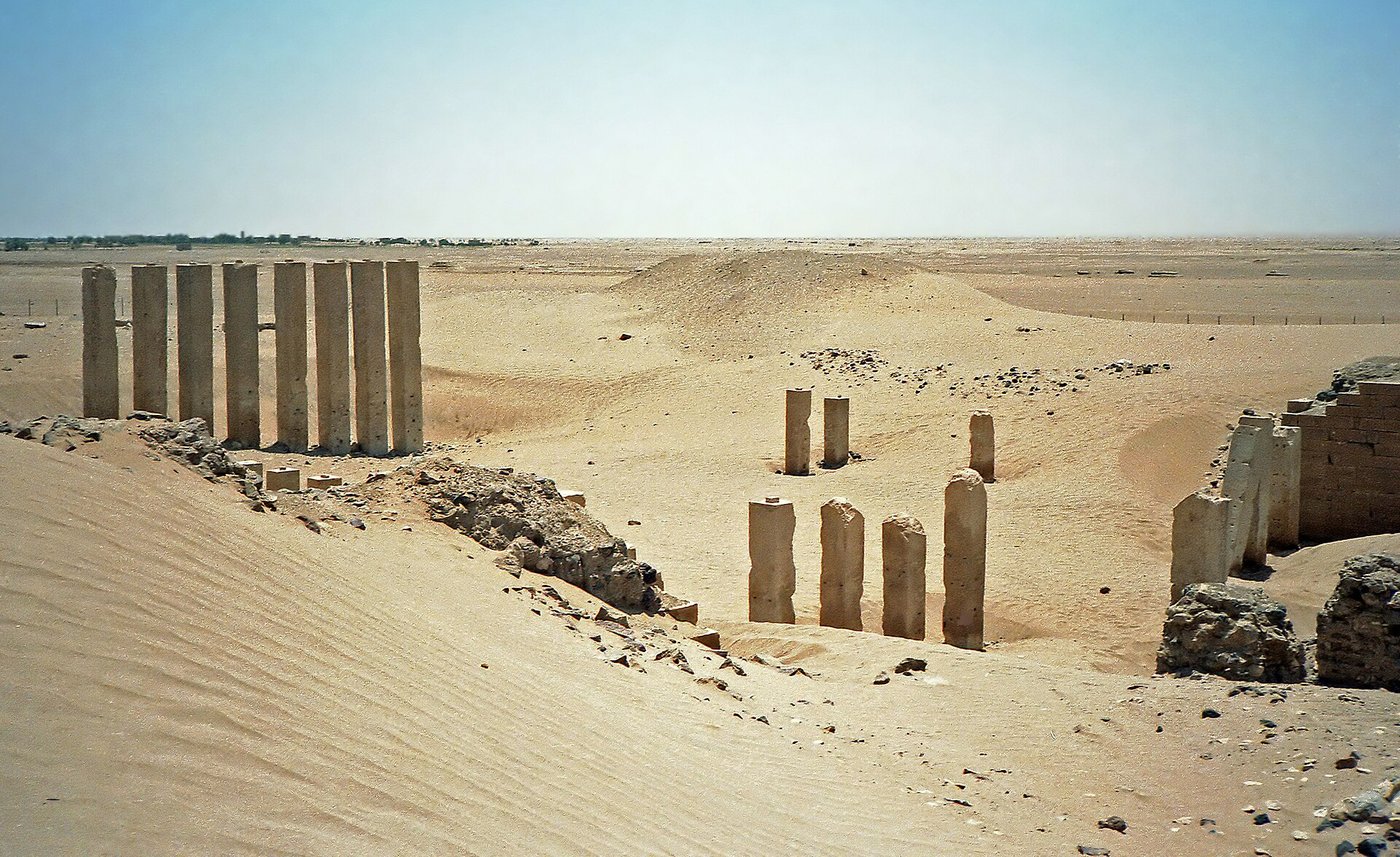
The Sabaeans worshipped a national god named Almaqah, and their chief sanctuary, the temple of Awwam, sat on the plain outside the city inside a vast oval wall more than seven hundred metres round. Pilgrims came for an eight-day festival each spring, a gathering that later writers could not help comparing to the Hajj. It is a place worth pausing on, because it is where the legend and the engineering meet. To local tradition the whole landscape belongs to one woman: the Queen of Sheba, Bilqis in Arabic, who in the Bible travels to test Solomon with hard questions and camels loaded with spices. The Awwam temple is still called Mahram Bilqis, the sanctuary of Bilqis; a smaller temple nearby is her throne. Whether a single historical queen stands behind the name, no inscription has yet confirmed. What the inscriptions do confirm is stranger and, in its way, more useful: a real state, run by real officials, that wrote almost everything down.
A machine you have to feed
Here is the thing the postcard view of the two sluices hides. A diversion dam on a river of mud is not a monument you build and admire. It is a machine, and it has an appetite. Every flood that the Sabaeans steered onto their fields carried silt, and that silt did not vanish. It settled: on the fields, in the canals, against the dam. Year after year the farmland rose. The oasis of Marib is buried under metres of the stuff, laid down flood by flood over centuries, until the fields sat higher than the land around them.
A rising field is a slow catastrophe, because water will not run uphill. As the fields climbed, the whole system had to climb with them: the canals raised, the sluice gates lifted, the dam itself heightened again and again to keep the water surface above the ground it was meant to reach. This is why the dam was rebuilt so many times, and why it grew from a modest bank a few metres high into a fourteen-metre wall. It was not getting grander for the sake of grandeur. It was running to stay in place.
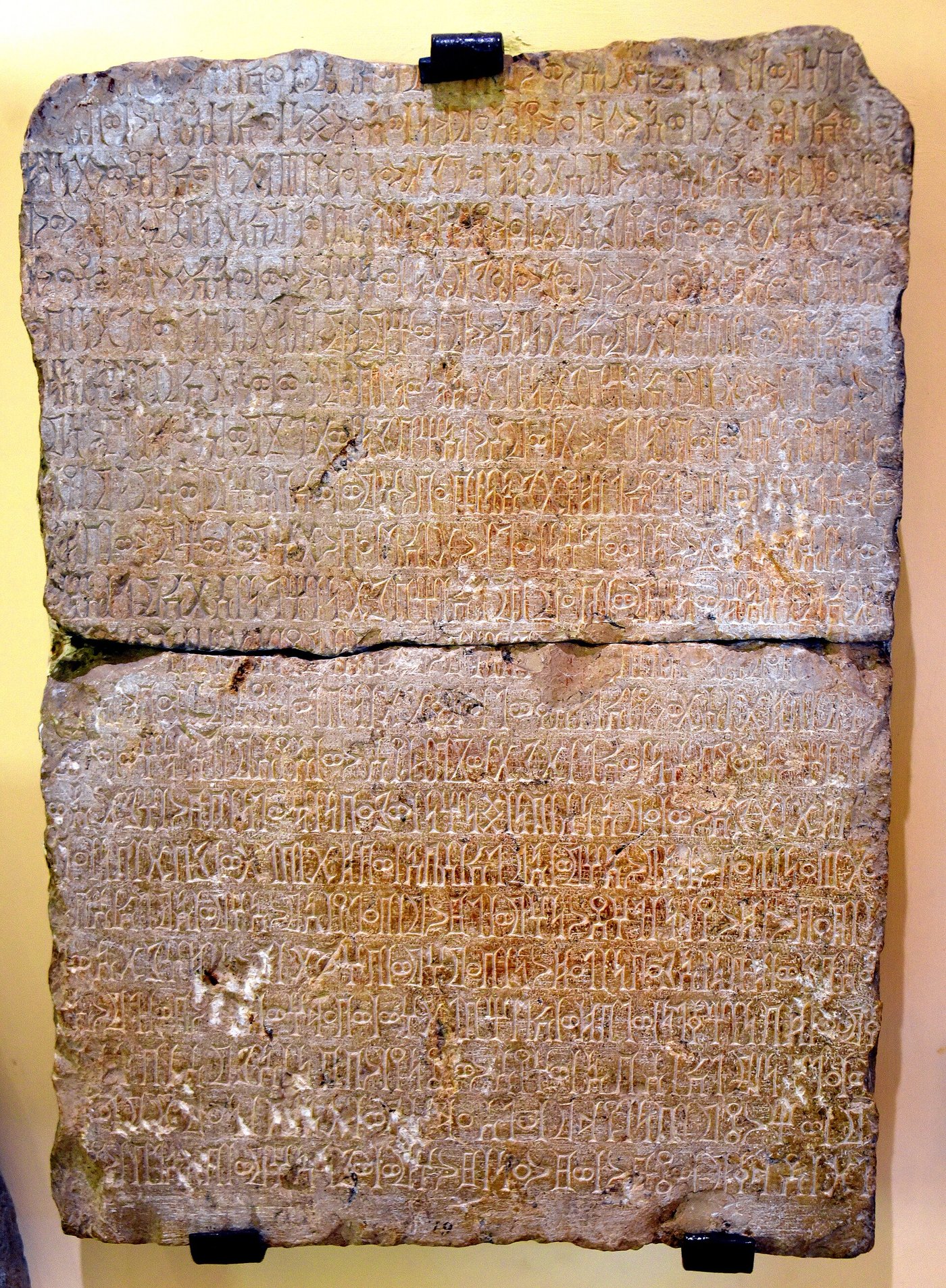
We know this because the Sabaeans were compulsive recorders. Nearly a thousand inscriptions have come out of the Awwam temple alone (the single greatest trove of pre-Islamic Arabian writing), and the dam has its own long series, ruler after ruler recording repairs from the eighth century BC onward. Officials logged who cut which sluice, who raised which wall, whose flood-water rights ran on which day. Read together, the stones are not a chronicle of a wonder. They are the maintenance log of a machine that could never be left alone, kept by a state whose survival depended on never falling behind on the work.
That dependence is easy to miss, and it cuts against how we like to imagine ancient greatness. The pyramids do not need mending. A Roman aqueduct, left alone, will carry water for centuries. Marib was different in kind. It bought its prosperity on credit, and the interest fell due after every single flood. As long as the kingdom was strong, the debt was paid: there were officials to organise the labour, taxes to fund it, and enough people in the valley to turn out with baskets and cut stone when the wadi tore a hole in the bank. The dam did not hold because it was well built. It held because someone showed up.
What a repair actually cost
How much work is hidden in that quiet phrase, someone showed up? The stones let us count it. The most detailed record is Abraha’s inscription of 548, the same long boast that opened this piece. Abraha was an Aksumite general who had seized power in Yemen; by his day the old Sabaean line was long gone, absorbed into the Himyarite kingdom that had swallowed Saba centuries earlier. But the dam still had to be kept, and when it burst he mounted the largest recorded repair in its history.
His inscription does something no chronicle bothers to do: it prices the job. To feed the workforce that closed the breach, the accounts list tens of thousands of measures of flour (more than fifty thousand of them) alongside twenty-six thousand measures of dates, three thousand head of cattle slaughtered for meat, thousands of sheep and goats, and hundreds of camel-loads of wine. This is not the language of miracle. It is a logistics ledger. Behind the poetry of a king mending his kingdom’s wall sits the plain reality of an enormous, hungry crowd of labourers, camped in the heat for a season, hauling stone and earth into a gap in a bank.
To supply the workmen who repaired the dam in 548, Abraha’s inscription records more than 50,000 measures of flour, some 26,000 measures of dates, 3,000 cattle’s worth of meat, over 7,000 head of small stock, and hundreds of camel-loads of wine. It reads less like a monument than a quartermaster’s account: a rare, hard number for what it took, in food alone, to keep one ancient machine running for one more season.
And it worked. The breach was closed; the fields were watered; the inscription was carved to say so. Abraha went on to greater and stranger things: a famous march north with an elephant, an army that Arabian tradition remembers being turned back at the gates of Mecca in the year the Prophet Muhammad is said to have been born. But that repair of 548 is the last securely dated mending of the dam that we have. After it, the record on the stones goes quiet.
Storm, quake, or nobody left to care
Sometime in the decades after Abraha’s repair (the usual estimate falls around 570 to 575), the dam broke a final time, and this time no one closed the gap. The fields, cut off from their floods, dried and blew away. The oasis contracted. The people left.
Ask what caused that last breach and the honest answer is that we are not sure, and that the question may be the wrong one. The inscriptions and later traditions offer the usual suspects. Some point to a run of exceptionally violent floods that overwhelmed the barrier. Others suspect an earthquake in a seismically restless region. Both are plausible; the dam had faced storms and shaking before and been mended each time.
The dam had burst many times across its history (there are records of major breaches in 449, 450, 542 and 548), and each was repaired. The real historical puzzle is not what tore the final hole in the bank but why, for the first time in a thousand years, nobody filled it. The likeliest answer is not a bigger flood. It is that the machinery of state that organised the repairs (the officials, the taxes, the sheer command of labour recorded in Abraha’s ledger) had come apart under war, plague and the collapse of Himyarite power, leaving the flood a victory it had never before been allowed to keep.
That is the reversal the site insists on. The final flood did not defeat the dam. It defeated a society that had stopped being able to answer it. Sixth-century South Arabia was a wreck of the old order: Himyar had fallen, foreign powers fought over the coast, plague swept the region more than once, and the tightly run kingdom that had once mustered fifty thousand measures of flour for a summer’s work no longer existed. When the wadi finally tore its hole, there was no one with the authority, the food and the hands to close it. The dam did not so much break as go unanswered.
The flood the Qur’an remembers
The people who left Marib did not forget what had happened, and the memory travelled with them into legend. It surfaces most famously in the Qur’an, in the chapter named for Saba itself, which holds up the kingdom as a lesson.
In the popular telling, the people of Saba lived in ease between two gardens, right and left, and were told simply to eat of their Lord’s provision and give thanks. They turned away. So God sent against them the Flood of the Dam, the Sayl al-‘Arim, which swept away their gardens in a night and left them only bitter fruit, tamarisk and a few thorny lote trees. The story is a parable of ingratitude punished, a green world lost in an instant to a single divine flood.
The archaeology and the inscriptions describe something slower and wholly human: a machine that demanded constant upkeep, a state that maintained it for a millennium and then lost the capacity to, and a final breach that stuck only because the repairs had stopped. But the parable preserves a real event with real precision: the two gardens, the flood, the ruined oasis, above all the scattering of the people are all things that happened. Legend compressed a long institutional collapse into a single dramatic night. It did not invent the collapse. It remembered it, and gave it a meaning.
What is striking is how much the parable gets right. The two gardens are on the stones. The flood is in the wadi. The bitter fruit and tamarisk are exactly what colonises a South Arabian field once the sweet floodwater stops coming and the salts creep up. The Qur’an is not describing a fantasy. It is describing Marib, seen from the far side of its ruin, through the lens of a people trying to understand why their homeland had failed them.
The scattering
And they had been scattered. The same passage says that God made them “tales” and tore them “utterly to pieces”, and here the legend and the history run together almost exactly. As the oasis failed, the tribes of Marib dispersed across Arabia, and the memory of that dispersal became one of the great organising stories of Arab genealogy. Whole tribal confederations, the Azd above all, traced their departure from the south to the breaking of the dam. Families that would later shape the history of Islam (that would settle Medina, or found dynasties) carried in their lineages a starting point at Marib, a green place their ancestors had left when the water went.
The migration was almost certainly not the single exodus the stories imply. It was more likely a drift, drawn out over generations, of people leaving a shrinking oasis for better ground to the north and east, the way people always leave a place that can no longer feed them. But the dam gave the drift a date and a cause and a name. It is a rare thing: a piece of civil engineering that became a chapter in the origin story of a civilisation.
What stands, and what was let go
The valley did not stay empty of dams forever. In the 1980s a modern barrier rose a short distance upstream of the ancient site, paid for by Sheikh Zayed bin Sultan Al Nahyan of Abu Dhabi, a gesture with a long tail, since his own tribe traced its roots back to the migrants who had left Marib when the old dam failed. A man whose ancestors were scattered by the breaking of the wall returned, fourteen centuries later, to build a new one. It opened in 1986, tall and concrete, and for a while the water came back to the plain.
The ancient works, meanwhile, have had a hard modern century. War has rolled through Marib more than once; the modern dam was struck from the air in 2015, and the whole region has spent years on the front line of Yemen’s long conflict. In 2023 the sanctuaries, the city and the sluices were together placed on the list of World Heritage sites, and, in the same breath, on the list of those in danger. The recognition and the warning arrived as one document.
Stand again between the two sluices, then, and read them correctly. They are not the ruins of a wall that a great flood once smashed. They are the two ends of a bargain that a kingdom kept for a thousand years and finally could not: catch the flood, feed the fields, and never, ever stop mending the bank. The flood in the old story is real, and so are the gardens, and so is the scattering. What the story leaves out is what actually decided everything: the long, dull, unbroken labour that stood between the water and the fields, and the moment it ended. The dam did not fall the day the earth gave way. It fell the day the last people who knew how to fix it decided, or were forced, not to.
Read next: Petra: The Buried Pipes That Kept a Desert City Alive and Qaryat al-Faw: The Three-Storey Market on the Empty Quarter's Edge.
Sources & further reading
- Christopher Edens and T. J. Wilkinson, “Southwest Arabia During the Holocene: Recent Archaeological Developments,” Journal of World Prehistory.
- Kenneth A. Kitchen, Documentation for Ancient Arabia (University of Liverpool Press) — on the Sabaean and Himyarite inscriptions, including the dam texts.
- Iwona Gajda, Le royaume de Himïar à l’époque monoéthéiste — on Abraha, the CIH 541 inscription and sixth-century South Arabia.
- St John Simpson (ed.), Queen of Sheba: Treasures from Ancient Yemen (British Museum) — on Marib, the Awwam temple and the Bilqis tradition.
- UNESCO World Heritage Centre, “Landmarks of the Ancient Kingdom of Saba, Marib” (inscribed 2023) — nomination file and state of conservation.
- Qur’an 34 (Sūrat Saba’), verses 15–19, on the two gardens and the Flood of the Dam.
Image credits (via Wikimedia Commons): the great sluice of the historical Marib dam — H. Grobe (CC BY-SA 3.0); stone remains of the ancient dam — Ljuba brank (public domain); pillars of the Awwam temple — Ali Mohamed (CC BY-SA 2.0); slab with an inscription of the kings of Sheba, Ancient Orient Museum, Istanbul — Osama Shukir Muhammed Amin (CC BY-SA 4.0); the ruins of Old Marib — Tapatio (CC BY-SA 3.0).