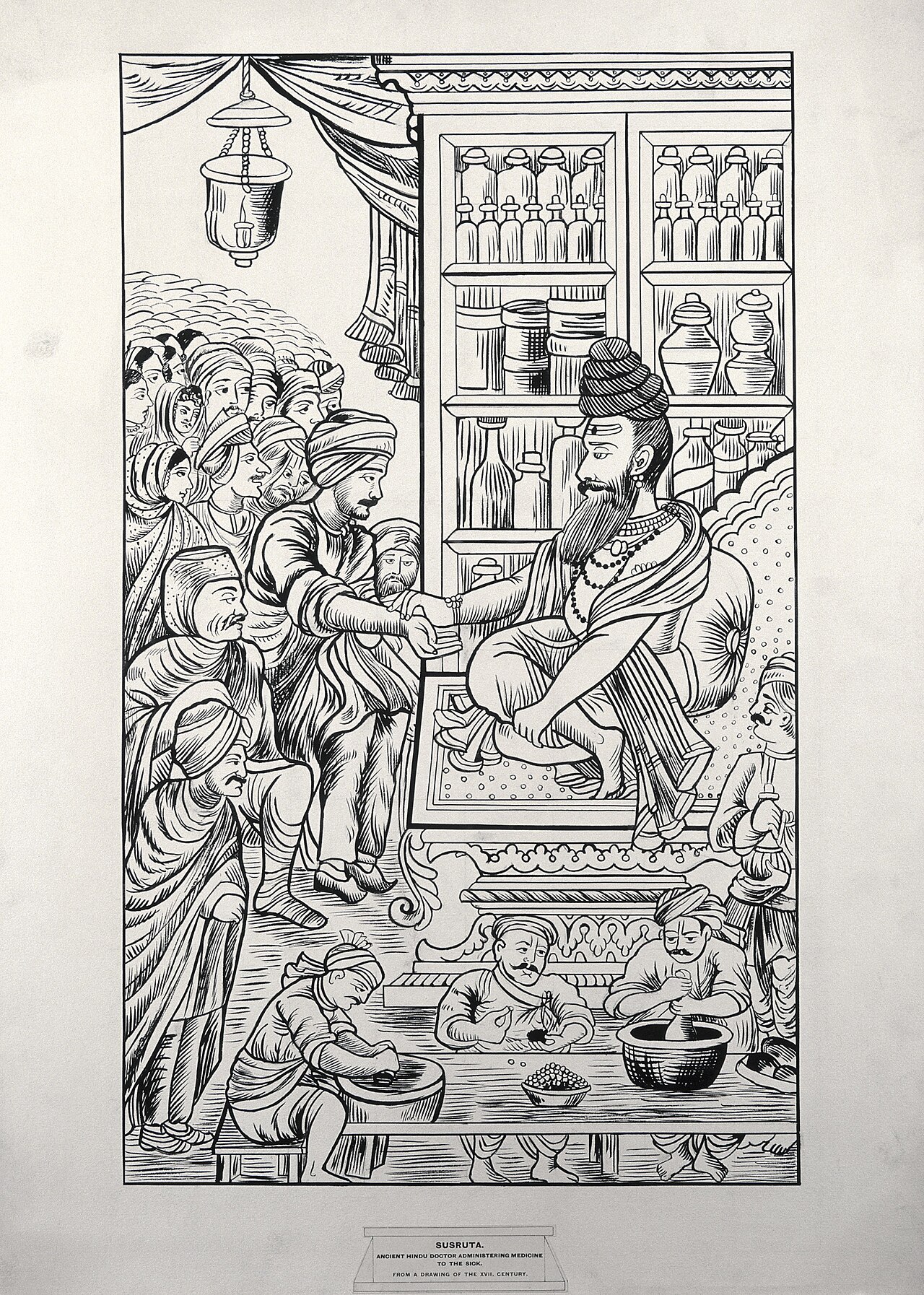
Picture a man arriving at a physician's door in an ancient Indian city, his face wrapped in cloth. He lowers it to reveal a wound where his nose used to be, cut off perhaps as a punishment, perhaps in battle. In most of the ancient world this would be a life sentence of disfigurement. But the surgeon here does something extraordinary: he measures a leaf against the wound, cuts a matching flap of living skin from the man's cheek or forehead, leaves it attached at one end so the blood keeps flowing, twists it down over the gap, and shapes a new nose. He props the nostrils open with two small tubes and binds the wound. Weeks later, the man has a nose again. The surgeon's name was Sushruta, and he was doing reconstructive plastic surgery more than two thousand years before the term existed.
Sushruta is one of the most remarkable figures in the history of medicine, and outside India he is far less famous than he should be. He is remembered as the author of the Sushruta Samhita, one of the foundational texts of Ayurveda and arguably the oldest systematic treatise on surgery in the world. In it, a surgeon of ancient India described operations, instruments, and training methods so advanced that parts of them fed, by a long and winding route, directly into modern surgery. He has been called, with good reason, the Father of Surgery, and the Father of Plastic Surgery.
Who was Sushruta?
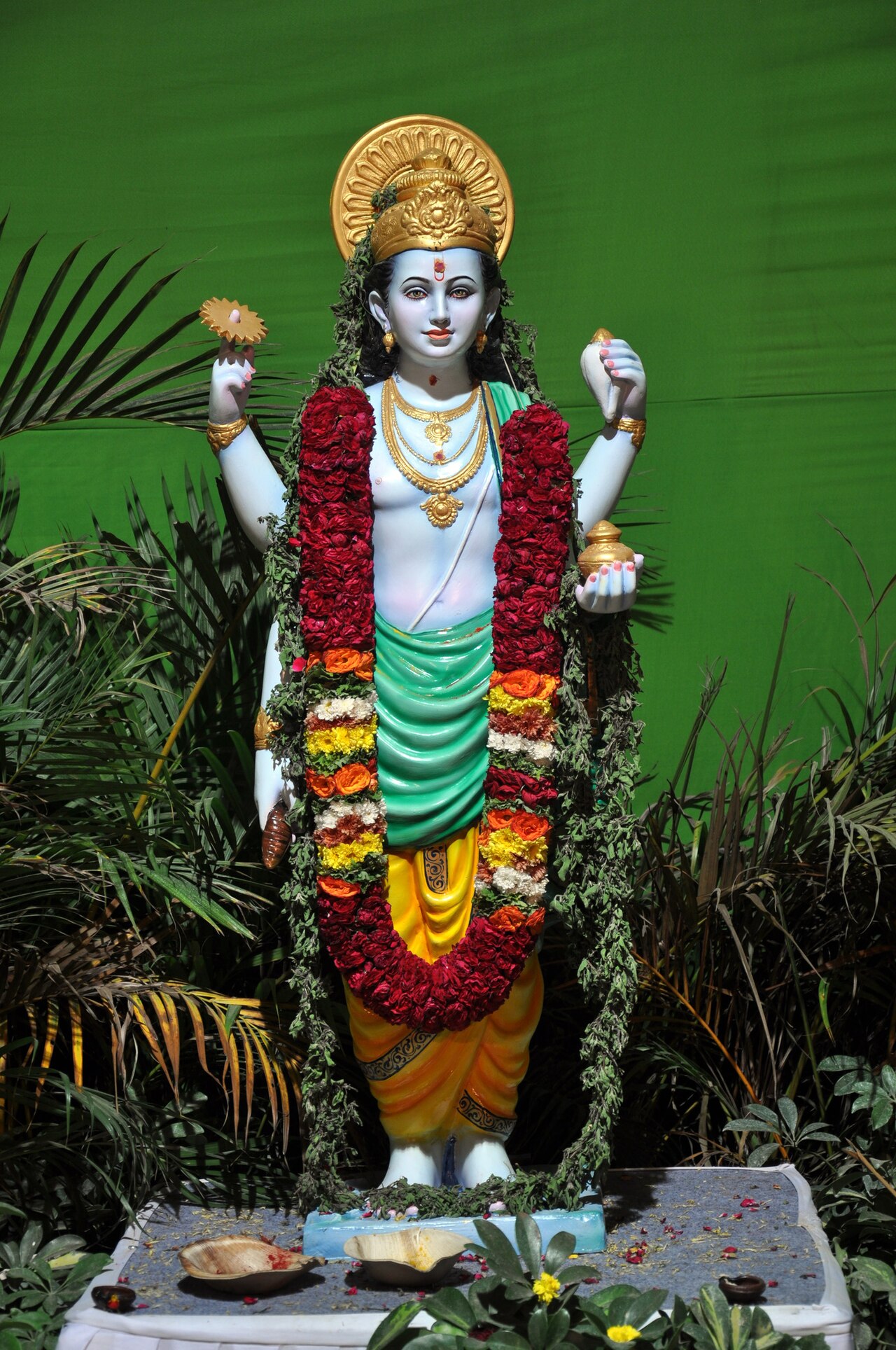
The honest answer is that we know his work far better than we know the man. Tradition places Sushruta in the ancient holy city of Kashi (modern Varanasi) on the banks of the Ganges, where he is said to have studied medicine and surgery as a pupil of Divodasa Dhanvantari, the king of Kashi who was associated with Dhanvantari, the revered figure of healing in Indian tradition. The Sushruta Samhita is framed as the teaching that this master passed to Sushruta and his fellow students, written down as a record of that knowledge.
Beyond that, the biography dissolves into legend and uncertainty. We have no reliable dates for his birth or death, no confirmed details of his life, only a towering body of medical knowledge attached to his name. In that sense Sushruta is a little like Homer or Hippocrates: a real tradition of learning crystallised around a name, whose historical edges we can no longer trace precisely.
The Sushruta Samhita: a surgical encyclopedia
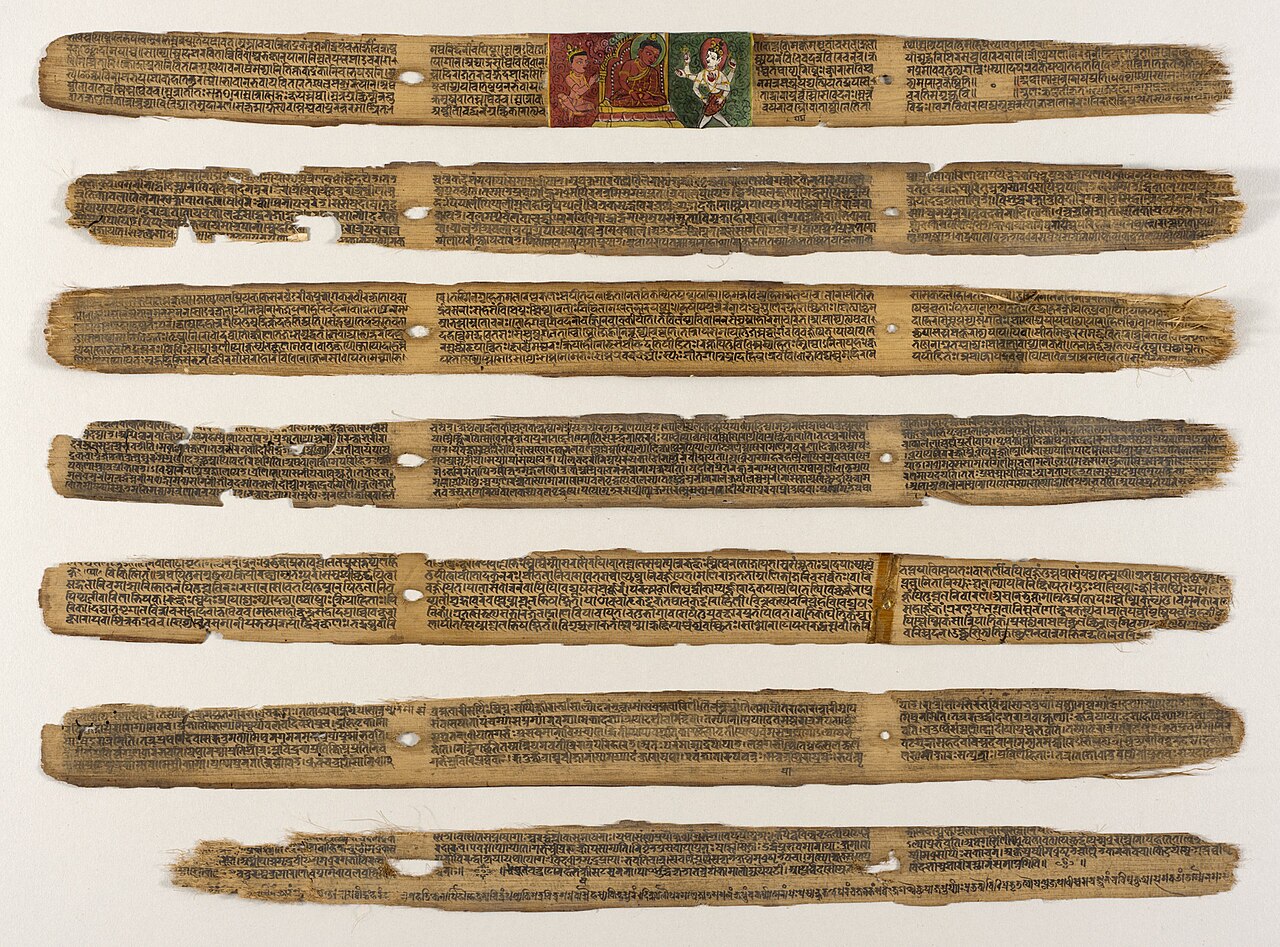
The book is the thing, and the book is astonishing. The Sushruta Samhita is a vast medical compendium, but what sets it apart from other ancient texts is its overwhelming emphasis on shalya tantra: surgery. Where most early medicine was content to treat with herbs and prayer, Sushruta's tradition picked up the knife and described, in methodical detail, how to cut, drain, stitch, and rebuild the human body.
The scope is enormous. The text discusses well over a thousand diseases and conditions, hundreds of medicinal plants and preparations, and, most strikingly, around three hundred surgical procedures. It classifies surgery itself into eight fundamental kinds of operation: excision, incision, scarification, puncturing, probing, extraction, drainage, and suturing. It covers the management of fractures and dislocations, the removal of bladder stones and tumours, the draining of abscesses, the repair of torn earlobes, caesarean delivery, the treatment of fistulae, and the careful suturing of wounds. It even maps out 107 marma, vital points on the body where nerves, vessels, and joints converge, which a surgeon had to know and avoid; that knowledge also fed into the martial arts of the subcontinent.
120 instruments, and a melon to practise on
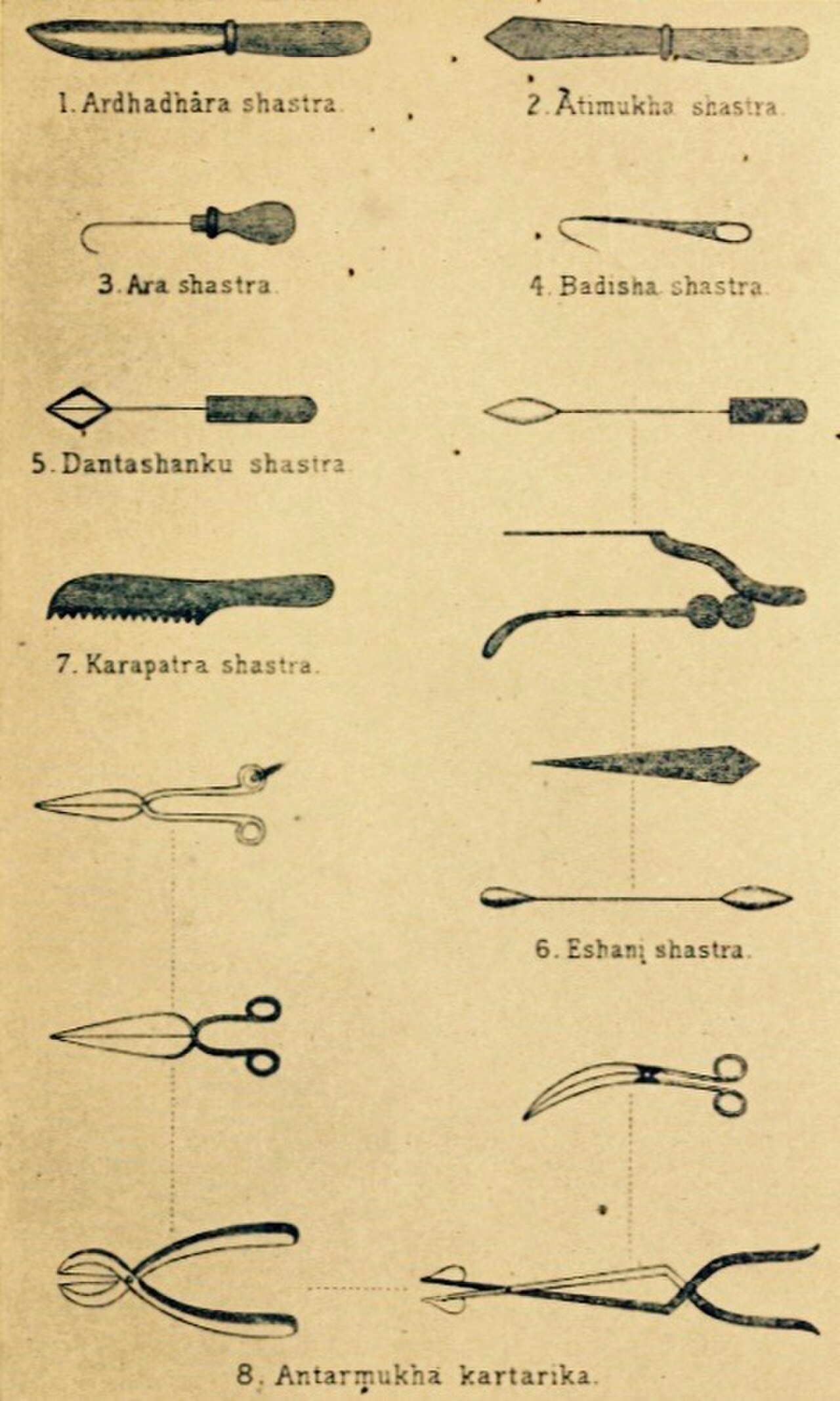
A surgeon needs tools, and Sushruta catalogued them with the thoroughness of an engineer. The Samhita describes well over a hundred surgical instruments: scalpels, knives, scissors, needles, forceps, probes, hooks, catheters, syringes, saws, and specialised extractors. Many were designed in the shapes of the jaws and beaks of animals (lions, tigers, herons, crocodiles), their forms chosen for the grip and bite a particular task required. Sushruta also insisted that a blade be sharp enough to divide a hair lengthwise, a standard of edge that tells you how seriously he took his craft.
But the detail that most delights modern surgeons is how Sushruta taught his students to operate, because he understood, two millennia early, that you do not learn to cut on a living patient. He prescribed a whole curriculum of practice on models. To learn incision, students cut into gourds, melons, and cucumbers. To learn drainage and puncturing, they worked on leather bags and bladders filled with water or mud. To practise probing, they used wood-eaten by worms and hollow reeds; to learn suturing, they stitched soft leather and cloth; to rehearse on vessels, they used the stalks of lotus plants. Only after mastering the motions on these stand-ins was a student let near a human body. It is, in everything but name, surgical simulation training, the same principle behind today's practice dummies and virtual trainers.
Sushruta may be the earliest known advocate of practising surgery on models before patients. His students rehearsed incisions on melons and gourds, suturing on leather, and puncturing on water-filled bladders. The idea that surgeons should train their hands on simulations, so obvious to us and so far from universal in the ancient world, is written into a text well over fifteen hundred years old.
The first plastic surgery
If Sushruta is famous for one thing, it is the operation in the scene we began with: the reconstruction of the nose. In ancient and medieval India, cutting off the nose was a recognised punishment for certain crimes, including adultery, and noses were also lost in war. A disfigured face carried a heavy social stigma. And so a demand existed for repair, and Sushruta described, in clinical detail, how to meet it.
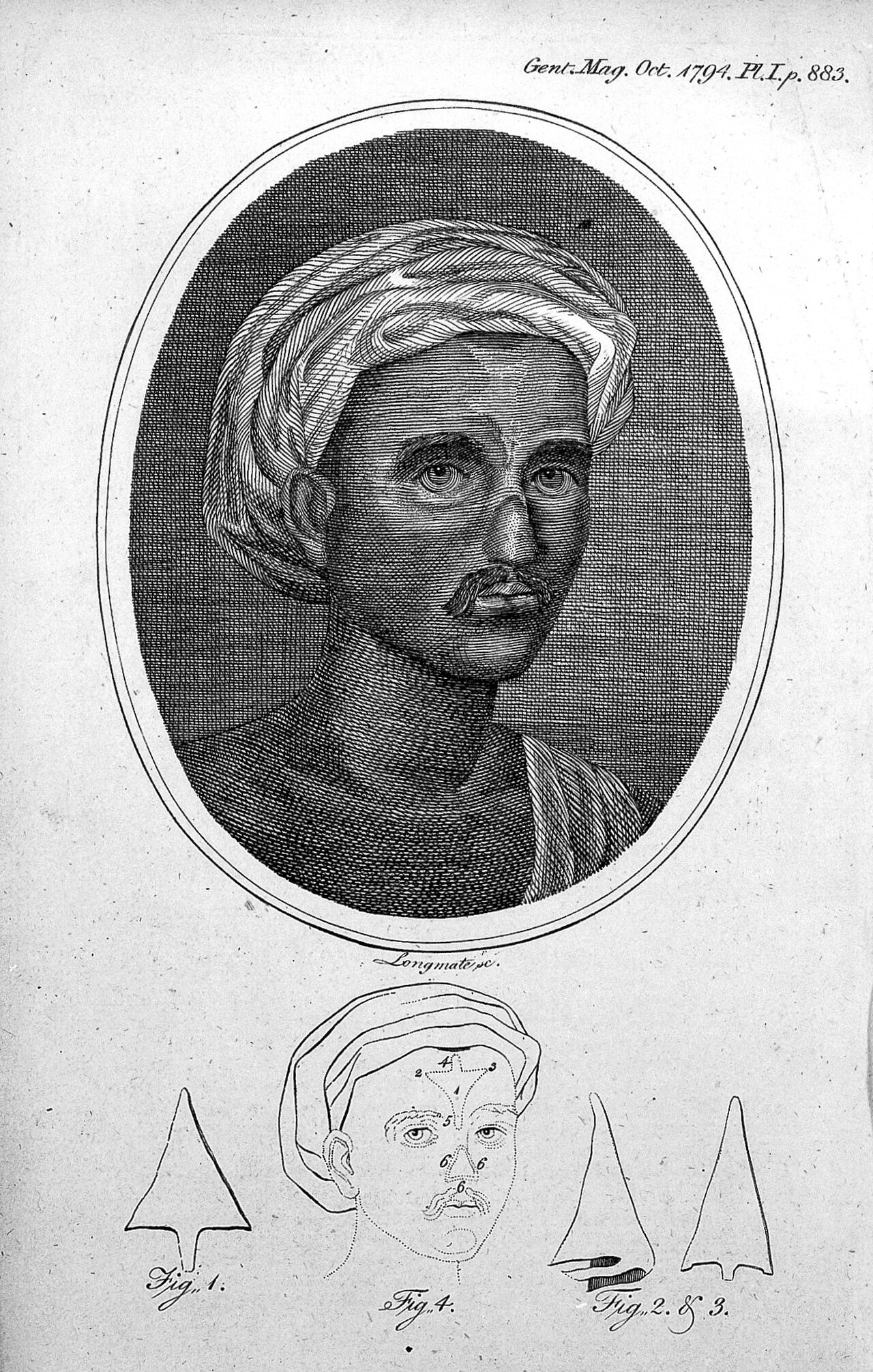
His method is the ancestor of what surgeons still call the "Indian method" of rhinoplasty. A leaf or template was cut to the size of the missing nose. A flap of skin was then raised from the patient's cheek (in later practice, more often the forehead), carefully left attached at one point so that its blood supply was preserved. We would now call it a pedicled flap. The flap was rotated down into position, stitched over the defect, and shaped, with two small tubes inserted to keep the nostrils open as it healed. The same fundamental principle, a flap of the patient's own living, blood-fed skin, moved to rebuild a missing part, is bedrock plastic surgery to this day.
Cataracts, stones, and the surgeon's daily work
Reconstructive surgery was only one corner of Sushruta's practice. He also described an operation for cataracts (the clouding of the eye's lens that gradually blinds) using a technique called couching. With a fine, curved needle the surgeon pierced the eye and pushed the opaque lens down and out of the line of sight, restoring a measure of vision; the eye was then bandaged and the patient told to rest. Versions of couching were practised across the ancient world, but Sushruta's description is among the most careful that survives.
Elsewhere in the text he tackles the grim staples of pre-modern surgery: cutting for bladder stones, draining abscesses and dropsy, removing growths, managing piles and fistulae, extracting arrows and foreign objects, treating burns, and setting broken bones with splints and bandages. He describes how to control bleeding, when to cauterise, and how to stitch a wound so it would heal cleanly. This is not folklore; it is the working manual of a surgeon who clearly operated, and operated often.
"Only the union of theory and practice makes a complete physician. A surgeon who has read the texts but has no practical skill loses his nerve at the patient's side; one who operates without knowledge is a danger. Both wings are needed for the bird to fly."— a paraphrase of the Sushruta Samhita's teaching on the training of a surgeon (after the Bhishagratna translation)
Reading the body: anatomy without taboo
Surgery is impossible without knowing what lies under the skin, and here Sushruta faced a profound obstacle: cutting a dead body was, in his culture, strictly taboo. His solution was as ingenious as it was strange. To study human anatomy, he recommended taking the body of a person who had died of no wasting disease, wrapping it in grasses, enclosing it in a cage, and submerging it in a slow-moving river for about a week. As the outer layers softened and decomposed, the student could then gently brush them away, layer by layer, with a soft brush, observing the muscles, vessels, and organs as they were exposed in turn, without ever taking a blade to the corpse.
It was a workaround for a religious prohibition, and by modern standards an imperfect one, since soft tissues distort as they decay. But it reflects a scientific impulse: the conviction that a surgeon must look inside the body and learn its real structure, not merely guess. Sushruta's anatomy, including his counting of the body's bones and his mapping of vessels and vital points, grew out of exactly this insistence on observation.
Pain, cleanliness, and the ethics of the knife
For all its sophistication, Sushruta's surgery belonged to a world without modern anaesthesia or germ theory, and it is important not to romanticise it. To dull the agony of an operation, patients were given wine to drink before the knife, enough to blunt the senses and the memory. It was analgesia, not the deep, controlled unconsciousness of a modern operating theatre, and surgery in his age must have been a fearful ordeal.
Yet Sushruta clearly grasped the importance of cleanliness in ways that anticipate later medicine. The Samhita stresses preparing the operating space, fumigating it, keeping wounds and instruments clean, and tending the patient carefully through recovery. And the text is insistent on ethics and character: it lays out the qualities a surgeon must have (steady hands, sharp instruments, courage, and a clear, compassionate mind) and the discipline expected of a student, who was bound by solemn vows to use this dangerous knowledge well. Long before the modern idea of medical ethics, Sushruta's tradition understood that the power to cut into a living person carried grave responsibility.
How Sushruta's knowledge reached the world
Here is the part of the story that turns a regional marvel into a thread of world history. Sushruta's surgical knowledge did not stay in India. Around the eighth century, as Arabic scholars gathered and translated the learning of many civilisations, the Sushruta Samhita was rendered into Arabic, and through the great medical writers of the Islamic world its ideas spread west, part of the vast transmission of knowledge that would eventually feed back into Europe.
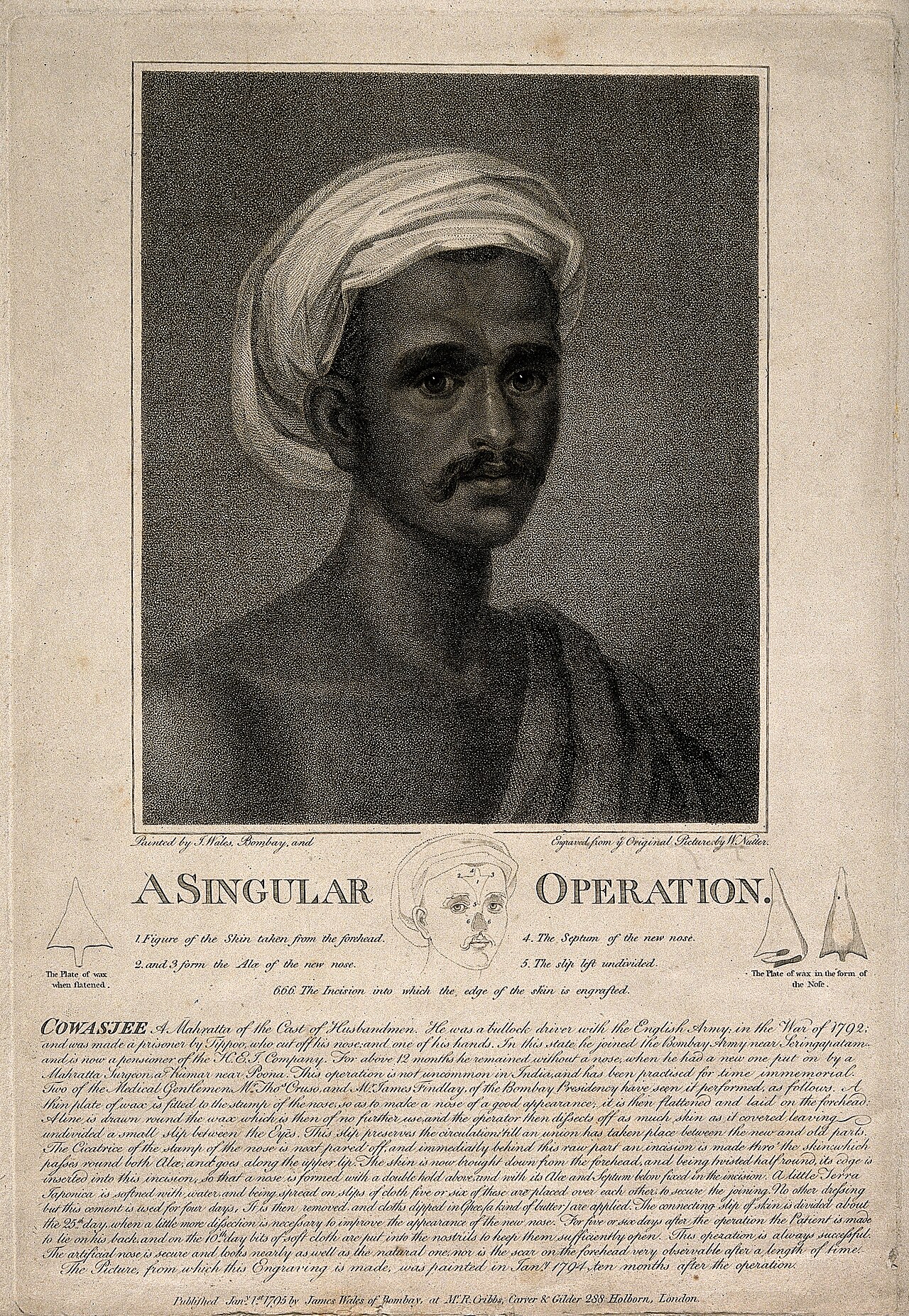
The most vivid link came much later. In 1792, during the wars in southern India, a man named Cowasjee, a bullock-driver working with the British, had his nose and a hand cut off by his captors. His nose was rebuilt in India by a traditional healer using the old forehead-flap method, and British surgeons witnessed the result. In 1794 an account of his case, with an illustration, was published in The Gentleman's Magazine in London. European surgeons were astonished. Within twenty years, the British surgeon Joseph Constantine Carpue had studied the technique and performed flap rhinoplasty in England, and from there the operation spread through nineteenth-century Europe, becoming a foundation of modern plastic and reconstructive surgery. The lineage runs, in a real and traceable way, from Sushruta's ancient text to the operating tables of today.
"Ancient India already had modern surgery — anaesthesia, antiseptics, the works — exactly as we know it today."
Sushruta's achievements are remarkable and influential: the flap rhinoplasty and cataract couching are real and well documented. But it's a disservice to him to overstate it. He had no modern anaesthesia, no microscope, no germ theory; his anatomy was limited and some of his medicine was bound to the ideas of his age. The truth is impressive enough without exaggeration: a surgeon who, working within the limits of his time, developed techniques and a teaching method centuries ahead of the rest of the world.
When did he live?
This is where historians have to be honest about the limits of the evidence. Traditional accounts place Sushruta deep in antiquity, with many dating the original teacher to around the middle of the first millennium BCE. But the Sushruta Samhita as we have it is clearly a layered text, edited and added to over a long period; scholars generally think the surviving version was compiled and redacted in the early centuries of the common era, with a later section, the Uttaratantra, added on top of the older core. So the "Sushruta" who first taught surgery and the finished book that bears his name may be separated by many centuries.
How old is Sushruta really? Estimates for the original figure range across most of the first millennium BCE, while the surviving text is usually dated to the early centuries CE. Was there one Sushruta, or a tradition of teachers writing under a revered name? Did the most advanced surgical passages belong to the original core or accrete later? There is no settled answer. What is not in doubt is that the knowledge is ancient, Indian, and far in advance of its time; the precise dates are an ongoing scholarly debate.
Surgery becoming a discipline
It would be easy to file Sushruta under "ancient curiosities", a clever man who did surprising things long ago. That would miss the point. His real significance is that he represents one of humanity's earliest moves toward surgery as a discipline: a body of knowledge built on observation, taught through structured training, practised with specialised tools, governed by ethics, and written down so it could be passed on, tested, and improved. That is the scientific spirit, recognisable across two thousand years.
And his ideas did not die with him. They travelled into the Arabic medical tradition, and eventually, through the strange accident of a bullock-driver's rebuilt nose, into the very foundations of modern reconstructive surgery. Every time a surgeon today raises a flap of a patient's own skin to rebuild a face after injury or cancer, they are working in a tradition whose earliest clear description sits in a Sanskrit text attributed to a man who taught on the banks of the Ganges. Few figures from the ancient world have left a thread that runs so directly into our own. Sushruta deserves to be remembered not as a curiosity, but as one of the true founders of surgery.
Read next: Nalanda: The Ancient University That Was Fading Before the Fire and Ötzi the Iceman: The Alpine Murder That Took 5,300 Years to Solve.
Sources & further reading
- Kunjalal Bhishagratna (trans.), An English Translation of the Sushruta Samhita (1907–1916) — the classic full English rendering of the text.
- Dominik Wujastyk, The Roots of Ayurveda — a scholarly, accessible selection from the classical Indian medical texts, with strong historical context.
- "An account of the method of supplying artificial noses as practised by the natives of India," The Gentleman's Magazine, London (1794) — the Cowasjee case that reintroduced flap rhinoplasty to the West.
- Surveys of the history of surgery and plastic surgery on the "Indian method" of rhinoplasty and the work of Joseph Constantine Carpue; and general references on Ayurveda and the Sushruta Samhita (Encyclopaedia Britannica and history-of-medicine literature).