Just after midnight on 3 December 1984, the people of Bhopal woke up unable to breathe. A cloud of poison gas had drifted out of a pesticide factory on the north side of the city and settled over the crowded neighbourhoods around it while they slept. Families stumbled out of their homes into the dark, eyes burning, lungs filling with fluid, coughing up foam, not knowing which way to run. By the time the sun rose over Bhopal, thousands were dead in the streets, and a city of hundreds of thousands had been poisoned in a single night. It remains the worst industrial disaster in human history, and what makes it unbearable is how avoidable it was.
This is a difficult story to tell, because the numbers are so large that they start to lose meaning, and because the suffering did not end with that night. It has stretched across forty years and into a third generation. But it has to be told carefully and honestly, because Bhopal is not only a tragedy. It is a case study in how cost-cutting, neglect, and the unequal value placed on human lives can combine to kill on a massive scale, and in how rarely anyone is held to account when they do.
The plant on the edge of the city
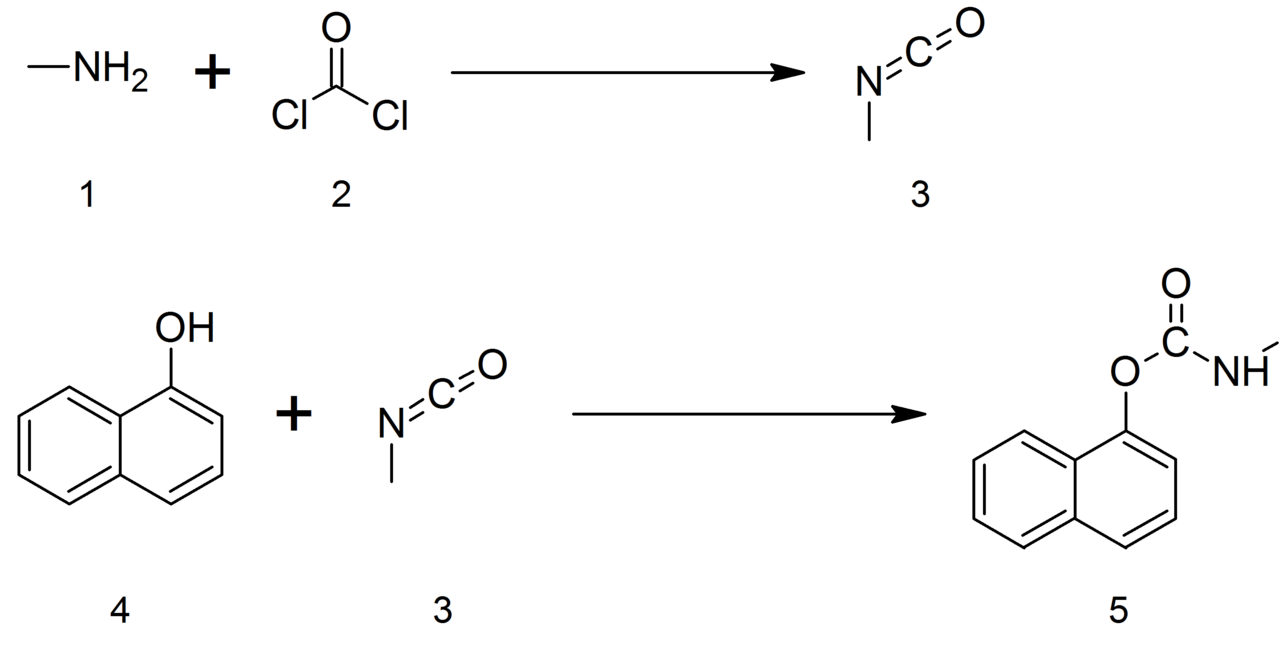
The factory belonged to Union Carbide India Limited, the Indian arm of the American chemical giant Union Carbide Corporation. It manufactured a pesticide called Sevin (carbaryl), part of the wave of agricultural chemistry that powered India's Green Revolution. To make that pesticide, the plant produced and stored an intermediate chemical with an unremarkable name and a horrifying nature: methyl isocyanate, almost always shortened to MIC.
MIC is one of the most dangerous industrial chemicals in routine use. It is highly volatile, reacts violently with water, and is acutely toxic to breathe even in tiny concentrations, attacking the eyes, the lungs, and the mucous membranes. Handling it safely demands that it be kept cold, isolated, and under constant, redundant layers of protection. At Bhopal, on the night in question, roughly forty tonnes of it were sitting in a single underground storage tank, designated E610.
The safeguards that weren't there
A plant handling a chemical like MIC is supposed to be wrapped in safety systems, each one a backup for the others. Bhopal had them on paper. In practice, by late 1984, the layers of protection had been allowed to decay, and the reasons were depressingly mundane: the plant was losing money, demand for the pesticide had slumped, and the response had been a steady campaign of cost-cutting that hollowed out its defences.
The refrigeration unit that was meant to keep the MIC cold had been switched off to save money, leaving the tank at ambient temperature. The vent gas scrubber, designed to neutralise escaping gas with caustic soda, was reportedly not in full working order. The flare tower, meant to burn off released gas, was out of service. Staffing had been cut, experienced workers had left, training and maintenance had been reduced, and safety standards at the Indian plant lagged behind those at the company's comparable facility in the United States. When the emergency came, almost every barrier that should have stopped it had already been lowered.
An estimated half a million people were exposed to the gas that night. Figures for the dead vary by source and by how they are counted: official immediate deaths were put in the thousands, but widely cited estimates place the toll at around 8,000 within the first days and, counting deaths from gas-related illness in the years since, somewhere between 15,000 and 20,000 or more. Hundreds of thousands were left with chronic injuries. No accounting fully captures it.
The warnings that went unheeded
Perhaps the cruellest fact about Bhopal is that it did not come without warning. The plant had a troubled safety record in the years before the catastrophe. There had been a series of smaller leaks and accidents, and in December 1981 a worker died after being exposed to phosgene gas at the facility, a death that should have set off alarms about how the plant was being run.
Most strikingly, a local journalist named Rajkumar Keswani had spent the two years before the disaster trying to warn the city. In a series of articles in a Bhopal weekly, beginning in 1982, he investigated the plant's hazards and published pieces with headlines that now read like prophecy, pleading, in effect, "save this city," and warning that Bhopal was sitting on the edge of a catastrophe. He laid out the dangers of the chemicals being stored and the inadequacy of the safeguards. The warnings were brushed aside by authorities and the company alike, and life around the plant went on. Two years later, the disaster he had predicted arrived almost exactly as he feared. Bhopal is not a story of an unforeseeable accident; it is a story of foreseeable danger that those with the power to act chose not to take seriously.
The night the tank reacted
Sometime on the night of 2–3 December, water entered tank E610; exactly how remains disputed to this day. Water and MIC are a catastrophic combination: the contact set off a runaway exothermic reaction inside the tank, generating enormous heat and pressure. The temperature climbed far past safe limits, the pressure surged, and with the cooling and the safety systems disabled or overwhelmed, there was nothing left to contain it.
Shortly after midnight, the tank vented. A high-pressure plume of methyl isocyanate and other toxic gases roared out of the stack and into the night air over Bhopal: tens of tonnes of poison released in a matter of an hour or two. MIC vapour is heavier than air, so the cloud did not rise and disperse. It sank, and spread low across the ground, rolling silently over the densely packed settlements that had grown up right beside the factory fence, and on into the heart of the sleeping city.
People woke choking, their eyes and throats burning as if on fire, and ran into the streets in the dark — many collapsing as they fled, families separated, no one understanding what the poison was or where it was safe to go.— a composite of the survivor testimony and contemporary reporting widely recorded in the years since the disaster
A city in the dark
What followed was chaos of a kind few cities have ever known. There was no warning system that reached the public, no evacuation plan, no clear information. People simply woke into agony and ran, and the running itself killed. In the panic and the darkness, in the crush of crowds fleeing through narrow lanes, the weak and the small were trampled. Many ran in the wrong direction, deeper into the gas. Parents lost children in the press of bodies and never found them again.
The local hospitals were overwhelmed within hours and had no idea how to treat what was arriving at their doors, because they had never been told what the plant actually made or what its emergency antidotes might be. Doctors worked blind against a poison they couldn't name. The dead came in faster than they could be counted, laid out in rows, while the injured kept arriving by the thousand. Livestock lay dead in the fields around the city. By morning, Bhopal had become a place of mass funerals and mass graves.
The years that followed
The acute catastrophe of that night gave way to a chronic one that has never really ended. Many survivors never recovered. Exposure to MIC left tens of thousands with lasting damage: chronic breathlessness and lung disease, eye injuries and partial blindness, neurological problems, and a wave of reproductive harm, with miscarriages, stillbirths, and birth defects in the area's children. The health effects rippled into the next generation.
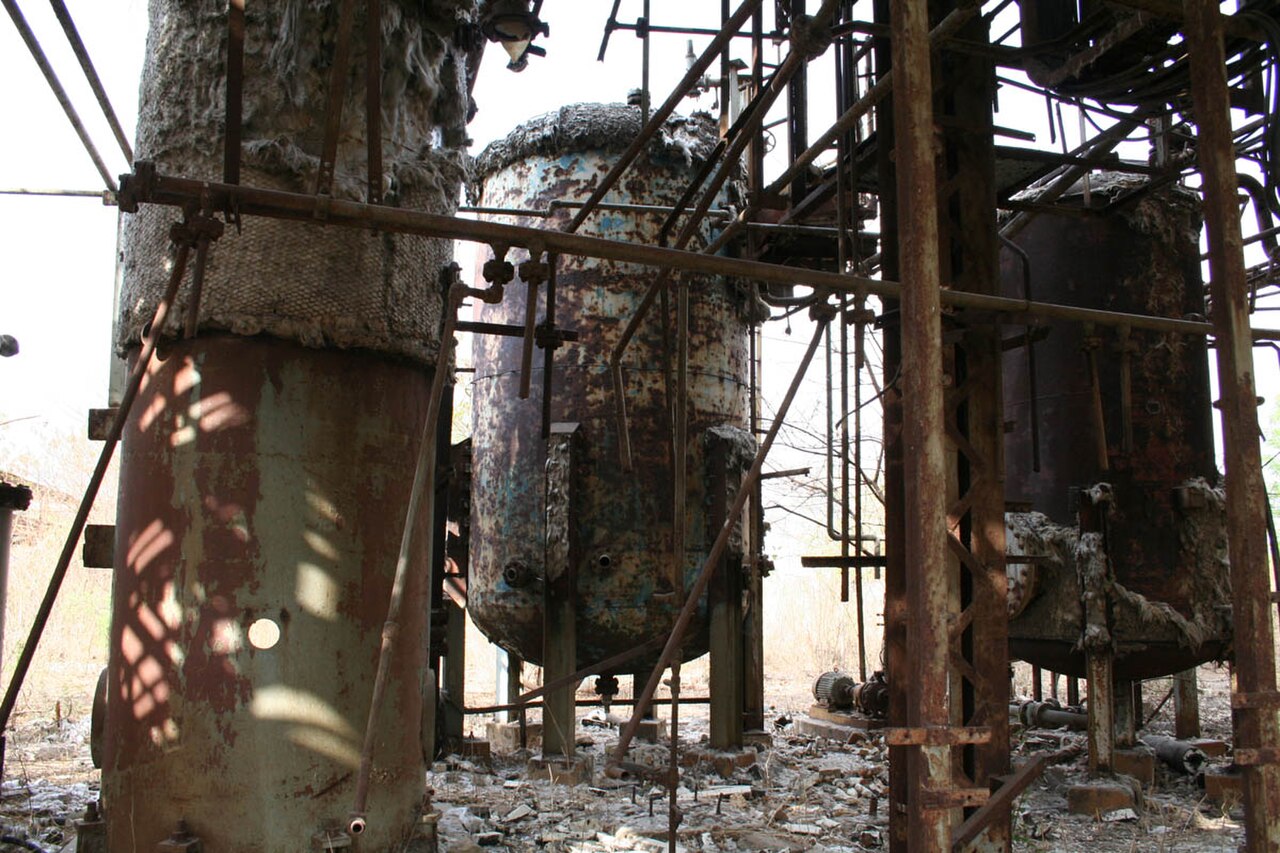
And the poison did not all blow away on the wind. The factory site itself was left contaminated, with hazardous waste and chemicals that leached into the soil and the groundwater that local families continued to drink for decades, prolonging the exposure long after the gas cloud was gone. The abandoned plant stood rusting over the neighbourhood for forty years. Astonishingly, it was only in 2025, more than four decades after the disaster, that the bulk of the remaining toxic waste was finally removed from the site for disposal, an indication of just how long Bhopal's wound was left open.
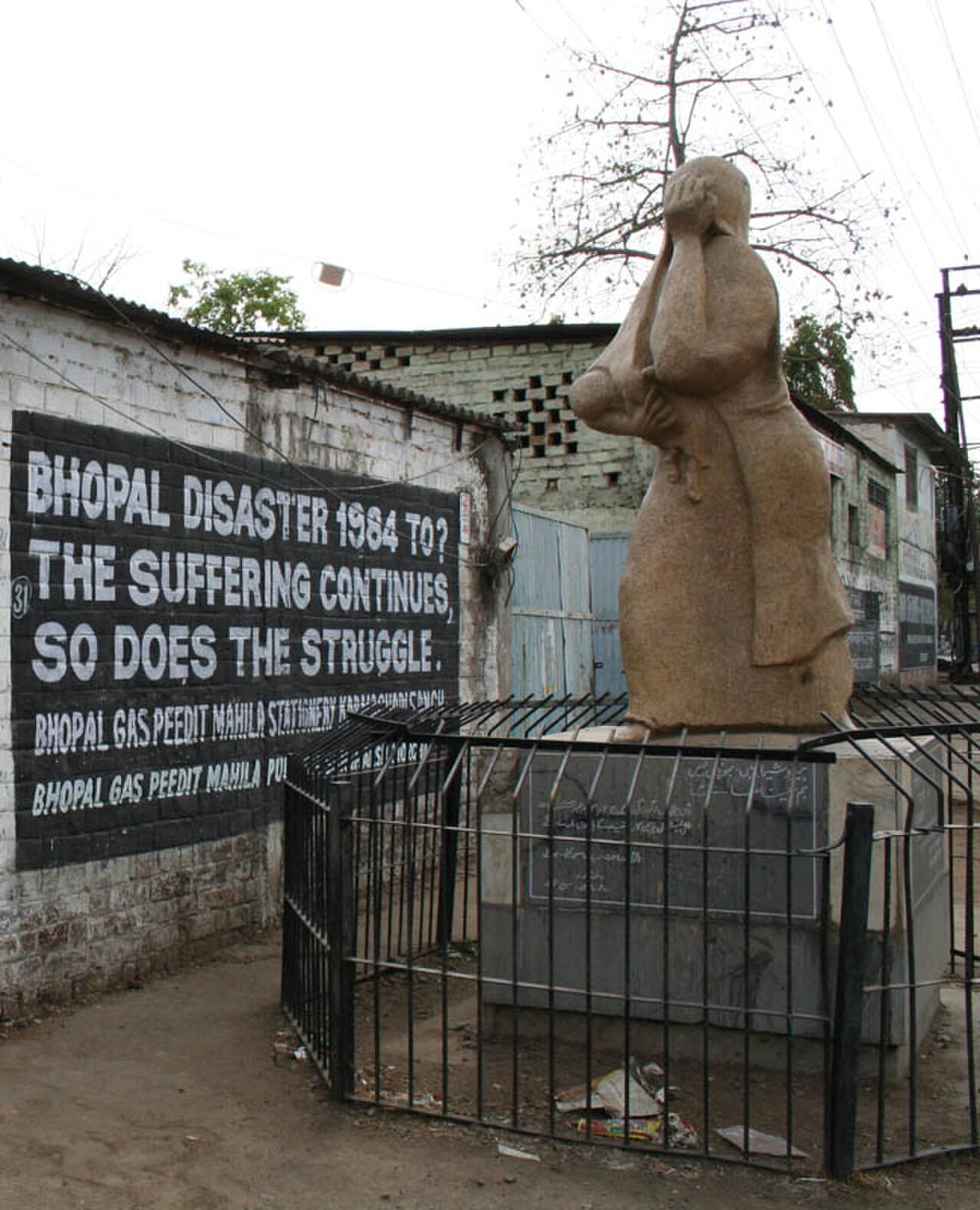
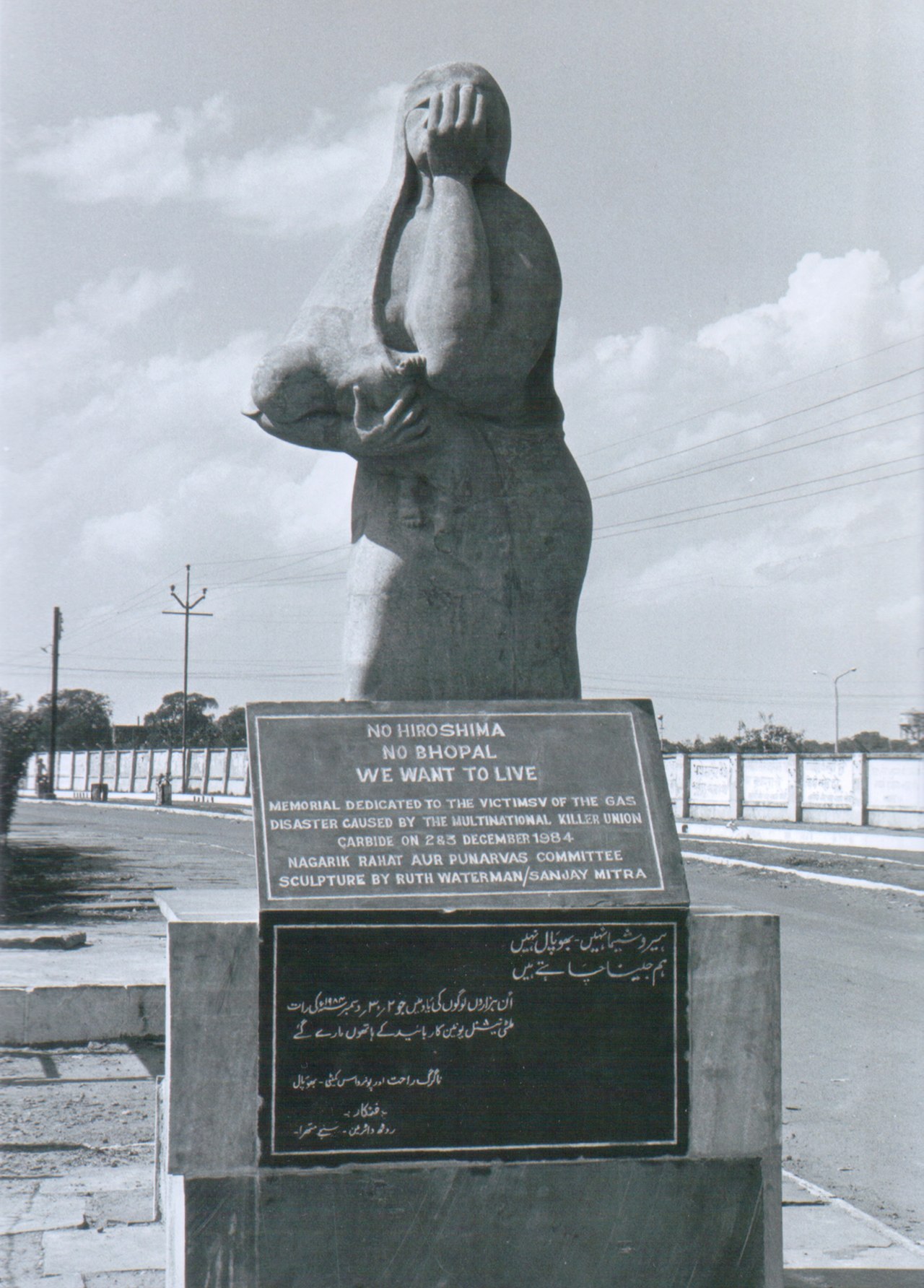
Through all of it, the survivors refused to be forgotten. Out of the gas-affected neighbourhoods grew some of the most determined grassroots movements in modern India: organisations of mostly poor, mostly women survivors who have marched, petitioned, sued, and lobbied for forty years, demanding adequate compensation, proper medical care, clean water, and a full clean-up of the site. They have walked across the country and carried their case to courtrooms and shareholder meetings on two continents. That such a sustained fight was needed at all, decade after decade, simply to be heard, is part of the injustice. The disaster was over in a night; the struggle for accountability has lasted a lifetime, and is not finished.
Was justice ever done?
The question of accountability is, for many of the survivors, the second tragedy. Warren Anderson, the chairman of Union Carbide Corporation, flew to India shortly after the disaster and was briefly arrested, then released on bail and allowed to leave the country. He never returned to face the criminal charges against him; India's later attempts to extradite him went nowhere, and he died in the United States in 2014, having never stood trial.
In 1989, Union Carbide reached a settlement with the Indian government, paying 470 million US dollars to resolve its liabilities. Divided among the vast number of victims, that sum amounted to a pittance per person and was widely condemned as grossly inadequate to the scale of the harm. Criminal proceedings in India dragged on for a quarter of a century; only in 2010 were several former Indian executives of the local company convicted of criminal negligence, sentenced to a maximum of two years each. Survivors' groups received the verdict as almost an insult, so long delayed and so light. Union Carbide was later absorbed by Dow Chemical, which has maintained that the settlement resolved the matter and has denied further liability. To this day, survivors' organisations continue to campaign for fuller compensation, medical care, and a complete clean-up of the site.
"The leak wasn't negligence — it was sabotage. A disgruntled worker deliberately introduced water into the tank, and no safety system can be blamed for a malicious act."
Union Carbide long promoted the sabotage theory, but it has never been substantiated, and independent investigators and most analysts reject it as the cause. The overwhelming weight of evidence points to systemic failure: disabled refrigeration, non-functioning scrubber and flare systems, deferred maintenance, reduced staffing, and a safety culture eroded by cost-cutting. Even if water entered the tank by some unexpected route, a properly maintained plant would have contained the result. The disaster was built up over months of neglect, not in a single night.
The survivors are still waiting
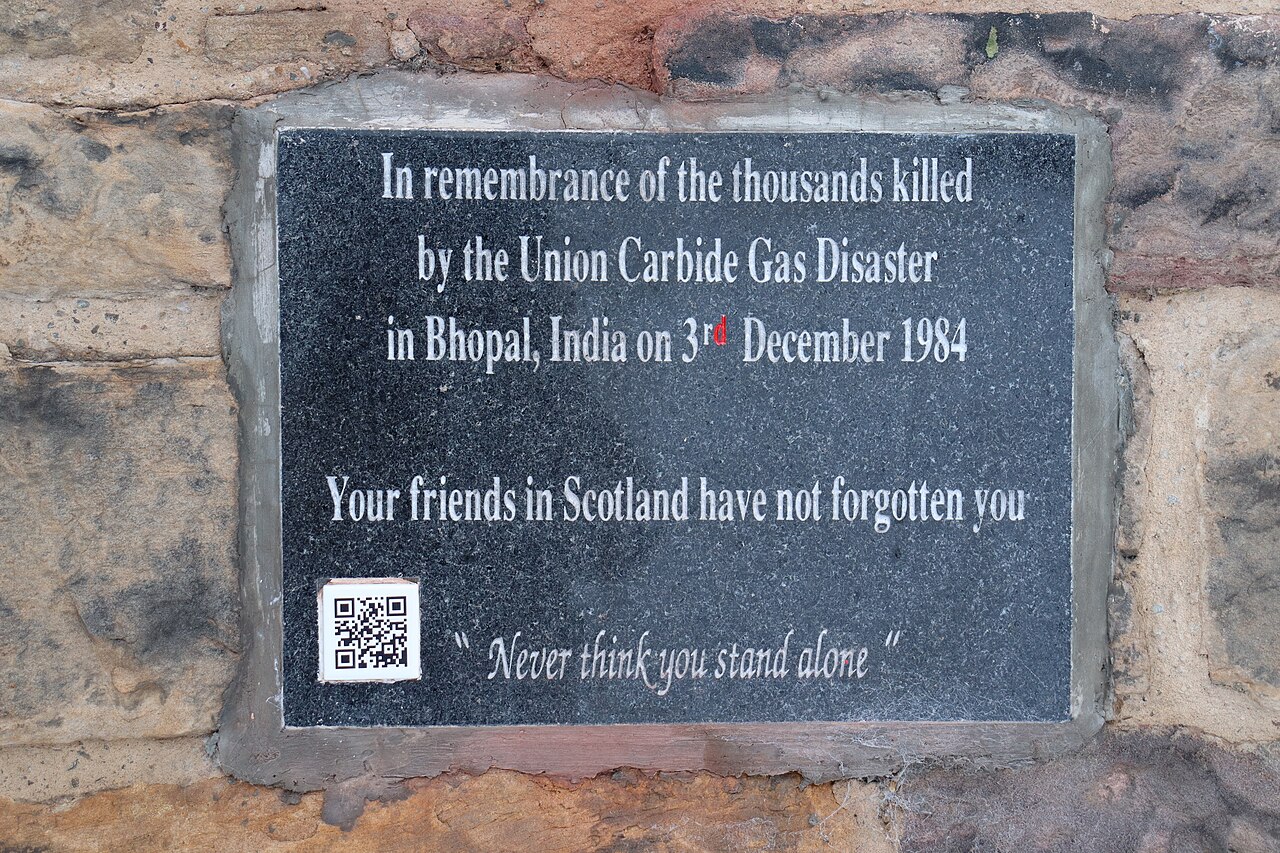
It would be comforting to treat Bhopal as a sealed chapter: a terrible accident, long ago, in a faraway place. It is not. The survivors are still living with their injuries and still fighting for redress; the site's contamination was addressed only in the last couple of years; and the underlying questions the disaster raised are as sharp now as they were in 1984. What responsibilities does a multinational corporation owe to the communities it operates among? Why were safety standards lower at the Indian plant than at its American counterpart? How is it that a disaster of this magnitude could produce so little accountability for those at the top?
The disaster did leave a mark on the rules of industry, even if the change came at an unforgivable price. In its wake, governments tightened laws on hazardous materials and gave communities a stronger right to know what dangerous substances were being produced and stored near them. In the United States, for instance, the landmark "community right-to-know" legislation that followed in the mid-1980s was shaped in part by the horror of Bhopal. The global chemical industry adopted new voluntary safety frameworks. Emergency planning, plant siting away from dense housing, and disclosure of chemical hazards all moved up the agenda. None of it can undo what happened, but the modern architecture of industrial-safety regulation is, in part, built on the graves of Bhopal.
Bhopal changed how the world thinks, or claims to think, about industrial safety, the handling of hazardous chemicals, the right of communities to know what is being made next door, and the obligations of companies that operate across borders. It became a permanent reference point in the law and ethics of industry. But the most important thing it asks of us is simpler and harder: to remember that behind the record-setting numbers were individual people, asleep in their homes on an ordinary winter night, who deserved to be protected and were not. The factory failed them, the systems meant to save them had been switched off to save money, and the world that profited from the chemistry largely looked away when the bill came due.
Decades on, the fundamental dispute endures: was Bhopal an accountability failure as much as a chemical one? Survivors and many observers argue that the modest settlement, the executive who never faced trial, and the light sentences amounted to impunity for one of history's deadliest corporate disasters. Others frame it within the legal limits and jurisdictional tangles of the time. What is hard to dispute is the imbalance between the scale of the harm and the scale of the answer to it.
Read next: Chernobyl: The Reactor Flaw the Operators Were Never Told About and Terracotta Army: The Assembly Line Behind 8,000 Unique Faces.
Sources & further reading
- Dominique Lapierre & Javier Moro, Five Past Midnight in Bhopal — a detailed narrative reconstruction of the disaster and the lives it touched.
- Indra Sinha, Animal's People — an acclaimed novel inspired by the disaster and its long aftermath.
- Amnesty International and various human-rights and environmental reports on the Bhopal disaster and its ongoing consequences.
- Contemporary reporting and subsequent investigations into Union Carbide India Limited, the 1989 settlement, the 2010 convictions, and the long-delayed clean-up of the factory site.