In July 2026, in a car park at the foot of Jerusalem's Old City, archaeologists lifted away a crust of hardened plaster and found wood underneath. Not fragments, not splinters, but thick beams, blackened all the way through, lying where they had fallen. When the building above them burned, the plaster on its walls had melted, run down over the collapsing roof and sealed it like wax over a letter. That seal held for roughly 2,600 years. The beams the team from the Israel Antiquities Authority and Tel Aviv University were looking at had last been part of a standing house on a day the Bible dates to the fifth month of the eleventh year of King Zedekiah of Judah: the day the Babylonian army finished burning Jerusalem.
Almost every ancient city that fell to an army leaves the same thin, grey signature in the ground: a layer of ash between the floor of one century and the foundations of the next. Jerusalem's is unusually thick, unusually rich, and unusually well documented, because three separate kinds of evidence converge on it. There is the archaeology: burnt floors, collapsed roofs, arrowheads, seal impressions baked hard by the fire that destroyed the documents they sealed. There is a Babylonian palace record, written in cuneiform on a clay tablet, that dates one stage of the conflict to a specific day. And there is a set of Hebrew texts written by people who watched it happen, or by their children.
Very few events in ancient history can be triangulated like that. It is worth understanding what happened, and where the popular version of the story parts company with the evidence.
A small kingdom between two giants
By the end of the seventh century BCE, Judah was a modest hill kingdom of perhaps a hundred thousand people, wedged between powers that could each field armies larger than its entire population. For most of the previous century its overlord had been Assyria. In 701 BCE, King Sennacherib had marched through Judah, destroyed the fortress city of Lachish and hemmed King Hezekiah into Jerusalem. In that famous siege, for reasons nobody fully understands, the Assyrians withdrew without taking the capital.
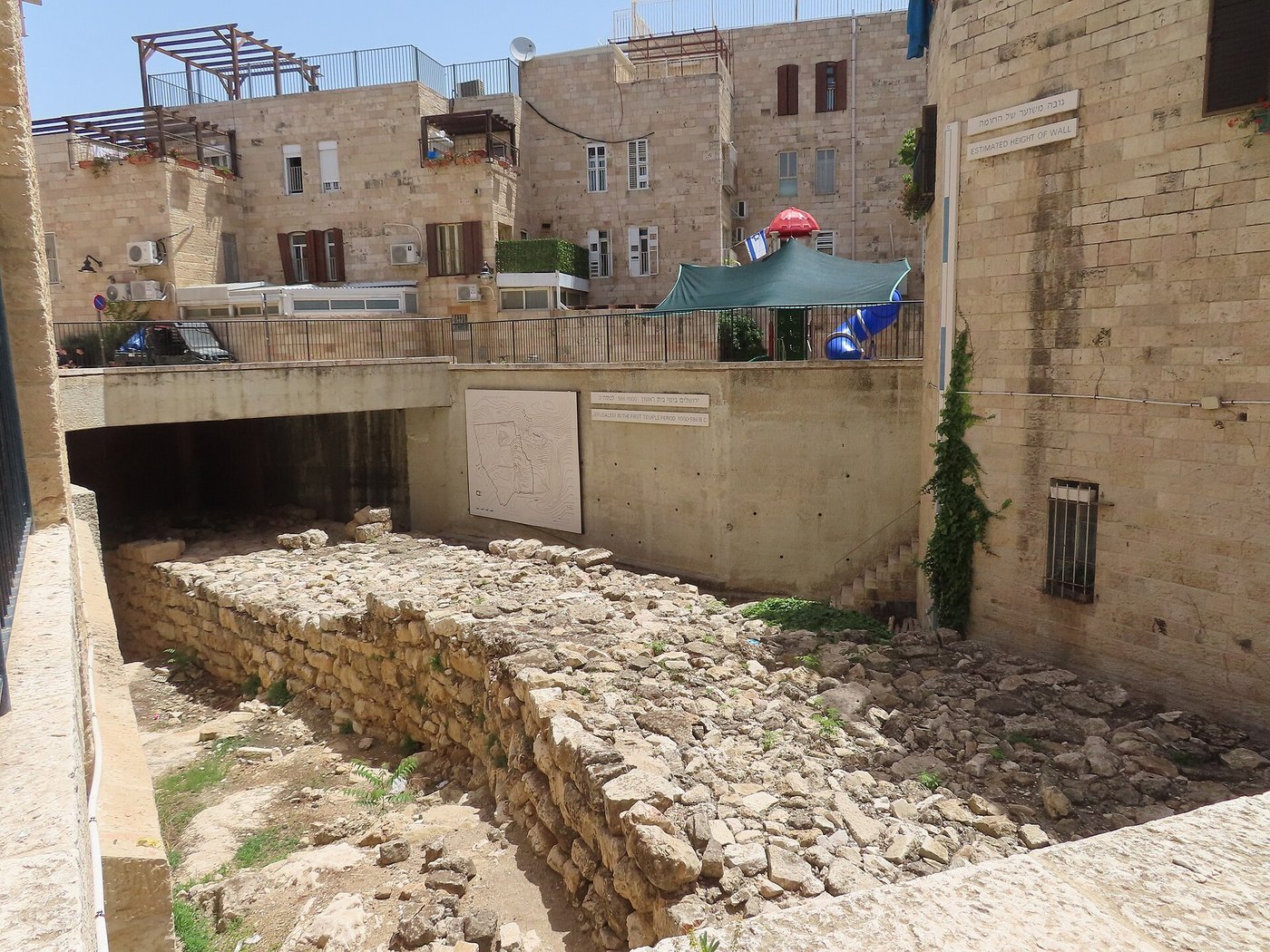
Hezekiah had prepared for that siege on a scale you can still walk through. He cut a tunnel more than five hundred metres through solid rock to bring the Gihon spring inside the walls. And he threw up a defensive wall across the western hill, seven metres thick, demolishing houses that stood in its path. A stretch of it was uncovered in the Jewish Quarter in the 1970s and left exposed. It is still there, and it is startling to stand next to: this is not decorative masonry, it is the wall of a kingdom that expects to be attacked.
That wall bought Judah a hundred more years. Then the map changed. Assyria collapsed with astonishing speed in the last decades of the seventh century, its capital Nineveh falling in 612 BCE to a coalition of Babylonians and Medes. Egypt tried to prop up the Assyrian remnant and failed. In 605 BCE, at Carchemish on the Euphrates, the Babylonian crown prince Nebuchadnezzar destroyed the Egyptian army so thoroughly that the whole Levant changed hands in a single campaigning season. Judah's new landlord was Babylon.
The problem for Judah was that Egypt did not go away. It sat to the south, weakened but rich, always willing to encourage a rebellion it would not have to fight. For the next twenty years the politics of Jerusalem consisted of an argument between a pro-Babylonian faction, who read the situation correctly, and a pro-Egyptian faction, who did not. The pro-Egyptian faction kept winning.
The first fall, dated to the day
King Jehoiakim of Judah paid tribute to Babylon for three years and then stopped. Nebuchadnezzar was busy elsewhere and dealt with him through proxies at first, but in the winter of 598 BCE he came in person. Jehoiakim died (of what, we are not told), and his eighteen-year-old son Jehoiachin inherited a siege three months into his reign.
What happened next is the single most precisely dated event in the entire history of the kingdom of Judah, and the source is not the Bible. It is a clay tablet in the British Museum, part of a series modern scholars call the Babylonian Chronicles: dry, year-by-year palace records of what the king of Babylon did. The entry for Nebuchadnezzar's seventh year states that he marched to the land of Hatti, besieged the city of Judah, and on the second day of the month of Adar captured the city and seized its king. He appointed a ruler of his own choosing, took heavy tribute and sent it to Babylon.
Converted to our calendar, that day is the middle of March 597 BCE. It is the earliest event in Jewish history that can be pinned to a specific date with confidence, and it comes from the filing cabinet of the people doing the besieging.
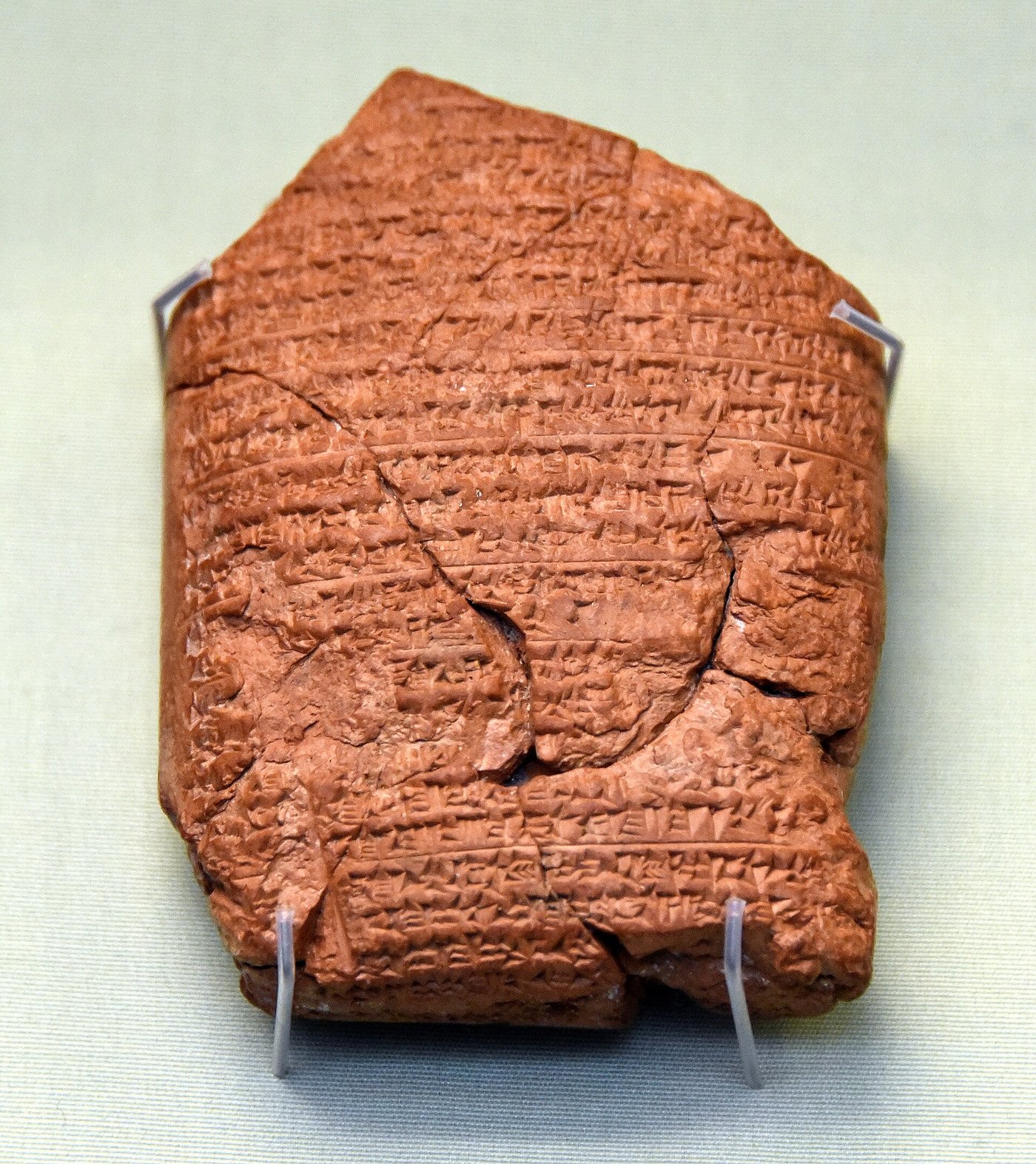
"In the seventh year, in the month of Kislev, the king of Akkad mustered his troops, marched to the land of Hatti, and encamped against the city of Judah. On the second day of the month of Adar he captured the city and seized the king."— Babylonian Chronicle, tablet BM 21946, covering the years 605–594 BCE
Jehoiachin was taken to Babylon along with the court, the craftsmen and the treasury. He was not executed. Decades later, administrative tablets from Babylon list rations of oil and barley issued to "Ya'u-kinu, king of the land of Yahudu" and his sons: a deposed king kept on the royal payroll, presumably as a card to be played if his replacement ever needed replacing.
That replacement was Zedekiah, Jehoiachin's uncle, installed by Nebuchadnezzar and immediately caught between the empire that had put him on the throne and a capital full of people who thought Babylonian power was a temporary embarrassment. The prophet Jeremiah spent a decade telling anyone who would listen that it was not, and was beaten, imprisoned and lowered into a cistern for his trouble.
The last letters out of the Shephelah
Zedekiah rebelled in about 589 BCE, on the strength of promises from the Egyptian pharaoh Apries. The Babylonian response was methodical. Rather than driving straight at Jerusalem, the army worked through the fortified towns of the Shephelah (the low hills between the coastal plain and the Judean highlands), cutting the capital off from the outside world before closing on it.
We have a handful of messages from inside that collapse. In 1935 and 1938, excavators at Lachish found twenty-one pieces of broken pottery in a guardroom by the city gate, each carrying a note written in ink in Hebrew. Most are routine military correspondence from a junior officer named Hoshaiah to his commander Yaush: acknowledgements of orders, reports on troop movements, a nervous complaint about a letter that had been read the wrong way.
One of them is not routine. The writer reports that he is watching for the signal fires of Lachish, according to the code his commander gave him, "for we cannot see Azekah." Azekah was the neighbouring fortress. Its fire has gone out. The Book of Jeremiah names Lachish and Azekah as the last two fortified cities of Judah still holding out besides Jerusalem. Somebody wrote that line on a broken pot, in a doomed garrison, watching the second-to-last light on the horizon go dark.
The Lachish letters survive because the city burned. Ink on unfired pottery is fragile stuff and would normally have faded to nothing within a few decades. The fire that destroyed the guardroom baked the sherds hard and fixed the writing on them. Nearly everything we have from the last months of the kingdom of Judah was preserved by the same event that ended it, a pattern that repeats across the whole site of Jerusalem.
Eighteen months
The siege of Jerusalem began on the tenth day of the tenth month of Zedekiah's ninth year; in our terms, January 588 BCE. It lasted roughly eighteen months, with one interruption: an Egyptian army did finally march north, the Babylonians turned to meet it, and for a few weeks the city could breathe. Then the Egyptians went home and the siege lines closed again.
Ancient sieges were rarely decided by assault. They were decided by hunger. The accounts written afterwards do not soften what that meant, and the Book of Lamentations, composed within living memory of the event, describes women who had cooked their own children. It is the kind of detail modern readers tend to file under rhetoric. Siege literature from across the ancient Near East suggests it was not.
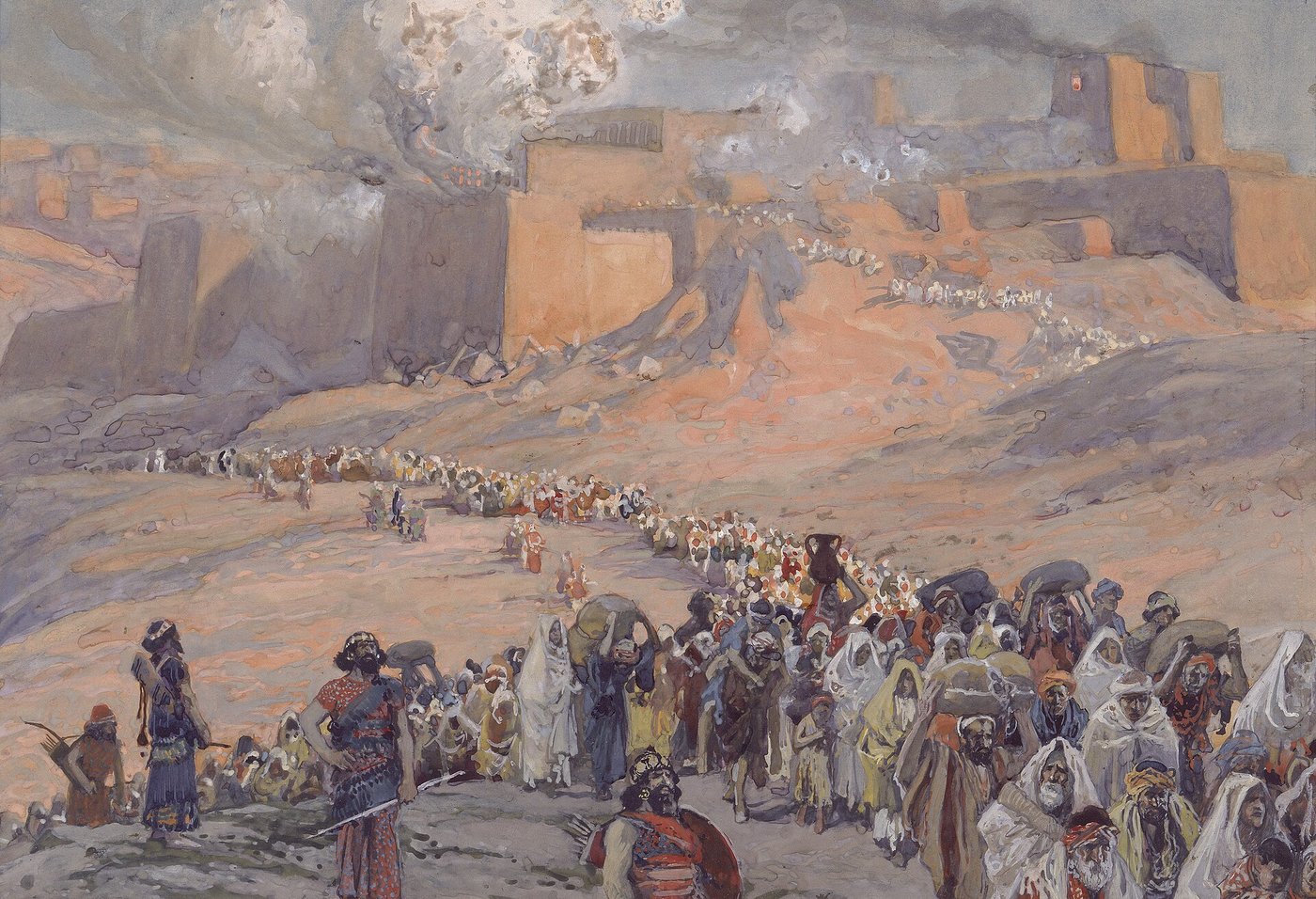
The wall was breached on the ninth day of the fourth month of the eleventh year: July 586 BCE. Zedekiah did not stay. He and his soldiers slipped out at night through a gate between the two walls and ran east towards the Jordan valley. The Babylonians caught them on the plains near Jericho. Zedekiah was taken north to Nebuchadnezzar's field headquarters at Riblah, where his sons were killed in front of him and he was then blinded, so that the execution of his dynasty would be the last thing he ever saw. He went to Babylon in bronze fetters.
The city itself was not destroyed immediately. About a month after the breach, an officer named Nebuzaradan, described as the commander of the guard, arrived with orders to finish the job. He burned the Temple, the palace and, in the phrasing of the account, every great house in Jerusalem. Then the walls were pulled down.
Inside the destruction layer
This is where archaeology stops confirming a story and starts adding to it. The destruction layer of 586 BCE has been reached in excavation after excavation across the ridge known as the City of David, and it has a consistent and very specific character.
There is ash, sometimes half a metre of it, mixed with collapsed stone, fallen mudbrick and charred beams. There are complete pottery vessels crushed in place, not the swept-out debris of an abandoned house. There are arrowheads, including bronze and iron trilobate points of a Scythian type used by troops in Babylonian service, lying in the burnt debris rather than scattered on the surface. And there are bullae: small lumps of clay, once pressed over the string of a papyrus document to seal it, stamped with the owner's name.
The bullae are the sharpest evidence of all, and they exist for a cruel reason. Papyrus burns. Clay fires. In a room in the City of David that excavators named the House of Bullae, more than fifty seal impressions were found in the ash, hardened into permanence by the same blaze that consumed every document they were attached to. One of them carries the name Gemaryahu son of Shaphan, a royal scribe who appears by name in the Book of Jeremiah, in whose chamber in the Temple precinct a scroll was read aloud to the people of Jerusalem. Another bulla, found more recently at the Givati site, reads "belonging to Nathan-Melech, servant of the king", matching an official named in the account of King Josiah's reforms.
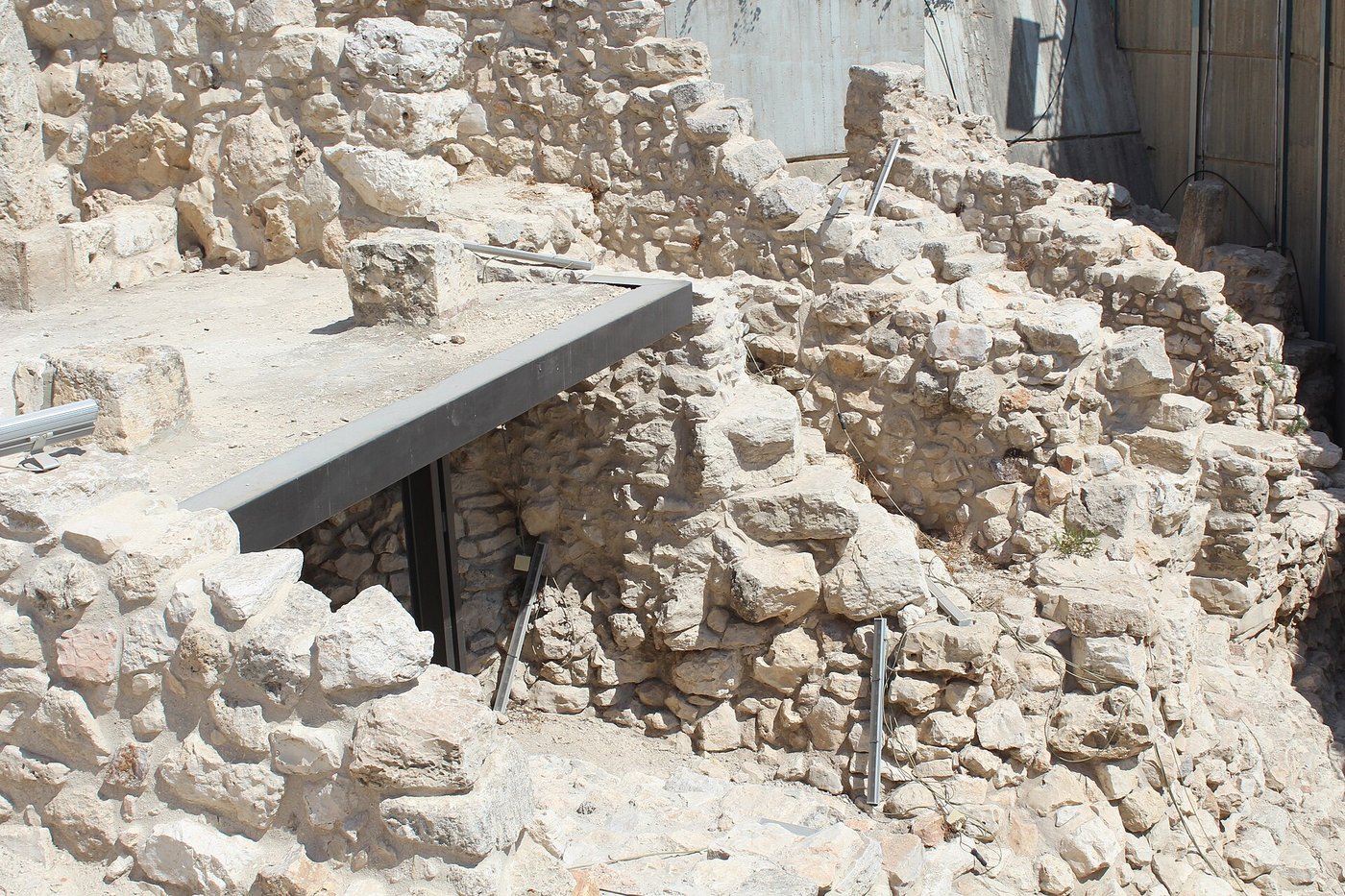
There is also a way of proving that a burnt floor really burned where it lies, rather than being filled in later with ash carted from somewhere else. When clay is heated past roughly 500°C, the magnetic minerals in it reset and lock in the direction of the Earth's magnetic field at that moment. Researchers sampling floors and collapsed debris in Jerusalem's destruction layer found exactly that signature, and found the alignments consistent across each surface. The material was heated in place, by a fire hot enough to reach those temperatures, in a single event. The 586 BCE layer has since become a reference point for dating other burnt sites across the region.
Was it 586 or 587 BCE? The dispute has run for over a century and turns on bookkeeping rather than evidence. Judah and Babylon counted regnal years differently, and it is not certain whether the biblical writer counted Zedekiah's partial first year as year one or as an accession year preceding it. Shift that assumption and every date in the sequence moves by twelve months. Most scholars now favour 586, a substantial minority hold to 587, and a good deal of published work simply writes "587/586" and moves on. Nothing about the archaeology settles it; a burnt floor cannot tell you which side of a new year it burned on.
The beams in the car park
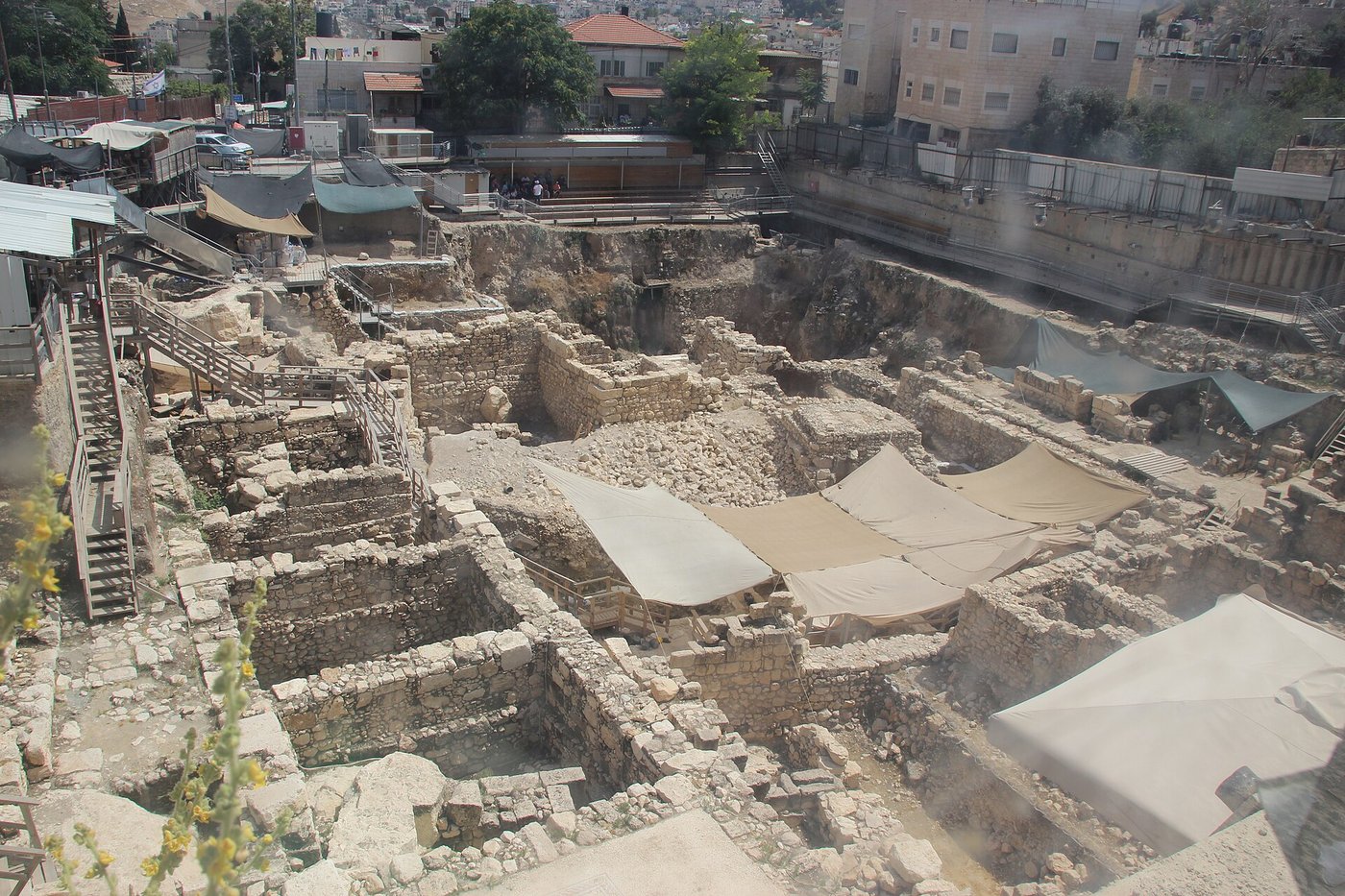
Which brings us back to the find of July 2026, at the excavation in the Givati Parking Lot conducted by the Israel Antiquities Authority and Tel Aviv University under the direction of Dr Yiftah Shalev and Efrat Bocher, with Professor Yuval Gadot of Tel Aviv University.
What makes the beams remarkable is not that burnt wood was found in the destruction layer. It has been found there before. It is that this wood is thick, largely intact, and carries an unusual number of growth rings, a rarity in the region, where most surviving ancient timber is thin, fragmentary and hard to read. According to the excavators, the beams formed the roof over an inner courtyard of a substantial building and fell onto its floor when the structure came down. Melted wall plaster then flowed over them and sealed them from the air.
The value of that lies in dating. Radiocarbon analysis of a single fragment of ancient wood typically produces a range spanning a century or more, which is useless for reconstructing the last decades of a kingdom. But if you can count the growth rings and radiocarbon-date several of them in sequence, matching the pattern of results against the known curve, the range collapses dramatically. Dr Johanna Regev of the Israel Antiquities Authority, who specialises in this work, has said the beams could narrow the dating to as little as a decade.
A decade is a different order of precision. At that resolution you can begin to ask which buildings in Jerusalem went up before the first deportation of 597 BCE and which were still being built afterwards: whether the city was rebuilding and expanding in the years between the two Babylonian campaigns, or slowly hollowing out. Those are questions about how a society behaves when it knows an army is coming back.
Who was left
The popular image of what followed is a country emptied: the whole nation marched off to Babylon, the land lying vacant for seventy years until the exiles returned. That version comes from the exiles' own literature, and it is doing something other than reporting.
The deportation numbers preserved in the Book of Jeremiah are strikingly modest: 3,023 people in 597 BCE, 832 from Jerusalem in 586, and 745 in a third round some years later, a total of 4,600. Even allowing that these may count only adult men, and that other accounts give higher figures, this is not a nation being removed. It is an elite being removed: the royal house, the priesthood, the scribes, the metalworkers, the officer class. Everyone who could organise a rebellion, and everyone whose skills a rebellion would need.
"Nebuchadnezzar emptied Judah. The entire population was carried off to Babylon and the land lay abandoned until the return under Cyrus."
Jerusalem and its immediate hinterland were devastated, and the archaeological drop-off there is real and severe. But the region of Benjamin just to the north (Mizpah, Gibeon, Bethel) shows continuous occupation straight through the sixth century, with no destruction layer at all. Babylon installed a governor at Mizpah and ran the province from there. Most people who lived in Judah in 587 BCE were still living in Judah in 586, farming the same terraces under new management.
The province was placed under a local governor, Gedaliah, based at Mizpah rather than in the ruins of Jerusalem. He lasted a matter of months before being assassinated by a man of royal blood who regarded cooperation as treason. A group of survivors, terrified of the reprisal that would follow, fled to Egypt and took the elderly Jeremiah with them, against his will. That is the last we hear of him.
The ash that was kept
There is a detail from the recent excavations that is easy to skim past and worth sitting with. When Jerusalem was resettled from the late sixth century onwards, the returning population did not simply level the debris and build on top of it. In places they built around it. Parts of the destruction layer appear to have been deliberately left exposed and undisturbed within the rebuilt city, what Dr Shalev has described as a landscape of memory.
If that reading holds, it means people were walking past the burnt remains of their grandparents' houses on purpose, generations after the fire, because forgetting was not the plan. The catastrophe had already become part of how the community explained itself.
That instinct never really stopped. The destruction of the First Temple and the destruction of the Second, more than six centuries later under the Romans, are mourned on the same day in the Jewish calendar, the ninth of Av, and it was in the week before that fast, in July 2026, that the beams were announced. Two thousand six hundred years is a long time for a fire to stay in a calendar.
What the archaeology adds is not confirmation, exactly. Nobody needed a burnt beam to know that Jerusalem fell. What it adds is specificity, and specificity is what turns a national catastrophe back into a series of ordinary rooms: a scribe's office where the documents burned and the seals survived, a guardroom where a soldier wrote down that he could no longer see the fire on the next hill, a courtyard roof that came down onto a floor and was covered, within seconds, by the melting plaster of its own walls.
Read next: The Sun Gate of Nineveh: A King's Stele Buried Between Two Destructions and Hattusa: The Vanished Empire Behind the World's Oldest Peace Treaty.
Sources & further reading
- Israel Antiquities Authority and Tel Aviv University, excavation reports and press releases on the Givati Parking Lot excavation, City of David, July 2026 — directed by Y. Shalev, E. Bocher and Y. Gadot.
- Grayson, A. K., Assyrian and Babylonian Chronicles, J. J. Augustin (1975) — includes the text of tablet BM 21946.
- Vaknin, Y., Shaar, R., Gadot, Y., Shalev, Y., Lipschits, O. and Ben-Yosef, E., "The Earth's magnetic field in Jerusalem during the Babylonian destruction: a unique reference for field behavior and an anchor for archaeomagnetic dating," PLOS ONE (2020).
- Torczyner, H. (Tur-Sinai), Lachish I: The Lachish Letters, Oxford University Press (1938).
- Lipschits, O., The Fall and Rise of Jerusalem: Judah under Babylonian Rule, Eisenbrauns (2005).
- Barstad, H. M., The Myth of the Empty Land, Scandinavian University Press (1996).
Image credits (via Wikimedia Commons): The Flight of the Prisoners — James Tissot (public domain); the Broad Wall, Jewish Quarter, Jerusalem — Fallaner (CC BY-SA 4.0); Babylonian Chronicle tablet recording the capture of Jerusalem — Osama Shukir Muhammed Amin FRCP(Glasg) (CC BY-SA 4.0); House of Ahiel, City of David — Deror avi (CC BY-SA 3.0); Givati Parking Lot excavations, City of David — Gary Todd (CC0).