On 6 June 2026, a work team clearing rubble at the eastern edge of the ruins of Nineveh, on the far bank of the Tigris from modern Mosul, hit stone that would not move. What came out of the ground over the following days was a slab of Mosul marble two metres tall and more than a metre and a half wide, carved on both faces. On the front stood a king in a tall helmet, his hands raised in the gesture Assyrian rulers used before their gods. On the back were two smaller figures, and column after column of cuneiform. Iraq's State Board of Antiquities and Heritage announced the find later that month. The king is almost certainly Ashurbanipal, who ruled the largest empire the world had yet seen, and the gate beside which his monument had lain buried is one of the few places on earth that has been wrecked twice by war, twenty-six centuries apart.
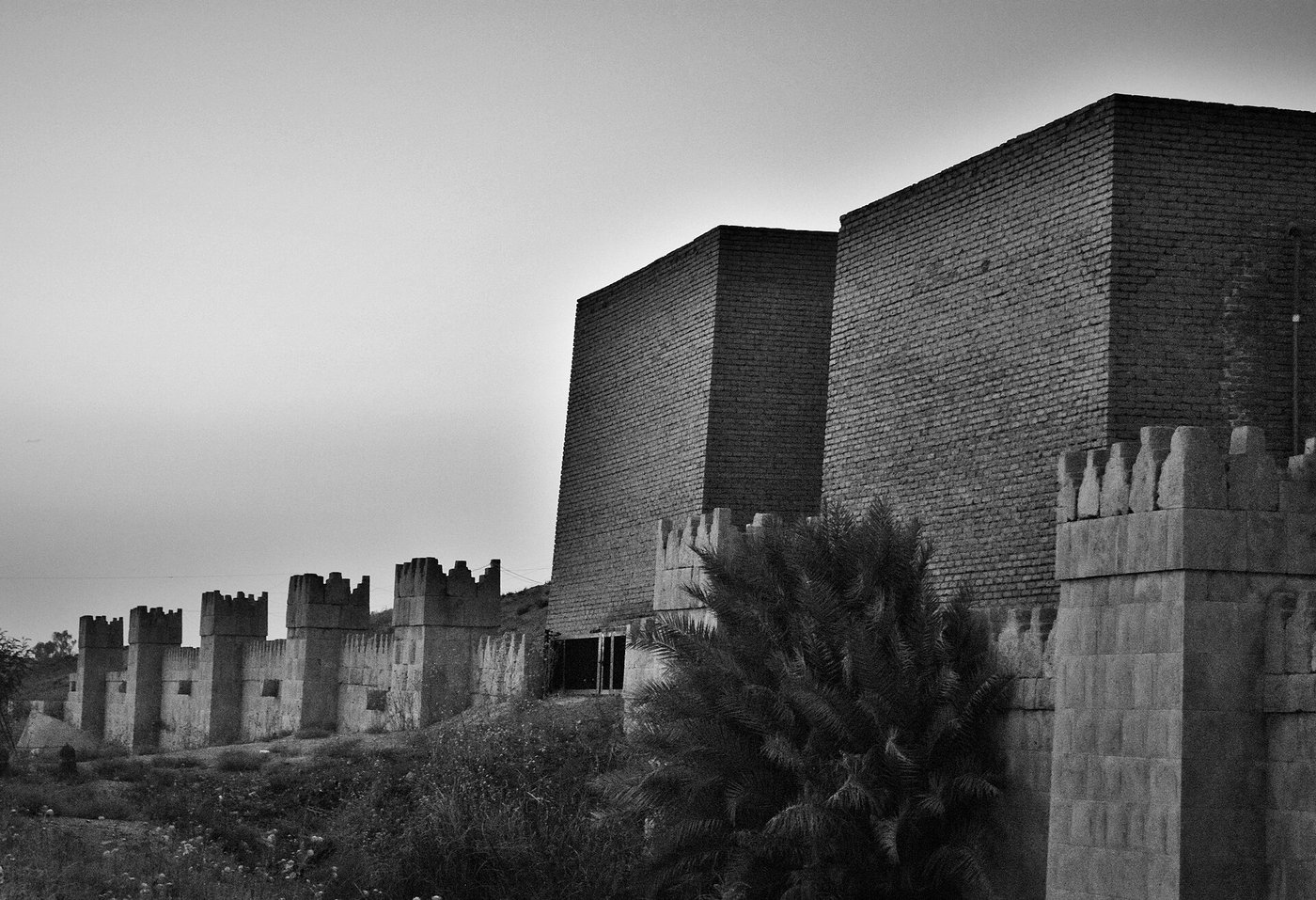
The place is called Bab Shamash: the Sun Gate. It was one of the main eastern entrances to Nineveh, and for most of the last hundred years it has been a low, weathered mound with a partly rebuilt gatehouse standing on it, the kind of ruin that tourists photographed on the way to somewhere else. Then the Islamic State took Mosul in 2014, and the gate stopped being scenery and became a firing position. What archaeologists have found beneath it since 2021 is not one disaster but two, stacked almost on top of each other: the sack of Nineveh in 612 BC, and the battle for Mosul in 2017.
The gate that faced east
Nineveh was not always the capital of Assyria. The empire's oldest heart was Assur, further down the Tigris, and its kings had shifted their seat more than once. Sennacherib, who came to the throne in 705 BC, chose Nineveh and then set about making it impossible to ignore. He widened its streets, ran an aqueduct in from the hills, laid out gardens, built himself a palace he called the Palace Without Rival, and threw around the whole city a wall system with a ring of monumental gates. Archaeologists now count eighteen of them, each with a name that tied a piece of masonry to a god or a road.
The Sun Gate belonged to Shamash. To Assyrians and Babylonians he was more than the sun: he was the god who saw everything the daylight touched, and so the god of justice, oaths and judgement. Putting his name on the eastern gate, the one that faced the sunrise, was not decoration. It was a statement about what happened when you passed through it. The road beyond ran towards Arbela, the city we now call Erbil, and anyone arriving from the east (merchants, tribute-bearers, defeated kings) came in this way.
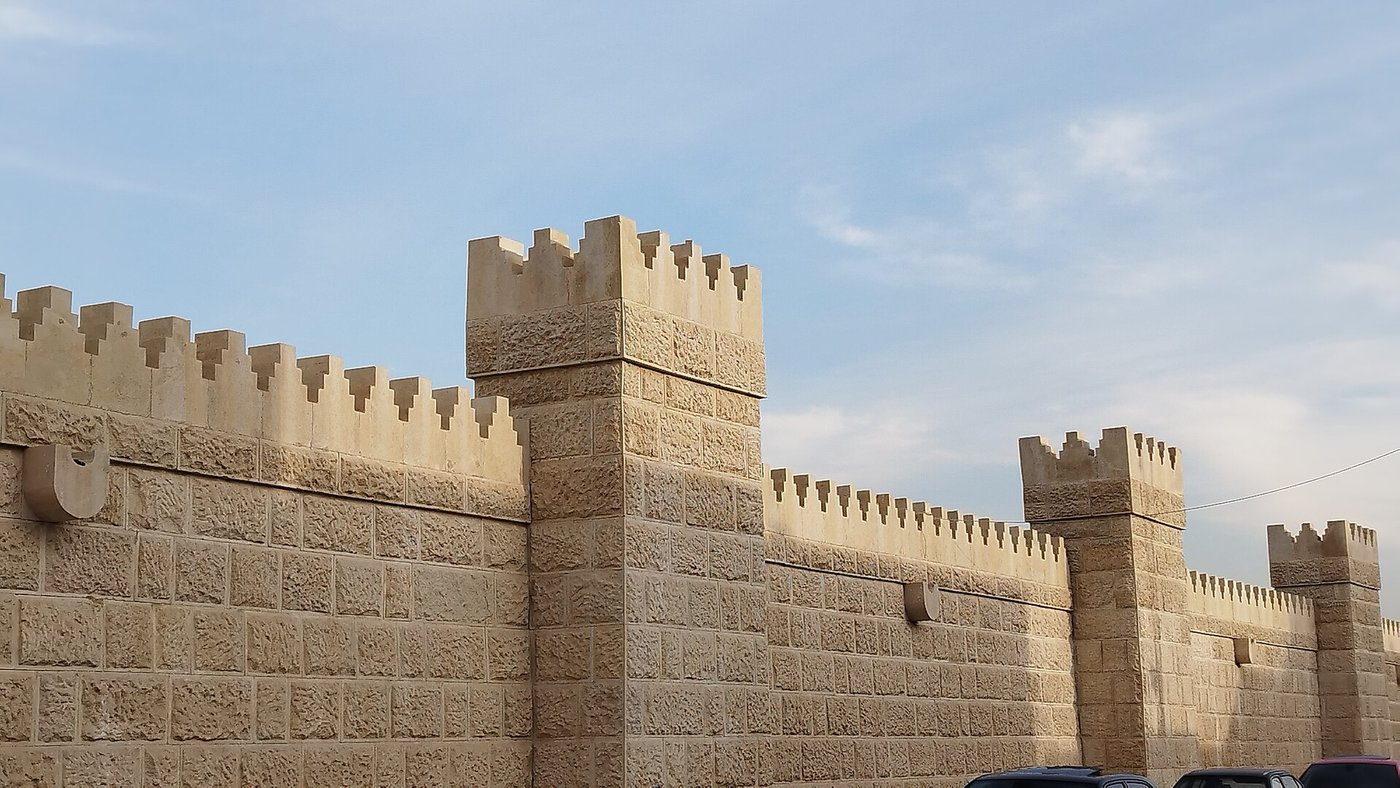
Gates in Assyrian cities did the work that courthouses and customs posts do now. Business was settled in their shadow, oaths were sworn there, and royal monuments were set up where the largest number of people would walk past them. A stele at a gate was meant to be read, or, since most people could not read cuneiform, to be pointed at and explained. It was the king talking to his city in stone.
The king in the tall helmet
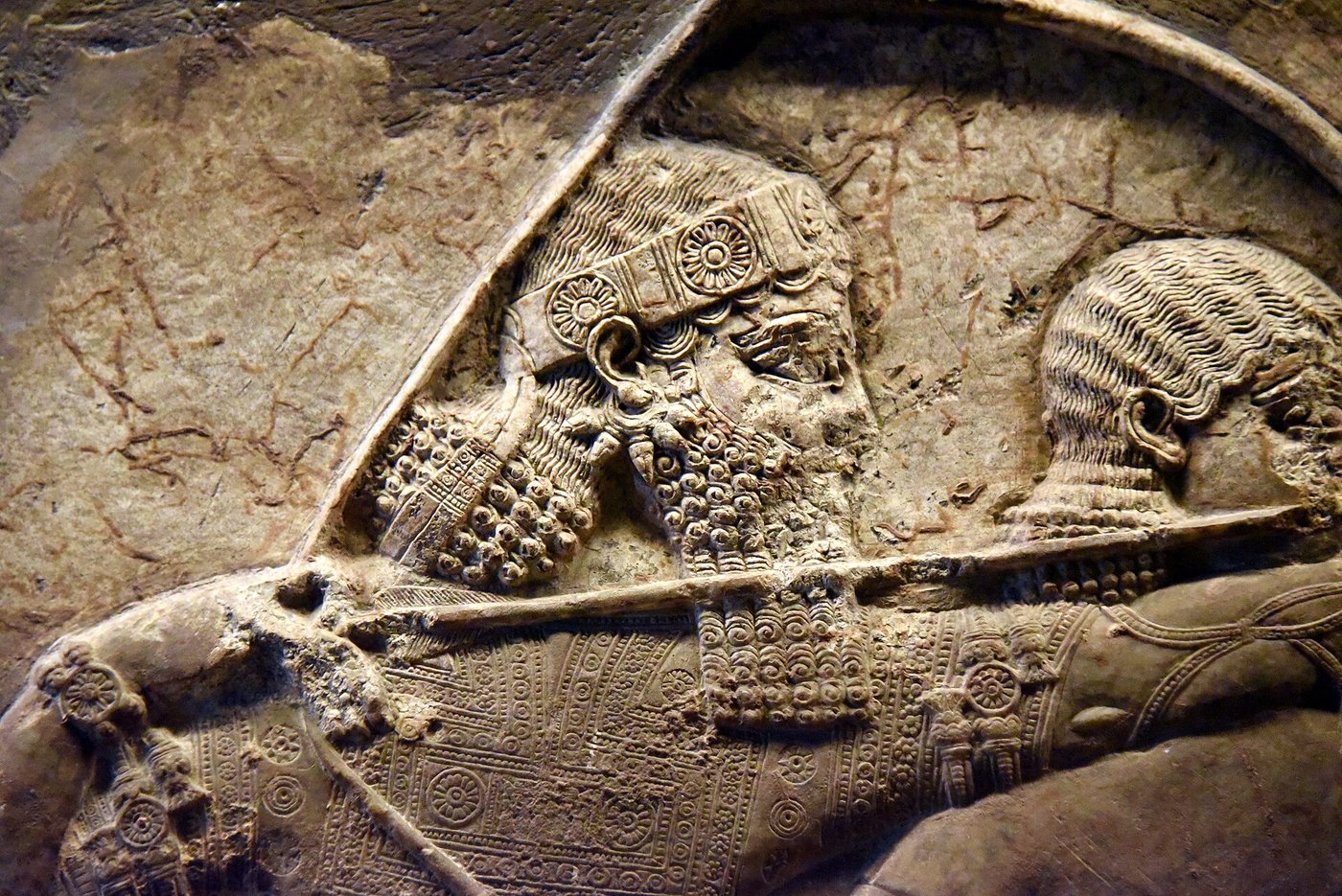
Ashurbanipal took the throne in 668 BC and held it until about 631 BC. He is the Assyrian king most people have seen without knowing it: the hunter in the British Museum's lion reliefs, drawing a bow from a chariot while dying animals twist under the wheels. Those panels came from his North Palace at Nineveh, and they were carved to be admired by courtiers who understood exactly what they meant. Killing lions was not sport. It was the king performing his job: standing between the ordered world and everything outside it that wanted to eat you.
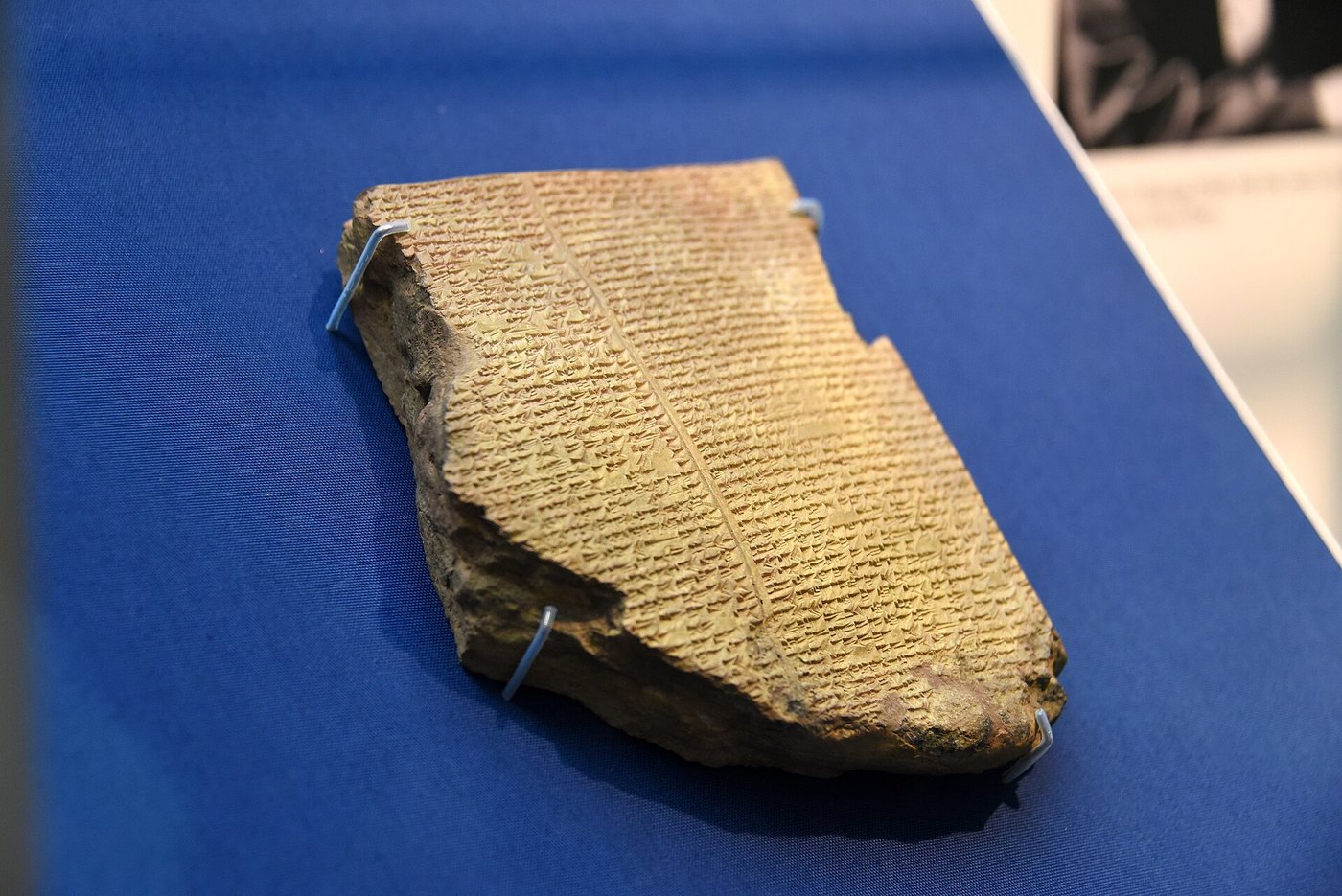
He was also, unusually for a conqueror, a reader. Ashurbanipal boasted that he could work through difficult tablets and understand the older Sumerian in them, and he sent agents across Mesopotamia to collect texts for his library at Nineveh. That library is the reason we can read Babylonian literature at all. When the British Museum's George Smith sat down in 1872 with a broken tablet from the collection and realised he was looking at a flood story older than Genesis, the modern study of Mesopotamia effectively began in that moment.
Around 30,000 tablets and fragments from Ashurbanipal's library at Nineveh survive today, most of them in London. They survived precisely because the city burned: the fire that destroyed Nineveh in 612 BC baked the unfired clay tablets hard, turning a perishable archive into pottery. The empire's worst night is the reason its books are still readable.
The stele that was smashed on purpose
The marble monument found in June 2026 is not the first stele to come out of the Sun Gate. Between 2021 and 2023, three excavation seasons at Bab Shamash turned up something stranger: the shattered remains of a limestone stele that had also carried Ashurbanipal's image and words. It had stood at least two metres high and roughly a metre wide. Archaeologists have so far recovered 196 pieces of it.
The way it broke matters. A monument that falls over cracks into a few large chunks. This one produced fragments of wildly different sizes, down to splinters and flakes, the signature of a stone deliberately battered apart. The team also found signs of fierce heat: the limestone appears calcified in places, and clay pressed against its surface preserved traces of burning and charred organic material, possibly straw. Somebody attacked this stele with tools, in or near a fire, and meant to leave nothing of it standing.
Even so, the text was not entirely lost. Four fragments fit back together and preserve readable passages on both sides, and epigraphers could match them against Ashurbanipal inscriptions already known from clay tablets. The surviving lines describe the Assyrian army's campaign in Egypt: the flight of the pharaoh Taharqa from Thebes after his forces were beaten, and the treachery of three vassal rulers in the Nile Delta who tried to make common cause with him. Two of the plotters were caught and brought before the Assyrian king, who, according to his own account, pardoned them.
"Collectively, the results of these investigations have revealed the surprisingly well-preserved remains of two catastrophic episodes in the long and illustrious history of this ancient city."— from the 2026 report on the 2021–2023 excavations at the Shamash Gate, led by Timothy Harrison and colleagues
That pardon is worth pausing on, because it shows how these monuments work. Assyrian royal inscriptions are not neutral records. They are the king's version, written to be believed, and mercy appears in them for the same reason massacre does: both demonstrate that the king alone decides. Read carefully, a stele tells you less about what happened than about what a king wanted his subjects, his gods and his successors to think had happened. The historian's job is to hold that against the archaeology, the Babylonian chronicles and the letters that survive in the archives, and see where the accounts pull apart.
The night the empire ended
Assyria fell fast. Within thirty years of Ashurbanipal's death, an empire that had run from the Persian Gulf to Egypt was gone. A coalition of Babylonians under Nabopolassar and Medes under Cyaxares moved against the Assyrian heartland, and in 612 BC they took Nineveh after a siege of about three months. The Babylonian chronicle that records it is short and businesslike: the city was captured, turned into ruin heaps, and the great spoil carried off.
The Sun Gate excavations put flesh, literally, on that summary. Above the gate's second paving surface, the diggers found a layer containing stele fragments, arrowheads of bronze and iron, broken pottery, a decorated bone button, and human bones. In the central passage the remains were jumbled and disarticulated, mixed into the debris rather than laid out. Preliminary study identified at least four people: a child of about two and a half to three years, a male in his late teens, a woman somewhere in her twenties, and one more adult whose age and sex could not be established.
At the gate's western entrance lay another body, face down, arms drawn in against the torso and hands in front of where the throat had been. The skull was missing; a badly broken jaw lay beneath a brick. From tooth wear the person was thirty-five to forty-five years old. Nothing was buried with them. The excavators think the upper body ended up under collapsing brickwork while the legs stayed exposed and eventually disappeared: an ordinary death in a falling city, preserved by accident.
The pottery gave the layer a date. Of eighty-seven diagnostic pieces, most were the yellow-green ware typical of the Neo-Assyrian period, and the shapes matched almost exactly those recovered from the Mashki Gate on the other side of the city, excavated in 1989 and 1990. This is the destruction of 612 BC, sitting where it fell.
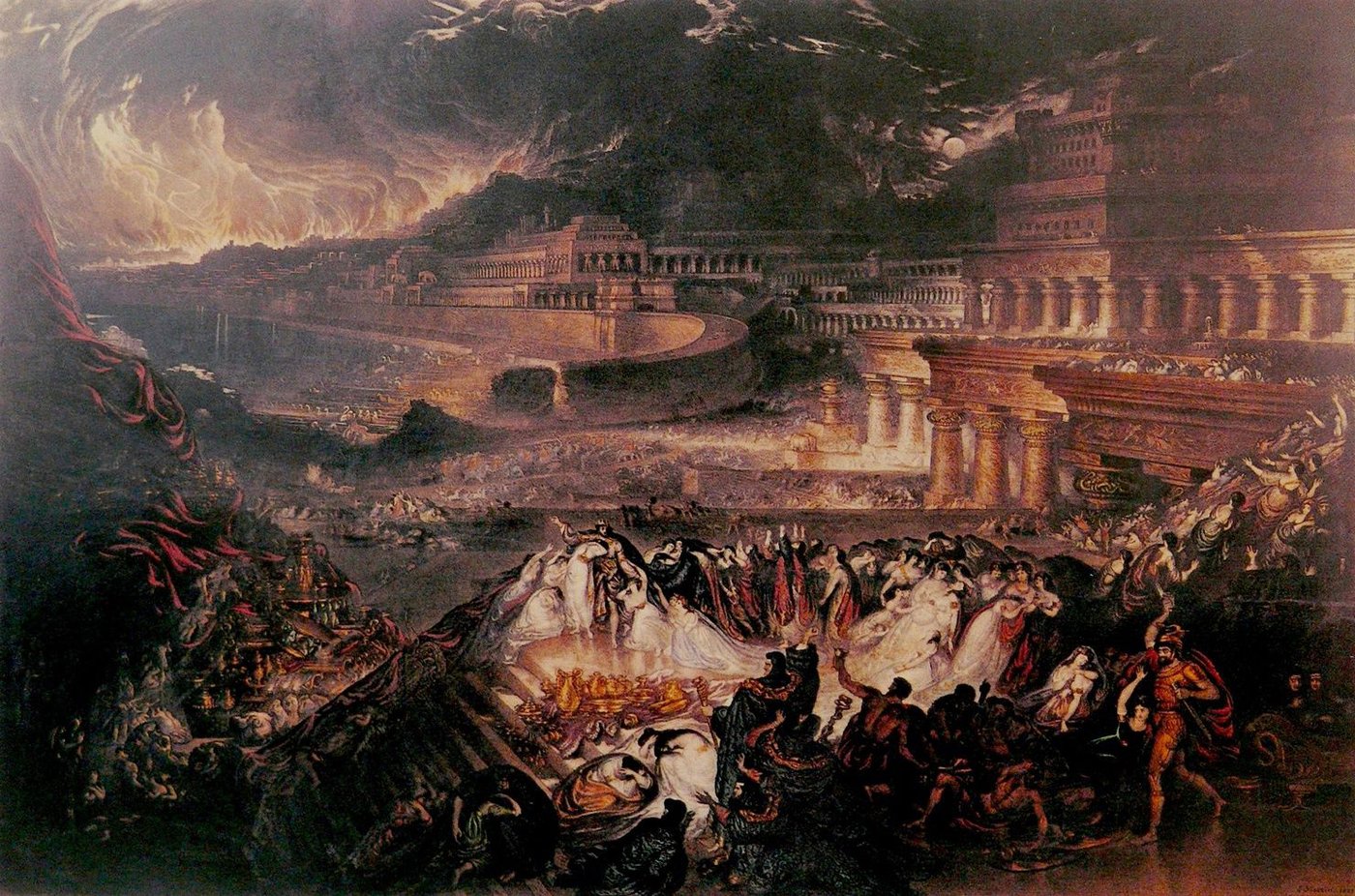
"Nineveh's last king, Sardanapalus, was a decadent voluptuary who, when the city could no longer hold out, built a vast pyre in his palace and burned himself alive on it with his concubines, his treasure and his horses."
Sardanapalus is a Greek invention, passed down from Ctesias through Diodorus Siculus, and no Assyrian source knows him. The name seems to be a garbled memory of Ashurbanipal, who was neither idle nor effeminate and who died decades before Nineveh fell. The story fired Byron's play and Delacroix's famous canvas, and it shaped how Europe pictured Assyria for a century, but the city was taken by a Median and Babylonian army after a hard siege, not lost by a king too soft to fight.
Nor did Nineveh vanish in a night. People went on living among the ruins in a much reduced way; there was still a settlement there when Xenophon's Greek mercenaries marched past around 401 BC, and they had no idea what the enormous walls beside them had been. Later still, an Assyrian church community grew up on the mound of Nabi Yunus. What ended in 612 BC was not the place but the state: the machinery of tribute, deportation and record-keeping that had held the Near East together for three centuries.
The second destruction
The Islamic State held Mosul from June 2014 until July 2017, and heritage was on its target list from the start. The shrine of Nabi Yunus (the tomb of Jonah, revered by Muslims, Christians and Jews alike, and built over the remains of an Assyrian palace) was blown up in July 2014. The Mashki Gate, rebuilt in the 1970s and by then part of the Mosul skyline, was bulldozed in 2016. Reliefs in the Mosul Museum were attacked with power tools while the destruction was filmed for release online.
The Sun Gate suffered differently. Rather than demolishing it, fighters turned it into a defensive strongpoint, expecting an attack from the east. They dug tunnels through the ancient masonry and the ground beneath it, around 210 metres of them in total, cutting through original inscribed slabs and the stone paving of the central passage, breaking stone where it blocked their route and abandoning dead ends where it did not. When Iraqi and coalition forces retook the area, the gate took gunfire and shelling: shrapnel, munitions, craters and burn marks are scattered across the complex.
There is also an oddity that no one quite knows what to make of. In front of the gate, ISIS members piled up household goods looted from Mosul's homes (washing machines, air conditioners, furniture, toilet seats) in a heap running for roughly two kilometres along the outside of the ancient wall. The excavators refer to it, drily, as the landfill at Nineveh's main entrance.
By 2021 the tunnels had left the gate close to collapse. A team working with the Iraqi–Italian Nineveh Expedition, directed by Nicolò Marchetti of the University of Bologna, first mapped the underground network with a laser scanner, then worked with the United Nations Development Programme, which stabilised the tunnels in early 2022 and backfilled them with sandbags filled with the same earth that had been dug out. Only after that could anyone excavate, which is how the smashed stele of 612 BC came to light beneath the wreckage of 2017.
How much of Nineveh should be rebuilt? The Mashki Gate that ISIS destroyed was not really ancient: it was a 1970s reconstruction, raised on partly excavated foundations by an Iraqi team under Tariq Madhloom, with mudbrick built up some twenty-five metres and stone facing added to the outside. It gave Mosul a landmark, and by covering the site it accidentally protected parts of it. It also mixed modern and ancient fabric so thoroughly, with so little documentation, that today's excavators must strip away eroding 1960s mudbrick before they can reach anything Assyrian. Reconstruction gives a wounded city something to stand in front of and be photographed with; it also destroys evidence and invents detail. Nineveh is where that argument is being had in practice, one gate at a time.
What the ground keeps giving back
The strange thing about Nineveh over the past few years is that the more damage it takes, the more it seems to yield. When Iraqi archaeologists from the University of Mosul and colleagues from the University of Pennsylvania began stabilising the shattered Mashki Gate in 2022, they dug into ground the 1970s reconstruction had never touched and found seven marble panels carved in the reign of Sennacherib: war scenes, mountains, palm trees and grape vines. The panels had been recycled from an earlier palace and reused as building material, laid on their sides with anything visible above floor level chiselled off. They were the first major Sennacherib-era reliefs found since Austen Henry Layard's excavations in the 1840s and 1850s, and unlike Layard's, they are staying in Iraq.
In 2025 a Heidelberg University team working in the throne room of Ashurbanipal's North Palace found the pieces of a relief slab about five and a half metres long, three metres high and weighing something like twelve tonnes. It shows the king flanked by Ashur and Ishtar, the chief god of Assyria and its great goddess, each followed by a protective figure: a fish-cloaked genius, and another attendant the excavators think is a scorpion-man. Major deities almost never appear in Assyrian palace reliefs, which makes the slab close to unique. It had been buried in a pit behind a niche opposite the throne room's main entrance, either hidden or dumped, at some point after the palace stopped being a palace.
Now the June 2026 stele from the Sun Gate joins them: intact where the older one was pulverised, carved from local Mosul marble, with the king on the front, two more royal figures on the back, and a long inscription that specialists expect will list building works carried out at Nineveh and across the empire. It has not been fully translated yet. Assyriologists have learned to be patient with these things. The text may turn out to repeat a known inscription word for word, or it may name a project nobody knew about, or fix a date that has been argued over for a century.
Why a broken stone matters
It is tempting to read all this as a neat morality tale: empire falls, monuments smashed, ruins avenged by science. The reality is more useful and less tidy. The men who broke the first stele in 612 BC and the men who tunnelled through its gate in 2016 were doing versions of the same thing: attacking a monument because of what it stood for, in the belief that destroying the object destroys the idea. Both were wrong in the same way. The fire that was meant to erase Ashurbanipal's library preserved it. The tunnels dug to hold the Sun Gate led archaeologists straight to a layer they might never have excavated otherwise.
The work at Nineveh now is largely Iraqi work, done with foreign partners rather than by them, and the finds stay in the country. That is a real change from the nineteenth century, when the ordinary practice was to crate the best reliefs and ship them to London or Paris. Mosul's museum has reopened after years of restoration, and the university that trains the archaeologists digging at Bab Shamash sits a few kilometres from the mound.
Ashurbanipal put his stele beside a gate because he wanted to be read by people coming and going for as long as the city stood. The city did not stand. The stone did. It was buried, broken, burned, tunnelled under, and finally lifted out of the ground in front of a country still rebuilding the town on the other side of the river. He is being read again, which is more or less what he asked for, though not at all in the way he imagined.
Read next: The Burning of Jerusalem: What the Charred Beams of 586 BCE Reveal and Cyrus Cylinder: The Clay Barrel Sold as the First Bill of Rights.
Sources & further reading
- T. Harrison et al., report on the 2021–2023 excavation seasons at the Shamash Gate, Nineveh (2026) — the destruction layers, the 196 stele fragments and the human remains.
- Iraq State Board of Antiquities and Heritage, announcement of the marble stele found at Bab Shamash, June 2026; reported by The National and Archaeology magazine.
- Heidelberg University, "Spectacular find in the ancient city of Nineveh" (2025) — the throne-room relief of Ashurbanipal with Ashur and Ishtar, Heidelberg Nineveh Project.
- Penn Museum and the University of Mosul, Mashki Gate restoration project — the seven reused Sennacherib reliefs uncovered in 2022.
- Eckart Frahm, Assyria: The Rise and Fall of the World's First Empire (2023) — accessible narrative history of the Neo-Assyrian state.
- Gareth Brereton (ed.), I am Ashurbanipal: King of the World, King of Assyria (British Museum, 2018) — the king, his library and his reliefs.
Image credits (via Wikimedia Commons): Nineveh city wall, Mosul — Abdulsalam Al Dabbagh (CC BY-SA 4.0); Ashurbanipal lion-hunt relief, British Museum — Osama Shukir Muhammed Amin FRCP(Glasg) (CC BY-SA 4.0); Flood Tablet from the Library of Ashurbanipal — Osama Shukir Muhammed Amin FRCP(Glasg) (CC BY-SA 4.0); The Fall of Nineveh by John Martin, 1829 — scan by Mu-tamajo (CC BY-SA 4.0); Mashki Gate, Nineveh (featured) — Omar Siddeeq Yousif (CC BY-SA 4.0).