In December 2025, in a rock-cut tomb numbered simply 65, in a sector of the Egyptian desert numbered simply 22, a team of archaeologists lifted the linen wrappings from around the abdomen of a mummy that had lain undisturbed for roughly sixteen centuries. Tucked against the body, where earlier seasons at the same site had always found rolled papyri covered in magical formulas and protective spells, was another papyrus. It looked, at first glance, like all the others. It was not. When conservators and papyrologists finally unrolled and read it in the early months of 2026, they found themselves looking at Greek hexameter verse: a fragment of the Catalogue of Ships, from Book II of Homer's Iliad. No one had ever found a literary text buried this way before. Somewhere in late Roman Egypt, someone had chosen to send a dead body into the afterlife wrapped not in a spell, but in a poem.
The discovery comes from Oxyrhynchus, one of the most productive archaeological sites in the world for understanding how the ancient Mediterranean read, wrote and thought, and it adds a new page to a story that scholars thought they knew well. Egyptologists have catalogued thousands of funerary papyri from Roman-period Egypt. Classicists have catalogued hundreds of papyrus fragments of the Iliad, more than of any other book from antiquity. What no one had previously documented was the two traditions meeting inside the same set of linen wrappings: a literary manuscript performing the job that magical texts were supposed to do. It is a small fragment, badly damaged and only partially legible. It may turn out to be one of the most significant papyrus finds of the decade.
Oxyrhynchus: the city that never stopped talking
To understand why this discovery landed as it did, it helps to know what Oxyrhynchus is. The ancient city (its modern name is el-Bahnasa, about 160 kilometres south-west of Cairo along a branch of the Nile) was a substantial provincial capital in Graeco-Roman Egypt, with temples, a hippodrome, theatres, and a large, comfortably bilingual population of Greek-speaking administrators, priests, merchants and schoolchildren. It would be a footnote in the history books were it not for its rubbish. Oxyrhynchus sits at the desert's edge, where centuries of household waste, discarded contracts, tax receipts, private letters, schoolboy exercises and worn-out literary texts were dumped into mounds and left to dry in sand that almost never sees rain.
That accident of geography turned the city's ancient refuse into the single richest cache of everyday papyrus documents to survive from the ancient world. British excavators Bernard Grenfell and Arthur Hunt began digging there in 1896 and, over the following decade, pulled out hundreds of thousands of fragments, an archive so vast that scholars are still publishing new volumes of the Oxyrhynchus Papyri series well over a century later, with perhaps ninety per cent of the find still unpublished. Modern excavation continued at the site itself, and the mission responsible for the 2025–26 season, an archaeological project of the University of Barcelona's Institute for the Study of the Ancient Near East directed by Núria Castellano and Ignasi-Xavier Adiego, has spent recent campaigns working through the city's necropolis, the burial ground where its Roman-period residents were laid to rest, rather than its ancient bins.
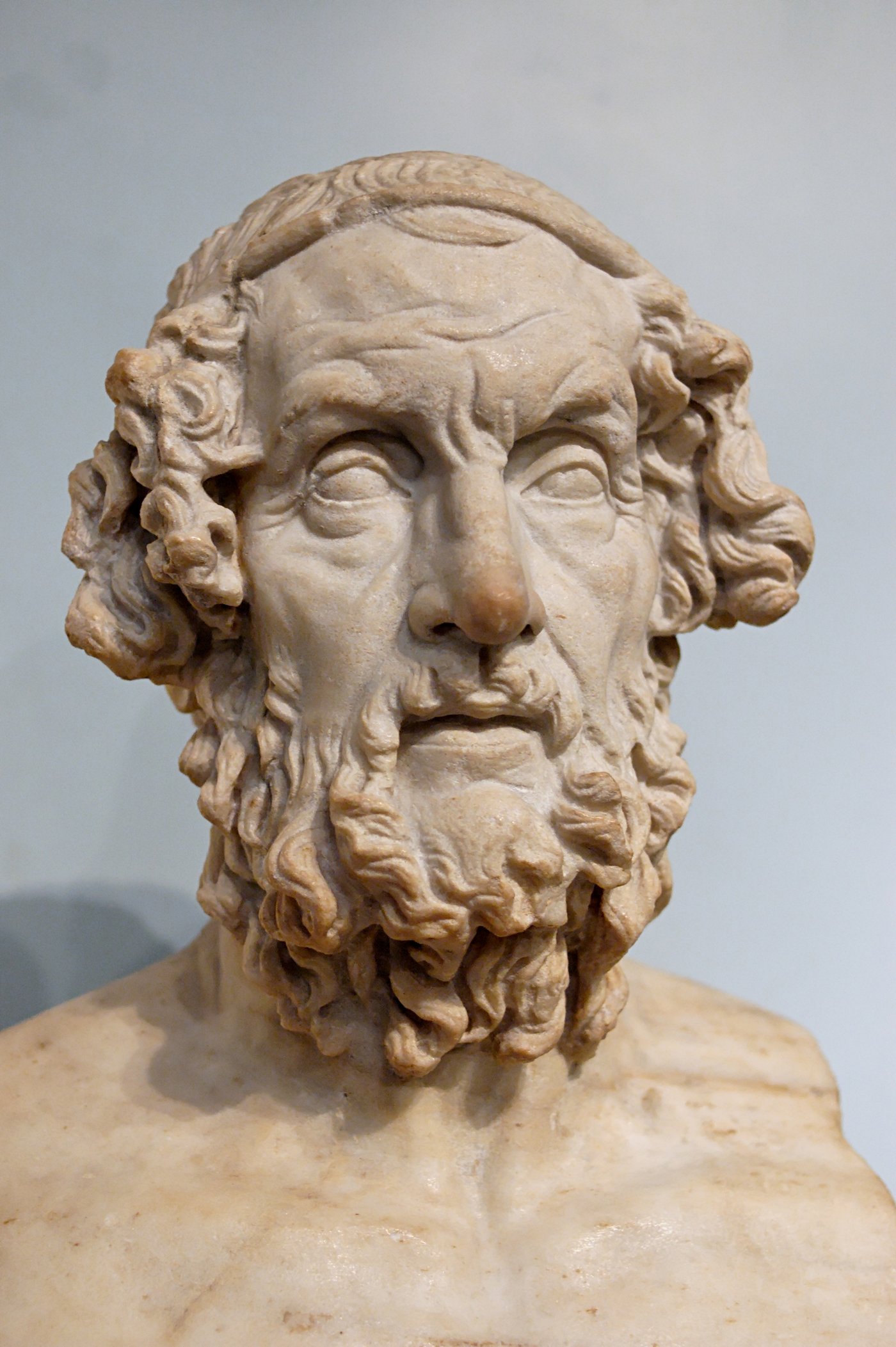
A body wrapped in the last centuries of pagan Egypt
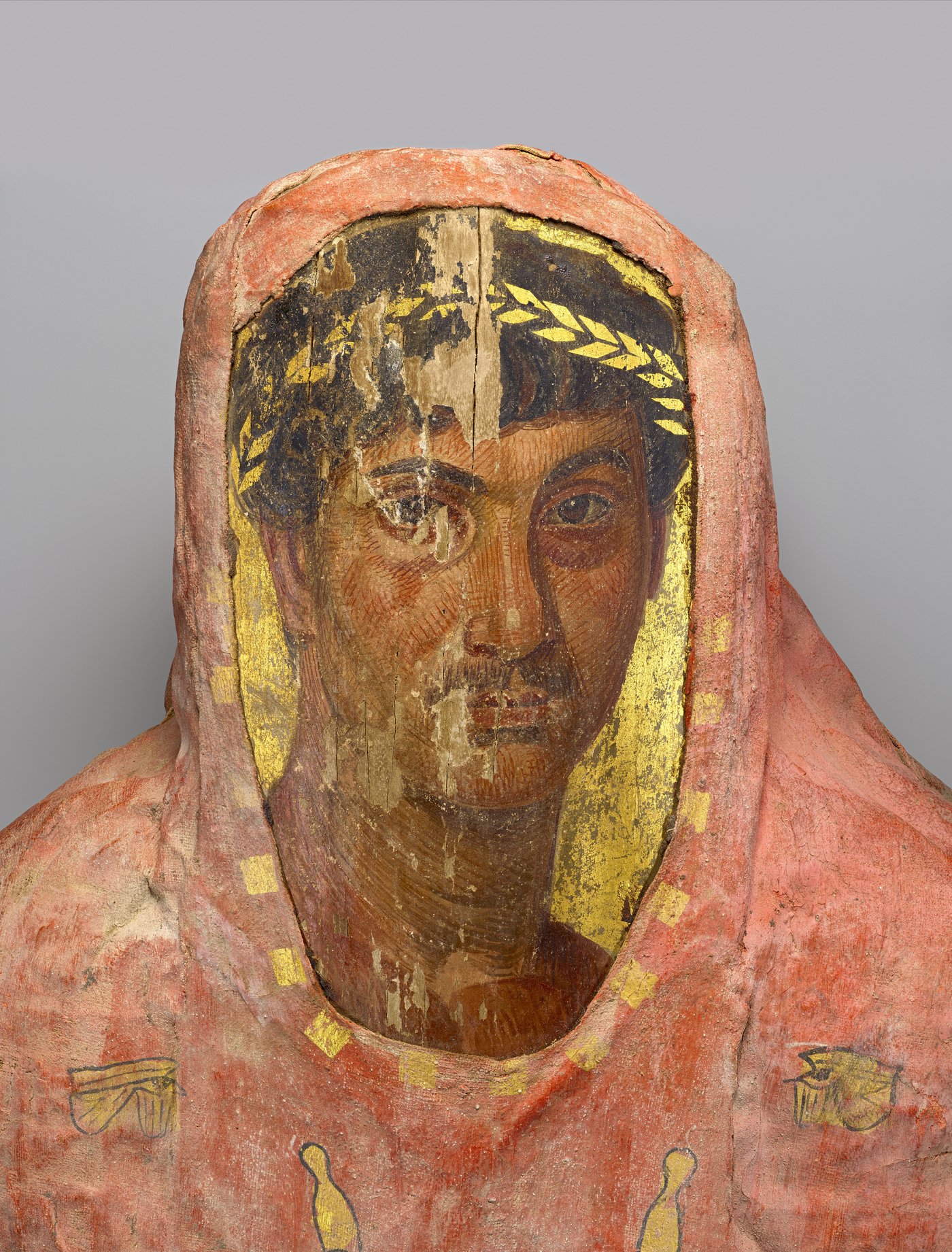
The mummy from Tomb 65 has been dated to roughly 1,600 years ago, placing it in the fourth or fifth century CE, the final stretch of Roman rule in Egypt, when the empire was Christianising fast but older funerary customs, especially away from the largest cities, had not yet disappeared. Mummification itself, the elaborate embalming tradition stretching back more than three thousand years to the Old Kingdom, was by this point a fading practice, increasingly simplified and increasingly confined to communities that still held to the old religious grammar of the afterlife: that a preserved, provisioned body gave the spirit somewhere to return to.
Oxyrhynchus in this period was a thoroughly mixed society: ethnically Egyptian in its deep roots, administratively and culturally Greek since Alexander's conquests seven centuries earlier, and by the fourth century increasingly Christian at the top of its social order while older households kept older habits. Embalmers at the site had, in earlier excavation seasons, already documented a recurring practice among some of Oxyrhynchus's Roman-period dead: papyrus rolls placed directly against the abdomen during wrapping, tucked in among the linen bandages as part of the embalming ritual itself, rather than left loose in the coffin or tomb the way funerary offerings usually were.
According to the excavation team, previous seasons at Oxyrhynchus had already turned up several examples of exactly this practice: a papyrus positioned on the torso as part of the wrapping process. Every one of those earlier examples, however, carried magical or ritual content: protective incantations and formulas of the kind associated with Egyptian and Graeco-Egyptian funerary magic. The Tomb 65 mummy is the first documented case in which the papyrus in that position carries a literary text instead. The ritual of placing a papyrus against the body was old and familiar. Filling that ritual slot with sixteen lines of Homer was, as far as the archaeological record shows, new.
What the conservators found when they unrolled it
Papyrus that has spent sixteen centuries pressed against a decaying body and folded into tight wrappings does not come out ready to read. The fragment recovered from Tomb 65 needed weeks of careful conservation before a single letter could be identified with confidence. That work fell to Margalida Munar, the mission's conservator, working alongside the papyrologist Leah Mascia; once the fragment had been stabilised, unfolded and photographed, it was Adiego, a classical philologist who has spent years directing the Oxyrhynchus project's textual work, who recognised the metre and the vocabulary. What emerged, across the damaged and partial lines, was a portion of the so-called Catalogue of Ships: the long roll-call in Book II of the Iliad in which Homer lists, region by region, every Greek contingent and its ships that sailed against Troy.
Modern readers tend to find the Catalogue of Ships the single most resistible stretch of the entire poem: some 260 lines naming kings, homelands and fleet sizes with almost no narrative incident to leaven them. Ancient readers took a very different view. To Greek and Roman geographers and historians, the Catalogue was treated as something close to an authentic political and geographical record of the Bronze Age world, cited for centuries by writers such as Strabo and Thucydides as evidence of how Greece had once been organised. It was also, simply, part of Homer, and in the schoolrooms and libraries of Roman Egypt, being part of Homer was more than enough.
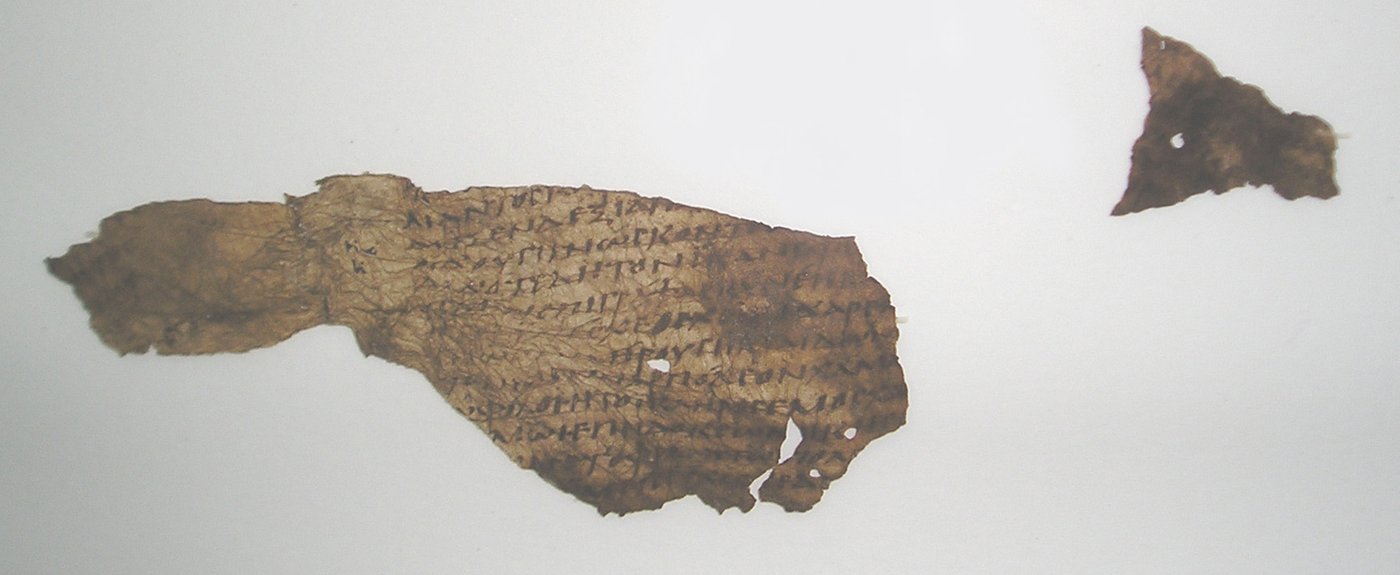
No book was ever more copied
However striking it is to find Homer in a mummy's wrappings, it is worth being clear about one thing: nobody who studies Roman Egypt was surprised that Homer, specifically, turned up. The Iliad is, by a wide margin, the most frequently attested literary text in the entire papyrological record of Egypt. Well over a thousand papyrus fragments of the poem have been recovered across the country's dry sites, dwarfing the numbers for any other classical author. The Bible's Greek Old and New Testaments are the only rivals in sheer volume, and only from the periods after Christianity took hold. Battered scraps of the Iliad turn up as elegant literary rolls owned by wealthy readers, as cheap secondhand copies, and, perhaps most tellingly, as handwriting exercises scratched onto broken pottery by schoolchildren practising their letters by copying out lines they were expected to know by heart.
Homer sat at the absolute centre of Greek education throughout the Hellenistic and Roman worlds, Egypt very much included. A boy who could read learned to read on Homer; a boy who could write copied Homer's lines to prove it. Adults who had long since left school still quoted him the way a modern reader might quote a proverb or a psalm. Homer functioned less like a novel on a Roman Egyptian's shelf and more like a shared cultural bedrock, which is precisely what makes his sudden appearance in a burial ritual so interesting. It suggests that for at least one family in fourth- or fifth-century Oxyrhynchus, the Iliad carried weight that reached beyond the classroom and into the register of magic and mortality.
"This poet has been the great educator of Greece, worthy of all study, for the ordering and betterment of human life."— Plato, Republic, Book X (early fourth century BCE), describing Homer's near-canonical status in Greek culture — a status that, eight hundred years later, had spread deep into Roman Egypt
Why the Iliad, and why here
The honest answer is that no one yet knows for certain, and the excavation team has been careful not to overreach. But the puzzle is not being approached blind. There is a documented context for treating Homer's verses as something more than literature in Roman Egypt. Amulets inscribed with lines of the Iliad and the Odyssey are known from the period, worn or carried for protective and even medicinal purposes, on the belief that the poet's words held real power. A distinctive genre called the Homeromanteion, a "Homer oracle", survives on several Egyptian papyri: sets of Homeric verses paired with a system for using dice or lots to select a line and read it as a divinatory answer to a personal question. Homer, in other words, was not read only as literature in this world. He was also consulted, worn, and invoked, in ways that shaded into magic.
Seen against that backdrop, a fragment of the Iliad placed on a corpse's abdomen looks less like an anomaly and more like a single further step along a path Roman Egyptians had already been walking: treating Homer's verses as carrying protective or ritual force, much as the more conventional magical papyri found in earlier seasons at the same necropolis clearly did. Whether the family chose this particular passage (a list of homelands and ships) for any specific symbolic reason connected to journeys, homecoming, or genealogy, or whether the fragment was simply whatever worn copy of the poem happened to be to hand, remains open.
Was the Iliad fragment chosen deliberately for its content, perhaps for the Catalogue's associations with homelands, journeys and a great fleet setting out, themes that could resonate with a passage to the afterlife? Or was almost any well-known, sufficiently "powerful" literary text interchangeable with the magical papyri found in earlier burials at the site? The excavation team has been candid that this is the first example of its kind, which means there is not yet a second data point to compare it against. Future seasons at Oxyrhynchus's necropolis, and renewed study of previously excavated burials, may eventually show whether this was a one-off act by an unusually bookish family or the first documented trace of a wider, previously unrecognised custom.
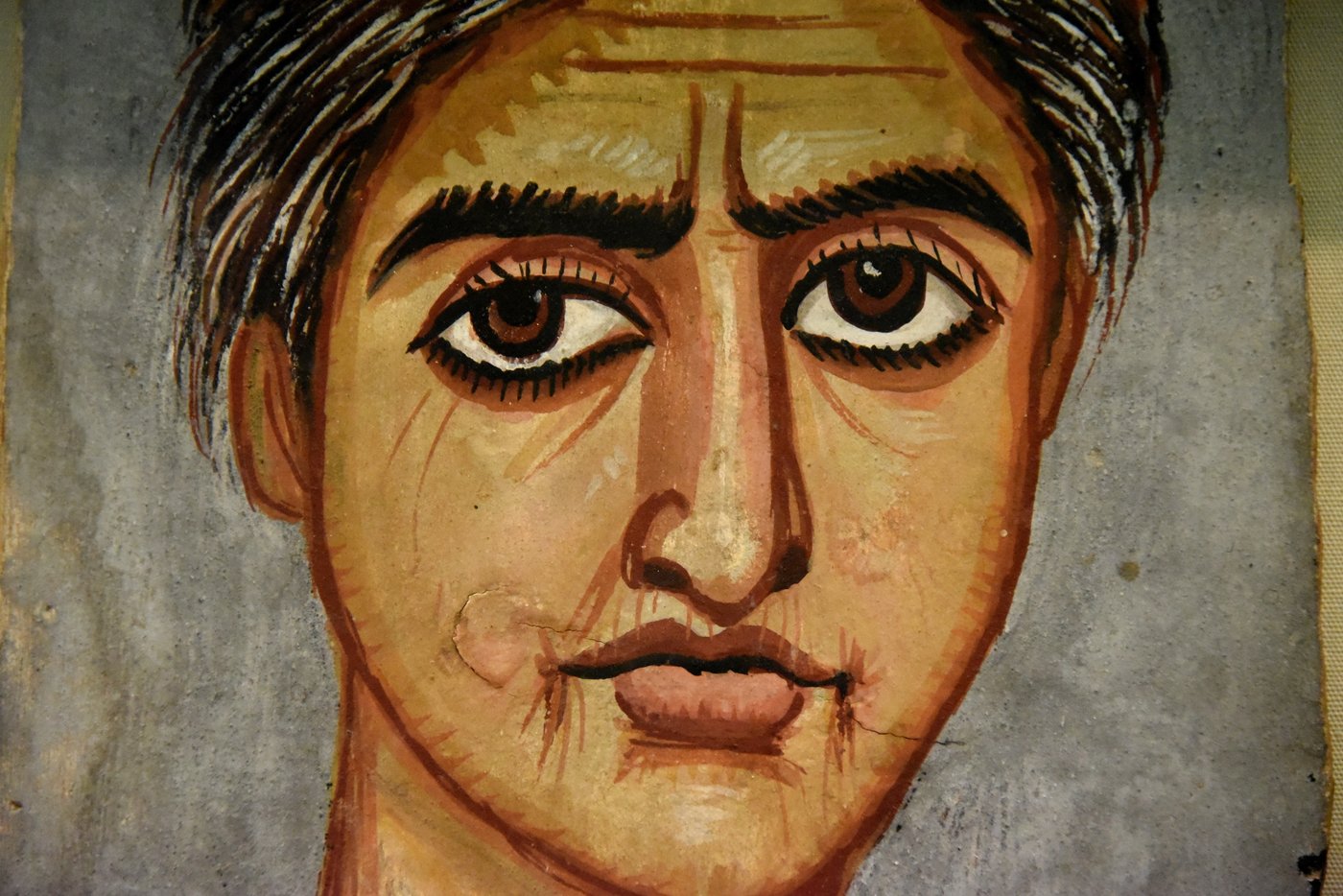
An older idea, dressed in a new language
None of this happened in a vacuum. Long before Greek was spoken on the Nile, Egyptians had already been burying their dead with texts for well over a thousand years. Collections of spells that modern scholars group under the title the Book of the Dead, inscribed on tomb walls, coffins and, especially from the New Kingdom onward, on dedicated papyrus rolls placed with the mummy, were meant to guide, protect and vouch for the deceased on the dangerous journey through the underworld. The basic belief underlying both traditions is strikingly continuous across three thousand years of Egyptian history: that the right words, placed in the right position on or near the body, could do something for the dead that ordinary burial goods could not.
What changed by the time of Tomb 65's occupant was the language and the source of those words. A thousand years earlier, the protective text would have been Egyptian, addressed to Egyptian gods, written in hieroglyphic or hieratic script. By late antiquity, in a bilingual provincial capital that had absorbed Greek culture for seven centuries, the same protective impulse could apparently reach for a Greek epic instead, or, more precisely, for a passage from the one Greek book that every literate person in Oxyrhynchus would have recognised on sight. The ritual slot stayed the same. What filled it had slowly become something new.
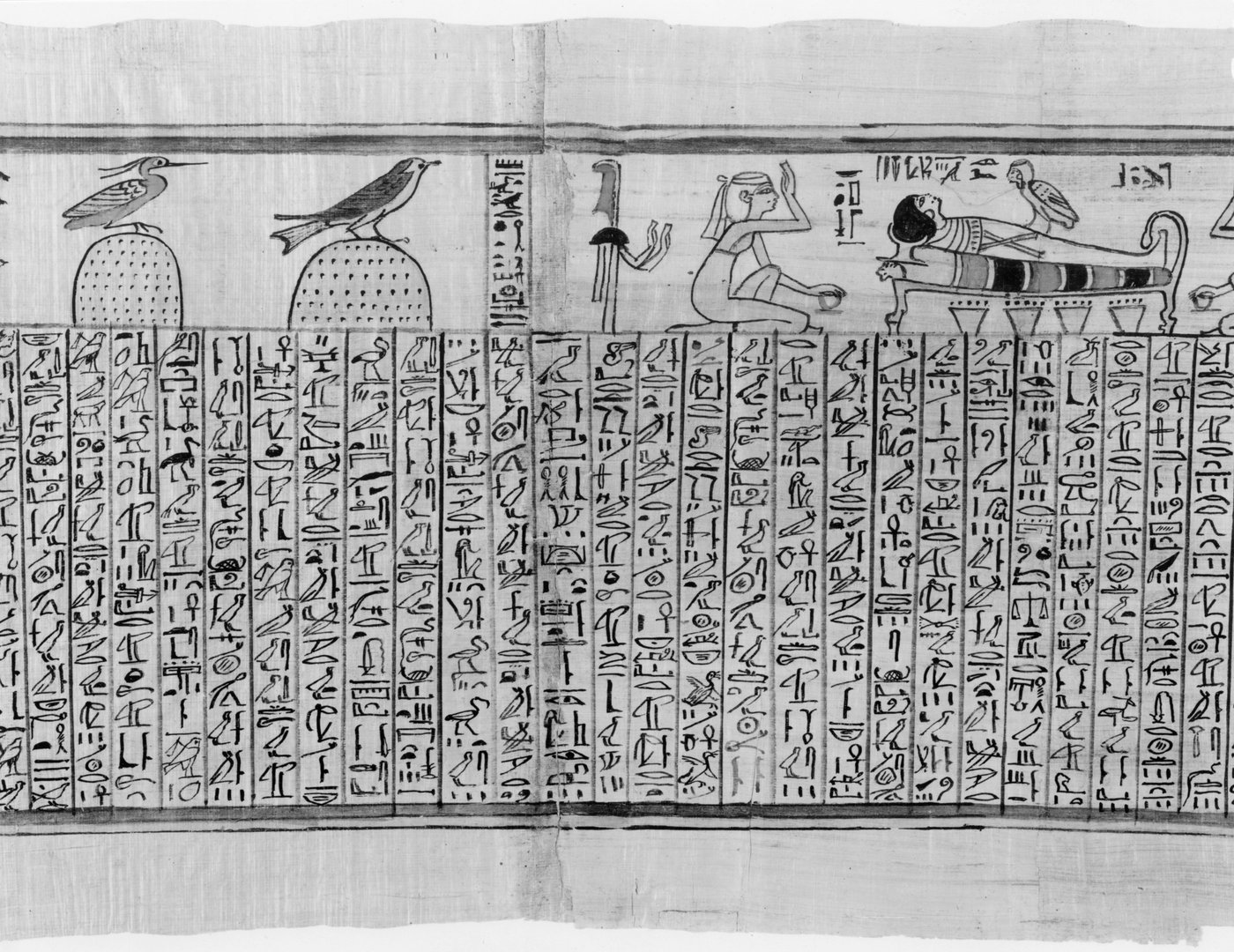
"Every Egyptian mummy was wrapped with pages from the Book of the Dead — that's simply what ancient Egyptians did with their dead."
Book of the Dead papyri were common in earlier periods, particularly the New Kingdom, but funerary text practices shifted considerably over Egypt's long history, and by the Roman period they were far from universal or uniform. At Oxyrhynchus specifically, the papyri found tucked against Roman-era bodies were not excerpts of the classic Book of the Dead at all, but separate magical and ritual formulas, and, in this one case, a fragment of Greek literature. The custom was real, but it was more varied, more regionally specific, and more capable of absorbing new material than the popular "every mummy had the same spell-book" image suggests.
What people actually did with books
It is tempting to treat this as a charming curiosity, proof that even in death, someone in fourth-century Egypt could not bear to be parted from a favourite poem. There may be real truth in that reading. But the deeper significance is what the fragment reveals about how literature actually functioned for the people who owned it. Modern readers tend to sort ancient texts into tidy boxes: this papyrus is "literary," that one is "magical," this one is "documentary." The Tomb 65 discovery is a reminder that people in the ancient world did not necessarily respect those boundaries. A poem studied in school, quoted in conversation, and copied out for pleasure could also, apparently, be pressed into service as protection for the journey into death, the same function a spell or an amulet was meant to perform. The categories are ours. The Iliad, to at least one grieving household in Oxyrhynchus, was simply powerful.
It is also a reminder of how much Oxyrhynchus still has to give up. More than a century after Grenfell and Hunt first put spades into its rubbish mounds, and after decades of continuous publication of its documentary and literary papyri, the site's necropolis, a different kind of archive altogether, made of bodies rather than bins, is still producing firsts. A single fragment, folded into the wrappings of one anonymous body in one modest tomb, has done something that a century of Homeric papyrology had not previously documented: shown a literary manuscript performing a magical function, in the closing, blended centuries of a culture that was simultaneously Egyptian, Greek, Roman and, increasingly, Christian, all at once. Somewhere in that layered identity, a family chose Homer to keep their dead company. We are still learning to read what that choice meant.
Read next: The Etruscans: The Civilisation That Taught Rome and Then Vanished and Thutmose II: The First Royal Tomb Found Since Tutankhamun.
Sources & further reading
- University of Barcelona, Faculty of Philology and Communication, "The archaeological mission to Oxyrhynchus of the IPOA identifies Homer's Iliad in a Roman-era mummy" (2026) — the excavating institution's own announcement of the find.
- Smithsonian Magazine, "Archaeologists Unearth a Papyrus Fragment From the 'Iliad' Tucked Inside the Wrappings of a 1,600-Year-Old Egyptian Mummy" (2026).
- ScienceDaily, "Archaeologists found Homer's Iliad inside a 1,600-year-old Egyptian mummy" (July 2026).
- National Geographic, "Why was an Egyptian mummy buried with the Iliad?" (2026).
- Peter Parsons, City of the Sharp-Nosed Fish: Greek Lives in Roman Egypt (2007) — on daily life, literacy and the papyri of Oxyrhynchus; and the ongoing Oxyrhynchus Papyri series (Egypt Exploration Society) for the site's wider documentary and literary record.
Image credits (via Wikimedia Commons): Bust of Homer, British Museum — public domain; Papyrus Oxyrhynchus 1389 (Homer, Iliad), Bridwell Library, Southern Methodist University — public domain; Mummy portrait of a woman from Fayum, Hawara, The British Museum — Osama Shukir Muhammed Amin FRCP(Glasg) (CC BY-SA 4.0); Book of the Dead for Nany, Metropolitan Museum of Art — public domain (CC0); Mummy of Herakleides, J. Paul Getty Museum — public domain (CC0).