In the digging seasons that began in 2011, on the low dunes just northwest of the ruined Red Sea port of Berenike, a Polish team started lifting small pits out of the sand. One of them held a young monkey. It lay on its side with its limbs drawn up, the way a sleeping animal folds itself, and it had not been thrown away. Tucked against its body were three kittens. Beside it sat two large sea shells and a small basket of woven grass, its lid sealed shut with resin. Whoever dug the hole had arranged the little body with care, packed its favourite things around it, and closed the sand back over the lot. Nothing about the grave was hurried, and nothing about it was religious. It looked, more than anything, like grief.
That pit was one of hundreds. Over the following years the same patch of ground gave up close to six hundred animals, buried one at a time across roughly a century, and the more of them the archaeologists lifted the stranger the place became. This was not a temple site or a sacred menagerie. It was a pet cemetery, the oldest one anyone has found, on the edge of the desert, at the far end of the ancient world's longest trade route. And some of the animals in it had no business being in Egypt at all.
A town at the end of the desert road
Berenike sits on the Egyptian coast of the Red Sea, far south of Suez, in a stretch of country with almost no fresh water and almost no reason to build a city. It was founded around 275 BCE by Ptolemy II, who named it after his mother, and for a long time it was a modest harbour. Then Rome took Egypt, and Berenike's fortunes changed completely. Under the early emperors it became the western terminus of the sea trade with India: the point where ships loaded with pepper, gems, ivory and cloth from the Malabar coast unloaded their cargo for the long haul across the desert to the Nile.
Getting there was brutal. Goods came ashore at Berenike and then travelled by camel for nearly two weeks across the Eastern Desert to Coptos on the river, along a chain of fortified wells. Everyone who lived at the port had chosen, or been posted, to a hot and isolated frontier where survival depended on supply convoys. There were soldiers, customs officials, merchants from across the Roman world and beyond, and a floating population of sailors waiting for the monsoon to turn. It was a working town, not a comfortable one.
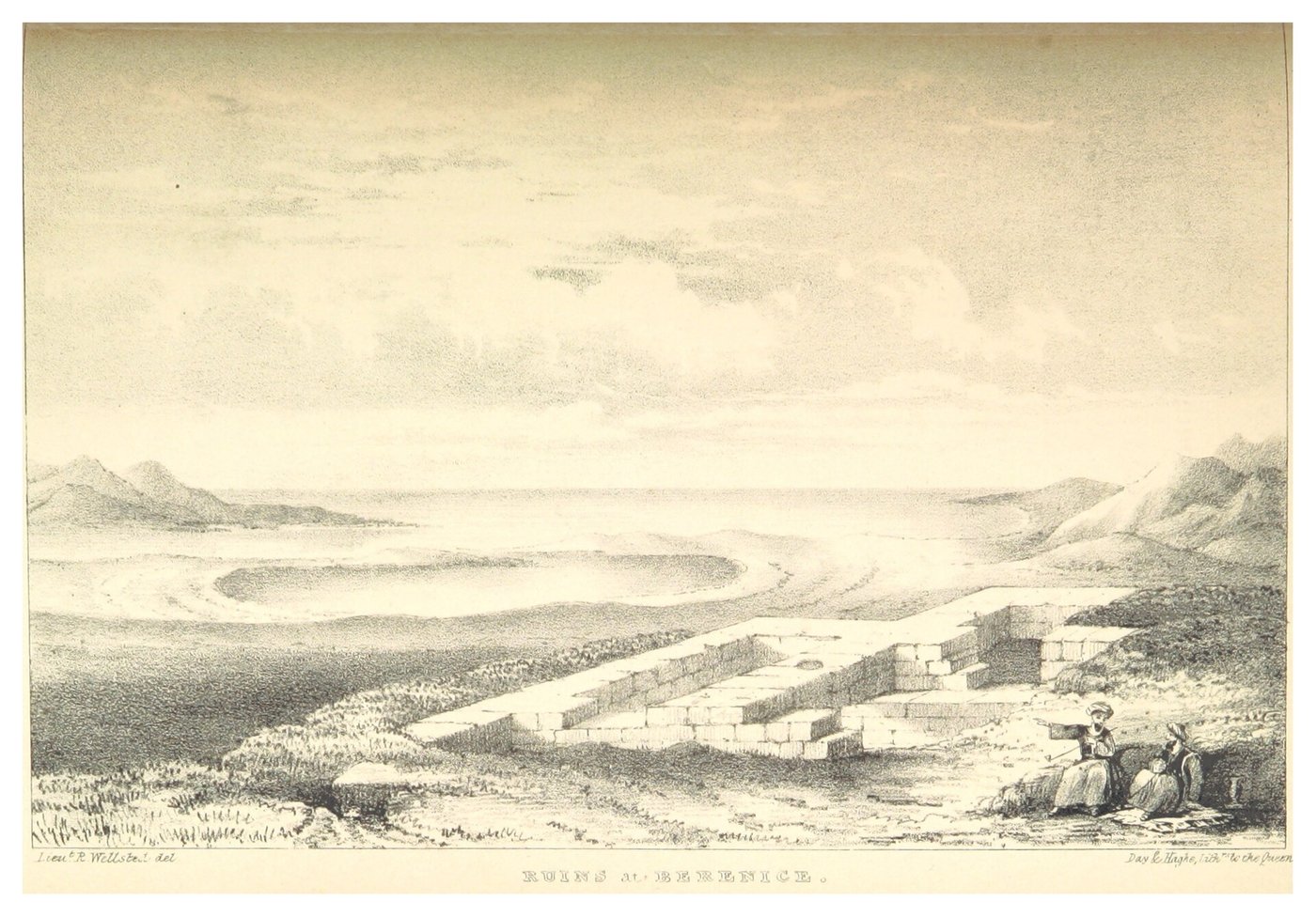
All of which makes what turned up in the dunes harder to explain, not easier. People at the edge of the empire, scraping by on imported grain and desert wells, were keeping animals they did not need and burying them as if they mattered.
Past the rubbish tips
The cemetery came to light almost by accident. Marta Osypińska, an archaeozoologist with the Polish Academy of Sciences, was working the trash mounds outside the old city walls, the sort of layered domestic rubbish that tells you what people ate and threw away. Beneath and beyond the refuse, in the clean sand of the dunes, her team began finding animal bodies laid out on their own. Not butchered. Not scattered as food waste. Whole, positioned, sometimes wrapped.
By 2020 the count stood at 585 individual animals across the excavated area, and the pattern held from one grave to the next. There were no human burials mixed in. None of the animals had been mummified, which set the site apart from the ritual animal cemeteries known elsewhere in Egypt, where cats and ibises were killed and embalmed by the thousand as offerings to the gods. Berenike was something else. These animals had died of their own causes and been put in the ground, one by one, by people who knew them.
The bones carried the proof. A dog with worn joints and gum disease had lived long past the point where a working animal earns its keep; someone had gone on feeding it. Cats turned up with healed fractures, injuries that would have crippled a stray but that had been given the time and shelter to mend. Fish bones sat inside the ribcages of animals that could never have caught fish on that shore. Again and again the skeletons told the same story: these creatures could not have fed themselves at a desert port, and yet they had eaten well. Human hands had kept them alive.
A city of cats
Overwhelmingly, the pets were cats. More than five hundred of the burials were domestic cats, which makes Berenike one of the richest early records of the housecat anywhere. They had come a long way, in their own fashion. The domestic cat spread out of Egypt and the Near East along exactly these trade lanes, riding grain ships to keep down the rats. At a granary port on the Red Sea they would have earned their place many times over. But the graves suggest they were more than pest control. One young cat had been laid on the outstretched wing of a large bird. Two others were buried with beads of ostrich eggshell resting at their throats, the closest thing an animal gets to a necklace.
Dogs came next, a few dozen of them, and then, in ones and twos among the cats, the animals that turned the site from a curiosity into a real puzzle. Monkeys. A desert port on the Red Sea had no wild monkeys of its own. Every one of them had been carried in, and once the bones were studied properly, the question was not just why they were there, but how far they had come.
The monkeys that came from the wrong direction
When the first monkey bones surfaced, the working assumption fit the map. If a Roman at Berenike wanted a pet monkey, the obvious source was Africa, and early study of the remains pointed that way: a grivet here, hints of a baboon there, both African animals that could be moved up the Nile or along the Red Sea coast without crossing open ocean. That would have been a tidy answer. It was also, it turned out, wrong for most of them.
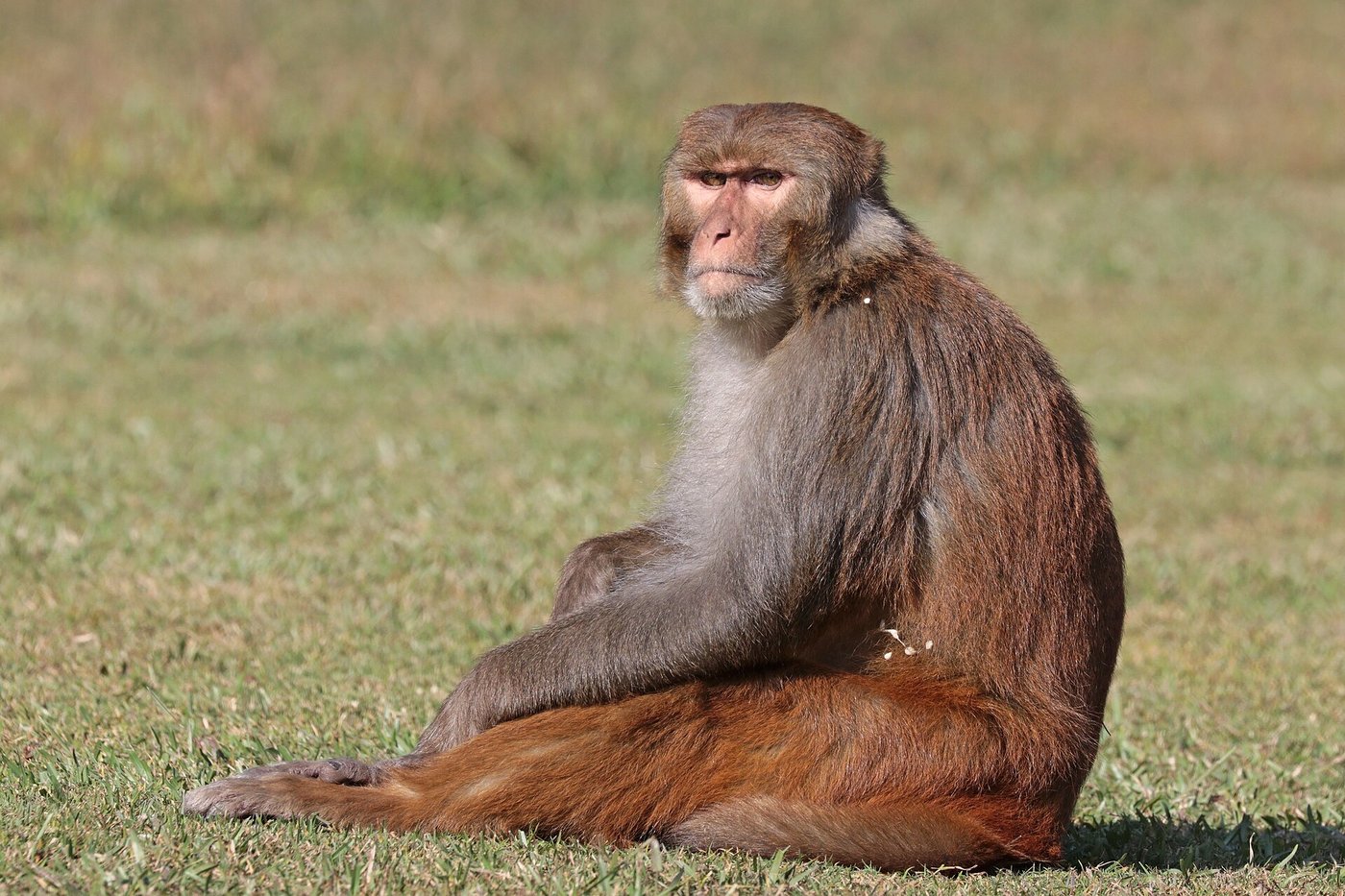
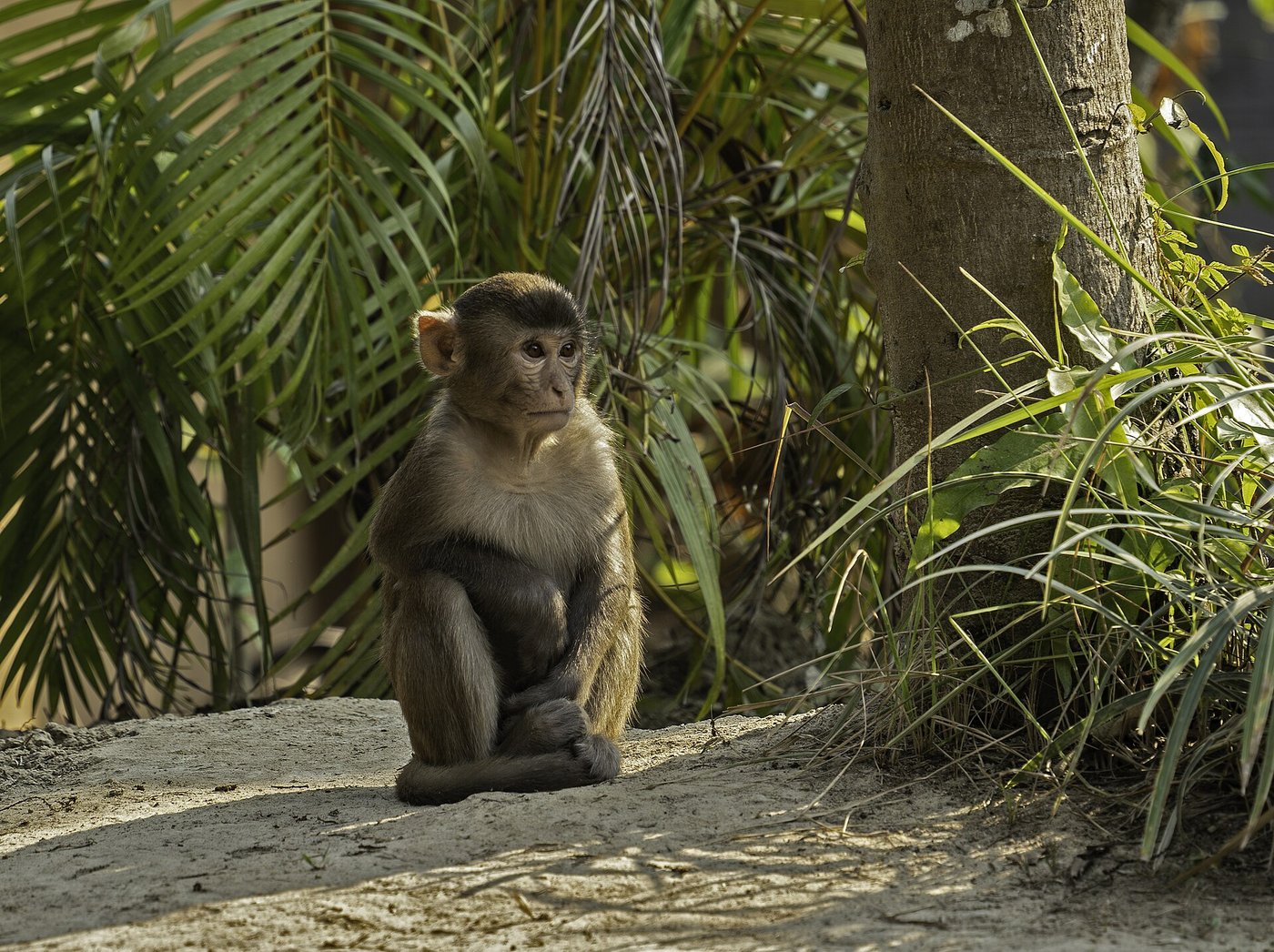
Closer analysis of the teeth and skulls told a different story. Several of the Berenike monkeys were not African at all. They were rhesus macaques and bonnet macaques, species that live in India and nowhere near Egypt. The bonnet macaque in particular pins the origin down hard: it is found only in the south of the Indian peninsula. These animals had not come up from Africa. They had come across the Indian Ocean, from the same coast that was sending pepper and gemstones into Berenike's warehouses, riding the trade in the opposite direction from everything a merchant would normally load.
It reframes the classic picture of the Roman pet monkey completely. For centuries the monkey a wealthy Roman kept on a chain was assumed to be the Barbary macaque, the tail-less monkey of the Atlas mountains and, famously, of Gibraltar: a North African animal, near to hand, the natural choice for anyone in the western empire. Berenike says that at the eastern edge of that same empire, people were reaching very much further.
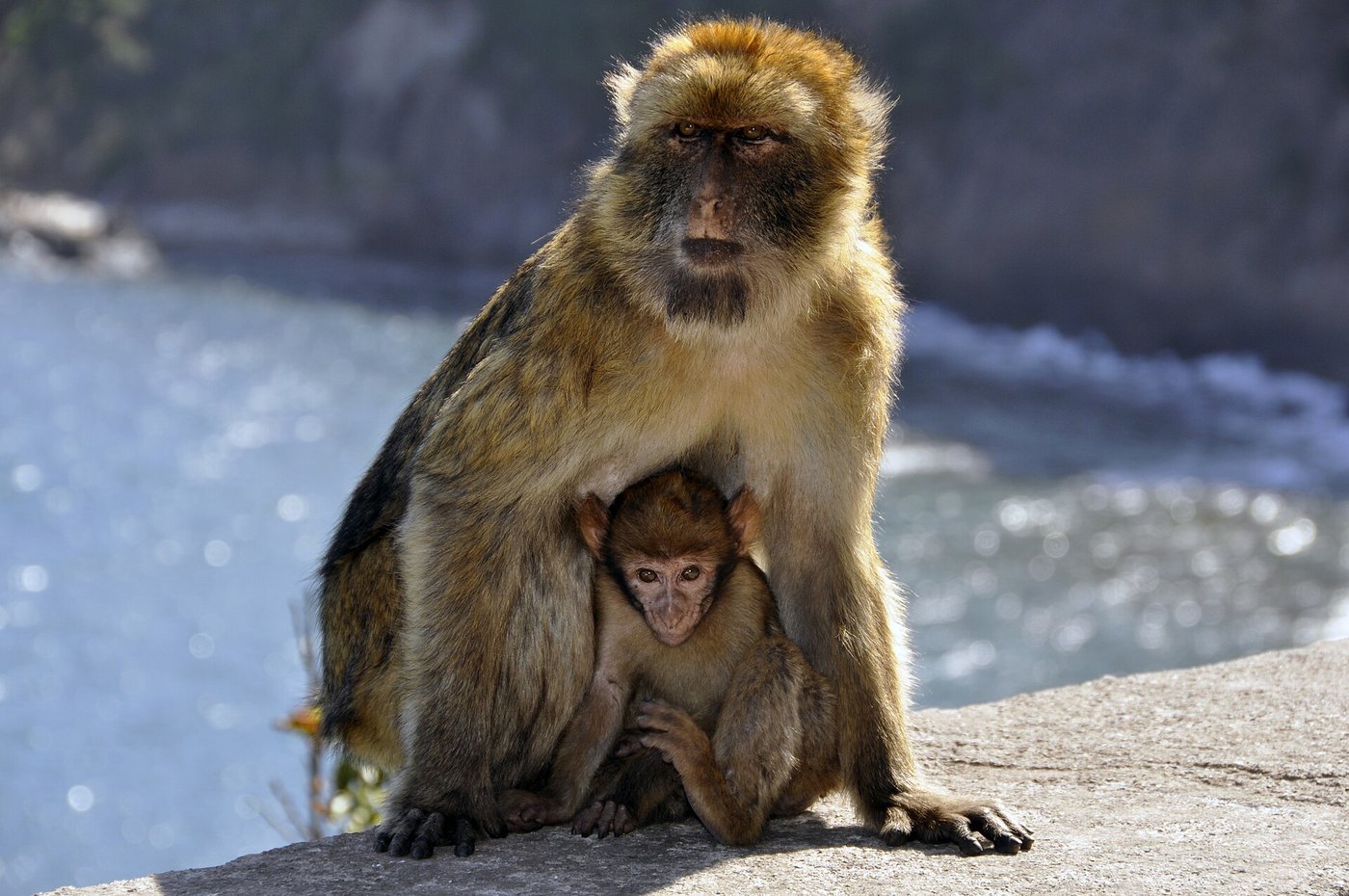
"The pet monkey of the Roman world was the Barbary macaque — an African animal from just across the Mediterranean, moved short distances overland and by coastal ship. Exotic, but never far from home."
The bones from the desert cemetery point east, not west. Rhesus and bonnet macaques are Indian species, and the bonnet macaque comes only from southern India. To reach a Red Sea port they had to be carried alive across the open ocean, thousands of miles by ship. These were not near-at-hand curiosities. They were among the most far-travelled pets in the ancient world.
How you carry a monkey across an ocean
The route existed, and we know a fair amount about it. A Greek merchant's handbook from the first century CE, the Periplus of the Erythraean Sea, lays out the whole run: down the Red Sea from ports like Berenike, along the coast of Arabia and Africa, and then, for those bold enough, straight out across open water to the markets of western India. The crossing turned on the monsoon. For part of the year the wind blows steadily towards India; months later it reverses and blows home. A captain who timed it right could ride the wind out, trade at a port such as Muziris on the Malabar coast, and ride the next season's wind back with a hold full of goods.
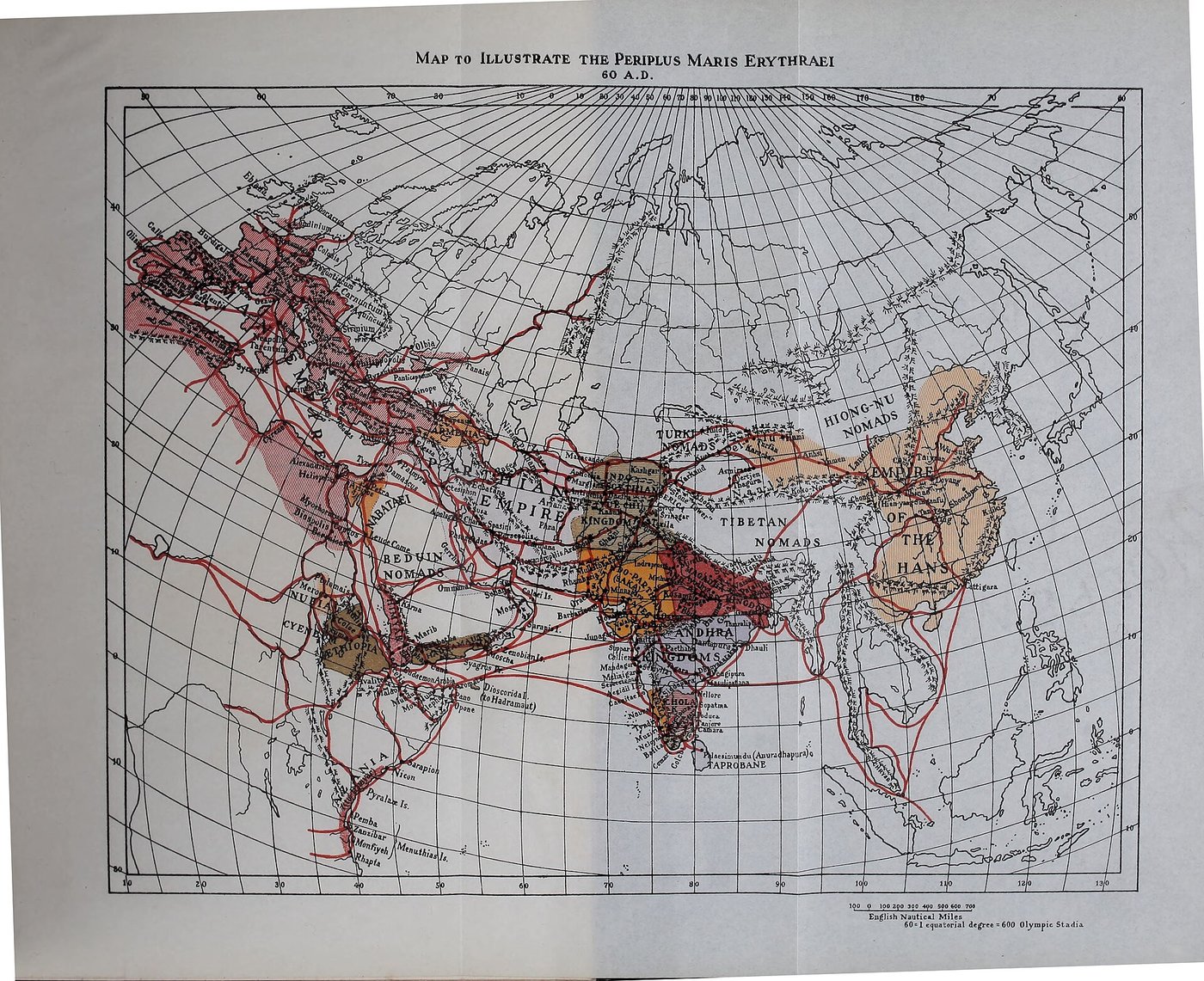
That handbook mostly counts cargo: pepper, cloth, ivory, gemstones, tortoiseshell, the staples of a spice trade that funnelled a fortune into Rome. Live animals do not get their own column. But a ship that can carry ivory can carry a caged monkey, and a sailor who has spent months in an Indian port has every chance to buy one. The Berenike graves are, in effect, the receipt for a trade the written sources barely mention: not just goods moving west, but living creatures, bought on the far side of the ocean and brought home as companions.
The crossing left its mark on the animals, and it is a grim mark. Almost every monkey in the cemetery died young. They rarely reached the age they would have lived to in the wild, and their bones show the strain of a diet and a climate that did not suit them. A macaque built for the forests of southern India does not thrive on a waterless coast, fed whatever a household could spare. People clearly tried (the care is written into the graves), but a monkey carried out of its whole world and set down in the desert was, more often than not, a monkey that would not last.
Buried like something loved
What lifts Berenike out of the world of mere data is the tenderness of the individual graves. These were not tidy scientific deposits. They were funerals, of a kind, arranged by people improvising their own small rites for animals no priest would have blessed.
Go back to the monkey with the three kittens. Think about what that grave records: a household that kept a monkey and cats together, that lost the monkey, and that chose to lay the young cats in with it. Whether they had died together or the kittens were placed there as company for the road, no one can say. The sealed grass basket beside the body may have held food. The two big sea shells were ornament, or keepsake, or something we have no word for. Elsewhere a young pig had been tucked under broken pottery close to another monkey's grave. Bodies were wrapped in cloth and matting, or roofed over with the curved shards of amphorae, or covered with a length of timber, as if the diggers wanted to give each animal a lid of its own.
A single burial can hold a whole relationship. In one pit: a young monkey, curled on its side; three kittens laid against it; a basket of woven grass sealed with resin; and two large sea shells set beside the body. There was no inscription, no mummy wrapping, no offering to a god: just an animal and the small things someone thought it should not go into the ground without.
None of this looks like religion, and that is what makes it land so hard. Egypt's famous animal burials were industrial acts of worship, millions of creatures killed and embalmed as messages to the gods. The Berenike graves are the opposite. Each one is a single choice, made by a person standing over a hole in the sand, deciding that a dead cat or dog or monkey deserved to be put down gently and kept whole. It is the most ordinary thing in the world and, from two thousand years away, oddly moving.
Whose hands dug the pits
Who were these people? Berenike in the Roman period was, among other things, a garrison. Soldiers were stationed there to guard the trade and the desert road, and the port's paperwork bears them out: excavators have recovered papyrus letters written by military officers, the kind of routine correspondence that kept a frontier post supplied. A pet is a luxury, and an imported monkey is a luxury on top of a luxury. Someone with a soldier's regular pay, or an officer's standing, is exactly the sort of person who could afford to buy a macaque off an incoming ship and feed it in a place where food had to be carried in.
That is the leading guess: that many of these animals belonged to Roman military men, and that a rare Indian monkey on a chain was a way of showing rank at the empire's edge, the ancient equivalent of an expensive and impractical status symbol. It is a reasonable reading, and the papyri and the cost of the animals both support it. But it is a reading, not a fact, and it sits a little awkwardly beside the graves themselves.
The status-symbol explanation covers why the monkeys were acquired. It struggles to cover why they were buried the way they were. A man showing off his wealth has no reason to lay three kittens against a dead pet, seal a basket of food beside it, and roof the grave over by hand. The care in the ground reads less like display and more like attachment, from someone who had lived alongside the animal and did not want to simply throw it out. Very likely both are true at once: the monkey arrived as a prize and left as a companion. The cemetery cannot tell us which of the two the owner felt more strongly, and probably its people could not have said either.
The last thing the sand kept
Berenike was abandoned in late antiquity, the sea trade it lived on unravelling as the Roman world contracted. The harbour silted, the wells failed, and the desert took the town back. The rubbish mounds and the little graves beyond them lay untouched under the dunes for more than a thousand years, which is the only reason any of it survived.
Dig them up and you get a version of the ancient world that the grand histories tend to skip. Not emperors and legions and cargo manifests, but a household on a hard coast that kept a monkey brought halfway across the earth, watched it fail in a climate it was never made for, and buried it with three kittens and a basket of food because that felt like the right thing to do. The trade routes carried pepper and gold, and everyone has always known that. What the sand at Berenike kept was the other thing they carried, and the fact that when it died, someone knelt down in the dunes and took the trouble to say goodbye.
Read next: Punt: The Land Egypt Sailed To, Traced by a Baboon's Teeth and Uluburun: The Bronze Age Wreck Whose Cargo Came From Three Continents.
Sources & further reading
- Osypińska, M. et al., "A centurion's monkey? Companion animals for the social elite in an Egyptian port on the fringes of the Roman Empire in the 1st and 2nd c. CE," Journal of Roman Archaeology (2025).
- Osypińska, M., Skibniewski, M. & Osypiński, P., "Ancient Pets. The health, diet and diversity of cats, dogs and monkeys from the Red Sea port of Berenice (Egypt) in the 1st–2nd centuries AD," World Archaeology (2020).
- Osypińska, M., "Animal burials at Roman Berenike," Antiquity / Polish Archaeology in the Mediterranean (2016–2019).
- Sidebotham, S. E., Berenike and the Ancient Maritime Spice Route (University of California Press, 2011).
- Casson, L. (trans.), The Periplus Maris Erythraei: Text with Introduction, Translation, and Commentary (Princeton University Press, 1989).
- Wikipedia, "Berenice pet cemetery" — a readable summary of the excavation and finds.
Image credits (via Wikimedia Commons): rhesus macaque, Gokarna — Charles J. Sharp (CC BY-SA 4.0); ruins at Berenice, 1838 — J. R. Wellsted, Travels in Arabia (public domain); Barbary macaque, Gouraya National Park — Hamza-sia (CC BY-SA 3.0); world map of the Periplus of the Erythraean Sea — Wilfred H. Schoff, 1912 (public domain); bonnet macaque, Kaziranga — Joydeep Chakraborty (CC BY-SA 4.0).